
What Is a Notebook, What Is a Notepad, and Which One Should You Print


Emma is our prepress and print production voice, built from the knowledge of our production team, with over 20 years in printing.
Two objects that look similar on a shelf and behave nothing alike in use. They differ in build, they differ in price, and one question settles which one you print.
A notebook is a bound book of blank pages held at the spine behind a cover, made to stay whole. A notepad is a stack of loose sheets glued along one edge over a chipboard backer, made so each sheet tears off and leaves. Choose a notepad when the paper has to travel to someone else, and a notebook when the paper has to stay with its owner. For a one off book, how to make a calligraphy practice book that opens flat shows the idea at small scale. A single spiral notebook costs $5 here, while 25 notepads of 50 or 100 sheets start at $93.37.

Quick answer
One is bound to keep pages, the other is glued to lose them
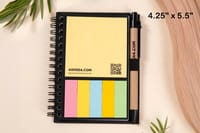
The binding is the whole difference. A notebook holds its pages at the spine behind a cover, coil bound on our 4.25 x 5.5 and 5 x 7 inch spiral books, so the book stays intact and stays with one person. A notepad holds its sheets with a band of padding glue over a stiff backer, 50 or 100 sheets to a pad, so each sheet comes away clean and goes somewhere else. Everything downstream follows from that: the notepad has no cover and prints on one side, the notebook prints on both covers and carries a fixed page count. Ask what happens to the paper next and the answer picks itself.
Notepad or Notebook, Decided by the Job
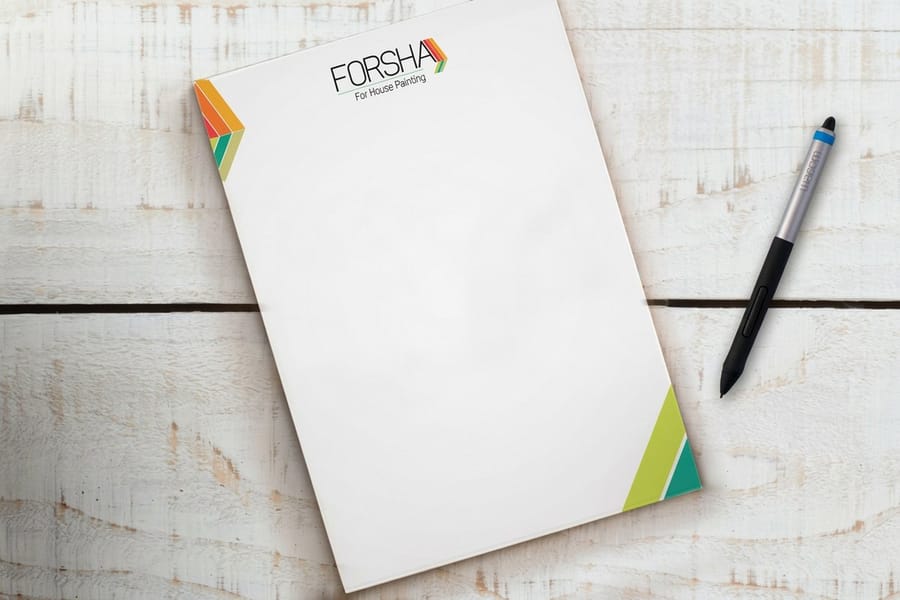
Name the job and the choice follows. This is the short version, with the product and the starting order for each.
| The job | Pick | What you order |
|---|---|---|
| Order forms, lists, message slips | Notepad | 25 pads of 50 or 100 sheets on 70 lb uncoated text, from $93.37 |
| Reminders on a fridge or a cabinet | Magnetic notepad | 25 pads of 25 sheets at 4 x 5, 4 x 8 or 3.5 x 8.5 in, from $93.37 |
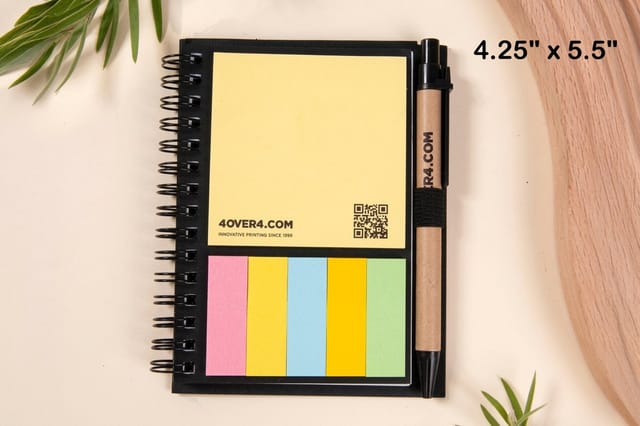
| Notes one person keeps | Spiral notebook | A single coil bound book at 4.25 x 5.5 or 5 x 7 in, from $5 |
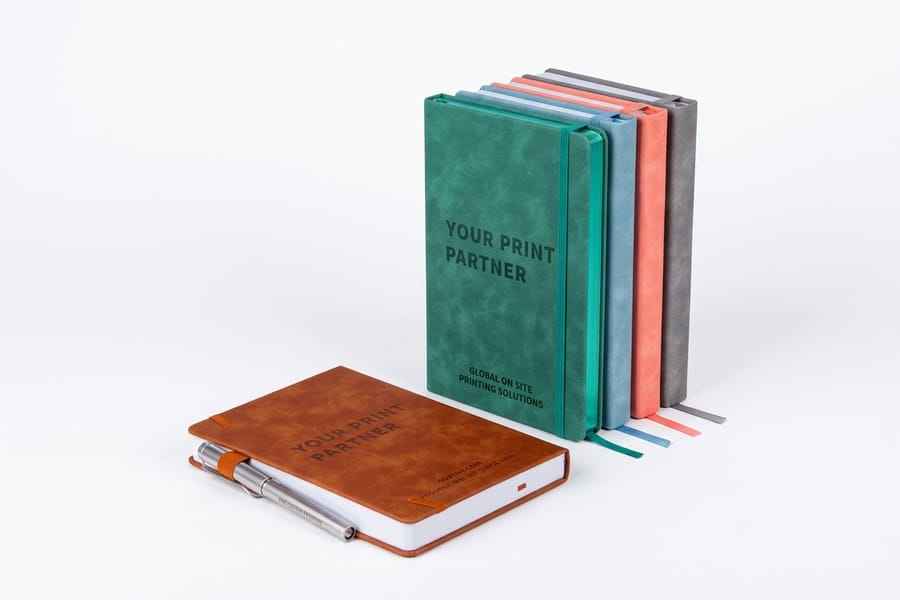
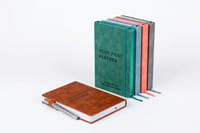
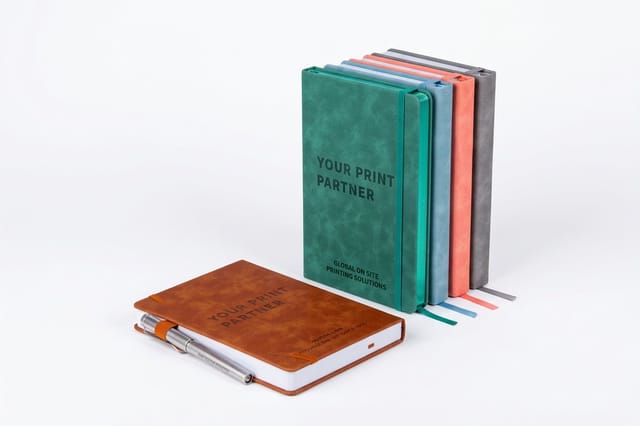
| A gift or a client handover | Leather journal | One 5.75 x 8.25 in journal in blue, green, gray, mocha or pink, from $10 |
| An onboarding or sponsor kit | Embossed notebook | 50 books for $763.37, about $3.95 each at 1,000 |
What a Notebook Is, and What the Binding Does
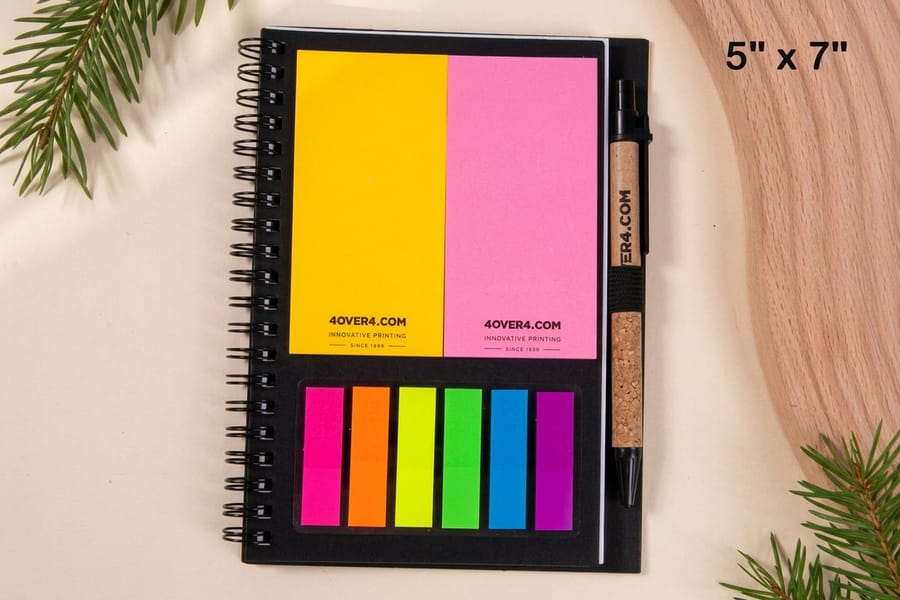
A notebook is a bound book of blank or ruled pages behind a cover. The binding is the definition, not the decoration: coil, wire-o, saddle stitch and perfect binding all lock the pages into a fixed order at the spine so the book stays whole from the first page to the last.
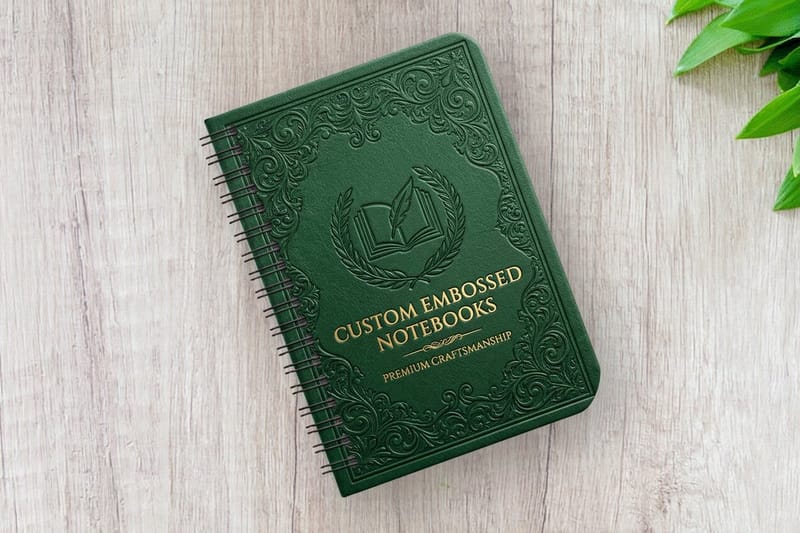
Which binding you pick changes how the book behaves in a hand. Coil binding, the kind on our Deluxe Spiral Notebook, lets the pages rotate a full 360 degrees, so the book folds back on itself and lies flat on a table or a knee. That is why site crews and students reach for spiral books. Perfect binding gives a clean printable spine and looks like a paperback, but it will not stay open on its own without being cracked. Wire-o, used on our Embossed Notebooks, splits the difference: it opens flat like a coil and looks more finished on a shelf. The embossed notebooks video shows that wire-o up close.
Page count is fixed the day the book is made. A spiral notebook that runs out is finished, not refilled, which is why people who plan a year of meetings order a book with the page count already worked out. The cover is the other half of the object. It carries the print, it protects the pages in a bag, and on a ready-made leather journal the plain suede becomes the whole reason the thing gets kept.
If you want the deeper comparison of how each binding is assembled and what it costs to run, the binding types guide walks through all four.
What a Notepad Is, and Why the Glue Matters
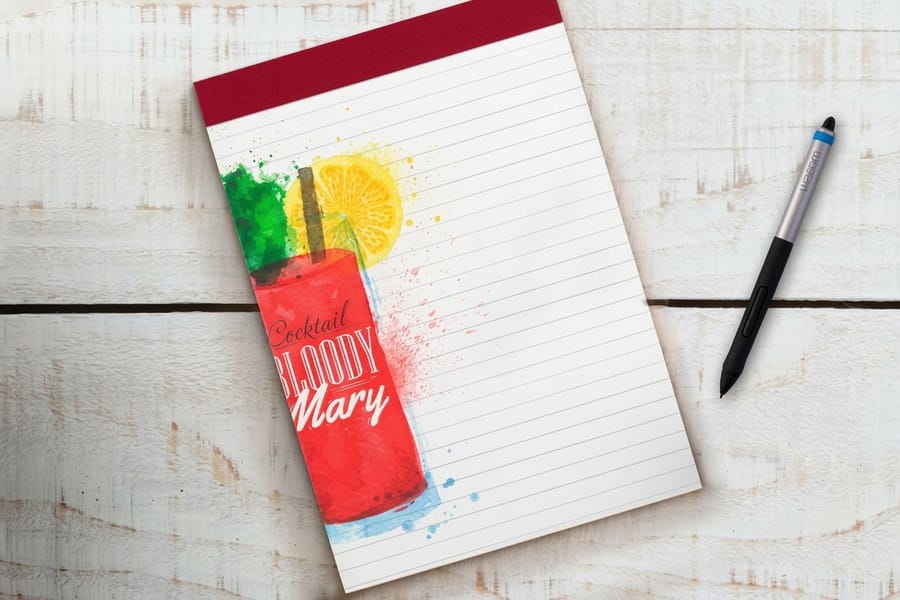
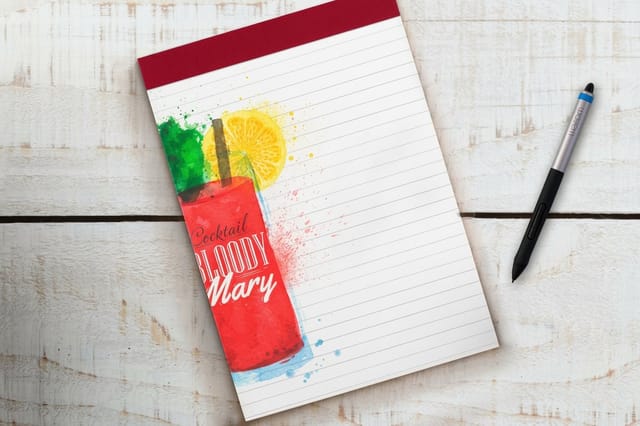
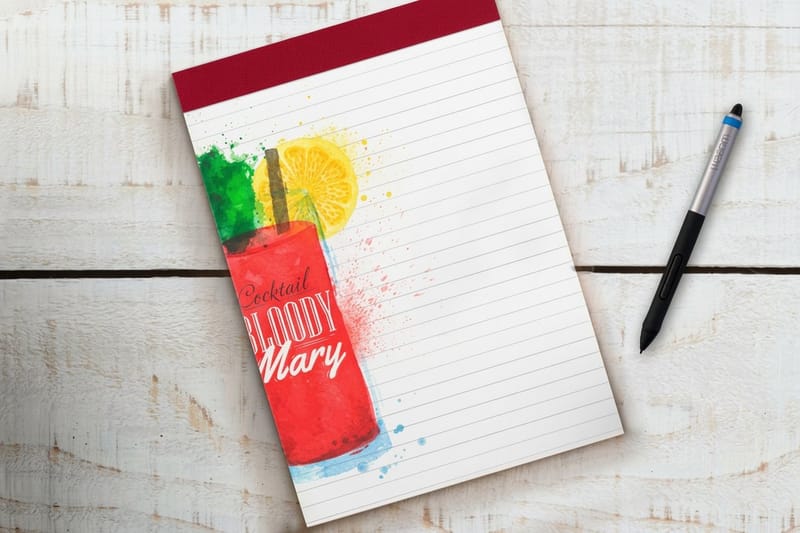
A notepad is a stack of loose sheets bonded along one edge with a flexible padding glue, mounted on a stiff chipboard backer. Nothing holds a sheet in place except that band of glue, and the glue is formulated to release cleanly. Pull the top sheet and it comes away with a straight edge, leaving the pad intact underneath.
Everything else about a pad follows from that. There is no cover, because the top sheet is the cover and it leaves on day one. The back of each sheet is left blank, because the person writing needs somewhere to press and often flips the sheet over. The backer is stiff so you can write on the pad in your hand without a desk. And the print sits at the head or in a light footer, out of the way of the writing.
Our Notepads come glued into pads of 50 or 100 sheets on 70# uncoated text, in five sizes from a 4.25 by 5.5 memo pad up to a full 8.5 by 11 sheet, with custom sizing to 9 by 11. A run starts at 25 pads for $93.37 and the per-pad price slides to about $1.10 as the quantity climbs toward 5,000. Magnetic Notepads are the same idea with a flexible magnet bonded to the back and a thinner 25 sheet stack, so the pad grips a fridge or a filing cabinet and stays flat against it.
Notepad vs Notebook, Difference by Difference
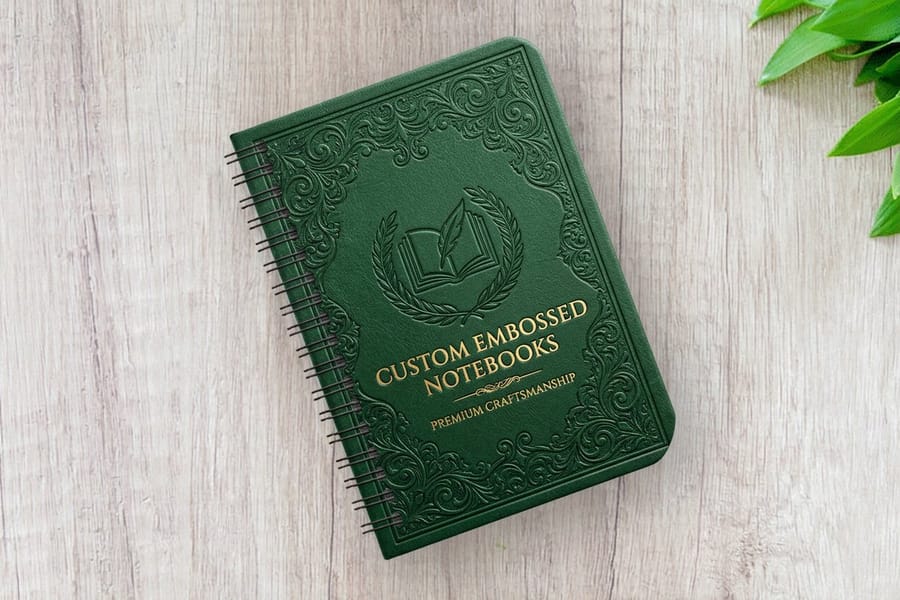
Six things separate them, from how the sheets are held to a 25 pad minimum against a single book, and only the first one is structural. The rest are consequences of it.
| What differs | Notepad | Notebook |
|---|---|---|
| How it is held together | A band of padding glue at the head over a chipboard backer. | A binding at the spine: coil, wire-o, saddle stitch or perfect. |
| What happens to a page | It tears off and goes somewhere else. | It stays attached for the life of the book. |
| Cover | None. The top sheet is the first thing used. | A printed front and back that carry the branding. |
| Printed sides | Front of each sheet only. The back stays blank for writing. | Cover both sides, plus optional printed interior pages. |
| Typical sizes | 4.25 by 5.5 up to 8.5 by 11, custom to 9 by 11. | 4.25 by 5.5 and 5 by 7 ready-made spiral, 5.75 by 8.25 ready-made leather journal. |
| How you buy it | In volume. 25 pads minimum, because padding pays off in runs. | One at a time if you want. Spiral notebooks run 1 to 10. |
| Stock | 70 lb uncoated text, 50 or 100 sheets a pad, black or full color on the front. | A printed cover over blank pages, or a leather cover in five colors. |
| Starts at | 25 pads for $93.37. | $5 for a spiral notebook, $10 for a leather journal. |
| What to upload | A header band of about one inch at the finished size, with bleed. | A wraparound cover with front, spine allowance and back planned together. |
Read the second row first, because it settles most arguments. If the paper is supposed to end up somewhere other than the book, you want a pad. If the paper is supposed to stay with its owner, you want a notebook. Everything in the other five rows exists to serve that one decision.
One limit worth naming: a notepad cannot be a keepsake. It is consumed, and by design it is gone in a few months. If you are printing something a customer is meant to still have next year, the pad is the wrong object no matter how good the artwork is.
Which One You Should Actually Order
Answer three questions and the choice makes itself.
- Does the paper need to leave? Order forms, kitchen lists, prescription pads, doorknob reminders and message slips all have to come off and travel. That is a pad, every time.
- Is this a gift or a tool? A gift needs a cover, weight, and something to hold. Leather journals at $10 for a single unit, in five cover colors at 5.75 by 8.25, exist for the welcome kit and the client handover. A tool needs to survive a bag and lie flat, which is the spiral notebook.
- How many people are you reaching? Pads scale by sheet, books scale by person. Twenty-five pads of 50 sheets is 1,250 branded sheets. Ten notebooks is ten people who carry one around for a year.
Budget rarely decides it, because the two are priced on different axes. Ordering a single spiral notebook for $5 is cheaper than a notepad run in absolute terms, but a notepad run of 25 pads at $93.37 works out at less than four dollars a pad and puts far more paper into the world. Compare cost per useful impression rather than cost per unit and the gap usually closes.
There is a third answer people forget. If the thing you actually need is a bound document rather than a blank book, a booklet is a better fit than either, because it carries printed content on every page instead of leaving them empty.
Where Each One Earns Its Place in a Brand Kit
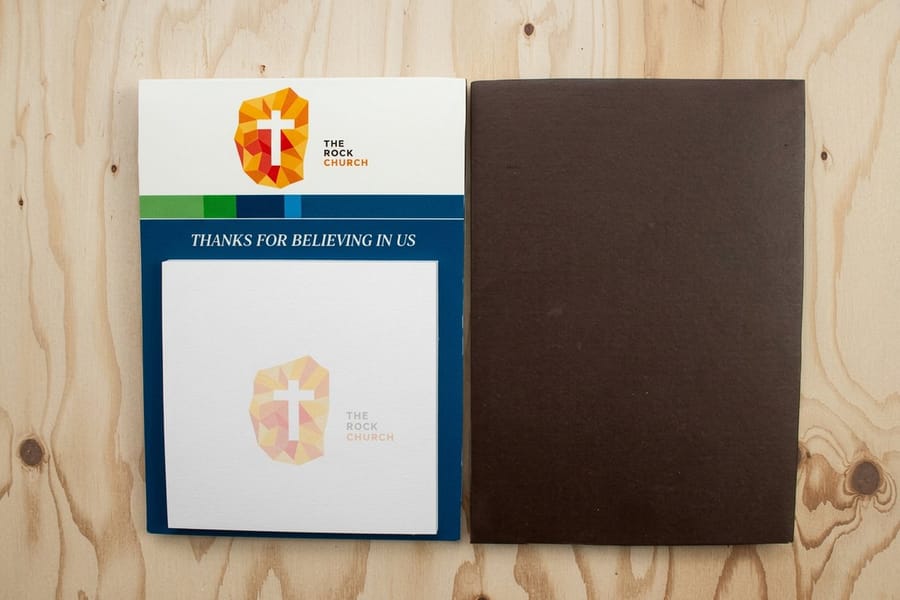
Notepads work as distribution. Every sheet that leaves the pad is a small piece of your brand moving somewhere you were not invited, and the sheet is kept because it has useful writing on it, not because it is an advertisement. That is the trick a flyer never manages. Restaurants, clinics, realtors and repair shops get more out of a $93.37 notepad run than out of most digital spend of the same size, because the paper sits on a counter for months.
Magnetic notepads push that further by choosing the location for you. The pad ends up on a fridge or a steel cabinet at eye level, in a room where decisions about groceries, appointments and repairs actually get made. Three sizes cover the usual cases, from a 4 by 5 memo block to a 3.5 by 8.5 list pad, with custom sizing to 4 by 9.
Notebooks work as retention. Give someone a book with your cover on it and they carry it to meetings you are not in. Onboarding kits, sponsor gifts, workshop materials and executive handovers all use notebooks for that reason, and the reason a 3D lenticular embossed notebook costs more per unit is that it survives the desk cull that flat giveaways never do. At 50 books for $763.37, falling to roughly $3.95 each at 1,000, it is priced to be given deliberately rather than piled on a table.
Most brands need both, and they need them to match. Our guide to building a professional branded stationery set covers how to keep pads, books, letterheads and cards reading as one family instead of four separate projects.
How to Design and Print a Custom Pad or Book
The setup rules are different enough that a file built for one will not work for the other.
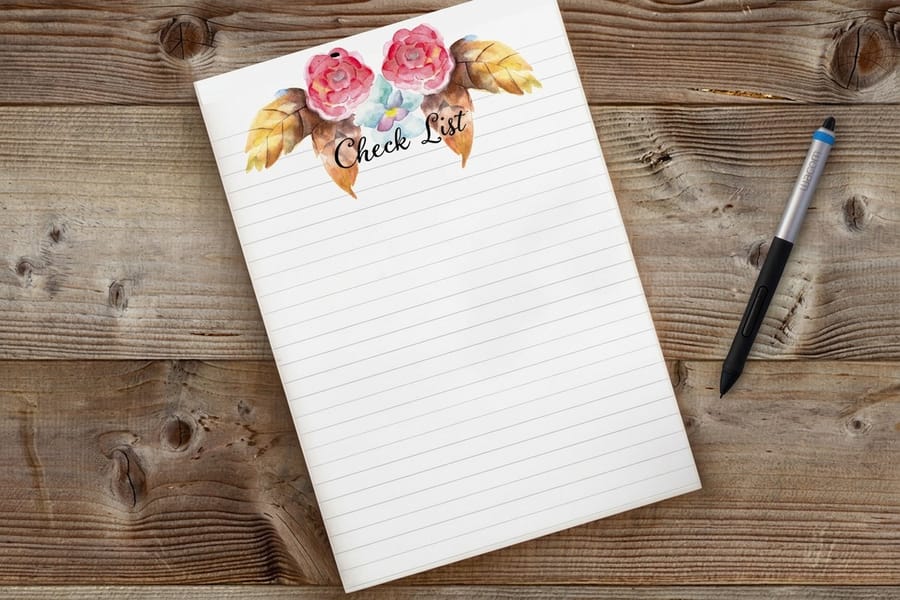
For a notepad, keep the artwork at the top and stop. A header band of roughly one inch, with the logo, one line of contact detail and nothing else, leaves the sheet usable. Anything you put in the middle gets written over. Keep ink coverage light on the writing area too, because a heavy screen makes ballpoint ink skate. Build the file at the finished size, allow standard bleed, and remember the back is blank by design, not by oversight.
For a notebook, the cover is a wraparound, so plan the front, the spine allowance and the back together and put nothing critical within a few millimeters of the trim. On a coil or wire-o book the punched edge eats a strip along the spine side, so pull type well clear of it. Convert fonts to outlines, supply artwork at full size, and check the artwork at 100 percent before you upload.
Start from a correctly sized layout in the blank template library rather than guessing dimensions, and if you want the full walkthrough for a book specifically, the how to make custom notebooks guide takes the cover from concept to print-ready. When the file is ready, configure the run on notepad printing or notebook printing and the price updates live as you change quantity.
Wally sorts out pads and books
Pull a sheet, or keep the whole thing
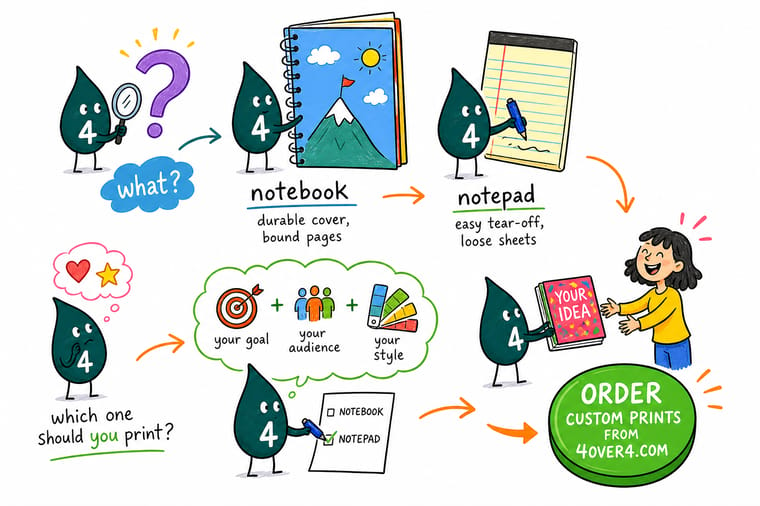
Wally holds a notepad in one hand and a spiral notebook in the other. The pad is only a stack of sheets with a band of glue at the head and a chipboard back, so he tears the top sheet off and hands it to you. The notebook is bound at the spine behind a printed cover, so nothing comes away and he keeps it. If the paper is meant to go to someone else, print pads. If the paper is meant to stay with its owner, print books.
Print a custom notebook →
Specs and pricing
Sizes, sheet counts and starting prices
Compare the bound books and the glued pads side by side, with live configuration choices and starting prices straight from the 4OVER4.COM configurator. Spiral notebooks come at 4.25 x 5.5 or 5 x 7 inches in orders of 1 to 10. Notepads come in five sizes from 4.25 x 5.5 to 8.5 x 11 inches at 50 or 100 sheets. Leather journals are 5.75 x 8.25 inches in five cover colors.

Print it
Order the one that fits the job
A single spiral notebook from $5 for notes someone keeps, 25 notepads from $93.37 for sheets that leave, or one leather journal from $10 for the client handover.

Explore more
Where to go next
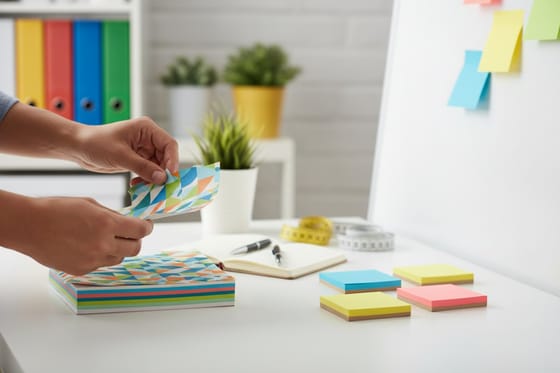
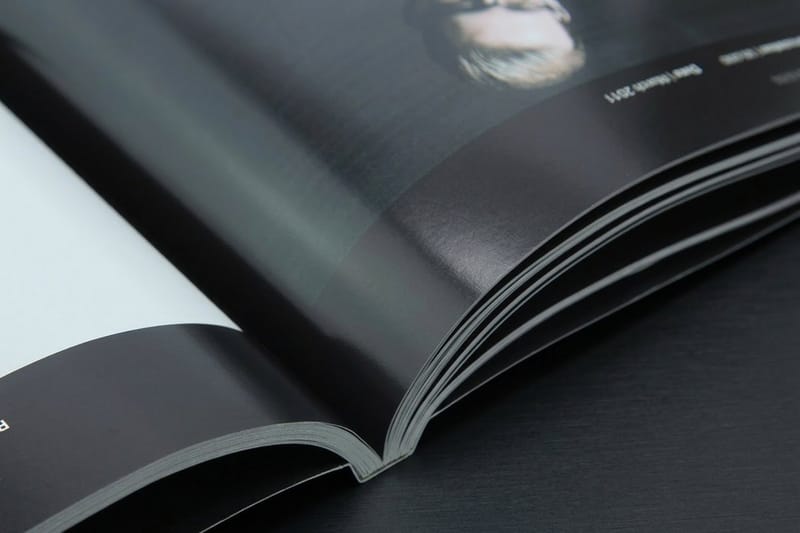
See where a sticky note beats a glued pad, take a notebook cover from artwork to print, compare the four bindings, and feel what 70 lb uncoated text means before you order.

By the numbers
Pads and books printed to order at 4OVER4
Common Questions
Your notepad and notebook questions, answered
What is a notebook?
A notebook is a bound book of blank or ruled pages held together at the spine behind a cover. The binding is what makes it a notebook: coil, wire-o, saddle stitch or perfect binding all hold the pages in a fixed order so the book stays whole while you use it. Our Deluxe Spiral Notebook is coil bound, which lets the pages rotate a full 360 degrees so the book lies flat on a table instead of springing shut. A journal is the same object with a heavier, more decorative cover.
What is the difference between a notepad and a notebook?
A notebook is bound to keep its pages. A notepad is glued along one edge so its pages come off. That construction difference drives everything else: a notepad has no cover, has a chipboard backer instead of a spine, prints only on the front of each sheet, and is bought in multiples because each pad is consumed. A notebook has a printed cover, a spine you can brand, and a page count that stays fixed from the first day to the last.
Which is better for a trade show giveaway?
Notepads if you want reach, notebooks if you want retention. A box of 25 pads at 50 sheets each puts 1,250 branded sheets into circulation, and every sheet someone tears off carries your name to a third desk. A notebook is handed to one person and stays with that person for months. Events with a large floor and a small budget usually run pads. Events where you meet 30 decision makers usually run books.
How many sheets are in a notepad?
Ours are glued into pads of 50 or 100 sheets on 70# uncoated text stock, with a minimum order of 25 pads. Magnetic notepads are built differently, at 25 sheets per pad, because the flexible magnet on the back has to keep the pad thin enough to sit flat against a fridge or a filing cabinet.
Can I order a single custom notebook?
Yes. The Deluxe Spiral Notebook runs from 1 to 10 copies and a single 4.25 by 5.5 book costs $5, and Leather Journals also start at one unit at $10. That matters when you are checking cover artwork: print one, hold it, then order the batch. Notepads do not work the same way. The padding and cutting steps only make sense in volume, so 25 pads is the smallest sensible run.
What paper goes inside each one?
Uncoated text stock in both cases, because coated paper repels ink from a ballpoint and smears under a gel pen. Our notepads and magnetic notepads use 70# uncoated text. Embossed Notebooks hold 50 blank uncoated sheets. If you are choosing stock for a wider stationery set, the guide to understanding paper weight for printing projects explains how those numbers translate into thickness you can feel.
Do notebooks cost more per person than notepads?
Per unit, almost always. Per useful impression, not necessarily. A 50 sheet notepad puts your logo in front of someone 50 separate times as the pad is used down, while a notebook shows the cover once per session but survives far longer. Embossed Notebooks fall to roughly $3.95 a book at 1,000 units, and notepads fall to about $1.10 a pad at 5,000, so both get cheap at scale in different ways.
Get Started
Deluxe spiral notebooks start at $5.00 each
Pick a coil-bound book people keep, or a glued pad whose sheets travel to desks you will never visit. Upload your artwork and the price updates as you set the quantity.
Legal Disclaimer
Gold Standard guarantees apply to all standard orders placed through 4over4.com. Price match requires verifiable proof of a competitor's published price for an equivalent product with matching specifications and turnaround time. Satisfaction guarantee covers manufacturing defects and print quality issues. Contact support with order number and documentation.
