
The Principles of Marketing Every Small Business Should Master


The 4 Ps and the 7 Ps are the levers behind every marketing decision. Each principle means something concrete for a small business, and each one has a printed piece that turns it from theory into something a customer can hold.
The principles of marketing are the 4 Ps, Product, Price, Place, and Promotion, extended to 7 Ps with People, Process, and Physical Evidence. Together they form a complete checklist for a small business. Each principle turns into a printed piece: brochures for Product, price cards for Price, signage for Place, flyers for Promotion, business cards for People, forms for Process, and packaging for Physical Evidence.
Start here
From the 4 Ps to the 7 Ps
The principles of marketing are a short, complete checklist: the 4 Ps, Product, Price, Place, and Promotion, plus three more for services, People, Process, and Physical Evidence. A small business wins by making all seven point the same direction, and by turning each one into a printed piece a customer can hold. The diagram below maps every P to the collateral that delivers it.
What the principles of marketing really mean for a small shop
Marketing can feel like a thousand disconnected tasks: a flyer here, a sign there, a price change, a new logo. The principles of marketing exist to tidy all of that into a short, complete checklist so nothing important slips through. Master the checklist and every scattered task suddenly has a place and a purpose.
The foundation is the 4 Ps: Product, Price, Place, and Promotion. What you sell, what you charge and why, where people can buy it, and how you tell them about it. For the service side that most small businesses also run, the model grows to 7 Ps by adding People, Process, and Physical Evidence. Seven levers, one goal: get the right offer to the right person in a way they trust.
For a small business the real power is not any single P, it is making all of them point the same direction. That coherence is what makes a modest operation feel established and reliable. This guide walks each principle and, crucially, the printed piece that turns it from an idea into something a customer can hold, starting with the brochure that carries your Product story. If you want the layer above the 7 Ps, pair this with our guide on developing a branding strategy.
The 4 Ps, and how they grew into the 7 Ps
The 4 Ps came out of an era focused on selling physical products, and they still hold up: Product, Price, Place, and Promotion cover the essentials of getting something made and into a customer's hands. If you sell a tangible good, those four will take you a long way on their own.
But services and experiences carry value you cannot box up, so marketers added three more Ps to fill the gap. People covers everyone the customer meets, because in a service the staff are part of the product. Process covers the steps and systems of delivery, which shape how the experience feels. And Physical Evidence covers the tangible cues that prove quality when there is no physical product to point to.
Most small businesses are a blend of product and service, so the 7 Ps usually map more completely onto reality than the original four. The rest of this guide takes them in order, and pairs each with the printed piece that delivers it, from a business card for People to a brochure for Product. Browse the whole lineup in marketing materials as you read.
Product and Price: what you sell and what it is worth
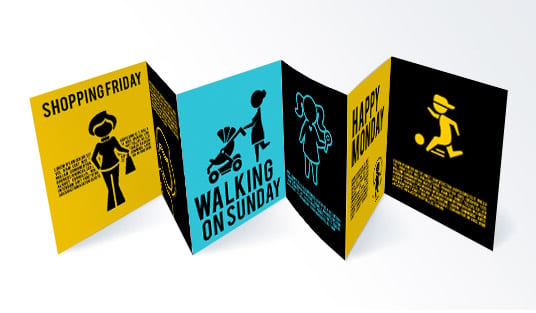
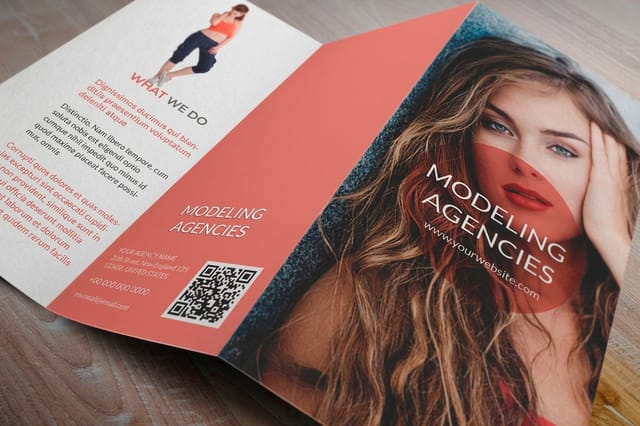
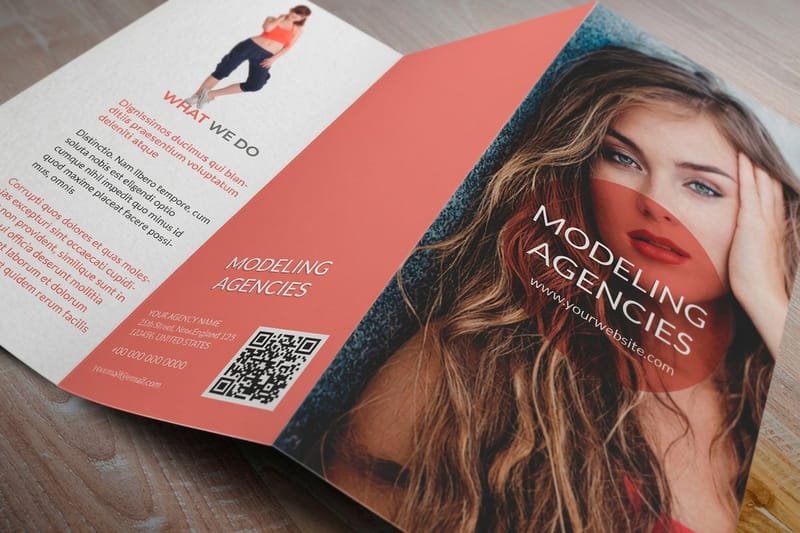
Product is the first P and the anchor for everything else: what you actually sell and the value it delivers. The marketing job is to make that value easy to understand and hard to forget. A well-built brochure or spec sheet does exactly this, explaining features in terms of benefits and giving customers something to take away and revisit after the conversation ends.
Price is not just a number; it is a story about worth. The same figure can feel expensive or like a bargain depending on how you frame the value around it. Communicate price where customers make decisions, on a price card, a menu, or a postcard, and pair it with the value so it reads as a fair exchange rather than a cost to resist.
These two Ps work together. Product defines the value; Price captures it. When your printed materials present both clearly and consistently, on the same stock, in the same voice, customers trust the offer more, because coherence itself signals a business that has its act together.
Place: be visible where customers look and buy
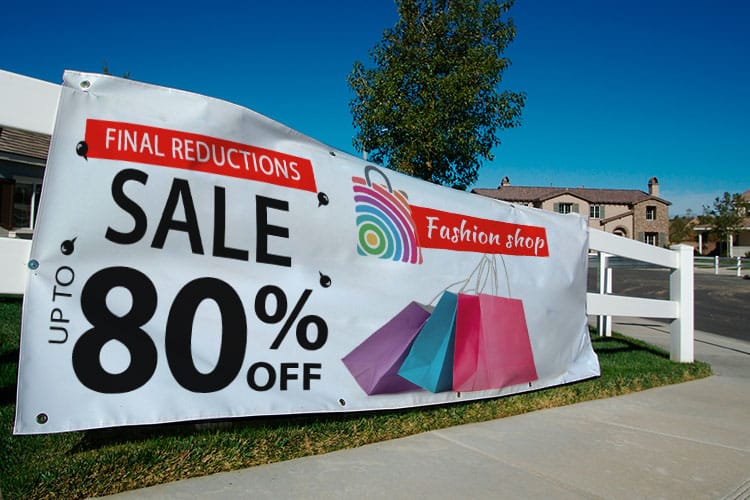
Place is about being where your customers are when they are ready to find you and buy. For a small local business, a lot of Place is physical: the sign over the door, the banner announcing an event, the window graphic that turns foot traffic into walk-ins. If people cannot find you or do not notice you, the other six Ps never get a chance to work.
Think about every point where a customer might discover you and make sure you show up there clearly and on-brand. A crisp vinyl banner at a busy corner, an A-frame on the sidewalk, or a window graphic on the storefront each claim a piece of the physical world in your favor. Visibility is not vanity; it is distribution for a local business.
Place and consistency reinforce each other. When your signage, banners, and storefront graphics all carry the same colors, logo, and voice as your cards and brochures, a customer who spots you outside already recognizes you inside. Explore the formats that win Place across marketing materials and coordinate them with the rest of your set.
Promotion: reach the right people with the right message

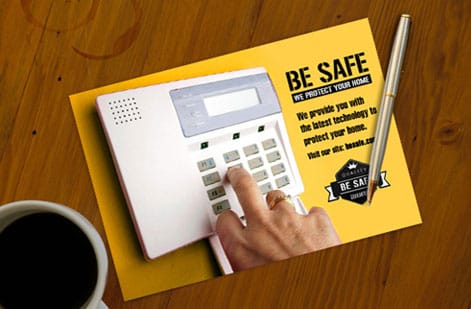
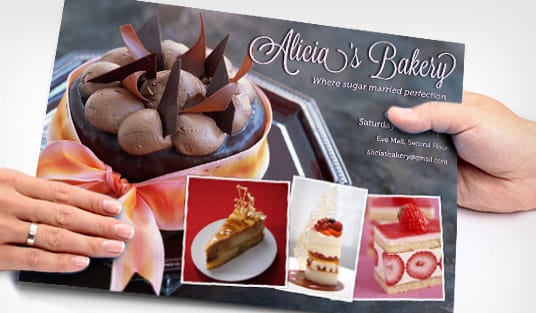
Promotion is the P most people think of first: how you spread the word and persuade people to act. For a small business the promotion that returns most is usually targeted and local, reaching a specific audience with a specific message rather than shouting broadly. The printed workhorses here are flyers, direct-mail postcards, and door hangers.
Each format meets a different reader in a different moment: a flyer at an event or counter, a postcard in a targeted mailbox, a door hanger on a chosen neighborhood's doors. The message matters as much as the medium, so lead with a clear benefit or offer and make the call to action obvious. Our guide on creating a marketing offer goes deep on the message half of this P.
Promotion is also where measurement pays off. Add a code or QR to each piece so you can see which promotion pulled, then reprint the winners. Because larger print runs drop the per-piece cost, a promotion that proves itself gets cheaper to scale, which you can see in the live pricing below.
People, Process, and Physical Evidence: the service Ps
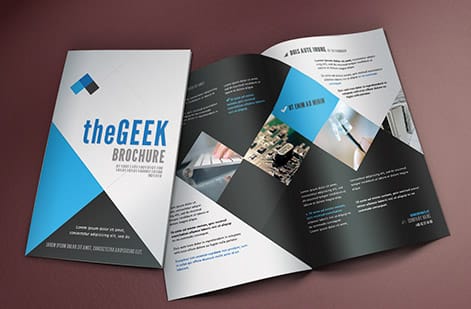
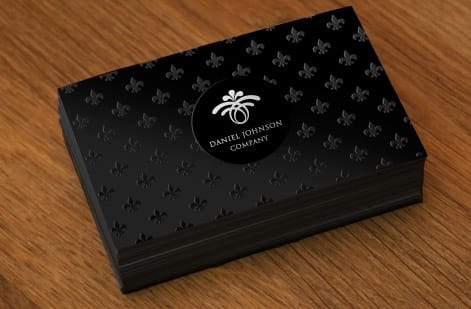
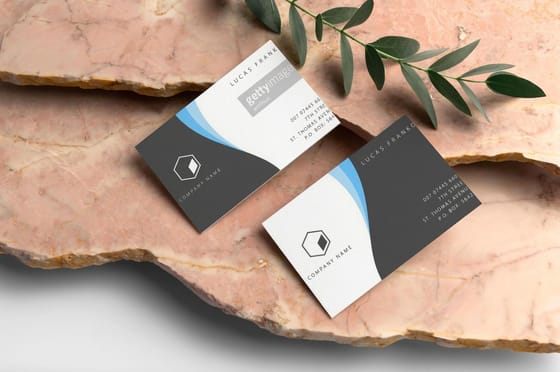
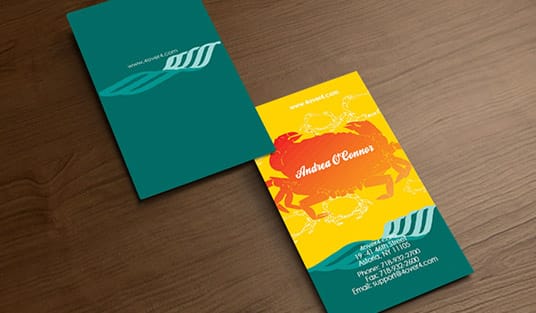
People is the principle that everyone your customer meets is part of the brand. In a small business the owner and staff often are the product, so equip them to look and feel professional. A well-designed business card, a name badge, and branded stationery turn every handshake and follow-up into a small proof of quality.
Process is the experience of doing business with you, the steps from first inquiry to final delivery. Smooth, consistent, on-brand steps build trust, while a clunky or off-brand process quietly erodes it. Branded forms, clear menus, and simple how-it-works pieces keep the journey coherent and reassuring, especially for a first-time customer deciding whether to come back.
Physical Evidence is the tangible proof customers keep when the value itself is intangible. This is where packaging, presentation folders, and premium cards earn their keep: a considered pocket folder handed over in a meeting, or thoughtful packaging around a product, signals substance and care. Get these three service Ps right and a small business feels every bit as trustworthy as a large one. Use the live specs and pricing below to build the pieces each principle needs.
Wally turns the 7 Ps into printed proof
Every principle becomes something a customer can hold
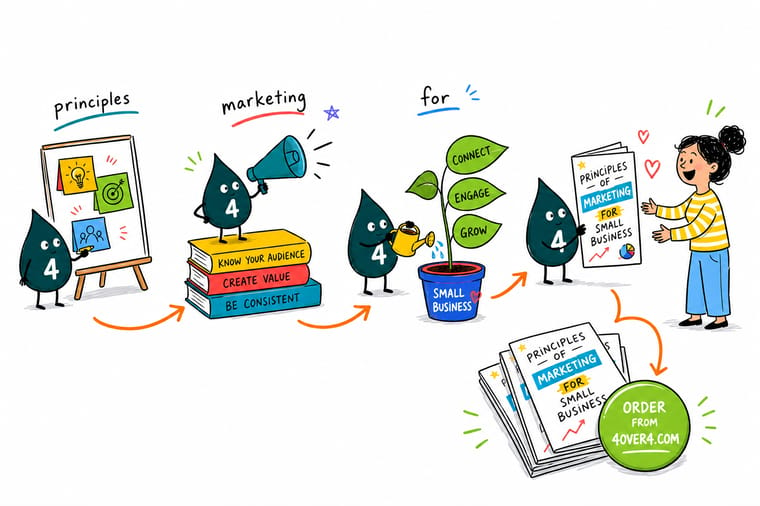
Wally lines up the seven principles and hands each one a printed job: a brochure for Product, a price card for Price, a banner for Place, a flyer for Promotion, a business card for People, a form for Process, and packaging for Physical Evidence. Point them all the same way and a small shop reads as trustworthy and established. Build the whole set with 4OVER4 in one consistent brand.
Print your marketing collateral →Quick reference
The 7 Ps and their printed form, at a glance
Every principle of marketing turns into something a customer can hold. Match each P to its piece and your collateral covers the whole strategy.
| Principle | Aim for | Why it matters and what prints it |
|---|---|---|
| Product | What you sell, shown clearly | Explain and display the offering so customers understand its value. Print: brochures and spec sheets. |
| Price | The value behind the cost | Frame price as worth, not just a number. Print: price cards, menus, and postcards. |
| Place | Where people find you | Be visible where customers look and buy. Print: signs, banners, and window graphics. |
| Promotion | How you spread the word | Reach the right people with the right message. Print: flyers, postcards, and door hangers. |
| People | Everyone the customer meets | Your team is part of the brand. Print: business cards, name badges, and stationery. |
| Process | The steps of doing business | Smooth, branded steps build trust. Print: forms, menus, and how-it-works guides. |
| Physical evidence | The proof they keep | Tangible cues signal quality. Print: packaging, folders, and premium cards. |
Step by step
Apply the 7 principles in order
- Start with Product Get clear on exactly what you sell and the value it delivers, then make that easy to understand. A brochure or spec sheet that explains the offering plainly does the heavy lifting here.
- Set Price as a value story Decide not just the number but the story around it, why the price is fair for what the customer gets. Communicate it on price cards, menus, or a postcard so it reads as worth, not cost.
- Win at Place Be visible and easy to buy from wherever your customers look. In the real world that means signs, banners, and window graphics that put you in their path.
- Drive Promotion Reach the right people with a clear message and offer. Flyers, direct-mail postcards, and door hangers are the small-business workhorses that carry a promotion to a specific audience.
- Invest in People Everyone a customer meets represents the brand, so equip your team to look the part. Business cards, badges, and branded stationery make every interaction feel professional.
- Refine your Process Make the steps of doing business smooth and on-brand, from first inquiry to follow-up. Branded forms, menus, and simple how-it-works guides keep the experience consistent.
- Build Physical Evidence Give customers tangible proof of quality they can keep and remember. Packaging, presentation folders, and premium cards are the physical evidence that a small business is the real deal.
Specs and pricing
Brochure specs and live pricing
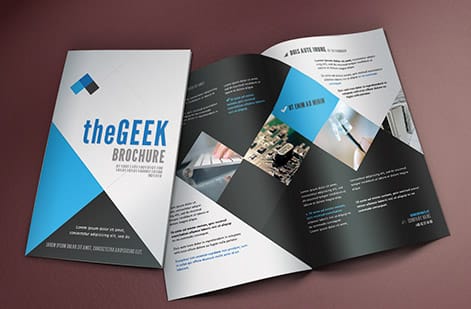
The brochure carries your Product story, the anchor of the 7 Ps. Here are the live specs and price-per-unit for brochures at 4OVER4.COM, straight from the configurator.

| Quantity | Price Per Unit | Total |
|---|---|---|
| 50 | $1.14 | $57.11 |
| 100 | 82.4¢ | $82.38 |
| 200 | 53.3¢ | $106.55 |
| 300 | 41.0¢ | $123.02 |
| 400 | 34.9¢ | $139.49 |
| 500 | 31.2¢ | $155.97 |
| 600 | 26.7¢ | $160.36 |
| 700 | 23.5¢ | $164.75 |
Print it
Print the collateral the 7 Ps call for

See it in use
Marketing collateral customers printed


Explore more
Where to go next

By the numbers
Stocks behind a small business marketing run
Common Questions
Common questions about marketing principles
What are the principles of marketing?
The principles of marketing are the core levers a business pulls to bring a product or service to market and win customers. The classic framework is the 4 Ps: Product, Price, Place, and Promotion. Product is what you sell, Price is what you charge and the value behind it, Place is where and how customers can buy, and Promotion is how you communicate and persuade. For service businesses the model expands to 7 Ps, adding People, Process, and Physical Evidence. Together they form a checklist that keeps every marketing decision aligned around the same goal.
What is the difference between the 4 Ps and the 7 Ps?
The 4 Ps, Product, Price, Place, and Promotion, were built to describe marketing a physical product. The 7 Ps extend that model for services and experiences, where more of the value is intangible. The three additions are People, everyone the customer interacts with; Process, the steps and systems of delivering the service; and Physical Evidence, the tangible cues that prove quality when the product itself is not a physical object. Because most small businesses sell some mix of product and service, the 7 Ps usually map more completely onto how they actually operate.
How do marketing principles apply to a small business?
They give a small business a simple, complete checklist so nothing important gets missed on a tight budget. You clarify your Product and the value it delivers, set a Price with a story behind it, make yourself visible and easy to buy from in the right Place, and Promote with focused messages to the right people. Then you sharpen the service side: your People, your Process, and the Physical Evidence customers keep. The real advantage for a small business is consistency, making all seven point the same direction, which reads as trustworthy and established well beyond your size.
How do I choose which marketing principles to focus on first?
Start where the gap is biggest. If customers do not understand what you offer, focus on Product and how you present it. If they hesitate on cost, work on the Price story. If nobody can find you, fix Place with better signage and visibility. If you are invisible, prioritize Promotion. Service businesses should not neglect People, Process, and Physical Evidence, since those often decide whether a first-time buyer becomes a regular. Audit all seven honestly, then invest first in the one that is currently costing you the most customers.
What does it cost to print marketing collateral, and how are prices set?
The principles cost nothing to apply; printing the collateral that delivers them scales with a few levers: quantity, where more pieces lower the unit price, plus size, paper stock, and finish. At 4OVER4.COM you set each option in the configurator and the price updates live, with brochures starting around $57.11 and business cards around $17.57. Because each of the 7 Ps maps to a different printed piece, you can build a coordinated set, cards, a brochure, flyers, signage, and see the exact total for each before you commit.
Get Started
250 door hangers cost $290.41, or $1.16 each
Build a coordinated set at 4OVER4.COM, cards, a brochure, flyers, and signage, all in one consistent brand. Adjust every option and watch your price update live before you order.
Legal Disclaimer
Gold Standard guarantees apply to all standard orders placed through 4over4.com. Price match requires verifiable proof of a competitor's published price for an equivalent product with matching specifications and turnaround time. Satisfaction guarantee covers manufacturing defects and print quality issues. Contact support with order number and documentation. On-time delivery rate based on tracked orders 1999 to 2026. Individual results may vary based on shipping carrier performance.
