
Vinyl Printing vs Screen T-Shirt Printing


Jordan is our labels, packaging and sustainability voice, built from the knowledge of our production team, with over 20 years in printing.
Vinyl vs screen printing comes down to run size: screen printing rules big matching runs, vinyl rules small sharp ones like names and numbers. Two great ways to put a design on a shirt, built for two different jobs. Here is how to read color, feel, durability, and cost so you pick the right one the first time.
Choose by run size and color count: heat-transfer vinyl (HTV) is a cut film pressed onto the shirt, so it is fastest and cheapest for one-off or personalized pieces and one to two crisp colors. Screen printing pushes ink into the fabric, costs more to set up per color, and becomes the cheaper, softer choice once you order roughly two dozen or more matching shirts. For photos or many colors, use screen or full-color transfer, not cut vinyl.
Quick answer
Vinyl or screen printing, in one paragraph
Order vinyl for small, sharp, or personalized runs and screen printing for matching bulk orders. Heat-transfer vinyl has no setup cost, so a single tee, a short run, or names and numbers come out cheap and fast, and it nails one to two crisp colors. Screen printing costs more to set up per color, then the per-shirt price falls sharply with volume, and the ink feels soft because it bonds into the cotton. For a photo or many colors, choose screen or full-color transfer rather than cut vinyl. 4OVER4.COM prints both in-house, so you can match the method to the job instead of the other way around.
Screen print vs vinyl
Screen print vs vinyl, which to choose for your shirts
Screen print a larger run of one simple design in a few solid colors, and press vinyl for small runs, names and numbers. Screen printing has two drawbacks. It needs a screen burned for every color, so twelve shirts for a one time event can cost more in setup than in shirts. And it struggles with photos and gradients, which need halftones or a full-color transfer. Vinyl skips the screens, but each color is a separate cut layer, so busy art gets thick and stiff.
Doing vinyl yourself on a home cutter means cutting, weeding each letter and pressing with firm, even heat, and a press that runs too cool or too brief leaves edges that lift. If you press in-house, heat activated transfer film starts at $19 at any size. A printed custom tee from us starts at $21.96 for one shirt, 25 shirts come to $372.21 and 100 shirts to $1,272.88, so the price per shirt falls from $21.96 to about $12.73 as the run grows.
Why the vinyl vs screen printing choice actually matters
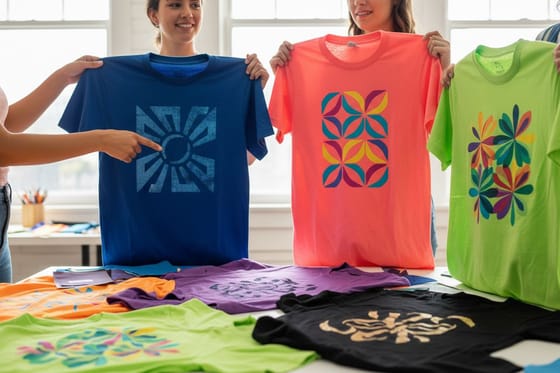
Both methods put your design on a shirt, and from three feet away a good print of either kind looks great. The difference shows up in your wallet, in how the shirt feels, and in how many pieces you need. Pick wrong and you either overpay for a single tee or blow your budget trying to bulk-order the wrong process.
Here is the short version. Heat-transfer vinyl is a colored film cut to your shape and pressed on with heat. Screen printing forces ink through a stencil straight into the cotton. Vinyl loves small, sharp, one-off jobs. Screen printing loves quantity. Everything else in this guide is just the detail behind that one sentence.
If you already know you want a batch of matching tees, jump straight to custom T-Shirt Printing and start a proof. If you are still weighing your options, the sections below walk through color, durability, feel, and cost so the right call is obvious. For the wider view, our roundup of the different types of printing puts these two methods in context with everything else on a press.
What is screen printing?
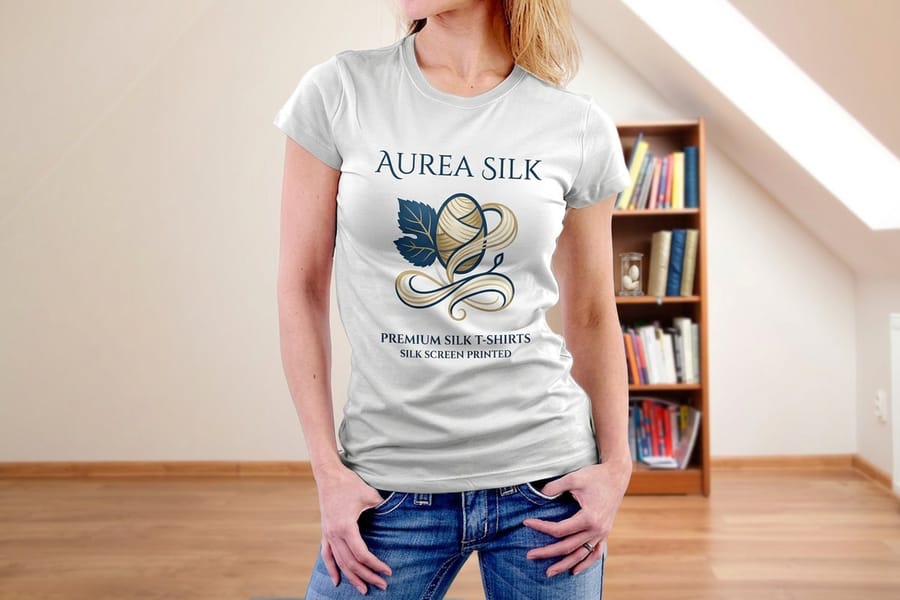
Screen printing, sometimes called silk screening, is the classic t-shirt method you picture when you think of a print shop. A stencil of your design is burned onto a fine mesh screen. Ink gets flooded across the screen and a squeegee pushes it through the open areas onto the fabric. Each color in the design needs its own screen, lined up so the colors register perfectly.
That setup step is why screen printing feels expensive for one or two shirts and cheap for a hundred. Once a screen exists, printing another shirt costs almost nothing, so the price per piece keeps dropping as the run grows. The payoff is a print with rich, opaque color that bonds into the fibers and feels soft, not plasticky. Our silk t-shirts lean on this look for clean, punchy branding.
Screen printing rewards simple, bold artwork with a handful of solid colors. A crisp logo reproduces beautifully. Before you send files, it helps to tidy up the art the way our logo design best practices lay out, because a clean vector shape is exactly what a screen wants.
What is heat-transfer vinyl (HTV)?
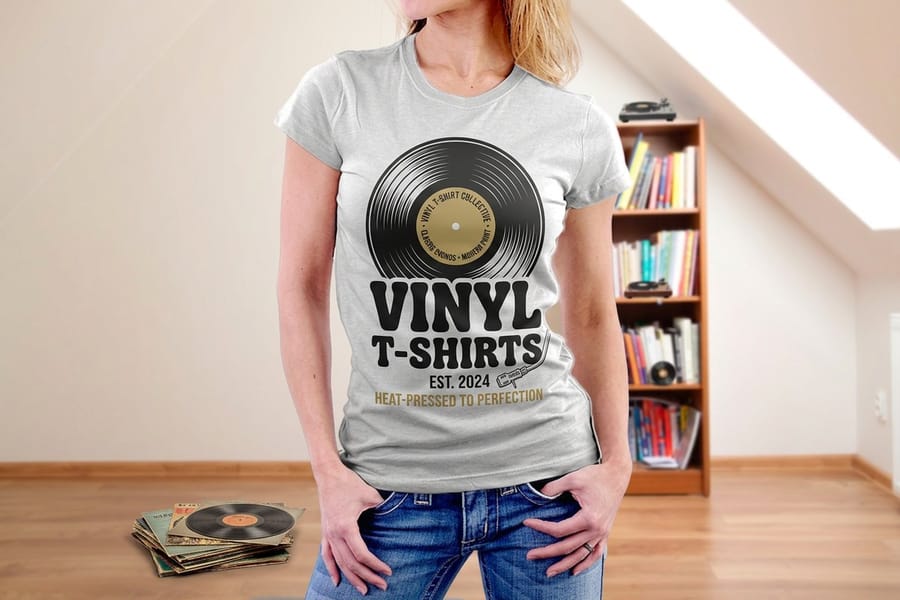
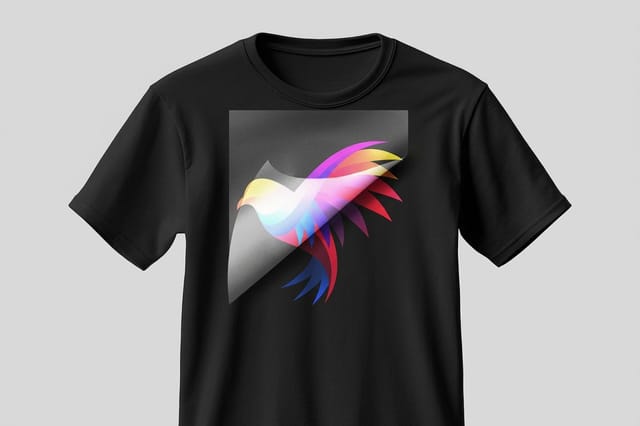
Heat-transfer vinyl is a thin sheet of colored, heat-activated film. A cutter traces your design into the vinyl, you weed away the parts you do not want, and a heat press bonds the remaining shapes onto the shirt. The result is a clean, sharp graphic that sits as a slim layer on the surface of the fabric. For a wall instead of a shirt, Fabric Vinyl Graphics print on a 7 mil low tack wall fabric rather than heat-activated film.
Because there is no screen to burn, vinyl has almost no setup cost. That makes it the go-to for a single custom tee, a short run, or anything that changes shirt to shirt like names and jersey numbers. Our vinyl t-shirts use exactly this process, and the same film also comes on its own as heat activated transfer film if you press in-house. The story on heat activated transfer film shows the film at work before you order a roll of your own.
Vinyl comes in finishes plain ink cannot touch, including matte, gloss, metallic, glitter, and reflective. The tradeoff is that each color is a separate cut layer, so busy multi-color art gets slow and thick fast. Application matters too: a press that is too cool or too brief leaves edges that lift, which is the same reason those vinyl ironing techniques stress firm, even heat.
Color vibrancy and detail: which one wins
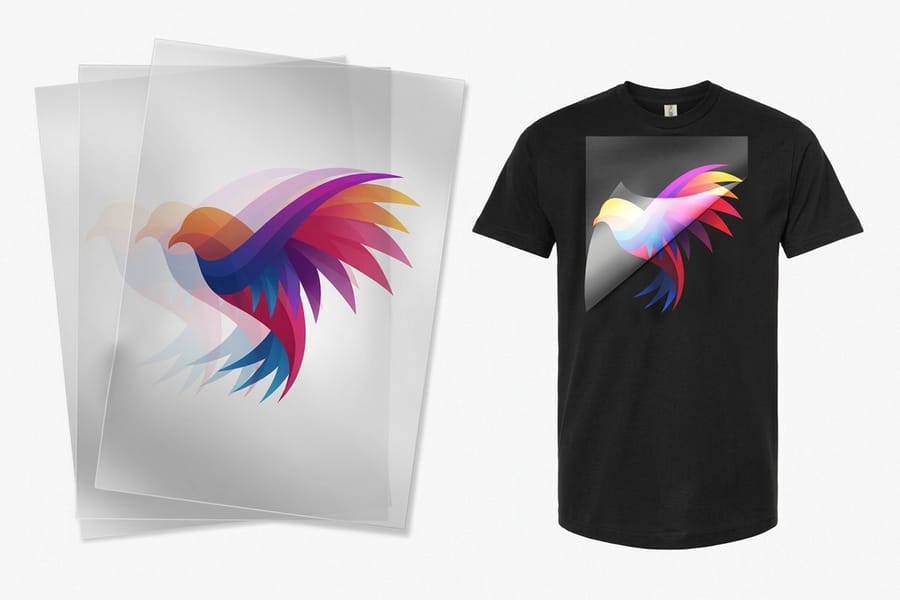
This is where the two methods split hardest, and the deciding factor is how complex your artwork is.
Cut vinyl gives you the sharpest possible edge on a single flat color. Text, thin lines, and geometric logos look razor clean because a blade, not ink, defines the shape. But every color is a separate layer stacked and pressed, so a two-color design is fine, a five-color design is a project, and a photograph is off the table.
Screen printing handles a few spot colors with deep, saturated ink and can push detail further with halftones. For photographic art or heavy gradients, full-color transfer methods pull ahead of both. Whatever route you take, set your file up in the right color space first. Our guide to CMYK vs RGB for printing and the notes on the best color profile for printing keep on-screen color from drifting once it hits fabric.
Rule of thumb: one or two crisp colors, choose vinyl for the edge. Several colors or a photo, choose screen or full-color transfer for the range.
Durability and feel: how each holds up

Feel first, because you notice it the second you put the shirt on. A cured screen print soaks into the cotton and feels soft, almost like it is part of the shirt. Vinyl sits on top as a thin film you can trace with a fingertip. Neither is wrong. Big vinyl graphics feel more present, and some people love that solid, slightly raised finish. Our guide on how to put a logo on cotton, from totes and tees to cotton cards covers the same feel question on other cotton pieces.
On durability, both go the distance when they are made right. Screen ink is bonded into the fibers, so it has no edge to catch and tends to age gracefully, fading slowly rather than peeling. Quality vinyl also lasts for years, but its vulnerable point is the edges, which can lift if the shirt is washed hot or tumble dried on high heat.
The care routine is the same for both and it is simple: turn the shirt inside out, wash cold, and hang dry or tumble on low. Do that and either print outlives the shirt around it. If you are building a full branded kit, the rest of our branded merchandise and heavier premium t-shirts hold a print especially well. The story on premium t-shirts shows the front, back and both sides options before you pick a blank.
Cost and run size: where each method pays off

Cost is really a quantity question, and a simple picture makes it click. Vinyl starts cheap and stays roughly flat because each shirt is cut and pressed one at a time. Screen printing starts high because of the per-color screen setup, then the per-shirt cost falls fast as the run grows and that fixed setup spreads across more pieces.
The two lines cross somewhere around two to three dozen shirts, depending on how many colors your design has. Below that point, order vinyl printing for the low, no-setup price. Above it, batch it as custom T-Shirt Printing and let the per-shirt cost drop. Live per-unit pricing for real quantities sits in the table further down this page, so you can see the curve with actual numbers instead of guessing.
On our custom tee pricing, order size plays out like this. The catalog lists the shirt price by quantity and no separate screen fee, so the right column is where each method tends to land on the page's own break-even rule.
| Order size | Total | Per shirt | Method that usually fits |
|---|---|---|---|
| 1 shirt | $21.96 | $21.96 | Vinyl, a one-off with no setup to spread. |
| 10 shirts | $152.98 | about $15.30 | Vinyl, well under the two dozen line. |
| 25 shirts | $372.21 | about $14.89 | The crossover zone, count your colors. |
| 100 shirts | $1,272.88 | about $12.73 | Screen printing for one matching design. |
| 250 shirts | $2,744.85 | about $10.98 | Screen printing, setup barely registers per piece. |
Feel and wash life do not change with order size. Screen ink soaks into the cotton and fades slowly, and vinyl sits on top and can lift at the edges in a hot wash, so wash either one inside out and cold.
Setup, turnaround, and the small-batch reality
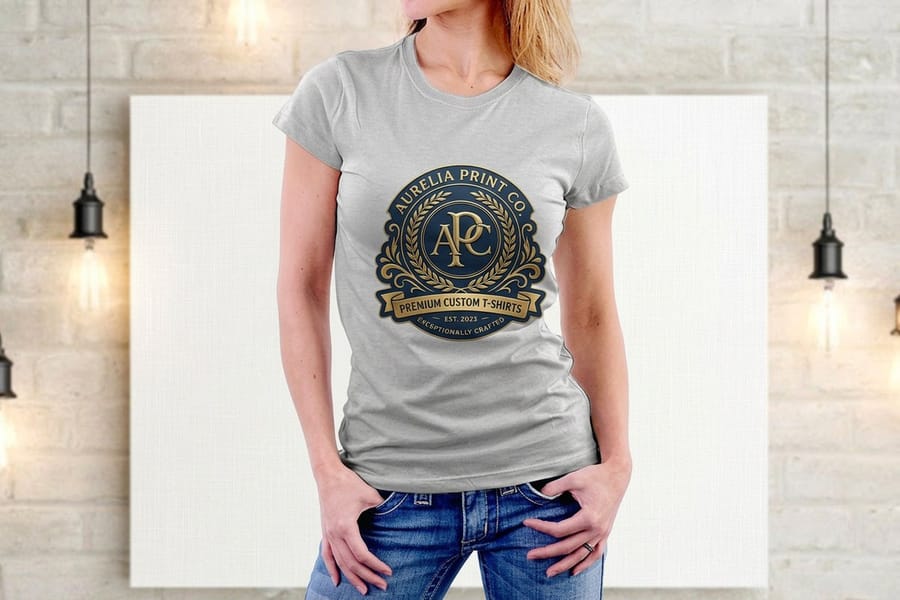
Speed usually tracks setup. Vinyl has none to speak of, so a single shirt or a tiny run can move quickly. Screen printing spends a little more time up front burning and aligning screens, then prints efficiently once it is rolling, which is exactly why it shines on larger orders.
The small-batch reality trips people up most. If you need twelve shirts for a one-time event, screen setup can cost more than the shirts themselves, and vinyl is the smarter buy. If you need two hundred shirts for a store or a team, that same setup barely registers per piece and screen printing pulls clearly ahead. Match the method to the mission and the price takes care of itself.
Whichever way you lean, get the artwork right before production. Build and preview your design in the online designer so what you approve is what presses, and if you want to see how the blank feels first, grab free samples before you commit to a full run.
How to choose: a quick decision guide
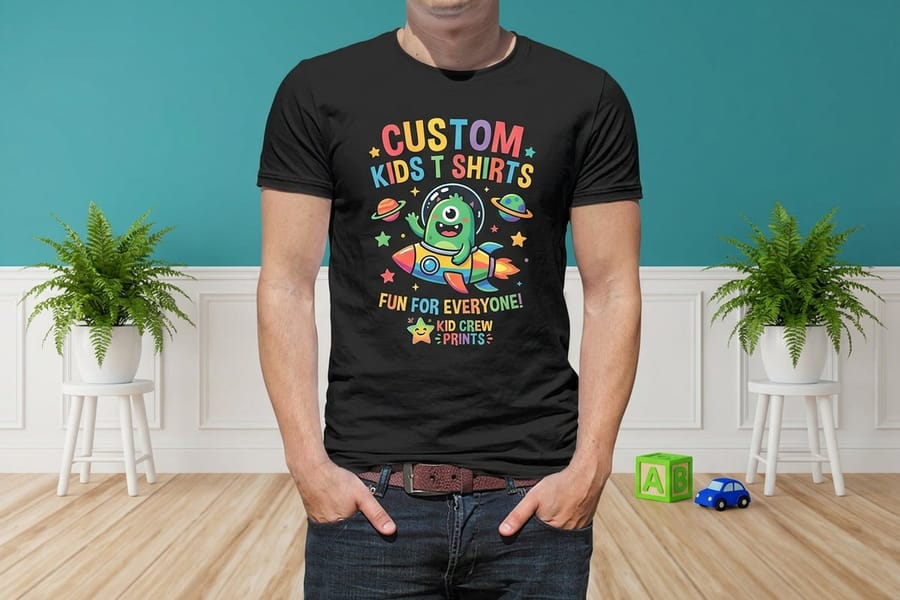
Run through these in order and the answer usually falls out on its own.
- Count your shirts. Under a couple dozen leans vinyl, a couple dozen or more leans screen printing.
- Count your colors. One or two flat colors suit vinyl, several spot colors suit screen, and a photo means full-color transfer.
- Check for personalization. Names, numbers, or anything that changes shirt to shirt is vinyl territory, even on top of a screen-printed base.
- Decide on feel. Want the print to disappear into soft cotton, go screen. Fine with a thin surface layer and special finishes, vinyl is great.
- Weigh the timeline. A rush on a few pieces favors vinyl, a planned bulk order favors screen.
For most everyday orders the sweet spots are clear: personalized or one-off pieces as vinyl t-shirts, and matching batches as custom T-Shirt Printing. Smaller sizes for a family run or a school event work either way with kids t-shirts.
Set side by side, the two methods compare like this.
| Point | Vinyl (HTV) | Screen printing |
|---|---|---|
| Feel | A thin film on top you can trace with a fingertip. | Soft, the ink soaks into the cotton. |
| Durability | Lasts for years, edges can lift in a hot wash. | Bonded into the fibers, fades slowly. |
| Color count | One or two flat colors, each a separate layer. | A few spot colors, one screen each. |
| Detail | Razor clean edges on text and logos, no photos. | Deep saturated ink, halftones for extra detail. |
| Run size | From one shirt, best under about two dozen. | Pays off from about two dozen matching shirts. |
| Turnaround | No screen setup, small orders move fastest. | Screens take prep, then print fast at volume. |
Pick vinyl for a dozen personalized tees with names and numbers. Pick screen printing for two hundred matching shirts with a two or three color logo.
Artwork tips and mistakes to avoid
Most disappointing shirts trace back to the file, not the method. A few habits keep both processes looking sharp.
Send vector art when you can. Logos and text as clean vector shapes cut and screen crisply at any size. For anything with photographic detail, follow our notes on image resolution for printing so it does not turn soft on fabric.
Do not force cut vinyl to do a photo. Stacking many vinyl colors gets thick, stiff, and expensive. Once you are past two or three colors, price out screen or full-color transfer instead.
Mind small text and thin lines on vinyl. Very fine details can be tricky to weed and can lift at the edges. Give letters a little weight so they press clean and stay put.
Do not eyeball placement. Center it, size it, and confirm it on a proof. Starting from a ready-made layout in our design templates takes the guesswork out and keeps every shirt in the batch identical.
Wally explains vinyl vs screen
Right method, right run size, every time
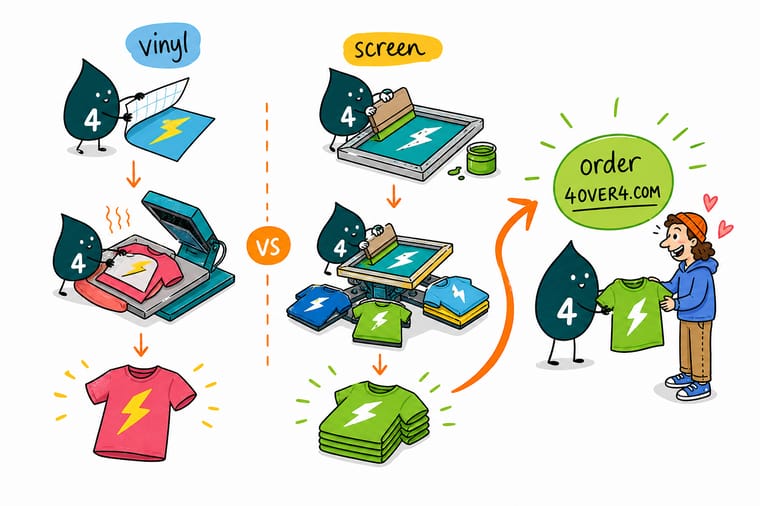
Wally thinks of it like tools in a bag: vinyl is the sharp knife for one-off cuts and names, screen printing is the stamp that pays off once you make a hundred. Count your shirts and your colors, and the answer picks itself. A dozen personalized tees, go vinyl. Two hundred matching ones, go screen. Either way, 4OVER4 prints both in-house so you never have to force the wrong process to fit the job.
Start your t-shirt order →
Specs and pricing
Custom t-shirt specs and live pricing
Once you have picked a method, here is what a real custom tee gives you at 4OVER4.COM: white or black shirts in S to XXL, an 8.5 x 11 inch print area, and full color on the front, the back or both sides. One shirt costs $21.96 and 100 cost $1,272.88, with live specs and price-per-unit pulled straight from the configurator so you can watch the per-shirt cost drop as the quantity climbs.

| Quantity | Price Per Unit | Total |
|---|---|---|
| 1 | $21.96 | $21.96 |
| 2 | $16.47 | $32.93 |
| 3 | $16.46 | $49.39 |
| 4 | $15.93 | $63.71 |
| 5 | $15.93 | $79.63 |
| 6 | $15.93 | $95.56 |
| 7 | $15.85 | $110.94 |
| 8 | $15.38 | $123.02 |
Print it
Shirts and transfer film to print your design on
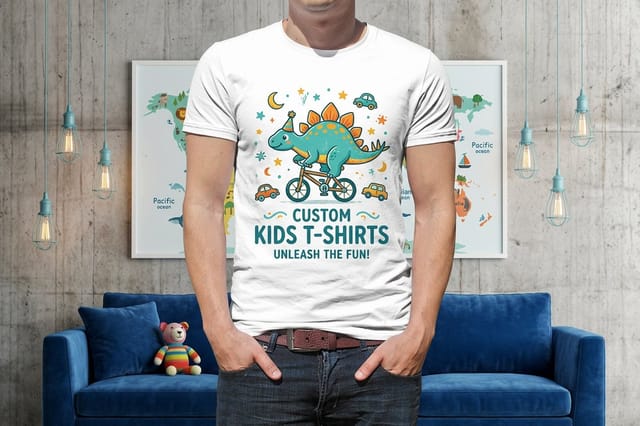
Kids t-shirts and silk t-shirts both start at $21.96 for one shirt, in white or black, S to XXL, with an 8.5 x 11 inch print area. Heat activated transfer film starts at $19 at any size if you would rather press the design yourself.
See it in use
Custom shirts we printed for customers
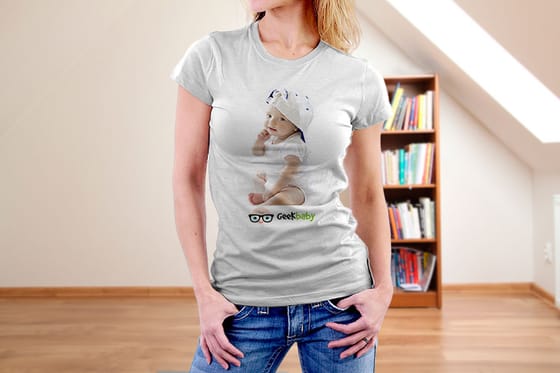

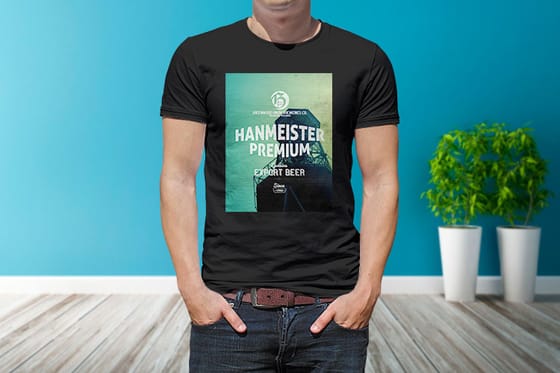
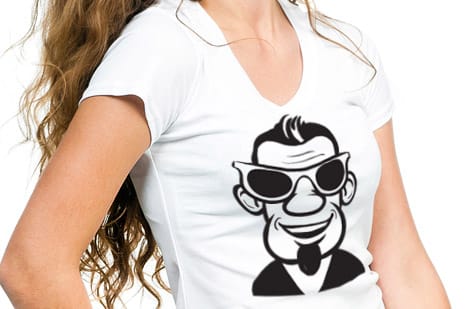

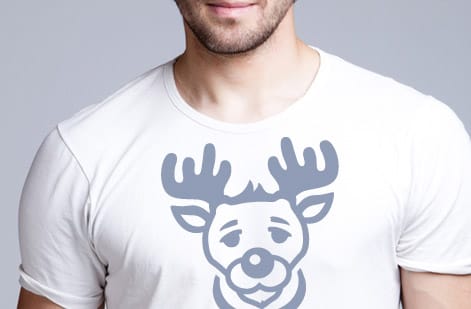

Explore more
Where to go next
By the numbers
Materials and products behind a custom shirt
Common Questions
Common questions about vinyl vs screen printing
What is the difference between screen printing and vinyl on a t-shirt?
Screen printing pushes ink through a fine mesh stencil directly into the fabric, so the design becomes part of the shirt and feels soft. Heat-transfer vinyl (HTV) is a thin colored film that a machine cuts into your shapes and a heat press bonds onto the surface, so the design sits on top of the fabric. Screen printing is built for repeating the same art many times, while vinyl is built for fast, sharp, one-off pieces.
Which lasts longer in the wash, screen printing or vinyl?
A properly cured screen print usually has the edge over the long haul because the ink is bonded into the fibers and has nothing to peel. Quality heat-transfer vinyl also lasts for years when it is pressed correctly, but its weak point is the edges, which can lift if the shirt is washed hot or tumble dried on high. For either method, turn the shirt inside out, wash cold, and hang dry or use low heat.
Is vinyl or screen printing cheaper for custom shirts?
It depends entirely on quantity. Vinyl is cheaper for one shirt or a handful because there is almost no setup cost. Screen printing carries a setup charge for burning a screen per color, so small runs feel expensive, but the per-shirt price falls sharply as the order grows. Somewhere around two to three dozen shirts the lines cross and screen printing becomes the better value.
Which method is better for a design with many colors or a photo?
For a photo, a gradient, or artwork with lots of colors, skip standard cut vinyl. It works one flat color at a time and gets slow and pricey once you stack colors. Screen printing handles a few spot colors well, and full-color heat-transfer methods reproduce photographic art cleanly. Reserve cut vinyl for bold one and two-color logos, names, and numbers where the crisp edge is the whole point.
Can I mix vinyl and screen printing on the same shirt?
Yes, and it is common. A team might screen print the main logo across a large batch, then add each player name and number in cut vinyl so every shirt is personalized without a new screen. It gives you the low bulk cost of screen printing plus the flexibility of vinyl for the parts that change from shirt to shirt.
How long does each method take to print and ship?
Both are quick once artwork is approved. Vinyl skips screen setup, so very small orders can move fastest. Larger screen-printed runs take a little longer to prep but print efficiently at volume. Order early enough to allow for proofing and standard production, and if you are unsure, build your file in the 4OVER4.COM online designer so it is press-ready the moment you check out.
Get Started
Ready to print your shirts?
Pick the method that fits your run, drop in your design, and we press a tee that looks sharp and holds up wash after wash.
Legal Disclaimer
Gold Standard guarantees apply to all standard orders placed through 4over4.com. Price match requires verifiable proof of a competitor's published price for an equivalent product with matching specifications and turnaround time. Satisfaction guarantee covers manufacturing defects and print quality issues. Contact support with order number and documentation.
