
What Are Canvas Prints and How Are They Made?


A canvas print is your image printed on woven canvas and stretched over a wooden frame, ready to hang with no glass and no extra framing. The wrap style decides what happens at the edges, and it is the choice people regret most.
Canvas prints are high-resolution images printed directly onto poly-cotton canvas, then stretched over a kiln-dried wooden frame. They turn photos, artwork, and designs into gallery-ready wall decor without the cost of traditional framing. Printed with archival pigment inks and finished with a UV coating, a quality canvas print holds its color for 75 to 100 years indoors. Price tracks size, from about $20 for small prints to $200 and up for large statement pieces.

Definition
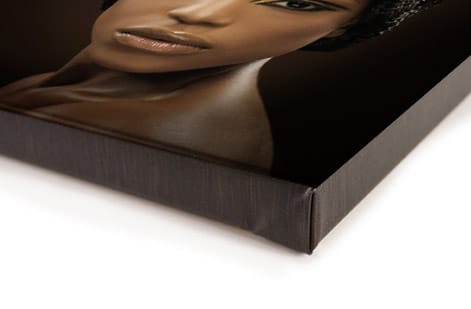
A canvas print is a high-resolution photo or artwork printed onto woven poly-cotton canvas with archival pigment inks, then stretched over a wooden stretcher-bar frame and hung on the wall with no glass in front of it. Gallery wrap is the standard finish: the image continues around the edges of the frame, so the piece reads as finished from every angle.
Sizes run from 8x10 up to 36x48 and larger, so match the print to the wall before you match it to the budget. See 16x20 premium canvas prints for the usual single-wall piece, or square canvas prints when you want a grid of matching panels.
Quick answer
Canvas, stretcher bars, and the wrap
A canvas print is a high-resolution image printed onto poly-cotton canvas and stretched over a wooden frame. It hangs like gallery art with no glass, no glare, and no separate framing. Printers use archival pigment inks and a gallery, mirror, or solid color wrap, then add a UV coating so the print holds its color for 75 to 100 years indoors. Size drives the price, from about $20 for small prints to $200 and up for large statement pieces at 4OVER4.COM.
What are canvas prints?
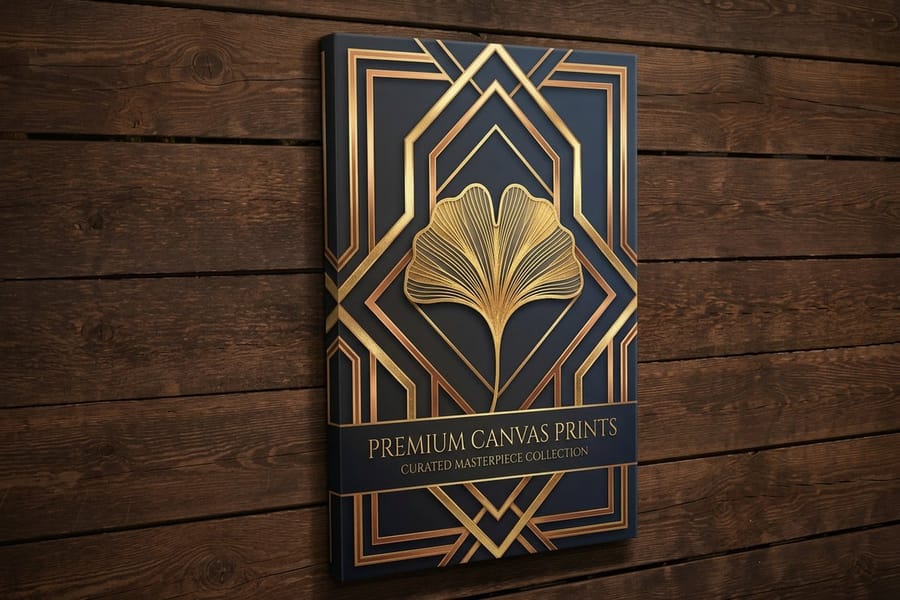
A canvas print is a high-resolution image printed straight onto canvas fabric, then stretched over a wooden frame so it hangs like a piece of gallery art. Instead of a photo behind glass, you get the picture on a woven poly-cotton surface with real texture and no glare. The result reads as finished wall decor the moment it comes out of the box.
People reach for canvas because it turns a phone photo, a piece of artwork, or a brand design into something worth hanging, and it does that without the cost of custom framing. 4OVER4.COM has printed for 150,000+ businesses and families across 25+ years, and canvas stays a favorite for offices, galleries, retail walls, and living rooms alike.
Want to design one from scratch? Build your layout in the browser with the 4OVER4.COM online designer, start from the design templates library, or browse the full canvas printing collection to see every size and wrap in one place.
The anatomy of a canvas print
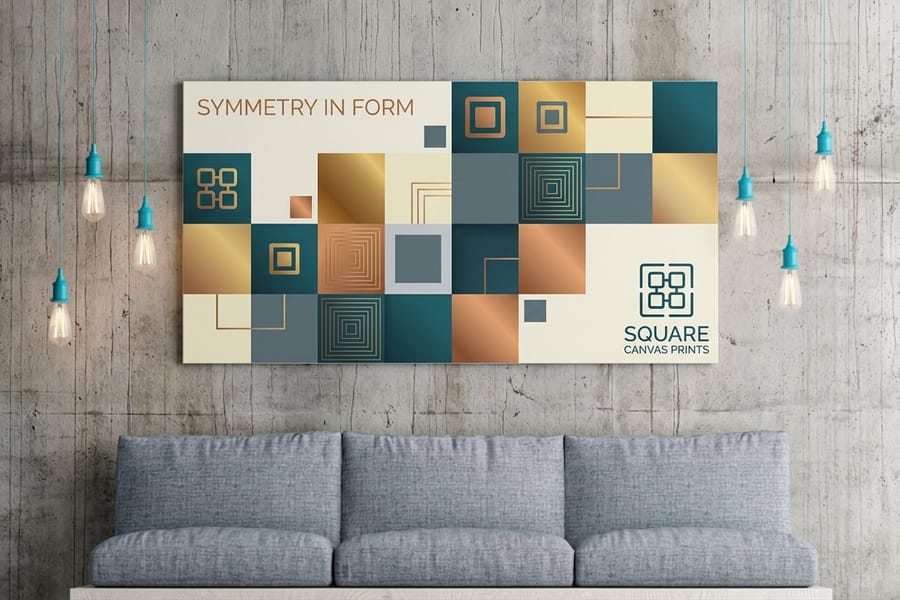
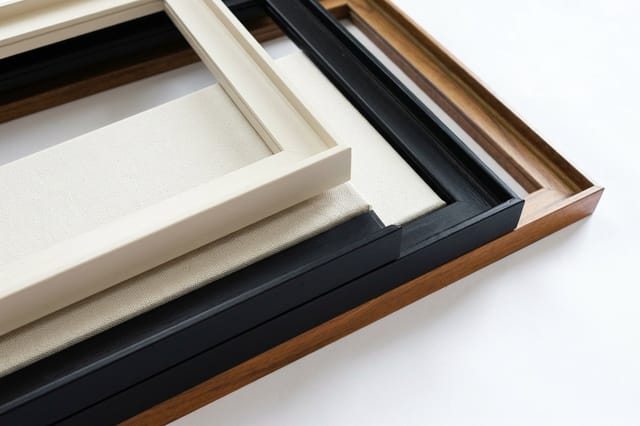
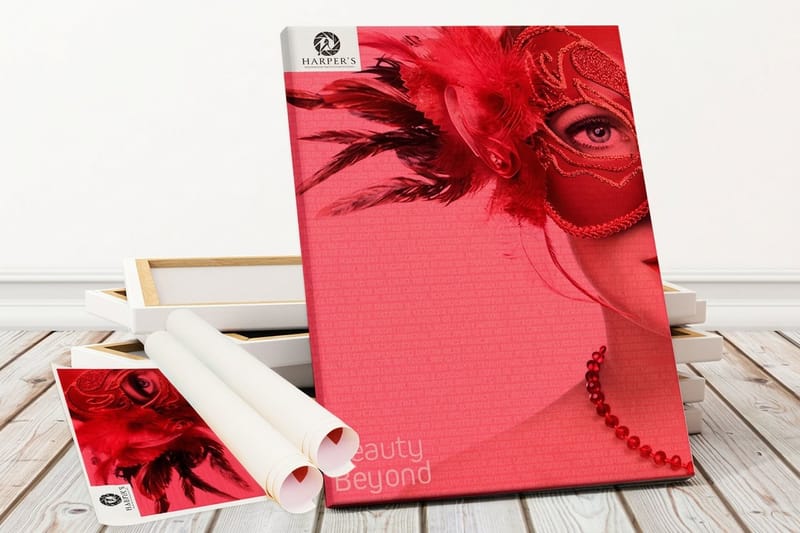
Every canvas print has three parts. The printed canvas is the surface you see, usually a poly-cotton blend woven tight enough for sharp detail but textured enough to keep that painted look. Underneath sit the stretcher bars, the wooden frame that holds the fabric drum-tight and gives the piece its shape.
Stretcher bars are almost always kiln-dried pine or a similar lightweight wood that resists warping over the years. The canvas wraps around these bars and staples to the back, so the front face stays clean and unbroken. The third part is the hanging hardware, a sawtooth hanger or wire, and it comes pre-attached. You pull the print out of the box and put it on the wall, no trip to a frame shop required.
How are canvas prints made?
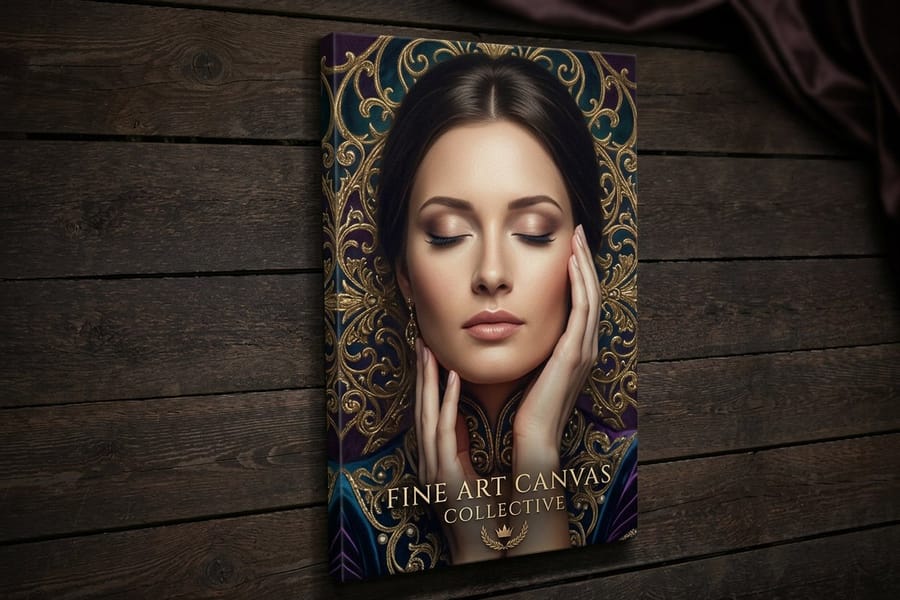
The process starts with your image file. A high-resolution file, ideally 300 DPI at the final print size and never below 150 DPI, gets color-corrected and prepared for print. This step matters more than most people expect, because a file that looks crisp on a phone can turn muddy or pixelated blown up to 24x36 inches.
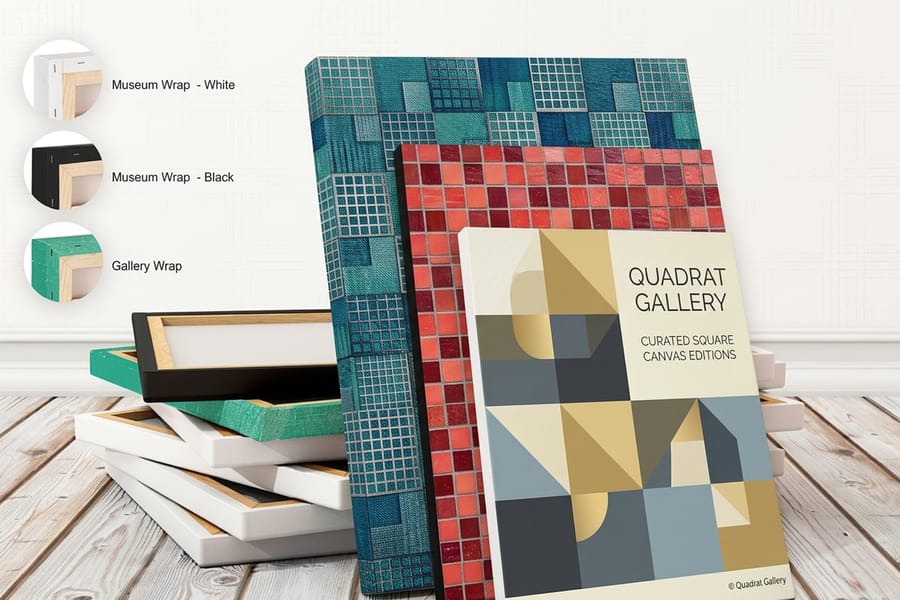
Next comes the printing itself. Modern canvas runs through large-format inkjet printers loaded with archival, pigment-based inks that resist fading from UV light and moisture. A well-made canvas print can hold its color for 75 to 100 years indoors and away from direct sun. After printing, the canvas dries and cures, then gets stretched over the wooden frame using one of three wrap styles:
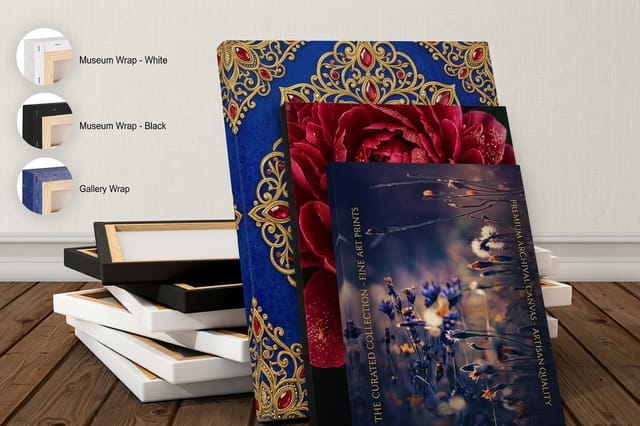
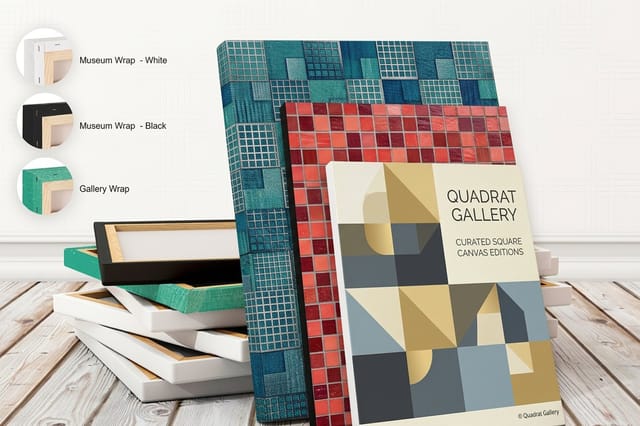
- Gallery wrap continues the image around the edges of the frame for a finished look from every angle. It is the most popular choice.
- Mirror wrap reflects the edge pixels around the sides, so no part of the original image is lost on the front face.
- Solid color wrap keeps the sides a single color, usually black or white, leaving the full image visible on the front.
Finally, many prints get a protective coating, a UV-resistant laminate or varnish that guards against scratches, moisture, and fading. That one step is what separates a canvas that lasts decades from one that looks rough within a year. Curious how other print jobs come together? The 4OVER4.COM guide hub covers dozens of related topics.
Canvas print sizes and where they work best
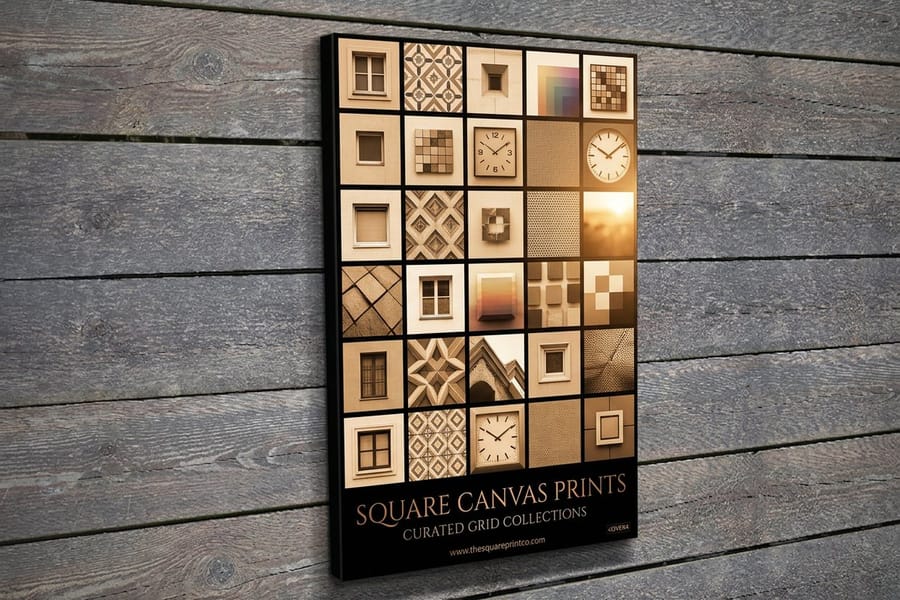
Canvas sizes run from 8x10 up past 36x48, and the right one depends on the wall and the effect you want.
- Small, 8x10 to 12x16 inches. Perfect for desks, shelves, bathroom walls, and gallery-wall groupings where you cluster several prints together. This is also the most affordable place to start.
- Medium, 16x20 to 24x36 inches. The sweet spot for living rooms, bedrooms, and office lobbies. A single 24x36 canvas makes a strong statement above a couch or behind a reception desk.
- Large, 36x48 inches and up. Statement pieces for big walls, conference rooms, restaurants, and retail spaces. At this size source resolution becomes critical, so start from a file that can handle the enlargement without going soft.
Multi-panel sets, where one image splits across two, three, or more separate canvases, create a dramatic panoramic effect that suits landscape photography and abstract art. Just make sure the wall has enough uninterrupted space before you order. Ready-made options like premium canvas prints and square canvas prints cover most of these sizes out of the box.
How much are canvas prints?
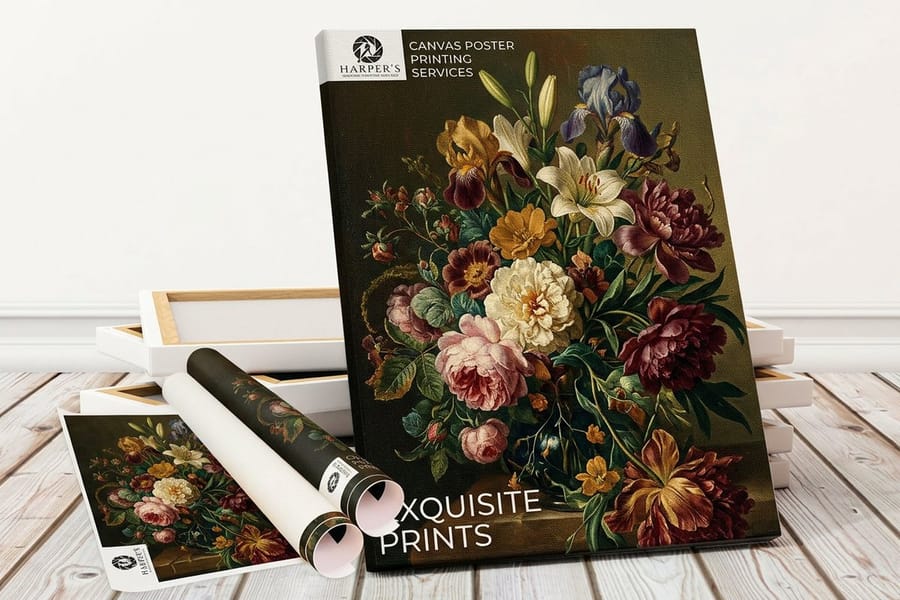
Price depends on size, canvas material, and extras like protective coatings or rush production, but size is by far the biggest factor. A general range, to set expectations. Small canvas prints, 8x10 through 12x16, usually start around $20 to $40. Medium sizes, 16x20 through 24x36, run $40 to $80. Large and extra-large prints, 36x48 and up, land anywhere from $80 to $200 and up. Multi-panel sets cost more because you are essentially ordering several prints at once. That figure is the finished piece on the wall: no frame to buy, no glass to cut, no matting and no trip to a framing shop, which is the honest answer to whether a canvas is worth it against a framed photo.
Doubling the dimensions roughly quadruples the canvas area, so costs climb fast as prints get bigger. Going from 12x16 to 24x36 is not a small step up, it is a different piece of fabric and a bigger set of stretcher bars. UV coatings and premium canvas add only a modest upcharge while extending the life of the print dramatically, and on a print rated 75 to 100 years indoors that is the cheapest money on the order. Bulk orders, say a photographer printing 20 pieces for a show or a hotel decorating 50 rooms, usually earn volume discounts, so it is worth asking about quantity pricing on larger runs. For another high-impact, budget-friendly print, take a look at 3D lenticular postcards.
Who uses canvas prints, and why
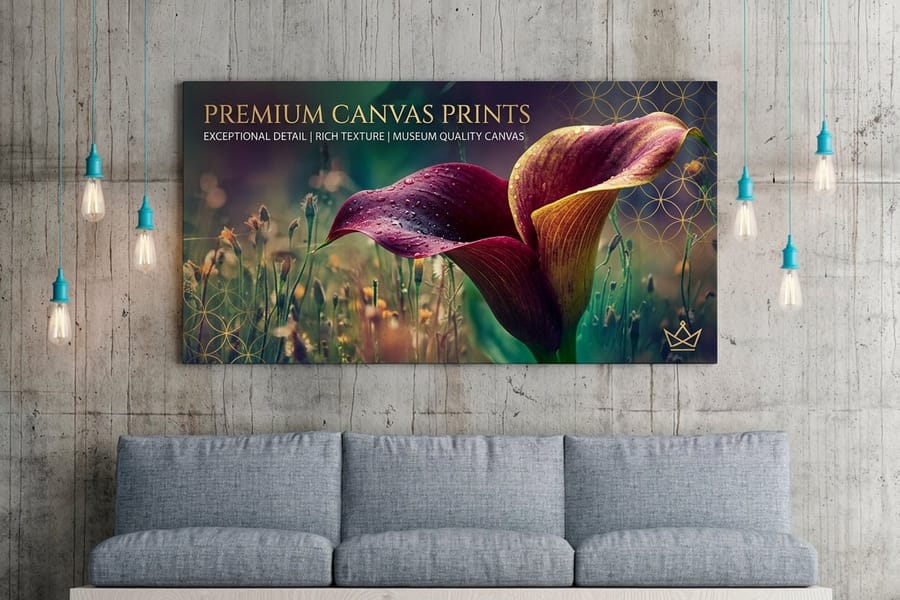
Photographers use canvas prints to sell their work, because a stretched canvas commands a higher price than a flat print in a sleeve and the presentation matches the quality of the image. Interior designers lean on canvas to fill wall space with custom art that matches a room palette, faster and cheaper than commissioning an original painting.
Restaurants and cafes hang oversized canvas prints to set a mood with food photography, local scenery, or abstract art, and a proper coating holds up well in humid rooms. Real estate agents gift a canvas of the new home to buyers at closing, a personal touch under $50 that earns referrals for years. Agents building out their marketing can pair it with the 4OVER4.COM how to make flyers guide for another high-impact piece.
Families turn vacation photos, wedding portraits, and kids artwork into canvas, the most popular way to get pictures off a phone and onto a wall. And corporate offices use canvas for branded wall art, mission statements, and team photos that look polished without the fragility of glass in high-traffic areas.
Whatever the job, the file decides the result. A sharp original that still measures 150 DPI at the finished size prints clean at any of these sizes, and no canvas grade or coating rescues a soft one, so start from the largest version of the image you have.
Canvas prints vs other wall art
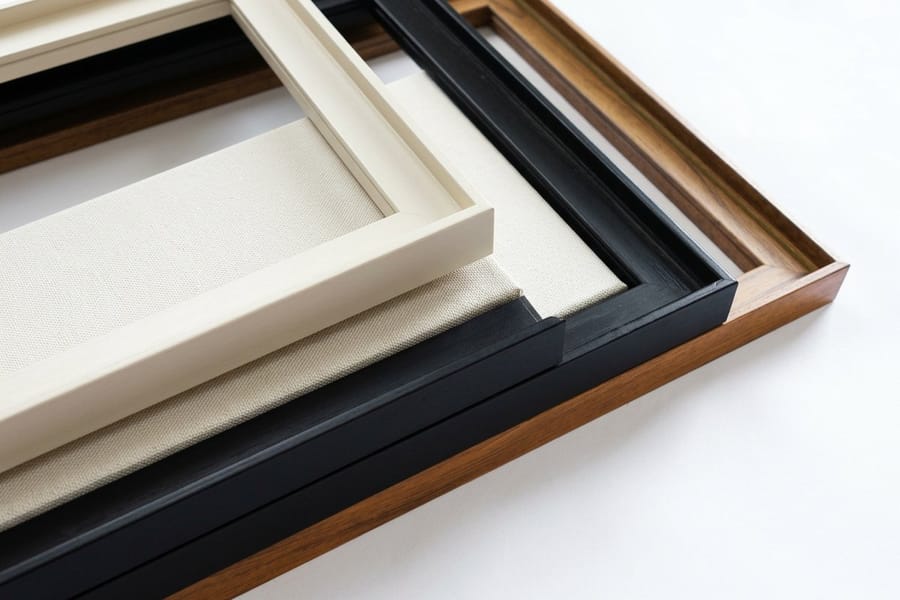
How does canvas stack up against the alternatives? Versus framed paper prints, canvas is lighter, needs no glass, so there is no glare and nothing to shatter, and it brings that textured gallery feel. Framed prints look more formal and suit fine-art reproductions where you want zero texture. Versus metal prints, canvas is warmer and more traditional and fits a wider range of interiors, while metal is ultra-modern, glossy, heavier, and pricier at large sizes.
Versus acrylic prints, canvas is more forgiving and versatile, where acrylic gives a sleek, backlit depth but costs more and shows fingerprints. Versus posters, there is no contest on longevity, because posters curl, tear, and fade while canvas stays rigid and professional from day one. If you are weighing every format, the sibling guide on metal and acrylic prints goes deeper, and you can also read up on how to fold a brochure or how to make envelopes for other print projects.
Preparing your image for canvas printing
The single biggest factor in canvas quality is your source image, so it pays to get the file right before you order. A few rules cover most jobs.
- Resolution matters most. Aim for 300 DPI at the final print size, and never drop below 150 DPI or pixelation shows up close.
- Use RGB color mode for most canvas printers rather than the CMYK used in offset printing, and check your printer specs to be sure.
- Leave room at the edges. On a gallery wrap the outer edge of the image wraps around the frame, so keep faces, text, and key details at least 1.5 inches in from the edge.
- Sharpen last. When you enlarge a photo, apply sharpening as the final step, since over-sharpening creates halos and artifacts.
- Watch your blacks. Canvas texture can make dark areas look muddy, so lifting the shadows slightly keeps detail in the darkest regions.
Not sure your file is ready? The same prep principles apply across products, and the 4OVER4.COM guide on how to make custom magnets walks through file setup in another format.
Mistakes that ruin canvas prints
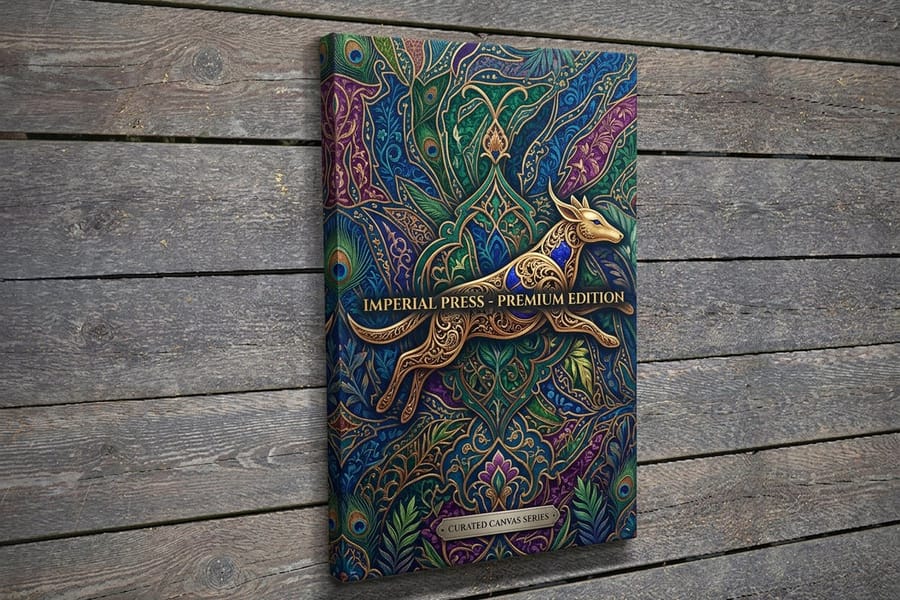
Using low-resolution images is the number one killer. That photo looks great on a phone screen, but blown up to 24x36 inches it turns into a blurry mess, so always check your file dimensions before you order. Forgetting about the wrap is a close second, because on a gallery wrap the outer inch or so of the image folds around the frame, and people lose faces, cut off text, and chop key details when they forget to plan for it.
Skipping the protective coating saves a few dollars now and costs you the whole print later, since UV coatings and varnishes prevent fading, moisture damage, and scratches. Hanging in direct sunlight speeds up fading no matter how good the coating is, so choose a wall with indirect light. And ordering the wrong size leaves an awkward gap, so 4OVER4.COM recommends measuring the wall first, then choosing a canvas that fills roughly two-thirds to three-quarters of the space above your furniture.
Print products that pair with canvas
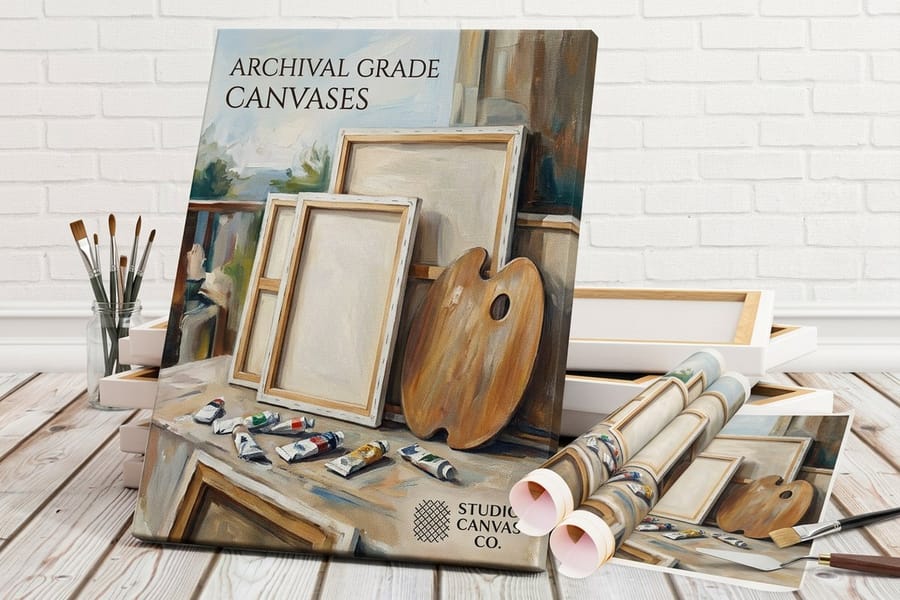
Once canvas is on the wall, it is worth rounding out the look. 4OVER4.COM carries 1,000+ products that pair naturally with canvas art, from branded signage for a retail wall to matching stationery for a studio. If you are a business owner testing our print quality for the first time, order a set of free business cards to match the professional feel your new canvas creates, a zero-risk way to see the quality firsthand.
Prefer to see canvas in the wild before you commit? Browse real customer work in the canvas printing collection, or grab free paper samples to feel the material in your hands.
Wally explains canvas prints
A photo on canvas is a photo you finally hang
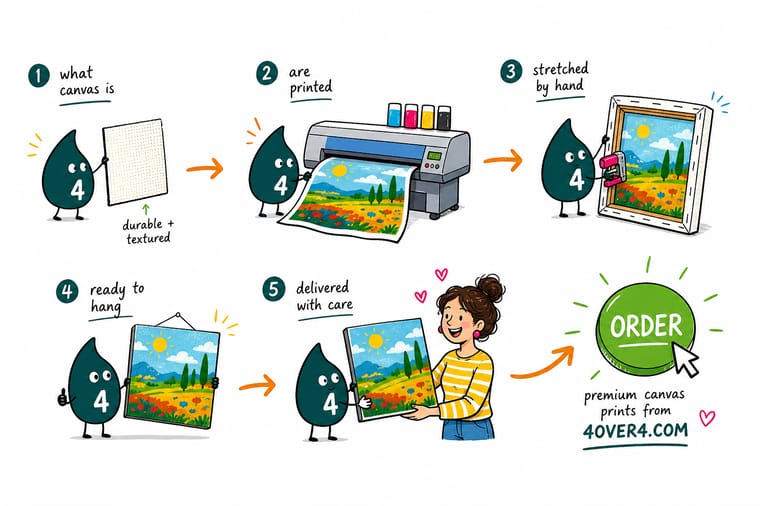
Wally thinks of a canvas print as a photo that finally makes it out of your phone and onto a wall. Print it big on woven canvas, wrap it around a sturdy frame, add a UV coat, and it hangs like gallery art with no glass and no glare. Match the size to your wall, start from a sharp high-resolution file, and 4OVER4.COM turns the image into a piece that lasts for decades.
Order canvas prints →Print it
Order canvas prints at 4OVER4
From premium gallery wraps to square and framed canvas, here are the options 4OVER4.COM customers reach for most, with live pricing straight from the configurator.
See it in use
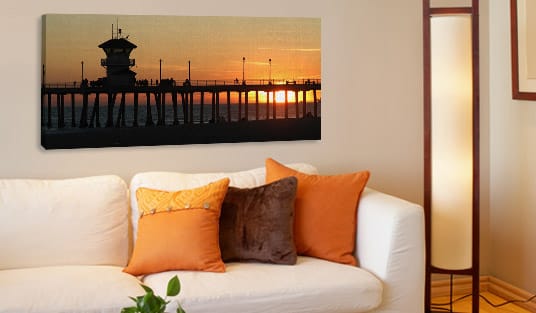
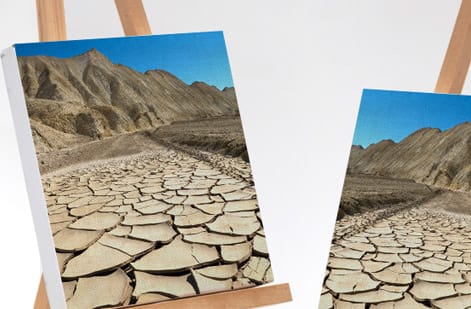
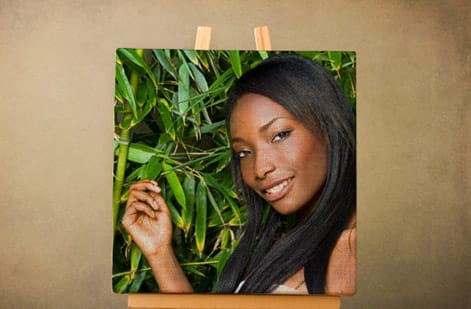
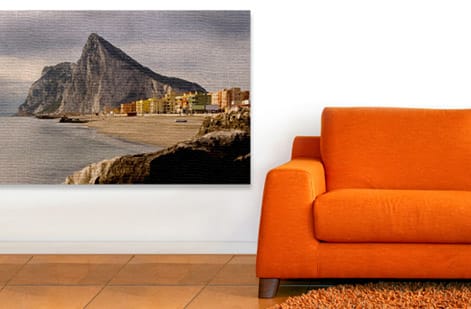
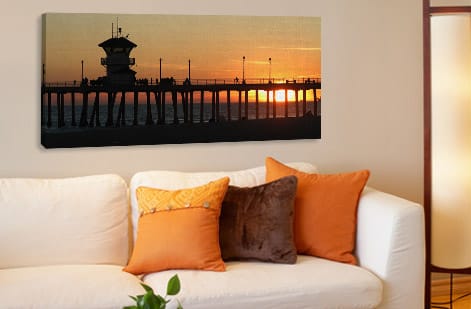
Canvas work we printed for customers
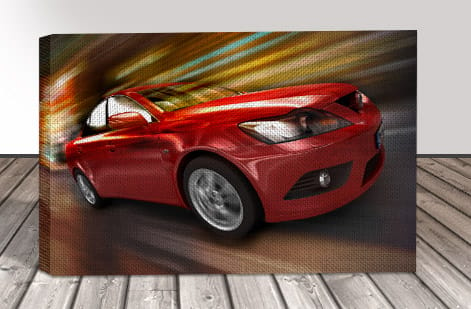
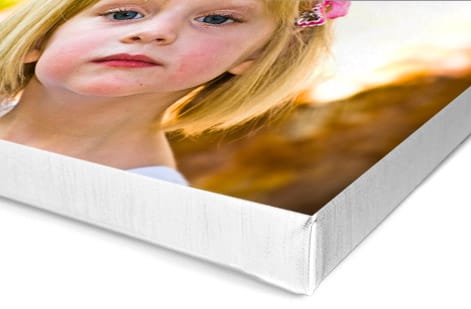
Explore more
Where to go next
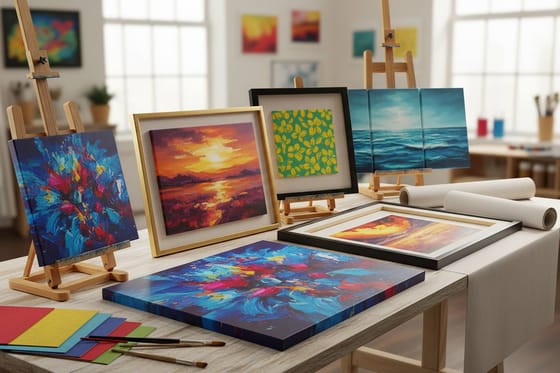
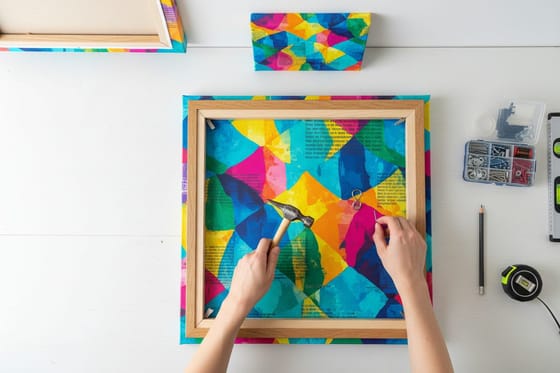
By the numbers
Twenty five years of stretching canvas
Common Questions
Common questions about canvas prints
What are canvas prints?
A canvas print is a high-resolution image printed onto woven poly-cotton canvas and stretched over a wooden stretcher-bar frame, so it hangs like gallery art with no glass and no glare. Archival pigment inks and a UV coating hold the color for 75 to 100 years indoors. Gallery wrap, where the image continues around the edges of the frame, is the standard finish and the reason a canvas needs no separate framing.
Are canvas prints worth it?
For wall art you plan to keep, yes. The price is the finished piece: no frame to buy, no glass to cut, no matting and no framing shop, so a small 8x10 to 12x16 canvas at $20 to $40 goes straight on the wall. A UV-coated print holds its color 75 to 100 years indoors, it is lighter than a framed photo, it will not shatter if it gets knocked, and it shows no glare under downlights, which is why restaurants, offices and real estate agents use it. If you want matting and a formal, traditional look, a framed photo is the better buy.
What are canvas prints made of?
Canvas prints use a poly-cotton or 100 percent cotton fabric stretched over a wooden stretcher-bar frame. The image is printed with archival pigment inks on a large-format inkjet printer. Most quality canvas prints also include a protective UV coating to prevent fading and scratching over time. The poly-cotton blend is the everyday choice of the two: it holds tension on the bars without sagging and takes ink evenly, while 100 percent cotton has the finer weave photographers prefer for fine-art reproduction. The wrap style, gallery, mirror or solid color, decides what happens at the edges once the fabric goes around the bars.
How are canvas prints made step by step?
First your image file is color-corrected and sized for the canvas. Then it is printed onto canvas material with archival inkjet inks. After the print dries, the canvas is stretched over a wooden frame using one of three wrap styles, gallery, mirror, or solid color. Finally a protective coating is applied for durability. Pick the wrap style before you send the file, because a gallery wrap borrows image from every side to cover the frame edge, so keep faces, signatures and text away from the outer border. Ink needs to dry fully before stretching, otherwise the fabric marks where it is pulled around the corners.
How much are canvas prints typically?
Small canvas prints from 8x10 to 12x16 generally cost $20 to $40. Medium sizes from 16x20 to 24x36 run $40 to $80. Large prints of 36x48 and up range from $80 to $200 and beyond. Price depends on size, canvas quality, protective coatings, and turnaround speed, and volume orders usually earn discounts. Doubling the dimensions roughly quadruples the canvas area, which is why the jump from 12x16 to 24x36 costs far more than the sizes suggest, and multi-panel sets price as several prints because that is what they are.
How long do canvas prints last?
With archival inks and a UV-protective coating, canvas prints can last 75 to 100 years indoors without noticeable fading. Keep them out of direct sunlight and away from high humidity for the best results. Uncoated prints in sunny spots may start to fade within a few years. Direct sun is the fastest way to lose color, so the wall opposite a bright window is safer than the wall beside it, and rooms that swing between damp and dry, bathrooms and unheated spaces, slowly loosen the stretch on the bars.
Can you make canvas prints from phone photos?
Yes, but resolution matters. Modern smartphones shoot at 12 to 48 megapixels or more, which is enough for canvas prints up to about 20x30 inches. For larger sizes, check that your image is at least 150 DPI at the final print dimensions and avoid heavy cropping, which reduces usable resolution. The arithmetic is simple: at 150 DPI a 20 inch wide print needs 3000 pixels across. Send the original file rather than a copy that has been through a messaging app, shoot in the highest resolution mode, and skip digital zoom, which crops rather than magnifies.
What is the difference between gallery wrap and standard canvas?
Gallery wrap means the image continues around the edges of the frame, so you see the picture from every angle. Standard or plain canvas prints have white or stapled edges that usually need a separate frame. Gallery wrap is the more popular choice because it looks finished right out of the box. Gallery wrap does want room at the edges of the image, so a tight crop with a head or a sign near the border is better served by mirror wrap, which flips a strip of the picture around the sides, or by a solid color wrap that keeps the whole image on the face.
Are canvas prints better than framed photos?
It depends on your style. Canvas prints are lighter, have no glass glare, and will not shatter if bumped. Framed photos offer a more traditional, formal look and can include matting for extra depth. For high-traffic spaces like offices or restaurants, canvas prints are often the safer, more practical choice.
Get Started
Print a wrapped canvas that hangs straight out of the box
Pick your size and wrap, upload your art, and we print a vivid, sturdy canvas that hangs gallery-ready right out of the box.
Legal Disclaimer
Gold Standard guarantees apply to all standard orders placed through 4over4.com. Price match requires verifiable proof of a competitor's published price for an equivalent product with matching specifications and turnaround time. Satisfaction guarantee covers manufacturing defects and print quality issues. Contact support with order number and documentation. On-time delivery rate based on tracked orders 1999 to 2026. Individual results may vary based on shipping carrier performance.
