Brochure Basics You Should Know
A brochure is a folded printed document used to share information about a business, product, service, or event. It's one of the most versatile marketing tools in print. Brochures come in multiple fold styles - bi-fold, tri-fold, gate fold, and more. They pack a lot of content into a compact, hand-friendly format. 4OVER4 has helped 150,000+ businesses create brochures that actually get read, backed by 10,000+ reviews from satisfied customers.
Brochures
Starting from $57.11
Free Design Templates:
So, What Is a Brochure Exactly?
If you've ever picked up a folded piece of paper at a hotel lobby, doctor's office, or trade show booth, you already know what a brochure is. It's a single sheet of paper, printed on both sides, then folded into panels that organize your message into digestible sections. Think of it as a mini magazine for your brand.
"Direct Mail Brochures /5"
| Quantity | Price Per Unit |
|---|---|
| 500 | $0.48 |
| 2,000 | $0.17 |
| 8,000 | $0.10 |
| 25,000 | $0.07 |
Ink Color
Finish
Folding
Scoring
Proof Options
Brochures work because they're tangible. People hold them, flip through them, and keep them. That's something a social media ad can't do. Whether you're promoting a new menu, listing real estate properties, or explaining your services, a well-designed brochure does the heavy lifting. Every order from 4OVER4 is backed by our 5 Gold Guarantees, so your print arrives exactly as expected.
"Brochures /5"
Ink Color
Finish
Folding
Scoring
Perforation
Proof Options
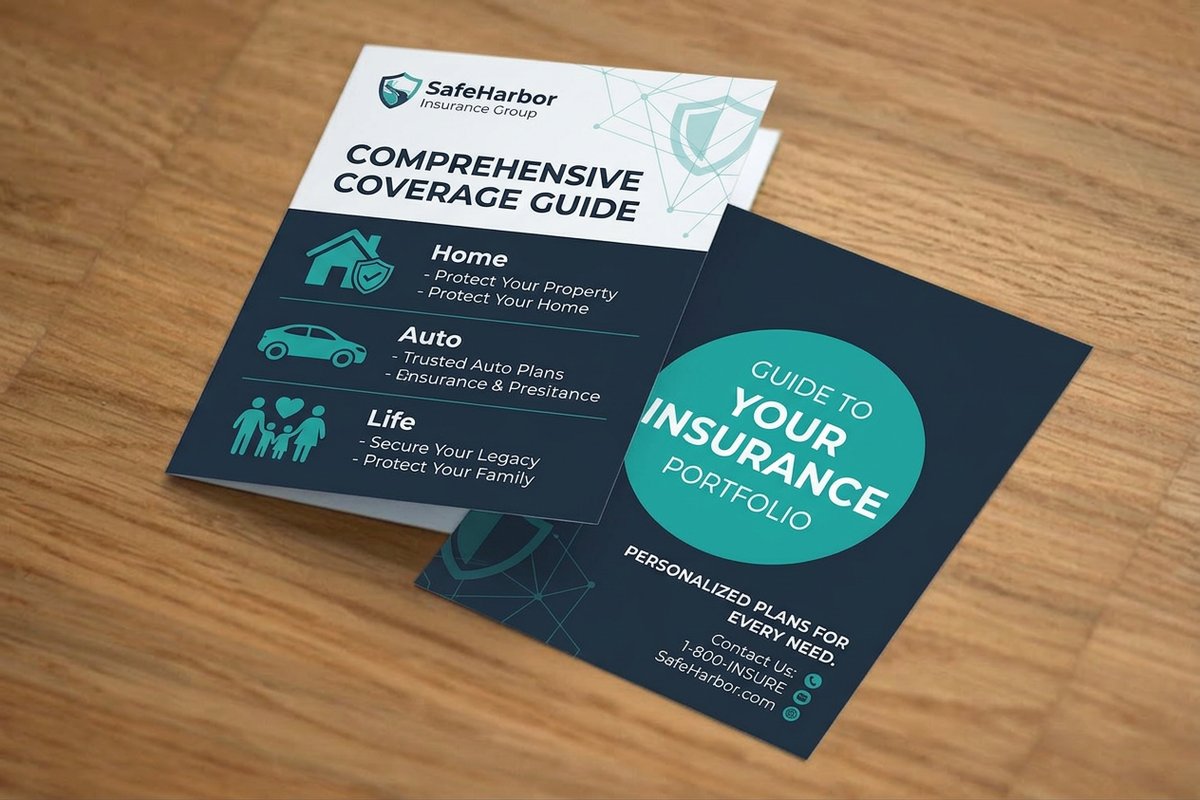
Not sure which fold style works best for your project? Our guide on How To Fold A Brochure breaks down every option. Below you'll find popular brochure products to get you started.
Brochure Types, Uses, and Design Tips That Actually Help
What Makes a Brochure Different from a Flyer or Pamphlet?
People mix these up all the time. A flyer is a single, unfolded sheet - great for quick announcements. A pamphlet is usually a small booklet with multiple pages stapled together. A brochure sits right in the middle. It's one sheet, printed on both sides, and folded into panels. That fold is what separates it from everything else.
The fold creates a natural reading flow. You control what the reader sees first (the cover panel), what they discover next (the inside panels), and what they take away last (the back panel with your contact info). If you're learning How To Make Flyers, you'll notice they share some design principles with brochures - but brochures give you more real estate to tell your story.
"We switched from flyers to tri-fold brochures for our spa menu, and clients actually started reading the full list of services. The fold makes people curious enough to open it."
- Rachel D., spa owner
Common Brochure Fold Styles
Your fold style determines how many panels you get and how your reader experiences the content. Here are the most popular options:
- Bi-fold (half fold): One fold down the center creates 4 panels. Clean, simple, and perfect for short presentations or event programs.
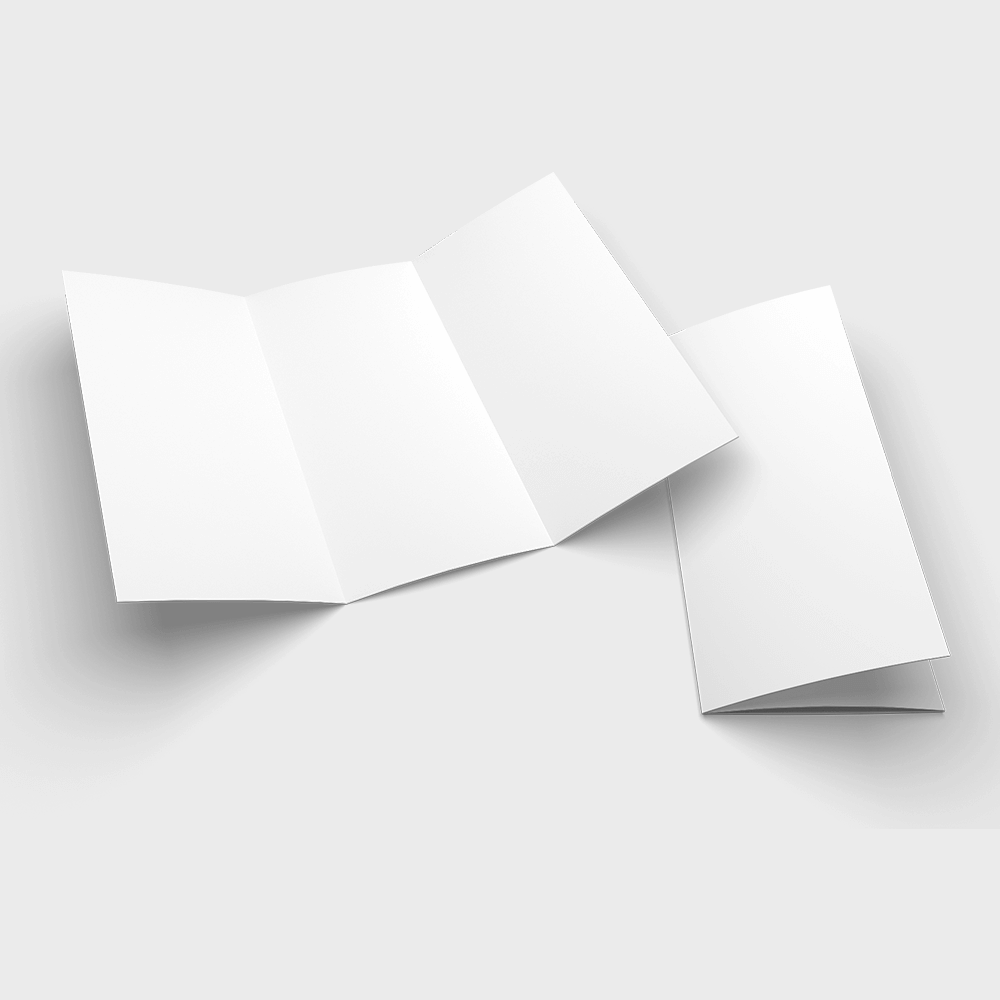
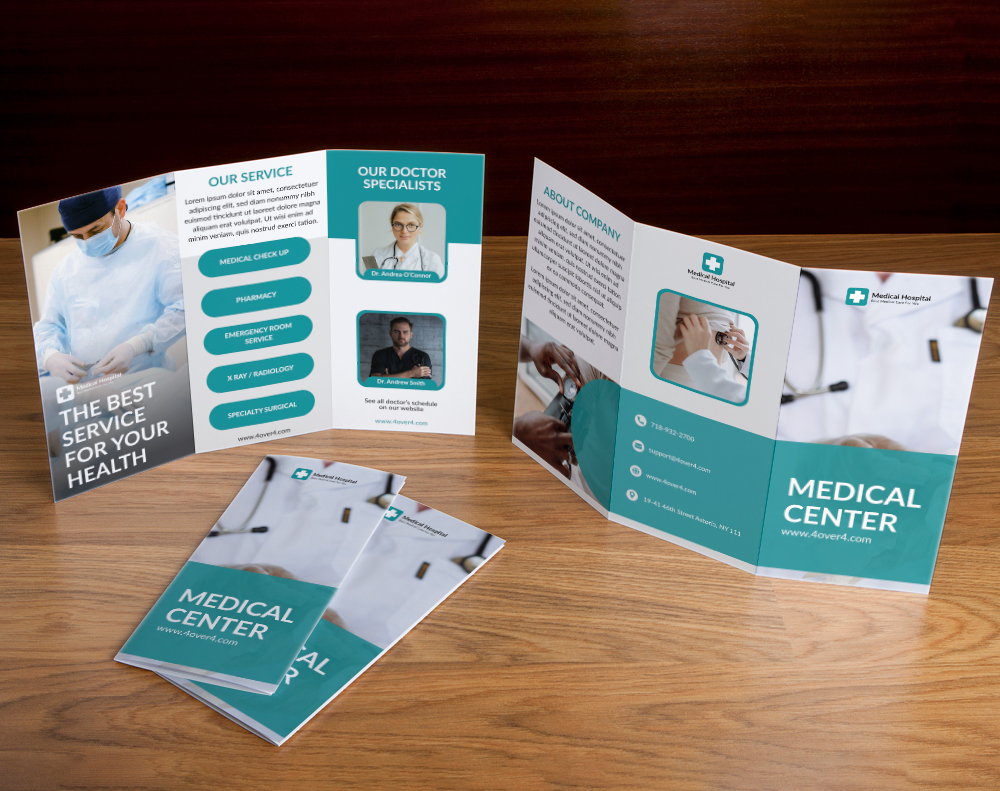
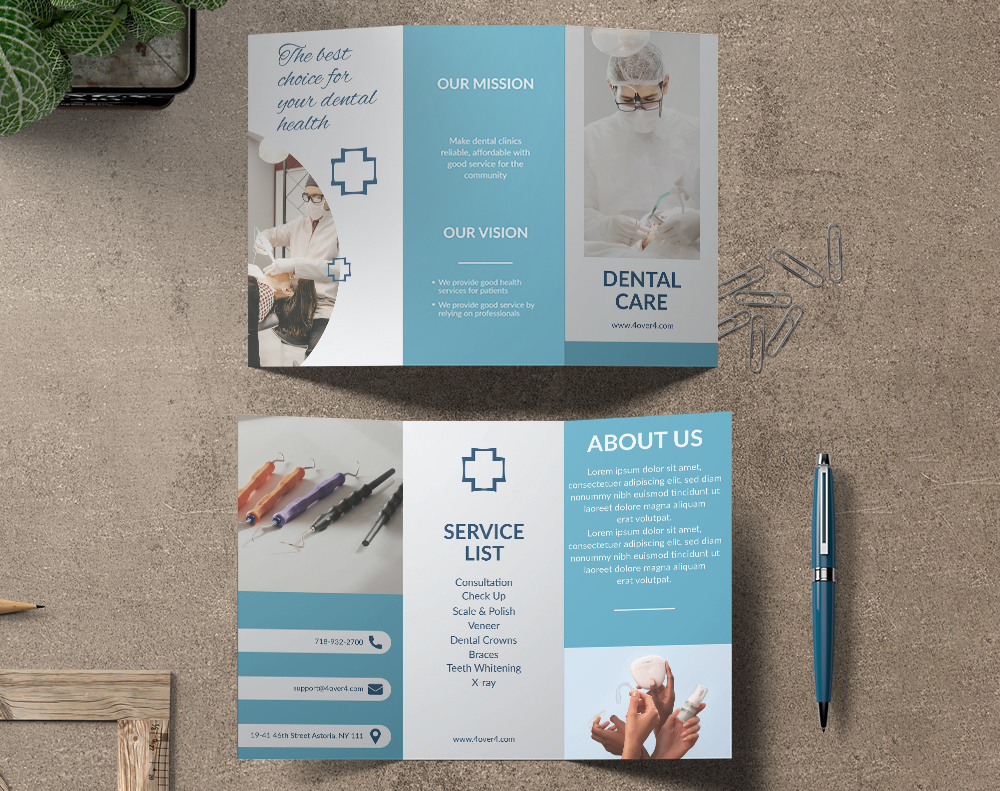
- Tri-fold (letter fold): Two parallel folds create 6 panels. The most common brochure style. Works for menus, service lists, and product overviews.
- Z-fold (accordion fold): The paper zigzags into 6 panels that unfold like an accordion. Great for step-by-step guides or timelines.
- Gate fold: Two panels fold inward to meet in the center, creating a dramatic reveal when opened. Ideal for luxury brands and high-end presentations.
- Roll fold: Panels fold inward sequentially, each one slightly narrower than the last. Works well for detailed product catalogs.
Each fold style changes how your reader interacts with the content. A tri-fold fits neatly into a brochure rack. A gate fold creates a "wow" moment at a trade show. Pick the fold that matches your goal.
Who Uses Brochures and Why They Still Work
Brochures aren't relics of the past. They're active tools used across dozens of industries every single day. Here's how real professionals put them to work:
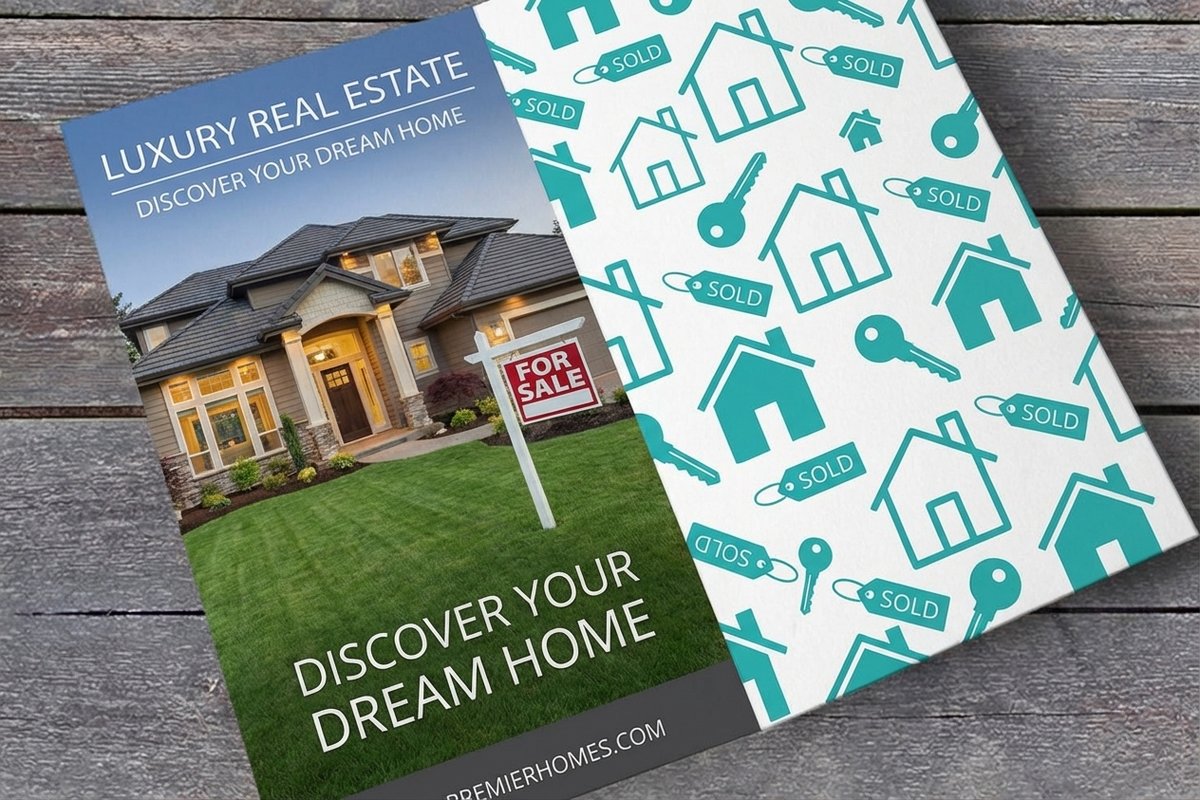
Real estate agents use bi-fold brochures as property sheets at open houses. Each panel features a room photo, square footage, and pricing details. Buyers walk away with something they can review at the kitchen table later that night.
Restaurants and cafes print tri-fold brochures as takeout menus. Customers tuck them into purses and glove compartments. That brochure sitting on someone's fridge is a silent salesperson working 24/7.
Healthcare practices distribute brochures explaining procedures, insurance options, and new patient information. A well-organized brochure reduces front-desk questions and makes patients feel informed before their appointment even starts.
Event planners hand out gate-fold brochures at conferences. The dramatic opening mirrors the excitement of the event itself. If you're also creating door-to-door marketing materials, check out Christmas Door Hangers for seasonal campaigns that pair well with brochure mailings.
Free Design Templates:
Nonprofits rely on brochures for donor outreach. A physical brochure with compelling photos and a clear call to action outperforms a cold email almost every time.
"I hand out tri-fold brochures at every listing appointment. My clients keep them on the counter for weeks. You can't do that with a PDF."
- Marcus T., real estate agent
How to Design a Brochure That Gets Read
A brochure that gets tossed in the trash is a brochure that failed. Here's how to make sure yours gets read.
Start with the cover panel. This is your hook. Use a bold headline, a striking image, and your logo. Don't cram it with text. The cover's only job is to make someone open the brochure.
Organize content by panel. Each panel should cover one topic. Don't let information bleed across folds - it creates visual confusion. Think of each panel as its own mini-page.
Use hierarchy. Headlines, subheadings, bullet points, and short paragraphs. Nobody reads a wall of text on a brochure. Break it up. Make it scannable.
Choose images that earn their space. Every photo should serve a purpose. A restaurant brochure needs food photography that makes mouths water. A real estate brochure needs bright, well-lit property shots. Skip generic stock photos whenever possible.
End with a clear call to action. The back panel should include your phone number, website, address, and a specific next step. "Call for a free estimate" beats "Contact us" every time. For more creative project ideas, browse the full Faq Hub on 4OVER4's site.
Blank Templates
Paper Stock and Finish Options for Brochures
The paper you choose changes how your brochure feels in someone's hands. And that feel matters more than most people think. A flimsy brochure signals a flimsy business. A thick, coated brochure says you take your brand seriously.
Glossy coated stock makes colors pop. Photos look vivid and sharp. It's the go-to for restaurants, travel companies, and anyone with strong visual content.
Matte coated stock has a smooth, non-reflective surface. It's easier to read under bright lights and feels more sophisticated. Law firms, financial advisors, and luxury brands tend to prefer matte.
Uncoated stock has a natural, textured feel. It's writable - meaning recipients can jot notes on it. Great for educational brochures, nonprofits, and eco-conscious brands.
4OVER4 offers 60+ paper types across its product line, so you're not stuck with one or two choices. Want to feel the difference before committing? Order Free Samples and compare stocks side by side.
Brochure Sizes and Dimensions
The standard brochure starts as an 8.5" x 11" sheet (letter size) before folding. But that's not your only option. Here are common brochure sizes:
- 8.5" x 11" - The most popular. Folds into a standard tri-fold that fits #10 envelopes and brochure racks.
- 8.5" x 14" (legal size) - More panel space for detailed content. Works well for menus and product catalogs.
- 11" x 17" - A larger format that folds into a bi-fold with generous panels. Great for maps, event guides, and portfolios.
- 5.5" x 8.5" - A compact half-letter size. Perfect for quick-reference guides and handouts.
Your size depends on how much content you need to include and where the brochure will live. If it needs to fit a standard rack or envelope, stick with 8.5" x 11". For related print projects, learn How To Make Envelopes that match your brochure mailings perfectly.
Brochures as Part of a Bigger Marketing Strategy
A brochure rarely works alone. It's usually one piece of a larger marketing puzzle. Pair your brochures with complementary print materials for maximum impact.
Send a brochure inside a direct mail package with a personalized letter. Include one in a welcome kit alongside business cards and a branded folder. Hand them out at events next to Custom Magnets Faq that keep your brand on the fridge long after the brochure has been read.
Some businesses even use brochures as leave-behinds after sales meetings. The conversation fades from memory, but the brochure sitting on the prospect's desk keeps working. If you use rubber stamps for branding your packaging, our guide on How To Clean Rubber Stamps helps you maintain those tools too.
Below you'll find real customer brochure designs for inspiration, along with ready-to-customize templates that speed up your design process.
Brochure Mistakes That Waste Your Budget
Knowing what a brochure is doesn't automatically mean you'll create a good one. Here are the most common mistakes 4OVER4 sees from first-time brochure orders - and how to avoid them.
Cramming too much text. A brochure isn't a whitepaper. If your panels look like newspaper columns, you've gone too far. Edit ruthlessly. Cut your word count in half, then cut it again.
Ignoring the fold. Text and images that land on a fold line look broken and unprofessional. Always design with your fold lines visible in your layout software.
Using low-resolution images. Print requires 300 DPI minimum. That photo that looks fine on your phone screen will print blurry and pixelated at 72 DPI.
Skipping the bleed. If your design has color or images that go to the edge, you need bleed (usually 0.125" on each side). Without it, you'll get thin white borders where you don't want them.
No clear call to action. Every brochure needs to tell the reader what to do next. Visit a website. Call a number. Scan a QR code. Don't leave them hanging.
Brochure Printing Options at 4OVER4
Now that you understand what a brochure is, it's time to pick the right product for your project. 4OVER4 offers brochures in multiple sizes, fold styles, and paper stocks - including eco-friendly options through our Green Printing program.
Whether you need 100 brochures for a local event or 10,000 for a national direct mail campaign, you'll find competitive pricing below. Here are the current brochure options with full specs, pricing tiers, and verified customer reviews.
Ink Color
Finish
Folding
Scoring
Proof Options
"Ordered what is a brochure from 4OVER4 and the quality blew me away. Sharp colors, premium feel, arrived 2 days early."
"Been using 4OVER4 for what is a brochure for a year. Consistent quality every time. The online designer made it easy."
"Switched to 4OVER4 and saved 40% on what is a brochure. Better quality than my old printer. 60+ paper options."
"4OVER4's what is a brochure helped us look more professional. Clients notice the difference."
"Ordered 500 tri-fold brochures for our nonprofit fundraiser. The matte finish looked incredible, and they arrived two days early. 4OVER4 made us look like a much bigger organization than we are."
- Denise K., nonprofit director, ★★★★★
Free Design Templates
Your Brochure Questions, Answered
What is a brochure used for?
A brochure is used to promote products, services, events, or organizations. Businesses hand them out at trade shows, include them in direct mail, place them in lobby racks, and use them as leave-behinds after sales meetings. They work because they organize a lot of information into a compact, portable format that people actually keep.
What's the difference between a brochure and a pamphlet?
A brochure is a single sheet folded into panels. A pamphlet is typically a small booklet with multiple pages bound or stapled together. Brochures are quicker and cheaper to produce. Pamphlets work better when you have more content than a single sheet can hold.
What size should my brochure be?
The most common brochure size is 8.5" x 11" (before folding). This creates a standard tri-fold that fits #10 envelopes and brochure racks. Larger formats like 11" x 17" work for event guides and portfolios. Smaller 5.5" x 8.5" brochures are good for quick-reference handouts.
How many panels does a tri-fold brochure have?
A tri-fold brochure has 6 panels - 3 on the front side and 3 on the back. Two parallel folds divide the sheet into thirds. This is the most popular brochure layout because it balances content space with a compact finished size.
What paper stock works best for brochures?
Glossy coated stock is best for photo-heavy brochures like restaurant menus and travel guides. Matte coated stock works well for text-heavy, professional brochures. Uncoated stock gives a natural, writable feel that suits nonprofits and educational materials. 4OVER4 offers 60+ paper types so you can match the stock to your brand.
Can I mail brochures directly to customers?
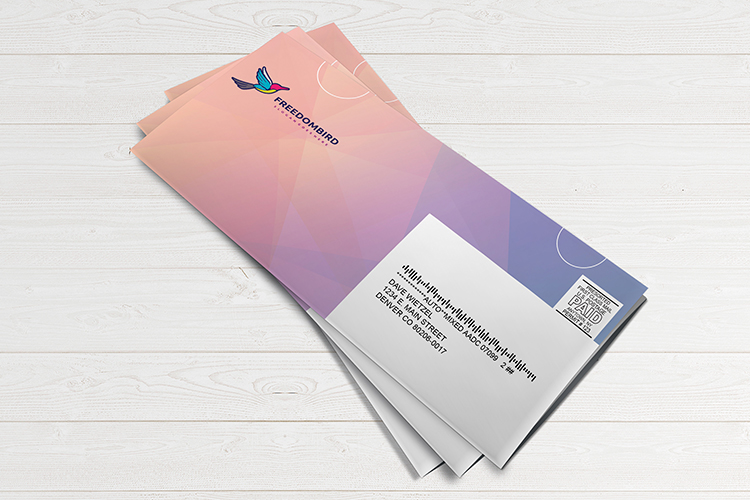
Yes. Brochures are one of the most popular direct mail formats. You can send them in envelopes or design them as self-mailers with a mailing panel on the back. 4OVER4 offers Direct Mail Brochures specifically designed for postal delivery, with address panel formatting built in.
What file format should I use for brochure printing?
Submit your brochure design as a press-ready PDF at 300 DPI with 0.125" bleed on all sides. Make sure fonts are embedded or outlined. CMYK color mode is required for accurate color reproduction. RGB files will be converted, which can shift your colors.