What You Need to Know About Foil Accent Business Cards
A foil accent business card features a thin metallic layer pressed onto specific design elements - logos, text, borders - creating a reflective, eye-catching finish. Unlike standard ink printing, foil stamping adds dimension and luxury that people actually feel when they pick up your card. 4OVER4 has printed over 10 billion cards for more than 150,000+ businesses, and foil accents remain one of the most requested premium finishes.
Why Foil Accents Change the Game for Business Cards
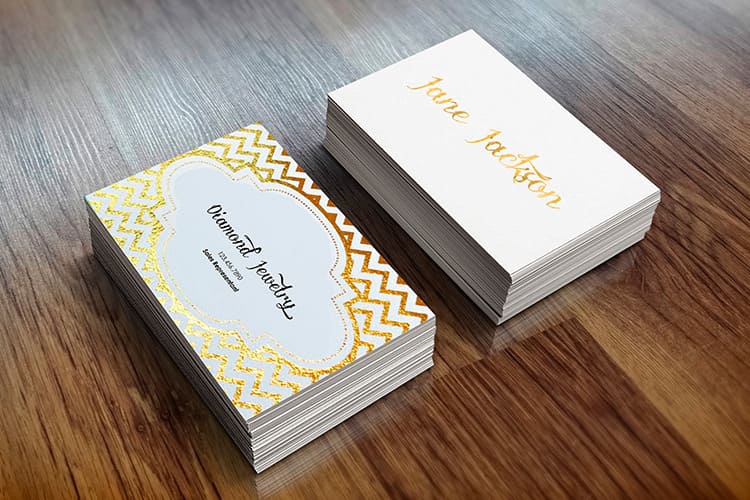
Having a foil accent business card explained in simple terms: it's a card where metallic foil gets heat-pressed onto your design, giving select elements a shiny, reflective quality that ink alone can't replicate. Think of it as jewelry for your business card. Gold, silver, copper, rose gold - each color shifts how people perceive your brand before they even read your name.
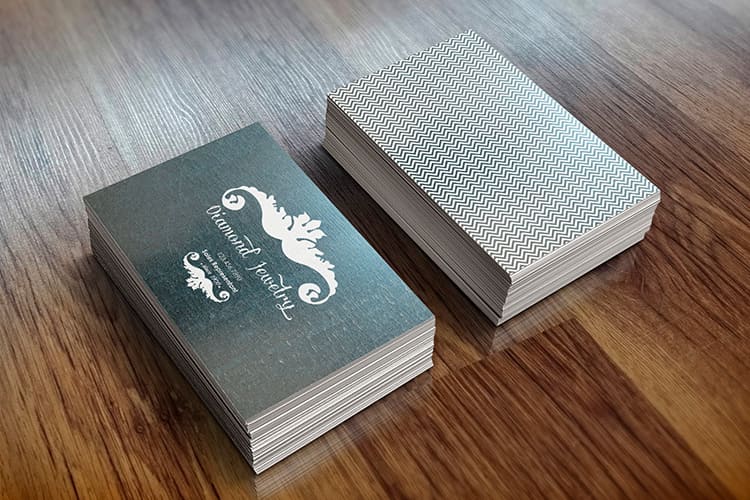
4OVER4 makes the process straightforward. You can use the Online Designer to build your layout from scratch, or start with one of our ready-made Design Templates that already include foil-ready zones. Not sure where to begin? The Online Designer walks you through foil placement step by step. Plus, every order lets you Earn Coins toward future purchases - so your next batch costs less.
.jpg)
How Foil Stamping Actually Works on a Business Card
Let's break down the mechanics. Foil stamping isn't just "shiny ink." It's a completely different process that bonds a metallic or pigmented film to paper using heat and pressure. Here's what happens behind the scenes.
The Die Creation Process
First, a custom metal die gets etched with your design elements - the parts you want foiled. This die acts like a stamp. It's precision-cut to match your logo, text, or decorative border down to fractions of a millimeter. The die is then mounted on a press.
Heat activates an adhesive layer on the foil sheet. The press pushes the heated die against the foil and your card stock simultaneously. The foil transfers only where the die makes contact. Everything else stays clean. The result? Sharp, metallic details with zero bleed or fuzziness.
Hot Foil Stamping vs. Cold Foil Stamping
Two main methods exist, and they produce slightly different results.
Hot foil stamping uses a heated die (around 250-400°F) to press foil onto the card. This method delivers the crispest edges and most intense metallic shine. It's the traditional approach and still the gold standard for premium Foil Accent Business Cards.
Cold foil stamping skips the heat. Instead, UV-curable adhesive gets printed onto the card first. The foil sheet passes over the adhesive, sticks where the glue is, and cures under UV light. Cold foil runs faster and costs a bit less, but the finish can look slightly less sharp than hot foil on very fine details.
Digital foil printing is a newer option that uses toner-based metallic transfer. It's great for short runs and variable data (like unique serial numbers in foil). But for that classic, deep-shine luxury look, hot stamping still wins. If you're exploring other creative print techniques, our Faq Hub covers dozens of methods.
Foil Color Options and What They Signal
Color choice matters more than most people think. Each foil color triggers different associations.
- Gold foil - Wealth, tradition, prestige. Perfect for financial advisors, luxury brands, and high-end real estate agents.
- Silver foil - Modern, sleek, tech-forward. Works well for tech startups, architects, and contemporary brands.
- Rose gold foil - Warm, approachable, trendy. Popular with beauty professionals, wedding planners, and lifestyle brands.
- Copper foil - Artisanal, earthy, creative. Great for craft breweries, boutique studios, and organic brands.
- Holographic foil - Bold, attention-grabbing, playful. Ideal for entertainers, event planners, and youth-focused brands.
Pick a foil color that aligns with your brand personality, not just what looks cool. A funeral director probably shouldn't hand out holographic rainbow cards. Context is everything.
"I ordered gold foil accent business cards for my real estate firm. Clients literally comment on how nice they feel. One buyer told me she kept my card on her fridge for three months before calling. That's the kind of staying power you can't buy with a standard card."
- Rachel D., Real Estate Broker ★★★★★
Foil Accent Business Cards vs. Regular Printed Cards
A regular business card uses ink - CMYK or digital - applied flat to the paper surface. It can look great, sure. But it doesn't catch light. It doesn't create dimension. And it doesn't make someone pause mid-handshake to actually look at what you just gave them.
Key Differences at a Glance
Foil cards use metallic or pigmented film bonded with heat and pressure. Regular cards use liquid or toner-based ink absorbed into the paper. The visual difference is immediate. Foil reflects light at angles, creating movement and depth that flat ink simply can't achieve.
Cost is higher for foil - the die creation, foil material, and specialized press time all add up. But the return on that investment shows up in how people respond. A study by the Print Industries Market Information and Research Organization found that tactile print elements increase brand recall by up to 70% compared to standard printed materials.
Regular cards work fine for everyday networking. Foil Accent Business Cards work when you need to signal quality, authority, or premium positioning. Know your audience and pick accordingly. For other creative print projects, check out guides like How To Make Flyers or How To Fold A Brochure.
Is a Foil Accent Business Card Worth the Investment?
Short answer: yes, if your brand positioning calls for it. Here's the longer breakdown.
First Impressions That Stick
You have about 7 seconds to make a first impression. A foil accent card buys you extra attention during those seconds. The metallic shine catches the eye. The raised texture engages touch. Both senses working together create a stronger memory anchor than a flat, matte card ever could.
Think about the last networking event you attended. How many plain white cards did you collect? How many do you remember? Now imagine one of those cards had a gold-foiled logo that caught the overhead light. That's the one you'd pull out of the stack later.
Brand Perception and Pricing Power
Premium materials signal premium services. If you charge premium rates - as a consultant, attorney, designer, or specialist - your business card should match that positioning. Handing someone a flimsy, ink-only card while quoting $500/hour rates creates cognitive dissonance. A thick, foil-accented card reinforces your value before you even open your mouth.
4OVER4 customers across 150,000+ businesses consistently report that upgrading to foil accents changes how prospects respond during initial meetings. It's not magic. It's psychology backed by material science.
"Switched from standard cards to silver foil on 32pt stock through 4OVER4. My close rate on initial consultations went up noticeably. People take you more seriously when your materials look serious."
- Marcus T., Management Consultant ★★★★★
When Foil Might Not Be the Right Call
Be honest with yourself. If you're ordering 5,000 cards to leave in fishbowls at trade shows, foil accents might not make financial sense. Those cards are meant to be grabbed in bulk, not examined. Standard printed cards work perfectly for high-volume distribution.
Foil shines (literally) when cards get handed directly to someone. One-on-one introductions, client meetings, VIP events - that's where the investment pays off. For related creative projects, you might also explore Custom Magnets Faq or How To Make Envelopes.
Designing for Foil: What Works and What Doesn't
Not every design translates well to foil. Here's what you need to know before uploading your artwork.
Best Elements to Foil
- Logos - The most popular choice. A foiled logo pops against any background color.
- Names and titles - Your name in foil creates instant hierarchy on the card.
- Borders and frames - A thin foil border adds structure and polish without overwhelming the design.
- Icons and small graphics - Accent elements like arrows, dividers, or industry symbols look sharp in foil.
What to Avoid
Fine serif fonts below 8pt don't hold foil well. The heat and pressure can blur thin strokes. Stick with bold, clean typefaces at readable sizes. Sans-serif fonts at 10pt or above work best.
Large solid foil areas can look uneven if the press pressure isn't perfectly uniform. A full foil background is possible but tricky. Spot foil - selective application on specific elements - almost always looks better and costs less.
Gradients don't work with traditional foil stamping. Foil is binary: it's either there or it's not. If you want gradient effects, you'll need to simulate them with halftone dot patterns in your die, which requires an experienced printer.
For design-ready files, grab our Blank Templates to make sure your artwork dimensions and bleed areas are correct. And if you're working on complementary print pieces, our guide on How To Clean Rubber Stamps covers maintenance for another popular finishing tool.
Blank Templates
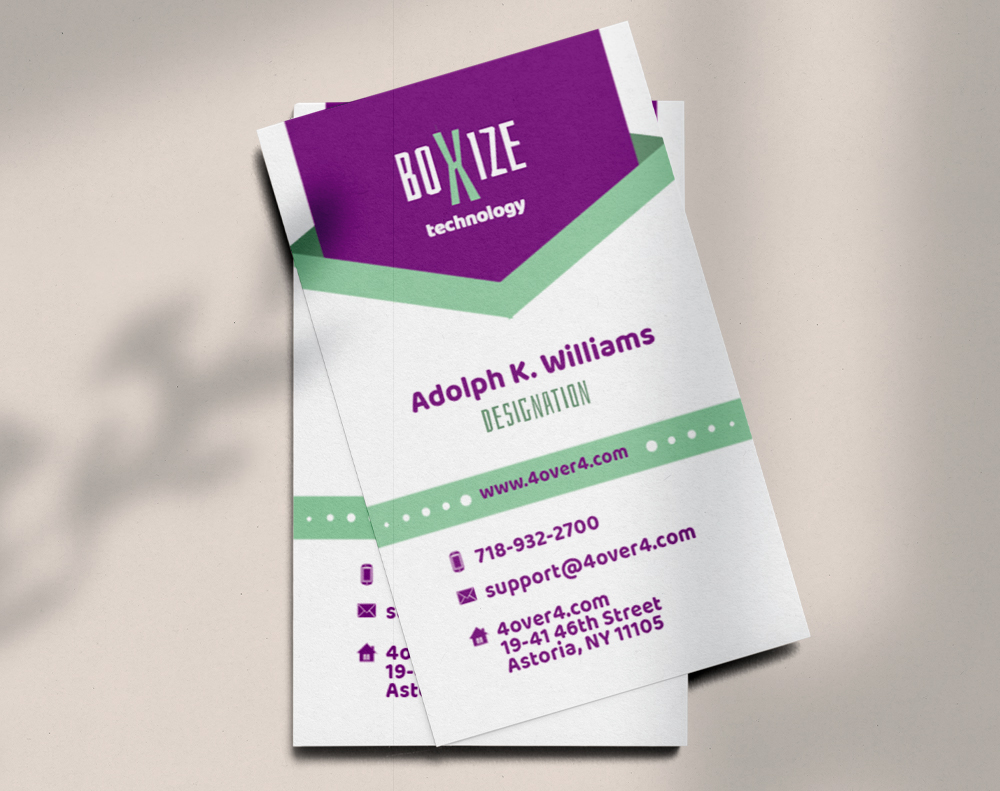
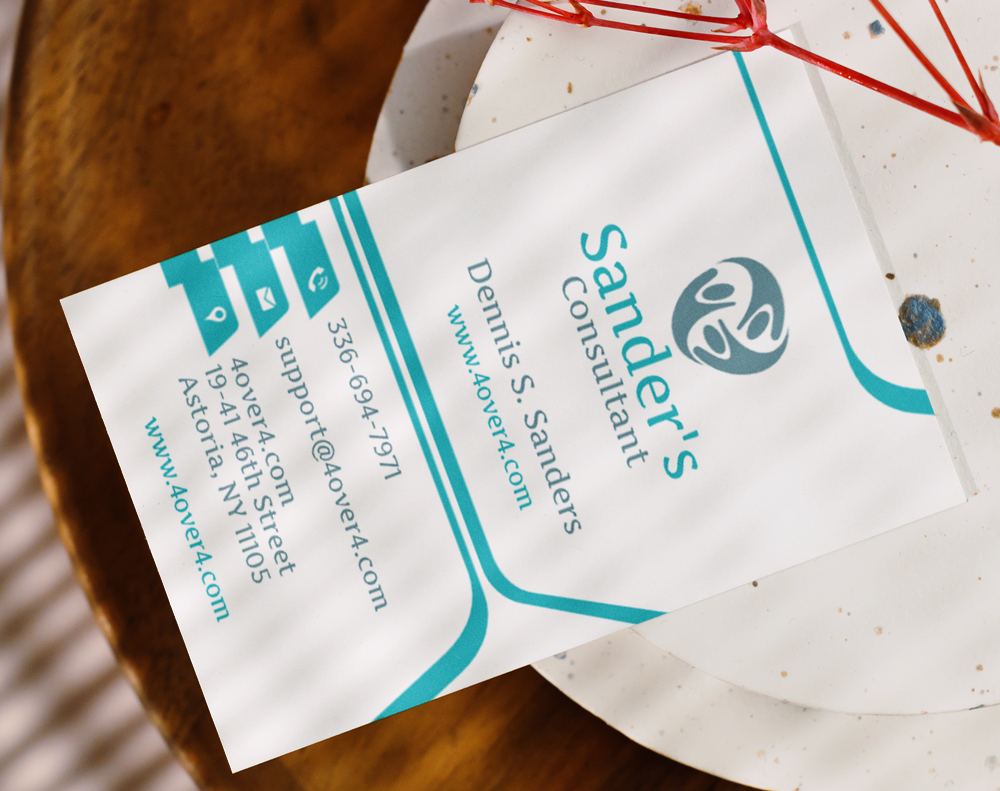
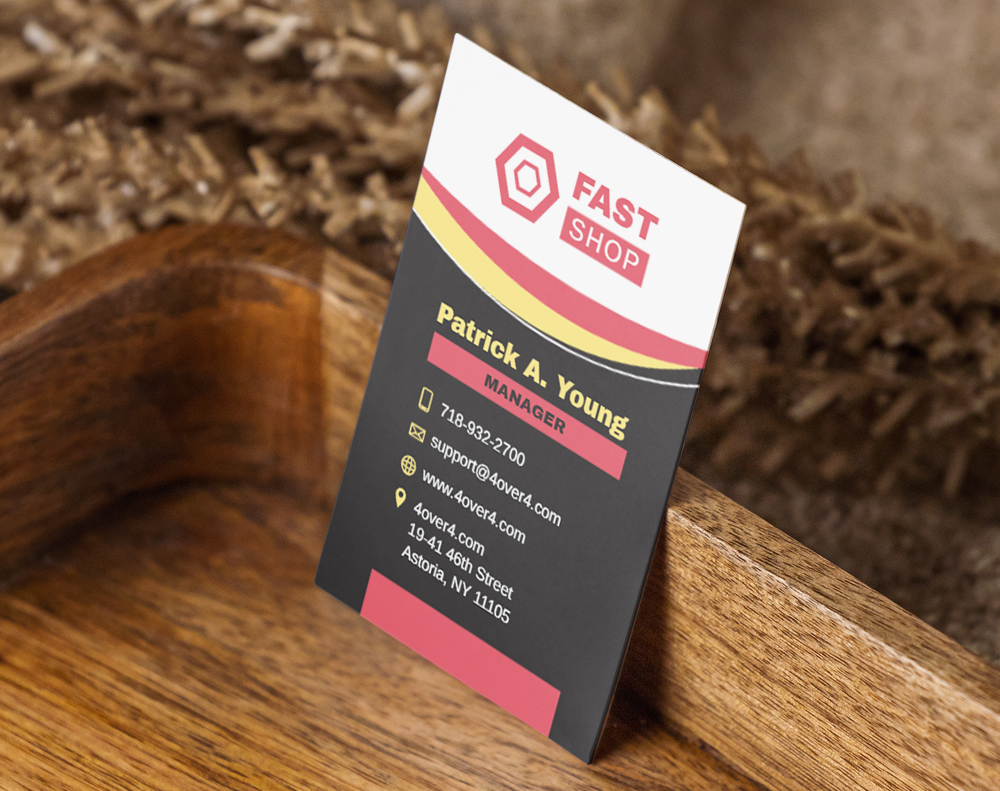
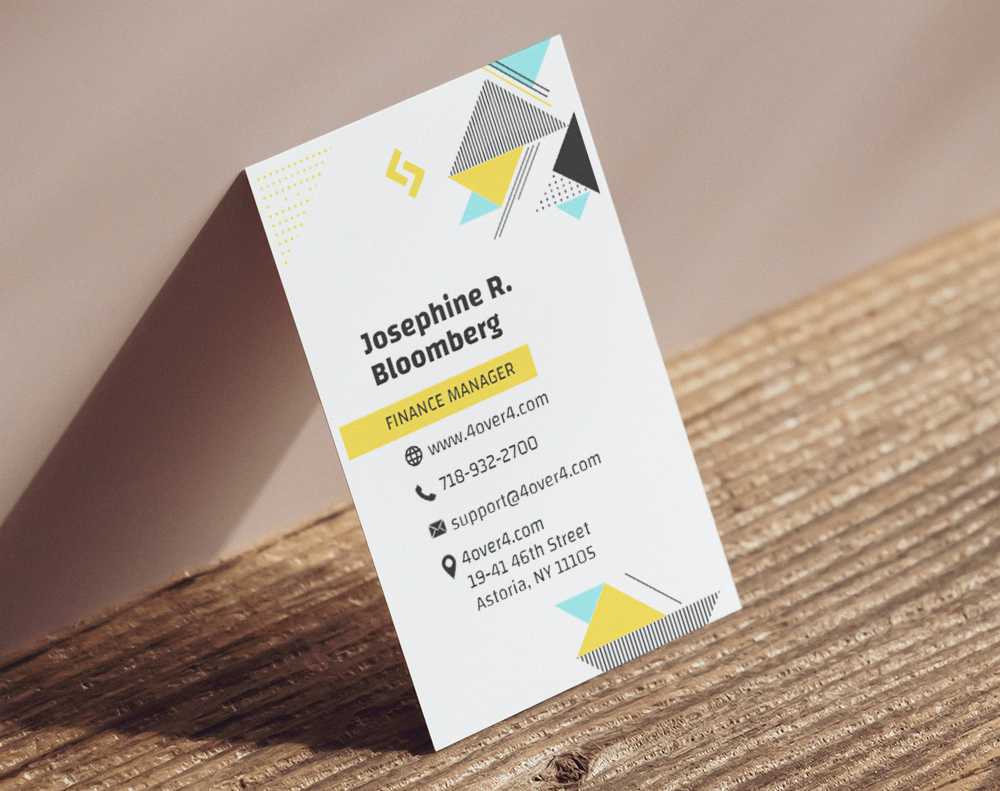
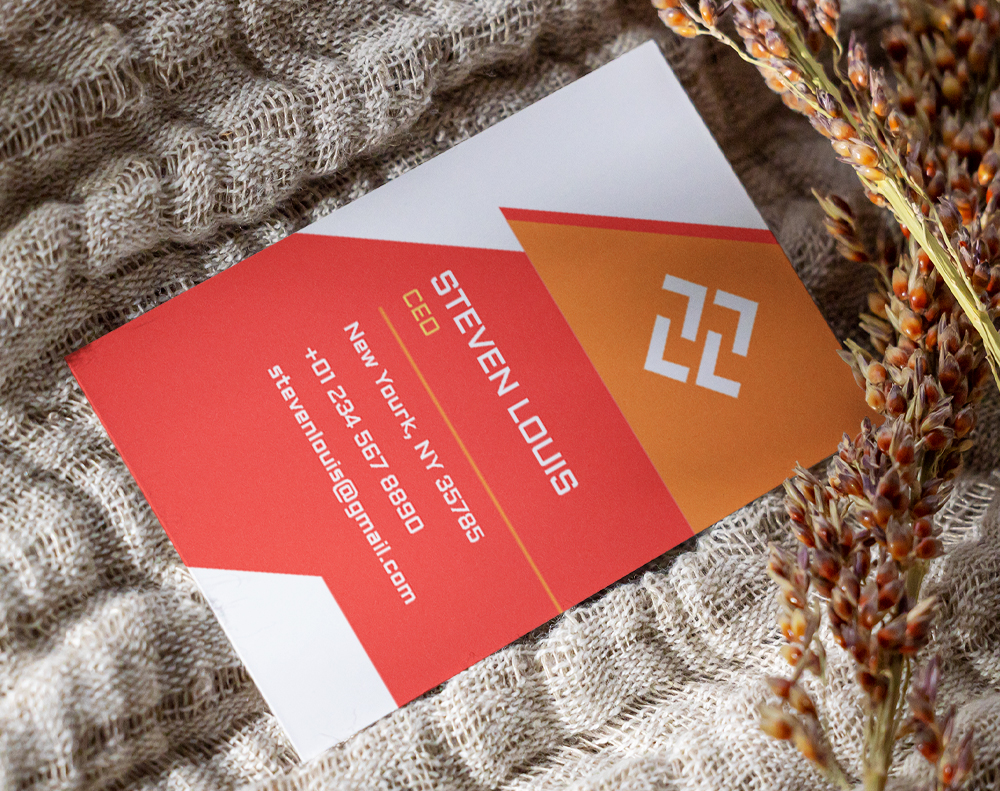
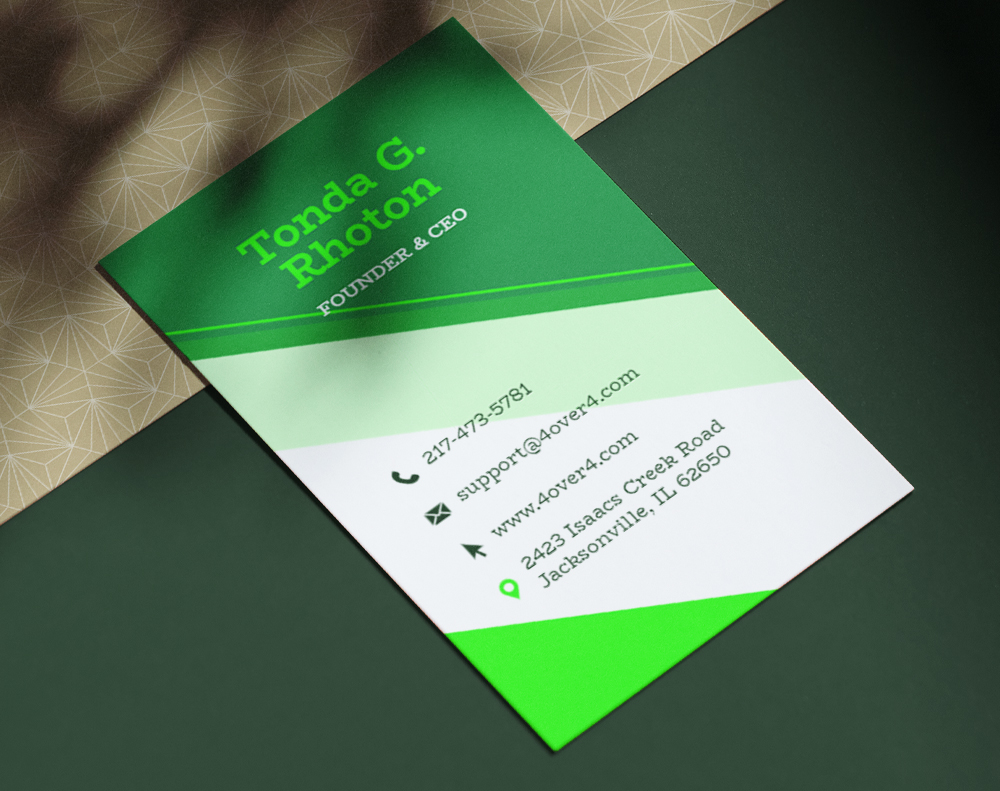
Ready to see what foil accent designs look like in action? Browse these templates for inspiration and starting points.
Foil Accent Mistakes That Waste Your Money
Getting a foil accent business card explained is one thing. Getting it right is another. Here are the mistakes 4OVER4 sees most often - and how to dodge them.
- Foiling too much. When everything shines, nothing stands out. Limit foil to 2-3 elements max. Less is more with metallic accents.
- Using thin fonts. Hairline serifs and script fonts under 8pt lose detail during stamping. Choose bold, clean typefaces that hold their shape under heat and pressure.
- Ignoring paper stock. Foil looks dramatically different on coated vs. uncoated paper. Smooth, coated stocks give the sharpest foil adhesion. Textured stocks can cause spotty coverage.
- Skipping the proof. Always request a digital proof before production. Foil placement errors are expensive to fix after the die is cut.
- Mismatching foil color and brand. Gold foil on a neon green card? Think twice. Make sure your foil color complements your overall color palette, not competes with it.
4OVER4's 10 billion+ cards printed means we've seen every mistake in the book. Don't add to the collection.
Best Card Options to Pair with Foil Accents
Foil accent business cards hit hardest on thick, premium stocks. 4OVER4 offers multiple card options that complement foil beautifully. Heavier stocks like 32pt give foil a luxurious, rigid foundation that people notice instantly.
If you want to push the wow factor even further, consider 3D Lenticular Business Cards for motion effects that pair with metallic highlights. With 150,000+ businesses trusting 4OVER4 and over 10,000+ reviews backing the quality, you're in good hands no matter which direction you go.
|
Foil Business Cards |
Regular Business Cards |
|
|
Appearance |
Shiny and metallic |
Matte or glossy |
|
Material |
Printed on high-quality cardstock or paper |
Can be printed on cardstock, plastic, or other materials |
|
Printing |
Requires special printing techniques |
Uses digital or offset printing methods |
|
Costs |
More expensive due to the additional materials and printing techniques |
Less expensive than foil cards |
|
Use cases |
Used by businesses and professionals to showcase luxury and high-end aesthetics |
Used by various professionals, from corporate executives to freelancers and small business owners |
"Ordered foil accent business card explained from 4OVER4 and the quality blew me away. Sharp colors, premium feel, arrived 2 days early."
"Been using 4OVER4 for foil accent business card explained for a year. Consistent quality every time. The online designer made it easy."
"Switched to 4OVER4 and saved 40% on foil accent business card explained. Better quality than my old printer. 60+ paper options."
"4OVER4's foil accent business card explained helped us look more professional. Clients notice the difference."
"I combined foil accents with a soft-touch matte finish from 4OVER4. The contrast between the velvety paper and the shiny gold logo is unreal. Every single client asks where I got my cards. Best marketing investment I've made this year."
- Devon K., Interior Designer ★★★★★
Here's a closer look at the specs and options available for Foil Accent Business Cards.
Free Foil Accent Business Card Templates
Your Foil Accent Business Card Questions, Answered
What exactly is a foil accent on a business card?
A foil accent is a thin metallic or pigmented film bonded to specific areas of your business card using heat and pressure. It creates a reflective, shiny finish on elements like logos, names, or borders. Unlike ink, foil catches light and adds physical dimension you can see and feel.
How much more do Foil Accent Business Cards cost compared to standard cards?
Foil accent cards typically cost more than standard printed cards due to custom die creation and specialized press equipment. The exact price depends on foil color, coverage area, quantity, and paper stock. The per-card premium shrinks a lot at higher quantities since the die cost gets spread across more units.
Can I use multiple foil colors on one business card?
Yes, but each additional foil color requires a separate die and press pass, which increases cost and production time. Most designs look best with one foil color paired with printed ink elements. Two foil colors work for special occasions, but three or more gets expensive fast.
What paper stock works best for foil accent business cards?
Smooth, coated stocks deliver the crispest foil adhesion and shiniest results. Uncoated or heavily textured papers can cause uneven foil coverage. For the best outcome, pair foil accents with a coated stock at 16pt thickness or above. 32pt ultra-thick stock with foil creates a card that feels as premium as it looks.
How small can foil details be on a business card?
Foil works best at font sizes of 8pt and above with bold or medium-weight typefaces. Very fine lines, thin serifs, and detailed details below 6pt may not transfer cleanly during the stamping process. Keep your foiled elements clean and bold for the sharpest results.
Will foil accents rub off or fade over time?
Properly applied foil is durable and resistant to normal handling. Cards stored in wallets, cardholders, or desk drawers maintain their shine for years. Excessive friction - like shuffling loose cards in a pocket with keys - can cause minor wear, but this is rare with quality stamping from a printer like 4OVER4.