Letterhead at a Glance: The Essentials
A letterhead is a pre-printed sheet of paper featuring your company's name, logo, contact details, and branding elements at the top. It's the foundation of professional business correspondence. Every letter, invoice, or memo sent on branded letterhead reinforces your identity. 4OVER4 has helped 150,000+ businesses create polished letterhead that makes a lasting impression, backed by 10,000+ reviews from satisfied clients.
Why Letterhead Still Matters in a Digital World
So, what is a letterhead exactly? It's a printed or digital sheet that carries your brand's visual identity - logo, company name, address, phone number, and sometimes a tagline. When someone receives a physical letter on custom letterhead, it signals legitimacy. It says you're established. You're real.
"Letterheads /5"
| Quantity | Price Per Unit |
|---|---|
| 50 | $2.00 |
| 4,000 | $0.09 |
| 35,000 | $0.05 |
| 100,000 | $0.05 |
Ink Color
Folding
Perforation
Three-Hole Punch
Blank Sheets
Proof Options
Letterhead works alongside other branded materials to build a cohesive identity. Think of it like a partner to your business cards, brochures, and marketing collateral. If you're exploring other print essentials, check out our guide on What Is A Brochure for another key piece of the puzzle.
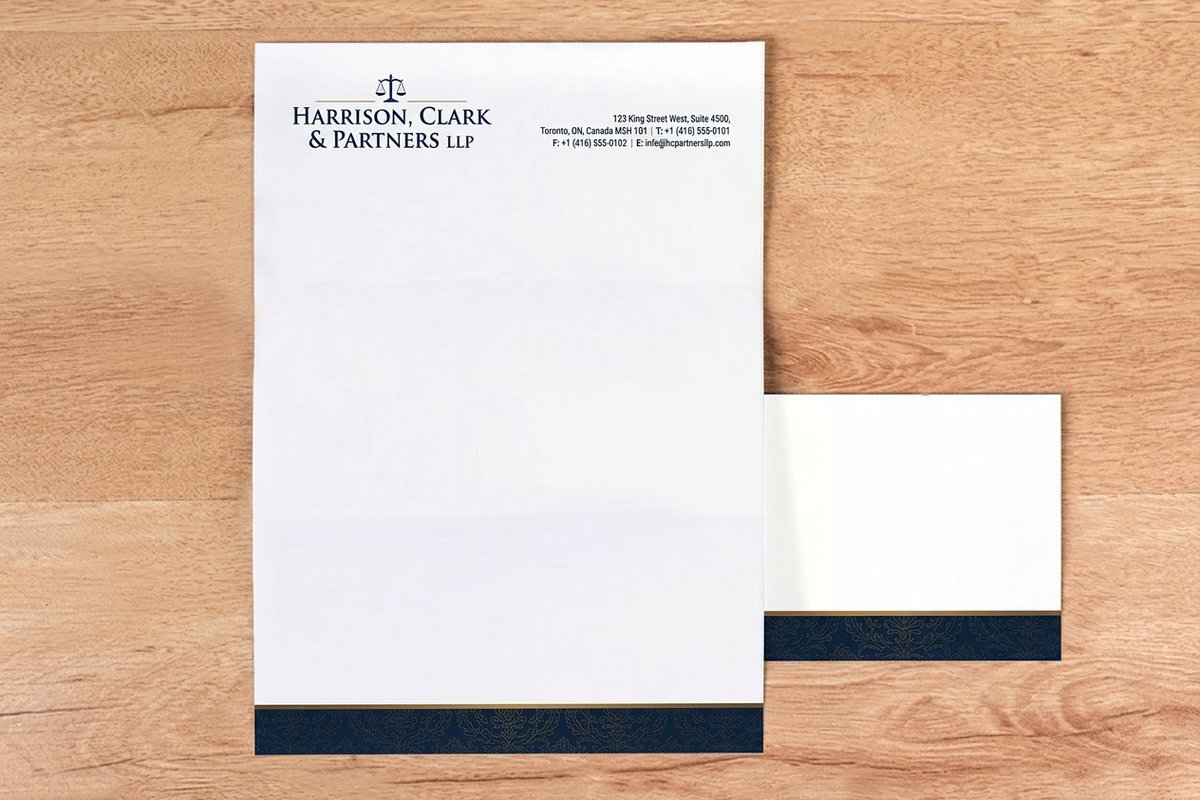
Color consistency across your letterhead matters more than most people realize. Techniques like What Is Spot Color Printing can help you nail your brand's exact hues. And if you'd rather not start from scratch, 4OVER4 offers ready-to-customize Design Templates that make the process fast.
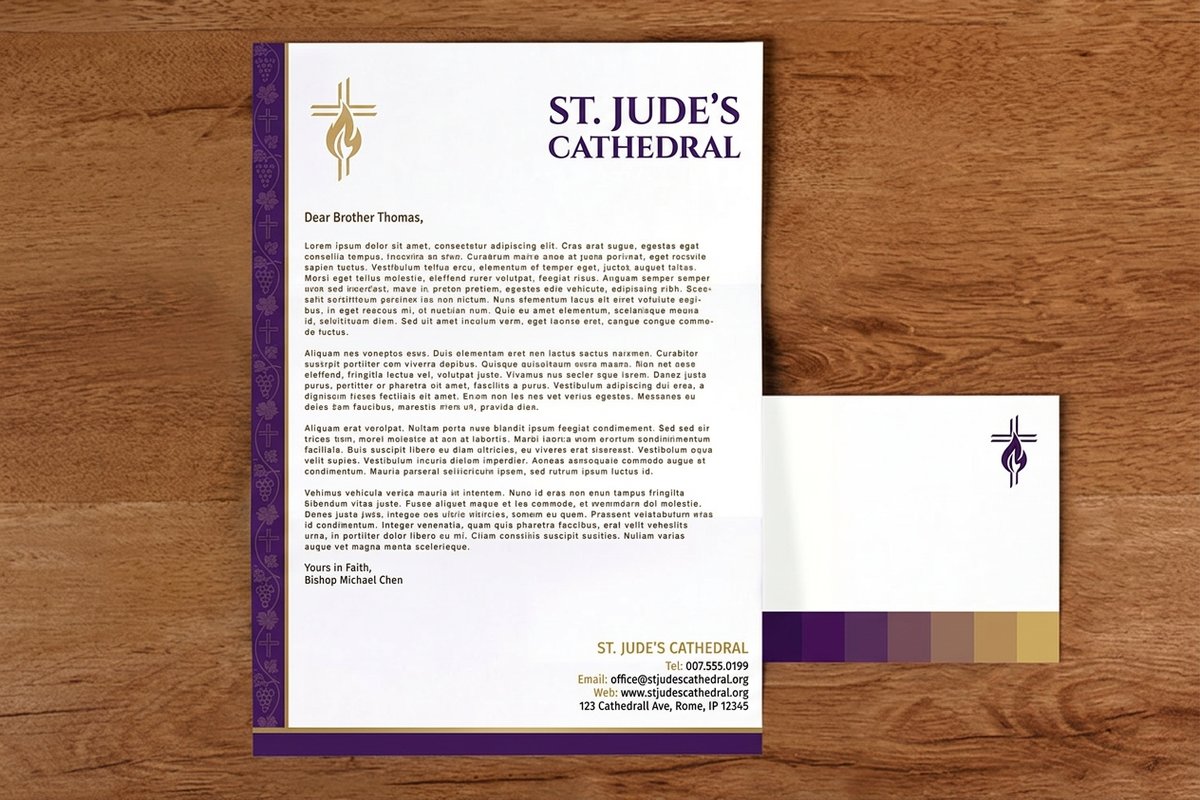
Here's a look at what 4OVER4 Letterheads offer and how you can get started with your own design.
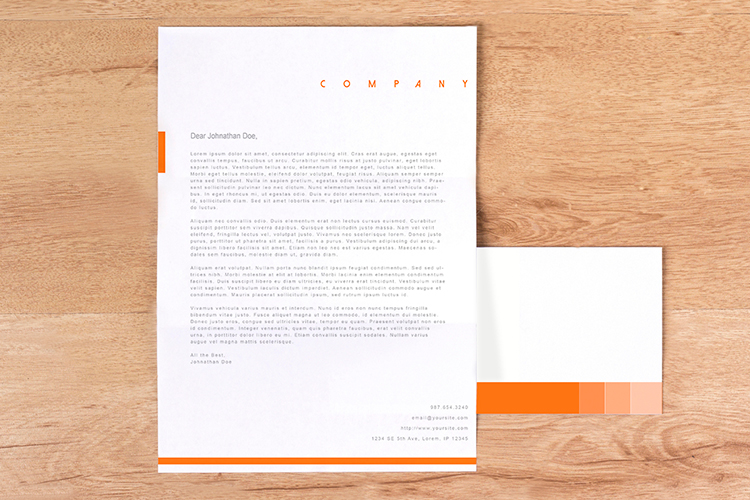
Letterheads
Starting from $99.95
Free Design Templates:
Breaking Down Every Part of a Professional Letterhead
A letterhead isn't just a logo slapped on paper. It's a carefully designed header area that typically occupies the top 2-3 inches of an 8.5" x 11" sheet. The best letterheads balance branding with function - they look sharp but still leave plenty of room for the actual letter content below.
Core Elements That Belong on Every Letterhead
Your company logo is the anchor. It's usually positioned in the top-left or top-center. The logo should be high-resolution (at least 300 DPI for print) so it reproduces cleanly without pixelation or blurriness.
Below or beside the logo, include your company name in a clear, readable typeface. Even if your logo contains the name, spelling it out in text improves readability on faxes, scans, and photocopies.
Contact information comes next. This includes your street address, phone number, email, and website URL. Some businesses add a fax number or social media handles depending on their industry. Keep it organized - don't cram everything into one line.
Optional elements include a tagline, registration numbers, or legal disclaimers. Law firms and financial companies often need to include licensing information. If your industry requires it, build that into the design from the start.
Choosing the Right Paper Stock for Letterhead
Paper choice makes or breaks the feel of your letterhead. A flimsy sheet undermines even the best design. Standard letterhead paper runs between 24lb and 32lb bond weight. The heavier the stock, the more big it feels in someone's hands.
Uncoated paper is the classic choice for letterhead. It's easy to write on, feeds smoothly through laser and inkjet printers, and has a natural, professional texture. If you're printing letters in-house after receiving your letterhead, uncoated stock is the way to go.
Linen and laid textures add a tactile quality that screams premium. Run your finger across linen letterhead and you'll feel the subtle crosshatch pattern. It's a favorite for law offices, accounting firms, and executive correspondence.
"We ordered linen letterhead from 4OVER4 for our law practice, and the texture alone gets comments from clients. It feels like you're holding something important."
- David R., ★★★★★
Cotton paper is another step up. It's durable, archival-quality, and has a soft feel that's hard to replicate with wood-pulp sheets. If longevity matters - think contracts or official documents - cotton is worth the investment.
Design Principles for Effective Letterhead
Keep your design clean. White space isn't wasted space - it's breathing room. The best letterheads use minimal elements arranged with intention. Your reader's eye should move naturally from the logo to the company name to the contact info.
Stick to 2-3 colors maximum. Your primary brand color, a secondary accent, and black for text. Going beyond that creates visual clutter. If your brand uses specific Pantone colors, make sure your printer can match them precisely.
Typography matters just as much as color. Use your brand's primary typeface for the company name and a complementary font for contact details. Avoid decorative or script fonts for small text - they become unreadable at 8-9pt sizes.
Margins need attention too. Leave at least 0.5" on all sides, and keep the header area compact enough that the body of your letter starts no lower than 3 inches from the top edge. People need room to write.
If you're designing other branded materials at the same time, our Faq Hub covers everything from print setup to finishing techniques. It's a good resource if you want consistency across all your materials.
Letterhead vs. Stationery: What's the Difference?
People use these terms interchangeably, but they're not the same thing. Letterhead refers specifically to the branded paper used for correspondence. Stationery is the broader category - it includes letterhead, envelopes, notecards, memo pads, and anything else you'd use for written communication.
A complete stationery suite typically includes matching letterhead, envelopes, and business cards. The design elements carry across all three so everything looks coordinated. If you're building out your envelope game, take a look at our guide on How To Make Envelopes for tips on creating matching pieces.
When and Where to Use Letterhead
Client proposals and contracts. Sending a proposal on branded letterhead adds weight to your pitch. It shows you took the time to present professionally, and it subtly communicates stability.
Invoices and billing statements. Letterhead on financial documents reduces disputes. Clients can verify the sender at a glance, and it looks more official than a plain sheet with a typed header.
Internal memos and announcements. Company-wide communications on letterhead carry more authority than a casual email. Use them for policy changes, milestone announcements, or formal recognitions.
Cover letters and HR correspondence. Offer letters, termination notices, and reference letters all benefit from letterhead. It protects your company legally and presents a unified brand image.
Thank-you notes and follow-ups. A handwritten thank-you on branded letterhead after a meeting? That's memorable. It stands out in a stack of mail far more than another email ever could.
How to Set Up Your Letterhead File for Printing
Start with the correct dimensions. Standard letterhead in the US is 8.5" x 11". Add a bleed of 0.125" on all sides if your design extends to the edge of the paper. This prevents white borders after trimming.
Set your document to CMYK color mode at 300 DPI. RGB colors look different when converted to print, so designing in CMYK from the start avoids surprises. If you're unsure about color modes, that's a common concern covered in our printing guides.
Export your final file as a high-resolution PDF. Flatten all layers, embed fonts, and convert text to outlines if your printer requires it. This eliminates font substitution issues that can wreck your layout.
For those who also create flyers and other collateral, our guide on How To Make Flyers walks through similar file setup steps. The principles overlap quite a bit.
Digital Letterhead: The Modern Companion
Physical letterhead isn't the only option anymore. Many businesses create digital letterhead templates for emails, PDF attachments, and electronic documents. The design stays the same - you just save it as a template in Word, Google Docs, or your preferred software.
Digital letterhead should match your printed version exactly. Same logo placement, same fonts, same colors. Consistency between physical and digital builds trust. If someone receives a printed letter and then an email from you, the branding should feel identical.
One tip: keep digital letterhead file sizes small. A 5MB PDF attachment because of an oversized header graphic isn't doing you any favors. Optimize images for screen resolution (72-150 DPI) while keeping print versions at 300 DPI.
Pairing Letterhead with Other Branded Materials
Letterhead doesn't exist in isolation. It's part of a larger brand ecosystem. Your business cards, brochures, and promotional items should all share the same visual DNA - colors, fonts, logo treatment, and overall feel.
If you're building out your brand toolkit, consider how each piece connects. A custom magnet on a client's fridge reinforces the same brand they see on your letterhead. Check out Custom Magnets Faq for ideas on extending your brand into unexpected places.
Rubber stamps are another underrated companion to letterhead. A branded stamp for return addresses or "received" marks keeps things consistent. If you already use stamps, our guide on How To Clean Rubber Stamps will help you maintain them.
Even something as simple as a well-folded brochure tucked inside a letterhead envelope creates a polished package. Learn the proper technique in our How To Fold A Brochure guide.
"I ordered letterhead and matching envelopes from 4OVER4 for my accounting firm. The consistency across everything - cards, letterhead, envelopes - made us look way more established than we actually were at the time."
- Monica T., ★★★★★
Here are some real examples of letterhead designs from 4OVER4 customers, plus templates to help you get started.
Blank Templates
Letterhead Mistakes That Undermine Your Brand
The most common letterhead mistake? Overcrowding the header. Trying to fit your logo, tagline, three phone numbers, two addresses, and social media icons into a 2-inch strip creates chaos. Edit ruthlessly. Include only what's necessary.
Using low-resolution logos is another killer. That PNG you pulled from your website at 72 DPI will look fuzzy and unprofessional in print. Always use vector files (AI, EPS, or SVG) or high-res rasters at 300 DPI minimum.
Ignoring printer compatibility. If your team prints letters in-house on the pre-printed letterhead, make sure the paper stock works with your office printer. Heavy coated stocks can jam laser printers. Uncoated bond in 24-28lb weight feeds smoothly through most machines.
Forgetting the bleed. If your design has color running to the paper's edge, you need that 0.125" bleed. Without it, you'll get uneven white strips along the edges after trimming. 4OVER4's file setup guidelines make this easy to get right the first time.
Mismatched branding. Your letterhead colors should match your business cards and envelopes exactly. Even slight differences look sloppy and raise questions about attention to detail.
Letterhead Options Worth Considering at 4OVER4
Now that you know what is a letterhead and how to design one properly, it's time to pick the right product. 4OVER4 offers Letterheads on multiple paper stocks with options for full-color printing. Pair your letterhead with other Marketing Materials Printing to build a complete brand kit.
New to 4OVER4? Grab a set of Free Business Cards to test the print quality before committing to a larger letterhead order. Here's a breakdown of pricing, specs, and what other customers have to say.
Free Design Templates

Ink Color
Folding
Perforation
Three-Hole Punch
Blank Sheets
Proof Options
"Ordered what is a letterhead from 4OVER4 and the quality blew me away. Sharp colors, premium feel, arrived 2 days early."
"Been using 4OVER4 for what is a letterhead for a year. Consistent quality every time. The online designer made it easy."
"Switched to 4OVER4 and saved 40% on what is a letterhead. Better quality than my old printer. 60+ paper options."
"4OVER4's what is a letterhead helped us look more professional. Clients notice the difference."
Your Letterhead Questions, Answered
What is a letterhead used for in business?
A letterhead is used for official business correspondence - proposals, invoices, contracts, HR documents, and client letters. It carries your logo, company name, and contact information so every piece of mail reinforces your brand identity and looks professional.
What size is standard letterhead?
Standard letterhead in the United States is 8.5" x 11" (letter size). In countries using international paper standards, A4 (8.27" x 11.69") is the norm. Always confirm the size with your printer before designing.
Can I print on letterhead with a regular office printer?
Yes. Choose uncoated paper stock in 24-28lb bond weight for the best results with standard laser and inkjet printers. Heavier or coated stocks may cause jams. Test a few sheets first before running a full batch.
What's the difference between letterhead and a letter template?
Letterhead is the physical (or digital) pre-printed paper with your branding. A letter template is the document layout - where the date goes, salutation style, paragraph spacing, and closing. You use a letter template on top of your letterhead.
How many colors should a letterhead have?
Stick to 2-3 colors. Your primary brand color, one accent color, and black for body text works best. Too many colors create visual noise and increase printing costs. If you need help with your design, visit the Help Center for guidance.
Should my letterhead match my business cards and envelopes?
Absolutely. Consistent branding across all printed materials builds trust and recognition. Use the same logo, colors, and fonts on your letterhead, business cards, and envelopes. Even small inconsistencies can make your brand look disorganized.
What file format should I use when ordering letterhead?
Submit a high-resolution PDF in CMYK color mode at 300 DPI. Include 0.125" bleed on all sides if your design extends to the edge. Embed all fonts or convert text to outlines to prevent substitution errors during printing.
"Ordered 500 letterheads from 4OVER4 for our real estate office. The uncoated stock feels big, and the colors matched our business cards perfectly. Clients notice the quality."
- Karen L., ★★★★☆