
What a Saddle Stitched Booklet Is and Why Pages Come in Fours


Emma is our prepress and print production voice, built from the knowledge of our production team, with over 20 years in printing.
The binding behind most programs, bulletins and short catalogs. The staple goes through the spine fold, 14 pages is impossible, creep eats your inner margins, and past a page count you should switch bindings.
A saddle stitched booklet is made of folded sheets nested inside one another and stapled with wire straight through the fold, then trimmed on the other three sides. Because one folded sheet carries four pages, the total page count is always a multiple of four, and the cover uses up four of them. It is the cheapest multipage binding we run, it lies flat at the center spread, and it stops working past roughly 64 pages.
Quick answer
Nested sheets, two staples through the fold, one trim
A saddle stitched booklet is bound by stapling through the fold of nested sheets, not by glue or wire loops. Each folded sheet holds four pages, which fixes the page count at 8, 12, 16, 20 and up, and the cover is one of those sheets rather than an extra. The nesting also causes creep: inner pages sit further out at the fore edge and lose more margin at the trim, which prepress corrects with shingling. It is the cheapest and fastest multipage binding, and it runs out of road at about 64 pages.
Page counts
Saddle stitch page counts you can order
Saddle stitch binding takes page counts in multiples of four, and the configurator offers 8 to 60 pages. Each count includes the cover: 8 pages is the cover plus 4 inside, 16 is the cover plus 12, and 60 is the cover plus 56. Sizes are 5.5 by 8.5, 8.5 by 11 and 11 by 11 inches, runs start at 25 booklets for $240.55, and standard production is 7 business days.
What Happens on the Stitcher, Step by Step
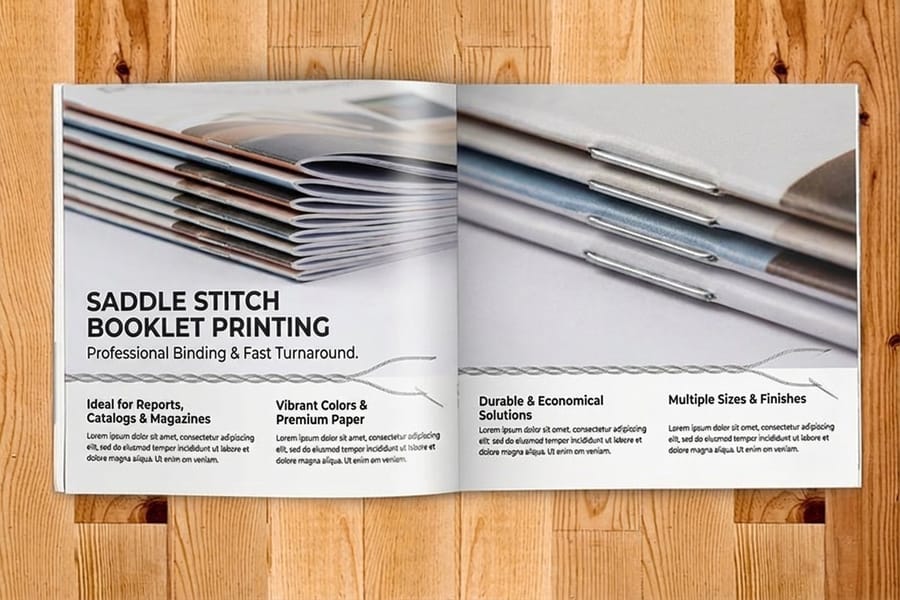
Saddle stitching is the simplest binding in the shop, and seeing the order of operations explains every rule that follows.
One, the sheets print as spreads. Each large sheet carries four booklet pages, two per side, and they are never consecutive. On an eight page booklet the outer sheet prints pages 8 and 1 on one side and 2 and 7 on the other.
Two, each sheet is folded once. That fold turns four printed panels into four pages in reading order once the sheets are assembled.
Three, the sheets are nested. They are dropped one inside another over a saddle, a narrow bar the folded sheets straddle. Nesting, not stacking, is what makes the numbering work.
Four, wire goes through the fold. Two staples are driven from the outside and clinched flat on the inside. Two is standard on a letter size booklet; taller pieces get three.
Five, three sides are trimmed. The knife squares the head, the foot and the fore edge in one pass. This is the step that turns creep from a theory into a visible problem, which is the next section.
The whole sequence is why saddle stitch booklet printing is cheap: no glue, no drying, no spine block, and no second bindery pass. Stitching is only one reason booklet printing is cheap, and that guide covers the rest. If you want the same comparison across every binding we run, the binding types guide lays them out side by side.
The Multiple of Four Rule, and How to Live With It
One folded sheet equals four pages. That single fact sets the page count, and no amount of design will get you around it.
| Sheets | Total pages | Interior pages | Pairs on each sheet side add to |
|---|---|---|---|
| 2 | 8 | 4 | 9 |
| 3 | 12 | 8 | 13 |
| 4 | 16 | 12 | 17 |
| 6 | 24 | 20 | 25 |
| 8 | 32 | 28 | 33 |
That last column is a free proof-reading tool. On any sheet side the two page numbers always add up to the total page count plus one, so if you are checking an imposed proof and a pair does not add up, the imposition is wrong.
The interior column is where most people get caught. The cover is a sheet like any other, so a 16-page booklet gives you 12 pages of content once the front, inside front, inside back and back are accounted for. Plan the content against that number, not against the headline count.
When the content lands on 13 or 14 pages, the choices are honest ones: grow it to 16 with a notes page, a contact page or a full bleed image, or cut it to 12. A blank inside back cover reads as deliberate. A page of padding reads as padding. If the piece is genuinely six pages of content, it was never a booklet, and standard brochures at $57.11 will do the same job for a quarter of the price of standard booklets at $240.55. The video on standard booklets shows the stitched format before you plan your count.
Creep: Why the Middle Pages Come Back Narrower
Creep is the outward shift of the inner pages, and it is the one thing about saddle stitching that surprises people after the job ships.
Picture the stack from the spine. The cover wraps everything, so it sticks out the least at the fore edge. Each sheet inside it has to wrap around less paper, so it sits a little further out. The innermost spread pushes out by roughly half the thickness of the whole folded stack. Then the knife trims all of it flush in one cut. Result: the cover keeps its full outer margin, the center spread loses the most, and everything in between loses a sliding amount.
Two things follow. The first is that thicker stock and higher page counts both make it worse, and they compound. A 32-page booklet on 100 lb gloss text creeps far more than a 32-page booklet on 70 lb uncoated. The second is that you do not fix it in your layout file. Prepress applies shingling during imposition, which shifts each inner spread back toward the spine by the amount it will creep, so the trimmed margins come out even.
What is on you is margin discipline. Keep folios, page numbers and any live text at least a quarter inch inside the trim on all four sides, and be careful with a rule or a photo edge running parallel to the fore edge near the margin, because a straight line is the first thing that shows a shift. Our bleed and trim guide covers the safe area, and the correctly sized layouts in the blank template library already carry the right margins.
When Saddle Stitch Stops Being the Right Answer
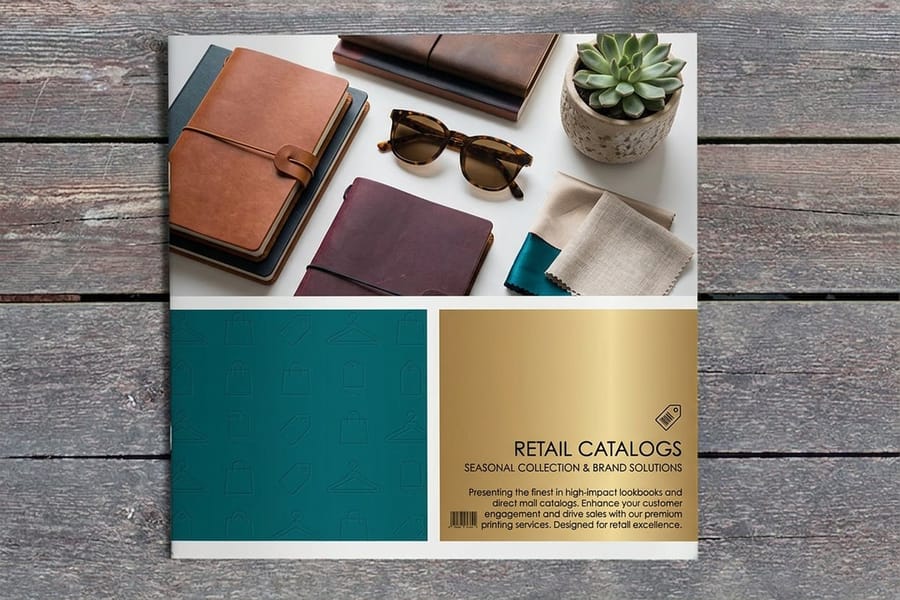
Saddle stitching wins on price, on lead time, and on lying flat. It loses on thickness, on shelf presence, and on anything that gets handled for years.
| Binding | Workable page range | Spine | How it opens | Best for |
|---|---|---|---|---|
| Saddle stitch | 8 to about 64 | Folded, no printable spine | Flat in the center, springy elsewhere | Programs, bulletins, short catalogs, manuals, anything mailed |
| Perfect binding | About 40 and up | Square and printable | Will not lie flat, gutter loses a few millimeters | Catalogs on a shelf, annual reports, books |
| Wire-o or coil | Any | Exposed wire, no printing | Lies dead flat and folds back on itself | Workbooks, cookbooks, anything used with both hands busy |
The overlap between 40 and 64 pages is where the real decision sits. Both bindings work there, so pick on use rather than on page count. Something read once and recycled stays saddle stitched. Something that has to be found on a rack among other titles needs a printed spine, which is where standard catalogs and perfect binding earn the extra money.
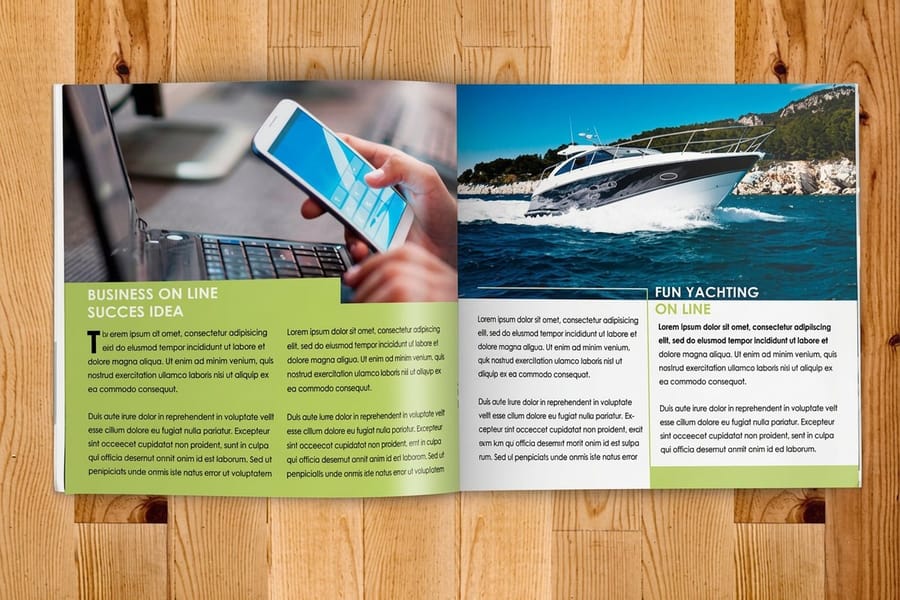
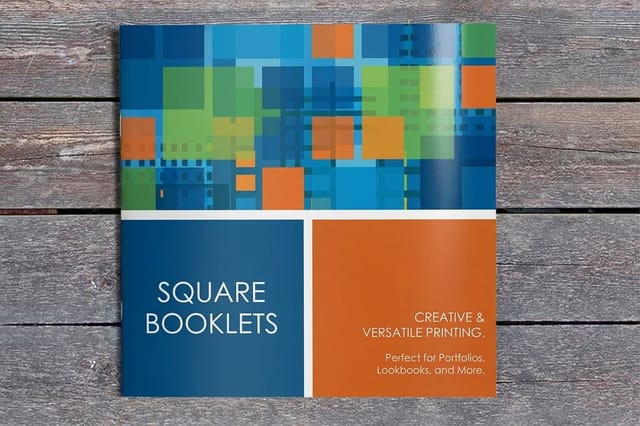
Format is worth a thought too. Square booklets stitch the same way but read differently, and a square page gives a photo spread more room without the letter size proportions; the square booklets video shows one. Whichever you pick, the full range with live pricing sits on the booklets and catalogs page, and the file setup for a multipage export is covered in our multipage printing guide. Stock choice drives how many pages the staple can hold, so read the paper weight guide before you commit to a count.
Wally explains saddle stitching
Four pages per sheet, two staples, one trim
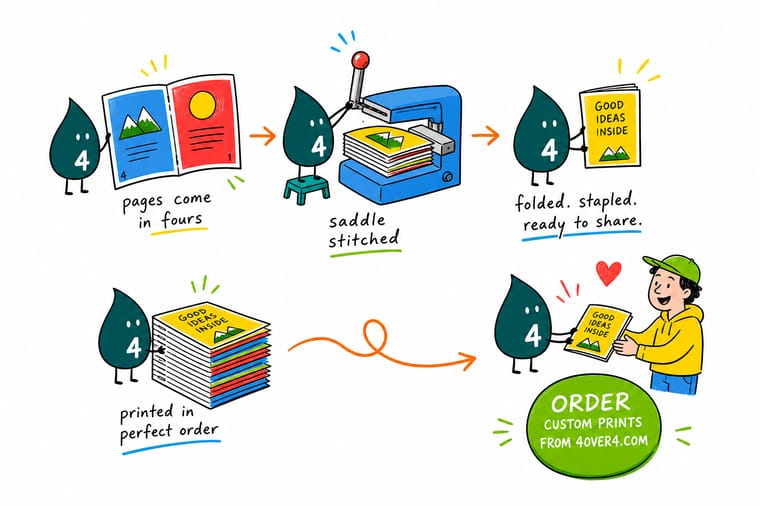
Wally folds each sheet once, which gives him four pages, then drops the sheets one inside another over the saddle bar and fires two staples through the fold. That is why he can build you 8, 12 or 16 pages but never 14. The cover is one of those sheets, so a 16-page booklet leaves him 12 pages of interior. The pages in the middle end up sticking out further than the cover, so the trim takes more off them, and he shifts those spreads back toward the spine before printing to even it out. Past about 64 pages the stack fights the staple and he will tell you to perfect bind it instead.
Price a saddle stitch booklet →
Specs and pricing
Booklet sizes, page counts and starting prices
Set the page count, the stock and the quantity, and the configurator prices it live. Standard booklets and saddle stitch booklets both start at $240.55. Choose 8 to 60 pages in fours at 5.5 by 8.5, 8.5 by 11 or 11 by 11 inches, inside pages on 100# gloss, 100# silk/matte or 70# uncoated text or a cover weight, and a 14pt gloss, 80# gloss or 100# gloss text cover.

Print it
Order a stitched booklet that opens flat
All three stitch the same way, from 25 copies at $240.55 on 7 business days of standard production: saddle stitch booklets and standard booklets at letter or half letter size, and square booklets at 11 by 11 inches for photo spreads.

More binding guides
Where to go next
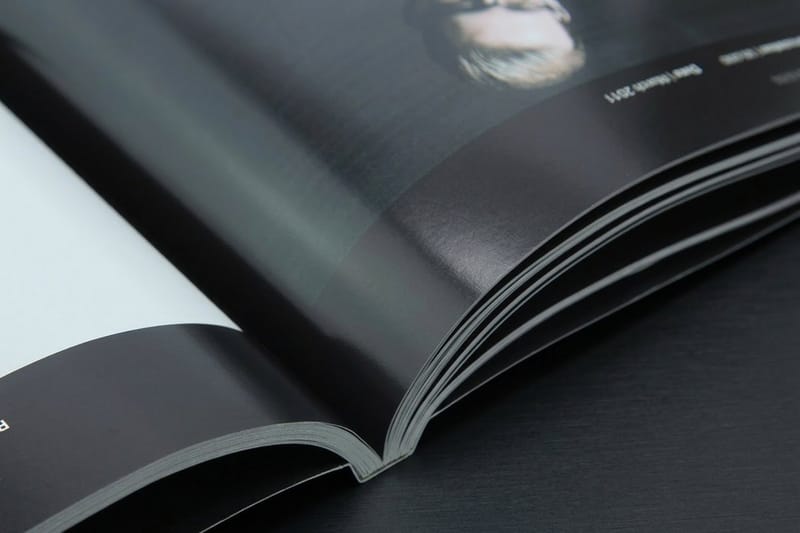

Printed in our Queens plant
Saddle stitched booklets and catalogs
Common Questions
Your saddle stitching questions, answered
What is a saddle stitched booklet?
It is a booklet made from folded sheets that nest inside one another and are stapled through the fold with two wire stitches, then trimmed on the other three sides. The name comes from the saddle-shaped bar the folded sheets straddle while the stitcher drives the wire through. It is the binding on most programs, catalogs, church bulletins, instruction manuals and short magazines, and it is the cheapest way to bind a multipage piece because there is no glue and no spine block to build.
Why does the page count have to be a multiple of 4?
Because one sheet of paper, folded once, gives you four printable pages: two on the front, two on the back. Add a sheet and you add four pages. There is no way to get to 10 or 14 without leaving a half sheet flapping loose. If your content lands on 13 pages you either grow it to 16 or cut it to 12, and the usual fix is a blank inside back page or a page for notes, contact details or a QR code.
Does the cover count in the page count?
Yes. In a saddle stitched booklet the cover is one of the folded sheets, so the front, the inside front, the inside back and the back are four of your pages. A 24-page booklet gives you 20 pages of interior. Printers call it self-cover when the cover prints on the same stock as the text, and plus-cover when the outer sheet is a heavier stock, which is quoted separately because it runs as its own sheet.
What is creep and do I have to fix it in my file?
Creep is the outward shift of the inner pages. The innermost spread wraps around every sheet outside it, so it pushes out toward the fore edge by roughly half the thickness of the whole folded stack, and the trim knife then takes more off its outer margin than off the cover. You do not have to correct it yourself. Our prepress applies shingling, which nudges each inner spread back toward the spine, during imposition. What you do need to do is keep page numbers, text and anything you care about at least a quarter inch inside the trim, and avoid a rule or a photo edge that runs parallel to the fore edge close to the margin, because a small shift shows up instantly on a straight line.
What is the maximum page count for saddle stitching?
Around 64 pages on light text stock, and less as the paper gets heavier. The problem is geometry rather than the staple: as the stack thickens the spine bulges, the fore edge steps visibly after trimming, and the booklet springs open instead of lying flat. On 100 lb gloss text you will feel it going wrong closer to 40 pages. Past that point perfect binding gives you a flat square spine you can print on, and coil binding gives you a book that lies open on a bench.
Should a 60-page catalog be saddle stitched or perfect bound?
It depends on what the catalog has to do. Saddle stitched at 60 pages still works on lighter stock, costs less, and lets a spread cross the gutter cleanly because the pages open flat in the middle. Perfect binding at 60 pages gives you a printed spine, which matters if the catalog will sit on a shelf or in a rack with other titles, and it feels more substantial in the hand. If it gets mailed and read once, saddle stitch. If it gets kept and referenced, spend the difference.
Can images run across the center spread?
Yes, and the middle spread is the one place in the booklet where a crossover works perfectly, because those two pages are physically the same sheet and the fold puts them dead level. Every other spread crosses two separate sheets held by staples, so the alignment is good but not exact. Keep faces and text out of the gutter on those, and put the full-bleed crossover image on the center pages if you have the choice.
Get Started
Saddle stitch booklets run 25 for $240.55, seven business days
Pick a page count in fours, choose your stock, and we fold, nest, stitch and trim it. Send the file as single pages and we handle the imposition and the shingling.
Legal Disclaimer
Gold Standard guarantees apply to all standard orders placed through 4over4.com. Price match requires verifiable proof of a competitor's published price for an equivalent product with matching specifications and turnaround time. Satisfaction guarantee covers manufacturing defects and print quality issues. Contact support with order number and documentation.
