
What Is Flexographic Printing and How Does It Work?


Flexographic printing wraps a flexible plate around a spinning cylinder and stamps fast-drying ink onto labels, film, and board at high speed. The plate, the anilox roller, and the run length decide whether it is the right process for you.
Flexographic printing is a high-speed relief method that uses flexible photopolymer plates and fast-drying inks to print on paper, plastic film, foil, and corrugated board. An anilox roller meters the ink and a doctor blade keeps it consistent, which makes flexo the dominant technology behind labels and packaging. It is most cost-effective on long runs, typically several thousand units and up.
In brief
Flexographic printing at a glance
Flexographic printing is the high-speed method behind most labels and packaging. A flexible plate picks up metered ink from an anilox roller and presses it onto paper, film, foil, or board. Water-based, solvent, and UV inks each match a different substrate. Flexo shines on long runs where the low cost per unit outweighs the upfront plate setup. For short or personalized jobs, a digital press is usually the better call.
Why flexographic printing matters for your brand
Flexographic printing sits behind almost every package you touch. The cereal box on your counter, the label on your shampoo bottle, the shipping carton on your porch, flexo printed all of them at a speed and cost no other method can match. Learning what flexographic printing is takes a few minutes and pays off every time you plan a custom label or a packaging run.
Once you know how flexo works, you make smarter calls on run length, substrate, and ink. You know when flexo is the right tool and when a short run belongs on a digital press instead. If you are prepping artwork before any print method, the Online Designer gives you a clean head start on file setup, and our printing guide hub covers the rest.
How flexographic printing actually works
Flexographic printing works like an industrial rubber stamp built for speed. A flexible photopolymer plate wraps around a rotating cylinder, picks up ink from an engraved anilox roller, and presses the image straight onto your material as it races through the press. That is the whole mechanism, and it is the reason your drink label stays bright in a cooler and your carton arrives with clean branding intact.
Four parts do the real work. The plate cylinder carries the flexible plate that holds your image. The anilox roller is engraved with tiny cells that meter an exact amount of ink onto that plate. The impression cylinder presses the substrate against the plate to transfer the image. Between the ink and the anilox sits a doctor blade, a thin metal strip that scrapes off the excess so every rotation lays down the same measured film of ink.
That metered consistency is the whole point, because your ten-thousandth print looks like your first. Flexo shares its relief-printing roots with the humble rubber stamp, so if plate care interests you, our guide on how to clean rubber stamps covers the same principles on a smaller scale.
Plate making: where flexo quality starts
The printing plate is the heart of flexographic printing. Plates are made from photopolymer, a light-sensitive plastic that hardens under UV light. Modern computer-to-plate imaging has pushed flexo quality to a place that would have looked impossible fifteen years ago, holding fine detail, small text, and smooth gradients on the plate surface.
Making a plate follows four clear steps:
- File imaging. Your artwork is lasered directly onto the plate using computer-to-plate technology.
- UV exposure. The plate hardens in the areas that will carry ink.
- Washout. The unexposed areas wash away, leaving the raised image standing proud of the surface.
- Drying and finishing. A final UV cure locks in durability before the plate mounts on the cylinder.
Clean, accurate files make better plates. If you want the fundamentals of print-ready artwork, our guides on bleed and trim and CMYK versus RGB color apply to flexo and every other method.
Ink systems used in flexographic printing
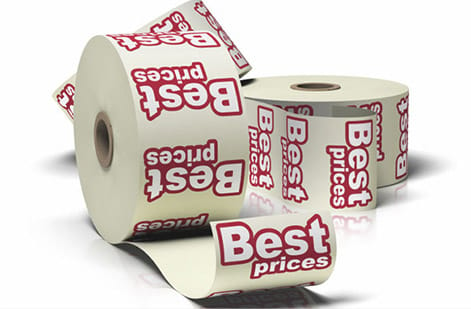
Flexo runs three main ink families, and each one is matched to a substrate and an end use. Pick the wrong one and the ink will not bond, so this choice matters as much as the plate itself.
- Water-based inks. The go-to for paper and corrugated board. They dry through absorption and evaporation and carry low odor, which makes them a common choice for food packaging.
- Solvent-based inks. Built for non-porous films and foils, where they grip slick surfaces and resist scratches and moisture.
- UV and EB inks. Cured instantly by ultraviolet or electron-beam light. They allow blistering press speeds and leave a durable, high-gloss finish for premium labels.
Food and beverage work carries strict rules about which inks may touch a product, so always confirm compatibility before the run. For color that has to match across every package, our guide on spot color printing explains how brands lock a shade in place.
Flexo versus offset, gravure, and digital
Knowing flexographic printing means knowing where it beats the alternatives and where it does not. Offset lithography prints exceptional images on paper and is the gold standard for brochures and commercial work, but it cannot run plastic film or corrugated board. Flexo can, which is why packaging leans on it. Our guide on offset lithography covers that side in depth.
Gravure produces arguably the finest packaging images of all, but its engraved metal cylinders cost a fortune to make, so it only pays off across millions of impressions. Flexo delivers strong quality at a fraction of the plate cost, which keeps shorter runs practical.
Digital needs no plates at all, so it wins on short runs, samples, and variable data. Above roughly five thousand units, flexo pulls ahead on speed and cost per piece. Offset is also what prints most flyers and folded brochures, so knowing the split helps you route each job correctly. If your project is small or personalized, compare methods with our overview of screen printing before you commit.
What flexographic printing can print on

This is where flexo earns its reputation. The flexible plate conforms to surfaces that would jam or damage a rigid offset plate, so flexo handles a range of materials no other single method can match at production speed.
- Corrugated board for shipping boxes, retail displays, and pizza boxes.
- Plastic films for food packaging, shrink wrap, and bags.
- Paper and paperboard for folding cartons, labels, and gift wrap.
- Metallic foils for snack packaging and blister packs.
- Non-woven fabrics for reusable shopping bags and medical packaging.
That breadth is why flexo dominates packaging, and specialty seasonal pieces like Christmas door hangers print on the same versatile stock. If you are weighing box options, the folding carton guide and our custom box printing range walk you through substrate and structure together.
Common uses of flexographic printing
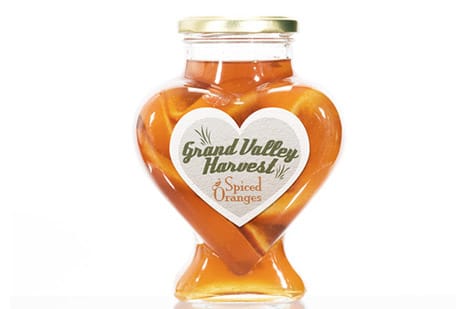
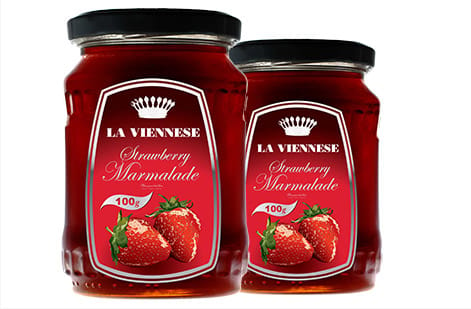
Flexo touches nearly every consumer aisle. Food and beverage packaging leads the list, from cereal boxes to juice cartons to candy wrappers, because food-safe inks on flexible film are exactly what flexo does best.
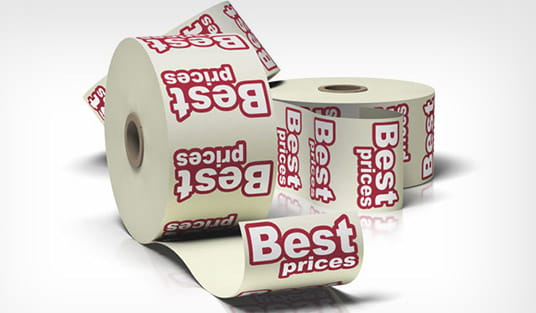
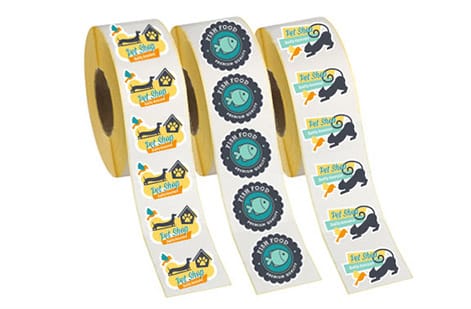
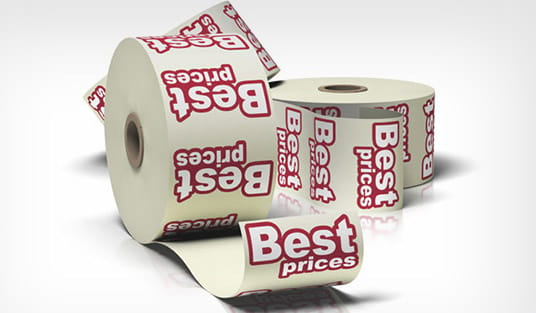
Labels and tags are the other giant. Narrow-web flexo presses are built specifically for label printing, running rolls of stock at high speed with die-cutting inline. Pressure-sensitive labels, shrink sleeves, and hang tags almost all come off a flexo press.
Corrugated boxes cover both the plain brown shipper and the fully printed retail-ready carton on the shelf, while newspapers and directories still lean on flexo for its speed on newsprint. To pair labels with packaging, browse roll labels and custom mailer boxes, then round out a branded kit with custom magnets and envelopes. Adding a scannable code to a label is easy too, and our complete guide to QR codes shows how to size one so it scans every time.
Quality factors: dot gain, registration, and anilox
Dot gain is the biggest thing to design around. When ink transfers from a soft plate under pressure, dots spread slightly, so highlights can fill in and shadows can plug. Skilled prepress teams shrink the dots in the file so the printed result lands where it should. Ask your printer for their dot gain curves before you separate the art.
Registration keeps multi-color work sharp. Each color prints from its own plate on its own station, so if the plates are not mounted with precision, colors shift and the image blurs. Camera-based mounting and pin registration hold that alignment tight.
Anilox choice controls how much ink reaches the plate. High cell counts feed fine detail, lower cell counts lay down heavy solids. Get it wrong and you either starve the image or flood it. For the file side of quality, our guide on print resolution and DPI keeps your artwork press-ready.
Where flexographic printing is heading

Extended color gamut printing is the headline shift. Instead of mixing a custom spot color for every job, presses run a fixed set of seven inks that reproduce most brand colors. That cuts plate changes, trims waste, and speeds makeready, which matters for brands juggling many packaging versions.
Automation and closed-loop color control now watch print quality in real time and nudge ink density and registration on the fly. Less hand-tuning means less waste and steadier results across a long run.
Sustainability keeps pushing flexo forward. Water-based and UV inks lower emissions, thinner plates use less material, and flexo prints cleanly on recyclable and compostable stock. If a greener package is the goal, our green printing options line your materials up with that commitment, and the packaging design guide helps you plan it.
Mistakes to avoid on flexo print projects
Even seasoned designers trip on the same flexo pitfalls. Avoid these and you save real time and money.
Ignoring dot gain compensation. Send an offset-ready file straight to flexo and the print comes back dark and muddy. Adjust your separations to the printer's curves first.
Specifying detail that is too fine. Reverse text below six point, hairlines under half a point, and tiny gradients can all fall apart on press. Design with the process in mind, and lean on the packaging file-prep guide when in doubt.
Matching the wrong ink to the substrate. Water-based ink will not hold on a slick film, and the wrong ink on food packaging can break the rules. Confirm compatibility before production.
Underestimating makeready on short runs. Plates, setup, and color matching take time, so for a few thousand units digital often wins. Know where your crossover point sits, and a blank template keeps your file square from the start.
Wally explains flexographic printing
One flexible plate, a whole shelf of packaging
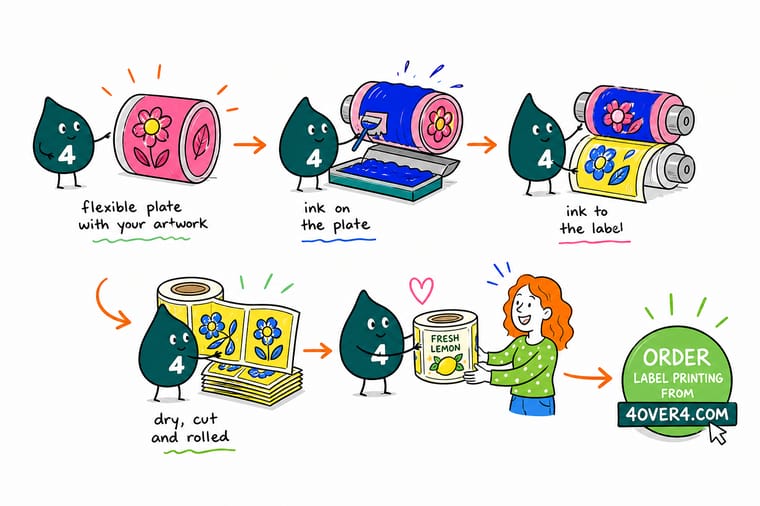
Wally thinks of a flexo press as a giant rubber stamp that never gets tired. A soft plate grabs a metered film of ink from the anilox roller and presses your label onto film, foil, or board thousands of times a minute, landing the same crisp result every pass. That is why flexo owns the packaging aisle. When your product is ready for its own labels, skip the guesswork and order sharp, made-to-spec labels built for your bottle, box, or jar at 4OVER4.
Order custom labels →Specs and pricing
Custom label specs and pricing
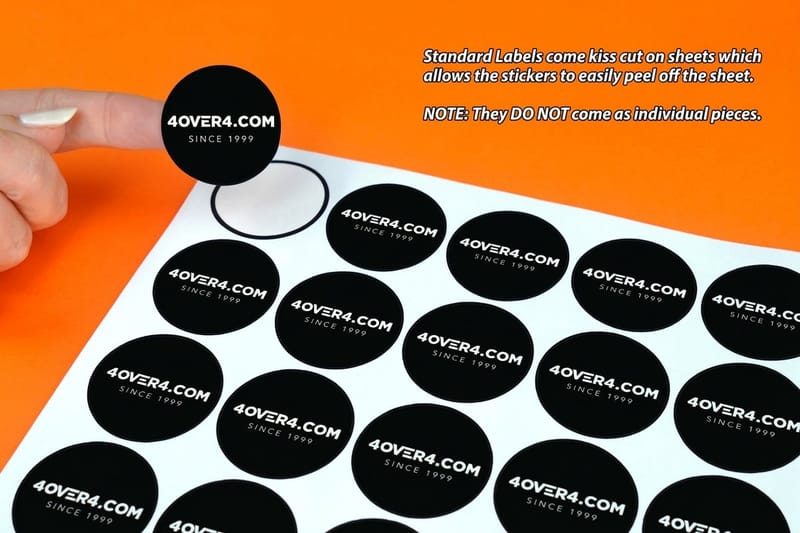
Ready to put flexo-grade labels on your own product? Here is what a custom label run gives you at 4OVER4.COM, with live specs and price-per-unit straight from the configurator.
| Quantity | Price Per Unit | Total |
|---|---|---|
| 25 | 95.5¢ | $23.88 |
| 50 | 72.9¢ | $36.44 |
| 100 | 42.7¢ | $42.72 |
| 150 | 32.7¢ | $49.01 |
| 200 | 27.6¢ | $55.29 |
| 250 | 24.6¢ | $61.57 |
| 300 | 22.0¢ | $65.97 |
| 400 | 17.6¢ | $70.36 |
Print it
Order labels and packaging print at 4OVER4
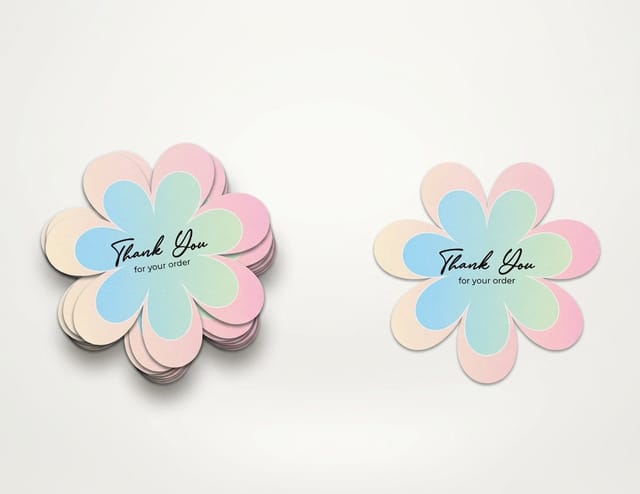
See it in use
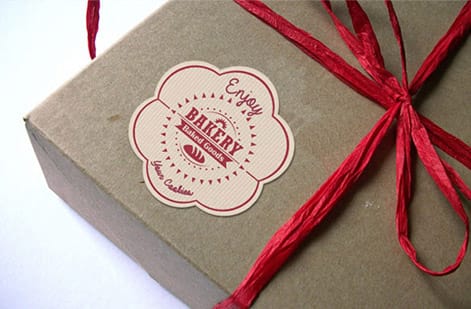
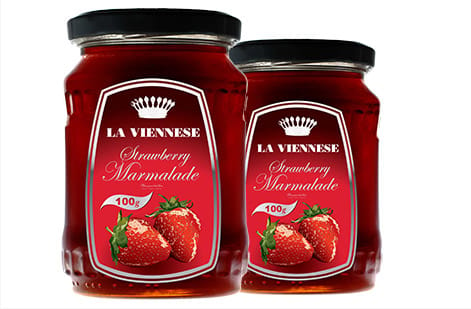
Label work customers printed in volume
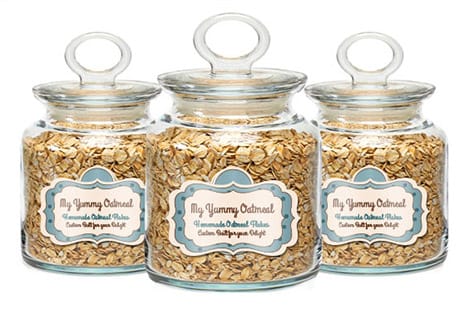
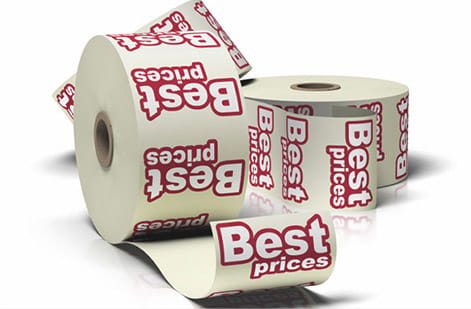

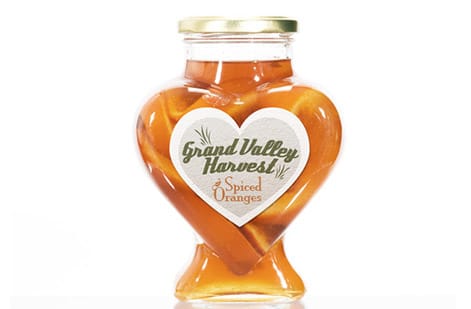
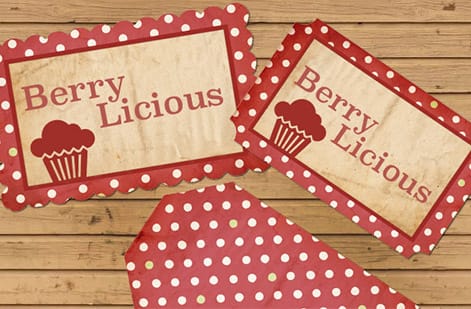
Explore more
Where to go next
By the numbers
What we run on our own label press
Common Questions
Common questions about flexographic printing
What is flexographic printing used for most often?
Flexographic printing is used mostly for packaging, including food wrappers, corrugated boxes, labels, shopping bags, and beverage cartons. It leads because it prints at high speed on plastic film, foil, and cardboard that other methods cannot handle efficiently. Narrow-web flexo presses also produce the majority of pressure-sensitive labels worldwide.
How does flexographic printing differ from digital printing?
Flexo needs physical plates and press setup, which makes it cost-effective for long runs, typically five thousand units and up. Digital printing needs no plates, so it fits short runs and variable data. Flexo runs faster and handles more substrate types, while digital gives quicker turnaround on small quantities. Your run length decides which method saves you money.
Can flexographic printing produce photo-quality images?
Modern high-definition flexo plates reproduce images at 175 lines per inch and higher, which approaches offset quality. You will not match the sharpness of gravure or high-end offset on coated paper, but for packaging the output looks excellent. Careful prepress work, especially dot gain compensation, is the key to getting the best result.
What inks does flexographic printing use?
Flexo uses three main ink types. Water-based ink is best for paper and cardboard, solvent-based ink is best for plastic films and foils, and UV-curable ink works on many substrates with instant curing. The right choice depends on your substrate, the end-use environment, and any rules such as food-contact safety.
Is flexographic printing environmentally friendly?
Flexo has made real progress on sustainability. Water-based and UV-curable inks produce low or zero emissions, thinner photopolymer plates reduce waste, and the process prints efficiently on recyclable and compostable substrates. For the marketing materials that go with your packaging, 4OVER4.COM offers eco-conscious stocks and processes.
How much does flexographic printing cost?
Upfront costs cover plate production and press setup, which can run from a few hundred to several thousand dollars depending on the number of colors and plate sizes. Per-unit costs drop sharply as volume grows. For runs over ten thousand units, flexo usually offers the lowest cost per piece of any print method, while short runs are better served by digital printing.
Can I add QR codes to flexo-printed packaging?
Yes. Modern flexo presses reproduce QR codes reliably as long as you give them room and contrast. Keep each code at least one inch square with strong contrast against the background, and test print before the full run. For layout and sizing, our complete guide to QR codes walks through building a code that scans every time.
Get Started
Order 100 roll labels on White BOPP from $322.98
Pick your size and material, drop in your artwork, and we print sharp, durable labels that hold up on any bottle, box, or jar.
Legal Disclaimer
Gold Standard guarantees apply to all standard orders placed through 4over4.com. Price match requires verifiable proof of a competitor's published price for an equivalent product with matching specifications and turnaround time. Satisfaction guarantee covers manufacturing defects and print quality issues. Contact support with order number and documentation. On-time delivery rate based on tracked orders 1999 to 2026. Individual results may vary based on shipping carrier performance.
