
Sustainable Printing Explained, From Recycled Stocks to Soy Inks


Jordan is our labels, packaging and sustainability voice, built from the knowledge of our production team, with over 20 years in printing.
Three things separate a green print job from an ordinary one: the stock, the ink system, and how many sheets end up unused. Each one changes something measurable, carries a cost, and stops helping at a point.
Sustainable printing is ordinary commercial printing with three things changed: the paper, the ink system, and the quantity that gets wasted. The paper does most of the work, because a print job is mostly paper by weight, and recycled or unbleached kraft stock removes a whole processing stage from the sheet. Soy and vegetable inks swap the petroleum carrier for plant oil, which helps the sheet de-ink later but leaves the pigment unchanged. Sizing the run to real demand beats both.
Quick answer
The stock, the ink, and the sheets nobody hands out
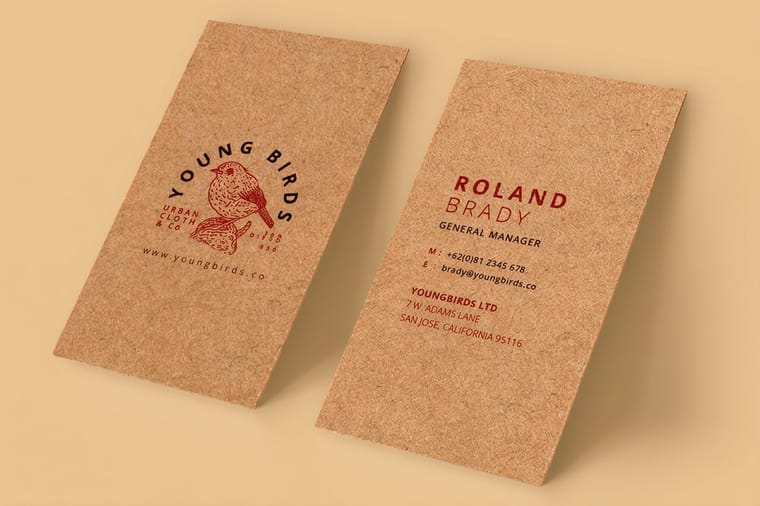
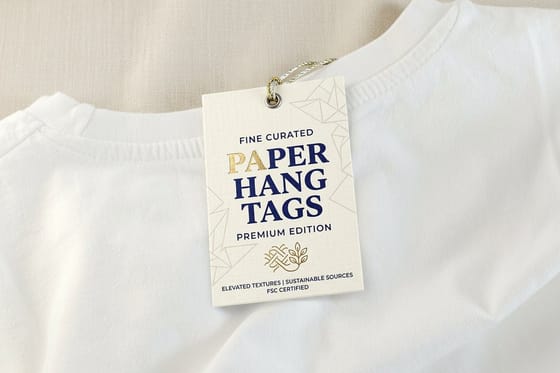
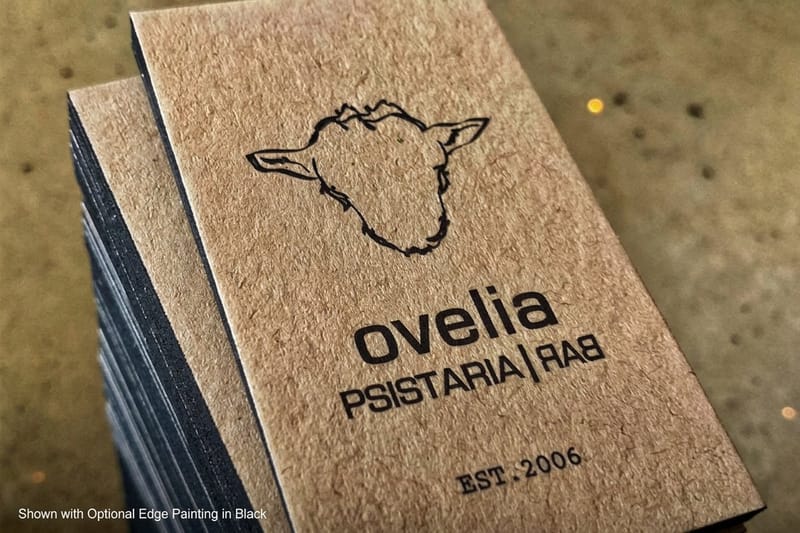
There is no single certificate that makes a print job sustainable, and no supplier can hand you one. What exists is three separate decisions, and each one shows up as a line on the order form. Recycled and kraft stocks change where the fiber came from and how much processing it took: our kraft business cards print on 18pt kraft uncoated cover at 100% post consumer waste, and recycled hang tags offer a 13pt uncoated cover at 100% PCW or a 14pt uncoated cover at 30% PCW. Vegetable based inks change the carrier the pigment sits in and how easily the sheet de-inks afterward. Run length changes how much of the order ever gets used. A printer who can name a post-consumer percentage, an ink system and a realistic quantity is doing more than one who says the word green.
Recycled and Kraft Stocks, and What They Do to Your Artwork
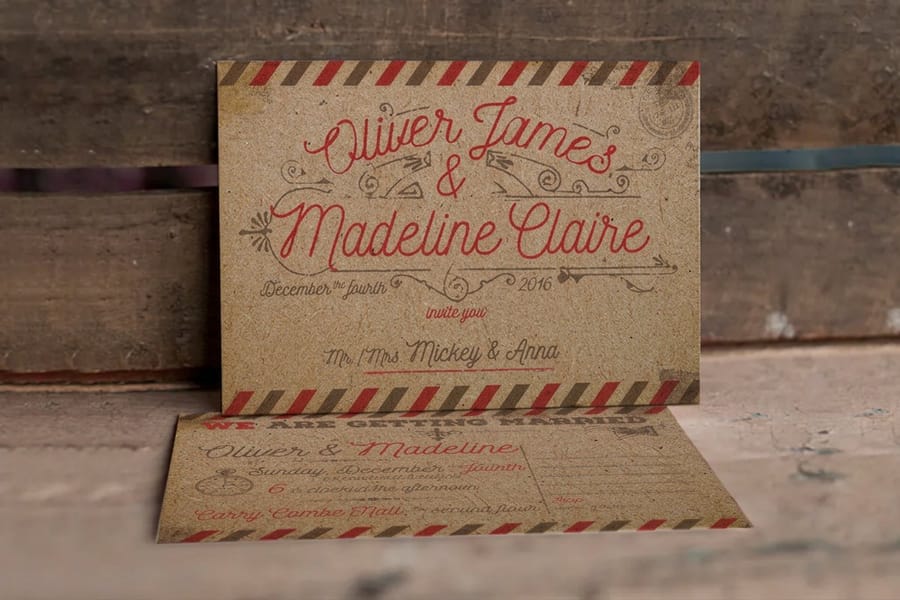
Paper is where a print job carries almost all of its physical weight, so the sheet is the decision that matters most. There are three realistic alternatives to bright virgin coated stock, and each one changes how the ink behaves.
Recycled stock is made from recovered fiber that has been pulped and de-inked. It is sold by its post-consumer waste share, usually written as a percentage, and 30 percent is the ordinary mill grade while 100 percent is a specialty order. Kraft skips the bleaching stage entirely, which is why it is brown, and that single omission removes a whole chemical process from the sheet's history. Cotton is not recycled at all, but it is made from textile fiber rather than wood pulp and it lasts decades.
| Stock | What it is | How it prints | Watch out for |
|---|---|---|---|
| Recycled | De-inked recovered fiber, blended with fresh fiber and sold by post-consumer share. | Slightly warmer base, a touch more absorbent than virgin stock. | Photos lose a little snap. Ask for the actual percentage, not the word. |
| Kraft | Unbleached pulp, left brown because no brightening stage is applied. | Every color prints over brown, so it shifts. White has to be a foil or a separate white ink. | Pale inks disappear. Bold marks and dark type hold up. |
| Cotton | Textile fiber rather than wood pulp, soft and thick. | Very absorbent, so fine detail spreads slightly and solids look soft. | The most expensive of the four by a wide margin. |
| Virgin coated | Bleached wood pulp with a clay coating. | The sharpest, brightest reproduction available. | The highest fiber demand, and the coating complicates recycling. |
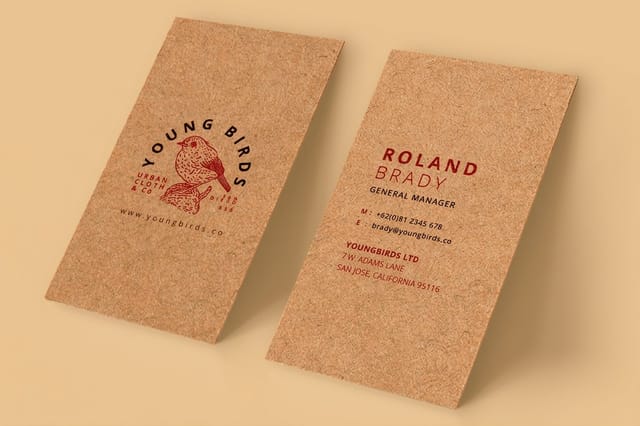
Read the third column before the second. Kraft is the most common choice at 4OVER4.COM and the one most people design wrong: on a brown base every ink is effectively overprinting a mid tone, so a pastel logo turns muddy and a photograph turns flat. Line art, heavy type and one or two strong spot colors are what the sheet is good at. Kraft business cards start at $24.75, kraft postcards at $28.49, and the side by side in our kraft versus standard business cards guide shows exactly how much the base shifts the color.
Soy and Vegetable Inks, and What They Do Not Fix
An offset ink is pigment carried in a vehicle. Conventional vehicles are built on petroleum distillates; soy and other vegetable inks replace most of that carrier with plant oil. That is the entire change, and it is worth understanding narrowly rather than broadly.
What it genuinely improves: less volatile solvent evaporates as the ink sets, and the ink lets go of the fiber more easily during de-inking, so a soy-printed sheet recycles more cleanly than a conventionally printed one. What it does not do: the pigment is identical, so the color is not any safer or any different; the printed sheet is still not compostable; and there is no single legal threshold behind the phrase "soy ink", so the share of soy in the vehicle varies between suppliers.
The real trade-off is drying. Vegetable oils oxidise more slowly than petroleum carriers, which is fine on coated stock but noticeable on absorbent uncoated and kraft sheets, where a heavy solid needs longer before the stack can be cut or folded. That extra dwell time is why a shop running a tight same-day schedule sometimes reaches for UV-cured ink instead, which sets instantly under a lamp with almost no solvent release. The catch is on the other end: a cured UV film is harder to remove during de-inking, so you trade a press-room gain for a recycling loss. Neither answer is wrong, but a printer who claims both benefits at once is not being straight with you. Our guide to ink in commercial printing covers how each system sets on different stocks.
The Certifications Worth Asking About, and What Each One Covers
Most green print claims collapse under one question: who certified what, and are they still certified. The labels below cover different links in the chain, and none of them covers the whole job.
| Claim | What it certifies | Who must be certified | What it does not tell you |
|---|---|---|---|
| FSC | Chain of custody from a responsibly managed forest through every handler of the fiber. | Forest, mill, merchant and printer, each separately. | Nothing about ink, energy or how far the paper travelled. |
| SFI | A separate North American forest management and fiber sourcing standard. | The same chain, under its own scheme. | It is not interchangeable with FSC, and the marks are not swappable. |
| Post-consumer waste | A stated percentage of fiber recovered after consumer use. | Nobody. It is a mill specification, not a certification. | Whether the remaining fiber is virgin, certified, or neither. |
| Renewable energy claims | How the mill or press facility buys its electricity. | The facility making the claim. | Anything at all about the paper itself. |
The one that trips people up is FSC. The mark belongs to a chain, not to a sheet, so putting the FSC logo on your own printed piece requires the printer running the job to hold current chain-of-custody certification and to reference their own license code. Buying certified paper is not enough on its own. If the mark matters to your brand, settle it before the file goes to press, and read printing on FSC paper and using the FSC logo for the exact rules. For everything else, the useful move is asking a supplier to name the specification rather than the adjective: a post-consumer percentage, an ink system, a stock code. Our guide to choosing an eco friendly printing service turns that into a short list of questions you can send by email.
Where the Choice Actually Pays Off, Product by Product
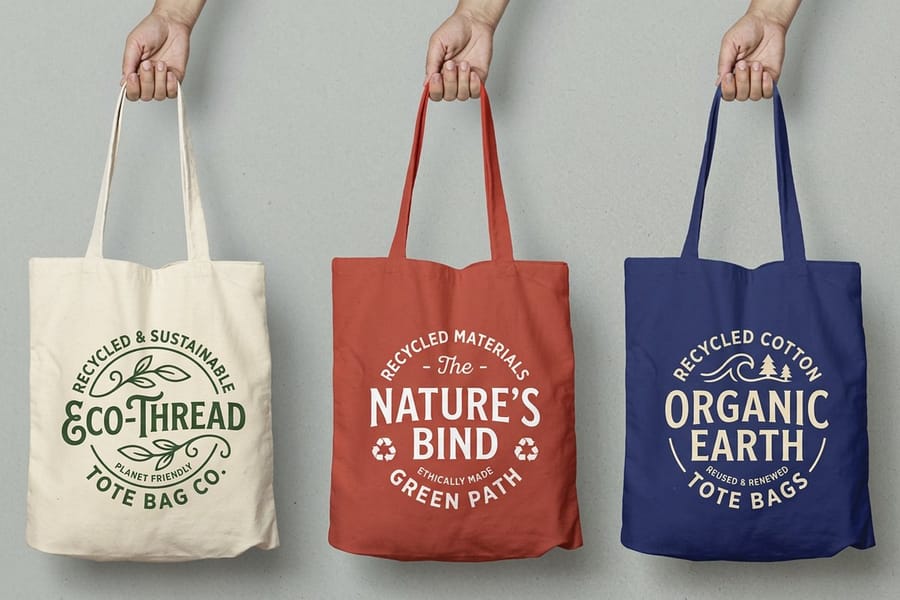
A sustainable stock earns its place where the piece is kept, reused, or seen up close. It earns nothing on something that gets glanced at and dropped, and that distinction is worth more than any certificate.
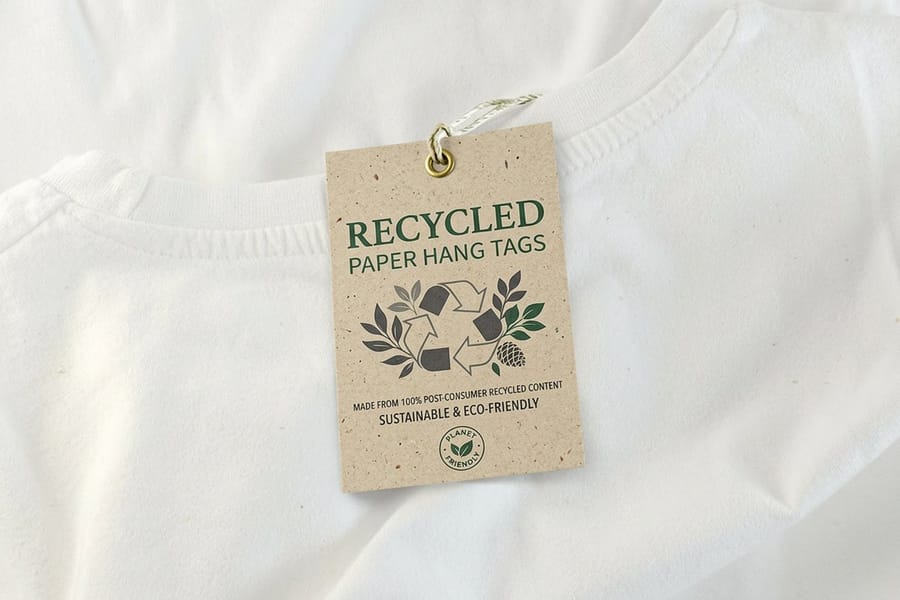
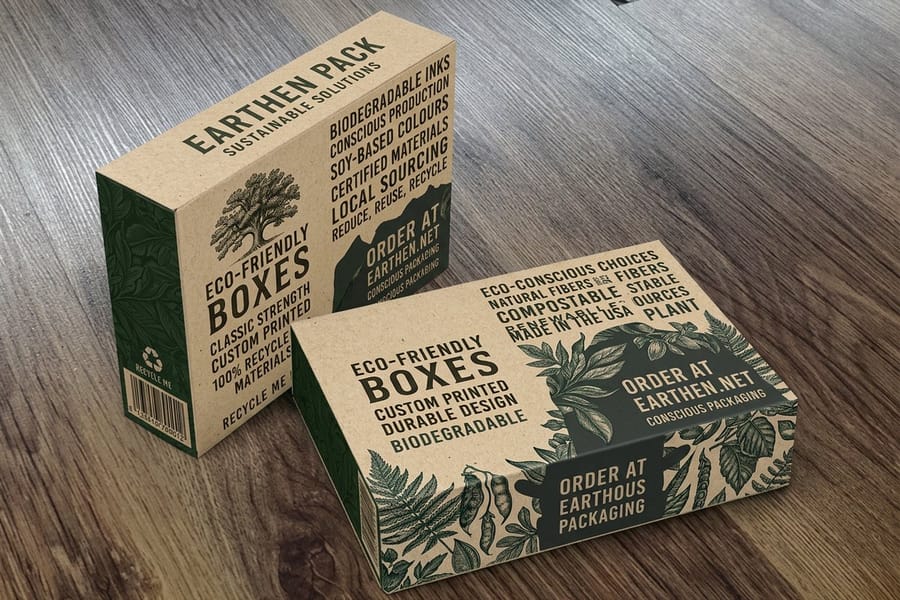
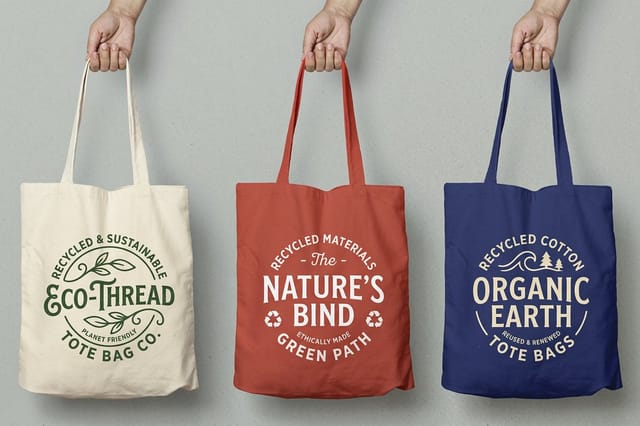
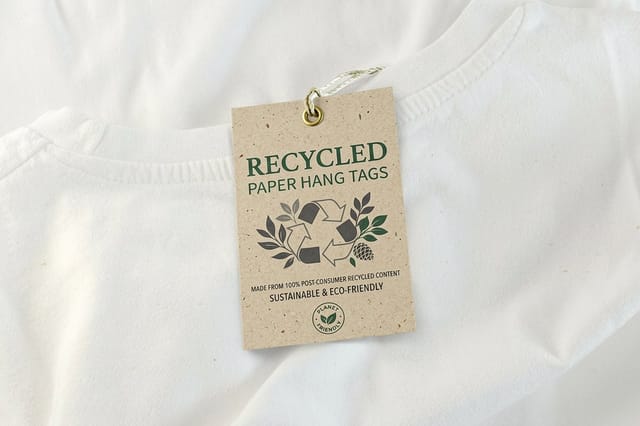
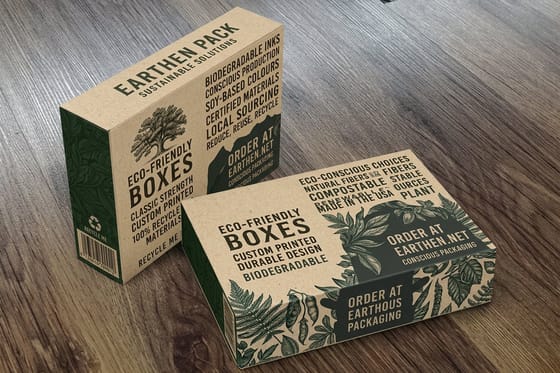
Packaging is the clearest case, because the customer physically handles it and forms an opinion about the brand while doing so. Eco friendly boxes start at $711.78 for a production run, which is a bulk commitment rather than a sample order, so plan the artwork carefully before committing. Recycled hang tags at $25.27 are the low-risk way to put recovered fiber on a product, and they sit next to the garment where the claim is actually read. On the reusable side, recycled tote bags start at $22.73 and get used for years, which is a genuinely different footprint from a printed sheet. If you are weighing the fabric options, cotton versus canvas versus recycled totes compares how each one takes a print.
For everyday print, the honest comparison is narrow. Kraft business cards at $24.75 against standard business cards at $17.57 is a small premium on something you hand over deliberately, and the brown stock reads as a design decision rather than a compromise. Browse the full kraft printing collection to see what the sheet is offered on, or the hang tags category and tote bags category for the retail side.
Then size the run properly. Ordering four times what you need because the unit price fell is the most common way a carefully chosen stock gets thrown away. Digital short runs exist to solve exactly that, and how online printing works explains where run length is decided in the schedule.
Wally explains sustainable printing
Pick the sheet, pick the ink, then stop overordering
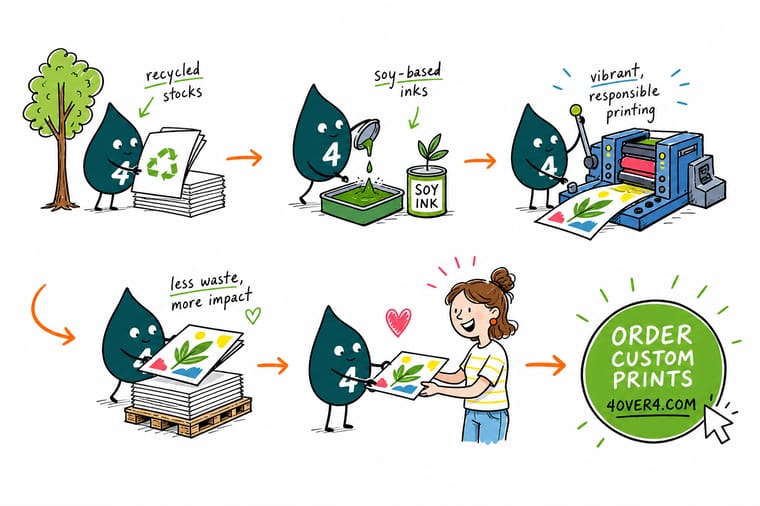
Wally checks three things and ignores the slogans. First the stock: kraft skips the bleaching stage, recycled reuses fiber that has already been through a press, and both change how the ink lands. Second the ink: vegetable oil instead of petroleum in the carrier, which helps the sheet de-ink later but sets more slowly on absorbent paper. Third, and the one he cares about most, the quantity. A right sized run beats every green label on the page, because the greenest sheet is the one you never had to print.
Order kraft business cards →
Specs and pricing
Recycled and kraft options, sizes and starting prices
Kraft business cards come in 6 sizes from 100 cards, kraft postcards in 16 sizes from 2 by 4 to 6 by 11 inches from 100, both on 18pt kraft at 100% PCW with an optional white ink layer, and recycled hang tags in 7 sizes from 50. Each widget reads the live 4OVER4.COM configurator for sizes and starting prices.
Print it
Order on recovered and unbleached stock
Kraft business cards run on 18pt kraft at 100% PCW with a 5 business day turnaround, tote bags print one or both sides from a single bag, and recycled hang tags come drilled with a 1/8 or 3/16 inch hole from 50.
%22%2F%3E%3Ccircle%20cx%3D%2242%22%20cy%3D%2249%22%20r%3D%2227%22%20fill%3D%22%23f59e0b%22%20opacity%3D%220.15%22%2F%3E%3Ccircle%20cx%3D%2278%22%20cy%3D%2258%22%20r%3D%2214%22%20fill%3D%22%23f59e0b%22%20opacity%3D%220.1%22%2F%3E%3Crect%20x%3D%2272%22%20y%3D%2229%22%20width%3D%2227%22%20height%3D%2234%22%20rx%3D%224%22%20fill%3D%22%23f59e0b%22%20opacity%3D%220.08%22%20transform%3D%22rotate(37%2080%2030)%22%2F%3E%3C%2Fsvg%3E)
Explore more
Where to go next
The eco printer guide lists the questions that expose a vague green claim, the FSC guide explains when you may print the mark, and the kraft guide shows how the brown sheet changes ink color.



By the numbers
Kraft, recycled and post consumer waste stocks
Common Questions
Your sustainable printing questions, answered
What is sustainable printing?
Sustainable printing is ordinary commercial printing with three things deliberately changed: the paper, the ink system, and the quantity that gets wasted. In practice that means recycled or responsibly sourced fiber instead of virgin bleached stock, vegetable based inks instead of petroleum based ones, and a run length matched to what you will actually hand out. There is no single certificate that covers all three at once, which is why a supplier who says only "we print green" has told you nothing. Ask which of the three they can document.
Is recycled paper always the greener choice?
Not automatically. Recovering fiber still takes water, energy and chemistry: the pulp has to be broken down, washed, and de-inked before it can be made into a sheet. Recycled stock generally wins on fiber demand and on keeping paper out of landfill, but a heavily coated recycled sheet trucked across the country is not obviously better than an uncoated local one. The clearer wins are unbleached kraft, which skips the brightening stage entirely, and a lighter sheet weight, which cuts both material and shipping mass.
Are soy inks actually better than conventional inks?
They are better in two specific ways and neutral in the rest. Soy and other vegetable based inks replace most of the petroleum distillate in the ink vehicle, which lowers the volatile solvent released as the ink sets, and they release from fiber more easily during de-inking, so the sheet recycles more cleanly. What they do not change: the pigment is the same, the sheet is not compostable because it carries ink, and vegetable inks set more slowly on uncoated stock, so a heavy solid can offset onto the sheet above it if the job is stacked too soon.
What does FSC certified actually mean on a print job?
The Forest Stewardship Council certifies a chain of custody, not a finished product. Every business that handles the fiber, from the forest to the mill to the printer, has to hold its own certification for the label to be legitimate on your piece. The label also comes in grades: FSC 100 percent, FSC Recycled, and FSC Mix, and Mix is by far the most common on commercial stock. If you plan to print the FSC mark on your own piece, read our guide on printing on FSC paper and using the FSC logo first, because using the mark without the certification behind it is the most common mistake in green print claims.
Does recycled or kraft stock cost more than standard stock?
A little, and the gap is smaller than most people expect. Kraft business cards start at $24.75 at 4OVER4.COM against $17.57 for standard business cards, so the uplift on a box of cards is a few dollars rather than a different budget. Recycled hang tags start at $25.27 and kraft postcards at $28.49. The stocks that genuinely cost more are the specialty ones: cotton and ultra thick kraft sit well above the standard sheet because of the material and the caliper, not because of the recycled content.
What is the single biggest thing I can change?
The quantity. Print buyers routinely order three or four times what they need because the unit price drops, and the surplus goes stale in a cupboard and then into a bin. A run sized to a real distribution plan beats every stock and ink decision on this page. Second to that is designing for the sheet you chose, because a job that comes back blotchy gets reprinted, and a reprint doubles the footprint of the whole order.
Get Started
Kraft business cards on 100% PCW run 100 for $24.75
Choose kraft or recycled stock, size the run to what you will actually hand out, and we print it in New York and ship it to you.
Legal Disclaimer
Gold Standard guarantees apply to all standard orders placed through 4over4.com. Price match requires verifiable proof of a competitor's published price for an equivalent product with matching specifications and turnaround time. Satisfaction guarantee covers manufacturing defects and print quality issues. Contact support with order number and documentation.
