14pt vs 16pt Business Cards - What You Need to Know
Choosing between 14pt and 16pt Business Cards comes down to feel, budget, and purpose. 14pt measures 0.014 inches thick - flexible, affordable, and great for high-volume orders. 16pt measures 0.016 inches thick - closer to a credit card's weight, with a sturdier hand-feel that signals quality. 4OVER4 prints both options across 60+ paper stocks, so your decision shapes the first impression your card makes.
Why Business Card Thickness Matters More Than You Think
Hand someone a flimsy card and watch what happens. They fold it. Toss it. Forget you exist. Hand them something with real weight and they pause. They run a thumb across the surface. That's the difference between 14pt vs 16pt Business Cards - and it's a difference worth understanding before you print.
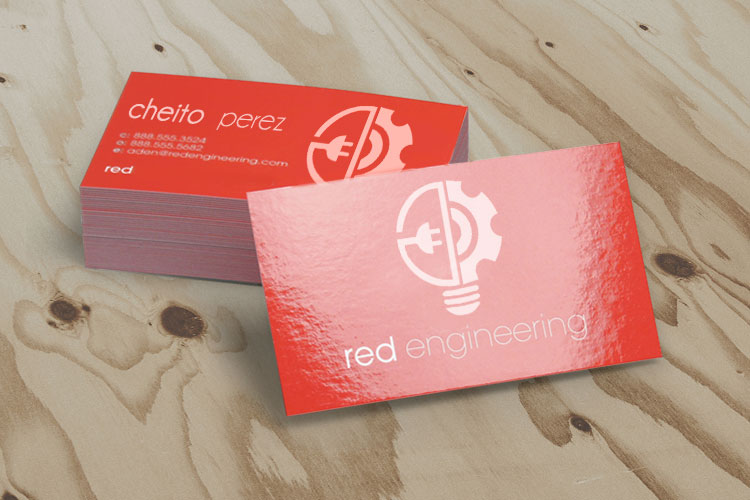
4OVER4 has printed over 10 billion cards since 1999, and thickness is one of the most common questions customers ask. This guide breaks down exactly what separates 14pt from 16pt stock, which industries prefer each, and how to pick the right one for your goals. You can explore our Design Templates to start visualizing your card right away, or check out the Online Designer to build one from scratch.
"Standard Business Cards /5"
| Quantity | Price Per Unit |
|---|---|
| 100 | $0.18 |
| 4,000 | $0.03 |
| 35,000 | $0.02 |
| 100,000 | $0.02 |
Ink Color
Finish
Variable Data (Codes, Names, Etc.)
Rounded Corners
Total Sets
Proof Options
"Free Business Cards With Free Shipping /5Paper Type14pt Gloss Cover14pt Uncoated Cover (30% PCW)Proof OptionsStraight To ProductionFree Online Proof"
"Die-Cut Any Shape Business Cards /5"
Ink Color
Finish
Die Cutting
Total Sets
Proof Options
Before you order, take a look at our Loyalty Program to earn points on every purchase. And don't miss the Daily Deals page for current pricing specials on Business Cards.
What Does "Pt" Actually Mean on a Business Card?
"Pt" stands for points - a standard unit in the printing industry that measures paper thickness in thousandths of an inch. A 14pt Business Card is 0.014 inches thick. A 16pt Business Card is 0.016 inches thick. That 0.002-inch gap sounds tiny on paper (literally), but your fingers notice it immediately.
Think of it this way. A standard sheet of copy paper is about 3pt. A 14pt card is roughly four times thicker than that. A 16pt card pushes closer to the thickness of a credit card. Both are considered professional-grade stock, but they serve different purposes and create different impressions. For more printing fundamentals, visit the Faq Hub where 4OVER4 covers everything from file setup to finishing options.
How 14pt Card Stock Feels and Performs
14pt is the workhorse of Business Card printing. It's sturdy enough to hold up in a wallet or card holder, but flexible enough that it won't snap if someone bends it slightly. That flexibility actually makes it easier to run through desktop printers and commercial presses at high speeds, which keeps costs down.
Best uses for 14pt Business Cards:
- High-volume networking events where you'll hand out hundreds of cards
- Trade shows, conferences, and expos with large attendee counts
- Startup teams ordering cards for 10+ employees at once
- Promotional inserts tucked into product packaging or mailers
- Budget-conscious projects that still need a polished look
14pt doesn't mean cheap. It means practical. When you're ordering 1,000+ cards for a sales team, the per-unit savings add up fast. And with the right finish - a matte coating or spot UV - a 14pt card can feel just as premium as thicker stock.
"We ordered 14pt Business Cards with a matte finish for our entire real estate office - 12 agents, 500 cards each. They looked sharp, felt professional, and the price was half what we expected."
How 16pt Card Stock Feels and Performs
Pick up a 16pt card and the first thing you notice is the weight. It sits heavier in your hand. It doesn't flex as easily. There's a rigidity that communicates permanence - like you're holding something that was made to last, not tossed out after a meeting.
Best uses for 16pt Business Cards:
- Luxury brands, boutique services, and high-end consultants
- Creative professionals - photographers, designers, architects
- Executive-level cards where first impressions carry real weight
- Cards with specialty finishes like foil stamping, embossing, or soft-touch lamination
- Small-batch orders where per-card cost matters less than perceived quality
16pt is the sweet spot between standard and ultra-thick (32pt). It's thick enough to feel premium without the cost jump that comes with heavier stocks. If you're learning about other print projects too, check out How To Make Flyers for tips on complementary marketing materials.
Side-by-Side: 14pt vs 16pt Business Cards
Let's put these two stocks next to each other so you can see exactly where they differ. The comparison isn't about one being "better" - it's about matching the right stock to the right situation.
Thickness: 14pt is 0.014 inches. 16pt is 0.016 inches. That's a 14% increase in thickness.
Weight in hand: 14pt feels like a standard professional card. 16pt feels noticeably heavier - closer to what you'd get from a luxury brand.
Durability: Both resist normal wear. 16pt holds up better against bending and corner damage over time.
Cost: 14pt is more budget-friendly, especially at higher quantities. 16pt costs slightly more per card but delivers a stronger tactile impression.
Finish compatibility: Both work with gloss, matte, UV coating, and lamination. 16pt pairs particularly well with soft-touch matte and raised spot UV because the thicker base gives finishes more surface stability.
If you're working on a complete brand package, you might also want to read about How To Make Envelopes to match your card stock to your stationery suite.
Blank Templates


Which Industries Prefer Which Thickness?
After 25+ years of printing for 150,000+ businesses, 4OVER4 has seen clear patterns in who orders what.
Real estate agents tend to go with 16pt. They hand cards to homebuyers who keep them for weeks or months. A thicker card survives purses, kitchen counters, and refrigerator magnets.
Restaurant owners often pick 14pt. They print loyalty cards, mini menus, and promo cards in bulk. The 14pt stock keeps costs manageable while still looking clean.
Photographers and designers almost always choose 16pt or thicker. Their card is a physical sample of their taste. A thin card contradicts the premium work they're selling.
Startups and tech companies split evenly. Some want the thickest card possible to stand out. Others prioritize volume and go 14pt so every team member has cards in hand fast.
Event planners lean toward 14pt for save-the-dates and info cards, but switch to 16pt for personal Business Cards they hand to potential clients.
"I'm a wedding photographer and I switched from 14pt to 16pt with a soft-touch finish. Brides literally comment on how nice my card feels. It's a small detail that books consultations."
How Finishes Change the Feel of Each Thickness
Here's something most people don't realize: a finish can make a 14pt card feel like a 16pt card, and a 16pt card feel like something from a luxury brand. The stock is the foundation, but the finish is what your fingers actually touch.
Gloss coating adds a thin protective layer and makes colors pop. On 14pt, it adds a slight rigidity. On 16pt, it creates a sturdy, magazine-cover feel.
Matte coating gives a smooth, non-reflective surface. It's subtle and modern. Works beautifully on both thicknesses.
Soft-touch lamination is where things get interesting. This velvety coating transforms any card into something people don't want to put down. On 16pt stock, it's borderline addictive to touch.
Spot UV adds a glossy raised element to specific areas - your logo, a pattern, text. It creates contrast, especially on matte-finished cards. Both 14pt and 16pt handle spot UV well.
For other creative printing projects that use similar finishing techniques, take a look at How To Fold A Brochure or learn about Custom Magnets Faq.
Cost Breakdown: When Does the Price Difference Matter?
The price gap between 14pt and 16pt Business Cards isn't dramatic on small orders. At 250 cards, you might see a difference of a few dollars. But scale that to 2,500 or 5,000 cards and the savings become meaningful.
If you're ordering for a team of 20 people, 500 cards each, the 14pt option could save you enough to invest in a premium finish or add a second print product to your order. That's smart budgeting, not cutting corners.
But, if you're a solo consultant ordering 250 cards that need to land meetings, the extra cost of 16pt is a no-brainer. You're spending pennies more per card for a noticeably better impression.
4OVER4's pricing scales with quantity, so the per-unit cost drops a lot on larger runs regardless of which stock you choose. If you're also maintaining stamps for your business, here's a helpful guide on How To Clean Rubber Stamps.
Making Your Final Decision
Ask yourself three questions:
1. How many cards do you need? High volume (1,000+) favors 14pt for cost efficiency. Low volume (under 500) makes 16pt's premium feel worth the small price bump.
2. What impression do you want to leave? If your brand is approachable and high-energy, 14pt with a gloss finish works great. If your brand is premium, exclusive, or design-forward, 16pt with matte or soft-touch is the move.
3. How long should the card last? Cards that live in wallets and desk drawers for months benefit from 16pt's extra durability. Cards handed out at events where speed matters more than longevity work perfectly at 14pt.
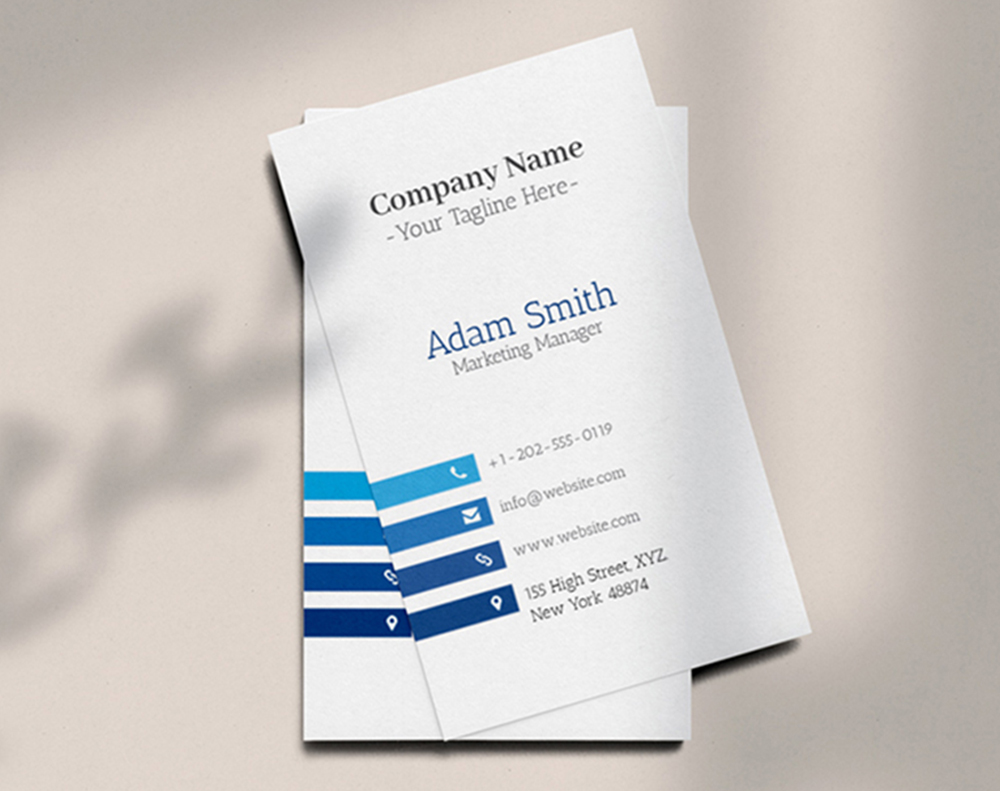
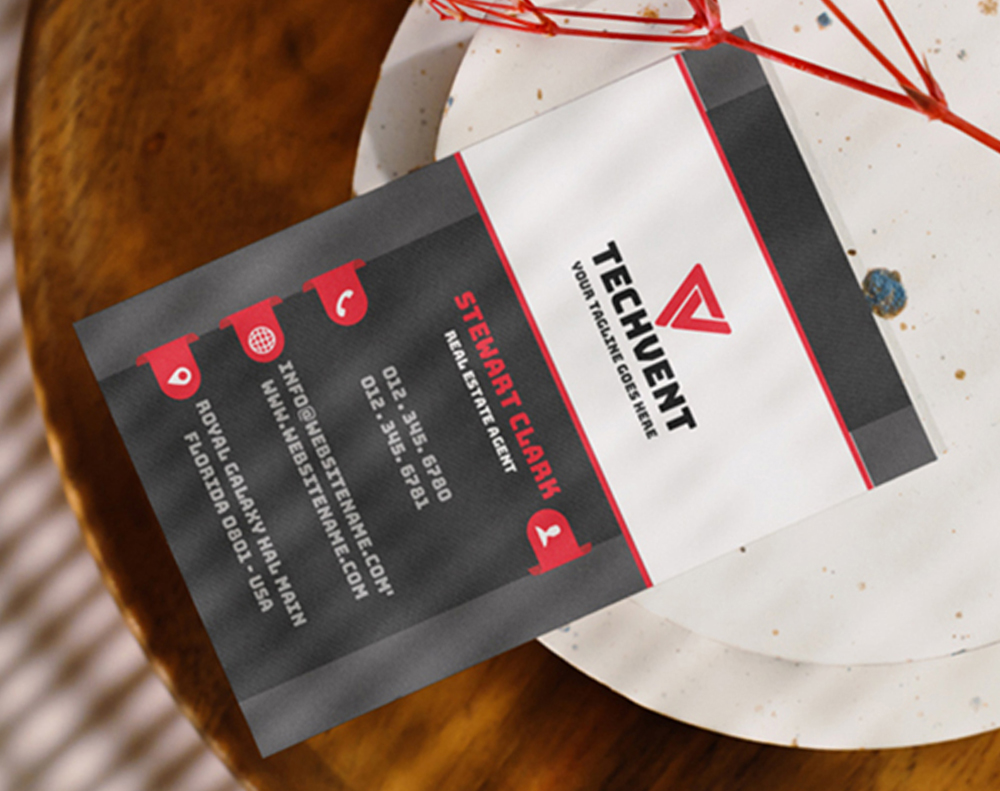
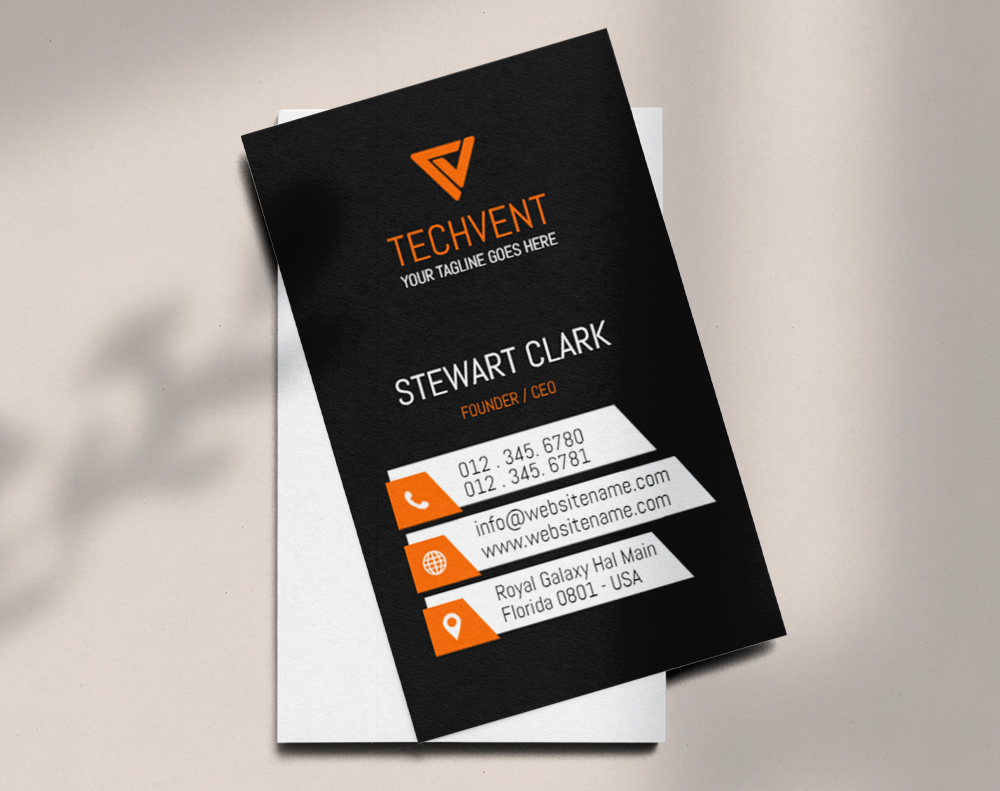
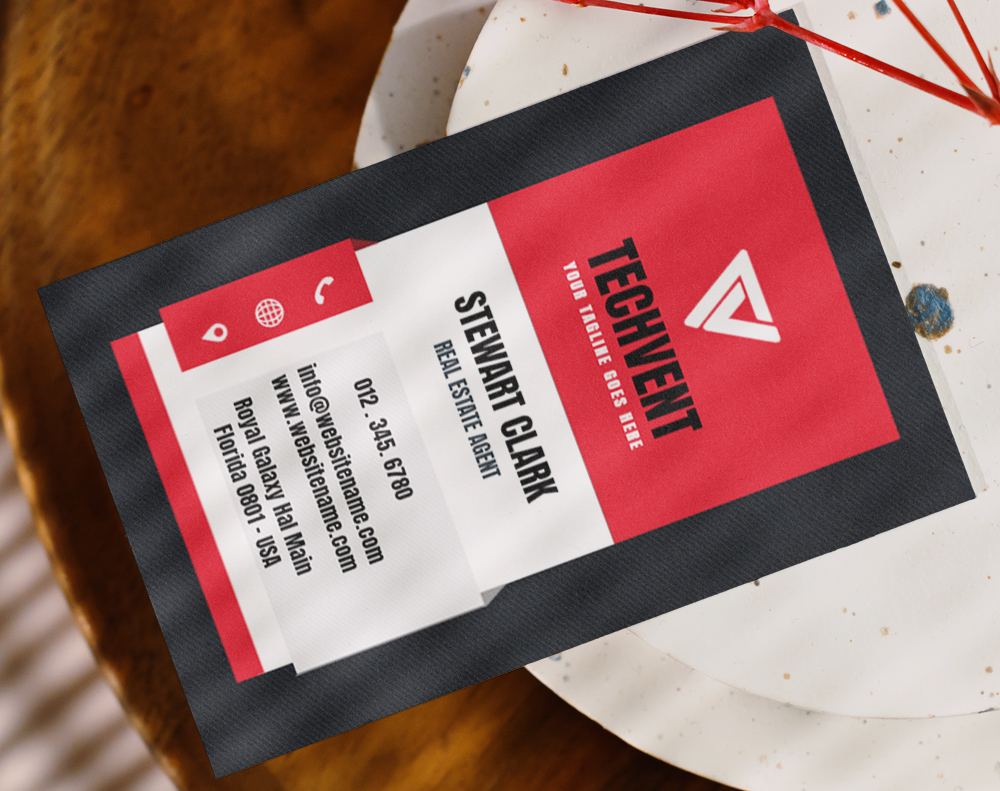
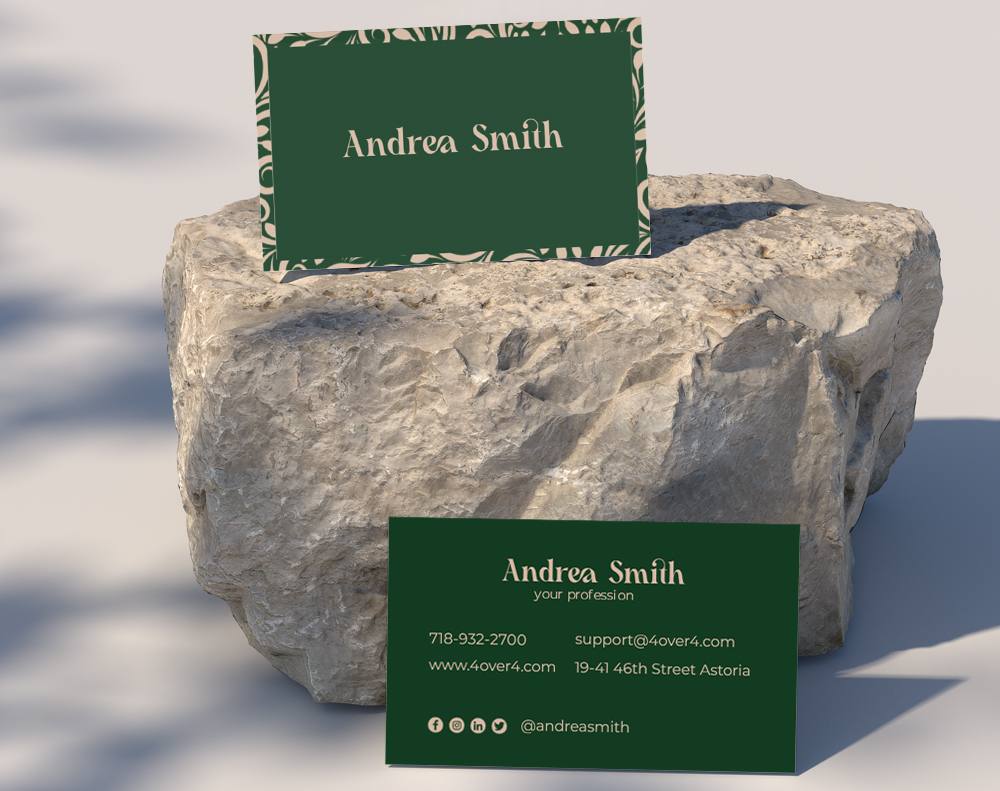
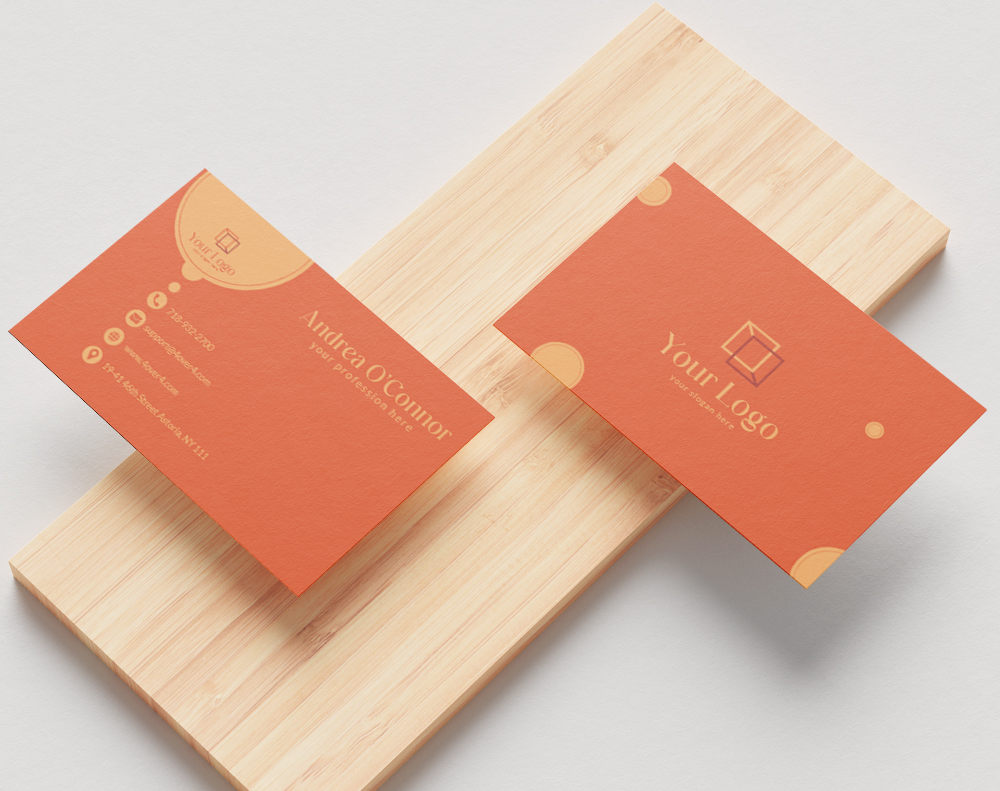
Here's a look at some real-world designs and industry data that show how both stocks perform in practice.
Mistakes to Avoid When Picking Your Card Stock
Choosing between 14pt vs 16pt Business Cards seems straightforward, but people trip up in predictable ways. Here are the most common mistakes 4OVER4 sees:
Assuming thicker always means better. A 16pt card with a cheap design still looks cheap. Stock thickness can't fix bad typography or a cluttered layout. Invest in design first, then match the stock to the quality of your artwork.
Ignoring the finish entirely. Stock thickness is half the equation. A 14pt card with soft-touch lamination can outperform a bare 16pt card in perceived quality. Always consider finishes alongside thickness.
Over-ordering on premium stock. If you're testing a new design or your contact info might change soon, start with 14pt at a moderate quantity. Don't print 5,000 cards on 16pt stock only to realize your phone number changed two months later.
Forgetting about coating compatibility. Some specialty finishes perform differently on each stock. Check 4OVER4's product specs before finalizing your order to make sure your chosen finish pairs well with your selected thickness.
"I ordered 16pt cards for our food truck launch - 2,000 of them. Then we changed our menu three weeks later. Lesson learned. Now I do small runs on 14pt until the design is locked in."
4OVER4 Business Cards Worth Trying
Now that you understand the difference between 14pt vs 16pt Business Cards, it's time to pick the right product. 4OVER4 offers both thicknesses across multiple card styles, from Standard Business Cards to specialty options like 3D Lenticular Business Cards that add motion graphics to your design.
Whether you need a classic rectangular card or something with a unique die-cut shape, 4OVER4 has you covered with 60+ paper types and fast turnaround. Here's a closer look at the available specs, pricing, and what real customers are saying.
Free Design Templates
| Card Stock | Thickness (inches) | Thickness (mm) |
|---|---|---|
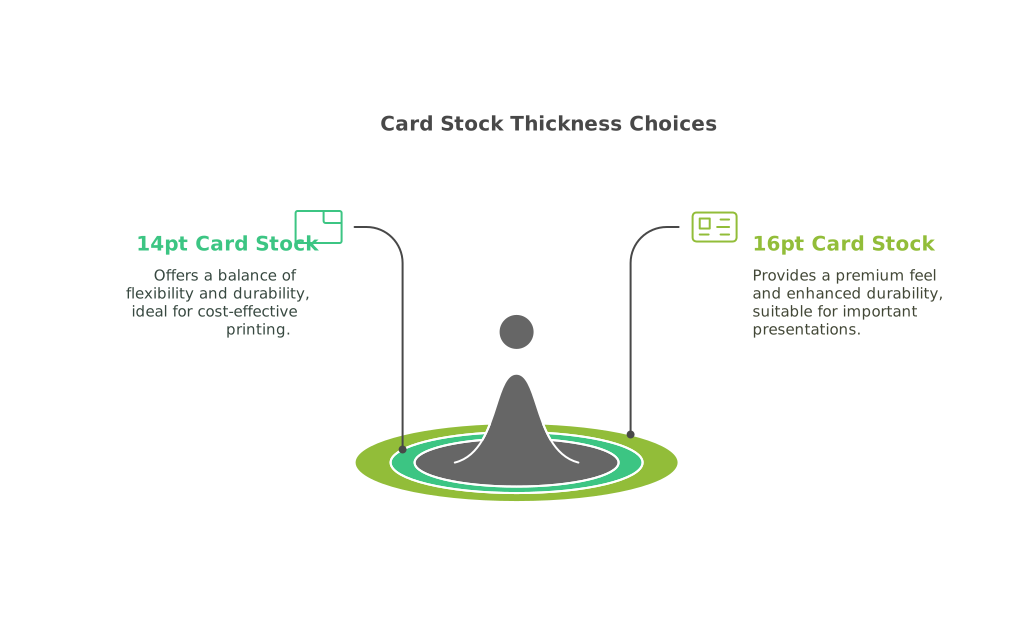
| 14pt | 0.014 | 0.39 |
| 16pt | 0.016 | 0.406 |
| Feature | 14pt Card Stock | 16pt Card Stock |
|---|---|---|
| Thickness | 0.014 inches | 0.016 inches |
| Feel | Flexible, smooth | More substantial, premium feel |
| Durability | Good for everyday use | Extremely durable, less prone to bending |
| Printing Quality | Excellent color reproduction | Enhanced print quality for intricate designs |
| Cost Efficiency | Cost-effective for large runs | Justifies higher cost for branding opportunities |
| Card Stock Type | Thickness (inches) | Price Difference (%) |
|---|---|---|
| 14pt | 0.014 | Reference |
| 16pt | 0.016 | 2% - 3% higher |
- Cost-effective: 14pt cards are generally more affordable than thicker stocks. They're a budget-friendly choice, allowing us to order in larger quantities without overspending.
- Flexible and portable: 14pt stock's thinner and flexible nature makes it ideal for Foldover business cards. These cards are lightweight, simplifying bulk transport and ensuring they won't weigh down clients' wallets.
- Adequate practicality: A 14pt card effectively serves its purpose, although it lacks the durability of a 16pt option. Some recipients may perceive lighter cards as lower quality, potentially weakening their impact.
- Limitations in finishes: Some advanced printing techniques, such as embossing, debossing, or foil stamping, may not be applicable to thinner cards.
- Versatile applications: 14pt cards are suitable for various formats, such as Mini, Standard, or Foldover business cards.
- Premium feel and durability: The weightier nature of a 16pt business card conveys a sense of quality and professionalism. These cards withstand damage better, making them a reliable choice.
- Enhanced finishing options: 16pt cardstock supports additional printing techniques like spot UV coating, embossing, debossing, and foil stamping. These features improve visual appeal and overall card quality.
- Perceived formality: While 16pt cards project a prestigious image, they may be misunderstood by some recipients as overly formal or extravagant.
- Higher investment: The increased quality comes at a higher cost, and these cards may not be as portable as lighter options.
- 14pt Card Stock: 14pt card stock serves as the more common and economical option. It costs less than 16pt card stock, making it ideal for large quantities. This cost-effectiveness does not compromise the printing quality, ensuring a professional appearance.
- 16pt Card Stock: 16pt card stock offers increased thickness and durability, measuring 0.016 inches thick. This added sturdiness comes at a slightly higher cost, typically around 2% to 3% more than 14pt card stock.
- For bulk orders or when cost is a significant factor, we recommend 14pt card stock, optimizing budget without sacrificing quality.
- When our goal involves creating a lasting impression with premium-feeling cards, opting for 16pt card stock enhances perceived quality.
- Businesses should consider leveraging the expertise of 4OVER4 for tailored printing solutions. By utilizing custom printing services, we elevate brand presence, ensuring our cards reflect the quality and professionalism we strive for. Custom designs and finishes available at 4OVER4 enhance the tactile and visual appeal of both 14pt and 16pt card stock options.
- Cost Efficiency: 14pt card stock is the most economical option among thicker cardstocks, making it suitable for large print runs. Businesses can save money while still presenting a professional image.
- Versatile Applications: This thickness works well for a range of print products, like flyers and invitations. Its flexibility makes it easier to distribute and handle.
- Professional Presentation: Despite its affordability, 14pt card stock offers a firm feel that conveys professionalism. This attribute enhances client interactions and leaves a lasting impression.
"Ordered 14pt vs 16pt business cards from 4OVER4 and the quality blew me away. Sharp colors, premium feel, arrived 2 days early."
"Been using 4OVER4 for 14pt vs 16pt business cards for a year. Consistent quality every time. The online designer made it easy."
"Switched to 4OVER4 and saved 40% on 14pt vs 16pt business cards. Better quality than my old printer. 60+ paper options."
"4OVER4's 14pt vs 16pt business cards helped us look more professional. Clients notice the difference."
Your Questions About 14pt and 16pt Business Cards, Answered
Is 14pt card stock thick enough for professional Business Cards?
Yes. 14pt is the standard thickness used by most businesses for professional Business Cards. At 0.014 inches, it's sturdy enough for everyday use, fits comfortably in wallets and card holders, and holds up well with coatings like gloss or matte. It's the go-to for companies ordering in bulk.
Can you feel the difference between 14pt and 16pt?
Most people can. 16pt feels noticeably heavier and more rigid when you hold both cards side by side. The difference is subtle on its own, but when someone handles your card, that extra weight registers as quality. A finish like soft-touch lamination amplifies the distinction even further.
Which is better for double-sided printing - 14pt or 16pt?
Both handle double-sided (4/4) printing without issues. Neither stock has show-through problems with standard CMYK printing. If you're using heavy ink coverage on both sides, 16pt offers slightly more opacity, but 14pt performs well for the vast majority of designs.
Does 4OVER4 offer finishes on both 14pt and 16pt Business Cards?
4OVER4 offers multiple finish options on both stocks, including gloss, matte, soft-touch lamination, spot UV, and more. Finish availability can vary by product, so check the specific product page for your chosen card style. You can also add a QR code using the free QR Code Generator before uploading your design.
How do I decide between 14pt and 16pt if I'm on a tight budget?
Go with 14pt and invest the savings into a premium finish. A 14pt card with matte lamination or spot UV often makes a stronger impression than a bare 16pt card. The finish is what people feel first, and it can close the perceived quality gap between the two stocks.
Will 16pt Business Cards cost a lot more than 14pt?
The price difference is modest, especially on smaller orders. At quantities under 500, you might only see a few dollars of difference. On larger runs (2,000+), the gap widens but remains reasonable. 4OVER4's volume pricing means per-card costs drop as you order more of either stock.