
Window Clings vs Decals vs Perforated Film for Storefront Windows


Jordan is our labels, packaging and sustainability voice, built from the knowledge of our production team, with over 20 years in printing.
Three vinyls, three ways of holding on to glass, three very different jobs. They separate on adhesion, each takes a different face of the window, and each fails somewhere.
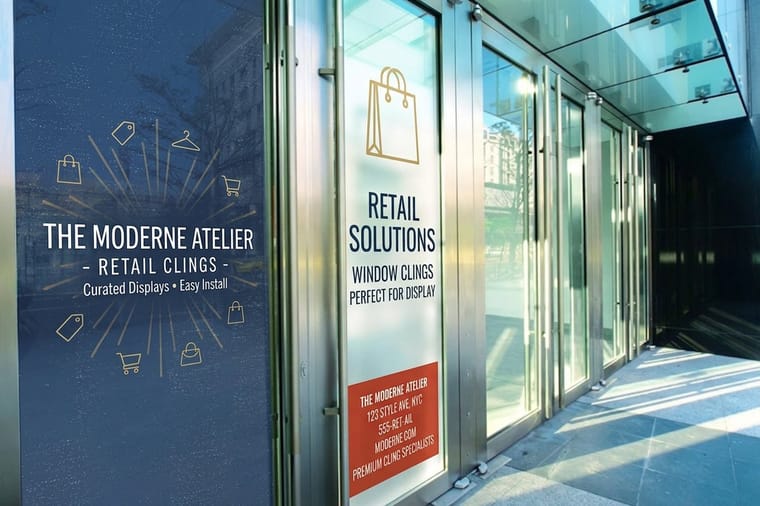
Window clings hold by contact with no adhesive and go on the inside face, so they peel off clean and suit anything you will change within a season. Adhesive decals bond to the glass and stay for years, which is where your hours and your logo belong. Perforated film is a printed vinyl full of small holes with a black back, and it is the only one of the three that covers a whole pane while staff still see the street. Clings start at $30, perforated window decals at $30, and full-color window decals at $93.37.
Quick answer
Adhesive or no adhesive, and whether you can see through it
Two questions sort all three. Does it need to come down easily, and does anyone need to see through it? A cling has no adhesive, lives on the inside face and lifts off clean, so it wins on anything temporary. A decal is bonded and permanent, so it wins on hours, logos and door information. Perforated film is a bonded decal drilled with holes and backed in black, so it is the only one that fills a whole pane and still leaves a sight line running outward. Everything else, price included, follows from those two answers.
How Each One Holds On to the Glass
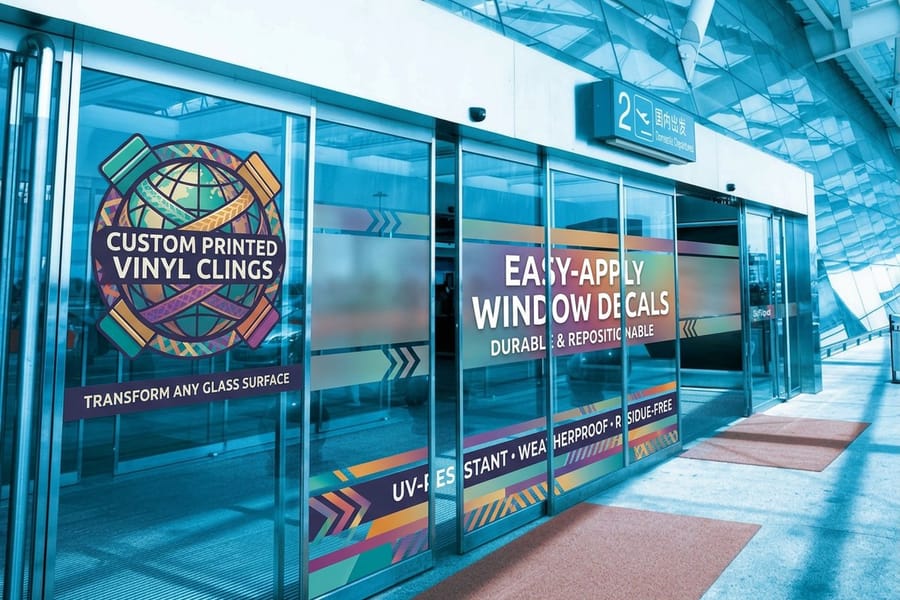
All three are vinyl. What separates them is the back of the sheet, and that single difference sets the price, the lifespan and how much swearing is involved in taking it down.
A cling has nothing on the back at all. Smooth vinyl pressed against smooth glass holds by contact, the way a wet sheet of paper holds on a mirror. Because there is no glue, a cling lifts off in one piece, rolls up, and goes back on the same pane next season if you stored it flat. That is the whole argument for vinyl window clings at $30: they are the cheapest thing in the shop to change, and changing them costs nothing but two minutes. The mechanism is also the weakness. Anything that breaks contact, a fingerprint of dust, a textured or frosted pane, a hot afternoon that softens the vinyl, and the edge lifts. How static cling vinyl works covers the physics in more detail.
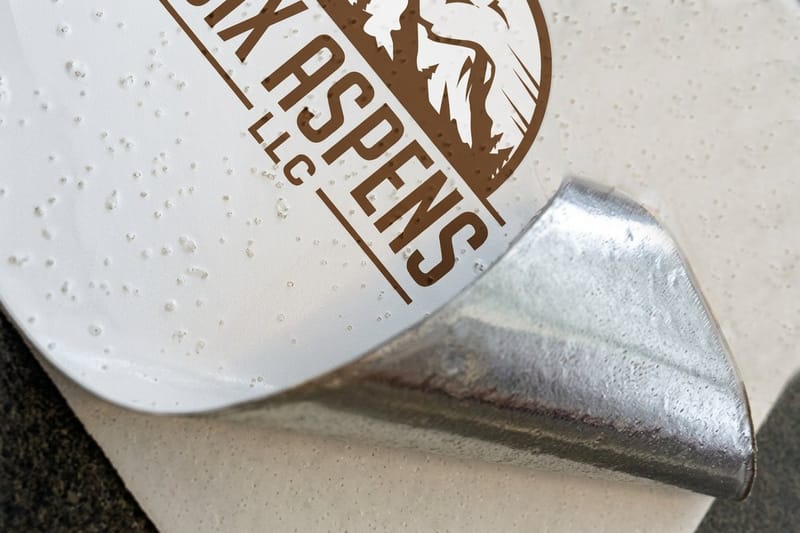
A decal has pressure-sensitive adhesive. Roll it down with a squeegee, the adhesive wets out against the glass over the next day or two, and it is not going anywhere. Window decals survive rain, wind and a pressure washer at the door, which is why hours of operation, a phone number and the logo on the door belong on a decal rather than a cling. Ask for removable adhesive if you expect to take it down inside a couple of years and permanent if you do not.
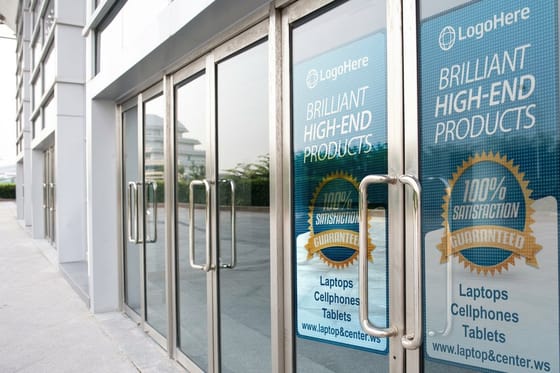
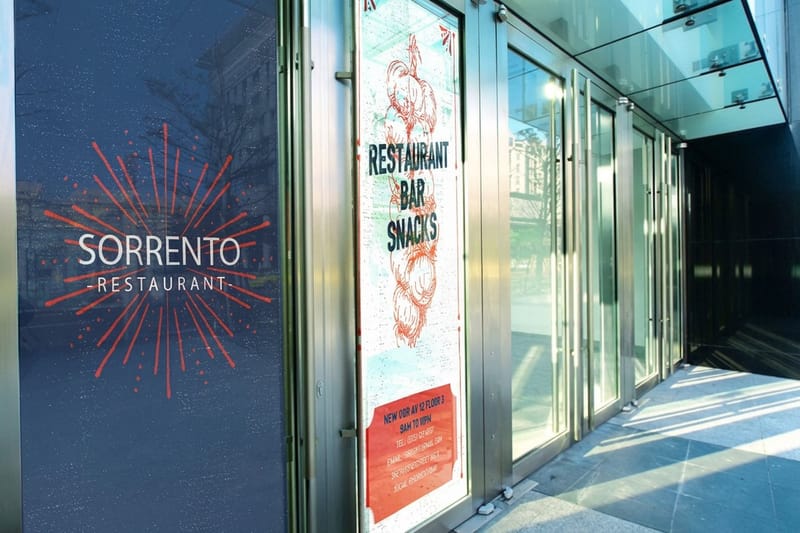
Perforated film is a decal with holes. It is printed on a white face, backed in black, and drilled with a regular grid of small holes across the whole sheet. The adhesive is on the black side. From the sidewalk the printed face fills your eye and the holes disappear. From inside the shop the black side absorbs light and your eye goes straight through the holes to the street. Perforated window decals also start at $30, so the see-through effect costs no premium over the other two.
Which Face of the Glass, and Why It Changes Your File
This is the detail that produces reprints, and it takes one sentence at order time to avoid. Glass has two faces. Anything printed on vinyl reads correctly from the side it was printed on, so a graphic mounted on the far side of the glass has to be printed backwards to read forwards.
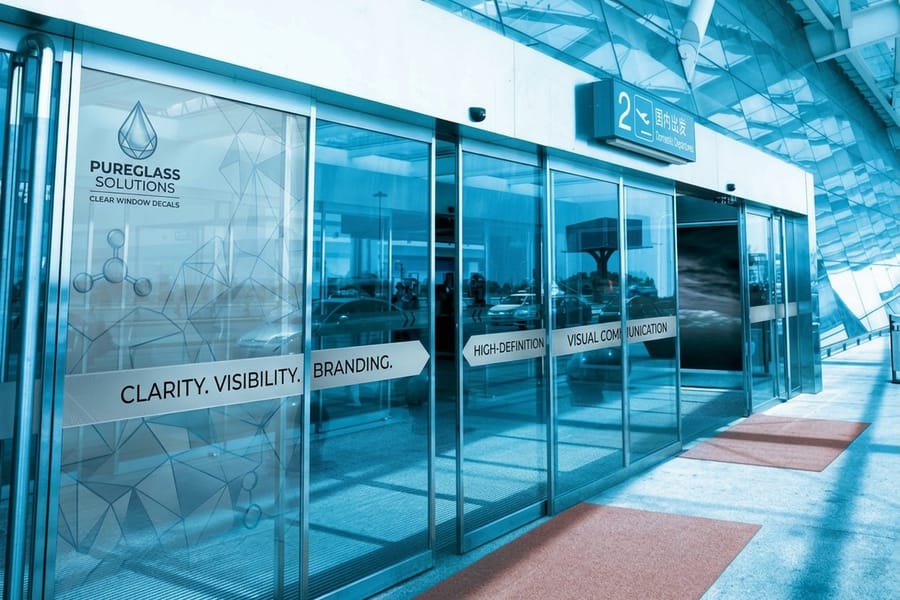
Clings live on the inside face, protected from weather and from a passer-by picking at a corner. If that cling is meant for the sidewalk to read, the file gets mirrored and the printed side goes against the glass. If it is meant for people inside the shop, it prints straight. Decals normally go on the outside face and print straight, because color is punchier without a quarter inch of glass over it. The exception is clear window decals at $30, which are frequently reverse printed and mounted inside so the glass shields them, the same trick sign shops call second-surface printing.
Perforated film has no choice. The holes have to open to the street and the black side has to face the glass, so it mounts outside and prints straight, every time. That also means it takes weather directly, which is why an optically clear overlaminate is worth adding on any pane that gets rain or regular cleaning.
Two more habits save trouble. Measure the visible glass rather than the frame, because the rubber setting bead around the pane hides between a quarter and half an inch on each side, and our guide to measuring and templating window graphics walks through the tape work. Then build the artwork at full size with type large enough to read from the curb, which designing window sign decals covers section by section.
Clings, Decals and Perforated Film Side by Side
Read the see-through column and the removal column first. Those two decide most storefront jobs before anyone talks about price.
| Material | Holds by | Glass face | See through it | Removal | Starts at |
|---|---|---|---|---|---|
| Vinyl window cling | Contact, no adhesive | Inside | Only if ordered on clear stock | Peels off clean, reusable | $30 |
| Adhesive window decal | Pressure-sensitive adhesive | Outside, or inside if reverse printed | No on white vinyl, yes on clear | Heat gun and adhesive remover | $93.37 |
| Clear window decal | Pressure-sensitive adhesive | Either face | Yes, around the printed areas | Heat gun and adhesive remover | $30 |
| Perforated window film | Pressure-sensitive adhesive | Outside only | Yes, outward through the holes | Lifts in one sheet while the laminate holds | $30 |
The pattern is easy to state. If the message changes with the season, use a cling. If the message is your address, use a decal. If the message has to cover a whole pane and the people behind it still need to see the street, use perforated film. The window clings category and the decals category list every size we cut for each.
Once the material is settled, these are the sizes, production days and files each one takes when you order.
| Material | Standard sizes | Production | What to send |
|---|---|---|---|
| Vinyl window cling | 19 sizes from 11 x 17 to 40 x 60 in, or any size | 3 days | Artwork at full size, reverse printed by default for inside glass, white ink optional |
| Adhesive window decal | 2 x 2 to 11 x 11 in, or a custom size, kiss-cut on sheets | 5 days | Artwork at full size on one of six label stocks, from $93.37 for 25 |
| Clear window decal | 19 sizes from 11 x 17 to 40 x 60 in, or any size | 3 days | Artwork with a white ink layer under any pale element, print direction set for the glass face |
| Perforated window decal | 2 x 2, 3 x 3, 4 x 4 and 11 x 17 in | 2 days | Bold, high contrast artwork at full size, since the holes break up fine detail |
Perforated Film Earns Its Place, With Two Real Catches
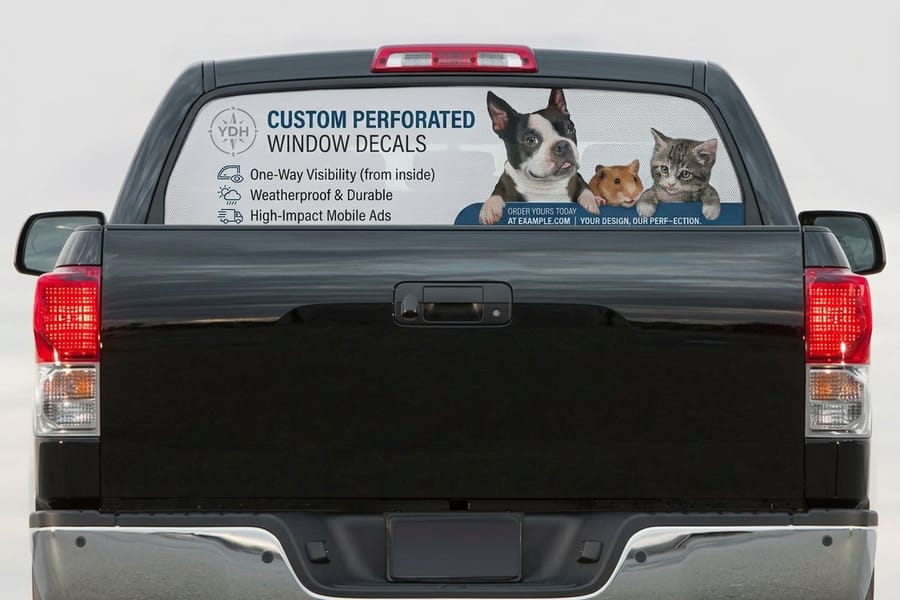
Perforated film solves the problem the other two cannot: a full-pane graphic that does not turn the shop into a box. A bank branch, a gym, a car showroom, any business that wants the glass working as a billboard while staff keep an eye on the street, ends up here. See-through vinyl explained covers the hole patterns in detail.
The first catch is the one people discover after dark. One-way vision is a light balance, not a coating. Daylight on the printed face beats the interior, so the graphic reads solid from outside. Switch the shop lights on at night and the balance flips, the interior becomes the brighter side, and someone on the pavement can see in through the holes. That is fine for a restaurant and wrong for anything you want screened.
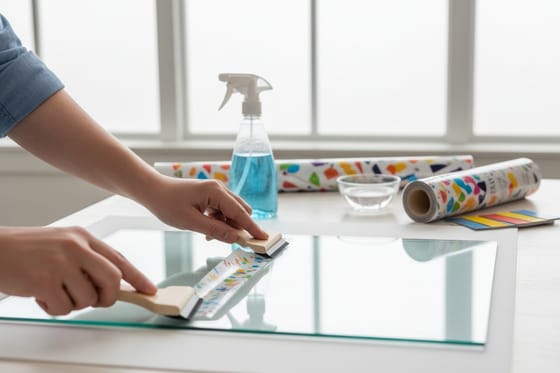
The second catch is installation. Never wet-apply perforated film. The soapy water that makes a large flat decal easy to position runs into the holes, sits there, and takes days to evaporate while the adhesive stays soft and the edges creep. Perf goes up dry, from the top, with a felt-edged squeegee and a second pair of hands. If the pane gets weather, add the clear overlaminate at the same time rather than trying to retrofit it. Our vinyl decal application guide covers the dry method step by step. For a see-through graphic with no holes at all, clear adhesive vinyl is 4mil clear gloss with a permanent adhesive, from $25.
One more thing worth a phone call before you order. Large dark graphics on the inside face of double-pane or low-E glass trap heat between the panes, and some glass manufacturers treat that as grounds to void the seal warranty. Ask your glazier before you cover an insulated unit, and lean toward the outside face when in doubt.
Picking by the Job, Not by the Material
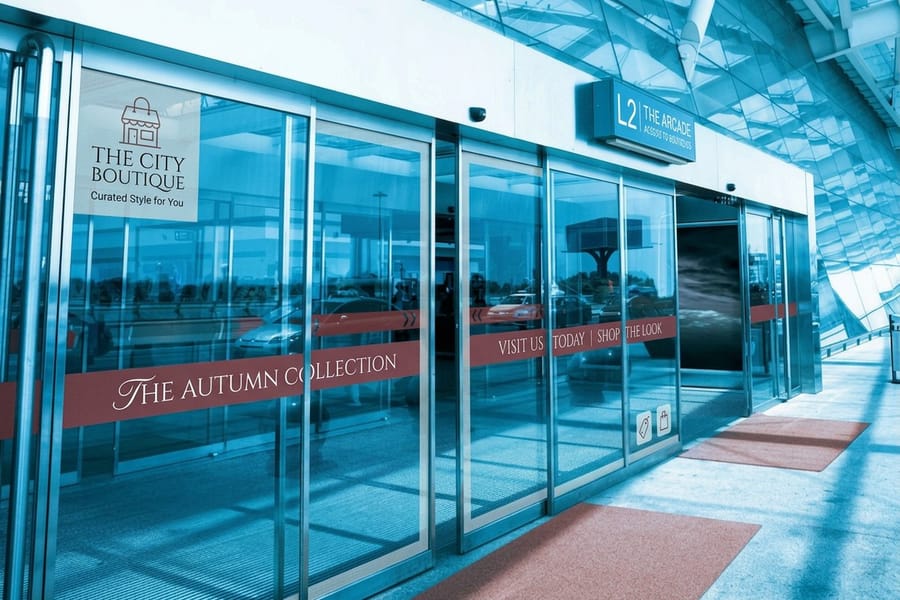
Start from how long the message has to live and how much glass it needs, and the material chooses itself.
- Weekly and seasonal promotions. Sale percentages, holiday artwork, a new menu item. Retail window clings at $30 go up in minutes, come down in seconds, and store flat in a drawer until next year.
- Permanent shop information. Hours, the logo, accepted cards, the delivery partner badges by the door. Adhesive decals, sized small and placed at the handle side of the entrance where people already look.
- Full-pane advertising with staff behind it. Perforated film, outside face, with an overlaminate if the pane faces the weather.
- Frosted privacy bands and door manifestation. Clear or etched-look decals cut to a band at eye height, which keeps the glass legal to walk toward and still lets daylight in.
- Directing people once they are inside. Floor decals at $34 carry queue markers and aisle signage, and they take the traffic that window vinyl never has to.
Two practical rules for the storefront itself. Keep the top third of the window clear so daylight still reaches the back of the shop, and keep type above roughly two inches tall for anything meant to be read from a moving car. Most cities also cap how much of the glass a business may cover, so read the local code before you commit to a full pane. Sign permits by state is where to check, and window marketing for retail covers what to actually put on the glass once you know how much of it you can use.
Wally explains window graphics
No glue, glue, or glue with holes in it
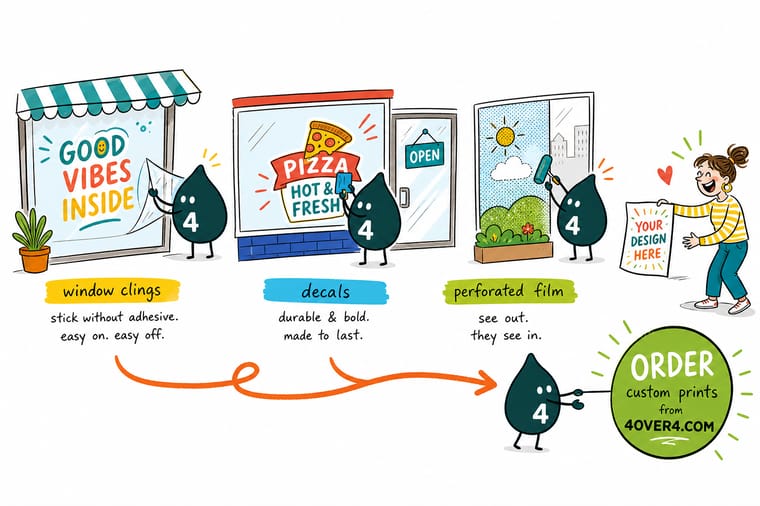
Wally puts a cling on the inside of the glass and it holds with nothing but contact, so it comes off next month without a fight. He puts a decal on the outside and the adhesive bonds, so the shop hours stay put through winter. Then he puts perforated film on the whole pane and stands behind it, still watching the street through the holes, while everyone outside sees the artwork. Same vinyl, three different backs, three different jobs.
Order vinyl window clings →%22%2F%3E%3Ccircle%20cx%3D%2243%22%20cy%3D%2245%22%20r%3D%2228%22%20fill%3D%22%23a78bfa%22%20opacity%3D%220.15%22%2F%3E%3Ccircle%20cx%3D%2280%22%20cy%3D%2262%22%20r%3D%2226%22%20fill%3D%22%23a78bfa%22%20opacity%3D%220.1%22%2F%3E%3Crect%20x%3D%2273%22%20y%3D%2221%22%20width%3D%2228%22%20height%3D%2232%22%20rx%3D%224%22%20fill%3D%22%23a78bfa%22%20opacity%3D%220.08%22%20transform%3D%22rotate(8%2080%2030)%22%2F%3E%3C%2Fsvg%3E)
Specs and pricing
Sizes, materials and starting prices for all three
Vinyl window clings start at $30 in sizes from 11 by 17 to 40 by 60 inches, adhesive window decals at $93.37 for 25 in sizes from 2 by 2 to 11 by 11 inches, and perforated window decals at $30. Each card below reads live from the 4OVER4.COM configurator.


Print it
Put the right vinyl on your glass
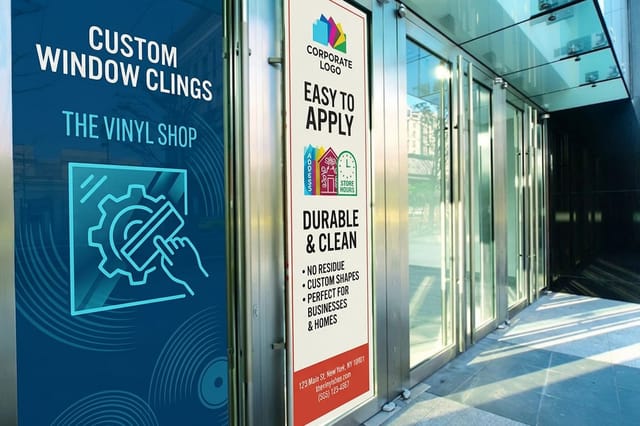
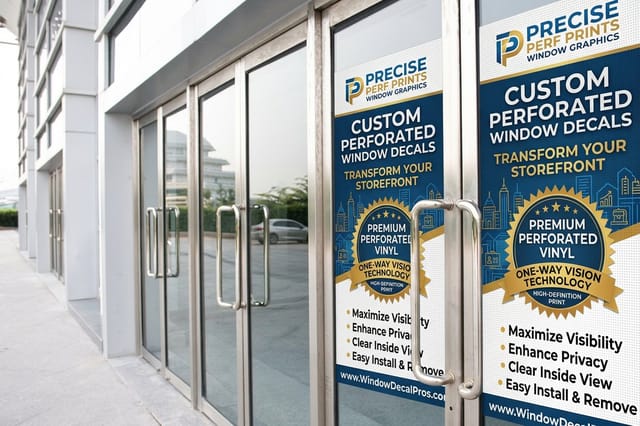
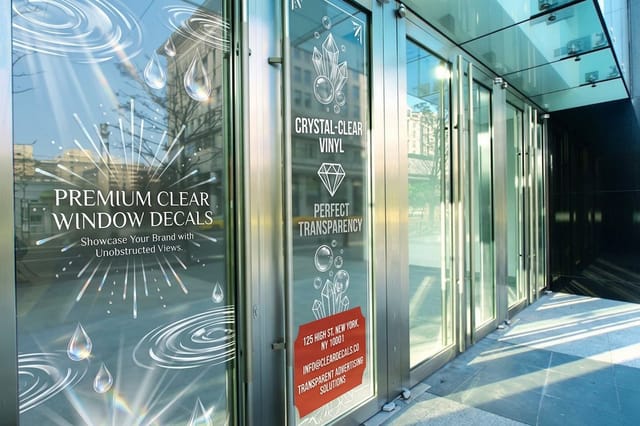
A vinyl cling from $30 for the seasonal message, perforated window decals from $30 for a pane staff still see out of, and clear window decals from $30 when the glass should show around the print.

Explore more
Where to go next
Read the application guide before you install perforated film, because perf goes up dry from the top with a felt-edged squeegee and a second pair of hands.
By the numbers
Three window films from one 1,000+ product shop
Common Questions
Your window graphics questions, answered
Which side of the glass does each one go on?
Clings almost always go on the inside face, where the glass protects them from weather and from anyone peeling them off. Adhesive decals normally go on the outside face so the color reads without a layer of glass over it, though a clear decal can be reverse printed and mounted inside for the same protection a cling gets. Perforated film goes on the outside, because the holes have to face the street for the one-way effect to work and the black side has to sit against the glass. Tell us which face you are mounting on when you order, since it changes whether we print the artwork straight or mirrored.
Do window clings work on the outside of the window?
They can hold for a while and they rarely last. A cling has no adhesive, so wind gets under an edge, rain runs behind it, and heat makes the vinyl relax and creep down the pane. Anything that lives outdoors should be an adhesive decal. Keep clings for the inside face, where they are the fastest thing in the shop to swap out.
Can people see through perforated window film at night?
Yes, once your interior lights are brighter than the street. The film works by light balance rather than by any coating, so during the day the sun on the printed face wins and the graphic reads solid from outside. After dark that reverses and the interior shows through the holes. If the window covers a back office or a stockroom, use an opaque decal instead, or plan on blinds behind the film.
How do I take an old decal off without shredding it?
Warm it first. A heat gun or even a hair dryer held a few inches away softens both the vinyl and the adhesive, then you lift a corner with a plastic razor and pull the film back on itself at a low angle rather than straight out. Pulling at ninety degrees is what tears it into confetti. Whatever adhesive stays behind comes off with a citrus-based remover and a plastic scraper. Never use a metal blade on coated or tinted glass.
Will window graphics make the shop too dark?
A full-coverage opaque decal will, which is the honest reason most retailers do not use one across a display window. Perforated film cuts the light roughly in proportion to its hole pattern, so a coffee shop keeps a usable amount of daylight and a plant shop generally should not cover the glass at all. The other route is to cover less: a band of vinyl at eye height on clear stock reads as a strong graphic and leaves the pane open.
Is there a limit on how much of the window I can cover?
Often yes, and it is local rather than national. Many municipal sign codes cap the share of glass a business may cover and some require an unobstructed sight line into the store for police and fire access. Check the code for your city before you size a full-pane graphic, because a permit issue after installation is an expensive way to learn the rule. Our guide to sign permits by state is the place to start.
What do the three cost at 4OVER4.COM?
Vinyl window clings start at $30, perforated window decals start at $30, clear window decals start at $30, and full-color window decals on standard vinyl start at $93.37. Price moves with square footage rather than with the process, so the real cost driver is how much glass you are covering, not which of the three you pick.
Get Started
Window decals run 25 for $93.37, or $3.73 a pane
Send the measurement of the visible pane, tell us which face it mounts on, and we cut clings, decals or perforated film to fit it.
Legal Disclaimer
Gold Standard guarantees apply to all standard orders placed through 4over4.com. Price match requires verifiable proof of a competitor's published price for an equivalent product with matching specifications and turnaround time. Satisfaction guarantee covers manufacturing defects and print quality issues. Contact support with order number and documentation.
