
How to Use Window Marketing to Pull Retail Traffic Off the Sidewalk


Tobias is our voice for cutting, binding and large format, built from the knowledge of our production team, with over 20 years in printing.
Your storefront glass is the only advertising space you already pay rent on. Where the message goes, how big the type has to be, and which material fits the length of the campaign are the three answers below.
Window marketing works when one message sits at eye level, between 4.5 and 5.5 feet, sized at roughly one inch of cap height per ten feet of viewing distance. Choose the material by how long that message lives: clings for promotions you swap, adhesive decals for a season or longer, perforated vinyl when you want a full pane covered and still need to see out. Check your city coverage limit, often 25 to 30 percent of the glass, before the file goes to print.
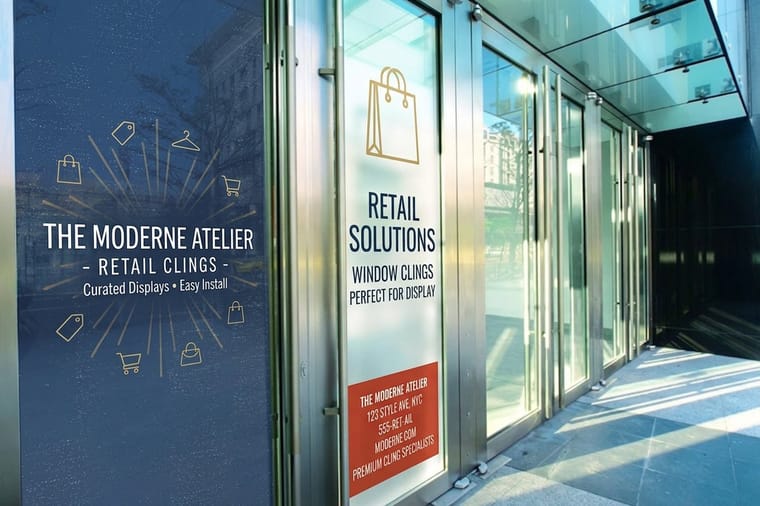
Quick answer
One message, at eye level, sized for the sidewalk
A storefront window has about three seconds to say one thing. Put that thing between 4.5 and 5.5 feet from the ground, where a walking adult looks, and size the headline at roughly one inch of capital height for every ten feet a customer stands away. Keep your name and hours above 7 feet where they read from across the street, and move anything below 3 feet inside onto the floor. Then match the material to the campaign: clings for a promotion you will change, adhesive decals for the season, perforated vinyl when the whole pane needs covering without blinding your staff. In cold weather, choose perforated film or an adhesive decal over a cling: a cling loses its grip on cold glass, while perforated vinyl is an adhesive film that holds a full pane for months.
Read the Glass Before You Design Anything
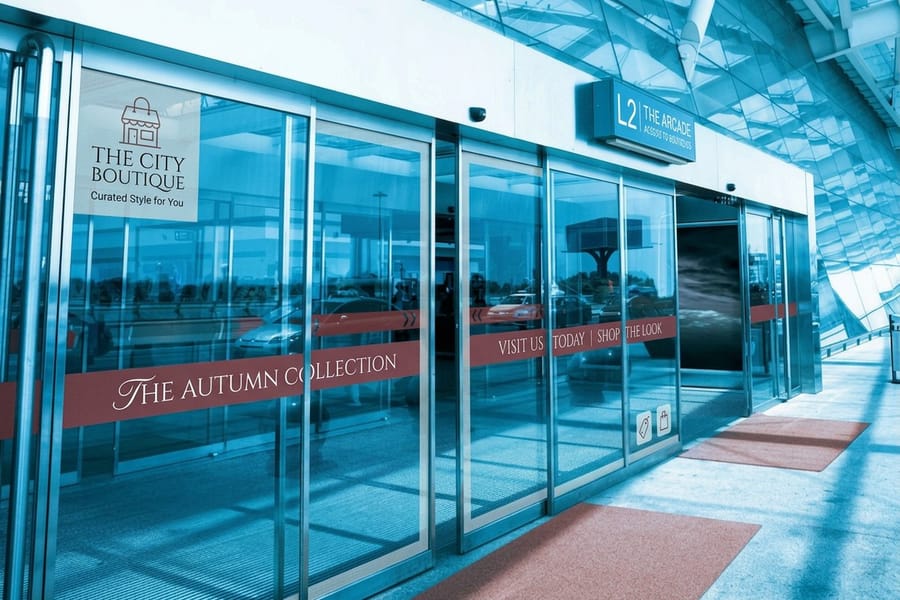
Stand on the sidewalk at the distance a real customer walks past, not with your nose against the pane. That single habit fixes most window campaigns before they are printed.
Measure three things while you are out there. The height from the sidewalk to the bottom of the glass, because a window that starts at 30 inches has already lost its lower band. The width of the sidewalk, which tells you the reading distance. And what sits inside the window, since mannequins, shelving and product tables occupy the band between roughly 3 and 4.5 feet and will block anything printed behind them.
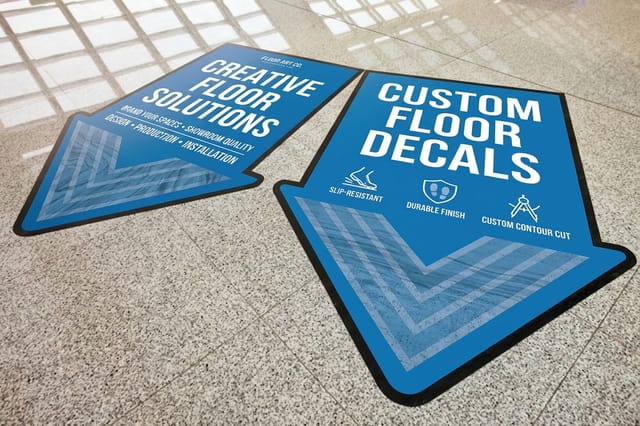
Then split the pane into bands. Above about 7 feet is identification: your name, your logo, your hours, read from across the street. Between 4.5 and 5.5 feet is the reading band for a walking adult, and that is where the offer goes. Under 3 feet is dead space for anyone in motion, which is why the message people should see on the way in belongs on a floor decal just inside the door instead.
One more check: which side of the glass. Graphics on the inside surface face out through the pane, so the file gets mirrored and clear material usually needs a white underlay to keep color solid. Graphics on the outside face print normally and take the weather. Decide this before the file is built, because a reversed file printed the wrong way is the most common window reprint we see.
Pick the Material by How Long the Message Lives
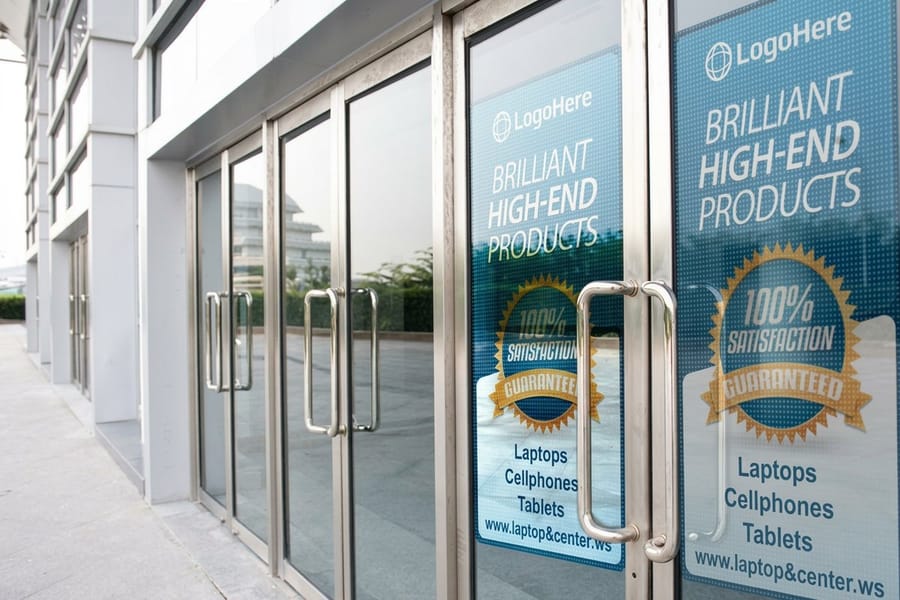
Retailers usually pick a window material by price and then fight it for a year. Pick it by lifespan instead and the price question mostly answers itself.
| Material | How it holds | Best campaign length | Starts at |
|---|---|---|---|
| Window clings | Static cling, no adhesive. Peels off clean, stores flat, goes back up. | A week to a season, changed often. | $30 |
| Window decals | Adhesive vinyl. Survives handling on doors and weather on outside faces. | A season to a few years. | $93.37 |
| Perforated vinyl | Adhesive film full of tiny holes. Solid graphic outside, see-through inside. | Full-pane coverage for months. | $30 |
| Floor decals | Textured adhesive rated to be walked on. | Weeks of foot traffic per placement. | $34 |
The trade-off in that table is grip against flexibility. A cling gives up adhesion, so it will lift on textured, dusty or cold glass and it does not belong on an outside face in a wet climate. What it buys you is a promo you can swap on a Monday morning in ten minutes and put back up next quarter. A decal gives up that freedom permanently, and in exchange it stays flat and bright through a summer of door slams.
Perforated vinyl sits apart from both. It covers a whole pane with one image and still lets your staff watch the street, which matters in a store where the window is also the sightline. The cost is brightness: the perforation pattern eats roughly half the surface, so colors read slightly muted from outside and interior light drops noticeably. Our perforated window vinyl guide covers the hole ratios and where each one makes sense, and the clings versus decals comparison settles the first choice quickly.
Size the Message for the Distance It Has to Travel
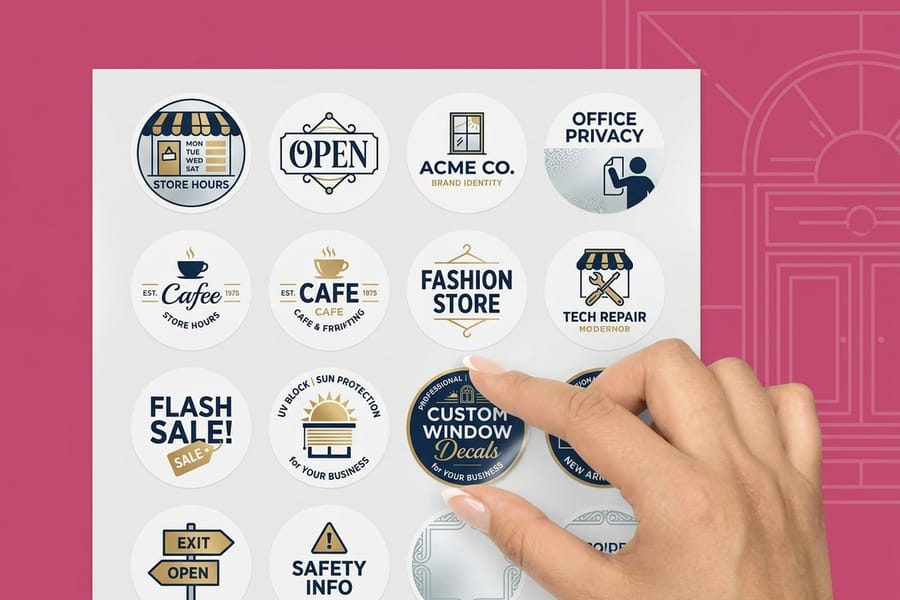
The most common window mistake is not ugly artwork. It is type sized for a laptop screen and then hung 12 feet from the reader.
Work from distance. About one inch of capital letter height buys ten feet of comfortable reading. A shopper on the far edge of a normal city sidewalk is roughly 12 feet from the glass, which puts the headline at 1.5 inches minimum. A window aimed at a strip mall parking lot is often 40 to 60 feet away and needs 4 to 6 inch caps. Measure the actual distance with a phone map or a tape, then size the headline. Everything else on the pane is secondary and can be smaller, because only a person who has already stopped will read it.
Contrast decides the rest. Dark type on a light or white background survives daylight glare and reflections better than the reverse, which is why white window clings outperform clear ones on a busy street even though clear looks nicer in the mockup. Clear material shows whatever is behind it, so a clear cling with black type over a dark store interior disappears at noon. Our guide to sign colors and visibility works through the pairings that hold up outdoors.
Build the file at full size with fonts outlined and artwork in CMYK, and start from a correctly sized layout in the blank template library rather than scaling a social post up. A 1080 pixel graphic blown up to 24 inches is soft at reading distance, and window work is read at reading distance by definition.
Build the Window Into a Sequence, Not a Poster
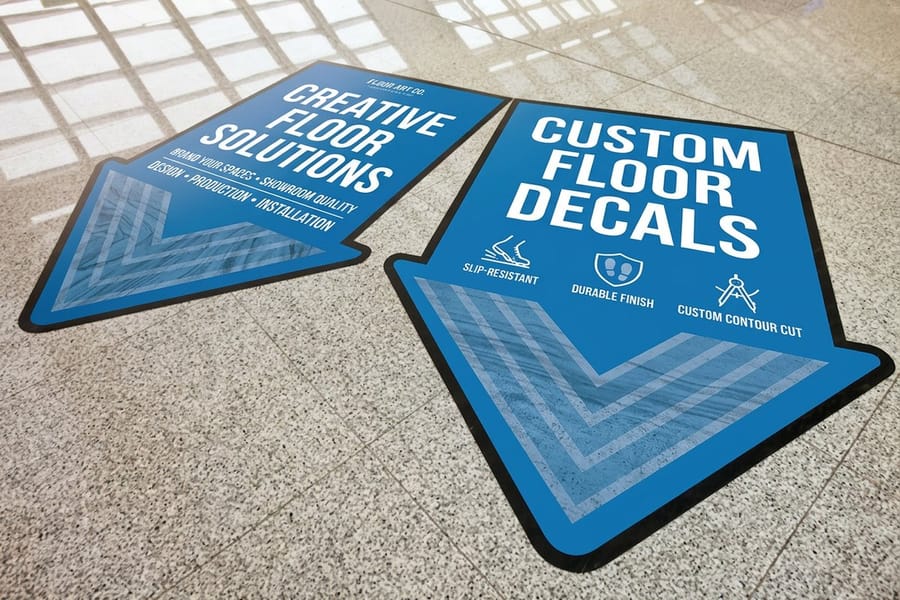
A window that stops someone has done half a job. The other half is what happens in the next 20 feet, and most stores leave it empty.
Run it as three beats. The window carries the offer at eye level. The door carries the small print and the practical detail, because a person reading the door has already committed to walking in and will accept smaller type. Then a floor decal or a shelf sign points at the actual product, so the promise made on the glass gets paid off in the aisle rather than forgotten between the entrance and the register.
Set a swap cadence and stick to it. A window that has not changed in four months stops registering to regulars, and staff stop mentioning it. Two rotations solve this cheaply: order clings for the changing message and keep the identification layer, name, hours and payment icons, on permanent decals that never move. That way a swap costs you the price of one cling set, not a whole re-application.
Tie the window to what is already selling inside. If a category is moving, the window should say so in plain words with a price, and the display behind the glass should hold that product. Our retail sales tactics guide covers the in-store half of the loop, and the retail printing collection carries the signage, decals and labels that finish it.
What Kills a Window Campaign
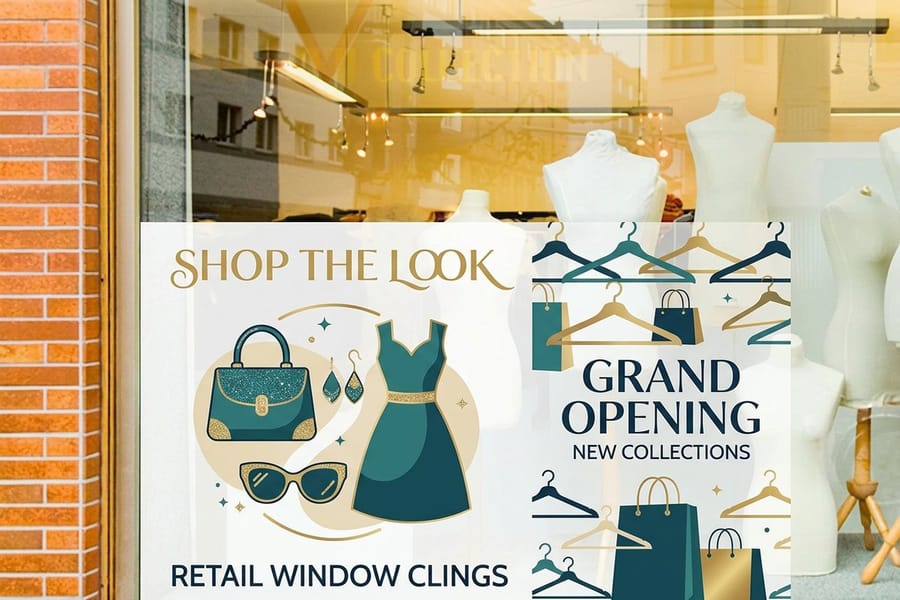
Five things account for nearly every window job that came back or came down early.
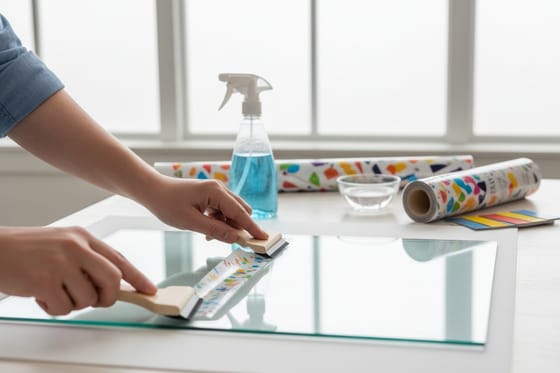
- Dirty or freshly cleaned glass. A cling needs a clean, dry, room-temperature pane. Ammonia cleaners leave a film that kills grip, and glass still damp from cleaning will trap bubbles that reappear overnight. Wipe, dry fully, then apply. The cling application guide has the sequence.
- Textured or coated glass. Frosted, patterned and heavily tinted panes give a cling almost nothing to hold. On those, use an adhesive decal or apply to the smooth interior surface instead.
- Cold weather. Vinyl goes stiff below roughly 50 degrees and lifts at the corners within days. Apply from the inside in winter, where the pane is at room temperature.
- Too many messages. Three offers on one pane means a passerby reads none of them. This is the failure nobody blames the print for, and it is the most expensive one.
- No code check. Coverage limits, illuminated sign rules and landlord restrictions all bite after the print is paid for. Check first. Our sign permit guide is the starting point for the state you are in.
Heat is the quiet one. A south-facing window behind glass runs hot, and dark ink coverage on the inside face of a tinted or low-emissivity pane traps enough heat to stress the glass on the worst days. If your window is tinted and gets direct afternoon sun, keep interior graphics light in coverage or move them to the outside face. If you want the whole pane filled, perforated window vinyl is the safer full-coverage option because it breathes and passes light.
Wally explains window marketing
Three seconds, one message, at eye height
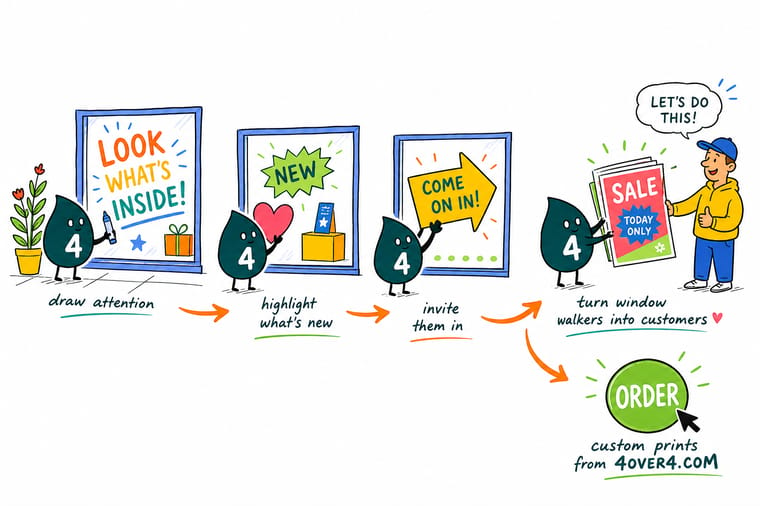
Wally stands on the sidewalk first, at the distance a real shopper walks past, and marks the band between 4.5 and 5.5 feet. That band gets one message and nothing else. He sizes the headline by distance, an inch of cap height for every ten feet, then picks the material by how long the message lives: a cling if it changes next week, a decal if it stays all season, perforated vinyl if the whole pane goes dark but the staff still need to see the street. Last thing he checks is the city coverage limit, because that is the only mistake you cannot fix with a squeegee.
Order retail window clings →
Specs and pricing
Window materials, sizes, and starting prices
Compare the three window materials side by side, with live configuration choices and starting prices straight from the 4OVER4.COM configurator. Retail window clings and perforated window vinyl both print from 11 x 17 to 40 x 60 inches or a custom size from a single piece, and window decals from 2 x 2 to 11 x 11 inches on white or clear vinyl from 25.


Print it
Order the window set that fits your campaign
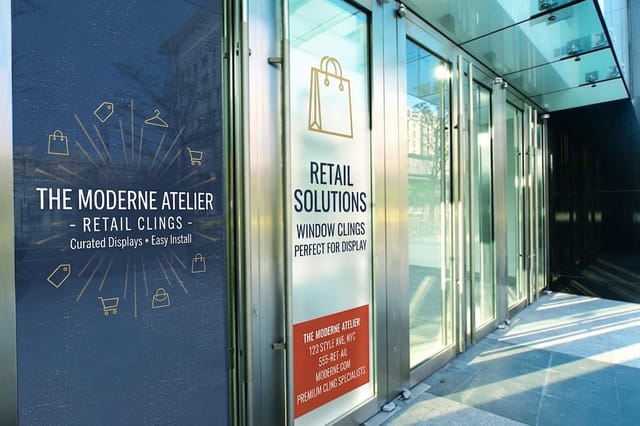
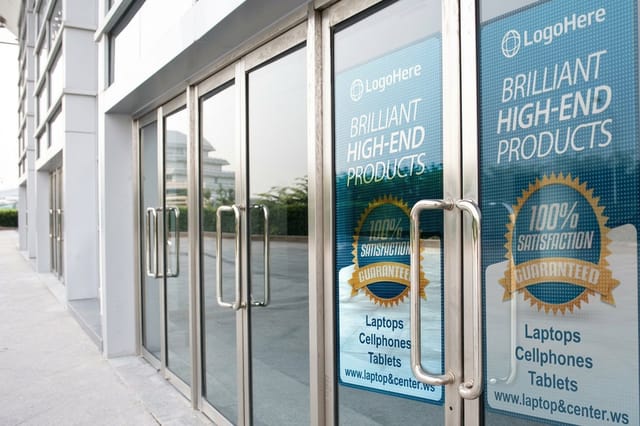
Put the weekly promotion on a clear cling, cover a full pane with perforated vinyl for months, and carry the message inside onto floor decals from 9 x 18 inches to a 48 inch circle, each from a single piece.

Explore more
Where to go next
Match the window job to the sign type, check what clings cost by size, weigh perforated film against decals, and put a cling up without bubbles.

By the numbers
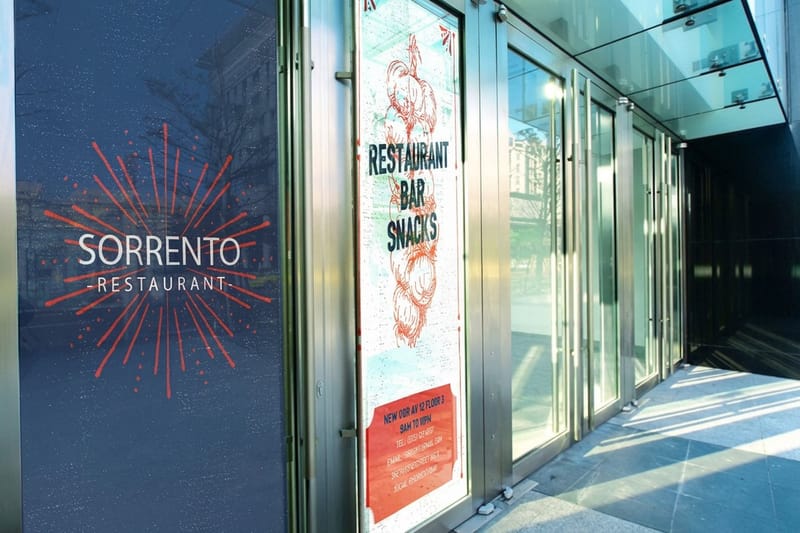
Decals, clings and perforated film for glass
Common Questions
Your window marketing questions, answered
What is window marketing?
Window marketing is using the glass of your storefront as advertising space: clings, decals, perforated film, printed posters and lettering that carry one message to people passing on the sidewalk or in traffic. It is the cheapest media a retail store owns, because the space is already paid for in the lease. The whole discipline comes down to three decisions, in this order: what the single message is, how far away it has to be read from, and how long it needs to stay up. Get those right and the material choice becomes obvious.
How high should a window graphic sit?
Put the message between roughly 4.5 and 5.5 feet from the sidewalk, which is eye level for a walking adult. Your name, logo and hours belong higher, above about 7 feet, where they read from across the street. The band between 3 and 4.5 feet is where mannequins, shelving and product displays sit inside the window, so printed elements there get blocked. Anything under 3 feet is invisible to a person in motion, and that message is better placed on a floor decal inside the door.
Clings or decals, which should I order?
Order clings for anything you plan to change: weekly promotions, seasonal artwork, holiday hours. Static cling vinyl holds by surface tension, peels off without residue and can be stored flat and reused. Order adhesive decals for messages that stay put for a season or longer, or that live on doors where they get touched all day, because adhesive survives handling and weather better than a cling. Retail window clings start at $30 and window decals at $93.37, so the cling also wins on any short campaign.
How big does the lettering need to be?
Use about one inch of capital letter height for every ten feet of viewing distance, and measure the distance rather than guessing it. A shopper reading from the far edge of a wide sidewalk is roughly 12 feet out, so 1.5 inch caps. A driver reading across two lanes is 40 feet out, so 4 inches. That rule sets the headline. Anything smaller than the headline, such as the terms of an offer, will only be read by someone who has already stopped walking, so keep it short and put it lower.
Can I cover the whole window?
Physically yes, legally often no. Many municipal sign codes limit covered window area to a percentage of the glass, frequently 25 to 30 percent, and some police departments ask retailers to keep clear sightlines to the register for safety. Landlords and mall operators layer their own rules on top. If you want a full pane covered, perforated window vinyl is the usual answer: it reads as a solid graphic from outside while staff still see the street, and it is treated more leniently than opaque coverage in some codes. Confirm your own limit with the city before printing.
Does the artwork print reversed?
It depends on which side of the glass it goes on. A graphic applied to the inside surface faces outward through the glass, so the file has to be mirrored and, for clear material, printed with a white underlay if you want the color to stay solid. A graphic applied to the outside face prints normally. Tell us which side you are applying to when you order, because a reversed file printed the wrong way is the single most common reprint on window work.
How long do window graphics last outside?
Adhesive vinyl decals on an outside face typically hold up for a few years, though a south-facing window in direct sun fades faster than a shaded one and ink coverage matters as much as the material. Clings on the inside surface last far longer because they never meet weather, but they lose grip on textured, dusty or freshly cleaned glass, so wipe the pane with glass cleaner and let it dry fully before applying. If the pane is tinted or low-emissivity, apply on the inside surface and watch for heat build up in summer.
Get Started
Order 25 window decals from $93.37 for the storefront
Pick the material by how long the message lives, upload artwork sized for the distance, and we print clings, decals and perforated film that read from the far side of the sidewalk.
Legal Disclaimer
Gold Standard guarantees apply to all standard orders placed through 4over4.com. Price match requires verifiable proof of a competitor's published price for an equivalent product with matching specifications and turnaround time. Satisfaction guarantee covers manufacturing defects and print quality issues. Contact support with order number and documentation.
