
8 Proven Doctor’s Office Marketing Ideas to Attract New Patients


Marcus is our print marketing voice, built from the knowledge of our production team, with over 20 years in printing.
What Actually Fills a Doctor’s Schedule
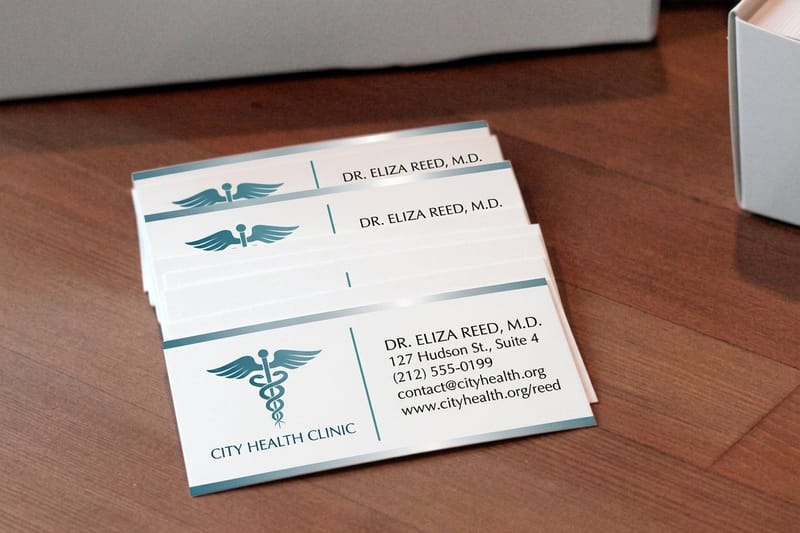
Good marketing for a medical clinic meets patients at the four moments they choose a physician: they ask a neighbor, they check whether the practice takes their insurance, they look at the map, and then they call the office that answered a question they already had. These ideas work when they show up at those four moments instead of shouting into a feed nobody in your zip code is reading.
The ideas below stay close to the ground. Local search, the recall list you already own, the referral relationships down the hall, and the printed pieces that leave your building in a patient’s hand. Each one is cheap to test, easy for a two person front desk to run, and measurable inside a single quarter.
Print carries a large share of this load. A printed card outlives a screen impression, a brochure answers the question the doctor did not have ten minutes to cover, and a mailed reminder reaches the patient who skips email.
Start with the patients you already have
Your chart system holds hundreds of people who liked you enough to come once. Reactivation is the cheapest new patient you will ever get, because there is no trust to build and no acquisition cost beyond postage. Work that list before you spend a dollar reaching strangers.
Then widen the circle one street at a time
A medical practice draws from a radius, not a country. Pick the neighborhoods your current patients actually live in, and put your name in front of those blocks repeatedly. Spend the budget on a few nearby blocks again and again, rather than once across a whole metro area.
Shop the category
Medical printing collection
Cards, brochures, and patient facing print built for clinics and private practices.
The Print Set That Starts at the Front Desk
Most of the work is done by the printed set that leaves the front desk with each patient, plus a sign that tells a first timer they found the right door. These are the four pieces, with the sizes and runs that fit a practice of two to ten providers.
- Doctor business cards. 4 sizes from the standard 2" x 3.5" to a 2" x 2" square, on 73 stocks from 13pt to 80pt, 3 business days. One set per provider with a direct extension.
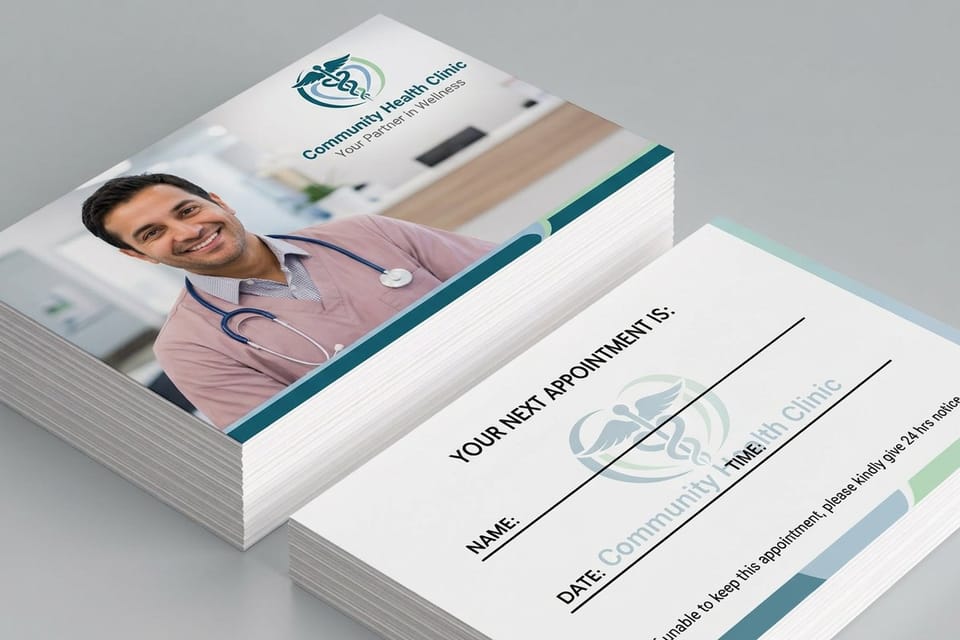
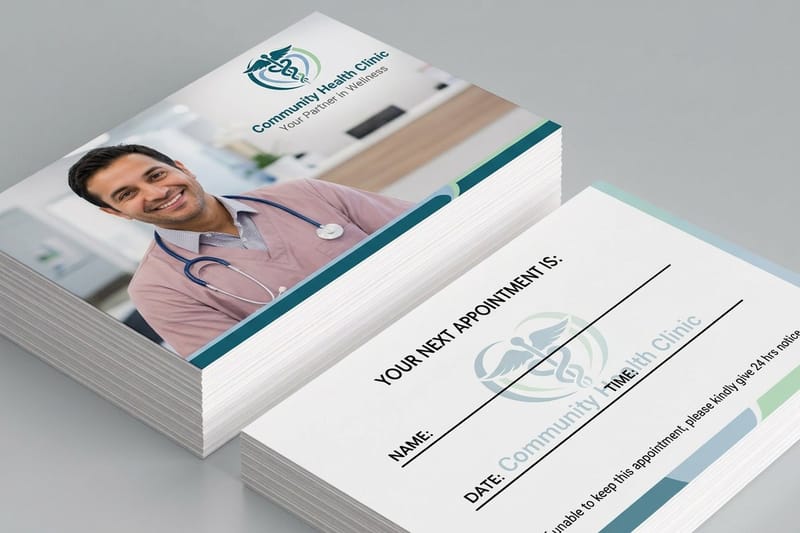
- Medical appointment cards. 2" x 3.5", 2" x 2" or 1.5" x 3.5", on 72 stocks, including uncoated ones a pen writes on cleanly, 5 business days.
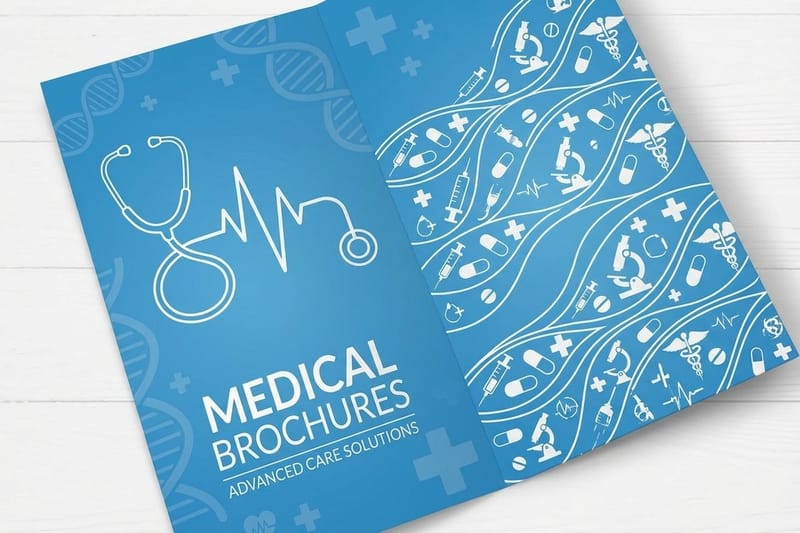
- Medical brochures. Flat or half fold, from 5.5" x 8.5" to 11" x 25.5", on 100# gloss text, 100# silk/matte text, 70# uncoated text or 14pt gloss cover, 3 business days.
- Medical signs. Fixed sizes from 11" x 17", or any size up to 59.5" x 100", on semi gloss, canvas or weatherproof polypropylene, from a single sign, for the entrance, the check-in counter and the parking lot.
Marketing Ideas for a Medical Clinic at a Glance
The eight ideas below, in the order a small clinic should run them, with the printed piece each one needs.
- Recall postcards. A monthly card to each patient whose visit is coming due.
- Local search profile. Free to claim; the appointment card carries the review request out of the building.
- Waiting room brochures. Short pieces in a rack, restocked from runs of 50.
- Provider business cards. In every patient's hand at checkout.
- Appointment cards. Filled in at checkout, with the cancellation policy on the back.
- Referral visits. Eight nearby practices, each left a stack of cards and a brochure, revisited once a quarter.
- Patient education. The top twenty questions, answered one a week and printed as handouts.
- Community events. A table kit of brochures, cards and a sign up sheet, ordered two weeks ahead.
Idea 1 Own the Local Search Results Patients Use First
When someone searches for a physician near them, Google shows a map pack before it shows a website. Claim and complete your business profile, get the practice name, address, and phone identical everywhere they appear, list every provider with correct credentials, and add real photos of the entrance and waiting room so people recognize the building when they arrive.
Then feed it. Ask satisfied patients for reviews at checkout, answer every review including the unhappy ones in ordinary words that respect privacy rules, and post your hours changes the same day they happen. A profile filled out once in 2021 and never touched shows stale hours and old photos to every new searcher.
- Fix the basics first. One phone number, one spelling of the practice name, one suite number across every directory and insurance listing.
- Service pages beat a single homepage. A page for each condition or procedure you treat gives search engines something specific to rank.
- Photos do the persuading. Exam rooms, parking, the front desk, and the providers, so a nervous first timer knows what to expect.
- Keep reviews recent. A new review each month tells a searcher the practice is active, which a pile of old five star ratings cannot.
- Print closes the loop. Put a short review request on the back of your appointment cards so the ask leaves the building with the patient.
The connection between the screen and the counter matters more than either alone. A patient finds you online, walks in, and takes home a printed piece with your name on it. Every one of those handoffs is a place where a practice either reinforces itself or evaporates.
Print picks
Three pieces every medical office should stock
Starting prices, ready to customize with your providers, hours, and logo.
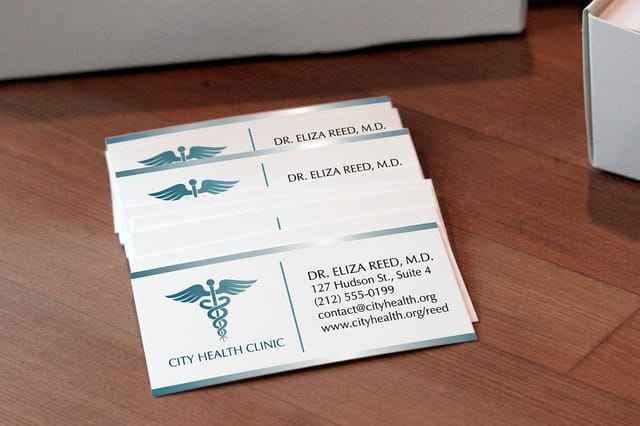 Doctor Business Cards From $17.57 for 100 The card a patient keeps in a wallet and hands to a friend who needs a physician.
 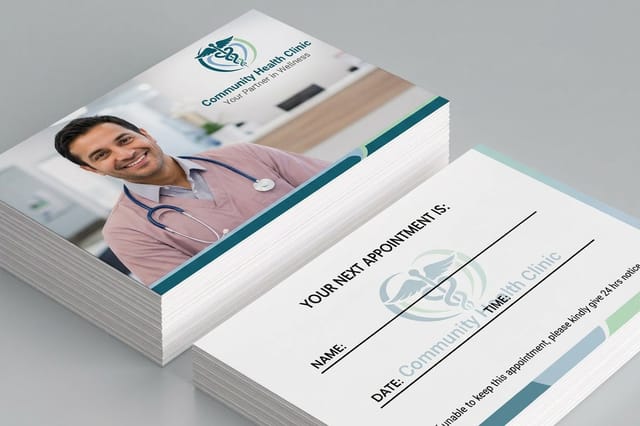 Medical Appointment Cards From $17.57 for 100 A written date the patient can see on the fridge, which is how no-shows shrink.
 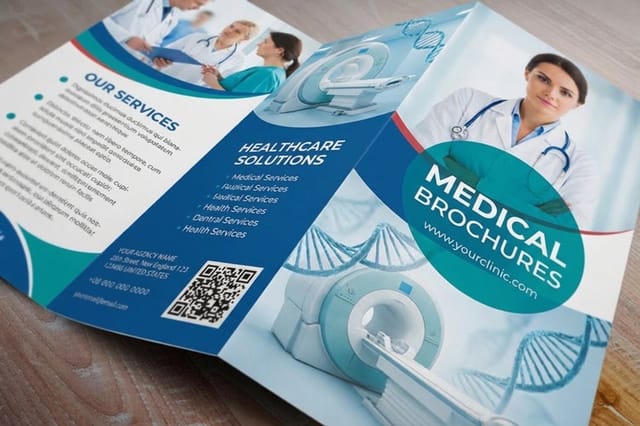 Medical Brochures From $57.11 for 50 Explain a procedure, a program, or a payment plan without a rushed hallway conversation.
 Idea 2 Turn Every Visit Into a Recall Postcard
Annual physicals, follow up labs, immunizations, and screenings all have a natural due date sitting in your system. Let those dates pass quietly and the schedule looks thin in February. A recall mailing pulls those patients back on a rhythm you control instead of waiting for symptoms to do the scheduling.
Pull a list of everyone due in the next sixty days, print a simple card that names the reason for the visit and the two ways to book, and mail it in batches every month. Keep the copy human. A line like your annual visit is due and we have mornings open reads better than a paragraph of clinical language.
- Segment by reason. A card about a diabetes follow up should not read like a card about a flu shot clinic.
- Mail monthly, not annually. Small consistent batches keep the front desk from drowning in callbacks in one week.
- Give two paths to book. A phone number for the patients who call and a short link for the ones who never will.
- Track it honestly. Count appointments booked within three weeks of each batch and keep the versions that fill chairs.
Physical therapy clinics run the same recall play, and the approach laid out in these physical therapy marketing ideas maps almost one to one onto a primary care recall list.
Idea 3 Make the Waiting Room Do the Explaining
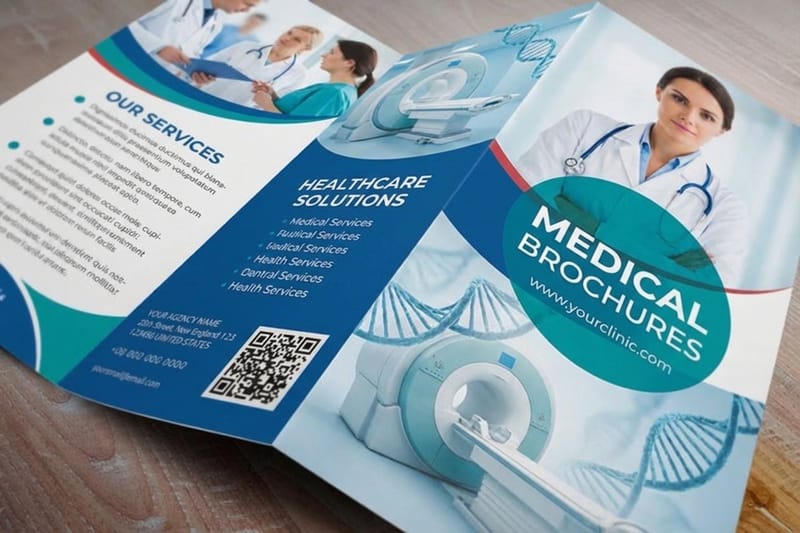
Every patient in your waiting room is already sold on your practice and has nothing to do for the next twelve minutes. That is advertising space the clinic already owns. Fill it with information that answers the questions patients ask the doctor when the visit is supposed to be ending.
A rack of Medical Brochures covering your most requested services does three jobs at once. It teaches, it markets services people did not know you offered, and it saves the physician the same five minute explanation twenty times a week. Print one brochure per topic rather than a single dense booklet that nobody finishes.
- Cover what you want more of. Preventive screenings, chronic care management, telehealth, sports physicals, weight programs.
- Write at a reading level a tired person can handle. Short sentences, plain words, a clear next step at the end.
- Include the ask. Every brochure closes with how to schedule and what to bring to the first appointment.
- Keep a stack at checkout. Staff hand one to the patient whose questions ran past the appointment slot.
Idea 4 Hand Out Cards Your Staff Are Proud to Give
A physician card is the piece a patient can pass to a coworker who needs a new doctor, or pin to the refrigerator next to the school calendar. Pick a stock with some weight and keep the logo sharp, because the card stands in for the practice when you are not in the room.
Give every provider, nurse practitioner, and front desk lead their own Doctor Business Cards with a direct extension. The price table below shows the cost per card falling from about 18 cents at 100 to under 7 cents at 600, a rounding error against one new patient who stays five years. Print a second version with the appointment line and no individual name so the front desk can hand one to anyone who walks in asking about availability.
- Put the useful things on the back. Office hours, the after hours number, parking notes, and the patient portal.
- Match the whole set. Cards, appointment cards, and brochures in one visual family look like a practice that runs tightly.
- Order for the year. Cards do not expire, so one larger run covers twelve months.
- Give them away on purpose. Two cards per patient, one to keep and one to pass along, turns every visit into a referral chance.
Quantity and price
Doctor business card pricing and specs
Real configurator numbers. The more you print at once, the lower the cost per card.
| Quantity | Price Per Unit | Total |
|---|---|---|
| 100 | 17.6¢ | $17.57 |
| 200 | 11.5¢ | $23.07 |
| 300 | 9.15¢ | $27.46 |
| 400 | 7.96¢ | $31.86 |
| 500 | 7.25¢ | $36.26 |
| 600 | 6.77¢ | $40.64 |
Idea 5 Print Appointment Cards That Cut No-Shows
Text reminders help, but they arrive on the device that is already buried in ninety other notifications. A physical card with a handwritten date sits in a wallet, in a bag, or on a counter where the patient sees it without opening anything. Use both: the text for the day before, the card for the weeks in between.
Medical Appointment Cards give you a printed line for the date, the time, and the provider, plus room for a cancellation policy the patient cannot claim they never saw. Add a short review request or your portal address on the reverse and the card does a second job on the way home.
- Write it in front of them. Reading the date aloud while filling the card makes the appointment stick.
- State the policy plainly. One line about how much notice you need heads off the awkward phone call later.
- Use the back. Portal address, after hours guidance, and what to bring next time.
- Keep them at every exit point. Checkout, lab, and the nurse station, so nobody leaves without one.
Reminder in hand
Medical appointment cards
Sizes, stocks, and finishes for the card your front desk fills out at checkout.

Idea 6 Build Referral Loops With the Practices Around You
Specialists, physical therapists, imaging centers, pharmacies, and urgent care clinics all see patients who need what you do. Those relationships start when someone walks over and introduces themselves. Referral marketing for a medical office is mostly a calendar problem.
Pick eight practices within a few miles, visit each one with a short stack of cards and a brochure that explains exactly which patients you want, and follow up once a quarter. Make it easy to send someone your way by naming the conditions you handle best and the turnaround a referred patient can expect for an appointment.
- Be specific about the fit. We can see referred patients within three business days beats we accept all referrals.
- Leave printed material. A brochure on their counter gives the other front desk your name and number to hand over.
- Close the loop back. Send a note when a referred patient is seen, and referrals keep coming.
- Refer out generously. The practices you send patients to are the practices that remember your name.
Leave something behind
Brochures for referral visits
A folded piece that tells a neighboring practice exactly which patients you want and how fast you can see them.
Idea 7 Publish the Patient Education Nobody Else Bothers With
The questions your patients ask in the exam room are the same questions your future patients are typing into a search bar tonight. Print the answers as a 5.5" x 8.5" handout on 100# silk/matte text, 50 at a time, so you can revise a sheet the week a guideline changes. Answering them clearly on your website, in a printed handout, and in a short waiting room video builds the kind of authority no advertisement buys. It also makes you the practice that comes up when someone searches a symptom at eleven at night.
Keep a running list of the top twenty questions your staff hears, then answer one a week. Publish it as a page, print the best ones as handouts, and hand them out during visits. The same content earns search traffic, saves clinical time, and gives your team something useful to say when a patient calls with a question between appointments.
- Answer the real question. What people actually ask, in the words they actually use, not the textbook phrasing.
- Keep it short. Four hundred honest words beats a two thousand word essay nobody scrolls.
- Print the winners. The pages that get the most traffic make the best waiting room handouts.
- Sign it. A named provider on the piece is worth more than a nameless clinic byline.
Compare formats
Popular medical print, side by side
Stock, finish, size, quantity, turnaround, and price across the pieces clinics reorder most.
| Medical Brochures | Medical Appointment Cards | 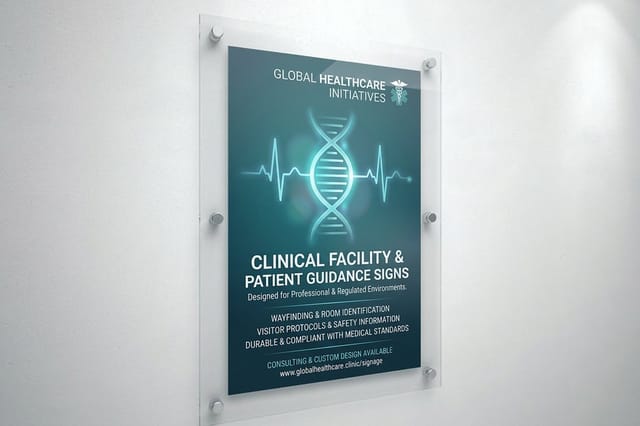 Medical Signs | 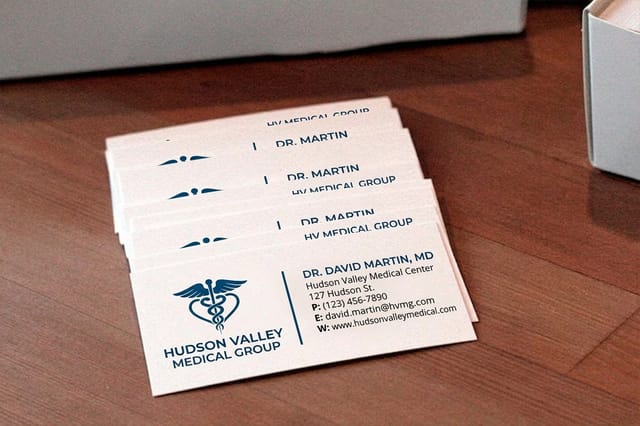 Medical Business Cards | |
|---|---|---|---|---|
| Min price | $57.11 | $17.57 | $25.00 | $17.57 |
| Paper / stock | 100# Gloss Text | 14pt Gloss Cover | 10mil Semi Gloss | 14pt Gloss Cover |
| Finish | Standard Finish | Standard Finish | - | Standard Finish |
| Size | 5.5" x 8.5" | 2" x 3.5" | 11" x 17" | 2" x 3.5" |
| Default qty | 50 | 100 | 1 | 100 |
| Turnaround | 3 business days | 5 business days | 2 business days | 3 business days |
| Rating | ||||
| View & customize | View & customize | View & customize | View & customize |
Idea 8 Show Up Where Your Neighborhood Already Gathers
School sports physicals, employer health fairs, senior centers, church health days, and the local farmers market all put you in front of people who live inside your service radius and have no doctor. Sponsorship money is optional. Showing up with a table, a provider who likes talking to people, and enough printed material to leave behind is the whole strategy.
Bring brochures for the services you want to grow, a stack of cards for every provider on site, and a simple sign up sheet for anyone who wants a call about establishing care. Follow up within three business days while the conversation is still fresh, while the person still remembers your table.
Plan the print run so it is ready before the event
Start from a print ready layout, drop in your logo and provider names, and check that your bleed and margins match the product template before you upload. Check the turnaround of each piece before you order, so the slowest one goes to press first.
- Cards and appointment cards. One stack per provider on site, plus a spare stack for the sign up table.
- Brochures. Print smaller runs more often so you can fix outdated hours or a departed provider without wasting a pallet.
- Event kits. Box one set per event with cards, brochures, and sign up sheets so setup takes ten minutes.
- Templates. Use exact size blanks to proof your layout before committing to a full run.
Start fast
Brochure templates and print-ready blanks
Free layouts plus exact-size blanks so your bleed, folds, and margins are right the first time.

Wally sorts the marketing ideas worth your week
Start with the patients you have, then print what leaves the building with them
Marketing a medical practice gets simple when you follow the patient. They search locally, they walk in, they take something home, and they tell a friend. Fix the local profile, mail your overdue list, stock the waiting room with brochures, and give every provider cards worth handing out. Wally can point you to the right format, quantity, and turnaround for each one.
Shop medical printing →Running These Ideas Without Adding a Marketing Hire
Explore more
More ways to grow a local practice with print
Open the medical printing collection for the full front desk set, then the healthcare, dental and chiropractic playbooks for practices that fill a schedule the same way a clinic does.
 Collection Medical Printing Collection Cards, brochures, and forms built for clinics and practices. Product Doctor Business Cards The card patients keep and pass along to a friend.
  Product Medical Appointment Cards A written date that keeps the schedule full. Product Medical Brochures Explain a service without holding up the front desk. Article 19 Physical Therapy Marketing Ideas Patient growth tactics that translate straight to a clinic.
  Article Healthcare Direct Mail Ideas Mailers that get patients to call and book.
  Article 8 Medical Brochure Designs That Work Layouts for the waiting room rack. Article Dental Direct Mail How a dental office fills open hygiene slots by mail.
  Article 11 Chiropractic Postcards Postcards that bring lapsed patients back to the table.
  Article 5 Storefront Sign Ideas Make the building itself easy to find and easy to trust.
  Article 5 Marketing Strategies for Chiropractors Growth steps for a small practice with one front desk.
  Guide Appointment Card Templates Guide Set up the card your front desk fills in at checkout.
 Put your practice in a patient’s hand
Pick the pieces your front desk actually uses, match them to one visual identity, and order enough to cover the year.
Doctor’s Office Marketing FAQs
What are the best marketing ideas for a medical clinic?
Run the three that need no new audience first: recall cards to overdue patients, a complete local search profile, and a printed piece in every patient’s hand at checkout. Paid advertising can wait until those are running.
Is the bottleneck an empty schedule or a confused patient?
Start with your bottleneck. If the schedule has holes, recall mailings and appointment cards fix it fastest. If new patients cannot find you, local search and referral relationships come first. If patients arrive confused about services, waiting room brochures and education content do the work. Pick one idea per bottleneck, run it for a full quarter, and measure booked appointments rather than impressions before adding anything else.
What does a year of cards and brochures cost?
For a practice with three providers, 500 Doctor Business Cards per provider cost $36.26 each, 500 Medical Appointment Cards another $36.26, and four Medical Brochures topics at 100 copies cost $82.38 per topic, about $475 for one full order. You can print brochures in smaller runs and update them when hours or providers change.
How do doctors advertise without sounding unprofessional?
Lead with usefulness instead of promotion. Explain a condition, publish your hours and access options, describe what a first visit looks like, and let credentials sit quietly in the background. Avoid outcome promises, keep every patient story out of your material unless you have written permission, and never reference protected health information in review replies. Clear, plain, accurate information reads as competence, which is exactly what a prospective patient is shopping for.
How long from approved artwork to a mailbox?
Doctor business cards and brochures print in 3 business days and appointment cards in 5. Add transit time and, for a mailing, a few days for addressing and postal handling. A safe plan is two weeks from approved artwork to a mailbox for a recall campaign, and expedited turnaround options cover the weeks when a provider announcement or a seasonal clinic cannot wait.
