
Custom Wooden Wine Boxes That Make Gifting Unforgettable


A custom wooden wine box is memorable because it survives the bottle, and the personalization that makes it yours is an engraved lid plus a printed label, not a printed box. Choose the construction first (sliding lid, hinged case, slat crate, tongue and groove, or a printed rigid box), then decide where the colour goes, because wood engraves in one tone and only print carries your brand palette.
Wine box styles at a glance
| Style | How it is built | Best for | What to watch | Pair it with |
|---|---|---|---|---|
| Sliding lid | Lid runs in a routed groove, no hardware | Engraved full-face lid art, single bottle | Lid can rattle out if the groove is cut loose | Custom wine labels |
| Hinged with clasp | Brass or steel hinge plus a hook clasp | Corporate gifts, reusable keepsake case | Screws pull out of soft pine after a few openings | Shaped wine labels |
| Slat crate | Spaced slats over a frame, rope handle | Rustic and farm-to-table gifting, two bottles | Slat gaps expose the bottle to knocks | Custom wine labels |
| Tongue and groove | Interlocked side panels, no visible fixings | Higher-value single bottles, gallery finish | Slowest to make, longest lead time | Custom mailer boxes as the shipper |
| Printed rigid box | Board construction, printed on every panel | Full-colour brand art, volume runs, shipping | Reads as packaging, not as a keepsake | Wine boxes from 4OVER4.COM |
Match the construction to the delivery method before you match it to the aesthetic. A slat crate that photographs beautifully is the wrong choice for a courier, and a sliding lid with a loose groove is the wrong choice for anything that travels at all. You can configure printed wine boxes in your own size straight from the product page.
What a wooden wine box actually buys you

A wooden wine box buys permanence. The recipient drinks the bottle in an evening and keeps the box on a shelf for years, which is the whole point: you are paying for the object that outlives the gift. Cardboard cannot do that, however well it is printed.
What it costs you is weight, lead time and flexibility. Wood is heavy, and carriers price by dimensional weight, so the box can add more to the shipping line than to the invoice. Engraving is set up per design, so a run of ten personalized lids is ten setups rather than one. And wood takes a burn mark or a routed cut, not full-colour artwork, so a logo with a gradient in it will not survive the translation.
The brands that get this right stop asking wood to carry the branding. The box carries the craft, and the colour work happens on the bottle and on the shipper. That is why custom wine labels and a printed outer box do more for recognition than an engraved logo ever will.
Size the interior to the bottle, not to the box
A standard 750 ml Bordeaux bottle is about 12 inches tall and roughly 3 inches across the base. A Burgundy bottle is shorter and wider at the shoulder, and a champagne bottle is heavier and wider still. Build the interior around the widest bottle you will ever put in it, then pad down with foam or an insert for the narrower ones.
Two-bottle boxes need a divider, and the divider is where cheap boxes give themselves away. A loose cardboard fin inside an oak box tells the recipient exactly how much of the budget went on the outside.
The wood decides the engraving
Birch plywood gives the cleanest engraving contrast, because the pale face burns dark and the line stays crisp. Pine is cheap and takes a mark, but the grain is uneven, so the same file engraves darker on the hard bands than on the soft ones. Walnut and dark-stained oak look expensive and then swallow the burn, which is why so much engraving on dark boxes reads faint in a photo.
If the box has to be dark and the mark has to be legible, engrave and then fill the cut with paint, or skip engraving and apply a printed label to the lid instead. Both are honest solutions. Fighting the wood is not.
The five box styles, and who each one suits
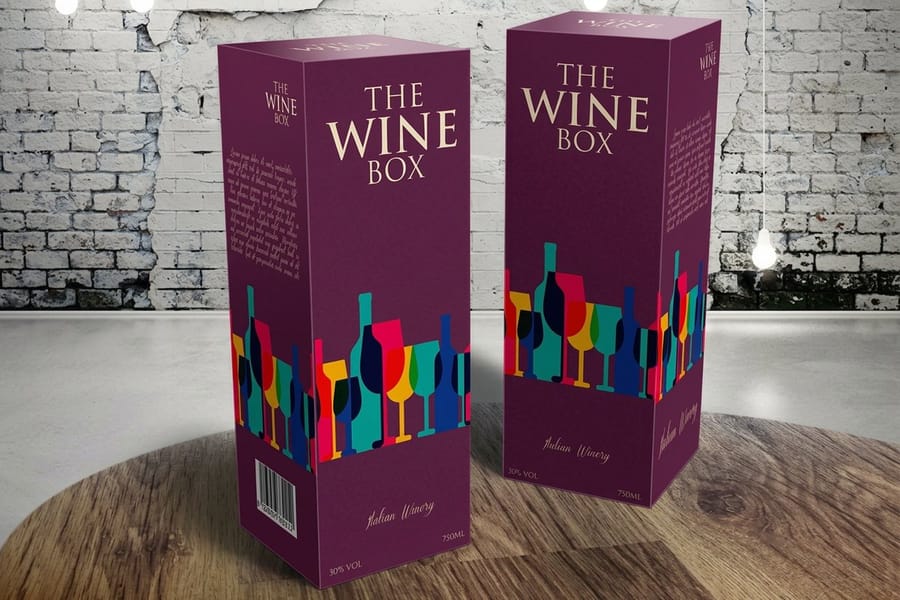
Every wooden wine box on the market is a variation on five constructions. Pick by how the box will be used after the bottle is gone, because that is what the recipient remembers.
Read the styles alongside our guide to making custom boxes, which covers the structural side that applies whatever the material.
Sliding lid, hinged case and slat crate
Sliding lid. The lid runs in a groove routed into the two long sides. No hinge, no clasp, nothing to break in transit, and the lid is one uninterrupted face for engraving. The failure mode is a groove cut a fraction too wide, which lets the lid slide out in a delivery van.
Hinged with clasp. This is the one that feels like a case rather than a box, and it is the right choice when you want the recipient to keep opening it. The hardware is the weak point. Hinge screws bite badly into soft pine and start to pull out after a dozen openings, so specify a hardwood at the hinge rail or a plate that spreads the load.
Slat crate. Spaced slats over a frame, usually with a rope handle. It photographs beautifully for farm-to-table and rustic gifting, and it protects the bottle least, because the gaps between slats are gaps in the armour. Use it for hand delivery, not for courier shipping.
Tongue and groove, and the printed rigid box
Tongue and groove. Interlocked panels, no visible screws or nails, and the cleanest finish of the five. It is also the slowest to make, so build the extra lead time into your gifting calendar before you promise a date.
Printed rigid box. Not wood at all, and worth including because it wins on the things wood loses on. Full-colour artwork on every panel, consistent unit cost across a run, and a weight the courier does not punish. Our wine boxes start at $460.22 and print your artwork edge to edge, which is the trade a lot of brands end up making once they price a hundred engraved lids.
Sizing a box for two, six or twelve bottles
Single bottle sizing is the easy case. Multi bottle boxes are where gifting programmes get caught, because the interior has to hold the bottles apart as well as hold them in.
Work from the same bottle figures. A standard 750 ml Bordeaux runs about 12 inches tall and roughly 3 inches across the base, so a two bottle box needs about 7 inches of internal width once you allow for a divider and clearance at each side. Six bottles usually sit two by three and twelve sit three by four, which is where the traditional case comes from, and both need a divider grid rather than padding alone.
Weight decides the rest. Twelve full bottles are heavy enough that the construction and the handle matter more than the finish, and most gifting runs stop at two or three bottles for that reason. Measure the actual bottles you ship, because Burgundy and champagne shapes are wider and will not sit in a grid cut for Bordeaux.
Personalization: what actually lasts on wood
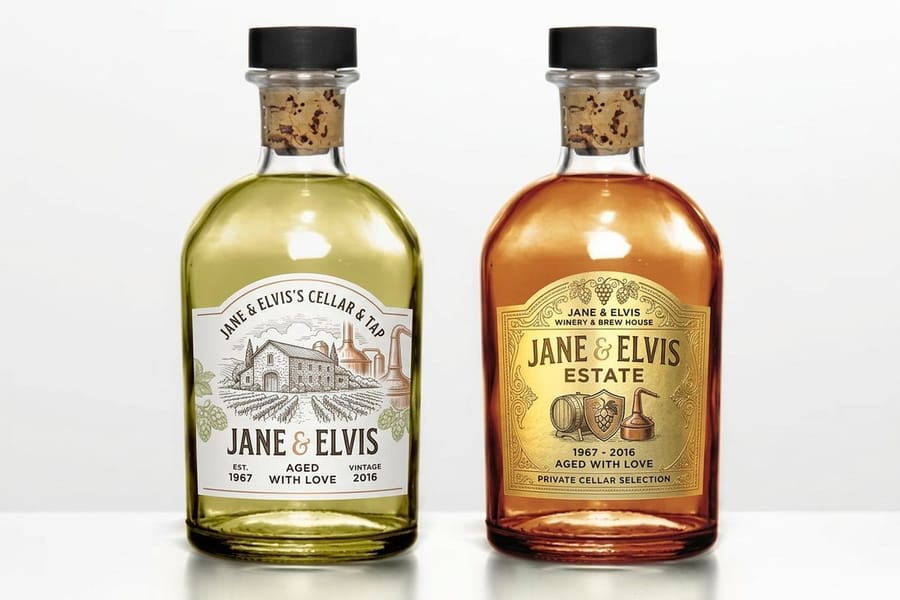
There are four ways to put a name on wood, and they are not interchangeable. Laser engraving burns a permanent mark and holds fine detail, but it is one tone, and the tone depends on the wood. CNC routing cuts deeper and wider, so it reads well from across a room and loses small type entirely.
A branding iron is the cheapest per unit once the die exists, and it is the least consistent, because depth and heat vary by hand. UV printing puts full colour directly onto the wood face, which solves the gradient problem, and it sits on the surface, so it scuffs where an engraved mark would not.
The fifth option is the one most brands should take: leave the wood plain and put the colour on a label. A label is reprintable per season, per client and per event without touching the box supply chain, and it costs a fraction of a new engraving setup.
Put the brand where it can be full colour
The bottle label is the surface the recipient looks at while they drink, and it is the only surface in the whole gift that can carry your exact brand colours. Custom wine labels start at $25 and print on stocks made to survive a chilled bottle sweating in an ice bucket, which ordinary paper does not.
For anything other than a rectangle, shaped wine labels start at $10.99 and cut to your outline, which is how neck tags, crest shapes and wax-seal silhouettes get made. The die-cut printing collection shows how far the same cutting process goes across other products.
The lid is a canvas, so treat it like one
Whatever process you use, the lid engraves best as a single centred mark with generous space around it. Fine serifs, hairline rules and type below roughly 10 point all lose definition when the beam widens on soft grain. Set the artwork bigger than feels comfortable, then step it back once you have seen a sample.
Ask the maker for one engraved sample on the exact wood and finish you are ordering, not on a demo offcut. Stain, oil and lacquer all change how the burn reads, and a sample costs less than a rejected run.
Where print beats wood, and where it does not
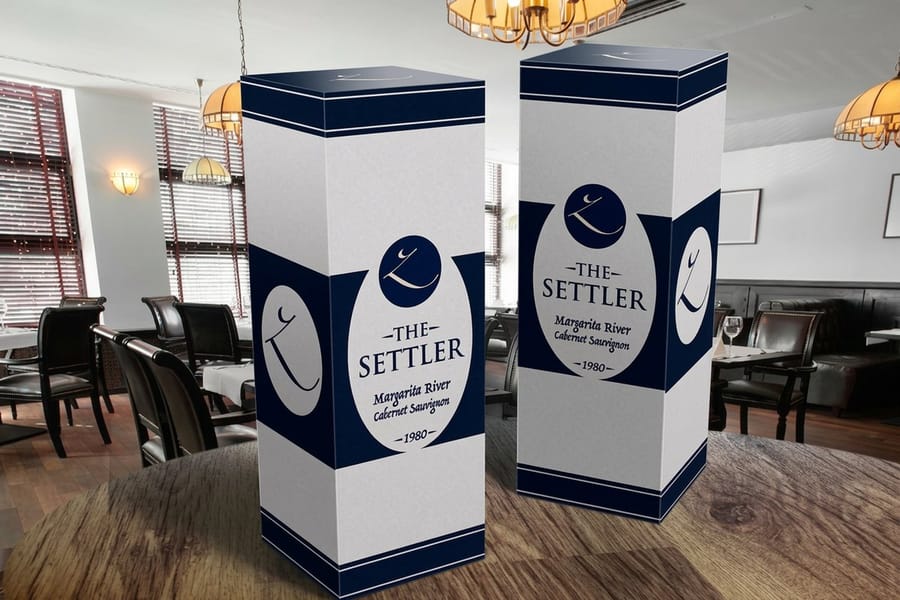
Wood wins on keepsake value, tactility and the moment the recipient lifts the lid. Print wins on colour, on cost per unit at volume, on lead time, and on shipping weight. Neither one wins on all four, and the brands that ship the best wine gifts use both.
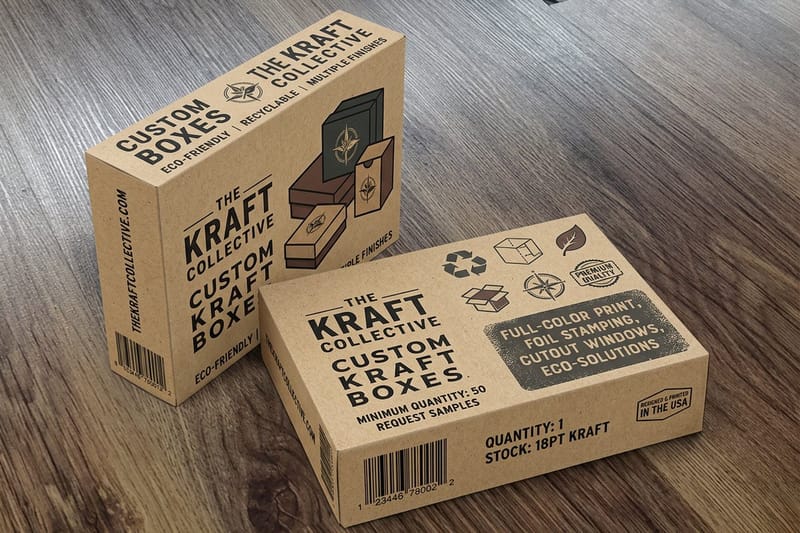
A common build looks like this: the bottle carries a printed label, the wooden box carries an engraved mark, and the whole thing travels inside a printed shipper that takes the abuse. Custom mailer boxes start at $711.78 and are built for exactly that outer layer, and custom kraft boxes at the same starting price give you the unbleached look when a glossy shipper would feel wrong around a rustic gift.
If your run is large and the recipients are customers rather than partners, price the all-print version honestly before you commit to wood. Our custom box printing range and the cardboard boxes guide cover what board construction can and cannot do, and the corrugated boxes guide covers the flute choices that decide whether a bottle survives a drop.
Shipping a bottle is its own problem
A wooden box protects against crushing and does very little against shock, because wood transmits an impact straight through to the glass. Molded pulp or foam inside the wooden box is what actually saves the bottle, and it has to hold the neck as well as the base.
Check the alcohol shipping rules for every destination state before you build a gifting programme around courier delivery. Carriers require an approved agreement for wine, and a beautiful box does not exempt you from it.
What to settle before you ship wine at all
The box is the last decision, not the first. Shipping wine is regulated, and a gifting program that orders packaging before checking the rules can end up with a beautiful box it cannot send.
Three things to settle first. Your carrier needs an alcohol shipping agreement on the account, and shipping without one risks the parcel being refused or destroyed. The destination state sets its own rules on who may receive wine and from whom, so a list that crosses state lines has to be checked against each one. And an adult signature is required on delivery, which means somebody has to be there, so a corporate list shipped to home addresses in December will produce failed deliveries.
Once those are settled the packaging question gets simple. Pick the construction for the way the gift actually travels, and let the printed label and the outer shipper carry the brand.
Wine box pricing and specs at 4OVER4.COM
Printed wine box pricing moves with size, board construction, finish and quantity, and the per unit cost falls as the run grows. The numbers below come from the live configurator, so you can compare them against a joinery quote before you decide which way to go.
Quantity and price
Wine box pricing and specs
Real configurator numbers, where the more boxes you order the lower the per unit cost drops.
| Quantity | Price Per Unit | Total |
|---|---|---|
| 50 | $9.20 | $460.22 |
| 100 | $5.04 | $504.15 |
| 150 | $4.39 | $657.93 |
| 200 | $3.40 | $679.90 |
| 250 | $3.25 | $811.71 |
| 500 | $1.93 | $965.47 |

You can also earn coins on every order and redeem them against future printing, which helps when a gifting programme repeats every season.
The label is where the brand lives
Whatever the box is made of, the label is the surface a recipient reads while they drink, and it is the only part of the gift that can hold your exact brand colours. Wine labels need a stock and adhesive that survive condensation, because a chilled bottle sweats and ordinary paper lifts at the edges within an hour of coming out of a bucket.
Print it
Custom wine labels, ready to apply
Stocks and finishes built for a bottle that gets chilled, poured and handled.
Finish changes both the look and the durability. Gloss lifts photography and shrugs off moisture, matte reads quieter and more premium under warm light, and a metallic or foil accent on a matte field is what most people read as expensive. Keep one accent and hold it steady across the range, because a consistent accent reads as a brand while a mix of them reads as a jumble. For anything other than a rectangle, a die cut opens up neck tags, crest shapes and wax-seal outlines, and the shaped business card ideas show how far a custom outline can be pushed on a small piece.
Who buys which box
The right answer changes with the volume and the relationship, so here is the breakdown by business type.
- Wineries and vineyards. Engraved single-bottle boxes for club members and library releases, with the vintage on the lid and the full brand system on the label. The box is annual, the label is per release.
- Corporate gifting teams. Hinged cases hold up to repeated opening, which matters when the gift sits on a client desk. Budget the engraving setup once and reuse the same lid art across the whole list.
- Restaurants and retailers. Slat crates for hand-delivered two-bottle gifts and printed boxes for anything that goes on a courier. The crate photographs well for social, the printed box survives the van.
- Event planners and weddings. Shaped labels do the personalization work here, because names and dates change per order and engraving does not scale to that. Keep the box plain and let the label carry the couple.
- Subscription and club shippers. Volume kills the wooden box on both cost and weight. Printed wine boxes inside a kraft shipper give you brand presence on every panel at a unit cost that survives a monthly cadence.
Templates and print-ready blanks
If you are laying out a printed box or a label rather than starting from a blank artboard, templates save a round of corrections. 4OVER4.COM sizes its blanks to exact product specs, so your artwork lines up with the cut lines, the bleed and the glue flaps. Pull a print-ready blank from the blank template library with bleed and trim already marked.
Start fast
Templates and print-ready blanks
Label and box templates at exact size, so your artwork lands inside the cut line.
Wally splits the gift into wood and print
Let the box carry the craft and the label carry the colour
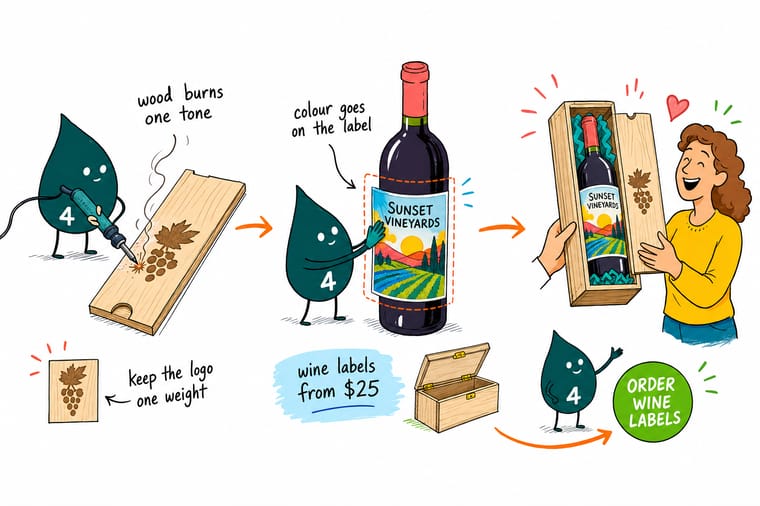
Engraving gives you one burn tone, so redraw your logo as a single-weight silhouette and keep type above roughly 10 point. Put the brand colours on the bottle instead: custom wine labels from $25, shaped wine labels from $10.99, and printed wine boxes from $460.22 when a run is too big for a hundred engraving setups.
Order custom wine labels →What to remember about wooden wine boxes
Design tips for engraved lids and printed labels
- Design for one tone. Engraving has no colour. Redraw the logo as a single-weight silhouette before you send it, or the maker will do it for you and you will not like the result.
- Leave the lid margin generous. A mark that sits close to the lid edge looks cramped once the box is in a hand. Keep clear space around the artwork equal to at least the height of the mark itself.
- Set type larger than feels right. Small serifs and hairlines fill in when the beam widens on soft grain. Anything below roughly 10 point is a gamble on wood.
- Sample on the real finish. Stain, oil and lacquer all change how the burn reads. A sample on a bare offcut tells you nothing about the finished box.
- Keep colour on the label. The bottle label and the printed shipper are where your exact brand colours live. Asking wood to be on-brand is the most common and most expensive mistake in wine gifting.
Explore more
More ways to package and brand a gift
Related products, categories and guides on 4OVER4.COM, one card each, so you can keep building the gift.
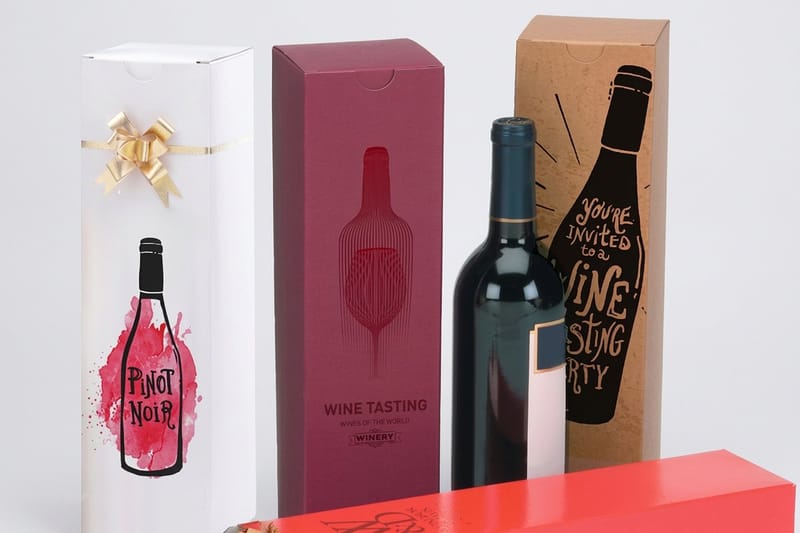 Product Wine Boxes Printed on every panel, built around a single bottle.
 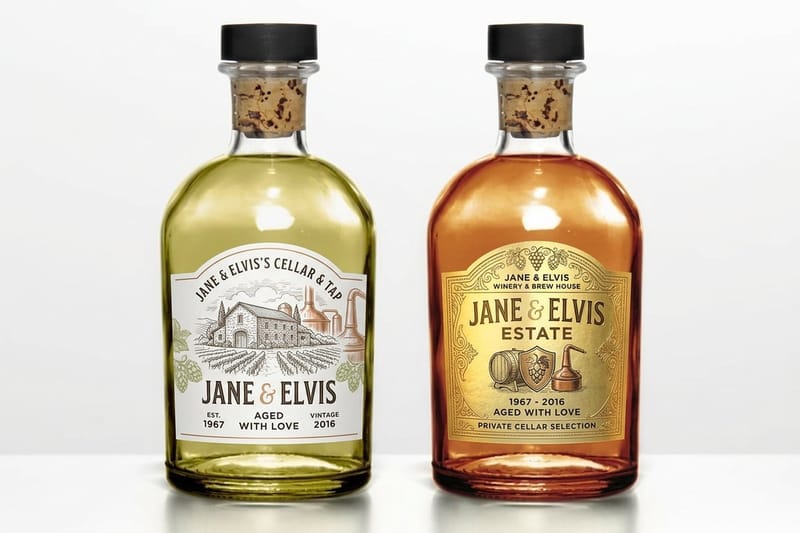 Product Custom Wine Labels Stocks that survive a bottle sweating in an ice bucket.
 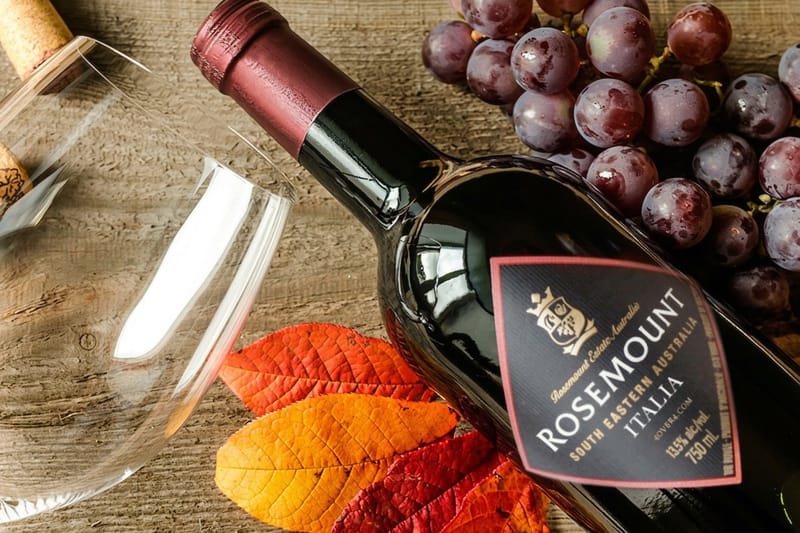 Product Shaped Wine Labels Cut to your outline for neck tags and crest shapes.
 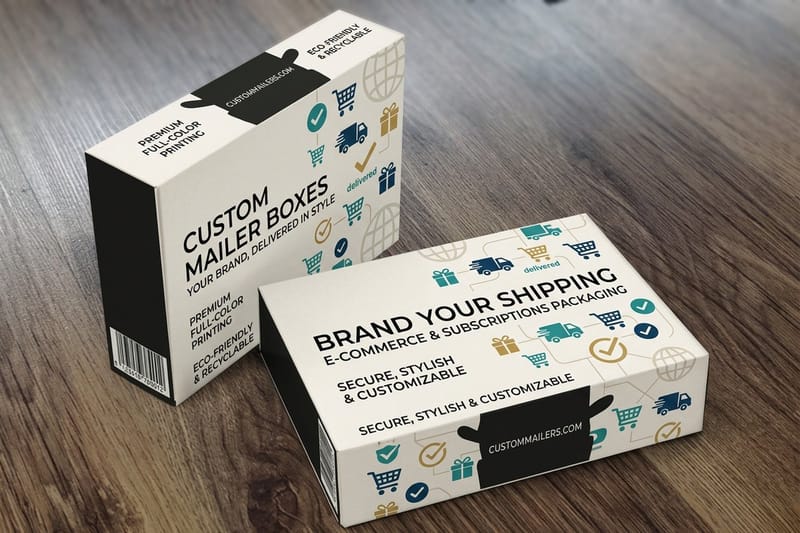 Product Custom Mailer Boxes The printed outer layer that takes the courier abuse.
  Product Custom Kraft Boxes Unbleached board when a glossy shipper feels wrong.
  Category Custom Box Printing Every box construction, size and finish in one place.
 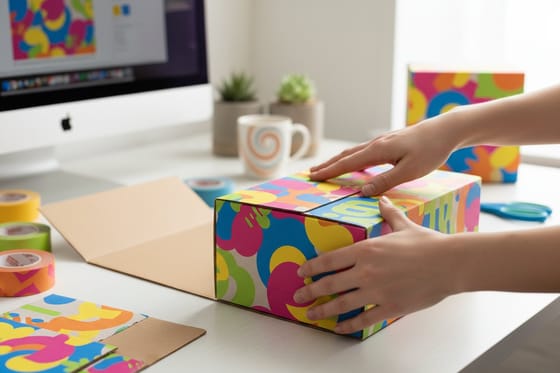 Guide How to Make Custom Boxes The structural decisions that apply whatever the material.
  Guide Custom Candle Boxes Guide Rigid box thinking for another fragile gift product.
  Article Custom Product Packaging That Sells Boxes and labels working together across a range.
  Category Custom Printing Collection The wider custom range beyond packaging.
 Building a wider packaging system rather than a one-off gift? The pizza box guide covers grease and heat resistance, the candle box guide covers protecting a fragile item, and custom planner printing covers the branded extras that ride along in a corporate gift.
Ready to print the rest of the gift?
Pick your size, upload your artwork or start from a free template, and 4OVER4.COM prints your labels and boxes sharp on premium stock, as fast as your gifting deadline needs.
Common questions about custom wine boxes
How much do custom wine boxes cost?
Printed wine boxes at 4OVER4.COM start at $460.22 with artwork on every panel, and the per unit cost falls as the run grows. Wooden boxes are quoted by a joinery or a laser cutting shop and priced per piece, which is why they rarely get cheaper in volume the way print does. Custom wine labels start at $25 and shaped wine labels at $10.99 if the budget belongs on the bottle instead.
What is the minimum order for printed wine boxes?
The smallest run is the first quantity tier in the selector on the product page, and it moves with the size and the board construction you pick. There is no single site wide minimum. Because setup is paid once and spread across the run, a very small order is the most expensive per box, so it is worth pricing the next tier up before you commit.
Can a wooden wine box be recycled or reused?
A plain untreated wooden box is reusable, and that is most of its value, since recipients keep them for storage long after the wine is gone. Recycling is harder, because a box with hinges, clasps or a heavy lacquer has to be stripped first. A printed board box in uncoated stock goes into the paper stream in most curbside programs, which is the greener option when the box is not going to be kept.
Does 4OVER4.COM make wooden wine boxes?
No. We are a printer, so we make the printed side of a wine gift: full-colour wine boxes from $460.22, custom wine labels from $25, shaped wine labels from $10.99, and the mailer or kraft shipper the gift travels in. Wooden boxes come from a joinery or a laser-cutting shop. Most wine gifting programmes end up using both, with the wooden box carrying the craft and the printed label and shipper carrying the brand colours, because wood can only give you a single burn tone.
What size should a single-bottle wine box be inside?
Build the interior around a bottle roughly 12 inches tall and 3 inches across the base, which covers a standard 750 ml Bordeaux, then add clearance for whatever padding you use. Burgundy bottles are shorter with a wider shoulder, and champagne bottles are wider and heavier again, so if one box has to hold all three, size it to the champagne and pad the others down with a foam or pulp insert. Measure the actual bottles you ship rather than trusting a spec sheet, because glass shapes vary between producers.
Which wood takes engraving best?
Birch plywood, because the pale face burns to a clean dark line and the grain is even enough that the mark stays consistent across the panel. Pine takes a mark cheaply but its grain alternates hard and soft bands, so the same file engraves unevenly. Walnut and dark-stained oak look expensive and give the least contrast, since a dark burn on a dark surface barely reads. On a dark box, either fill the engraved cut with paint or apply a printed label to the lid instead of fighting the material.
Is a wooden box or a printed box better for shipping wine?
A printed box is usually better for shipping, and a wooden box is better for handing over in person. Wood resists crushing but transmits shock straight through to the glass, so it still needs a pulp or foam insert to protect the bottle, and it adds weight that carriers charge for by dimensional pricing. A printed rigid box weighs less, costs the same per unit across a run, and carries artwork on every panel. Check your carrier alcohol agreement before shipping wine either way.
How do I personalize wine gifts for hundreds of recipients?
Personalize the label, not the box. Every engraved variation is a separate setup, so a hundred names on a hundred lids is a hundred setups, while a hundred names on labels is one print run with variable data. Keep one plain or single-mark box design across the whole list and let the label carry the recipient name, the date or the occasion. It also means a mistake costs a reprinted label rather than a scrapped wooden box.
