
Eco Friendly Hanukkah Card Ideas on Recycled Paper


Print Hanukkah cards on a 30% post-consumer recycled uncoated stock when you want them to look like any other card, and on 100% post-consumer when the recycled content is part of the message. The trade-off is color: a recycled sheet carries a warm base, so deep blues shift toward gray and metallic silver ink sinks into the fiber instead of sitting on top of it.
Hanukkah card formats at a glance
| Format | Trim size | Envelope | Room for | Watch out for |
|---|---|---|---|---|
| Flat A2 card | 4.25 x 5.5 in | A2, 4.375 x 5.75 in | A greeting, a logo, one line of warmth | No fold, so no cracking risk on recycled stock |
| Folded 5 x 7 | 10 x 7 in flat, folds to 5 x 7 | A7, 5.25 x 7.25 in | Eight short lines inside, one per night | Score before folding, and fold with the grain |
| Square card | 5.5 x 5.5 in | Square, 5.75 x 5.75 in | A single centered motif, menorah or dreidel | Square envelopes pay a nonmachinable surcharge |
| Postcard | 4 x 6 in | None, it mails bare | A short public greeting, no private note | Cheapest to mail, and the message is readable by anyone |
| Keepsake magnet | 3.5 x 2 in | Tuck it inside an A2 | A dreidel or hanukkiah that stays on the fridge | Not paper, so it sits outside the recycled story |
Pick the envelope before the card, not after, because envelope sizes are fixed and card trims are not. If a shape you want has no stock envelope, the card is the thing that has to move. You can browse the seasonal range in Hanukkah printing.
What recycled stock actually does to a Hanukkah card

Recycled paper is not one material. The figure worth asking your printer for is post-consumer waste content, the share of the sheet that came back from somebody’s recycling bin rather than from mill offcuts, and it changes both the price and the look. A 30% PCW uncoated sheet prints so close to virgin stock that nobody at the table will spot it. A 100% PCW sheet has visible fiber, a warmer base and a tooth you can feel with a thumb, which is the point if the recycled content is part of what you are saying.
The base color is what catches people out, because Hanukkah design leans on the two things a warm sheet fights hardest: a deep blue and a metallic silver. Blue ink laid on an oatmeal base goes slightly gray and slightly soft. Silver ink soaks into the fiber instead of sitting on top of it, so it reads as light gray rather than metal.
None of that is a reason to avoid recycled stock. It is a reason to design for it. Pick a navy rather than a bright royal blue, since navy keeps its character when it warms up. Let the sheet itself be the light color instead of trying to print white over it. If you want real shine, use foil, which sits on the surface, rather than metallic ink, which does not. Our recycled printing collection and the wider eco friendly printing range show which stocks are stocked at which content levels.
Choosing the recycled content
Ask for 30% PCW when the card has to look crisp and the eco story is a footnote rather than the headline. It is the cheaper of the two, it runs on standard presses without fuss, and photographs still hold their contrast on it. Ask for 100% PCW when the recycled content is the message, when the design is line art rather than photography, and when you are willing to accept a warmer, softer print.
There is a third option people forget. A card printed on 30% PCW and mailed in a plain kraft envelope reads as more sustainable than a 100% PCW card in a bright white envelope, because the envelope is what the recipient touches first. If budget only stretches to one of the two, spend it on the envelope.
Blue, silver and white on a warm sheet
On coated stock, white is printed. On uncoated recycled stock, white is simply the paper you left alone, and that paper is a shade of oatmeal. A snowy hanukkiah on a cream field looks intentional. The same design with an actual white ink hit next to it looks like a mistake, because now there are two whites on one card.
Silver is the harder call. Metallic silver ink on uncoated recycled goes flat, so either commit to foil, use a blind deboss so the impression catches the light instead of the ink, or drop metal altogether and let a single deep blue carry the card. The 100 lb matte cover explainer covers how an uncoated surface changes ink behavior, and it applies here directly.
Eight Hanukkah card ideas that print well on recycled paper
Eight ideas, one per night, each chosen because it survives contact with a recycled sheet rather than because it looks good on a screen. Line work, negative space and impression all get better on uncoated stock. Heavy full-bleed photography gets worse.
Most of them cost nothing extra to try. Hanukkah stickers start at $25 and business card stickers at $10.76, which is a small enough spend to test a motif before you print a card run around it.
Ideas one to four: the front of the card
1. A one-color line hanukkiah. Nine branches, not seven. Eight for the nights plus the shamash, set higher or offset so the count reads at a glance. A seven-branch menorah is the Temple menorah, and printing it on a Hanukkah card is the single most common design error we see. One deep navy line on bare recycled stock costs the least of any idea here and looks the most considered.
2. Foil where you were going to use silver ink. Foil sits on the fiber instead of sinking into it, which is exactly the problem uncoated recycled stock creates. Keep the foil small. A foiled flame on eight candles, everything else printed, reads more expensive than a foiled background.
3. A blind deboss instead of a color. Uncoated recycled stock takes an impression beautifully because the fiber compresses. A debossed dreidel with no ink at all is a card people run their thumb over, and it is the one design choice that only works better on recycled paper.
4. Dreidel letters as the whole design. Nun, gimel, hey and shin, set large as typography. Outside Israel the shin stands for sham, so the four letters read as the miracle happening there. It gives you a strong graphic that needs no illustration budget and no photography, which is what a warm sheet wants.
Ideas five to eight: the inside, the envelope and after
5. Eight short lines, one per night. Use the inside of a folded 5 x 7 for eight single sentences instead of one paragraph. It gives the recipient a reason to keep the card open on a shelf for the whole festival rather than reading it once.
6. A year-free card you can reprint. Leave the date off entirely. Hanukkah moves on the civil calendar, so a card with a year printed on it is scrap the moment the festival ends, while an undated design gets reordered without an artwork charge. If you want the sending year recorded, write it by hand.
7. A sticker seal instead of a glued flap. A printed sticker closing the envelope is the cheapest way to brand the outside of a card, and on a kraft envelope it is the only color the recipient sees before opening. Business card stickers at $10.76 do this job, and a sheet of Hanukkah stickers doubles as something for children at the table.
8. A keepsake that outlives the card. Tuck a small printed magnet inside the fold. Business card magnets start at $19.68 and end up on a fridge for months, which is more shelf life than any card gets. It is not recycled paper, so say so honestly rather than folding it into the eco claim.
Folding, envelopes and getting the card mailed
Recycled fibers are shorter than virgin fibers, and short fibers crack when you bend them. A folded card printed with a dark blue panel across the spine will split along the fold and show a pale line straight through the ink unless the sheet is scored first. Scoring crushes a channel so the fibers fold instead of tearing. Ask for it on anything above 100 lb cover, and fold with the grain rather than across it.
The other half of the job is the envelope, and the sizes are fixed rather than negotiable. A 4.25 x 5.5 in flat card takes an A2 envelope at 4.375 x 5.75 in. A folded 5 x 7 takes an A7 at 5.25 x 7.25 in. The extra eighth of an inch on each dimension is what lets a card slide in without buckling the flap.
Then there is what the post office will accept at the letter rate. The piece has to be rectangular, at least 3.5 x 5 in and 0.007 in thick, and no larger than 6.125 x 11.5 in. Square envelopes fail the rectangular machine test and pick up a nonmachinable surcharge, which is worth knowing before you fall in love with a square card. Confirm the current rates with USPS before a large mailing, since they change.
Timing the eight nights
Hanukkah begins at sundown on 25 Kislev, which drifts across the civil calendar and can fall anywhere from late November to late December. Look up the date for the year you are printing rather than assuming it sits beside the December holidays, because in some years it does not.
Work backwards from there. Allow about ten days in the mail for domestic first class, more if you are posting internationally, and add your print turnaround on top. If the card is undated, missing the first night is survivable. If you printed a date on it, it is not, which is one more argument for leaving the year off.
Sending a bulk run to one place
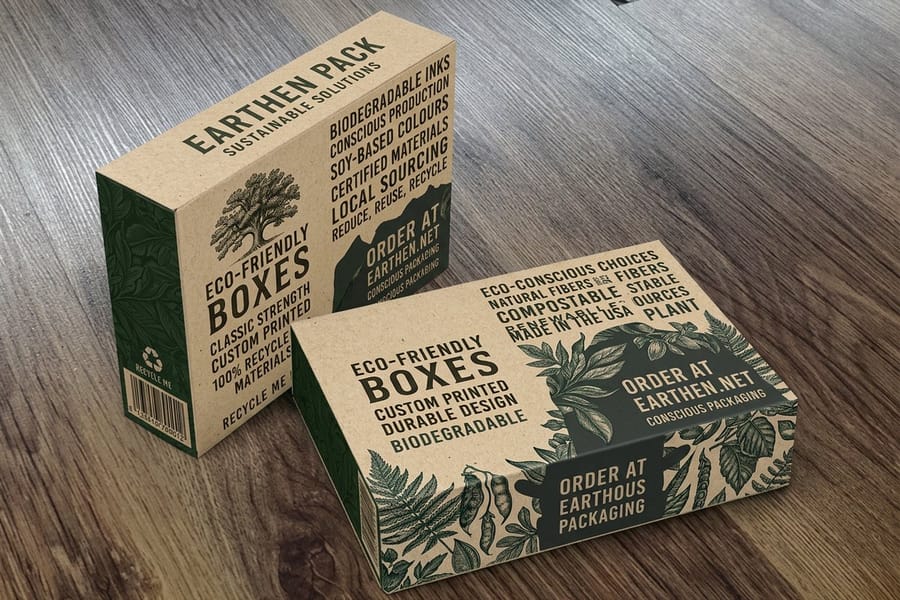
Offices, synagogues and schools usually want the whole run delivered to one address so somebody can hand them out. That is a packaging question rather than a printing one, and shipping several hundred cards in a plain corrugated carton undoes some of the story the card is telling. Eco friendly boxes start at $711.78 for a custom run, which only makes sense if you are shipping a product alongside the cards rather than the cards alone.
For a smaller hand-delivered set, a recycled tote bag at $22.73 carries the cards to an office exchange and stays useful afterwards. There is more on this thinking in our article on eco friendly packaging ideas.
Sticker and seal pricing at 4OVER4.COM
Sticker pricing moves with size, shape, stock and quantity, and the per unit cost drops as the run grows. The numbers below come straight from the live configurator, so you can size a card program before you commit to it.
Quantity and price
Hanukkah sticker pricing and specs
Real configurator numbers, where ordering the seals and the loose stickers in one run costs less per piece than two small orders.
| Quantity | Price Per Unit | Total |
|---|---|---|
| 1 | $25.00 | $25.00 |

You can also earn coins on every order and redeem them against future printing, which helps when a seasonal run repeats each year.
Paper weight, finish and what they cost on recycled stock
Weight decides whether the card stands up on a shelf for eight nights or curls after two. A flat card wants 14pt or 16pt cover, and 16pt is noticeably more rigid once the card is larger than 5 x 7. A folded card can drop to 100 lb cover because the fold does the stiffening, but that fold has to be scored first. Our paper weight chart lines the common stocks up against each other if you want the numbers side by side.
Print it
Hanukkah stickers, ready to seal
Menorah and dreidel motifs sized for envelope seals, favors and the table.

Finish behaves differently on recycled fiber than it does on virgin stock. Gloss lifts color but sits oddly on a sheet whose whole appeal is texture, so most recycled card runs stay uncoated or take a soft matte. Uncoated also stays writable, which matters when the sender wants to add a handwritten line, and it takes a deboss cleanly. If you do want a coating, put it on one side only and leave the inside bare so a pen still works on it. For the wider comparison of coated and uncoated behavior, the 80 lb gloss book explainer is the closest reference we have.
Ideas by who is sending the card
The right answer changes with the run size and who is handing the cards out.
- Small businesses and studios. One navy line design on 30% PCW, an undated inside message, and a printed sticker sealing a kraft envelope. Reorders cost nothing in artwork because there is no year on it.
- Synagogues and community groups. A folded 5 x 7 with eight short lines inside, printed once and delivered in bulk to one address for hand distribution.
- Schools and classrooms. Postcards for the cheapest mailing plus a sheet of stickers per child, so the card doubles as an activity rather than a piece of paper that gets recycled twice.
- Families sending personal cards. A square card with a single centered motif, accepting the surcharge, because the design matters more than the postage on a run of thirty.
- Retailers and gift shops. A debossed design on 100% PCW at a higher price point, sold alongside the eco products you already stock rather than as a giveaway.
Templates and print-ready files
Set your file up at 300 DPI in CMYK with 0.125 in bleed on every side, and keep type at least 0.125 in inside the trim so a slight shift on the cutter never clips a letter. Start from a sized blank in the blank template library if you would rather not build the document yourself, or use the design templates and change the artwork. If the design uses a plastic card rather than paper, the 30mil plastic card materials guide covers what that swap changes.
For a broader look at how eco choices land with customers, our articles on eco friendly brands worth studying and business card ideas sellers actually use are the closest neighbors to this one, and custom shaped card ideas covers what a die cut costs if you want the card itself to be a dreidel.
Wally prints Hanukkah cards that respect the paper
Design for the warm sheet instead of fighting it
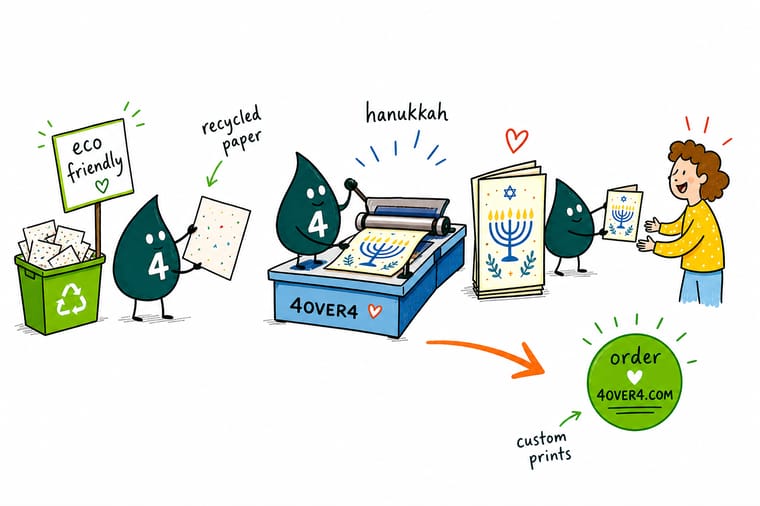
Ask for 30% post-consumer stock when the card must look crisp and 100% when the recycled content is the point. Set up at 300 DPI in CMYK with 0.125 inch bleed, choose navy over royal blue, score every fold before it cracks, and use foil rather than metallic ink so the shine stays on the surface.
Order Hanukkah stickers →What recycled stock changes about the card
Design tips that hold up on any recycled sheet
- Count the branches. Nine on a hanukkiah, eight nights plus the shamash. Seven is the Temple menorah and it is the error people notice fastest.
- Let the paper be the light color. Do not print white on an oatmeal sheet. Leave the stock bare and design around its actual color rather than the one on your monitor.
- Score before you fold. Short recycled fibers crack along an unscored fold, and the crack shows worst through a dark ink panel, which is exactly where a spine usually sits.
- Foil over metallic ink. Silver ink sinks into uncoated recycled fiber and reads gray. Foil sits on top and keeps its shine, so buy a small amount of foil rather than a lot of metallic ink.
- Leave the year off. An undated card reprints without an artwork charge and survives a late delivery. Handwrite the year inside if you want it recorded.
Explore more
More ways to print for the eight nights
Hanukkah stickers print in 3 business days and business card stickers in 5, both on label stock.
 Product Hanukkah Stickers Menorah and dreidel motifs for seals, favors and the table.
  Product Business Card Stickers Seal a kraft envelope with your own mark instead of glue.
  Product Business Card Magnets A keepsake that outlives the card on somebody’s fridge.
  Product Recycled Tote Bags Carry a hand-delivered set and stay useful afterwards.
  Product Eco Friendly Boxes Custom packaging for a bulk run shipped to one address. Category Hanukkah Printing Everything we print for the eight nights, in one place. Category Recycled Printing Stocks with post-consumer content, by product.
  Category Eco Friendly Printing The wider sustainable range across every format.
  Guide Bamboo Business Cards How the alternative fibers compare on cost and feel.
 Ready to print your Hanukkah run?
Pick your stock, drop in your design or start from a free template, and 4OVER4.COM prints it on recycled paper with a proof before the run goes to press.
Common questions about recycled Hanukkah cards
Does a Hanukkah card printed on recycled paper look cheap?
Not if the design is built for the sheet. A 30% post-consumer recycled uncoated stock is close enough to virgin paper that recipients do not register a difference at all. A 100% post-consumer sheet is visibly warmer with flecks of fiber in it, and whether that reads as premium or as cheap depends entirely on the artwork. Line work, generous white space and a single deep color look deliberate on that surface. A full-bleed photograph with heavy shadow detail does not, because the uncoated fiber absorbs ink and softens the contrast. Choose the design first, then the stock that flatters it.
Can I print a family photo on recycled card stock?
You can, but expect it to look softer and slightly warmer than the same file printed on a coated sheet. Uncoated recycled stock absorbs more ink, so dots spread a little and shadow detail closes up, and the paper’s own base color tints the highlights. If a photo is the whole card, either accept that muted look as the aesthetic, or use a 30% post-consumer sheet rather than 100% so the base stays closer to neutral. Lighten the shadows in your file by a touch before you send it, and ask for a proof rather than judging from your screen.
What envelope size do I need for a 5 x 7 Hanukkah card?
An A7 envelope, which measures 5.25 x 7.25 inches. That extra quarter inch is what lets the card slide in without bowing the flap or scuffing the corners. A flat 4.25 x 5.5 inch card takes an A2 envelope at 4.375 x 5.75 inches. If you are set on a square card, remember that square envelopes are not machinable at the standard letter rate and carry a surcharge per piece, which adds up quickly on a run of two hundred. Confirm current postage with USPS before committing to a shape.
When should I mail Hanukkah cards?
Work backwards from the first night, which begins at sundown on 25 Kislev and can land anywhere between late November and late December depending on the year. Allow roughly ten days for domestic first class mail, longer for international, and add your print turnaround on top of that. In practice, that means having artwork approved about a month before the festival starts. Check the date for your specific year rather than assuming it sits alongside the other December holidays, because in some years Hanukkah begins well before Thanksgiving weekend has finished settling.
How do I keep the card usable for more than one year?
Leave the year off the artwork. Hanukkah moves on the civil calendar, so a printed year turns leftover stock into scrap the moment the festival ends, while an undated design gets reordered with no new artwork charge and no new proof cycle. Keep the greeting general rather than referencing a specific event, and write the year by hand inside if you want it recorded. Print a slightly larger run than you need on that basis, because the per-unit cost falls as the quantity climbs and the surplus is still good next time.
