
Fitness Greeting Card Ideas for Gyms, Trainers, and Members


The fitness cards that work are tied to a member's own calendar rather than yours: a welcome card in week one, a milestone card the day they hit it, a card on their join-date anniversary, a thank-you for every referral, and a birthday card with no offer inside. Print the front, leave the inside uncoated, and write one specific line by hand, because the handwriting is the reason the card ends up on a fridge instead of in the bin.
Gym card moments at a glance
| Card | When it goes out | Format | What the inside says | Product at 4OVER4 |
|---|---|---|---|---|
| Welcome card | Week one, handed over at the desk | A2 folded, uncoated inside | The coach signs it and names the class they start on | Greeting Cards |
| Milestone card | The day the member hits it | 5 x 7 folded, blank inside | The exact lift, time or class number, written by hand | Greeting Cards |
| Membership anniversary | On the join date, not in January | A2 folded | How long they have trained, and one thing that changed | Greeting Cards |
| Referral thank-you | Within a week of the sign-up | A2 folded, uncoated inside | The name of the person they sent, and nothing to buy | Greeting Cards |
| Member birthday | Batched monthly from the join form | A2 folded, printed front | A short line, no offer, no expiry date | Birthday Greeting Cards |
Five cards is a full year for most gyms, and they all print on the same product with different fronts. Batch them into one run rather than ordering monthly. You can order folded greeting cards in either size straight from the configurator.
Why a printed card lands in a gym

A gym already has every cheap channel. Email, the app push, the whiteboard, the group chat. What none of them do is sit on a fridge for six months, and that is the only reason a printed card is worth the postage: it is the one piece of member communication that survives being read.
The catch is that it only works when the card is about the member. A card that arrives with a promotion inside is a flyer in a nicer envelope, and members sort it the same way. Tie the send to something that happened to that person, and the card gets kept. Tie it to your sales calendar, and it gets binned with the takeaway menus.
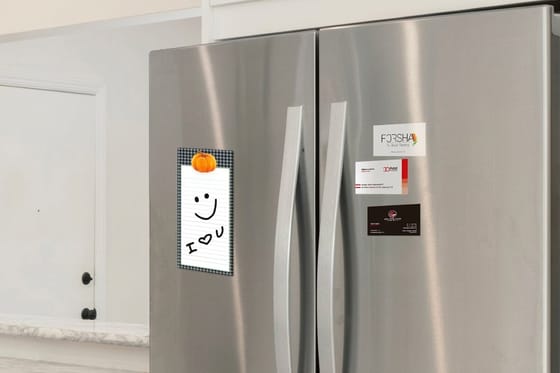
That also sets the frequency. Print cards for the moments that come round once a year per member at most, and put the recurring stuff, the class schedule and the seasonal promo, on a business card magnet or in email where it belongs. Our fitness printing collection covers the rest of the wall and counter pieces.
The moments that earn a card
Week one, when a new member is still deciding whether this place is for them. A milestone, the first unassisted pull-up or the hundredth class. The join-date anniversary. A referral. A competition morning. An injury. Every one of those is specific to one person, which is exactly what makes the card readable.
The pattern underneath is simple. If you can write one true sentence about the person that nobody else could write, print the card. If you cannot, you are about to send a mail merge and pay envelope prices for it.
The moments that do not
Price increases, schedule changes, holiday closures and monthly promotions. These are announcements, and an announcement in a greeting card reads as a bill in a birthday envelope. Members remember the mismatch longer than the message.
The awkward one is the win-back card to a lapsed member. It can work, but only stripped down to two hand-written lines with no discount on the front. The moment it leads with an offer it becomes a reactivation campaign, and everybody can tell.
Ten fitness card ideas worth printing

These ten cover a full training year for a gym, a studio or a single trainer. They are ordered from the easiest to run with no system behind it to the ones that need a member list you actually maintain.
All of them print on the same product. Greeting cards start at $56.02 a run, which is why the sensible approach is one order with several fronts rather than a small order every month.
Ideas one to five: the member calendar
1. The week-one welcome. Handed over at the desk, not mailed. The coach who takes their first session signs it and writes the name of that session. It costs nothing extra and it is the only card the member gets while they are still deciding.
2. The milestone card. First unassisted pull-up, first 5k, hundredth class, first competition. Print a blank-inside folded card with your mark on the front and write the actual number in. The number is the whole card.
3. The join-date anniversary. Dated to when they joined, not to January. Say how long they have trained and one thing that changed in that time. Nobody else in their life is tracking that date, which is why it lands.
4. The referral thank-you. Sent within a week, naming the person they referred, with nothing to buy inside. If you want to add a reward, put it on a separate piece in the envelope so the card itself stays clean.
5. The member birthday. Use birthday greeting cards at $56.02 and batch them monthly off the join form. One line, no offer, no expiry date. A birthday card with a coupon in it is a coupon.
Ideas six to ten: coaching and competition
6. The competition morning card. Handed over before they lift or run, signed by the coaching team. Short, because nobody reads a paragraph an hour before a meet.
7. The recovery card. For a member out with an injury, signed by the people they train with. This is the one that brings people back, and it works precisely because there is no membership talk in it.
8. The program completion card. A 5 x 7 flat card doubles as a certificate for a twelve-week block or a course, printed with a blank line for the name and the date. Members photograph these.
9. The trainer introduction card. A folded card that introduces a new coach with a photo and three lines about what they actually coach, paired with fitness business cards at $17.57 so the member leaves with the contact details too.
10. The early-December card. Sent before everybody else starts shouting about January. Thank them for the year, say what is coming, and leave the offer out. The birthday card ideas we collected work as front-panel directions here as well.
Wording a member actually keeps

One sentence that only you could have written beats four sentences of warm nothing. Name the lift, the class, the time, the person they referred. That single specific detail is what proves a human looked at their record before signing.
Keep the offer out of the card. If there is a reward attached to a referral, print it on a sticker at $10.76 or a separate insert and let the card do only the thanking. Mixing the two halves the effect of both.
Sign with the coach who trains them, not the gym. A signature from a name the member recognises is worth more than a logo, and it also decides who writes the cards, which is the real bottleneck.
Printed inside or handwritten
Handwriting is the reason a card gets kept, so handwrite as many as you can genuinely handwrite. At 400 members, that stops being possible, and the honest trade is to print a short line inside for the bulk and reserve handwriting for milestones and referrals. What you should not do is print a script font pretending to be handwriting. Everyone spots it, and it costs you the trust the card was buying.
If you are laying out that printed line yourself, the InDesign greeting card walkthrough covers the spread setup, and making your own greeting card covers the same ground without the software.
Fronts that suit a gym
Photography of your own space beats stock every time, because members recognize the rig, the floor, the wall. Shoot it empty and lit, not mid-class, so the card does not date the moment somebody leaves.
If you go typographic instead, keep it to one short line at a size a person reads across a room. Copy directions worth stealing sit in business card ideas for personal trainers, and the layout thinking carries straight over to a card front.
Card pricing and specs at 4OVER4.COM
Greeting card pricing moves with size, stock, finish and quantity, and the per unit cost drops sharply as the run grows. The numbers below come straight from the live configurator, so you can size a year of sends before you order.
Quantity and price
Greeting card pricing and specs
Real configurator numbers on folded card stock, where ordering a year at once costs far less than ordering a month at a time.
| Quantity | Price Per Unit | Total |
|---|---|---|
| 50 | $1.12 | $56.02 |
| 100 | 78.0¢ | $77.99 |
| 200 | 50.0¢ | $99.95 |
| 300 | 40.6¢ | $121.92 |
| 400 | 36.0¢ | $143.89 |
| 500 | 33.2¢ | $165.86 |

You can also earn coins on every order and redeem them against future printing, which helps when a gym is buying cards, magnets and counter pieces in the same year.
Stock, fold, and the coating trap
Two specifications decide whether a card can do its job, and both are set at order time. The first is coating. A gloss or aqueous coat is built to repel moisture, and ballpoint and gel ink are moisture, so a coated inside panel smears under a signature and takes hours to set. If a human signs the card, the inside has to be uncoated. Coating one side only gives you a photographic front and a writable inside on the same piece.
Print it
Folded greeting cards, ready to sign
Preset sizes on folded card stock, with the inside left writable when you need it.
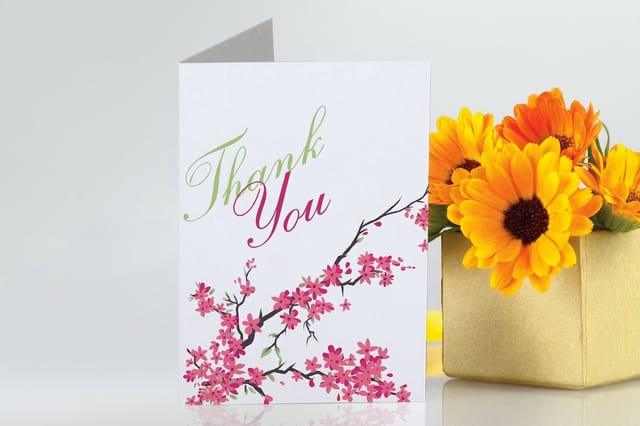
The second is the fold. Cover stock cracks along an unscored fold, and on a digital press the toner sitting on the surface makes that crack show as a white line straight through the artwork. A score before folding solves it, and keeping heavy ink coverage away from the fold line solves the rest. Heavier stock feels better in the hand and cracks more readily, so that weight decision cuts both ways.
Everything else is standard prep. Set the artwork as a spread, one flat sheet with the fold down the middle, with 0.125 inch bleed on every edge, 300 DPI, CMYK. Get the panel order wrong and the back prints upside down, which is the most common reprint on folded work. The greeting card size guide lists the folded and flat dimensions side by side, and the quick guide to standard sizes covers which ones have easy envelope supply.
Which cards suit which fitness business
Member count changes what is realistic, so here is the split by business type.
- Big-box gyms. High member counts mean printed inside lines for birthdays and anniversaries, with handwriting saved for milestones and referrals. Batch a year of fronts in one run to keep the per-card cost sane.
- Boutique studios. Small enough to handwrite everything, which is the whole advantage. Welcome cards at the desk and milestone cards after class do more than any campaign.
- CrossFit and strength gyms. The milestone card is the flagship here because the numbers are already tracked. Print blank-inside cards and write the actual lift.
- Personal trainers. One card design, a small run, and fitness business cards to match so the client sees the same brand twice. Referral thank-yous carry most of the return.
- Yoga and pilates studios. Program completion cards at 5 x 7 flat work as certificates for a course block, and members photograph them, which does the marketing for you.
Card blanks with the fold already set
If you are not starting from scratch, templates save the setup. 4OVER4.COM sizes its blanks to exact product specs so the fold, the bleed and the trim already line up. Pull a print-ready blank from the blank template library, or work through the free greeting card templates guide first.
Start fast
Card blanks with the fold already set
Card blanks with the fold and the uncoated inside panel already set.

Wally signs the card before he sells anything
Pick the moment first, then the size and the stock
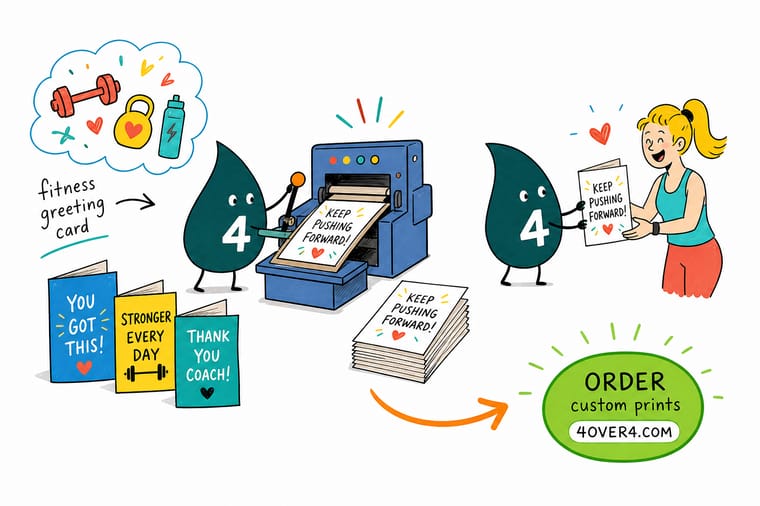
Use A2 at 4.25 x 5.5 inches folded for birthdays and anniversaries, 5 x 7 inches when the front carries a photo of your own gym. Set the artwork as a spread with 0.125 inch bleed at 300 DPI in CMYK, ask for the inside uncoated so a pen still works, and have the fold scored so heavy stock does not crack. Then write one true line about the member and leave the offer out.
Order greeting cards →What a gym card has to survive
Print decisions that decide whether the card works
- Leave the inside uncoated. A gloss or aqueous coat repels ballpoint and gel ink, and the writing smears for hours. If a human is signing it, specify the inside uncoated before the run.
- Score before you fold. Cover stock cracks along an unscored fold, and toner shows the crack as a white line. Ask for the score, and keep heavy ink coverage away from the fold.
- Design the spread, not the page. A folded card is one flat sheet with a fold down the middle. Set the document as a spread with 0.125 in bleed all round and 300 DPI in CMYK, or the back panel ends up upside down.
- Match the envelope to the folded size. Order envelopes against the folded dimension, not the flat one. A2 cards take A2 envelopes, and 5 x 7 cards take A7. Getting this backwards is the most common reorder we see.
- Think about postage before shape. Square cards are handsome and they carry a nonmachinable surcharge with USPS. If you are mailing hundreds, that shape decision has a price attached.
Explore more
More ways to print and promote
Greeting cards run 50 for $56.02, which is $1.12 a card before anyone writes inside it.
 Product Greeting Cards Folded cards from $56.02, with uncoated inside available.
 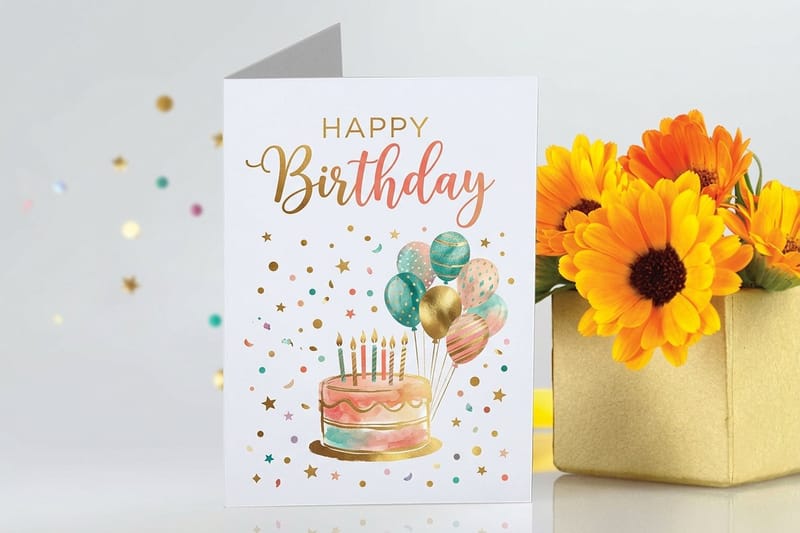 Product Birthday Greeting Cards Batch a year of member birthdays in one run.
 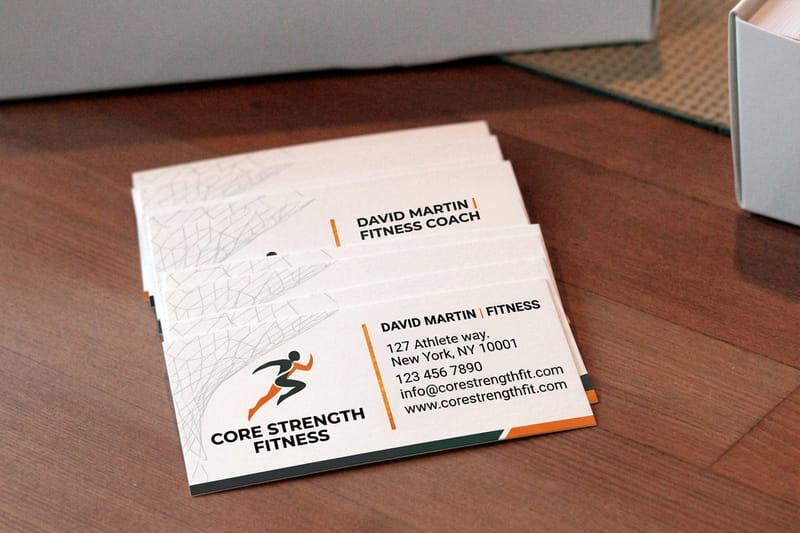 Product Fitness Business Cards From $17.57, so the brand matches what you hand out.
  Product Business Card Magnets From $19.68 for the schedule that lives on a fridge.
  Product Business Card Stickers From $10.76 for referral rewards that stay off the card.
  Category Greeting Card Printing Every size, stock and finish in one place. Category Fitness Printing Print built for gyms, studios and trainers.
 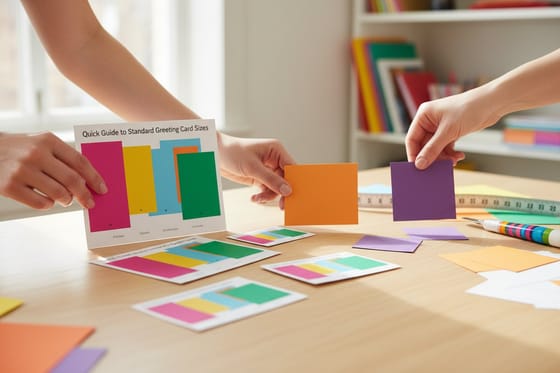 Guide Standard Greeting Card Sizes The sizes with easy envelope supply, and why. Guide Greeting Card Size Guide Folded and flat dimensions with bleed and trim.
  Guide Free Greeting Card Templates Start from a blank that already fits the cut line.
 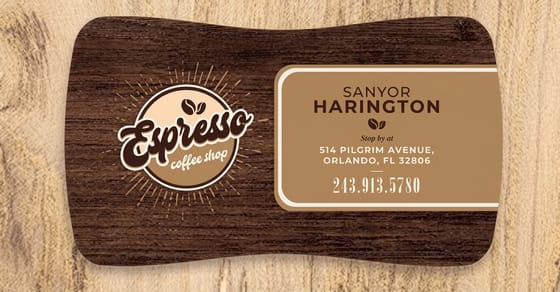 Article Custom Shaped Card Ideas Shape thinking that transfers to a card front.
  Article Business Card Ideas That Get Used What earns a second look on a small format.
 Ready to print your member cards?
Pick your size, drop in your design or a free template, and 4OVER4.COM prints it sharp on folded card stock, as fast as your deadline needs.
Common questions about fitness greeting cards
What size should a gym greeting card be?
A2, which folds to 4.25 by 5.5 inches, and 5 by 7 inches cover almost everything a gym sends. A2 is the cheaper one to mail and the easier one to source envelopes for, so it suits high-volume sends like birthdays and anniversaries. 5 by 7 gives the front panel enough room for a photograph of your own space and reads as the bigger occasion, which is why it suits milestone and program completion cards. Order envelopes against the folded size rather than the flat size, because A2 cards take A2 envelopes and 5 by 7 cards take A7.
Should the inside be printed or left blank for handwriting?
Leave it blank if you can genuinely write them all, because the handwriting is the reason the card gets kept. Past a few hundred members that stops being realistic, and the honest compromise is a short printed line for the bulk sends with handwriting reserved for milestones, referrals and recovery cards. Do not print a script typeface pretending to be handwriting. Members notice, and the card then costs you the credibility it was meant to build. Whatever you choose, specify the inside uncoated so a pen still works on it.
Will a pen write on the inside of a printed card?
Only if the inside is uncoated. A gloss or aqueous coating sits on top of the sheet and repels moisture, which is exactly what ballpoint and gel ink are, so the writing beads, smears and takes hours to set. Uncoated stock absorbs the ink and takes a signature straight away. This is the single most common problem with cards ordered for a gym, and it is a specification choice at order time, not something you can fix afterwards. If the front needs gloss for a photograph, ask for coating on one side only.
How many cards should a gym order at once?
Work out a year of sends, then order that in one run with several fronts rather than a small order every month. Greeting cards start at $56.02 at 4OVER4.COM and the unit cost drops as the quantity climbs, so twelve small orders is the most expensive way to buy the same number of cards. Count your realistic monthly birthdays, your expected new joiners, your anniversaries and a buffer for milestones and referrals, which are the two you cannot schedule. Keep the fronts generic enough that a leftover box is still usable next year.
Does a printed card really beat an email for winning members back?
They do different jobs, and pretending otherwise wastes money. Email is the right tool for anything time-bound, cheap to repeat and easy to measure. A card is the right tool when you want the message to survive the day it arrived, which is why it works for milestones, anniversaries and thank-yous rather than promotions. For a lapsed member specifically, a card works when it is two hand-written lines with no offer on it, and fails when it leads with a discount, because at that point it is a reactivation campaign wearing an envelope.
