
The 12 Largest Convention Centers in the US and What to Print for Each Floor


Tobias is our voice for cutting, binding and large format, built from the knowledge of our production team, with over 20 years in printing.
McCormick Place in Chicago is the largest convention center in the United States, at roughly 2.6 million square feet of exhibit space. The Las Vegas Convention Center follows at about 2.5 million and the Orange County Convention Center in Orlando at about 2.1 million. The hall size does not change your booth, though. It changes how far away people read you from, and how much it costs to get your crate to the floor. So the ideas that work in these halls are about distance and weight: a five word headline on a retractable banner stand that reads from 40 feet down a quarter mile aisle, a fabric table cover that folds into the case, and a fabric back wall once you move up to a 10 by 20.
The 12 largest US convention centers by exhibit space
| Rank | Convention center | City | Exhibit space | What the floor demands |
|---|---|---|---|---|
| 1 | McCormick Place | Chicago, IL | ~2,600,000 sq ft | Four buildings and a shuttle ride between them. Signage that finds you matters more here than anywhere. |
| 2 | Las Vegas Convention Center | Las Vegas, NV | ~2,500,000 sq ft | West Hall added 600,000 square feet of exhibit space in 2021. Fire marshal is strict on fabric certificates. |
| 3 | Orange County Convention Center | Orlando, FL | ~2,100,000 sq ft | North and South concourses sit across a road. Plan for two crowds, not one. |
| 4 | Georgia World Congress Center | Atlanta, GA | ~1,500,000 sq ft | Three exhibit halls with long sightlines. Tall fabric towers read from further away than banner stands. |
| 5 | Ernest N. Morial Convention Center | New Orleans, LA | ~1,100,000 sq ft | One of the longest contiguous halls in the country, close to a mile end to end. |
| 6 | Kay Bailey Hutchison Convention Center | Dallas, TX | ~1,000,000 sq ft | A major rebuild is under way, so confirm your hall assignment before you print anything with a hall number on it. |
| 7 | Jacob K. Javits Convention Center | New York, NY | ~850,000 sq ft | Tight aisles and expensive labor. Anything you can set up yourself saves real money. |
| 8 | Anaheim Convention Center | Anaheim, CA | ~815,000 sq ft | Consumer shows dominate. Booths compete on color and height rather than copy. |
| 9 | Huntington Place | Detroit, MI | ~723,000 sq ft | Auto and manufacturing shows, big machinery, so keep your graphics above the equipment line. |
| 10 | Los Angeles Convention Center | Los Angeles, CA | ~720,000 sq ft | Two halls joined by a concourse. Directional signage earns its cost here. |
| 11 | Walter E. Washington Convention Center | Washington, DC | ~703,000 sq ft | Association and government shows. Conservative booths, heavy on printed handouts. |
| 12 | San Diego Convention Center | San Diego, CA | ~616,000 sq ft | A single long hall on the waterfront, with an outdoor deck that suits tents and flags. |
Figures are exhibit space, rounded, as published by each venue. Gross building area runs far higher at every one of them. Confirm your own hall in the exhibitor kit, then print the booth to fit it: the tallest retractable stand graphic, 92 inches, still sits under the common 8 foot inline cap.
How exhibit space is counted, and why two lists disagree
Every convention center publishes two numbers and lets you confuse them. Gross square footage counts everything under the roof: meeting rooms, ballrooms, lobbies, loading docks. Exhibit space counts only the floor where booths can stand. McCormick Place quotes about 2.6 million square feet of exhibit space out of a building that runs to roughly 9 million gross.
The third number is the one exhibitors actually care about, and almost nobody publishes it clearly: contiguous exhibit space, meaning the largest unbroken hall you can put one show in. A venue with 2 million square feet split across four buildings and a shuttle route is a different job from 1 million in one room. New Orleans wins on that measure well above its rank on this list.
So when a ranking puts Orlando above Las Vegas or the reverse, neither is lying. They are counting different things. Read the show kit for your specific hall rather than the venue homepage, because the hall is what decides your booth size, your ceiling height and your rigging rules. Our guide to choosing convention displays works through the same decision from the display side.
We printed a back wall for a 10 by 20 and only found out at move-in that our hall capped inline height at 8 feet. The top 18 inches of the graphic sat behind the drape all week.
A first-time exhibitor at McCormick Place
What the size of the hall actually changes for you
Floor space does not change your booth. A 10 by 10 in Javits is the same 10 by 10 in Orlando. What a bigger hall changes is distance, sightline and cost. In a hall a quarter of a mile long, a visitor reads your booth from 40 feet away before they decide to walk over, and at 40 feet a paragraph is invisible while a five word promise is not.
Cost moves too. Bigger halls mean longer hauls from the dock, and material handling is priced by weight, so the same graphic printed on fabric instead of rigid board can cut the bill to get it onto the floor. That single choice is worth more than most booth design decisions.
What to print for a 10 by 10 inline booth
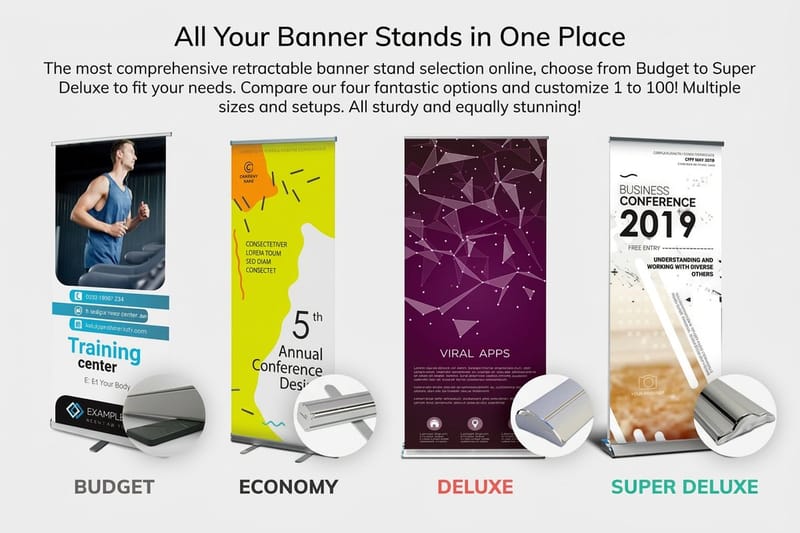
Most first booths are a 10 by 10 inline: 8 foot drape behind you, 3 foot rails at the sides, a table, two chairs. Show rules follow the standard exhibit guidelines, which cap the back wall at 8 feet and cap anything in the front 5 feet of your space at 4 feet so you do not block the neighbors. Design to those two heights and nothing gets cut at move-in. For layouts past the 10 by 10, see our trade show exhibit design ideas for 10x10, 10x20 and island booths.
The whole kit is three printed pieces. A retractable banner stand at $139 carries the headline, a fabric table cover at $225 turns a bare hotel table into a branded surface, and a stack of handouts does the follow-up. That is under $400 of print for a booth that reads as deliberate.
Order the table cover to the table, not to the booth. A 6 foot table is 72 by 30 inches at 29 inches high; an 8 foot table is 96 by 30. Show kits usually say which one you get, and if the kit does not say, ask, because a 6 foot cover on an 8 foot table looks exactly as bad as it sounds. The table cover sizing guide has the full fit chart.
Where the money is wasted
Two mistakes repeat. The first is printing the company description on the back wall, where nobody standing in an aisle will ever read it. The second is a graphic that ends at 7 feet on an 8 foot stand, leaving a strip of gray aluminum at eye level. Print full bleed to the stand size the product page lists, and keep the top third clear of anything you need read.
A second stand beats a bigger stand. Two 33 by 81 inch retractables at the corners of a 10 by 20 frame the space and travel in two cases a single person can carry. One oversized banner does neither. If you are doing this in a hurry, next day trade show displays covers what can still be produced on a short clock.
Island booths and the halls that swallow a small display
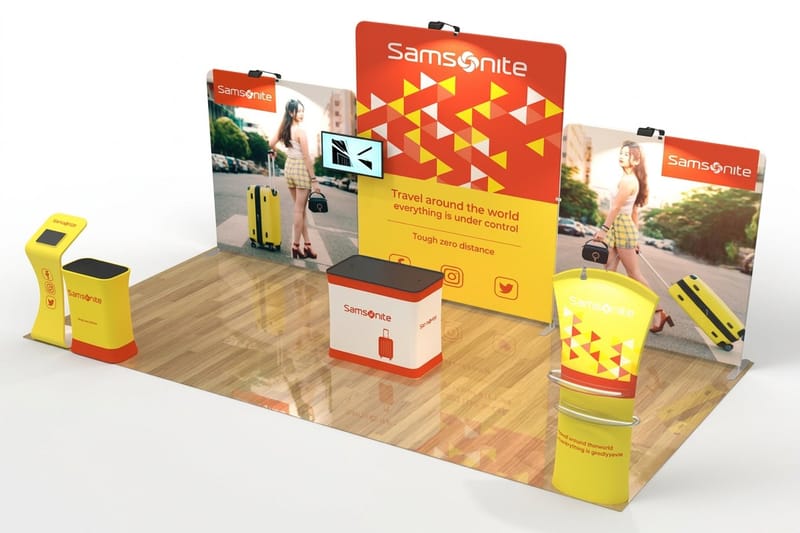
Above 20 by 20 the rules invert. An island booth is open on all four sides, so there is no back wall to print on and no neighbor to protect, and height limits rise to somewhere between 16 and 20 feet depending on the show. Everything now has to work from every angle, which is why islands use towers, hanging structures and double sided fabric rather than flat panels.
This is where SEG displays earn their price. A silicone edge graphic has a thin rubber strip sewn into the hem that presses into a groove in the frame, so the print sits flush with no visible hardware and no seam line. It packs into a soft case, ships light, and a marked panel can be replaced without touching the frame. At $229 the entry size costs less than reprinting a rigid wall once.
The catch is repair. Fabric wrinkles in a case and needs steaming, and a snag or a coffee stain means a new panel rather than a wipe. Rigid laminated panels survive handling better and cost more to freight every single show. Pick by how often you exhibit: three shows a year or more, fabric wins on freight alone. Once a year in one hall, rigid is fine. The tension fabric frame explainer walks through the hardware.
Hanging signs are a permission, not a purchase
An overhead sign is the single best way to be found in McCormick Place or the Orange County Convention Center, and it is also the piece most likely to be refused. Halls set a maximum height to the top of the sign, most reserve rigging for the in-house labor crew, and the drawings usually have to be filed weeks before move-in. Confirm the rule for your hall before you print, not after.
If the hanging sign is out, go vertical inside your own footprint instead. A tall tension fabric tower or a pair of feather flags at $108.75 gets your name above head height without a rigging order or a crane call.
Booth footprint and the print kit that fits
Booth size decides the kit, not the building. Match your footprint to the row below, then read the height rule twice before you send artwork.
| Booth | Footprint | Height rule | What to print | From |
|---|---|---|---|---|
| Inline 10 x 10 | 10 x 10 ft, 8 ft back drape | 8 ft at the back wall, 4 ft across the front 5 ft | One retractable stand, one fitted table cover, badges | Stands from $139 |
| Inline 10 x 20 | 10 x 20 ft, two booth spaces | Same height rule, twice the back wall | An 8 ft SEG back wall plus a stand at each corner | SEG displays from $229 |
| Peninsula 20 x 20 | Open on two or three sides | Often 12 ft, always check the show kit | Double sided fabric, a counter graphic, floor signage | Booth kits from $2,599 |
| Island 20 x 20 and up | Open on all four sides | Usually 16 to 20 ft, hanging signs need approval | Tension fabric tower, pop up wall, overhead graphic | Pop up displays from $752.39 |
| Tabletop only | A 6 ft or 8 ft table, no back wall | Nothing above the table beyond the display | Table top display, fitted cover, printed handouts | Table top displays from $49.41 |
Height rules come from the show organizer and vary. The 8 foot back wall and 4 foot front limit are the common standard for inline booths, and most shows follow them.
Booth display pricing and specs at 4OVER4.COM
Display pricing moves with size, frame and quantity. The retractable banner stand, the piece most booths start with, comes in 13 sizes from 24 by 79 to 59 by 85 inches across budget, economy, deluxe and super deluxe hardware, printed on 13oz smooth blockout vinyl so the aisle lights do not shine through, and it prints in 3 business days at the standard turnaround. These are the live configurator numbers, so you can budget the floor before you book it.
Quantity and price
Retractable banner stand pricing and specs
Real configurator numbers, including the graphic sizes that fit a standard 10 by 10 inline booth.
| Quantity | Price Per Unit | Total |
|---|---|---|
| 1 | $139.00 | $139.00 |

You can also earn coins on every order and put them against the next show, which matters when you exhibit on a circuit rather than once a year.
Freight, fire marshals and the costs nobody quotes
The print is the cheap part. Getting it onto the floor is where budgets break, because material handling is billed by the hundredweight with a minimum charge, and every crate pays it whether it is full or not. A fabric graphic and a frame that fold into one soft case can weigh a fifth of the rigid panels doing the same job, and the difference shows up on the invoice at every show you do.
Print it
SEG displays that sit flush in the frame
Silicone edge graphics that push into the groove and sit flush, with no visible hardware.
The second uninvoiced cost is the fire marshal. Fabric on the show floor generally has to meet a flame resistance standard, and inspectors in Las Vegas and Orlando do ask for the certificate. Get the documentation for your material before you travel. The third is time: labor rates on a show floor are set by the venue, so a display one person sets up in five minutes is worth paying for over one that needs a crew and a ladder. Setting up a retractable stand takes about a minute, which is exactly why they are still the most common thing on a convention floor.
What to print, by exhibitor type
The right kit depends far more on how often you exhibit than on which hall you are in.
- First-time exhibitors. One retractable stand, one fitted table cover, one clear promise. Add nothing else until you have worked a show and seen what people actually stop for.
- Multi-show teams. A fabric back wall with swappable panels. Same frame every show, new graphic per campaign, and the freight bill stays flat because fabric weighs almost nothing.
- Consumer show brands. Height and color over copy. Feather flags, a tall tower, and a table cover in the brand color beat any amount of explanatory text on the wall.
- Associations and conferences. Event badges, printed programs and directional signage matter more than the booth. Order badges early, because name lists always change late.
- Outdoor and festival footprints. A printed event tent, flags at the corners, and a weighted base. Wind, not visibility, is what ends outdoor booths early.
For the piece by piece packing list, the must-have print products for trade show booths and the first-time exhibitor checklist cover what goes in the crate. If you are still deciding on the display format itself, read the trade show signage and display guide and browse every display we print.
Wally sizes the booth, not the building
McCormick Place is 2.6 million square feet. Your booth is still 10 by 10
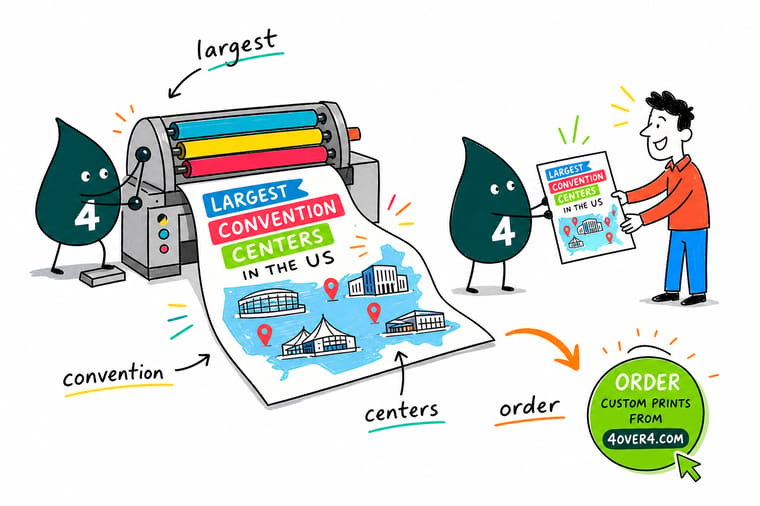
Design the back wall to 8 feet and keep the front 5 feet under 4 feet high. Print the headline for a reader 40 feet away, order the table cover to the table you are given rather than the booth, and ship fabric instead of rigid so material handling does not eat the budget before the doors open.
Order your booth display →What to remember about the big halls
Booth design tips that hold in any hall
- Five words at forty feet. A visitor decides to walk over from across the aisle. Write the headline for that distance and put the detail on the handout.
- Design to the height rule, not the frame. Inline booths cap at 8 feet high with a 4 foot limit across the front 5 feet. Anything above that sits behind drape or gets pulled.
- Keep the logo off the fold line. Fabric graphics crease where they fold in the case. Put flat color on the fold and the mark somewhere else.
- Weigh the booth before you ship it. Material handling is billed by the hundredweight with a minimum. Knowing the crate weight before you book tells you what the floor will really cost.
- Bring a spare panel, not a spare idea. Graphics get scuffed in transit. One replacement panel in the case has saved more booths than any amount of onsite improvisation.
Explore more
More ways to print your booth
Fabric table covers run 1 for $225.00 in 4 business days and SEG displays 1 for $229.00 in 3.
Product SEG Displays Silicone edge fabric that sits flush in the frame, no visible hardware. Product Retractable Banner Stands The one piece every 10 by 10 booth needs, from $139. 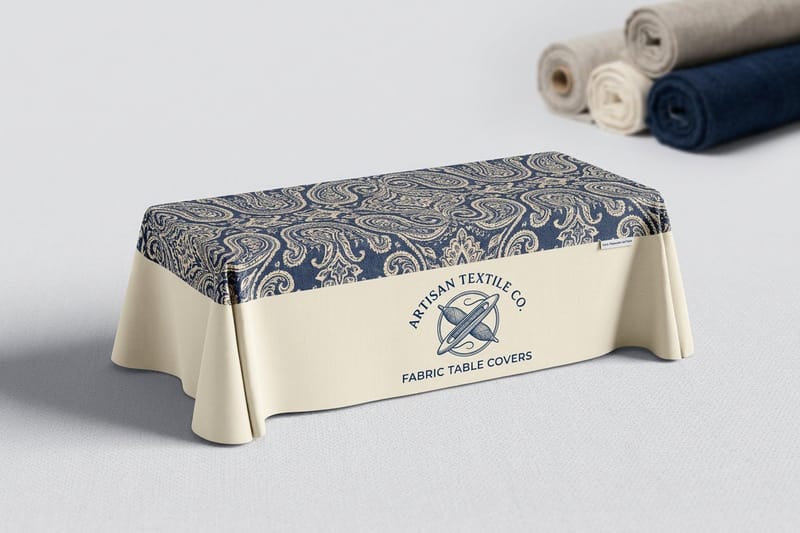 Product Fabric Table Covers Fitted covers sized to the 6 and 8 foot tables show kits supply. Product Trade Show Booth Kits Frame, graphics and case in one order for a full island build.
 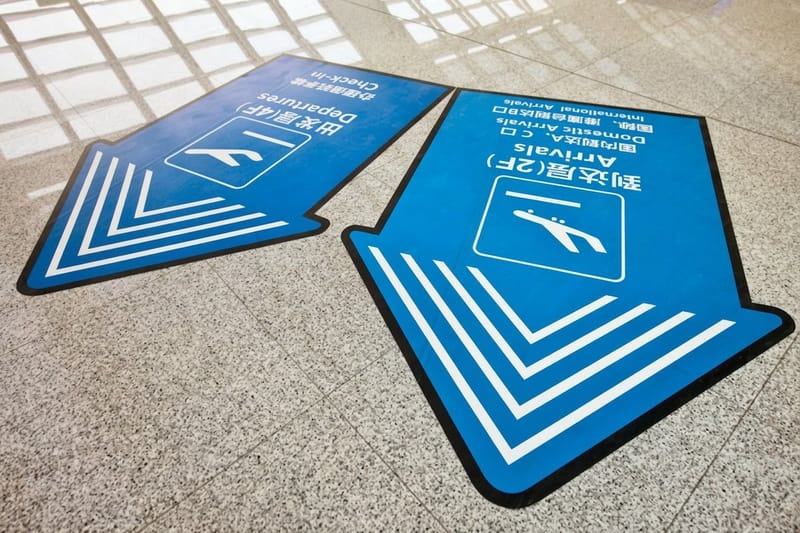 Category Trade Show Printing Every booth piece we print, in one place.
 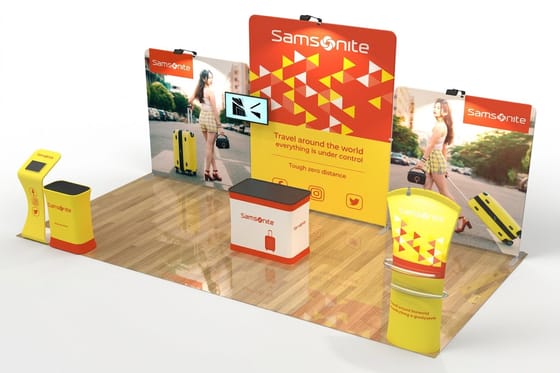 Article The 50 Largest Trade Shows in the US The shows that fill the halls on this list.
 Ready to print your booth?
Pick the display, drop in your artwork, and 4OVER4.COM prints it sharp and ships it to the show or to you, in time for move-in.
Common questions about convention centers and booths
Which convention center in the United States is the largest?
McCormick Place in Chicago, with roughly 2.6 million square feet of exhibit space spread across four connected buildings. The Las Vegas Convention Center is second at about 2.5 million square feet after the West Hall opened in 2021, and the Orange County Convention Center in Orlando is third at around 2.1 million. Rankings shuffle between those three depending on whether the source counts exhibit space or gross building area, and venues quote both.
How tall can my booth graphics be at a trade show?
For a standard inline booth the back wall caps at 8 feet, and anything in the front 5 feet of your space caps at 4 feet so you do not block the booths either side of you. Island booths, which are open on all four sides, usually allow 16 to 20 feet, and a hanging overhead sign has its own height limit plus a rigging approval process. Those numbers come from the show organizer, not the building, so read the exhibitor kit for your specific show before you send artwork to print.
Do convention centers require fire certificates for fabric graphics?
Many do, and Las Vegas and Orlando are among the strictest. Fire marshals ask for documentation that the fabric meets the flame resistance standard, and a booth without it can be shut until the paperwork appears. Ask your printer for the flame certificate for the material before the show rather than during move-in. Printed fabric displays from 4OVER4.COM come with the material documentation on request, which is the version of this question that actually matters at 7 in the morning on setup day.
Should I ship my booth to the advance warehouse or straight to the show?
Advance warehouse for anything you cannot afford to have arrive late, which is most first-time exhibitors. The warehouse receives freight for weeks before the show and delivers it to your space before you arrive, at a higher handling rate. Direct to show site is cheaper but only accepts deliveries during a narrow move-in window, and a truck stuck in a marshalling yard queue means an empty booth. Either way the bill is calculated by the hundredweight, so pack light.
Is a fabric display worth it over a retractable banner stand for a small booth?
Not for a single 10 by 10 at one show a year. A retractable stand at $139 plus a fitted table cover does the same job for a fraction of the cost, sets up in under a minute and needs no tools. Fabric starts paying once you have a 10 by 20 or larger, or once you exhibit three or more times a year, because a continuous 8 foot wall reads as a built booth rather than a table, and the swappable panel means one frame carries you through several campaigns.
