
Brand Signs That Make Storefront, Window, Wall and Event Signage Match


Tobias is our voice for cutting, binding and large format, built from the knowledge of our production team, with over 20 years in printing.
Four placements, four materials, one brand color that has to survive all of them. Planning the set starts with sizing letters for the viewing distance, then buying in the order that costs least to get wrong.
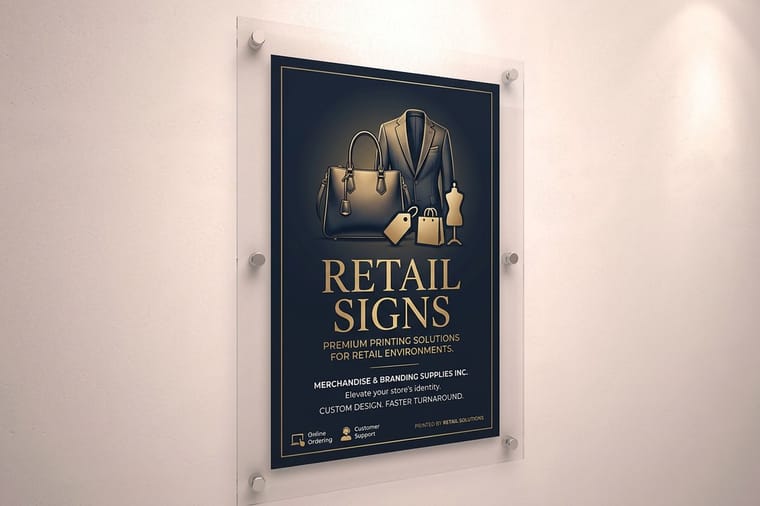
Brand signs are the storefront, window, wall and event pieces that carry one logo, one color and one way of writing your name. They only look like a system when the color is fixed as a Pantone plus a CMYK build and approved on each material, and when letter height follows the distance the sign is read from, roughly one inch of capitals per ten feet. Order banners and window decals first because they are cheap to redo, and cut aluminum or acrylic once the identity has held steady.
Quick answer
One color, one logo file, and letter height set by distance
A brand signage system is three decisions repeated across every piece. Fix the color as a Pantone reference plus a CMYK build and approve a physical sample on each substrate, because gloss vinyl reads deeper than brushed aluminum and daylight through window film shifts it again. Size the capitals to the distance, about one inch per ten feet, which usually means less copy rather than smaller type. Then buy in order of risk: banners and window decals now, aluminum and acrylic once the identity is settled.
What Turns a Pile of Signs Into a Signage System
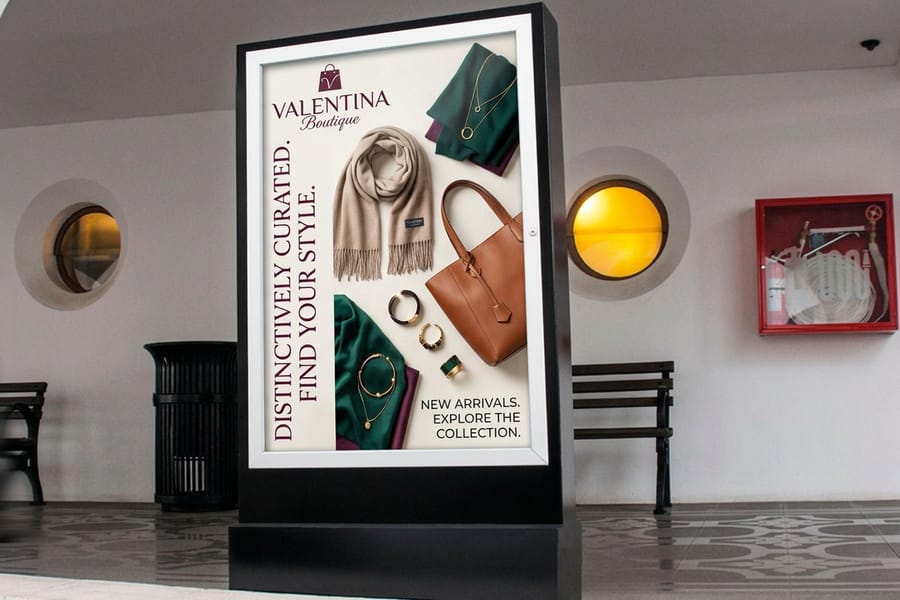
Most small businesses do not buy signage. They buy signs, one at a time, over three years, from whoever was quickest, and the result is a storefront in four typefaces. A system is the opposite decision: you write down the color, the logo file and the wording rules once, then every piece after that is a repeat rather than a new design.
Signs do four different jobs, and mixing two of them onto one panel is what makes a frontage look cluttered. Identification says who you are and nothing else, which is the storefront sign and the logo on the glass. Direction moves people to parking, an entrance or a counter. Information covers hours, policy, wifi and restrooms. Promotion sells what is happening this week and is the only one meant to be replaced often.
Once you sort your signs that way, the budget sorts itself. Promotion goes on vinyl banners and window graphics that cost little to redo. Identification goes on aluminum or acrylic, because you want it there in three years. The full breakdown of signage types covers the categories in more detail, and everything we print for them sits in signs and banners.
The wording rule is the one people skip. Decide how the business name is written, including whether it carries a tagline, and then never vary it. A sign that says the name one way and a window that says it another reads as two businesses sharing a lease.
Storefront, Window, Wall and Event Signs, and What Each One Costs
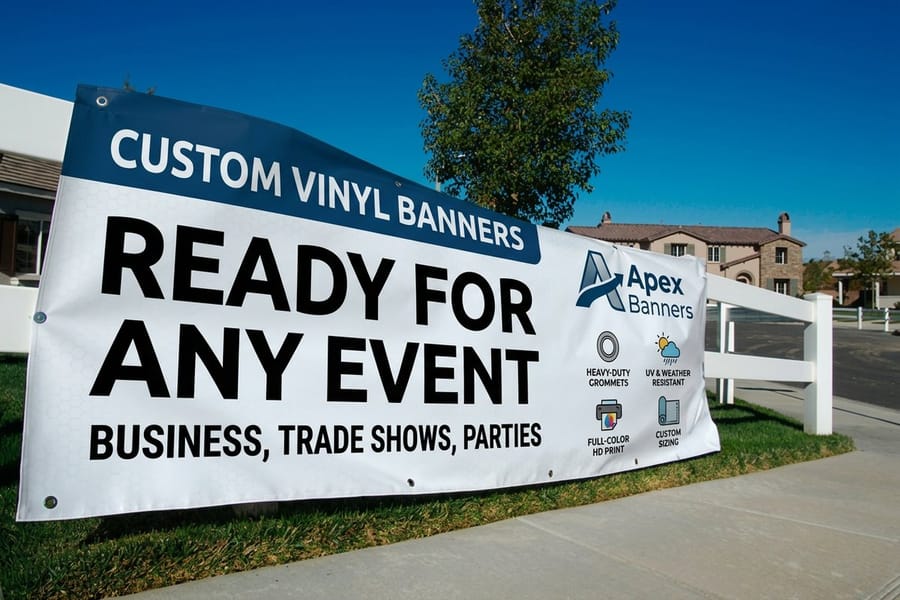
Four placements cover almost every business, and each one has a material that suits it and a material that fails on it. The table sets them side by side.
| Placement | What to print | Realistic life | Starts at |
|---|---|---|---|
| Storefront | Vinyl banners or business banners while a permanent sign is permitted, then aluminum signs | A season for banner vinyl, years for aluminum | $43.92 banner, $36 aluminum |
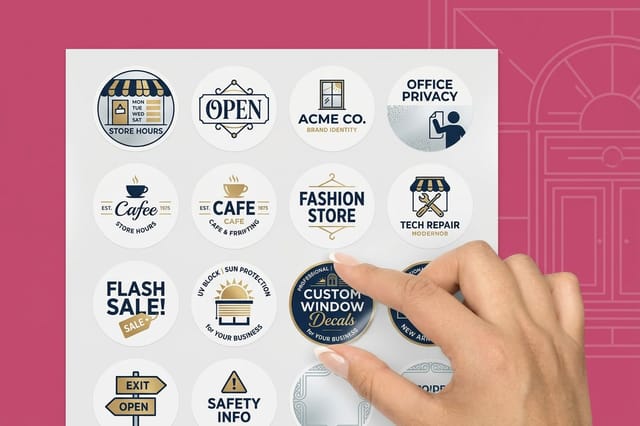
| Window | Window decals for the logo, hours and door rules | Two to three years on clean glass | $93.37 |
| Interior wall | Acrylic signs for the lobby mark, retail signs for aisles and departments | Indefinite indoors | $152.72 acrylic, $25 retail |
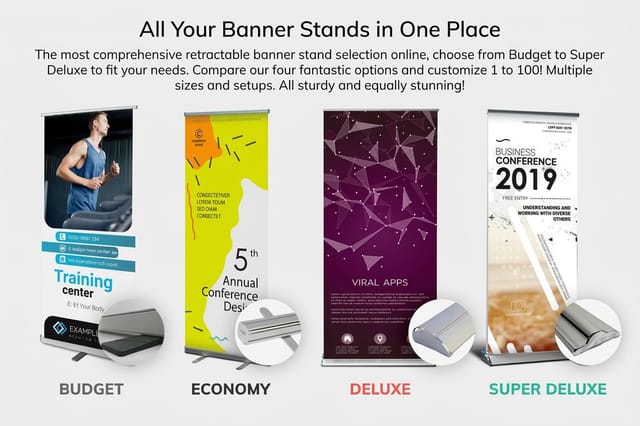
| Events and sidewalk | Retractable banner stands indoors, yard signs outside | Dozens of setups for a stand, a campaign for coroplast | $139 stand, $25 yard signs |
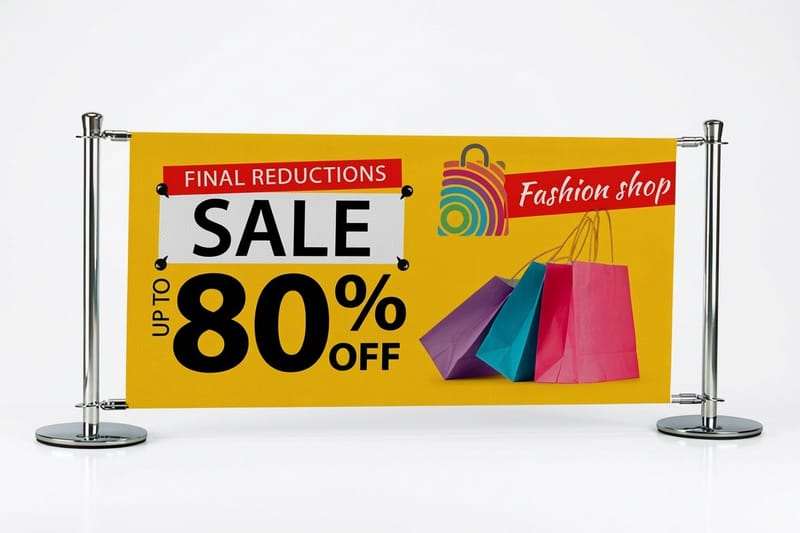
Two notes on that table. The banner figure is the honest starting point for a storefront, but a banner is a stretched sheet held by grommets, so wind is what ends it rather than sun. If your frontage catches a crosswind, ask for wind slits or step up to a rigid panel, and read typical banner sizes before you commit to a width the wall cannot carry.
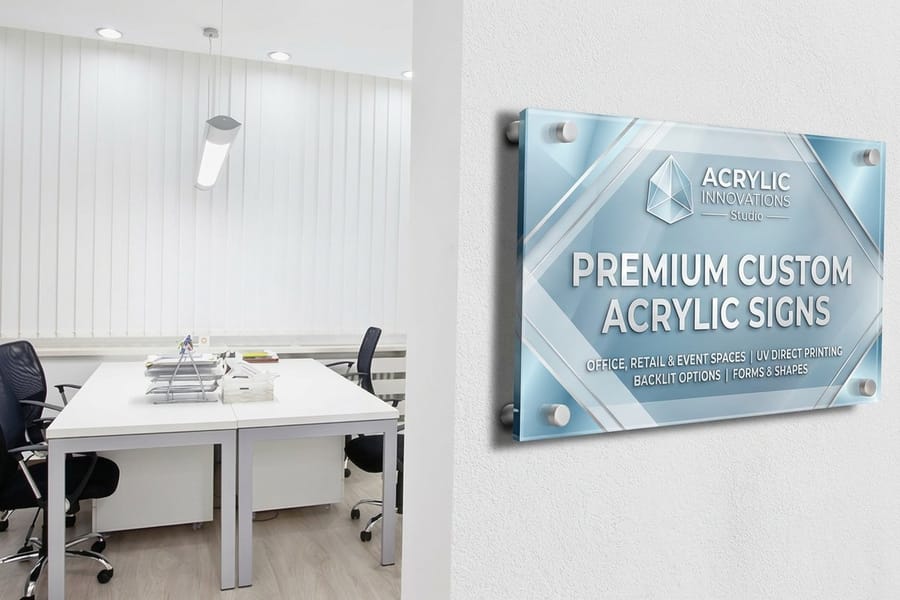
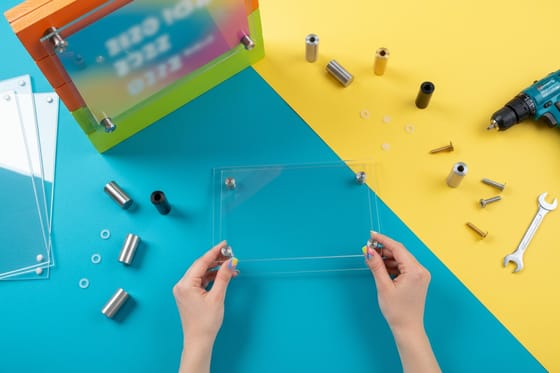
The acrylic number looks steep next to the others until you count reprints. A lobby sign mounted on standoffs is bought once. The acrylic business signs buyer guide walks through thickness and mounting, and standoff hardware is the detail that makes it look fabricated rather than glued on.
Holding One Brand Color Across Vinyl, Metal, Acrylic and Glass
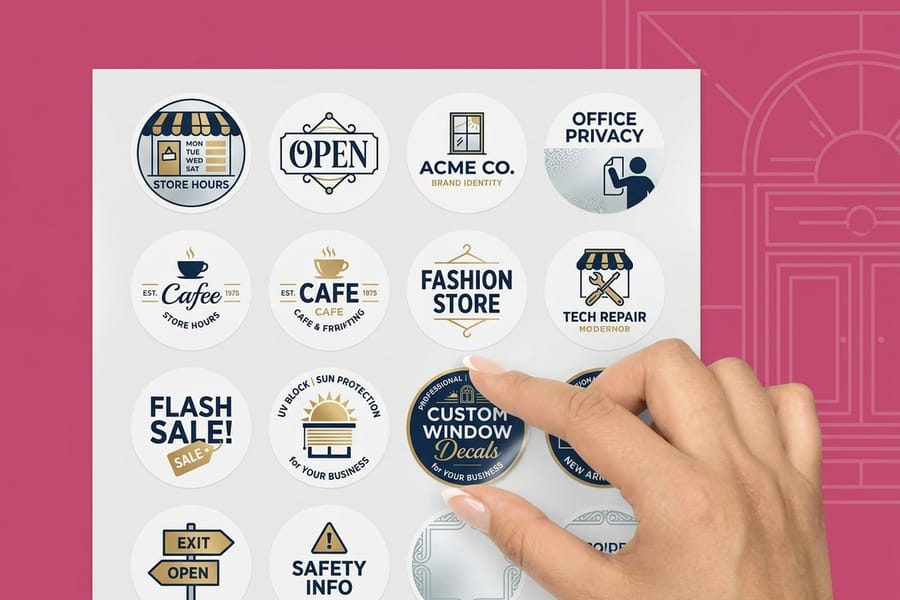
This is where branded signage actually goes wrong, and it is rarely a printing fault. The same ink values land differently on each surface, so a set of signs ordered separately over a year drifts even when every file was correct.
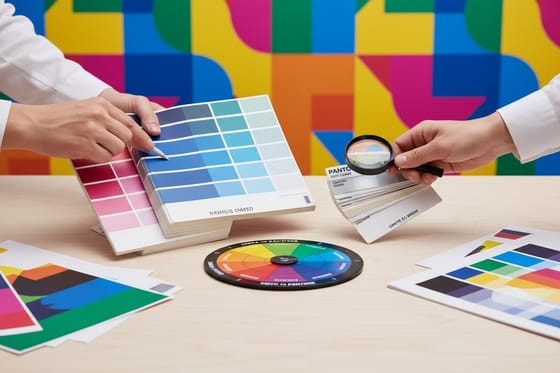
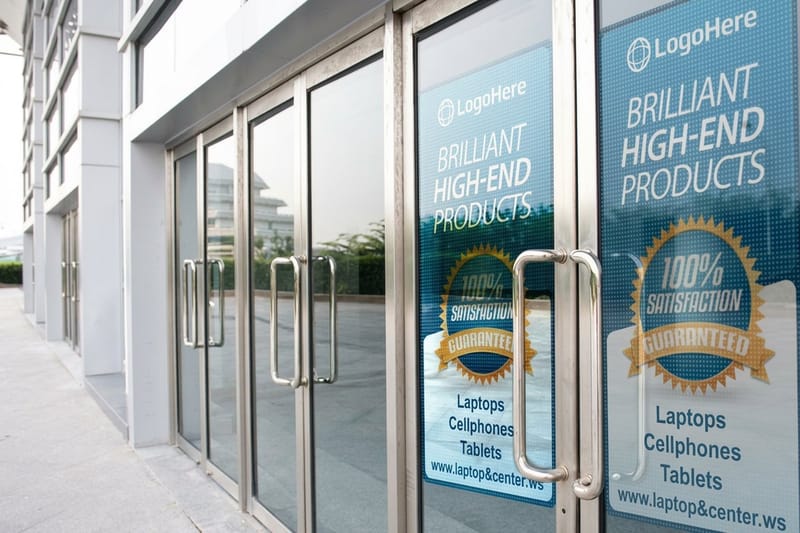
Gloss banner vinyl has a smooth reflective face, so ink sits on top and reads deep and saturated. Brushed or matte aluminum scatters light and pulls the same build a step lighter and flatter. White adhesive vinyl on glass looks close to paper until the sun comes around and daylight passes through the film, at which point a mid tone can look washed. Perforated window film is the extreme case: it is full of holes, so from outside you see the graphic mixed with the dark interior behind it, and anything subtle disappears. Reflective film shifts the build again, so look at the Reflective Vinyl Graphics story and the Reflective Adhesive Vinyl video before you approve a brand color on it.
The fix is procedural rather than technical. Specify the brand color as a Pantone reference and an agreed CMYK build, not as a screen RGB value, since RGB has no fixed meaning on press. Our notes on CMYK versus RGB for printing explain why, and the Pantone colors that shift most in CMYK flags the oranges, deep blues and bright greens that move furthest. If your brand color is one of those, expect to approve a compromise on process work and keep the true spot for the pieces that matter.
Then order the first pieces together rather than one a month. One banner, one window decal and one wall panel arriving in the same box lets you judge them in the same daylight and set a reference. Keep the approved files and reorder against them. For the logo itself, supply vector artwork with fonts outlined, sized for the largest piece: a logo that was only ever a small web PNG will show its edges at five inch letter height. The logo design best practices guide covers what makes a mark survive that enlargement, and the practical branding guide covers deciding the rules before you spend on signs.
Sizing, Mounting, and the Order to Buy In
Start with distance, not with the wall. Pace out where a customer first sees the sign, then apply about one inch of capital height per ten feet. Ten feet at the door is one inch, fifty feet across a street is five, a hundred feet across a parking lot is ten. Measure the capitals, not the whole logo lockup, because a lowercase or script mark reads shorter than its bounding box suggests.
That rule almost always cuts copy. At five inch capitals a sign fits a business name and one short line, which is the correct amount. Anything you were going to add belongs on the window, where people stand close enough to read it. Go one size up when the sign is viewed at a sharp angle, seen through glass, or read from a moving vehicle.
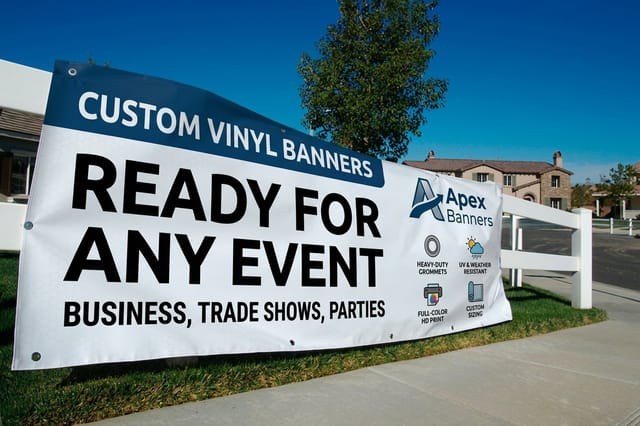
- Banners: hemmed edges with grommets roughly every two feet. Order the width your wall or fence can actually hold, then set the height.
- Aluminum: pre drilled holes at the corners for a post or a wall, and rounded corners if it is anywhere near head height.
- Acrylic: standoff barrels at the corners, which is what creates the shadow gap that makes a lobby sign look fabricated.
- Window decals: decide first surface or second surface. Applied inside the glass, artwork is protected but has to be printed reversed.
Buy in the order that protects your money. Banners, window decals and a retractable stand first, because they are inexpensive to replace while the name, color and wording are still settling. Aluminum and acrylic last, once the identity has held for a few months and any permit question is answered. If you want to feel the materials before committing, order free samples, size your artwork from a blank template, and browse the full range in large format printing.
Wally explains brand signs
One color card, four different surfaces
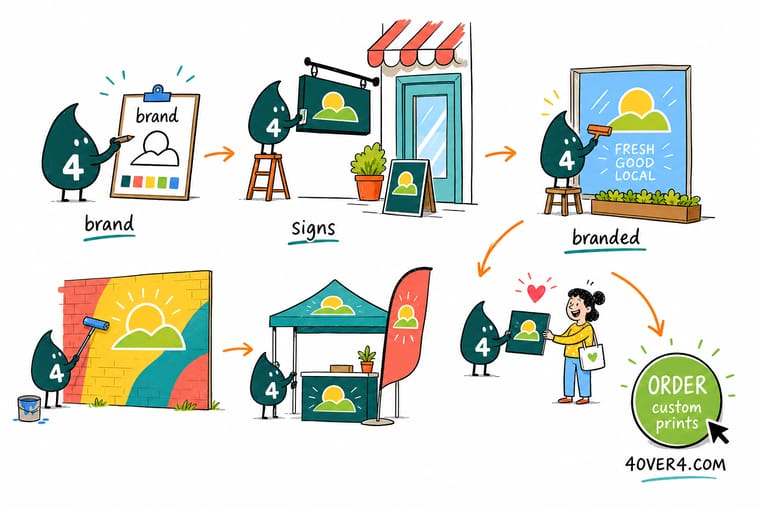
Wally carries a single color swatch to every sign he hangs. The banner takes it deep because gloss vinyl reflects, the aluminum panel takes it lighter because brushed metal scatters the light, and the window decal changes again once the sun comes through the glass. So he prints one of each first, stands in the doorway, approves them together, and reorders against those exact files. He also paces out how far away people stand and sizes the capitals from there, about an inch for every ten feet, which is why his signs say the name and one line instead of a paragraph.
Order branded vinyl banners →
Specs and pricing
Sign materials, sizes, and starting prices
Vinyl banners run from 2 by 4 feet to 8 by 20 feet, or any size, on 13 oz outdoor or 15 oz blackout vinyl, starting at $79 in 3 business days. Aluminum signs are .040 inch sheet in 12 by 18, 18 by 24 or 24 by 36 inches from $36, and acrylic signs are 1/4 inch plexiglass in 16 by 24, 20 by 30 or 24 by 36 inches from $152.72, both in 4 business days.

Banners, decals, stands
Order the pieces your frontage needs first

Color, vinyl and sign reads
Where to go next

Printed in our Queens plant
One color across four substrates
Common Questions
Your brand signage questions, answered
What are brand signs?
Brand signs are the physical pieces that carry your logo, brand color, typeface and wording into the places customers actually stand: the storefront banner, the window graphics, the lobby wall sign, the sidewalk sign, the trade show display and the yard sign on a job site. They are not one product. They become a brand signage system when the color is specified once, the logo comes from a single master file, and the letter height on each piece suits the distance it is read from.
How do I keep my brand color consistent across different signs?
Fix the color as a Pantone reference plus an agreed CMYK build, then approve a physical first piece on each material rather than a screen proof. Gloss vinyl reflects light and reads deeper. Matte and brushed aluminum scatter light and read lighter and flatter. Backlit window film shifts again once daylight passes through it. The practical method is to order the first banner and the first window decal together, look at them in the actual doorway, and keep the approved files so the reorder is an exact repeat rather than a new interpretation.
How big should the letters on my sign be?
Use about one inch of capital letter height for every ten feet of reading distance, measured on the capitals rather than the whole logo lockup. Ten feet at the door needs one inch, twenty five feet from the sidewalk needs two and a half, fifty feet across a street needs five, and a hundred feet across a parking lot needs ten. Go up a size when the sign is read at a sharp angle, through glass, or from a moving car. That rule usually forces the copy down to a name and one line, which is the point.
Which sign material lasts outdoors?
Aluminum is the long stay. It does not rust, it holds its shape on a post or a wall, and it survives several seasons of sun and rain. Vinyl banners handle weather well but stretch and fray at the grommets after heavy wind, so treat them as a season or a campaign rather than a permanent fixture. Coroplast is a corrugated plastic built for weeks, which is why yard signs are priced for volume. Acrylic and foam core are indoor materials and will yellow or delaminate outside.
What signs should a new business order first?
Start with the pieces that answer identification and hours, since those are the two questions people ask from the sidewalk. A vinyl banner or business banner covers the storefront while a permanent sign is still being permitted, window decals carry the logo and the hours on the glass, and a retractable banner stand travels to every event. Leave the wall and building signs until the identity has held steady for a few months, because those are the expensive ones to redo.
Do I need a permit for a storefront sign?
Often yes, and it depends on your city and sometimes your landlord. Municipal sign codes commonly regulate total sign area, projection over the sidewalk, illumination and any sign attached to a building face, while a temporary banner or an A-frame on your own property is usually treated more loosely. Check with your local building or zoning department before you commission a permanent sign, because a fabricated aluminum or acrylic piece that fails a code review is a full reprint rather than an adjustment.
Get Started
A business banner costs $43.92 and ships in 2 business days
Pick the substrate, upload the logo, and we print signs that carry one color from the storefront banner to the lobby wall.
Legal Disclaimer
Gold Standard guarantees apply to all standard orders placed through 4over4.com. Price match requires verifiable proof of a competitor's published price for an equivalent product with matching specifications and turnaround time. Satisfaction guarantee covers manufacturing defects and print quality issues. Contact support with order number and documentation.
