
Flat Pouch Packaging, From Seal Seams and Sizes to the Label That Brands It


Marcus is our print marketing voice, built from the knowledge of our production team, with over 20 years in printing.
The cheapest pouch format on the market, and the one that will never stand on a shelf. It is built from two sealed films, each size holds a known volume, and the label that turns a blank pouch into your product.
A flat pouch is a film bag sealed on three edges with no bottom gusset, so it lies down instead of standing up. That single missing gusset makes it the cheapest pouch to buy, ship and store, and rules it out for anything merchandised face out on a shelf. Seal seams take roughly three quarters of an inch off the printable face, and most small brands buy the pouch blank and brand it with a printed label rather than paying mill plate charges and thousand unit minimums.
Quick answer
Three sealed edges, no gusset, and a face smaller than the pouch
Flat pouches trade the ability to stand for a lower unit cost and a much thinner pack. Film is sealed down both sides and across the bottom, product goes in the open top, and a heat seal closes it. Those seams are fused film, thicker than the face and slightly ribbed, so they take about three quarters of an inch out of the area you can print or label. Hang it on a peg, drop it in a basket or pack it into a subscription box and the format is close to unbeatable on price. Put it on an open shelf and it falls over.
What a Flat Pouch Is, and the One Thing It Will Not Do
Take two layers of film, seal them down the left edge, down the right edge and across the bottom, and leave the top open. That is a three side seal flat pouch, and it is the simplest thing in flexible packaging. The other common flat build is the pillow pouch, where a single web of film is wrapped into a tube with a fin seal down the back and closed with a seal at the top and the bottom.
Neither has a gusset. Nothing folds out at the base, so a filled flat pouch slumps onto its side. If your product is merchandised face out on a shelf, stop here and price a stand up pouch instead, because no label, no film and no clever fold will make a flat pouch stand.
Where it wins is everywhere the pouch is not standing. Peg hooks, where a euro slot punched through the top seal carries the weight and the shallow profile lets you hang three deep. Baskets and counter bowls at a register. Subscription boxes, where a flat pouch packs without wasted air. Sample and trial sizes, where a stand up pouch would cost more than the contents. Tea, spices, jerky, seasoning blends, single serve drink powders, seed packets, bath salts, hardware kits and refill packs all sit naturally in this format.
The cost gap is the reason it keeps winning. A flat pouch uses less film per unit than the same capacity in a stand up pouch, needs no gusset tooling, and ships and stores nearly flat, which shows up again in your freight and your shelf space. For a wider view of how it compares to boxes, cartons and rigid containers, our guide to the nine types of packaging lines the formats up side by side.
Sizes, Seal Seams, and the Face You Can Actually Print On
Flat pouches are quoted as flat width by length, in inches, measured across the outside. That number is not what you get to design on. Side seals typically run a quarter to three eighths of an inch each, and the bottom seam takes the same again, with a fourth band across the top once you close it. Subtract all of it and a 5 by 8 inch pouch leaves you roughly a 4.25 by 7.25 inch flat face.
| Flat pouch size | Typical use | Approximate flat face left after seams | Label size that sits comfortably |
|---|---|---|---|
| 3 x 5 in | Single serve sachets, seed packets, sample sizes. | About 2.25 x 4.25 in | 2 x 3 in |
| 4 x 6 in | Loose tea, spice blends, small hardware kits. | About 3.25 x 5.25 in | 3 x 4 in |
| 5 x 8 in | Jerky, granola, bath salts, mid size retail units. | About 4.25 x 7.25 in | 4 x 6 in |
| 6 x 9 in | Coffee, protein powder, pet treats. | About 5.25 x 8.25 in | 4 x 6 in or 5 x 7 in |
| 8 x 12 in | Bulk refills, food service packs. | About 7.25 x 11.25 in | 6 x 8 in |
Capacity is set by what you are filling, not by the pouch. Two brands can use the same 5 by 8 inch pouch and one holds two ounces of dried herbs while the other holds eight ounces of ground coffee. Fill a sample by hand and weigh it before you order a case, and leave headspace at the top so the sealing jaw closes on clean film rather than on your product. Our pouch sizing guide works through fill weight in more detail.
Sealing is heat, pressure and time. A hand impulse sealer handles a few hundred units a week, a constant heat bar handles thousands, and above that you are looking at a form fill seal line. The two failures worth memorising are both avoidable. Contamination in the seal band, meaning powder, oil or a stray flake of product, creates a channel that leaks no matter how hard you clamp. And dwell time scales with film thickness, so a foil laminate needs longer under the jaw than a thin clear pouch. Seal one, let it cool, then try to peel the seam apart with your fingers. If it opens, adjust before you run the batch.
Branding a Blank Pouch With Labels, Bands and Tags
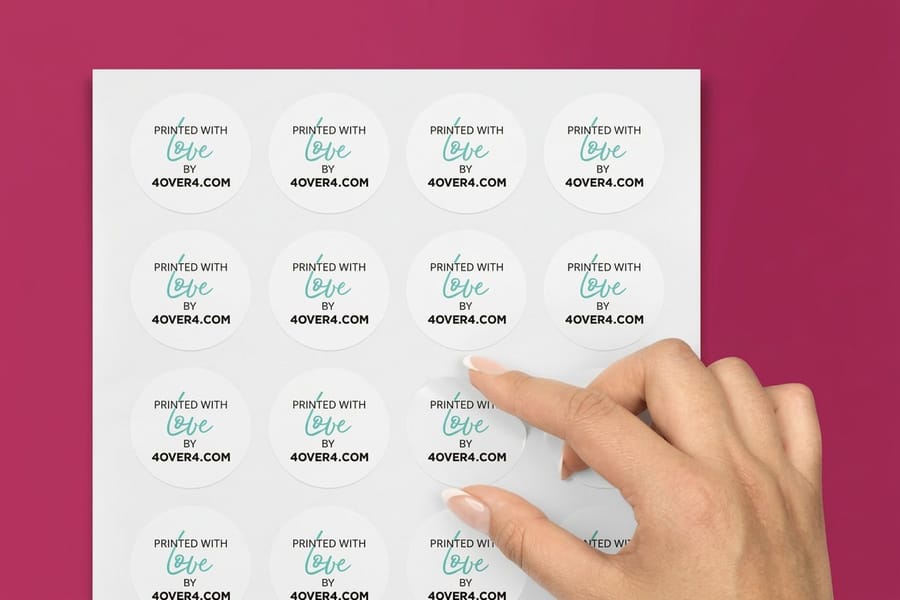
There are two ways to get your name on a flat pouch. The mill prints your artwork directly into the film, or you buy the pouch blank and apply a printed label. The first is cheaper per unit at scale and shows no join. It also means plate charges, minimums that usually start in the thousands per artwork, and a fresh order every time you add a flavour or correct an ingredient line.
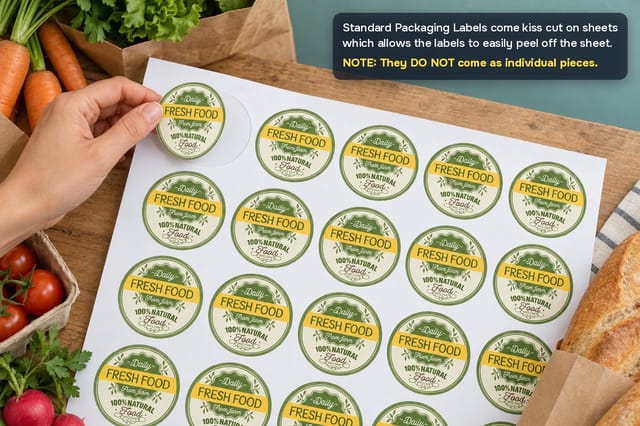
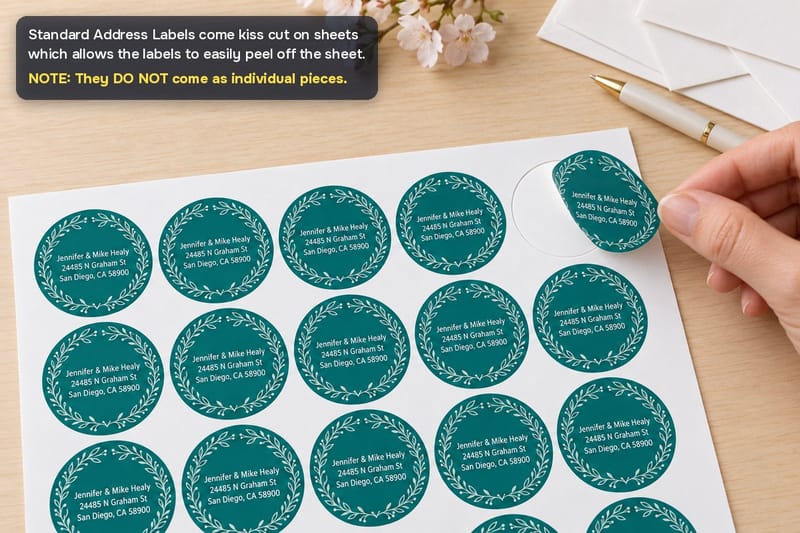
Applying a label to a blank stock pouch inverts all of that. You can run a hundred units. You can carry six flavours off one blank pouch and six label designs. When a supplier changes and an allergen line has to change with it, you reprint labels, not film. Standard Packaging Labels start at $23.88, which is roughly what a single artwork plate would cost you as a rounding error on a mill run. The break even usually arrives somewhere in the low thousands of units per design, and until then the label wins on cash and on flexibility.
Three formats do most of the work:
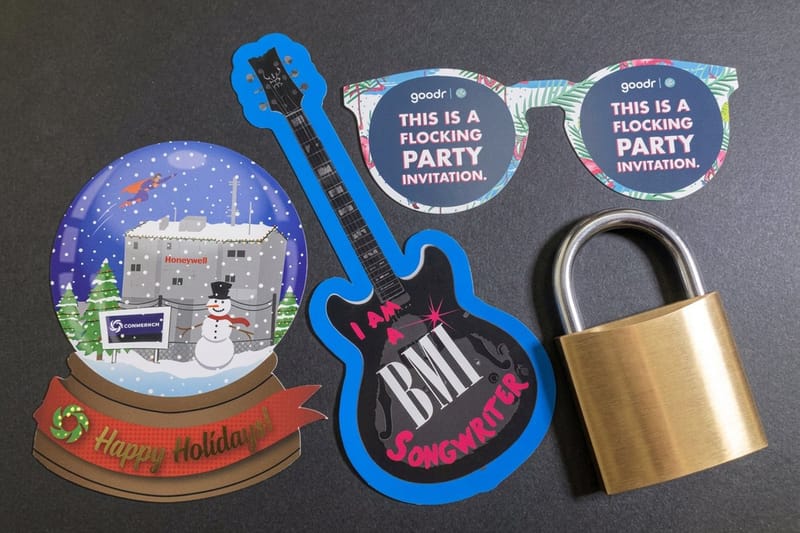
- A front label. The one most brands order. A rectangle or a shaped die cut carrying the brand, the product name and the net weight, placed inside the flat face. Custom Die Cut Labels start at $93.37 and are the option when the shape itself is part of the brand.
- A back label. Ingredients, allergens, batch and best before, and a barcode. Keeping the legal copy on its own label means an ingredient change never forces you to reprint the front.
- A belly band or sleeve. A printed paper band wrapped around the pouch and closed at the back with a sticker. It covers a wide front area for less than a large label, works beautifully on kraft pouches, and can be swapped for a seasonal design without touching anything else.
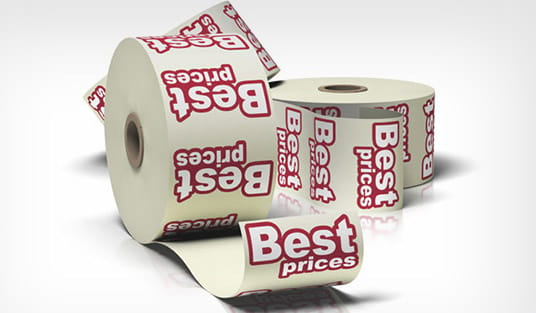
For retail that hangs, a hang tag threaded through the euro slot adds a price point and a story panel without crowding the face, from $25.27. Once volume climbs past hand application, switch from sheets to Roll Packaging Labels, which feed a hand dispenser or a semi automatic applicator instead of being peeled one at a time. If you are still deciding what goes on which label, our guide to building branded packaging covers the hierarchy.
Picking a Label Material That Survives the Pouch
A label on a rigid box only has to stay flat. A label on a flat pouch has to survive a surface that flexes every time someone picks it up, a shipper that squeezes it, and often a cold or damp shelf. That changes the material choice, and it is where most first orders go wrong.
Paper stock is the cheap default and the usual mistake. It creases with the film, and once a crease breaks the face stock the corner starts lifting. Film labels flex with the pouch instead of fighting it, which is why they hold. For anything going into a fridge, a freezer, a cooler bag or a bathroom, Premium Waterproof Labels from $84.68 are the safer call, because a paper label in condensation will let go within days.
Four habits prevent nearly every adhesion failure. Round the corners, since a square corner is a lever and it is always the first thing to lift. Keep the label inside the flat face and clear of every seam, because a seam is a raised ridge and adhesive cannot bridge it. Apply at room temperature and let the adhesive set for a day before the pouch goes cold, as a permanent acrylic adhesive needs time to wet out and applying to a chilled pouch traps it half stuck. And press from the center out with a squeegee or the flat of your hand rather than dropping the label flat, which is what leaves air bubbles under the face.
If the pouch carries food, the label sits on the exterior and never contacts the product, so ordinary label stock is compliant. What you print on it is the part that is regulated: net weight, an ingredient list in descending order, allergen declarations, and your business name and address. Premium Food Labels start at $29.16 and are sized for that copy. Our label printing guide explains how material, adhesive and finish are chosen together, and the small business food packaging guide covers what else has to appear on the pack.
Wally explains flat pouches
No gusset, so keep the label off the seams
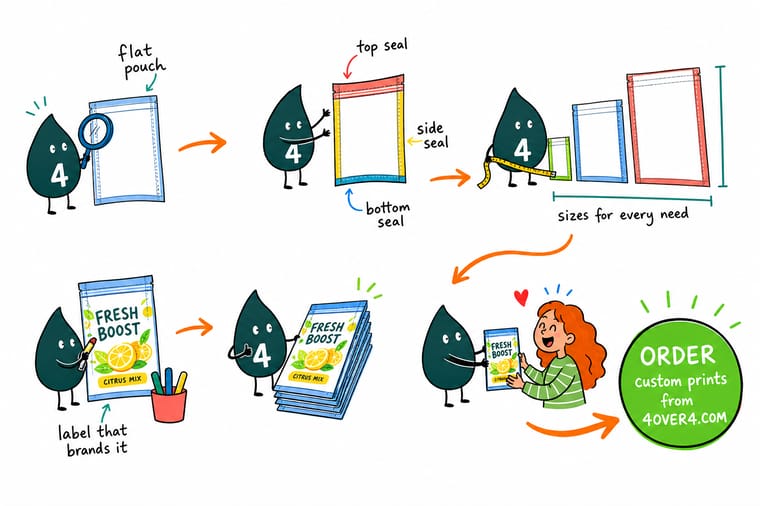
Wally fills a three side seal pouch, leaves headspace so the sealing jaw closes on clean film, and runs it under the heat bar. Then he puts the label in the middle of the flat face, nowhere near the side, bottom or top seams, because a seam is a raised ridge and a label edge on a ridge lifts at the corner. Round the corners, press from the center out, and let the adhesive set for a day before the pouch goes anywhere cold.
Order packaging labels for your pouches →
Specs and pricing
Pouch labels, sizes, and starting prices
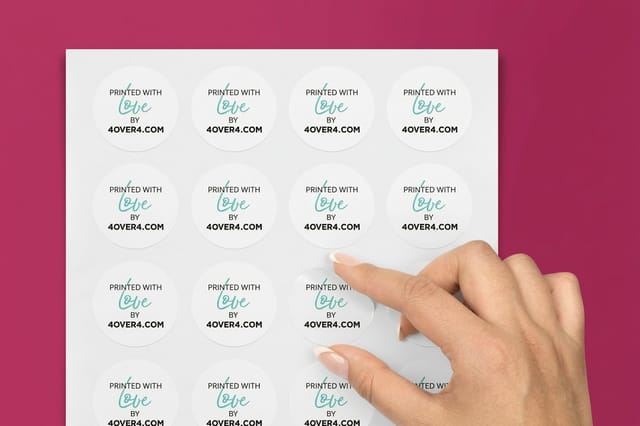
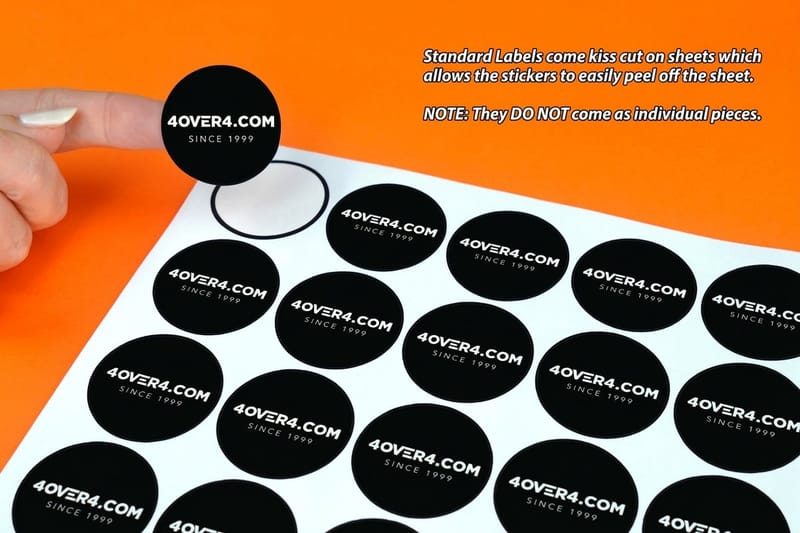
Standard packaging labels come in 50 sizes, circles from 0.5 to 4.5 inches and rectangles up to 3 by 4 inches, on uncoated, semi-gloss, hi-gloss, white vinyl or clear stock, from 25 in 3 business days. Premium food labels run 3 by 5 to 5 by 7 inches or any size on 23 stocks in 3 business days, and die-cut labels cut 16 sizes from 2 by 2 to 11 by 11 inches on six stocks, from 25 in 5 business days.
Print it
Turn a blank pouch into your product
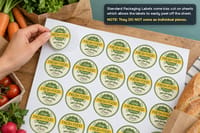
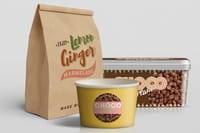
A 3 by 4 inch standard label fits a 4 by 6 inch pouch, a 4 by 6 inch food label fits a 5 by 8 or 6 by 9 inch pouch, and a die-cut label takes the shape of the brand mark, each from 25 pieces.

Explore more
Where to go next
The cards below cover fill weight and pouch size, laying out artwork for film, when a mill printed pouch beats a label, and how to measure for the right label size.

By the numbers
Pouch and label work inside the wider catalog
Common Questions
Your flat pouch questions, answered
What is a flat pouch?
A flat pouch is a flexible packaging bag made from sealed film with no bottom gusset, so it lies flat rather than standing up. The most common build is the three side seal: film folded or laid face to face, sealed down the left edge, the right edge and the bottom, and left open at the top for filling. Once product is in, the top is heat sealed and the pouch is closed. The pillow pouch is the other common flat build, with a fin seal running down the back and a seal at the top and bottom instead of down the sides.
What is the difference between a flat pouch and a stand up pouch?
The bottom. A stand up pouch has a gusset, a folded panel at the base that opens into an oval when the pouch is filled and lets it stand on a shelf. A flat pouch has a plain sealed bottom seam and no gusset, so it lies down. The stand up pouch costs more per unit because it uses more film and more complex tooling, and it takes more shelf depth. Pick the stand up pouch when the product is sold face out on a shelf, and the flat pouch when it hangs on a peg, sits in a basket, goes in a subscription box, or ships as a sample.
What sizes do flat pouches come in?
Stock flat pouches are sold by flat width and length in inches, commonly from around 3 by 5 inches for single serve sachets up to 8 by 12 inches and larger for bulk refills. Capacity depends on the density of what you are filling far more than on the pouch dimensions, which is why two brands using the same 5 by 8 inch pouch can hold 2 ounces of dried herbs or 8 ounces of ground coffee. Fill a sample by hand before you commit to a size, and leave headspace so the seal jaw closes on clean film.
How do you seal a flat pouch?
With heat. A hand held impulse sealer is enough for hundreds of units a week, a constant heat sealer or a foot operated bar suits thousands, and a form fill seal line takes over above that. Two rules cover most failures. First, the seal band has to be clean: powder, oil or a stray fragment of product in the band creates a channel that leaks and no amount of extra pressure fixes it. Second, seal time is set by film thickness, so a thick foil laminate needs a longer dwell than a thin clear PET pouch. Pull test a sample from each run and try to peel the seam apart.
Can you put a label on a flat pouch?
Yes, and for most small brands it is the better route. The label sits on the outside of the pouch, so it never touches food and standard label stock is fine. Two things matter. Keep the label inside the flat face, clear of the side, bottom and top seams, because a label edge that crosses a seam rides a ridge and lifts at the corner. And choose a film label rather than paper, since the pouch flexes and paper stock will crack or peel along a crease. Standard Packaging Labels start at $23.88 at 4OVER4.COM.
Do flat pouches keep food fresh?
The film decides that, not the pouch shape. A clear PET or PE pouch shows the product but lets light and a fair amount of oxygen through, which is fine for a week of cookies and poor for spices, roasted coffee or anything with an oil that goes rancid. A foil laminate blocks light almost completely and gives the strongest oxygen and moisture barrier, at the cost of hiding the product. A metalized film sits between the two. Clear windows on an otherwise foil pouch are the usual compromise, and roasted coffee also needs a one way degassing valve regardless of the barrier.
Get Started
25 die-cut labels cost $93.37, hang tags 50 for $25.27
Pick a size that fits the flat face, choose a film stock that flexes with the pouch, and we print labels that stay stuck through a shipper and a cold shelf.
Legal Disclaimer
Gold Standard guarantees apply to all standard orders placed through 4over4.com. Price match requires verifiable proof of a competitor's published price for an equivalent product with matching specifications and turnaround time. Satisfaction guarantee covers manufacturing defects and print quality issues. Contact support with order number and documentation.
