
How to Choose Custom Pouch Packaging by Style, Barrier Film and Label


Jordan is our labels, packaging and sustainability voice, built from the knowledge of our production team, with over 20 years in printing.
Five decisions, taken in order, from how the product behaves to how the graphics get onto the film. Written for food and supplement sellers ordering their first real run.
Choose the pouch style by how the product behaves, choose the barrier film before anyone draws artwork, and only then decide whether the graphics are printed into the film or applied as a label. Stand-up pouches suit retail shelves and reseal; flat pouches suit samples and single servings; side-gusset bags belong to whole-bean coffee. Printed film locks artwork, net weight and ingredients into a full film run. A stock pouch with a printed label lets one SKU change without touching the rest, which is why most brands start there. For the film side in depth, read Pouch Bag Printing and Stand Up Pouches Explained.
Quick answer
Product behavior, then style, then film, then the label
Work outward from the product. How it behaves decides the style and the barrier, the style decides how much of the pouch you can actually brand, and the film structure decides shelf life in a way no label can rescue. The graphics decision comes last for a reason: it is the only one you can change later without scrapping inventory. Measure the flat panel between the top seal and the gusset fold, order the label to that number, and keep a quarter inch clear of every seal.
The Five Decisions, in the Order They Actually Happen
Pouch quotes go sideways when the questions get answered out of order. Style before product behavior means a second sample round. Artwork before film structure means artwork that has to be redrawn. This is the sequence that holds.
- Describe how the product behaves. Whole bean or ground, powder or capsule, oily or dry, does it off-gas, does it need to stay out of light. Every later choice hangs on this.
- Pick the style. Stand-up, flat, side-gusset, or spouted. The style decides how the pouch presents on a shelf and how much of it you can brand.
- Pick the size by fill weight, not by volume. A pouch sold as a 16 ounce bag assumes a density, and your product rarely matches the one the mill assumed. Weigh your own fill into a sample before committing. The pouch size guide covers headspace and settling.
- Choose the film structure. Barrier layer, outer finish, window or no window, and whether the pouch has to be recyclable in a store drop-off stream.
- Choose how graphics get on it. Printed into the film at the mill, or applied as a label to a stock pouch. This is the decision most brands make first and should make last.
Steps one through four are packaging. Step five is printing, and it is the one you can change later without throwing anything away.
Four Pouch Styles and What Each One Costs You
Every style trades something. Read the last column before the first: the thing you give up is usually what sends a brand back for a second round of samples.
| Style | How it sits | Best for | What it costs you |
|---|---|---|---|
| Stand-up (doypack) | Bottom gusset folds out into a base so the pouch stands filled. | Retail shelf presence, resealable coffee, snacks, powders. | The gusset and the top seal both swallow height, so the brandable panel is well short of the pouch dimension. |
| Flat (three-side seal) | Lies down, or hangs from a punched hole. | Single servings, samples, tea, jerky, sachets. | Will not stand, so it disappears on a shelf unless it hangs or sits in a display box. |
| Side gusset | Squared block bag with folded sides, a valve near the top. | Whole-bean coffee and higher-volume dry goods. | Two of its four faces are folded, so art on the side panels is only half visible. |
| Spouted | Stands, with a fitment and cap molded into the top seal. | Liquids, purees, drink concentrates. | Highest tooling and filling complexity, and the fitment area cannot carry graphics at all. |
For most food and supplement sellers the practical answer is stand-up for the retail size and flat for the sample. That pairing lets one label artwork family cover both, scaled, and it keeps the sample cheap enough to give away. Flat pouch packaging goes deeper on how the three-side seal is built.
Film Structure Decides Shelf Life, and Artwork Cannot Fix It
A pouch is not one material. It is a laminate, typically an outer layer that carries the print, a middle barrier layer, and an inner sealant layer that melts against itself to form the seals. What sits in the middle is the whole ballgame for shelf life.
Foil and metallized layers block light and slow oxygen and moisture transfer. That is why coffee, nuts, powdered greens and anything with fat in it usually sit behind an opaque film. Clear pouches and clear windows do the opposite: they sell the product on sight and let light in. Kraft-look outers are a printed effect on a laminate more often than actual paper, and where the outer really is uncoated kraft it will mark from oils and stain from the inside if the sealant layer is thin.
Recyclable mono-material pouches, usually all-polyethylene, are the honest compromise of the moment. They give up some barrier and they run at a narrower sealing temperature window, which shows up as inconsistent seals if the filling line is not dialed in. If a store drop-off claim matters to your buyer, take the barrier hit knowingly rather than discovering it in month four. For samples, a flat pouch keeps the film cost lowest, which custom flat pouches, the cheapest printed package that sells explains.
The practical rule: pick the structure for what the product has to survive, then design within it. If the film is opaque, your window is a printed illusion, and a die-cut label with a clear area will not create one. If the pouch will live in a cooler or a humid kitchen, put a waterproof face stock on the label instead of coated paper, because paper wrinkles at the edges once condensation gets under it.
| What the product needs | Pouch film | Label face to pair with it |
|---|---|---|
| Dark, dry and long shelf life: coffee, nuts, powders | Opaque foil or metallized barrier layer | White BOPP or a premium paper label, sized to the flat panel |
| Seen through the pack: candy, pasta, snacks | Clear film or a clear window | Clear BOPP, so the product shows around the copy |
| Cold or damp: cooler, fridge, humid kitchen | Any barrier, sealed well | Premium waterproof labels on white vinyl, never coated paper |
| Store drop-off recycling claim | Mono-material polyethylene, less barrier | A label face and adhesive the recycler accepts, confirmed first |
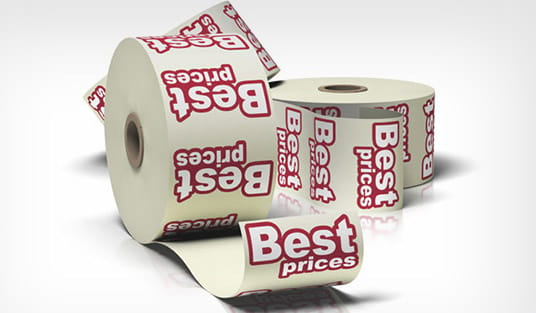
Roll food labels come on white gloss for indoor use, white or clear BOPP for indoor and outdoor, silver metallic foil or 70lb eggshell felt, with gloss or matte lamination as options.
Printed Film or a Stock Pouch With a Label

This is where most of the money and most of the flexibility sit. Mill-printed film gives you edge to edge artwork and no label edge to peel, but the plates, the film run and the minimum order are all paid before the first pouch exists, and every recipe change means another run. A stock pouch with a printed label splits the cost in two and lets each SKU move independently.
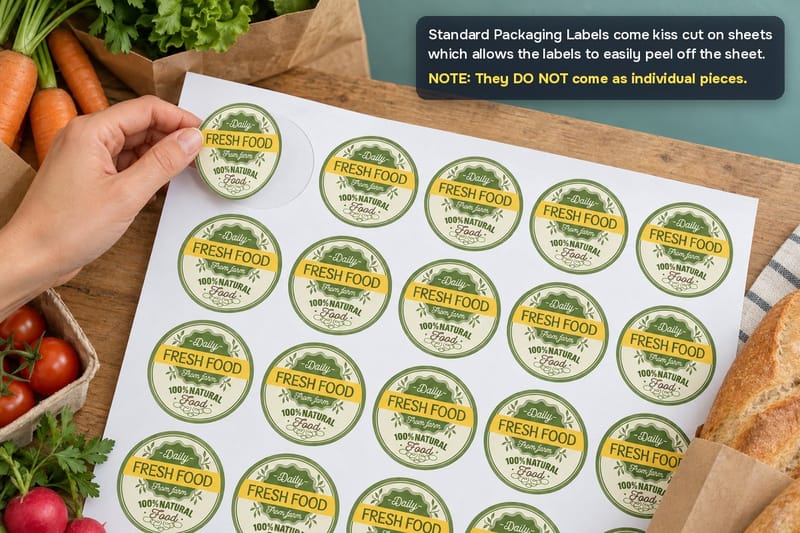
The label route is what we print. Premium Packaging Labels start at $29.16 and cover the sheet-fed case, where you are hand-applying to a few hundred pouches and want a heavier face stock and a proper finish. Roll Food Labels start at $322.98 and come wound on a core, which is the format you need the moment a semi-automatic applicator or a contract packer enters the picture. Roll direction and core size are worth confirming with the packer before you order, because a roll wound the wrong way is unusable on their machine. The roll food labels video shows the format on its core.
Two habits save a reprint. Size the label to the flat panel you measured, not to the pouch, and keep a quarter inch of clearance from the seals. And set the label finish against the film finish: a gloss label on a soft-touch matte pouch reads as an afterthought, while matte on matte reads as one piece. Start from a correctly sized layout in the blank template library and check the panel numbers in our label size guide.
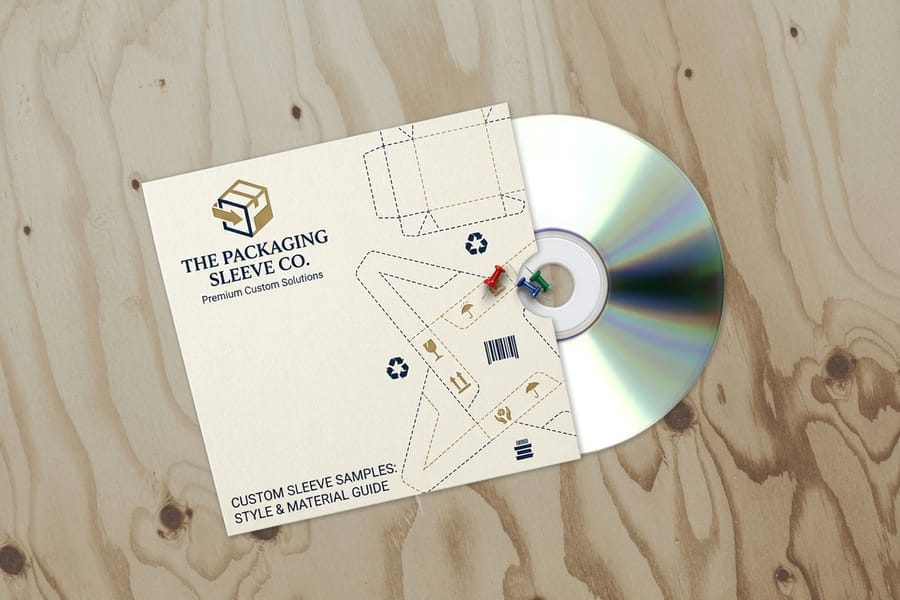
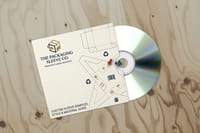
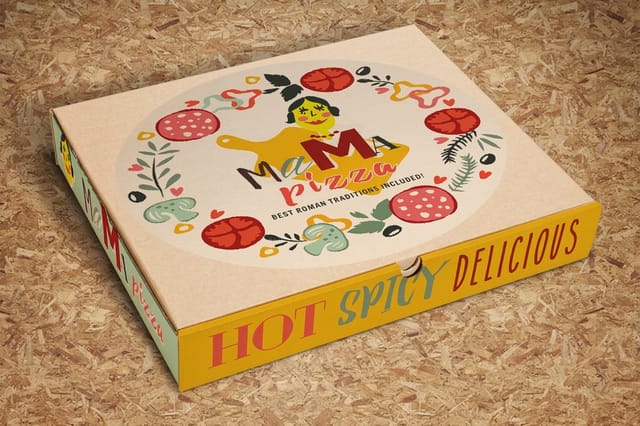
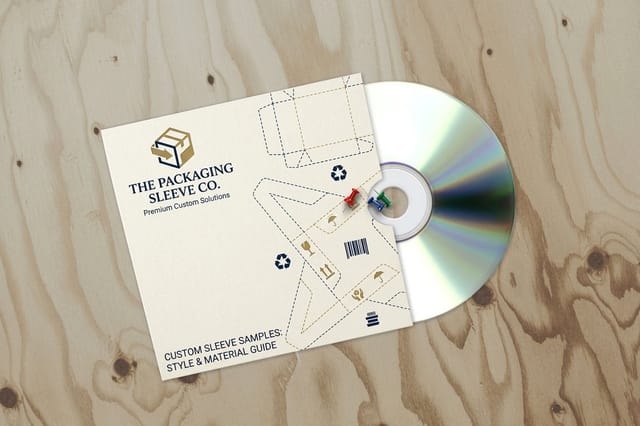
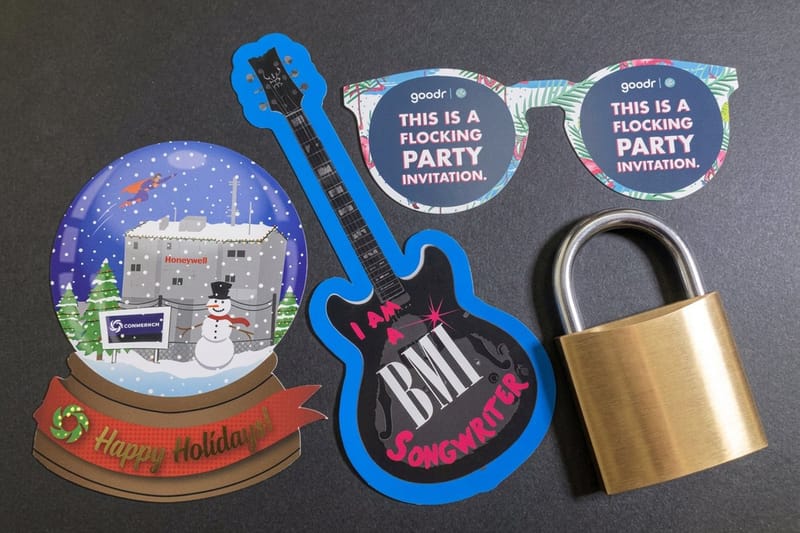
Where a label cannot carry the whole story, a packaging sleeve can, starting at $438.25. A sleeve wraps the pouch or a set of them, holds a full front and back panel of copy, and comes off without touching the pouch underneath, which makes it useful for seasonal editions and gift sets on top of an existing SKU.
What Ships Around the Pouch
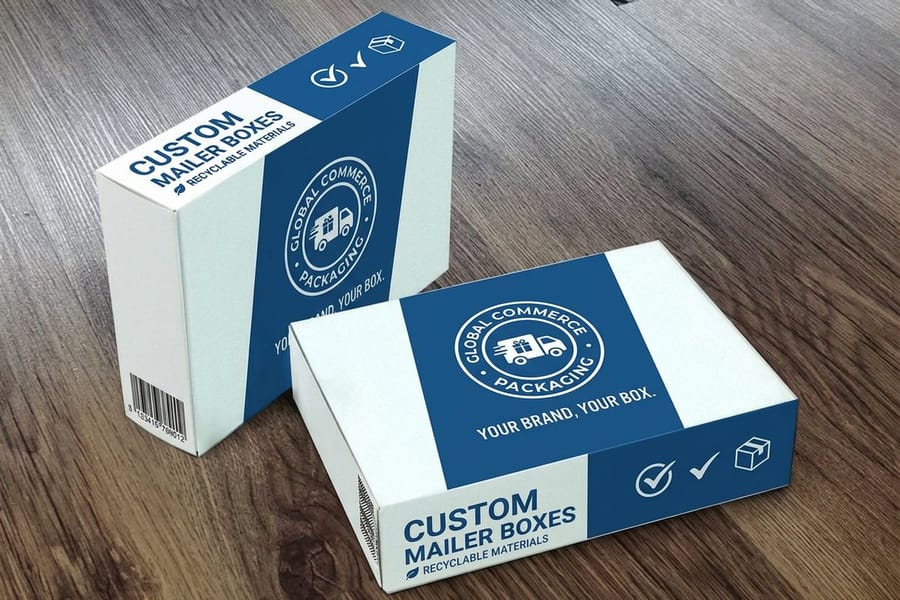
A pouch is a poor shipping container. It punctures, it takes a corner hit badly, and a zipper can pop under stacking pressure in a carrier's sortation system. Direct-to-consumer sellers who skip the outer box learn this at the returns desk.
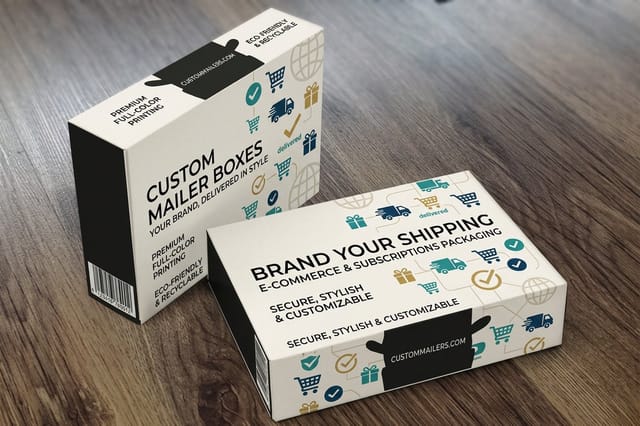
Custom mailer boxes, from $711.78, give the pouch a rigid shell and turn the arrival into something worth photographing. Keep the interior fit snug: a pouch sliding inside an oversized box abrades its own print and arrives looking handled. For retail rather than shipping, the same logic sends you to a printed carton or a shelf-ready tray, which the packaging printing collection covers across formats. Our guide on how to choose custom rigid mailers that arrive flat and unbent covers the box side.
The last piece is consistency. The pouch label, the sleeve, the box and the shipping label should share one type family and one palette, so the parcel reads as your brand from the doorstep inward. Browse the full range at label printing, or start with the sheet and roll options built for pack panels in packaging labels. If the pouch is going on a shelf next to competitors, our notes on food label shelf appeal cover what actually gets picked up.
Wally explains pouch packaging
Fill it, stand it up, then measure the flat part
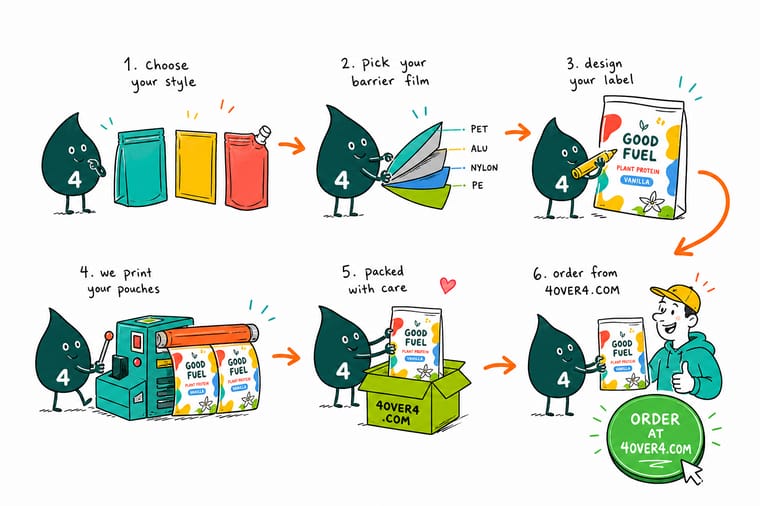
Wally fills the pouch before he measures anything, because an empty pouch lies about its own size. He stands it up, finds where the zipper stops and where the bottom gusset starts to fold, and measures the flat rectangle in between. That is the label. He takes a quarter inch off every side so the adhesive never lands on a seal ridge, then matches the label finish to the film so matte meets matte. The barrier layer he chose earlier is doing the work of keeping air out. The label is only doing the talking.
Order premium packaging labels →
Specs and pricing
Pouch labeling options, sizes, and starting prices
Sheet labels for hand application, roll labels for an applicator or a contract packer, and sleeves when the panel is not big enough. Live configuration choices and starting prices straight from the 4OVER4.COM configurator. Premium packaging labels come in 3 by 5 up to 5 by 7 inches or any size, on paper, vinyl or clear faces, from $29.16 with 3 business days of production. Roll food labels come in 102 sizes on a 3 inch core, from 100 for $322.98 with 6. Packaging sleeves start at 100 for $438.25 at 5 by 5 inches on 14pt or 16pt gloss cover and other stocks, with 5.
Print it
Print the part of the pouch that carries your brand
Measure the flat panel, keep a quarter inch clear of each seal, and order premium packaging labels from $29.16 to that size. Add a sleeve from $438.25 for a gift edition, and custom mailer boxes from 250 for $711.78, 5 by 7 by 1.7 or 5.5 by 5.5 by 2.625 inches, when the pouch ships direct.

Explore more
Where to go next
Size a pouch by fill weight and headspace, see how a flat three-side seal is built, weigh mill-printed film against a labeled stock pouch, and lay out FDA panels, then shop packaging labels and the full packaging range.

By the numbers
The packaging side of a thousand product catalog
Common Questions
Your pouch packaging questions, answered
Should I order printed pouches or blank pouches with labels?
It turns on how settled your product is. Printed film is decided once and applied to the whole run, so the artwork, the net weight and the ingredient panel are locked in until the next film order. A stock pouch with an applied label separates the two: the pouch is a commodity you can buy in one size for several products, and the label carries everything that changes. Sellers with one hero SKU and a stable recipe usually end up on printed film. Anyone running several flavors, seasonal batches, or a formula that is still moving is better off with labels, because a reformulation costs one label reprint instead of a pallet of obsolete pouches. Premium Packaging Labels start at $29.16 at 4OVER4.COM, which is what makes the second route survivable while a brand is still finding its footing.
Which pouch style should a food or supplement brand start with?
A stand-up pouch with a zipper covers most of the shelf-facing cases, because it presents a flat front panel at eye level and reseals after opening. Flat pouches, with no gusset at all, are better for single servings, sample packs and anything thin like tea or jerky, and they cost less per unit because there is less film and one fewer forming step. Side-gusset bags belong to whole-bean coffee, where the volume is high and the bag is meant to be seen from the front and the side. Spouted pouches exist for liquids and are a different order of complexity. If you are unsure, start flat for samples and stand-up for the retail size.
How do I measure a pouch for a label?
Fill the pouch first, or stuff it with the product weight you plan to ship, and stand it up. Then measure the flat front panel: from the bottom of the top seal or zipper track down to where the gusset starts to fold, and side to side between the two side seals. That rectangle is your working area. Take at least a quarter inch off each side so the label never touches a seal or a curve, because an adhesive edge that sits on a ridge will lift at the corners. Our guide to choosing the correct label size walks through the same measurement on curved and flexible surfaces.
Will a label stick to a matte kraft pouch?
Usually yes, but it is the one place where pouch labeling goes wrong. Kraft-look films and soft-touch matte laminates have a low-energy, slightly textured surface, so the label needs firm pressure and a clean, dust-free panel when it goes on. Apply at room temperature rather than straight out of a cold storage room, press from the middle outward, and give the adhesive time before you box and ship. If the pouch will live in a cooler, a refrigerated case, or anywhere condensation forms, order a waterproof label instead of a paper one. Premium Waterproof Labels start at $84.68 and hold up where a coated paper face would wrinkle.
Do I need a barrier film if my label already looks premium?
The label does nothing for shelf life. Barrier is a property of the film structure, usually a foil or metallized layer sandwiched between an outer print layer and an inner sealant, and it is what keeps oxygen, moisture and light away from the product. A clear window or an uncoated kraft outer means less barrier, which is a real trade for coffee, nuts, powdered supplements and anything with fat in it. Decide the structure by what the product needs to survive, then design the graphics to fit it.
What has to appear on a food or supplement pouch?
For food sold in the United States, the front carries the statement of identity and the net quantity of contents, and an information panel carries the ingredient list, allergens, the nutrition panel and the name and place of business of the manufacturer, packer or distributor. Supplements use a Supplement Facts panel instead of Nutrition Facts. Leave room for a lot code and a best-by date as well, because those are usually printed or stamped after the pouch is filled and people forget to allow space for them. The FDA food labeling guide on this site covers panel placement in detail, and the rules there apply the same way whether the panel is printed into the film or sits on an applied label.
Get Started
Order 100 roll food labels from $322.98
Measure the flat panel, pick sheet or roll, and we print packaging labels that sit square on film and survive the cooler.
Legal Disclaimer
Gold Standard guarantees apply to all standard orders placed through 4over4.com. Price match requires verifiable proof of a competitor's published price for an equivalent product with matching specifications and turnaround time. Satisfaction guarantee covers manufacturing defects and print quality issues. Contact support with order number and documentation.
