
What Flyer Printing Costs and Which Choices Drive the Price


Sofia is our design and templates voice, built from the knowledge of our production team, with over 20 years in printing.
Flyer pricing is not a mystery, it is five fields on an order form. Here is what each one does to the total, priced live rather than hidden behind a quote request.
Standard flyers start at $39.54 at 4OVER4.COM, club flyers at $16.48, and folded flyers at $68.54. What you actually pay is set by five choices: how many you order, the trim size, the paper stock, whether you print one side or both, and the turnaround. Quantity moves the number hardest, because a print run is one fixed setup plus a small cost per sheet, so the per piece price falls steeply up to about 1,000 and then flattens out.
Quick answer
One setup, then pennies a sheet
A flyer order is a fixed setup cost plus a small charge for every extra sheet. That is why the per piece price collapses over the first few hundred flyers and then barely improves: past a few thousand pieces you are only paying for paper and ink. At 4.25 by 5.5 inches on 100# gloss text, 100 Standard Flyers cost $57.11 and 1,000 cost $126.32, so the price per sheet falls from 57 cents to about 13 cents. Trim size is the next biggest lever, because a smaller flyer fits more times on the same press sheet. Stock, sides and turnaround fine tune the total from there, and every combination prices live before you reach the cart.
The Five Choices That Set a Flyer Price
Every flyer quote in the world is built from the same five inputs. Learn what each one does to the number and you can read any price page, ours or anyone else's, in about a minute.
| Choice | What it changes | How hard it moves the price |
|---|---|---|
| Quantity | How far the fixed setup is spread across the run. | The biggest lever by far, and most of the effect lands before 1,000. |
| Trim size | How many flyers fit on a press sheet. | Large. A 5.5 by 8.5 flyer takes half the paper of an 8.5 by 11. |
| Paper stock | Sheet weight, coating, and how the flyer feels in a hand. | Moderate going up in weight, larger when you cross from text to cover. |
| Sides | 4/0 front only, or 4/4 on both sides. | Small. The back is the cheapest space on the order. |
| Turnaround | Where your job sits in the production schedule. | Small at standard speed, significant on same day and next day. |
Read the third column before you start cutting. Designers instinctively shave the paper weight to save money, when moving the quantity or the trim size usually saves more and costs the flyer nothing. Standard flyers start at $39.54 and price live as you change each of those five fields, so you can watch the number react instead of guessing.
Why Quantity Moves the Number More Than Anything Else
A print run is one fixed cost plus a small cost for every extra sheet. The fixed part covers getting the job on press, matching color, and setting the cutter, and it does not care whether you asked for 100 flyers or 10,000. That single fact explains the entire shape of a flyer price list.
At 100 pieces you are mostly paying for setup, and the per piece price looks terrible. At 1,000 the setup is spread thin enough that paper and ink dominate. Past 10,000 the curve is almost flat, and each additional thousand adds close to the raw material cost. So the cheap jump is the early one. Going from 100 to 500 changes your unit price dramatically. Going from 10,000 to 25,000 barely improves it.
The trap is buying quantity you cannot distribute. Flyers carry a date, a price, or an offer, and a box of 4,000 leftovers is not a saving, it is 4,000 pieces of scrap with your logo on them. Order what your distribution plan can actually put into hands over the life of the offer, then round up to the next price break if the step is small. Our guide on how bulk price breaks work shows where those steps sit, and bulk discounts covers the volume terms on larger repeat runs.
Here is what 100 flyers cost on each flyer product, at its smallest size and default stock, printed full color on the front in 3 business days.
| Product | Size and stock | 100 pieces |
|---|---|---|
| Club flyers | 2.5 by 2.5 in, 14pt gloss cover | $24.16 |
| Standard flyers | 4.25 by 5.5 in, 100# gloss text | $57.11 |
| Business flyers | 5.5 by 8.5 in, 100# gloss text | $82.38 |
| Folded flyers | 5.5 by 8.5 in, 100# gloss text | $98.86 |
Upload a PDF at the trim size with 0.125 inch bleed and pick the free online proof, and the price you see is the price you pay before shipping.
One more quantity note that catches people out. Club flyers start at $16.48 because they print small and heavy on a compact 4 by 6 format, so if your message fits that size, the same budget buys a lot more pieces.
Size and Paper Stock, Where the Money Actually Goes

Paper is the raw material, and size decides how much of it your job consumes. An 8.5 by 11 flyer is the default because it is the sheet everyone recognizes, but it is also the most expensive common flyer size for exactly that reason. Half that size, 5.5 by 8.5, fits twice as many pieces on the same press sheet, which is why the price per flyer drops so cleanly when you step down.
Stock is the second decision, and the honest advice is to stop at 100 lb gloss text for a handout. It is bright, it takes solid color well, it folds without cracking, and it is what a flyer is supposed to feel like. Cover weight turns the piece into something closer to a postcard: sturdier in a rack, better in the mail, heavier to ship, and more expensive per sheet. That step is worth paying for when the flyer sits on a counter for a month. It is wasted on a piece someone reads once at a street corner.
Coating is smaller money than either. Gloss makes photography pop and resists fingerprints. Matte reads more calmly and is the only choice if anyone needs to write on the flyer, because pen skates on a gloss coat. Uncoated is warm and cheap and mutes the color. Business flyers come in six flyer sizes from 5.5 by 8.5 to 11 by 25.5 inches on all three finishes, and the yoga flyers video overview shows a studio flyer on press. If you want the full breakdown, flyer paper stocks and weights and the best paper weight for flyers go stock by stock, and standard flyer sizes lists the trim sizes with what each one is good at.
Set the file up at the right size from the start. Every trim size we print has a correctly built layout in the blank template library, which removes the most common reason a cheap job turns into a reprint.
A3 Flyers and Leaflets, Ordered in Inches

A3 is the international sheet at 297 by 420 mm, about 11.7 by 16.5 inches. Our configurator measures flyers in inches, so an A3 flyer or leaflet orders as the nearest US size, 11 by 17 inches, and the artwork is set up at that size with 0.125 inch bleed.
- Flat A3 flyer. Standard Flyers print 11 by 17 on 100# gloss or silk text, 70# uncoated text or cover weights, one or both sides. The ladder starts at $39.54 for 50 at the smallest size, and the 11 by 17 sheet costs more because it takes more press sheet.
- Folded A3 leaflet. Folded flyers take the same 11 by 17 sheet with a half fold, trifold, Z-fold or gate fold, from $68.54.
- Small A-size handout. For a compact card, club flyers start at $16.48.
The quantity rule holds at A3 as at every size: most of the price drop lands before 1,000 pieces.
Sides, Turnaround, and the Costs People Forget
Print both sides. A 4/4 flyer runs an extra pass inside the same job, so you are buying ink and press time rather than a second order, and you double the space you have to sell with. If the front is a poster and the back is empty, you paid for paper you are not using.
Turnaround is the lever most people ignore until the invoice. Standard production is the baseline price. Faster options move your job up the schedule and are priced accordingly, which is fair and also avoidable: pick the date first and order three weeks out, and the rush surcharge never enters the conversation. Print delivery and turnaround explained covers how production days and transit days stack, which is the part that actually decides whether the flyers land before the event.
Three costs hide outside the price field. Shipping, because 10,000 flyers is a heavy box and weight is weight no matter who prints it. Reprints, caused by a file with no bleed, low resolution images, or type sitting too close to the trim. And design, if you do not have artwork ready. None of them are surprises if you check them before you compare printers, which is the whole point of comparing flyer printing companies on matching specs.
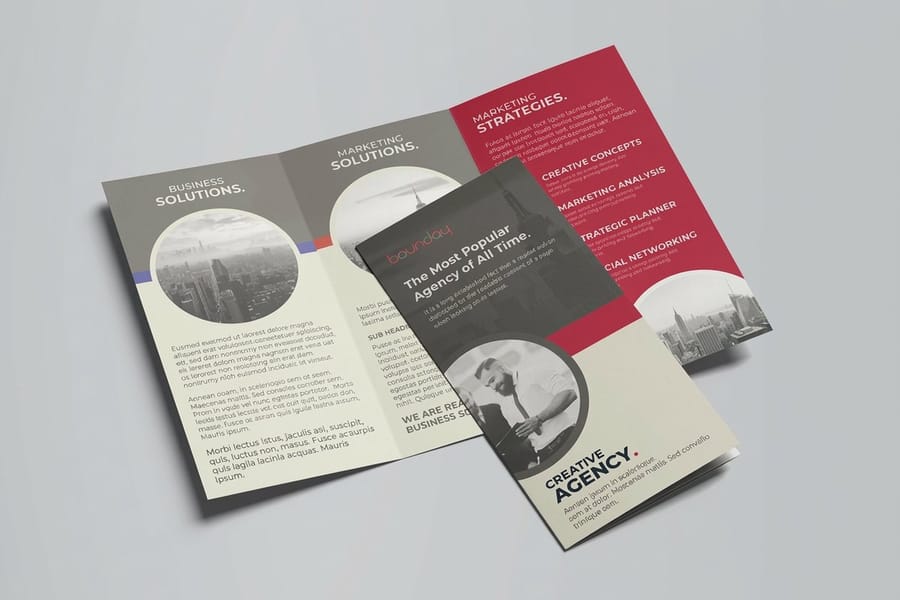
Finishing is the last variable. A UV coat adds gloss and durability for a small step up, explained in our guide to UV coating. A fold turns a flyer into a small brochure, which is what folded flyers at $68.54 are for. And when the piece needs to be mailed rather than handed out, standard postcards at $16.48 are usually the cheaper route, since flyer stock and postal rates rarely get along.
What Each Handout Format Starts At
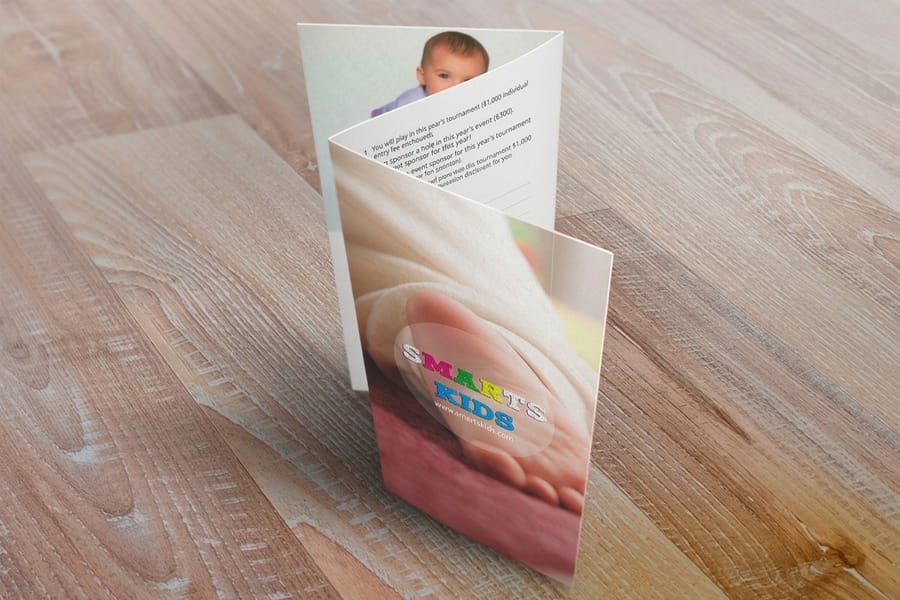
Flyers are one option among several, and each starting price tells you how the format is built: club flyers on 14pt card, standard flyers on 100# gloss text, folded flyers with a half, tri, Z or gate fold. None of that says which is best for your job. These are the live starting prices at 4OVER4.COM, each for the smallest, simplest configuration of that product.
| Format | Starts at | What you are paying for |
|---|---|---|
| Club flyers | $16.48 | Compact 4 by 6 handouts on heavy stock, cheapest way to put a lot of pieces in a lot of hands. |
| Standard postcards | $16.48 | Mailable card stock, the right pick when the piece needs a stamp rather than a hand. |
| Standard flyers | $39.54 | Full size text weight sheets, the everyday flyer for events, menus, and promotions. |
| Standard brochures | $57.11 | A folded sales piece with panels, priced for the fold and the extra layout work it carries. |
| Folded flyers | $68.54 | A flyer with a fold, more room than a flyer and less commitment than a brochure. |
The comparison that matters most is the first against the third. If your offer fits a small card, club flyers put far more pieces in circulation for the same money. If you need room for a schedule, a menu, or a map, the full size flyer earns its price. Flyer versus brochure and postcards versus flyers take that choice apart in detail, and the flyer printing category lists every flyer product with its own live configurator.
Wally explains flyer pricing
The setup costs the same whether you print 100 or 10,000
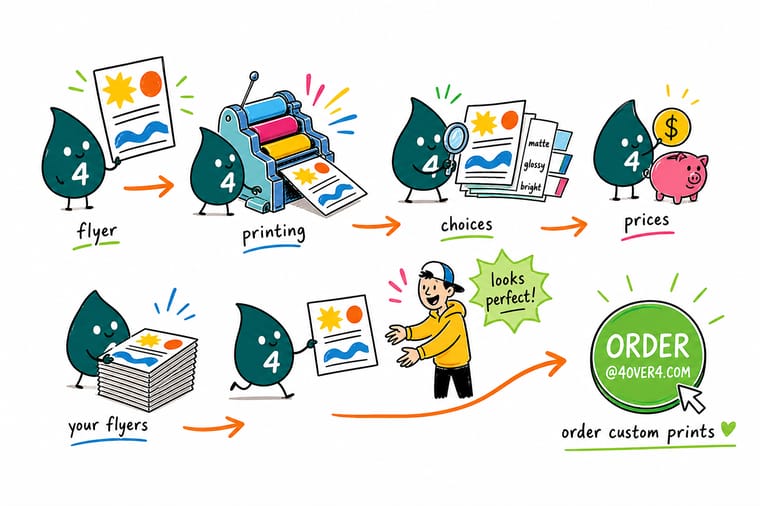
Wally pays once to get the job on press, match the color and set the cutter. After that, every extra flyer costs him paper and ink. Split that setup over 100 flyers and each one looks expensive. Split it over 1,000 and it nearly vanishes. That is the whole trick behind quantity discounts, and it is why he tells people to order what they can actually hand out rather than chasing the prettiest unit price on a run they will never finish.
Price standard flyers →
Specs and pricing
Flyer sizes, stocks and live starting prices
Standard flyers run 4.25 by 5.5 to 11 by 25.5 inches on seven text and cover stocks, club flyers 14 sizes from 2.5 by 2.5 to 6 by 11 inches on 22 card stocks, and folded flyers 5.5 by 8.5 to 11 by 25.5 inches on gloss, silk or uncoated text with four folds, all from 50 in 3 business days. Change the quantity, size, stock, sides and turnaround in each panel and the price updates as it does in the cart.


Print it
Order flyers at a price you can see up front
Standard flyers start at 50 for $39.54, club flyers at 50 for $16.48 and folded flyers at 50 for $68.54, and each product shows the price at every quantity step before you add it to the cart.

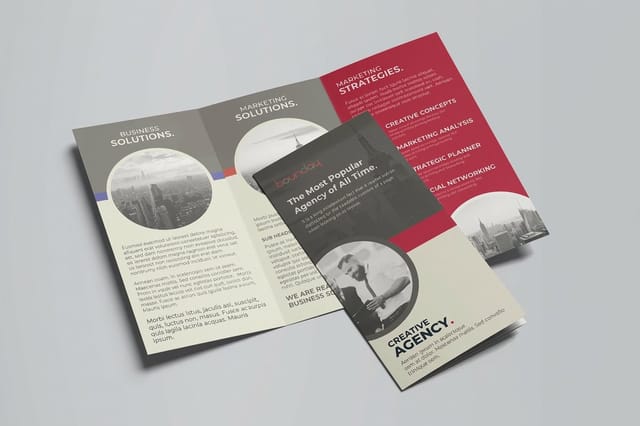

Explore more
Where to go next
The cards below show where bulk price breaks fall, list the flyer trim sizes, compare flyer paper stocks, and cover which corners save money on a cheap run.
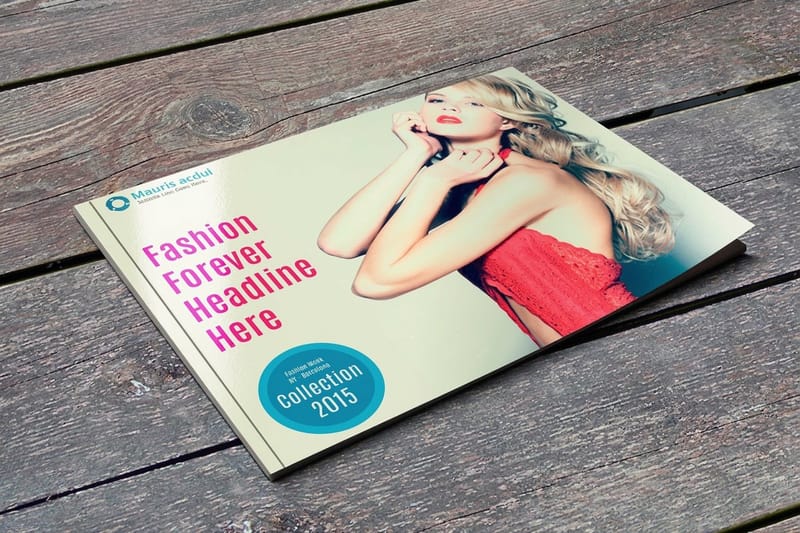
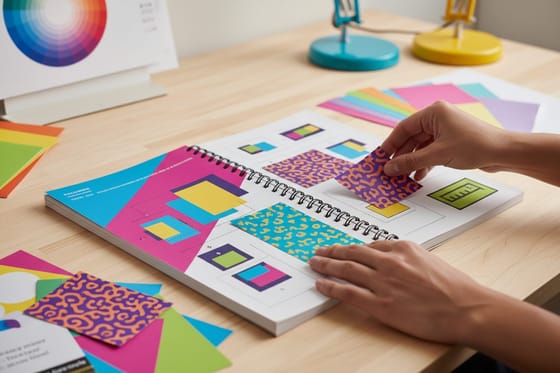
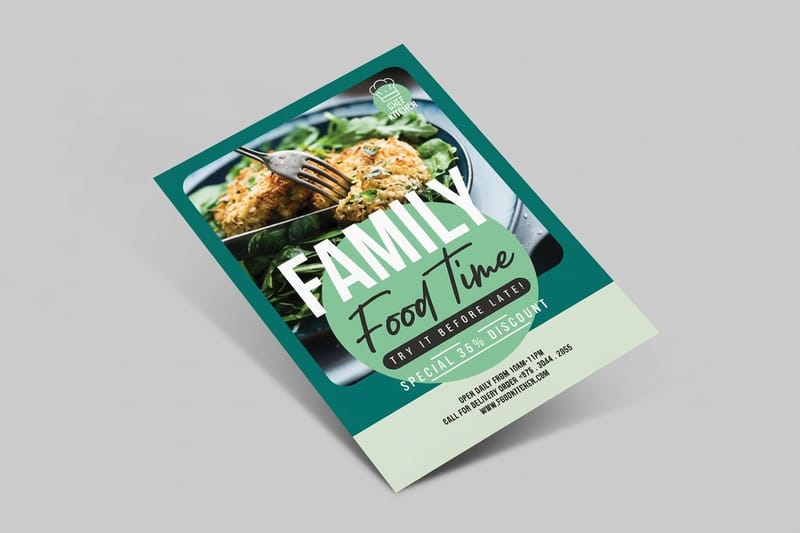

By the numbers
Priced live, not behind a quote form
Common Questions
Your flyer pricing questions, answered
How much does flyer printing cost?
At 4OVER4.COM standard flyers start at $39.54, club flyers start at $16.48, and folded flyers start at $68.54. Those are starting prices for the smallest, simplest configuration of each product. The number you actually pay comes from five choices you make on the product page: how many you order, the trim size, the paper stock, whether you print one side or both, and the turnaround. Every combination is priced live in the configurator, so you see the total before you add anything to the cart rather than waiting on a quote.
Why does the price per flyer drop so much at higher quantities?
Because most of what you pay on a small run is setup, not paper. Getting a job on press, matching color, and setting the cutter costs the same whether the run is 100 sheets or 10,000. Spread across 100 flyers that fixed cost dominates the invoice. Spread across 5,000 it nearly disappears, and each extra flyer costs little more than the paper and ink it consumes. The practical consequence is that the savings are front loaded: moving from 100 to 500 changes your per piece price far more than moving from 10,000 to 25,000.
Is it cheaper to print one side or two?
One side is cheaper, but the gap is smaller than most people expect and two sides is usually the better buy. A 4/4 flyer runs through an extra pass on the same job with the same setup, so you are paying for ink and press time, not for a second order. If you have a map, a coupon, hours, or an offer that will not fit on the front, put it on the back rather than stepping up to a larger trim size, which costs more because it eats more paper.
What paper weight should I price a flyer at?
Start at 100 lb gloss text. It is the standard handout flyer stock, it folds without cracking, and it is the cheapest way to look professional. Move up to a cover weight only when the flyer has to survive handling, sit in a rack, or double as a mailer, because cover stock costs more per sheet and adds shipping weight. Our guide to the best paper weight for flyers walks through where each stock earns the step up.
Does rush turnaround cost extra?
Yes. Faster production means your job jumps the schedule and often runs on its own rather than sharing a press sheet with other work, and the configurator prices that in. If your event is three weeks out, choosing standard turnaround is the single easiest way to cut the bill without touching quantity, size, or stock. If the date is fixed and close, price the rush option before redesigning the flyer, because it may cost less than dropping a size.
Why do two printers quote such different prices for the same flyer?
Usually because the two quotes are not the same job. Check the stock weight and finish, whether the price is 4/0 or 4/4, whether trimming and bleed are included, what turnaround the quote assumes, and whether shipping is in the total or added at checkout. A cheap quote on 70 lb uncoated text at a seven day turnaround is not competing with a 100 lb gloss text flyer shipping in two days. Line the specs up first, then compare the numbers.
Is it cheaper to print your own flyers?
Not once you need more than a small handful. 100 Standard Flyers cost $57.11 at 4.25 by 5.5 inches on 100# gloss text, and 1,000 cost $126.32, about 13 cents a sheet, printed with bleed and trimmed clean. Printing at home only makes sense for a few copies you need within the hour.
Get Started
50 folded flyers cost $68.54, or $1.37 each
Pick the quantity, size, stock, sides and turnaround, and the total updates as you go. No quote form, no waiting on a rep to call you back.
Legal Disclaimer
Gold Standard guarantees apply to all standard orders placed through 4over4.com. Price match requires verifiable proof of a competitor's published price for an equivalent product with matching specifications and turnaround time. Satisfaction guarantee covers manufacturing defects and print quality issues. Contact support with order number and documentation.
