
How to Choose a Banner Printer That Gets the Specs Right


Tobias is our voice for cutting, binding and large format, built from the knowledge of our production team, with over 20 years in printing.
Four things decide whether a banner survives its season, and all four are answerable before you pay. What to ask, what the answers mean, and what each material costs.
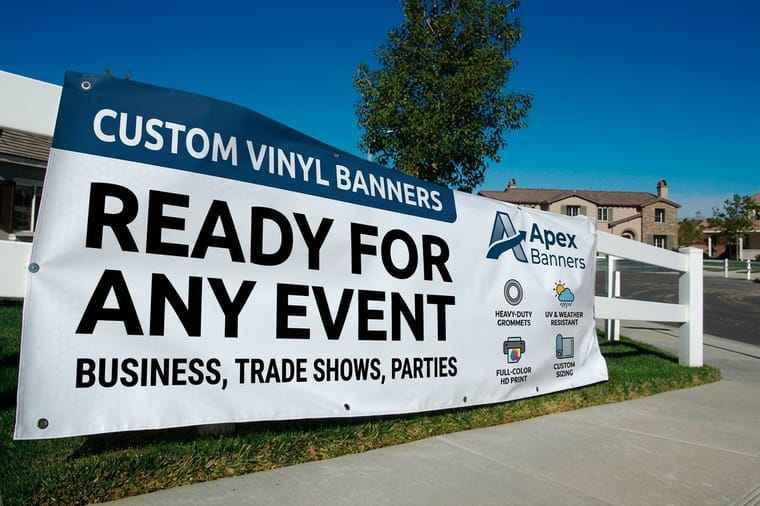
Judge a banner printer on four answers: the material weight in ounces per square yard, whether the edges are hemmed and how far apart the grommets sit, whether you see a proof before it prints, and the file cutoff time behind the turnaround they quote. 13 oz scrim vinyl is the outdoor baseline, hemmed edges with grommets every 24 inches are standard, and production days are counted separately from shipping days. Price only tells you something once those four match.
Quick answer
Ounce weight, edge finishing, proof, cutoff time
Two banner quotes are only comparable once you know the material weight and the finishing behind each one. 13 oz scrim vinyl is the standard outdoor grade, 15 to 18 oz blockout is the double sided upgrade, and roughly 8 to 9 oz polyester or fabric belongs indoors where there is no wind and no UV. Hemmed edges with a grommet every 24 inches and one in each corner are what keep it hanging. After that, ask whether you see a proof, and get the file cutoff time separately from the shipping days.
Start With the Ounce Weight, Not the Price Per Square Foot
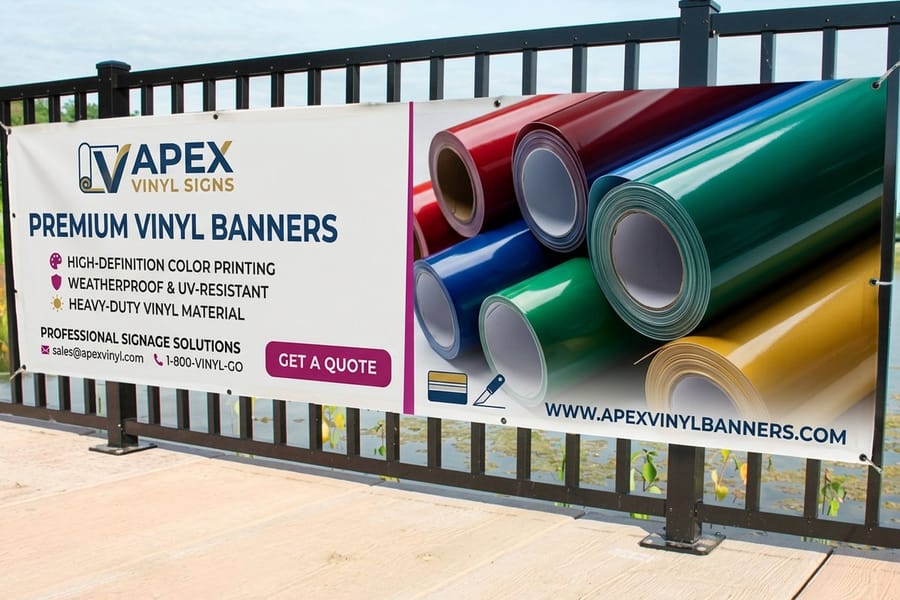
Banner material is sold by weight, in ounces per square yard, and that single number explains most of the price gap between two quotes for the same size. Everything else in the spec sheet follows from it.
| Material | Weight | Where it belongs | What it fails at | Starts at |
|---|---|---|---|---|
| Indoor banner | Light | Retail interiors, lobbies, one day events. | Any real weather. It is not built for a season outside. | $25 |
| Polyester | About 8 to 9 oz | Trade show booths and anywhere lights would glare off vinyl. | Rain and wind loading. It stretches. | $49 |
| Fabric | About 8 to 9 oz | Backdrops and repeat use, because it folds and packs without a crease line. | Long outdoor exposure and grommet loads. | $57.20 |
| Mesh vinyl | About 9 oz, perforated | Fences, scaffolding, building faces, anywhere exposed. | Solid color density. The holes cost you saturation. | $75 |
| Scrim vinyl | 13 oz | The outdoor default. Storefronts, sponsor walls, road frontage. | Double sided work. Light shows through from behind. | $79 |
| Pole banner | 13 oz plus pockets | Street poles and light standards, printed both faces. | Nothing, if the pocket size matches the hardware. | $97.76 |
Scrim vinyl is a polyester mesh sandwiched between two vinyl faces, and the scrim is what stops a small nick from running into a tear. Blockout grades at 15 to 18 oz add an opaque core so a double sided banner does not ghost the back image through the front. A printer who cannot tell you which one is in the quote is not comparing the same product as the one who can. The banner material guide walks through the same decision from the design side.
The Edge Is Where Cheap Banners Fail
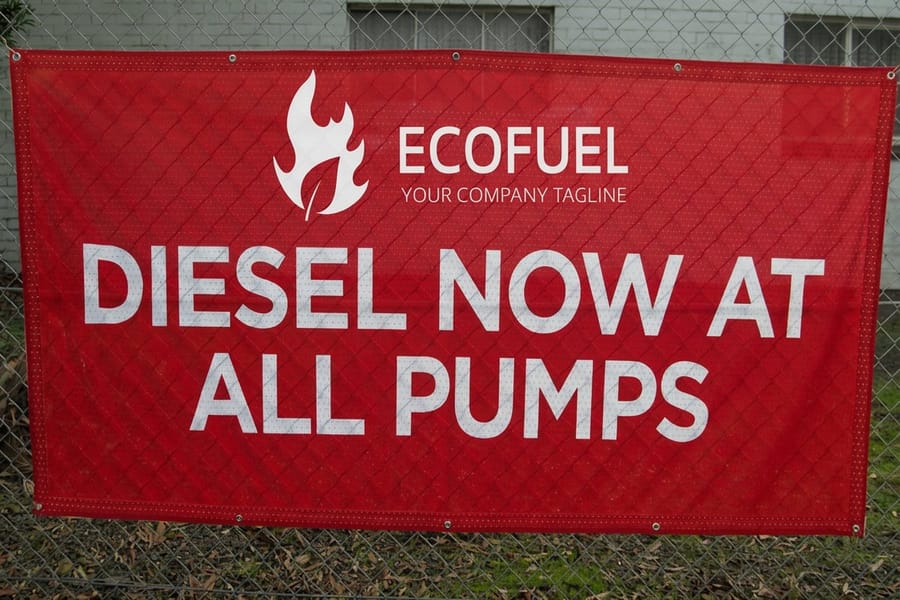
Almost no banner fails in the middle. It fails at a grommet, at a corner, or along a raw edge that was never hemmed, and all three are finishing decisions the printer made before the banner shipped.
A hem is the material folded back on itself and welded, usually about an inch, which doubles the thickness exactly where the hardware pulls. Grommets go into that doubled edge at roughly 24 inch intervals with one in every corner. Punch a grommet through a single unhemmed layer and it will pull out, usually in the first week the wind gets under the banner. When a quote is noticeably cheaper than the others, this is the line item that was removed. Our grommet placement guide covers the spacing in more detail.
Wind is the other decision. Slitting a finished vinyl banner is a common suggestion and a bad one: a cut in tensioned vinyl gives a tear a starting point, and the pressure it relieves is not worth what it invites. Perforated mesh banners let air through the whole face instead, which is why fence wraps and scaffold banners are almost always mesh. If the artwork has to stay dense and saturated, keep the vinyl and switch the hanging method: pole pockets top and bottom spread the load along the whole edge instead of concentrating it at five points.
One more thing to ask about on big jobs. Banner vinyl comes off rolls in fixed widths, so a finished drop taller than the roll needs a welded seam. That seam is strong, but you want to know where it lands before the logo sits on top of it. The large banner printing guide covers what changes past that width.
Proofs, Files, and Why 300 DPI Is the Wrong Target
The second thing that separates banner printers is what happens to your file between upload and press. Ask two questions: do I see a proof, and what do you do if the file is wrong.
A soft proof is a PDF or an on screen preview showing the trimmed banner with the hem allowance marked. It catches the things that actually go wrong at this size: text sitting inside the hem fold, a logo centered on the artboard but off center on the finished drop, a pole pocket eating three inches of the design. A hard copy proof, printed on the real material and shipped to you, is the only way to judge color on a large flat solid, and it costs a shipping cycle. Order one when the banner carries a brand color that has to match something already printed. Skip it for a weekend sale banner.
Resolution is where most people overspend effort. A banner is read from several feet back, so 100 to 150 dpi at the finished size is enough, and working at one tenth scale at 1000 to 1500 dpi produces the same output in a file that opens. What does matter is color space. Send RGB and a large flat area will convert somewhere you did not choose. Supply brand colors as CMYK or Pantone values and let the printer tell you which ones sit outside the achievable range on vinyl. Correctly sized starting layouts are in the blank template library, and how online printing works walks through the whole file handoff.
Production Days and Transit Days Are Two Different Numbers

Banners get ordered late. That is the nature of the product, and it is why turnaround is the spec people misread most often when they choose a printer.
Production turnaround counts only the time the banner is being printed, hemmed, grommeted and boxed. Shipping starts when it leaves the dock. A one day production banner going ground from New York to California is not a one day banner, and no printer is being dishonest when they say otherwise, they are just quoting the half they control. Get two numbers before you commit to an event date: the file cutoff time in the plant timezone, and the ground transit days to your zip code. Then keep a day of slack, because a file that fails preflight after the cutoff loses the whole production day.
The other half of speed is where the banner is made. We print in the United States and ship from our own plant, so the transit map is domestic ground rather than an international customs queue. If you are working against a hard event date, the next day banners guide lays out what has to be true on your side of the upload for a fast lane to work, and every turnaround option shows live in the configurator on vinyl banners.
Five Questions That Sort Printers in Ten Minutes

You do not need a procurement process. You need five answers, in writing, from each printer you are considering.
- What is the material weight in ounces? If the answer is a brand name instead of a number, ask again. 13 oz is the outdoor baseline.
- Are the edges hemmed, and what is the grommet spacing? Hemmed with grommets every 24 inches and one per corner is standard. Anything less is a price cut you will pay for later.
- Do I get a proof, and does it show the hem allowance? A proof that shows only the flat artwork will not catch text lost inside a fold or a pole pocket.
- What is the file cutoff time, and what happens if preflight fails? The answer to the second half tells you whether anyone is looking at your file before it prints.
- Is the price per banner or per square foot, and what is not included? Hems, grommets, pole pockets and wind reinforcement are sometimes line items rather than defaults.
Run those five past any shop and the field narrows fast. Our starting prices, finishing options and turnaround choices are all visible before you add anything to a cart across the vinyl banner printing range, and what we stand behind on quality and reprints is written out on the guarantees page. If you are outfitting a booth rather than a storefront, retractable banner stands start at $139 with the hardware and case included, and the trade show banner guide covers which format suits which booth size.
Wally checks the quote
Ounces, hem, grommets, cutoff time
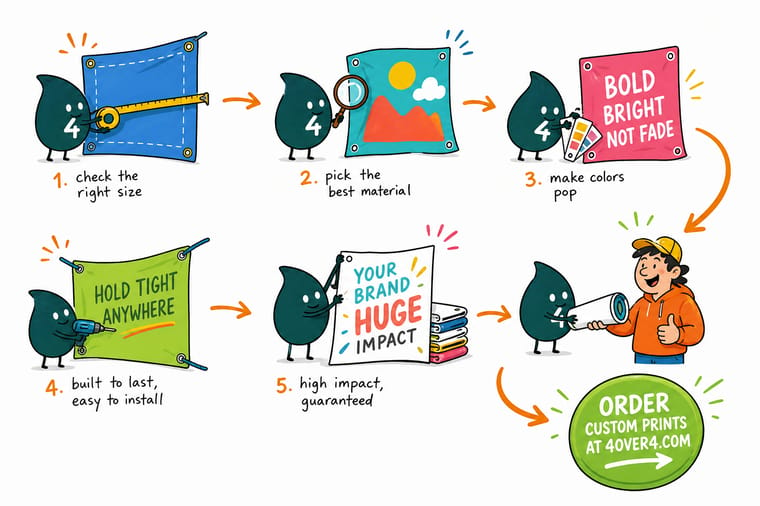
Wally does not read the price first. He looks for the ounce weight, because 13 oz scrim vinyl and a light indoor banner are not the same product at the same size. Then he runs a thumb along the edge to see whether it is hemmed, counts the grommets, and asks what time the file has to land for the production day being promised. If a quote answers all four, it is a real quote. If it says vinyl banner and a number, there is nothing to compare it to.
Configure a vinyl banner →%22%2F%3E%3Ccircle%20cx%3D%2235%22%20cy%3D%2219%22%20r%3D%2230%22%20fill%3D%22%23f59e0b%22%20opacity%3D%220.15%22%2F%3E%3Ccircle%20cx%3D%2233%22%20cy%3D%2229%22%20r%3D%229%22%20fill%3D%22%23f59e0b%22%20opacity%3D%220.1%22%2F%3E%3Crect%20x%3D%2275%22%20y%3D%229%22%20width%3D%2220%22%20height%3D%2219%22%20rx%3D%224%22%20fill%3D%22%23f59e0b%22%20opacity%3D%220.08%22%20transform%3D%22rotate(15%2080%2030)%22%2F%3E%3C%2Fsvg%3E)
Specs and pricing
Sizes, finishing options and starting prices
Materials, sizes, hem and grommet choices and turnaround options, straight from the 4OVER4.COM configurator with live starting prices. Vinyl banners come in 24 sizes from 2 by 4 feet on 13 oz outdoor or 15 oz blockout vinyl, hemmed on two or four sides, with grommets at the corners or every 2 feet or pole pockets. Mesh banners run on 8 oz perforated vinyl from 24 by 72 inches up to 48 by 144 inches or any size.


Print it
Order a banner built for where it hangs
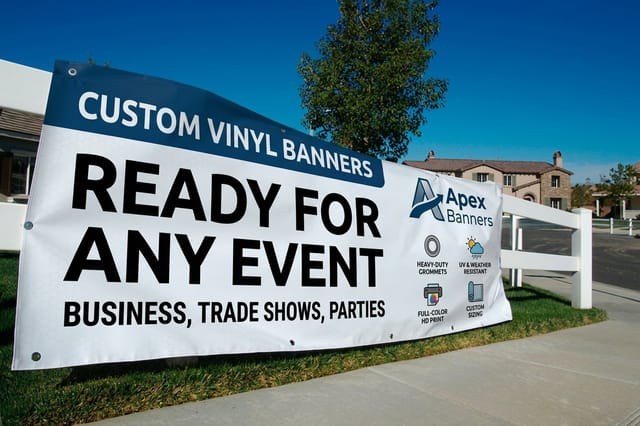
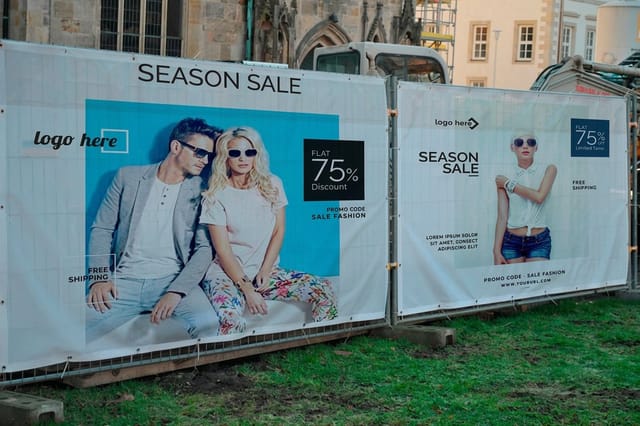
Vinyl, outdoor and mesh banners each print from one banner in 3 business days. Pick 13 oz vinyl for a one sided outdoor banner, 15 oz blockout when it reads from both sides, and mesh when wind has to pass through a fence line.
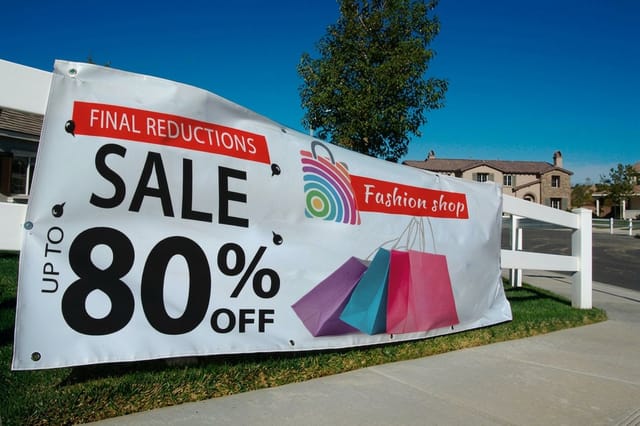

Explore more
Where to go next
Compare vinyl, mesh, fabric and polyester by where each belongs, weigh vinyl against mesh, space grommets so they hold, work through the vetting checklist, see what changes on an oversized banner, then shop vinyl banners.
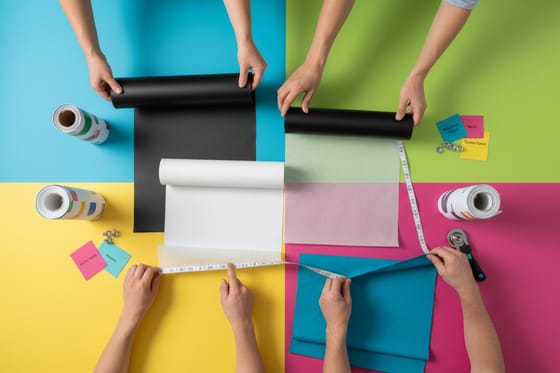
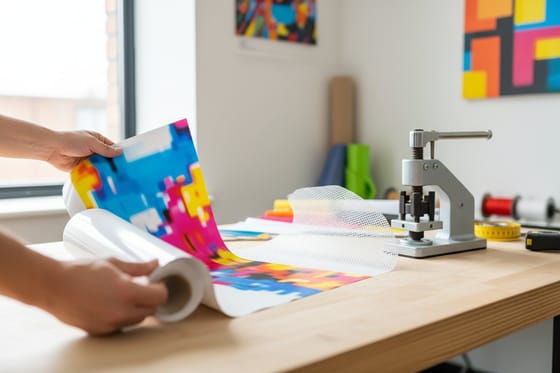
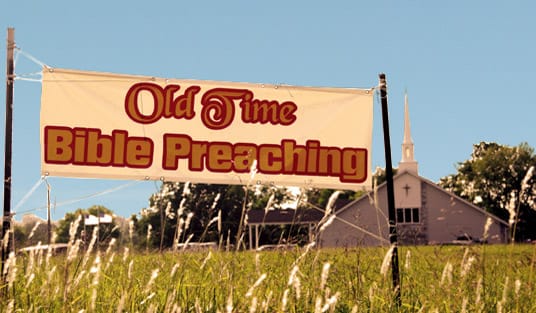

By the numbers
13 oz scrim hemmed and grommeted in house
Common Questions
Your banner printer questions, answered
What should I ask a banner printer before I order?
Five things, in this order: the material weight in ounces per square yard, whether the edges are hemmed or left raw, the grommet spacing, whether the artwork gets a proof before it goes to press, and the file cutoff time for the production day you are being promised. Every one of those is answerable in a sentence. A printer who will not put the ounce weight in writing is quoting a different product than the one you are comparing it to.
What weight vinyl banner do I actually need?
For a banner that hangs for a season outdoors, 13 oz scrim vinyl is the standard and is what most outdoor banners are made from. Step up to 15 to 18 oz blockout when the banner is double sided and you do not want the back showing through, or when it will live on a fence through a windy winter. Going heavier than that mostly adds shipping weight. Indoors, where there is no wind and no UV, a lighter polyester or fabric banner looks better because it does not throw glare back at the lights.
Are wind slits a good idea on a vinyl banner?
No. A slit is a cut, and a cut in tensioned vinyl is a place for a tear to start and run. The pressure relief it provides is small compared to the damage it invites. If the banner is going somewhere exposed, order perforated mesh so the air passes through the whole face, or hang it with a pole pocket top and bottom so the load spreads along the edge instead of pulling on individual grommets.
How high does the resolution need to be for a banner?
Lower than most people build. A banner is read from several feet away, so 100 to 150 dpi at the finished size is plenty, and working at one tenth scale at 1000 to 1500 dpi gives the same result in a file your printer can actually open. What matters more is that solid brand colors are supplied as CMYK or Pantone values rather than RGB, because a large flat area is where a color shift is impossible to hide.
Does same week turnaround mean I get it that week?
Only if the transit time fits. Production turnaround counts the days the banner is being made and finished; shipping is counted separately from the moment it leaves the plant. A one day production banner shipping ground across the country is not a one day banner. Ask for the file cutoff time in the printer local timezone, then add the ground transit days to your own zip code before you commit to an event date.
How much should a printed banner cost?
At 4OVER4.COM, indoor banners start at $25, polyester banners at $49, fabric banners at $57.20, mesh banners at $75, and vinyl banners at $79. A retractable banner stand, which includes the hardware and the case, starts at $139, and step and repeat banners start at $217.50. Size, material weight and finishing move those numbers more than quantity does on a single banner, which is why two quotes for the same square footage can be far apart.
Get Started
Order a hemmed and grommeted banner, printed in 2 business days
Pick the material weight, set the hem and grommet options, choose a turnaround, and see the real number before anything goes in a cart.
Legal Disclaimer
Gold Standard guarantees apply to all standard orders placed through 4over4.com. Price match requires verifiable proof of a competitor's published price for an equivalent product with matching specifications and turnaround time. Satisfaction guarantee covers manufacturing defects and print quality issues. Contact support with order number and documentation.
