
How to Mail a Postcard the Easy Way


Mailing a postcard comes down to three things: the size that sets your postage, the back layout USPS relies on, and the address and stamp. Here is the whole process, plus the easier print-and-mail route for many cards.
To mail a postcard, keep it within postcard-rate size limits, put the address and stamp on the right with the barcode zone clear, and apply the correct postage. For dozens or thousands, a print-and-mail service prints, addresses, and mails every card at bulk rates.

Start here
Mailing a postcard in one paragraph
Mailing a postcard comes down to size, layout, and postage. Keep the card within postcard-rate limits for the cheapest mailing, put the address and stamp on the right with the barcode zone clear, and apply the correct stamp. For many cards, a print-and-mail service handles printing, addressing, sorting, and postage in one step. The layout below shows the back zones.
Watch it printed
See standard postcards on the press, in 154 seconds
What mailing a postcard actually involves

Mailing a postcard is one of the simplest things you can send, but a few rules decide whether it goes cheaply and arrives without a hitch. There are really only three things to get right: the size, which sets the postage rate; the back layout, which the postal service relies on to route it; and the address and stamp themselves.
Get those three right and a single card needs nothing more than a mailbox. The catch is that a postcard is a machine-read piece of mail, so its size and the placement of the address and barcode are not just style choices, they determine the rate and the reliability of delivery.
This guide covers the whole process for a single card, then shows the easier route when you have many to send: a print-and-mail service that handles printing, addressing, sorting, and postage in one step. Whether you are sending one postcard or a full campaign of direct-mail postcards, the fundamentals start here.
Postcard sizes and the postage rate each one earns

Size is the first decision because it sets the postage rate. A rectangular card within the postcard-rate limits, roughly 3.5 by 5 inches at the small end and up to about 4.25 by 6 inches at the large end, mails at the lowest postcard rate. That makes the standard postcard the cheapest thing you can send with a message on it.
Go larger and the card still mails, but it moves up a class. An oversized postcard at 6 by 9 or 6 by 11 inches mails at a first-class letter or flat rate, which costs more per piece but commands far more attention in a stack of mail. That tradeoff, lower postage versus more presence, is the real choice behind picking a size.
The card also needs to be a stock sturdy enough to feed through postal equipment without bending. Because postal pricing and exact limits change over time, confirm the current numbers with USPS before buying postage. Our postcard sizes guide lays out every standard dimension and how it affects mailing.
Addressing and the layout USPS expects
The back of a postcard has a fixed layout, and following it is what keeps delivery smooth. The right side is reserved for the delivery address and the stamp: the stamp goes in the upper right corner and the recipient address sits below it. The lower portion of that right side must stay clear so the postal service can print or read a routing barcode.
Your message, along with a return address in the upper left if you include one, lives on the left side. Keep artwork, dark backgrounds, and text out of the address and barcode zones, because postal scanners read those areas and anything intruding can delay or misroute the card. A clean, legible address in a standard format is all the equipment needs.
If you are designing the card yourself, build these zones into your layout from the start rather than squeezing them in at the end. Our guide on designing an effective postcard shows how to make the front sell while the back stays perfectly mail-ready.
Mailing a greeting card in an envelope instead
A folded card in an envelope follows different rules from a postcard, and the difference is mostly postage class. Once the card goes inside an envelope it mails as a letter, not a postcard, so a First-Class letter stamp covers it up to one ounce. A standard 5 x 7 card in an A7 envelope weighs well under that.
Three things push a card out of the plain letter rate. A square envelope, which USPS treats as nonmachinable and surcharges per piece. A rigid or lumpy enclosure, such as a card with a thick embellishment or a gift card inside, which earns the same surcharge. And anything over 6.125 by 11.5 inches or a quarter inch thick, which becomes a flat.
The addressing side is simpler than a postcard because there is no barcode clear zone to protect. Write the recipient address in the center of the envelope face, the return address in the top left, and place the stamp in the top right. Seal it, and it goes in the same collection box as a postcard. If you are sending the card bare, our guide to what goes on the back of a postcard shows the layout that replaces the envelope.
Mailing one card versus mailing many
For one card or a small handful, doing it yourself is quick: address each card, add a postcard-rate stamp, and drop them in the mail. There is no reason to overcomplicate a birthday note or a change-of-address card to a few friends, and a short run of standard postcards covers that job.
The moment the count climbs into the dozens, hundreds, or thousands, hand-mailing becomes a chore, and buying single stamps stops being economical. This is where volume changes the approach entirely: sorting, addressing, and stamping a large list by hand is hours of work, and you miss out on the bulk postage rates that come with presorted mail.
That is exactly the problem a print-and-mail service solves, and it is the right tool for any business mailing, promotion, or announcement at scale. Rather than printing cards and then figuring out postage, you hand the whole job to one service. Our guide on EDDM mailing guidelines covers one popular way to reach every address in an area.
The easy route: print-and-mail in one step
The simplest way to mail postcards at any real volume is to skip the post office altogether with a print-and-mail service. You upload your design and a mailing list, and the service prints every card, addresses each one, sorts them to postal standards, and mails them, often at bulk postage rates lower than single stamps.
That means no addressing by hand, no trip to the counter, and no guessing at postage. It also folds two costs into one clear quote: the printing and the mailing. For a campaign, this is the difference between an afternoon of manual work and uploading a file and a spreadsheet once.
Our direct-mail postcards do exactly this, printing and mailing your cards to your list in a single order. You set the size, stock, and finish, watch the print price update live, and see the mailing quoted alongside, so the whole postcard, from design to doorstep, comes from one place. Browse every option in postcards to start.
Wally mails it without a trip to the counter
Right size, right layout, right postage
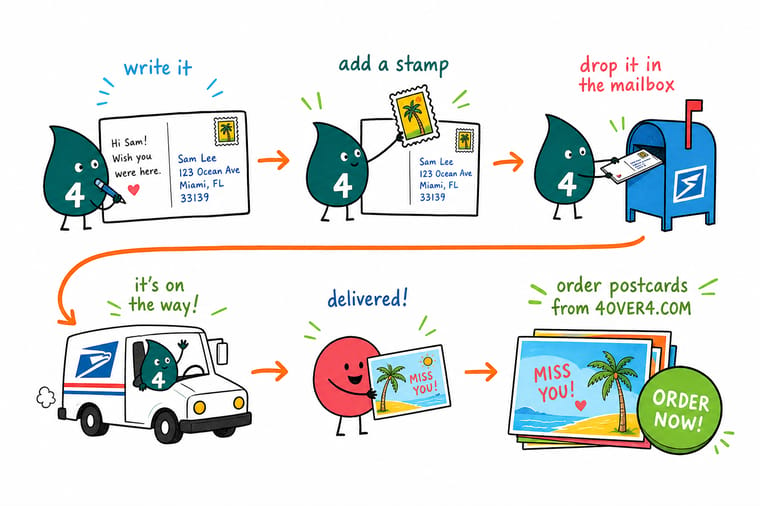
Wally sizes the card to the postage rate he wants, keeps the address and stamp on the right with the barcode zone clear, and adds the correct stamp. For one card, that is the whole job. For a whole list, he hands it to a print-and-mail service that prints, addresses, sorts, and mails every card at bulk rates, no post office line required.
Print and mail postcards →Quick reference
Postcard mailing reference, at a glance
Size sets the rate and the back layout keeps delivery smooth. Confirm current postage with USPS, since rates change over time.
| Factor | Aim for | Why it matters |
|---|---|---|
| Postcard rate | Up to 4.25 x 6 in | The smallest, cheapest class. Stay within these limits for the lowest single-card postage. |
| First-class larger | 6 x 9 in and up | Cards above postcard-rate limits mail at a letter or flat rate, which costs more but stands out. |
| Thickness | Rigid enough to feed | A sturdy card stock runs through mail equipment without jamming or bending. |
| Address zone | Right side, clear | Keep the recipient address and stamp on the right so scanners read it correctly. |
| Barcode zone | Lower right, open | Leave the bottom clear of art so USPS can print or read the routing barcode. |
| Bulk direct mail | Print-and-mail service | For many cards, a service handles addressing, postage, and delivery at bulk rates. |
Step by step
Mail a postcard in 7 steps
- Choose a size that fits the rate you want For the cheapest single-card postage, keep the card within postcard-rate limits, up to 4.25 by 6 inches. Go larger for more impact and mail it at a letter or flat rate instead.
- Design the back to the standard layout Reserve the right side for the address and stamp, keep the lower zone clear for the routing barcode, and put your message on the left so nothing interferes with delivery.
- Print on a mailable stock Use a card stock sturdy enough to run through postal equipment without bending, and finish it so the address area still takes a pen or an inkjet address cleanly.
- Address it clearly Write or print the recipient address in the right-side zone in a clean, legible format, with the return address in the upper left if you include one.
- Apply the correct postage Add a postcard-rate stamp for a card within the limits, or letter postage for a larger card. If in doubt, a quick check at the counter confirms the right amount.
- Drop it in the mail Place it in any collection box or hand it to your carrier. A single, correctly sized and stamped card needs nothing more to be on its way.
- For many cards, switch to print-and-mail When you are sending dozens or thousands, upload your design and mailing list to a print-and-mail service that prints, addresses, sorts, and mails every card for you at bulk postage rates.
Specs and pricing
Postcard specs and live pricing
Once you have a size in mind, the print decisions come down to stock and finish. Here are the live specs and price-per-unit for postcards at 4OVER4.COM, straight from the configurator.
| Quantity | Price Per Unit | Total |
|---|---|---|
| 50 | 33.0¢ | $16.48 |
| 100 | 24.2¢ | $24.16 |
| 200 | 15.9¢ | $31.86 |
| 300 | 12.8¢ | $38.45 |
| 400 | 11.3¢ | $45.04 |
| 500 | 10.3¢ | $51.62 |
| 600 | 9.89¢ | $59.31 |
| 700 | 9.57¢ | $67.00 |
Order it
Print and mail postcards at 4OVER4
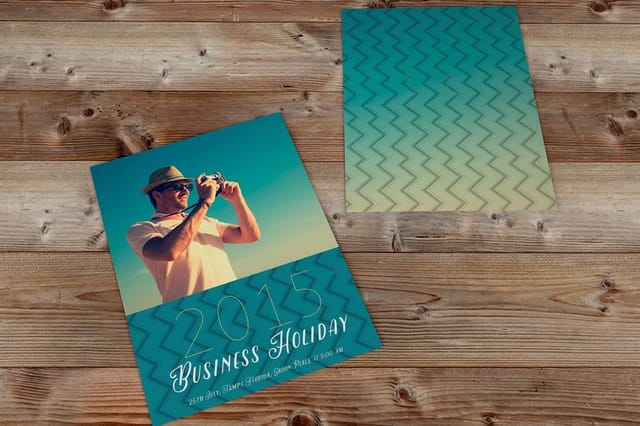
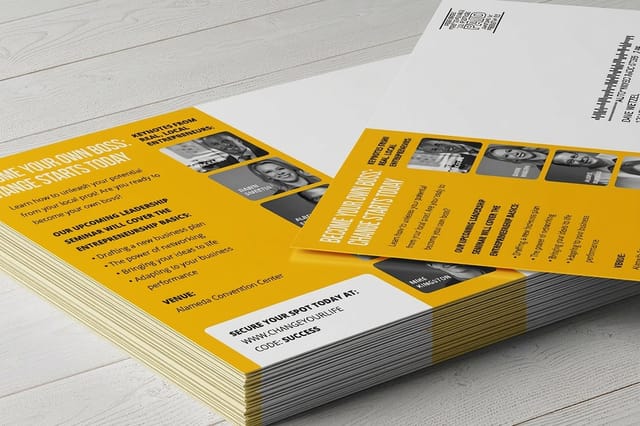
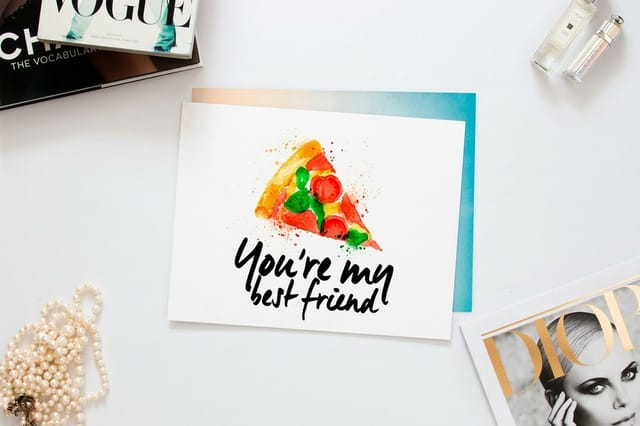
See it in use
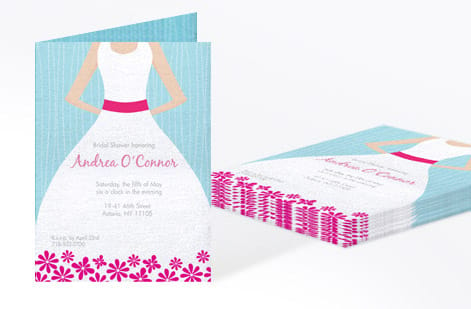
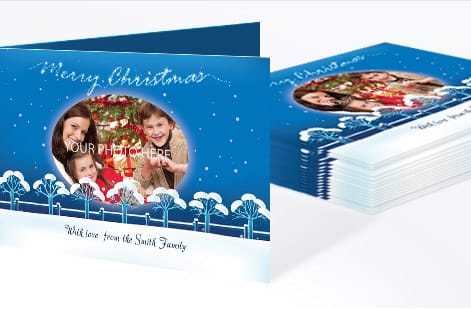
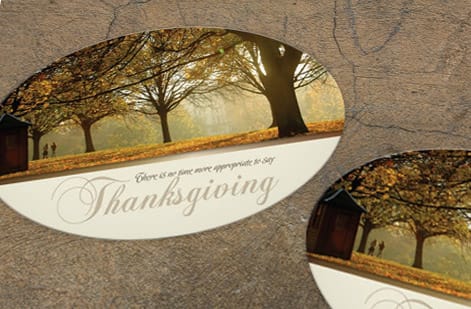
Postcards customers printed before mailing





Explore more
Where to go next

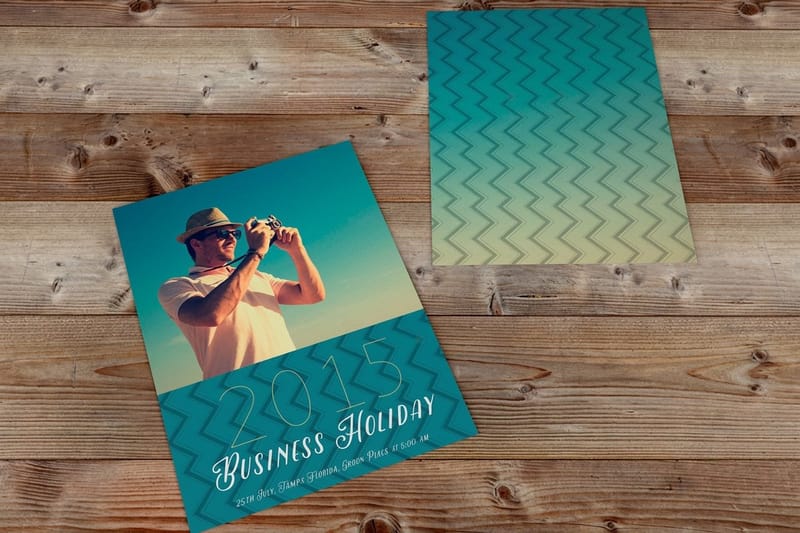
By the numbers
Postcard stocks and the record behind a mailed order
Common Questions
Common questions about mailing postcards
How do you send a card in the mail?
Put the card in its envelope, write the recipient's name and address in the center of the envelope face, your return address in the top left, and place a First-Class letter stamp in the top right. A standard rectangular envelope under one ounce needs one stamp. Square envelopes and rigid cards carry a nonmachinable surcharge, so add the extra postage or hand it over at the counter. Drop it in any blue collection box or leave it in your mailbox with the flag up.
How do I send a postcard from Italy?
Buy a stamp for a card going abroad at a tabaccheria, the tobacco shop marked with a large T, or at a post office, and ask for posta prioritaria to the United States. Write the address on the right half of the card with USA alone on the last line in capitals, then drop it in a red Poste Italiane box using the slot marked per tutte le altre destinazioni, the one for every other destination. Allow one to three weeks for delivery.
How do I mail a card internationally?
From the US, one Global Forever stamp covers a postcard or a one ounce letter to any country. Write the destination address in the center, put the country name alone on the last line in capital letters, and add your return address with USA on its last line. Cards in square or rigid envelopes need extra postage, and anything with a gift inside may need a customs form, so take those to the counter. Standard international delivery runs one to three weeks depending on the destination.
What is the fastest way to mail a card?
Priority Mail Express, which delivers overnight to most US addresses and comes with tracking, but it needs the card inside an envelope or a flat rate envelope, so a bare postcard cannot go that way. Priority Mail lands in one to three business days at a lower price. A regular First-Class postcard or letter takes one to five business days, and dropping it at a post office before the last collection time of the day gains you a day over a home mailbox pickup.
How do I mail a single postcard?
Mailing one postcard is simple. Make sure the card is a mailable size and a sturdy stock, write the recipient address clearly on the right side of the back, add a return address in the upper left if you like, and apply the correct postage. For a standard card within postcard-rate limits, up to about 4.25 by 6 inches, a postcard-rate stamp is all you need. Then drop it in any collection box or hand it to your mail carrier. The whole process is the address, the stamp, and the mailbox.
What size postcard qualifies for the postcard rate?
To mail at the lowest postcard rate, the card generally needs to be rectangular and within roughly 3.5 by 5 inches at the small end and 4.25 by 6 inches at the large end, on a stock thick enough to feed through mail equipment but not too thick. Anything larger than those limits, such as a 6 by 9 or 6 by 11 inch oversized postcard, still mails, but at a first-class letter or flat rate rather than the postcard rate. Because postal pricing changes over time, confirm the current rate and exact limits with USPS or at the counter before you buy postage.
Where do the address and stamp go on a postcard?
On the back of the card, the right side is reserved for the delivery address and the stamp, with the stamp in the upper right corner and the recipient address below it. The lower portion of that right side must stay clear so the postal service can apply or read a routing barcode. Your message, and a return address if you include one, go on the left side. Keeping to this layout is not just etiquette; postal scanners depend on it, and art that strays into the address or barcode zones can delay or misroute the card.
When should I use a print-and-mail service instead of mailing myself?
Mailing a few cards yourself is quick and cheap. But once you are sending dozens, hundreds, or thousands, a print-and-mail service saves enormous time and often money. You upload your design and a mailing list, and the service prints every card, addresses each one, sorts them to postal standards, and mails them, frequently at bulk postage rates that are lower than buying single stamps. It also removes the manual work of addressing and the trip to the post office entirely. For any campaign-scale mailing, direct mail is the practical route.
What does it cost to mail postcards, and how is it priced?
Two costs stack: printing and postage. Printing scales with quantity, size, stock, and finish, and the per-card price drops as the run grows. Postage depends on the size class, with cards within postcard-rate limits costing the least per piece and larger cards moving to letter or flat rates. A bulk direct-mail service can lower postage further through presorting. You set your print options in the configurator and the price updates live, and for direct mail the mailing cost is quoted alongside so you can see the full picture before you order.
Can I mail postcards for a business campaign?
Yes, and postcards are one of the most cost-effective direct-mail formats for exactly that. For a campaign, design the card to grab attention at a glance, keep the back layout mail-ready, and use a print-and-mail service so the whole list goes out in one step at bulk postage rates. Oversized postcards stand out in a stack of mail and still mail affordably at a letter or flat rate. Our guides on postcard sizes and effective postcard design help you build a card that gets read and acted on.
Get Started
Ready to print and mail your postcards?
Print a stack to mail yourself, or let a print-and-mail order handle addressing, postage, and delivery for your whole list. Set your options and watch the price update live.
Legal Disclaimer
Gold Standard guarantees apply to all standard orders placed through 4over4.com. Price match requires verifiable proof of a competitor's published price for an equivalent product with matching specifications and turnaround time. Satisfaction guarantee covers manufacturing defects and print quality issues. Contact support with order number and documentation. On-time delivery rate based on tracked orders 1999 to 2026. Individual results may vary based on shipping carrier performance.
