
Book Printing Project Ideas for Journals, Photo Books, Zines and Kids Books

Emma is our prepress and print production voice, built from the knowledge of our production team, with over 20 years in printing.
Choose the binding before you choose the book: page count and whether it has to lie flat decide it, and the layout follows from there. Saddle stitch handles roughly 8 to 64 pages in multiples of four, perfect binding takes over once there is enough paper to glue a printable spine, and spiral coil is what you use when somebody has to write in the book or cook from it.
Book projects and the binding that suits each one
| Project | Common trim | Typical pages | Binding and stock | Product at 4OVER4 |
|---|---|---|---|---|
| Personal or gift journal | 5.5 x 8.5 in | 80 to 200 pages | Leather or soft cover, sewn or glued | Leather journals |
| Photo book | 8.5 x 11 in or square | 32 to 120 pages | Perfect bound, heavy coated text | Photography booklets |
| Zine or small press title | 5.5 x 8.5 in | 8 to 48 pages | Saddle stitch, multiples of four | Saddle stitch booklets |
| Kids picture book | 8.5 x 8.5 in square | 16 to 40 pages | Saddle stitch or perfect bound, thick cover | Kids books |
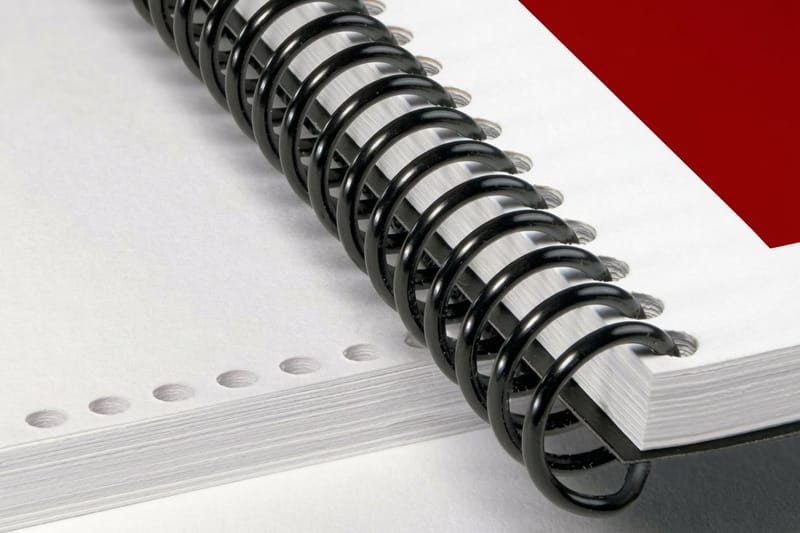
| Workbook or planner | 8.5 x 11 in | 48 to 250 pages | Spiral coil so it lies flat under a pen | Spiral coil books |
Trim sizes here are the common ones, not the only ones. Set the page count before the layout, because a saddle stitched book rounds up to the next multiple of four whether you planned for it or not. You can order a perfect bound book in any of these sizes straight from the configurator.
Pick the binding first, then design the book
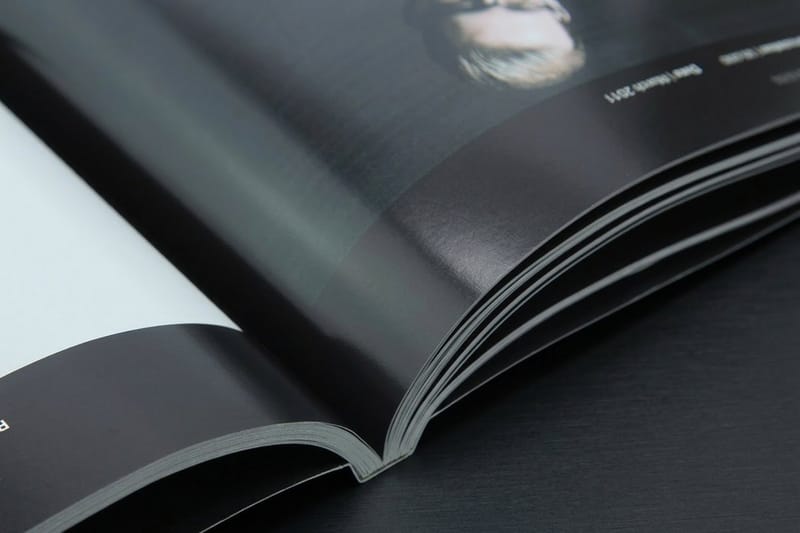
Two things decide the binding: how many pages the book has, and whether it needs to stay open on a table. Saddle stitch covers roughly 8 to 64 pages, perfect binding takes over once there is enough paper to glue a spine you can print on, and spiral coil is the answer whenever somebody has to write in the book or cook from it.
Designers get this backwards constantly. The layout gets built at a size and page count that feels right, then the bindery says the file cannot run, and the whole thing goes back for a rebuild. Deciding the binding first costs nothing and saves a redesign.
The complete guide to binding types walks each method in detail. What follows is the shorter version: which project maps to which binding, and what each one costs at 4OVER4.COM book and booklet printing.
Count pages, not sheets
One sheet of paper carries two pages, one on each side. A 16 page zine is eight sheets, and a saddle stitched job is always a multiple of four because each folded sheet contributes four pages. If your page count lands on 22, you are printing 24 and one spread is blank.
Our pages versus sheets explainer covers the counting, and the page counts and creep guide covers what happens to the inner margins once the book gets thick.
The question nobody asks until it is too late
Does the book need a printed spine? A perfect bound book has a flat spine wide enough to carry a title, which is what makes it look like a book on a shelf. A saddle stitched book has a folded edge and no spine at all, so on a shelf it disappears.
If the book will ever sit spine out in a store, a library or an office, that answer alone picks perfect binding and sets a floor on the page count.
Twelve book projects worth printing
These are twelve projects that print well, each with the binding that suits it. They run roughly from the cheapest to test up to the most involved, so a first time self publisher can start at the top and a studio with a print budget can work further down.
None of them need a thousand copies to be worth doing. Saddle stitch booklets start at $240.55 and a perfect bound book at $375.05, which puts a real short run inside the reach of a small press or a family project.
Projects one to six: journals, notebooks and short books
1. A journal for clients. Leather journals start at $10.00 and ship as they come, a suede cover with no logo added. They land as a gift rather than as marketing, which is exactly why they get kept.
2. A dotted or lined notebook for a team. The deluxe spiral notebook starts at $5.00 and lies flat, so people actually write in it. Our notebook and journal article covers the rulings worth choosing between.
3. A hardcover journal for a milestone. A wedding, an anniversary or a company birthday deserves a case bound book rather than a stapled one. Follow the hardcover journal guide for the cover build.
4. A zine. Eight to forty eight pages, saddle stitched, printed short and given away. The format is old, cheap and still the fastest way to put an idea in somebody’s hands.
5. A recipe book that stays open. Nobody wants to hold a cookbook flat with one elbow. A spiral coil book from $423.28 opens on the counter and folds back on itself.
6. A workbook or course companion. Same coil binding, different content. If people write in it, the coil pays for itself in how the book gets used.
Projects seven to twelve: photo books, kids books and small press
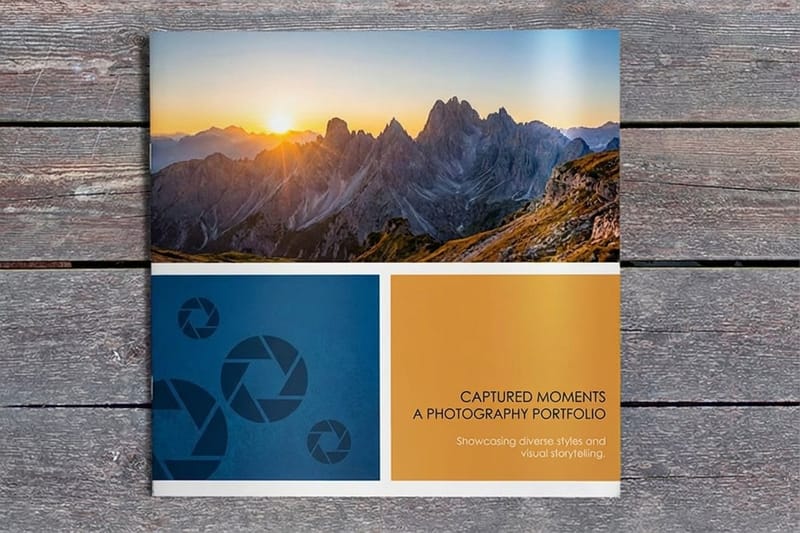
7. A portfolio photo book. Photography booklets start at $240.55 on coated stock that holds shadow detail. Leave a gutter allowance so a face never lands in the fold.
8. A family or travel photo album. Sequence it like a story with one image per spread rather than four to a page. The scrapbook guide is a good starting point for the edit.
9. A kids picture book. Kids books start at $240.55. Square trim, big type, thick cover, and a page count that stays low enough for one sitting.
10. A school or class yearbook. Saddle stitch below about forty pages, perfect bound above it. Names spelled right matters more than the design.
11. A small press novel or poetry collection. This is where the printed spine earns its cost. Perfect bound printing explained covers the spine width maths.
12. A magazine or lookbook for a season. Print it as a booklet, date it, and let it expire. Our magazine printing guide covers the setup, and seven booklet design ideas covers the layout thinking.
Paper, page count and where each binding stops
Once the project is chosen, three decisions set the price and the feel: the text stock, the cover stock and the page count. Everything else is artwork.
Text stock is the one people underspend on. A photo book on thin uncoated paper shows the next spread through the page, and that show through is the difference between a book that reads as a product and one that reads as a printout. Heavier coated text costs more per page and it is where the money should go on anything image led.
Cover stock is a different job. It has to survive being picked up, so it runs much thicker than the text, usually with a laminate. A kids book gets handled harder than any other book we print, so its cover is the one place to spend without hesitating.
Where each binding actually fails
Saddle stitch fails on thickness. Past about forty pages the staples strain, the book will not sit closed, and creep starts pushing the inner pages out toward the trim. Perfect binding fails at the thin end, where there is not enough paper to hold glue, and it also fails at flatness, since a perfect bound book fights being held open. Spiral coil fails on shelf presence, because there is no spine to print a title on, and the coil can catch in a bag.
There is no binding without a cost. Pick the one whose weakness does not matter for your book, which is a different question to picking the best one.
Test one copy before the run
Print a single copy, read it the way a reader will, and look at the gutter, the inner margins and the cover crease. Page thirty of a real proof teaches more than any amount of on screen review.
The printing a book online guide walks through ordering the first copy, and standard booklet sizes covers picking a trim that does not waste paper.
Book printing prices and specs at 4OVER4.COM
A perfect bound book starts at 10 copies for $375.05, and 25 copies cost $503.65, so each copy falls from about $37.50 to about $20.15 as the run grows. The binding sets the floor: a saddle stitched booklet starts at 25 for $240.55, and a leather journal at $10.00 a piece. Perfect bound trim runs 5.5 x 8.5, 6 x 6, 6 x 9 or 8.5 x 11 inches with the inside starting at 40 pages, and the table below carries the rest from the live configurator.
Quantity and price
Perfect bound book pricing and specs
Real configurator numbers, where the per copy cost falls as the run grows and the page count sets the spine.
| Quantity | Price Per Unit | Total |
|---|---|---|
| 10 | $37.51 | $375.05 |
| 15 | $27.86 | $417.92 |
| 20 | $23.04 | $460.78 |
| 25 | $20.15 | $503.65 |
| 30 | $18.22 | $546.51 |
| 40 | $15.54 | $621.52 |
You can also earn coins on every order and redeem them against a reprint, which helps when a first run sells out faster than expected.
Cover stock and finish on a book that gets handled
Cover and text do separate jobs. Text stock carries the reading and the images, so it is chosen for opacity and how it holds ink: 100# gloss text for photographs, 100# silk/matte text for mixed pages, 70# uncoated text for pages people write on. Cover stock carries the abuse, so it is chosen for thickness and for what sits on top of it, which on a perfect bound book means 14pt or 80# gloss cover with a velvet, silk or gloss laminate. A laminate takes the scuffing instead of the print, and on a kids book that laminate is the single reason the cover still looks like a book after a year in a toy box.
Print it
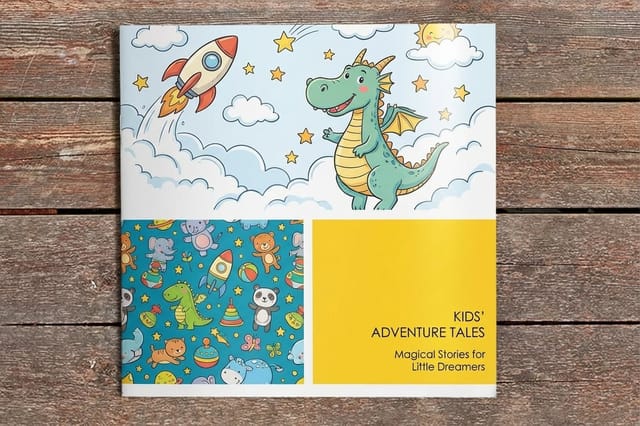
Kids books, built for small hands
Square trim, thick laminated cover, page counts sized for one sitting.
Finish changes the read as much as the look. Gloss lifts saturation and suits color photography, matte cuts reflection and reads calmer under a lamp, and an uncoated cover feels warm in the hand but scuffs faster without a laminate. Soft touch sits between them and is worth the cost on a gift book that gets handed over in person. For a book people write in rather than read, a spiral coil book with an uncoated text stock takes pen ink without feathering, which a heavily coated sheet does not. If you are printing notebooks alongside the books, notebook printing covers the smaller formats.
Which project suits which maker
The same binding serves very different people. Here is who tends to print what, and why.
- Photographers. A perfect bound photography booklet on heavy coated stock, one image per spread, sequenced like a story. It leaves a client meeting with the client, which a portfolio site never does.
- Self publishers and small press. Saddle stitch for the first run to test demand, perfect bound once the page count and the audience justify a printed spine.
- Teachers and course creators. Spiral coil workbooks that lie flat and take a pen, plus a matching booklet for handouts.
- Parents and families. A square kids book from a bedtime story, or a photo album from one trip rather than one decade. Small scope finishes.
- Studios and agencies. Branded journals as client gifts and a seasonal lookbook as the sales piece. Two very different budgets, one visual identity.
Page blanks that line up with the trim
Starting from a blank saves the most common setup error, which is artwork that does not line up with the trim and bleed. 4OVER4.COM sizes its blanks to exact product specs, including the gutter allowance that a bound book needs. Pick the 5.5 x 8.5, 8.5 x 11 or 11 x 11 inch booklet blank, keep 1/8 inch of bleed on each outside edge, and plan the page count in multiples of four, from 8 to 60 pages for a stapled booklet. Grab a print ready blank from the blank template library with bleed and trim already marked, or start from a layout in the design template library.
Start fast
Print-ready booklet blanks
Exact size press blanks with bleed and trim marked, so your spreads land inside the cut line.
Wally matches the project to the binding
Page count and how the book opens decide everything else
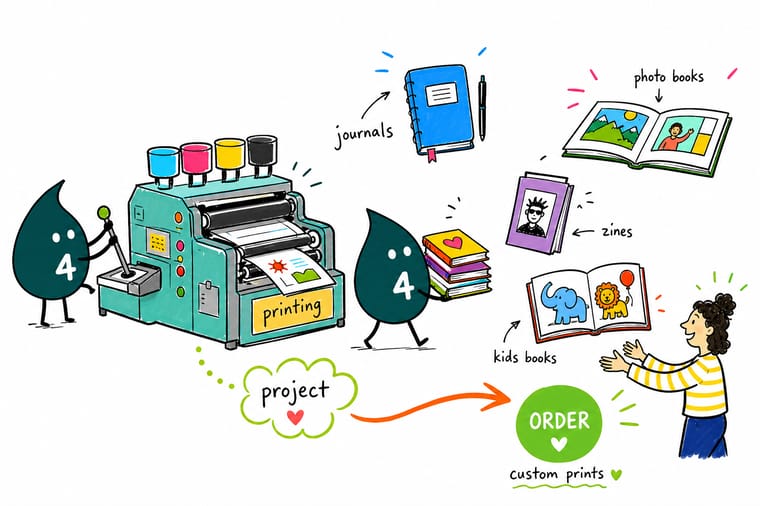
Count pages rather than sheets, round a saddle stitched book up to the next multiple of four, and move to perfect binding once the spine is thick enough to print a title on. Use spiral coil whenever the book has to lie flat under a pen. Leave extra room in the inner margin, proof one physical copy, and 4OVER4.COM prints the run on stock chosen for the job.
Order your book printing →What the binding decides for you
Design tips that hold on every book project
- Set the page count before the layout. Saddle stitch needs multiples of four. Building at 22 pages and discovering it at the bindery costs a rebuild of every spread after the change.
- Leave the gutter alone. Keep faces, text and anything you care about clear of the fold. The inner margin needs more room than the outer one, especially on a thick book.
- Spend on the cover, not the count. A shorter book on a thicker laminated cover feels better than a longer book on a flimsy one. Readers judge weight in the hand.
- Design the spine only when there is one. A saddle stitched book has no spine. Putting a title on a folded edge is wasted work and it will not sit right on a shelf.
- Proof one physical copy. Read it, hold it, open it flat on a table. Errors that a screen hides show up in three minutes on paper.
Explore more
More ways to print and bind
Kids books and photography booklets both run 25 for $240.55 in 7 business days.
Product Perfect Bound Book A flat glued spine you can print a title on.  Product Saddle Stitch Booklet Printing Folded and stapled, in multiples of four pages. Product Spiral Coil Books Lies flat and folds back for workbooks and recipes.
  Product Kids Books Square trim and a cover built for small hands. Product Photography Booklets Coated stock that holds shadow detail across a spread.
  Product Leather Journals Suede covers for gifts that get kept. Category Books and Booklets Printing Every binding, size and stock in one place. Guide Binding Types Explained How each binding method works and where it stops.
 Ready to print the book?
Pick the binding, set the page count, drop in your file or a free blank, and 4OVER4.COM prints it on stock chosen for the job.
Common questions about book printing projects
How many pages does a book need before it can be perfect bound?
It depends on the paper, not on a fixed number, because what matters is total spine thickness rather than page count. A book printed on heavy coated text reaches a gluable spine at a lower page count than the same book on thin uncoated stock. In practice, thin books get sent back from the bindery when the spine is too narrow to hold glue and carry a printed title, and the fix is either adding pages or moving to a heavier text stock. If your book is close to the line, ask before you finalise the layout rather than after, since adding pages reflows every spread that follows.
Does a zine have to be saddle stitched?
No, but saddle stitch is what makes zines cheap enough to give away, which is the point of the format. Fold and staple keeps the cost per copy low, runs fast, and works from eight pages upward in multiples of four. The trade off is that there is no spine to print on and the book will not sit flat once it gets thick. If your zine has grown past about forty pages and you want it to look like a book on a shelf, that is the moment to move it to perfect binding and accept the higher price.
What paper should a photo book be printed on?
Use a heavy coated text stock. Thin paper lets the next spread show through the page, which flattens contrast and undoes the work in the photographs. Coated stock also holds shadow detail rather than letting dark areas fill in, which matters most on moody or low key images. Gloss lifts saturation and is the safer choice for color work, matte cuts reflection and reads calmer for portrait and documentary sets. Photography booklets at 4OVER4.COM start at $240.55 and print on stocks chosen for image work.
What makes printing a kids book different?
The cover and the trim, more than the pages. Kids books get chewed, dropped, carried by one page and read in the bath, so the cover runs thick with a laminate over it and the corners take the abuse first. A square trim around 8.5 by 8.5 inches suits full page illustration and sits comfortably in small hands. Keep the page count low, because a picture book is read in one sitting and length works against it. Kids books start at $240.55, and both saddle stitch and perfect binding work depending on how many pages you land on.
Should I order one proof copy or go straight to the run?
Order the copy. A physical proof shows the gutter, the inner margins, the cover crease and the real color of the text stock, and every one of those is invisible on screen. It also lets you read the book the way a reader will, which is how typos and sequencing mistakes get caught. The cost of one copy is small against a run you have to reprint. Once the proof reads right, order the quantity you will genuinely use before the content changes rather than the quantity with the best unit price.
