
How to Make a Scrapbook That Holds Up for Decades


Emma is our prepress and print production voice, built from the knowledge of our production team, with over 20 years in printing.
Sort into spreads, build one grid and repeat it, mount on paper that is acid-free and lignin-free, and pick the binding before you design. Here is the whole sequence, plus when printing the book beats gluing it.
Make a scrapbook by choosing one page size, sorting the photos into spreads before you design, laying every spread on the same grid with a half inch outer margin and a wider band at the spine, mounting on acid-free and lignin-free cardstock, and binding it in a format that opens flat. Photos need 300 pixels per inch at the size they print, so a 4 by 6 image needs 1200 by 1800 pixels. Scan ticket stubs and clippings rather than gluing the originals in, because acidic paper stains the page it touches and bulky items crease the page above them.
Quick answer
One grid, archival paper, and a spine that opens flat
A scrapbook is one page design repeated well, not fifty separate ideas. Choose the size, sort the photos into spreads, and build a single template with a half inch outer margin and a wider gutter band. Use paper that is acid-free, lignin-free and pH neutral, because acid-free on its own still lets lignin brown the sheet. Then pick the binding before you lay out page one: coil and saddle stitch open flat so artwork can cross the spine, while perfect binding curls into the gutter and needs about 0.75 inch of inner margin kept clear.
Plan the Book Before You Cut Anything
Every scrapbook that gets abandoned was started at page one with a pile of loose photos. Sort first, design second.
Pick the size and never change it. Craft albums default to 12 by 12 inches. If you plan to print the book rather than glue it, 8.5 by 11 portrait and 5.5 by 8.5 run on standard press sheets and cost less per page than an odd size. An 8 by 8 square is the friendliest to design because both halves of every spread are identical.
Sort into spreads, not pages. A reader sees two facing pages at once, so that is the unit. Put the photos in physical piles or dated folders, one pile per spread, before any layout happens. You will find out immediately that one afternoon has forty photos and the whole of March has two, and that is a story problem worth solving now.
Build one template spread and reuse it. Half inch clear margin on the outside edges, a wider band at the spine, one dominant photo, two or three supporting ones, and a fixed place for the caption. Repetition is what makes a finished book look designed instead of assembled. Past five photos on a spread, individual pictures stop getting looked at.
If you are laying the pages out on screen, start from a correctly sized file rather than guessing: the blank template library has print-ready sizes with bleed and safety already marked, and the guide to booklet page counts explains why a folded book always lands on a multiple of four. Our guide to standard booklet page sizes lists the trim sizes to choose from.
Paper That Will Not Yellow in Ten Years
Scrapbook paper is sold with three claims on the label, and only one of them is the one people check. Acid-free means the acid was neutralized. Lignin-free matters just as much, because lignin is the wood component that browns a sheet on its own, which is why a newspaper clipping goes tan while the album page around it stays white. pH neutral is the third. You want all three printed on the pack, not just the first.
Buffered paper adds an alkaline reserve, usually calcium carbonate, that keeps absorbing acid as it migrates in from the photos and clippings themselves. For anything in direct contact with a photograph, the test worth asking about by name is the Photographic Activity Test, ISO 18916. It is the standard that checks a material will not stain or fade the image it is pressed against.
| Stock | Roughly | Behavior in a scrapbook |
|---|---|---|
| 80lb text | Thicker copy paper | Fine for printed photo pages inside a bound book. Too floppy to mount anything onto by hand. |
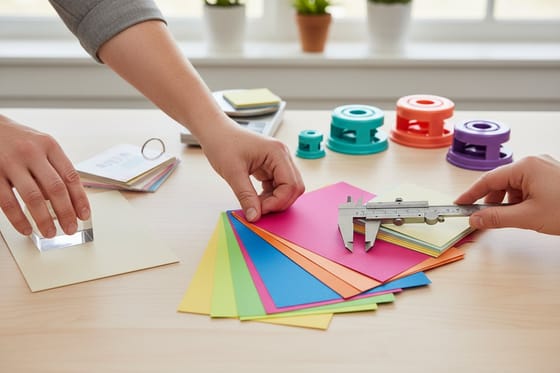
| 80lb cover | Light cardstock | The everyday scrapbook page. Takes adhesive and photo corners without curling. |
| 100lb cover | Heavy cardstock | Holds a loaded page flat and resists denting from embellishments. Adds noticeable bulk over 30 pages. |
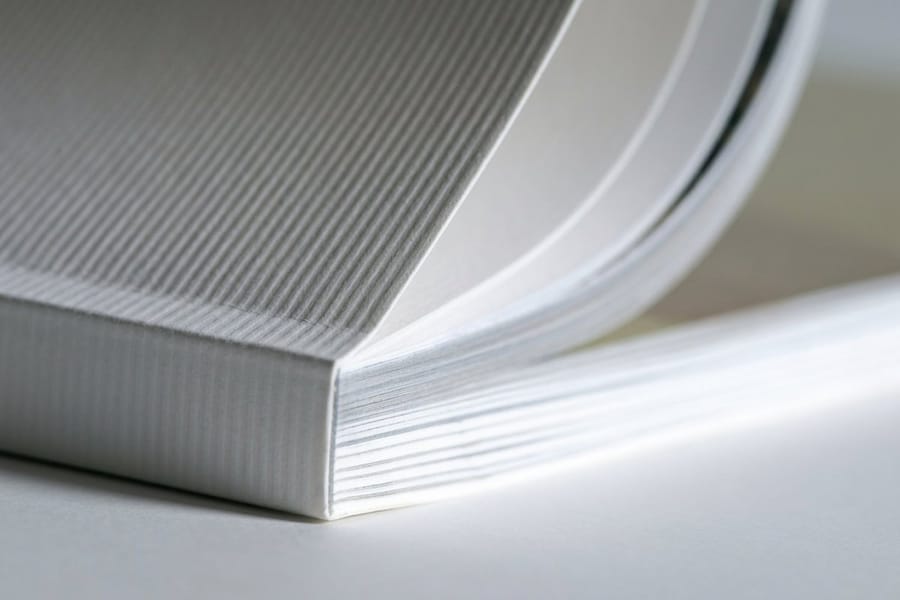
| 14pt to 16pt | Board weight | Covers and dividers. Stiff enough that the book stands on a shelf without sagging. |
Two traps. Dark saturated cardstock can transfer dye into anything damp or warm pressed against it, so put a white mat between a deep red page and a photo. And a gloss coating shows every fingerprint on a book that is meant to be handled; matte or uncoated is more forgiving, at the cost of a little contrast in the photos. Our cardstock weights guide maps the pound numbers to real thickness, and the glossy photo finish explainer covers the coating trade-off in detail.
The Binding Decides Your Layout, So Choose It First
People design the whole book, then pick a binding, then discover the spine has eaten the left edge of every photo. Decide the binding first and the margins follow from it.
| Binding | How it holds the pages | Opens flat | Page count rule |
|---|---|---|---|
| Post-bound album | Screw posts through punched pages, added one at a time. | Yes | Any, and you can add pages later. |
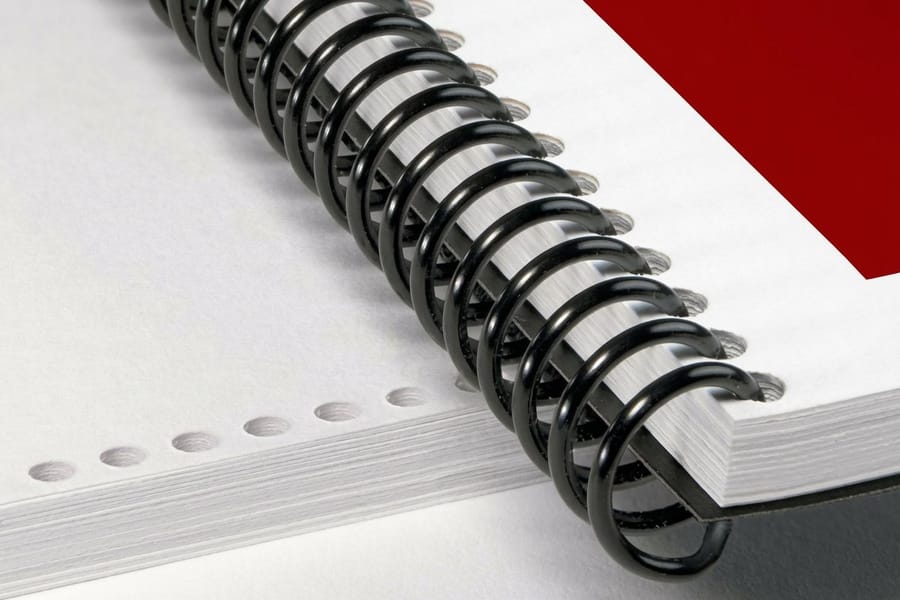
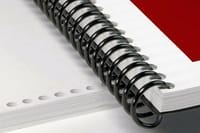
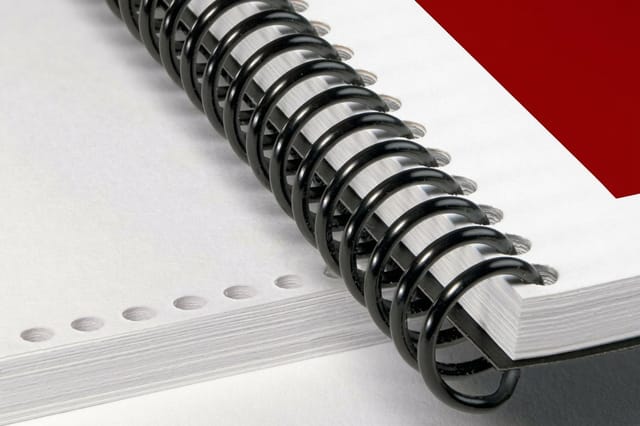
| Spiral coil | A plastic coil threaded through punched holes along the spine. | Yes, and folds back on itself. | Any count. |
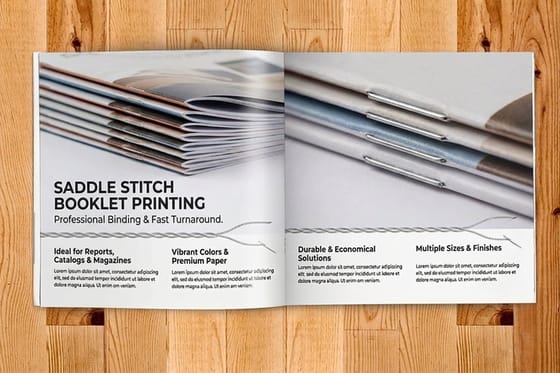
| Saddle stitch | Folded sheets stapled through the fold. | Yes | Multiples of four only. |
| Perfect bound | Pages glued into a square spine with a wrapped cover. | No, it curls at the gutter. | Any count, but needs bulk for a real spine. |
Read the third column before the others. A spiral coil book lies completely flat, which is the one property that lets a photo run across the middle of a spread without a face disappearing into the fold. That is why coil is the closest printed equivalent to a traditional scrapbook, and it starts at $423.28. Saddle stitch booklets also open flat and start at $240.55, but they only work up to a modest thickness, and every page count has to be a multiple of four.
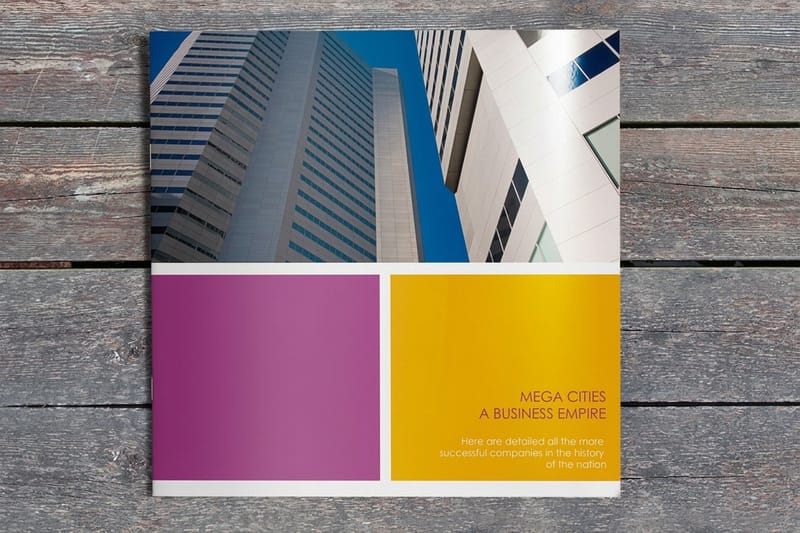
A perfect bound book from $375.05 gives you the printed spine you can read on a shelf, which matters for a book you intend to keep among other books. The cost is that it does not open flat, so widen the inner margin to about 0.75 inch and never put a face or a caption in that band. The same binding carries product books, and our guide on how to print a wholesale catalog buyers can order from covers that use. For the full comparison including wire-o, the binding types guide goes deeper, and the booklets and catalogs category shows live pricing at each page count.
Building the Pages: Photos, Mounting and Journaling
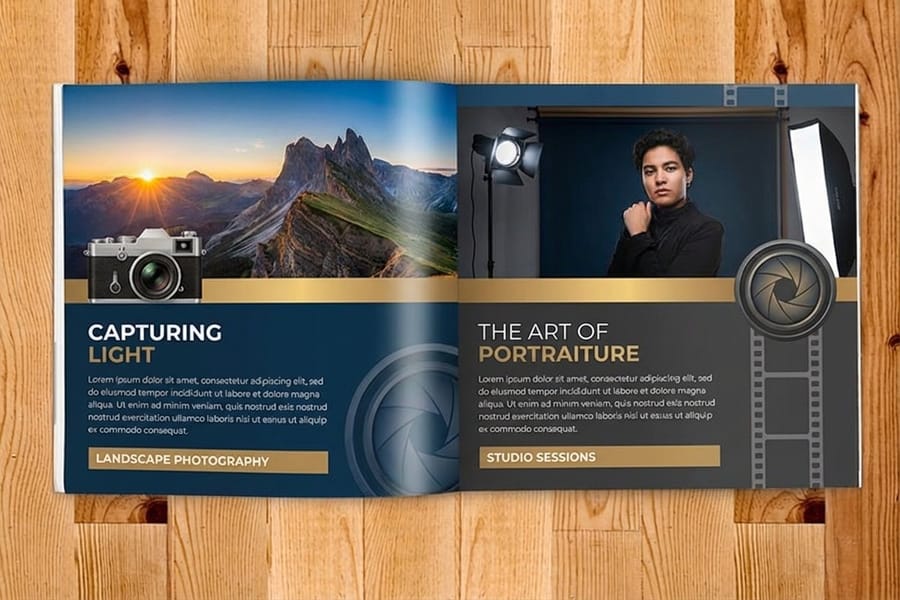
Resolution first, because it is the one mistake you cannot fix after printing. A photo needs 300 pixels per inch at the size it will actually appear on the page. Placed 4 by 6 inches, that is 1200 by 1800 pixels. Filling a full 8.5 by 11 page needs 2550 by 3300. A screenshot pulled from a messaging app is often 800 pixels wide, which is fine at postcard size and visibly soft anywhere larger. Check the pixel dimensions, not the file size in megabytes. If you need to work out where a file stands, changing dpi in Photoshop walks through the resampling settings that quietly throw pixels away.
For mounting, the choice is reversible or permanent. Photo corners hold a print by its edges and let you lift it out years later, which is what you want for anything original or irreplaceable. Double-sided tape runners and photo-safe adhesive squares are permanent and much faster, and they are the right call for reprints you can make again. Skip household glue sticks and rubber cement; they are acidic, they go brittle, and the photo eventually lifts at one corner and stays lifted.
Journaling is what turns a photo album into a scrapbook, and it is the part people skip. Names, place, date, and one sentence about what was actually happening. Write it in pencil first if you are working by hand. Never mark the back of a photograph with a ballpoint pen, because the pressure embosses through to the image side; a soft pencil or a photo-safe marker is the safe tool.
Embellishments should support the photos rather than compete with them. A handful of die-cut stickers from $93.37, a strip of patterned paper, and consistent captions do more than a page crowded with layers. Keep everything thin: anything raised more than a couple of millimeters will press a mark into the facing page once the book is closed and shelved.
When to Print the Book Instead of Gluing It
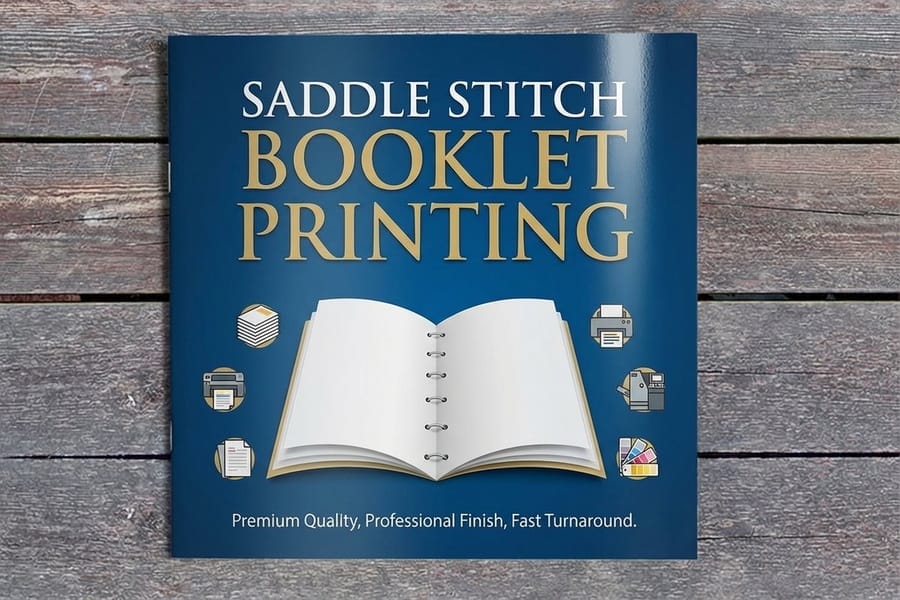
A handmade scrapbook exists once. Drop it, spill on it, or move house twice and it is gone, and there is no second copy for the other side of the family. That is the honest argument for laying the pages out digitally and printing the result.
The workflow is short. Scan the flat memorabilia at 600 dpi and photograph the objects that will not lie on a scanner. Build the spreads in whatever layout tool you already use, at final size with 0.125 inch bleed on every edge and text kept 0.25 inch inside the trim. Export one PDF with the pages in reading order, single pages rather than reader spreads, and the page count matching the binding rule. Then order it: photography booklets start at $240.55 and are built for image-heavy interiors, and the wider book printing range covers longer projects.
The limit is real and worth stating plainly. A printed book cannot hold a pressed flower, a fabric swatch, a lock of hair, or a folded map. Those are the things a physical album does that no press will ever match. The compromise most people land on is to build and print the book, then keep the three or four genuine objects in a labeled envelope tucked inside the back cover, where they are protected instead of glued down and creasing the page above.
One more practical reason to print: a bound book with a spine gets shelved and looked at, while loose pages in a box get moved from cupboard to cupboard unopened. If you want to feel the stocks before committing, order free paper samples first and mount a test photo on each one.
Wally explains the scrapbook spread
One grid, repeated, and a spine that opens flat
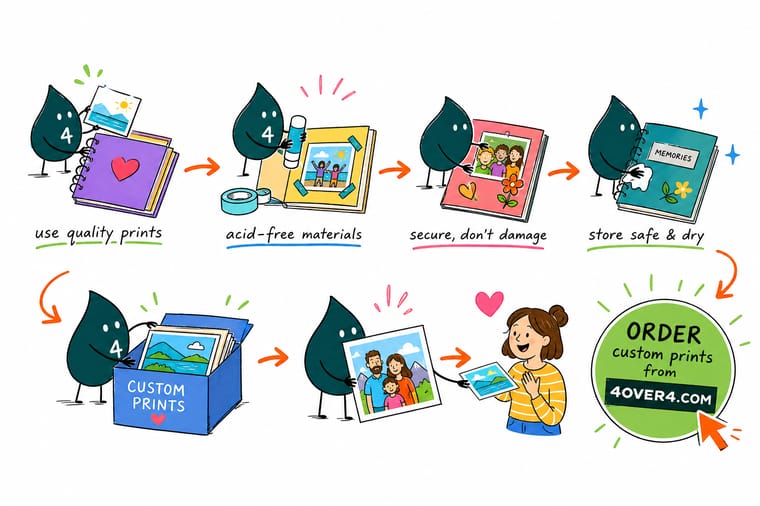
Wally sorts the photos into piles first, one pile per spread, then draws a single grid and reuses it on every page. Half inch clear on the outside edges, a wider band at the spine, one big photo and a couple of small ones. He mounts on paper that says acid-free and lignin-free, not just acid-free. The ticket stub gets scanned at 600 dpi and the original goes back in the box, because glued paper stains the page and lumps crease the page above. Then he prints it coil bound, so the book lies flat and a photo can run right across the middle.
Print a coil bound scrapbook →
Specs and pricing
Binding options, sizes, and starting prices
Spiral coil and perfect bound books print at 5.5 by 8.5, 6 by 6, 6 by 9 or 8.5 by 11 inches with 40 inside pages and up, in runs from 10, on 100# gloss or silk text or 70# uncoated inside a 14pt or 80# gloss cover. Saddle stitched booklets run 8 pages and up at 5.5 by 8.5, 8.5 by 11 or 11 by 11 inches, from 25 copies. Compare the three with live page count and paper choices and starting prices straight from the 4OVER4.COM configurator.
Print it
Turn the layouts into a book you can hand around
Pick the spiral coil book when spreads must lie flat, the perfect bound book when the spine has to read on a shelf, and photography booklets at 11 by 11 inches when the album is square photos and under 40 pages.
Explore more
Where to go next
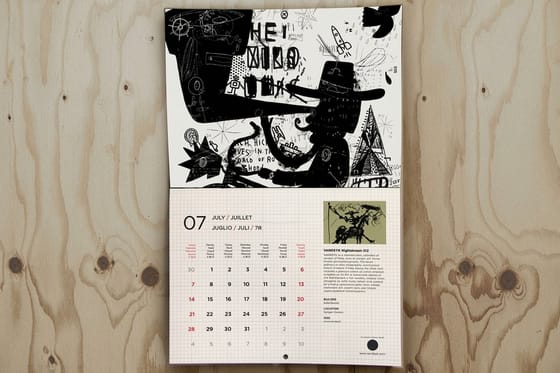
Settle the binding type first, then the page count in multiples of four, then the cardstock weight, and look at a photo calendar if the year of photos suits a wall better than a shelf.
By the numbers
The book printing side of the shop
Common Questions
Your scrapbook questions, answered
How do I make a scrapbook step by step?
Choose one page size and stick to it. Sort the photos into the order the story happens, in piles or in folders, before you glue anything. Draw a simple grid for a spread, with a half inch clear margin on the outside edges and a wider band at the spine, and reuse that grid across the book. Mount the photos on acid-free, lignin-free paper. Write the journaling last, because captions are easier once you can see the finished layout. Then bind, or send the finished layout to print as a booklet so you can keep a copy.
What paper is safe for scrapbook photos?
Look for three words together: acid-free, lignin-free and pH neutral. Buffered paper goes further and carries an alkaline reserve, usually calcium carbonate, that absorbs acid migrating in from the photos and memorabilia themselves. For anything that touches a photograph directly, the standard to ask about is the Photographic Activity Test, ISO 18916, which is the test that checks a material will not stain or fade an image it is stored against. Heavy cardstock in the 80lb to 100lb cover range holds mounted photos without bowing. Our guide to cardstock weights explains how the pound numbers map to actual thickness.
What size should a scrapbook be?
Craft-store albums are built around 12 by 12 inches, which is generous but bulky and awkward to shelve. For a book you intend to print, 8.5 by 11 portrait and 5.5 by 8.5 are the two sizes that come off a press without wasting sheet, so they cost less per page than an unusual size. An 8 by 8 square sits nicely in the hand and is the easiest format to design because every spread is symmetrical. Decide once, at the start, because changing size halfway means rebuilding every page you already finished.
Should I make a handmade scrapbook or print a photo book?
Handmade wins when the objects matter. Pressed flowers, fabric swatches, a folded map and thick embellishments only exist in a physical album, and the texture is the point. Printed wins on everything else: the layout stays put, the pages do not lift at the corners, it survives being passed around a family gathering, and you can order a second copy for a sibling. A practical middle path is to build the layouts digitally, print the book, and keep the three or four real objects in an envelope tucked into the back.
How do I include ticket stubs, cards and other memorabilia?
Scan them at 600 dpi and mount the scan, not the original. Newsprint clippings and cheap ticket stock are acidic enough to stain the page they are glued to and the photo on the facing page, and once they are down with permanent adhesive they cannot come back off. Scanning also fixes the practical problem: a book that has three-dimensional objects glued into it will not close flat, and the pages above them crease within a year. If an original absolutely has to go in, use photo corners so it can be lifted out, and put a buffered sheet behind it.
How many pages does a scrapbook need?
A handmade album has no rule. A printed one does, and it depends on the binding. Saddle stitch is folded and stapled through the spine, so the page count is always a multiple of four, and a book that lands on 26 pages has to become 24 or 28. Perfect bound and spiral coil accept any count, though perfect binding needs enough bulk for a square spine to form. Most family scrapbooks settle between 20 and 40 printed pages, which is roughly 10 to 20 spreads and enough for one trip or one year.
Get Started
Order 25 photo booklets from $240.55
Pick your page size, choose a coil binding that opens flat or a perfect bound spine you can shelve, and we print a book that survives being passed around the table.
Legal Disclaimer
Gold Standard guarantees apply to all standard orders placed through 4over4.com. Price match requires verifiable proof of a competitor's published price for an equivalent product with matching specifications and turnaround time. Satisfaction guarantee covers manufacturing defects and print quality issues. Contact support with order number and documentation.
