
12 Creative Uses for Business Cards Beyond Networking


Emma is our prepress and print production voice, built from the knowledge of our production team, with over 20 years in printing.
A business card is a 3.5 by 2 inch printed rectangle, and eight of the twelve uses below print on that exact die with nothing changed but the words on the back. The other four move to a neighbouring format: a longer cut for bookmarks, a punched hole for swing tags, a die for shaped backing cards, and 30mil plastic for membership cards that have to last.
Twelve card uses, and what each one needs
| Use | Size | Stock and finish | Why that stock | Product at 4OVER4 |
|---|---|---|---|---|
| Loyalty punch card | 3.5 x 2 in | 16pt uncoated or matte | Stamps and pens must dry on it | Standard business cards, $17.57 |
| Appointment reminder | 3.5 x 2 in | 14pt, uncoated back | Staff write the date at the counter | Appointment cards, $17.57 |
| Swing tag | 2 x 3.5 in, hole punched | 16pt, gloss or matte | Carries a string and takes handling | Standard hang tags, $25.27 |
| Jewelry backing card | 2 x 2 to 3.5 x 2 in | 16pt, uncoated | Earring posts pierce it and hold | Die-cut business cards, $26.37 |
| Bookmark | 2 x 6 in | 16pt, gloss front | Long enough to sit proud of the pages | Standard bookmarks, $16.48 |
| Membership card | 3.375 x 2.125 in | 30mil plastic | Lives in a wallet for years | Plastic business cards, $180.02 |
| Fridge card | 3.5 x 2 in | Magnet backing | Stays visible instead of filed away | Business card magnets, $19.68 |
The five uses not listed here are the referral card, the gift tag, the mini art print, the feedback card and the care card. All five print on the standard cut, uncoated, so they share a row with the loyalty card. You can order standard business cards in any of these finishes straight from the configurator.
Why a business card blank does more than networking
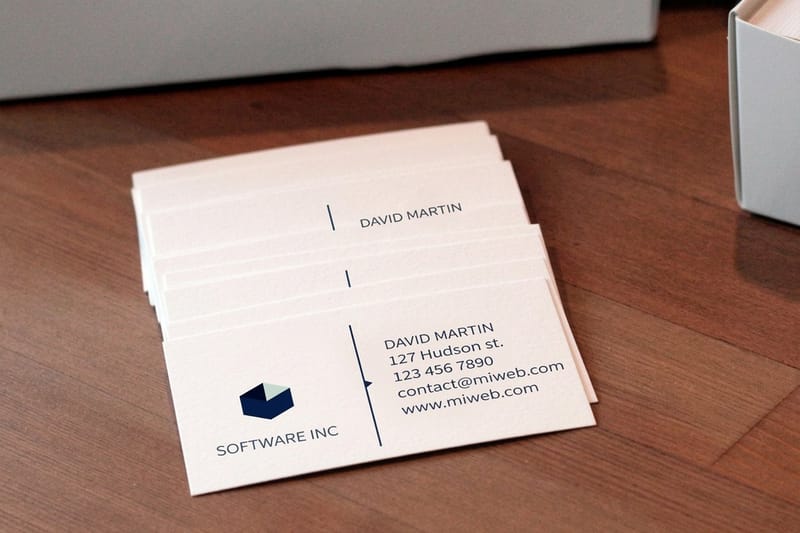
A business card is a 3.5 by 2 inch rectangle of printed card, and almost nothing about that rectangle is specific to networking. Change the coating, the copy or the hole, and the same die becomes a loyalty card, an appointment reminder, a swing tag, a jewelry backing card or a bookmark, at roughly the price of reprinting your contact details.
That matters because the card format is the cheapest printed thing a small business can order. It is also the format every free template library and every online designer supports, so you are never starting from a blank artboard. The size guide for the standard cut lives in our business card size guide, and every use below either keeps that cut or moves to a neighbouring one.
The limit is real and worth naming up front. A business card blank has no hole, so a swing tag is a different product rather than a repurposed card. And a gloss or UV coating, which is what most people order by default, will not take pen or a rubber stamp. Pick the coating for the job before you pick the artwork.
We ordered 500 gloss cards to use as punch cards and the stamp ink sat on the surface and smeared. Reprinted uncoated and it worked the same afternoon.
A mistake we see about once a week on the phones
The coating decides half the list
Gloss and UV coatings seal the surface. That is exactly what you want on a card handed across a bar or carried in a pocket, and exactly what you do not want on anything a person writes on. Ballpoint skates, gel pen beads up, and rubber stamp ink stays wet long enough to smear on the next card in the stack.
Uncoated and matte stocks absorb ink. They look quieter, they scuff more easily, and they are the only sensible choice for punch cards, appointment cards and referral cards with a blank name field. A common trick is a gloss front and an uncoated back, which gives you the photography on one side and a writable panel on the other. The stock and coating breakdown covers what each option costs.
When to change the cut instead
Four of the twelve uses need a different shape. Bookmarks need length, hang tags need a punched hole, plastic membership cards need a thicker material, and a shaped backing card needs a die. Trying to force those out of a rectangular paper business card produces something that almost works, which is worse than either option.
Everything else is the standard cut with different words on it. If you want the shape itself to do the talking, our guide to card shapes shows what a die can and cannot cut cleanly.
Loyalty, appointment and referral cards
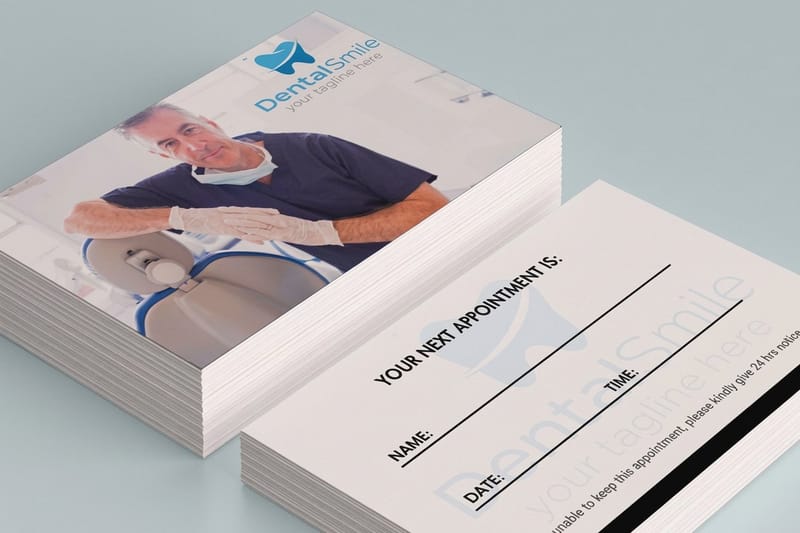
These three are the highest-return uses because they give a customer a reason to keep the card instead of binning it. All three print on the standard cut, and all three need a surface that takes ink.
Order them together. Standard business cards and appointment cards both start at $17.57, so a shop can run contact cards, punch cards and appointment cards as three short runs for less than most single ad placements.
Uses one to three
1. The loyalty punch card. Ten small marks in a row, a line for the reward, and an uncoated face so your stamp actually dries. Keep the marks at least 0.25 inches across, because a stamp landing on a 4mm circle misses more often than it hits. If you want layout ideas before you design one, we collected a set of loyalty card designs that bring customers back.
2. The appointment reminder. A ruled panel for date and time, your address, and a cancellation window. Dentists, salons and clinics have used this format for decades because it survives a handbag and it turns up on a fridge. Ready-made layouts are in our appointment card template guide.
3. The referral card. Same card, one blank line labelled "referred by" and a stated reward on both sides. Give ten to a customer who already likes you rather than one to everyone. The blank line is the whole mechanism, so it has to be on an uncoated back or nobody fills it in.
What to check before you order
Print one proof and write on it. That single step catches the coating mistake that ruins a punch card run, and it takes a minute. Then count how many stamps a real customer can plausibly earn before the card falls apart, because a 14pt card living in a wallet for six months goes soft at the corners. For anything meant to last a year, step up to 16pt.
Swing tags, backing cards and gift tags
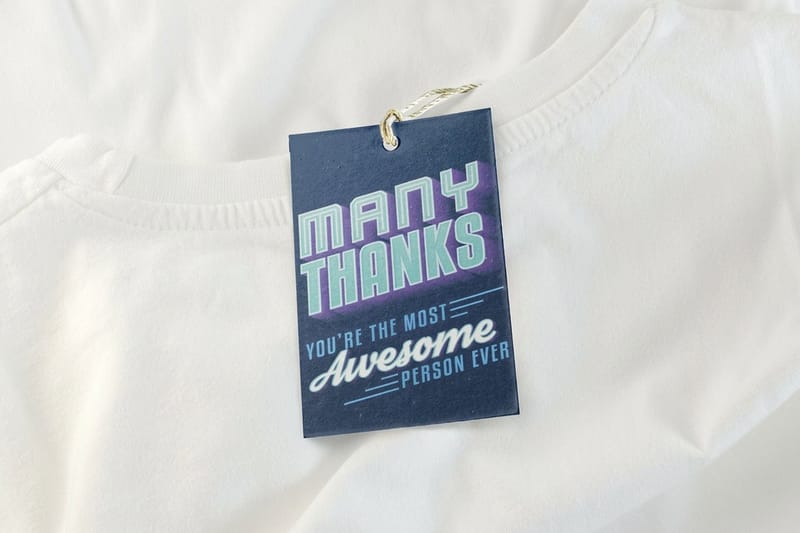
Once the card attaches to a product rather than a person, it starts doing sales work. A tag on the item is the last thing a buyer reads before they decide, and it is the only piece of your branding that goes home in the bag.
Two of these three need a hole, and the hole is why they are a separate product. Standard hang tags start at $25.27 with the hole punched to spec. Punching a business card yourself works once and tears out on the tenth tag.
Uses four to six
4. The swing tag. Price, size, fabric or material, and your mark. Set the hole at least 0.25 inches inside the trim edge, further on a thin stock, or the string pulls through the first time the garment is handled. Round the corners while you are at it, because square corners on a hanging tag turn into dog ears within a day on the rail.
5. The product backing card. Earrings, pins, hair clips, keyrings and patches all sell better mounted on a card than loose in a bag. A die-cut card at $26.37 can carry a shaped top, two pierce points for posts, and a slot for a clip. Use uncoated 16pt so the post grips instead of sliding.
6. The gift tag or place card. A folded or flat card with a name on it does the same job at a wedding, a market stall or a hamper. The cheapest version is a standard card run with names left blank and written in on the day, which means uncoated again.
The mistake that costs a whole run
Tags get read at arm’s length while somebody holds a garment in the other hand. Type that looks fine at 7pt on a monitor is unreadable in a shop. Set the price and the size at 10pt or larger, and keep the small print for the back.
Bookmarks, mini art and feedback cards
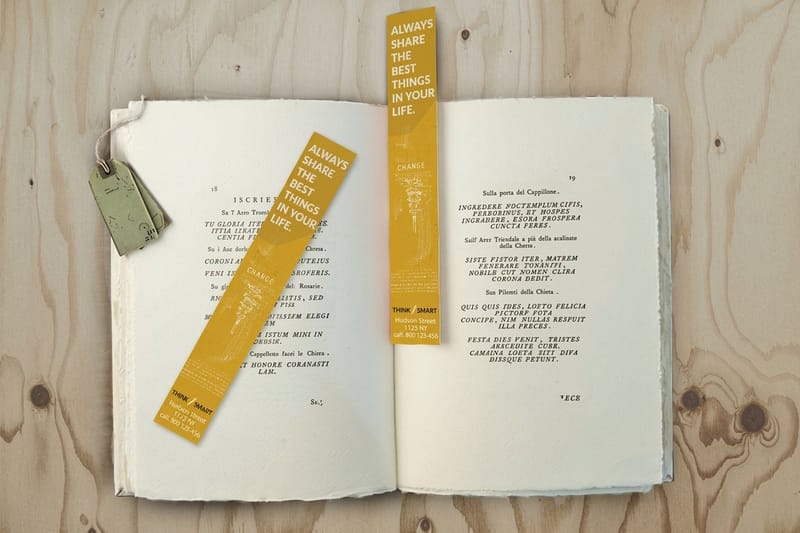
This group trades on the fact that people keep printed things that are useful or pretty. A card that ends up on a shelf or in a book carries your name for months rather than seconds.
Bookmarks change the cut rather than the stock. Standard bookmarks start at $16.48, and the common sizes are 2 x 6 and 2 x 7 inches, covered in our bookmark size guide.
Uses seven to nine
7. The bookmark. Bookshops, libraries, publishers and anyone selling a book obviously, but also cafes, therapists and tutors. Print 16pt or heavier, because a 14pt bookmark curls inside a spine and a curled bookmark gets thrown out. Some brands print them on the business card die instead, which is a real format with its own following, described in our piece on bookmark business cards.
8. The mini art print or collectible. Artists, tattooists and illustrators run a series of cards, number them on the back, and include one in every order. The card is small enough to be free to ship, and a numbered series gives repeat buyers a reason to collect. Uncoated stock suits illustration; gloss suits photography.
9. The feedback or review card. One question, a QR code, and nothing else. Point the code at the review page itself, not your homepage, because every extra tap loses people. Include it in the box rather than handing it over, so the customer reads it after the product has arrived and worked.
Why a QR code needs the quiet zone
A QR code printed smaller than about 0.8 inches square, or crowded right up to a border, fails to scan on older phone cameras. Leave a clear margin of at least four modules around it and test the printed proof with a phone, not the PDF on screen. More code layout ideas sit in our QR code card guide.
Membership cards and care cards
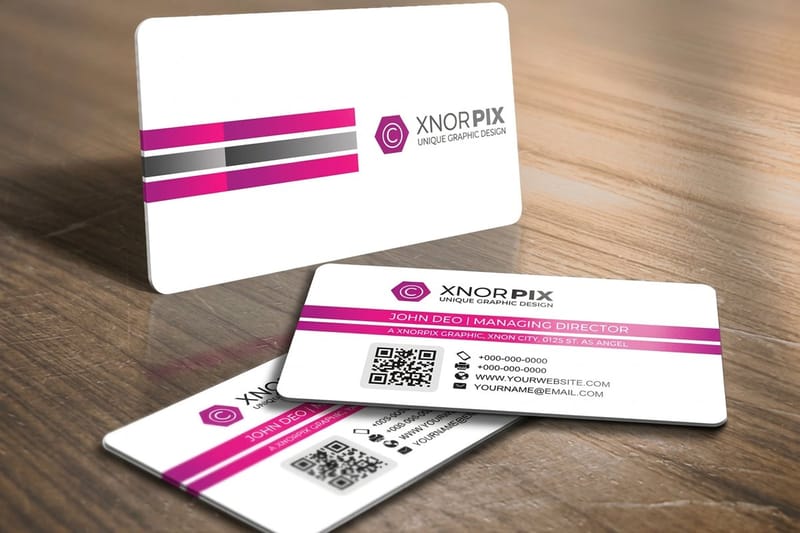
The last three uses ask the card to survive. A membership card is handled hundreds of times, a care card gets read next to a washing machine, and a fridge card sits in a kitchen for years.
Paper does not do that job. Plastic business cards start at $180.02 and 30mil white plastic cards at $226.11, which is a real step up in cost and the reason to be honest about whether the card needs to last.
Uses ten to twelve
10. The membership card. Gyms, clubs, salons and loyalty tiers. 30mil plastic is 0.030 inches, the same thickness as a bank card, so it sits in a wallet slot properly and does not soften. The material options and what each one costs are in our 30mil plastic card materials guide.
11. The care and washing card. Candles, ceramics, knitwear, leather and skincare all benefit from a printed card that says how to look after the thing. It reduces the emails you get, it reduces returns caused by misuse, and it makes a $40 product feel like a considered one. Print it on the standard cut, uncoated, and keep it to five lines.
12. The fridge card. A business card magnet at $19.68 is the same artwork with a magnetic back. Plumbers, vets, takeaways and locksmiths use them because the whole point is that the number is visible at the exact moment somebody needs it, rather than filed in a drawer.
When plastic is not worth it
If the card is a promotion that ends in three months, print paper and reprint. Plastic earns its price when the same card is carried for a year or longer, or when it has to look like a credit card to feel valuable. A 16pt matte card with a laminate gets surprisingly close for a fraction of the cost.
How to design and order each type
Every use on this list starts from the same file. Set the document to 3.5 by 2 inches, add 0.125 inches of bleed on all four sides, keep type 0.125 inches inside the trim, and work at 300 DPI in CMYK. Then save one master with a front you never change and a back you swap per use.
Quantity and price
Business card pricing and specs
Live configurator numbers on the standard cut, where the per unit cost drops as the run grows.
| Quantity | Price Per Unit | Total |
|---|---|---|
| 100 | 17.6¢ | $17.57 |
| 200 | 11.5¢ | $23.07 |
| 300 | 9.15¢ | $27.46 |
| 400 | 7.96¢ | $31.86 |
| 500 | 7.25¢ | $36.26 |
| 600 | 6.77¢ | $40.64 |
What that pricing means in practice: the gap between 250 and 500 cards is usually smaller than people expect, which is why running a second use as its own short run is cheaper than trying to make one card do two jobs. The full breakdown of what moves the price sits in our guide to business card prices and what drives them. You can also earn coins on every order and put them against the next run.
Stock, coating and the jobs they rule out
Stock weight decides how long the card survives; coating decides what you can do to it. A 14pt card is the standard and it is fine for anything handed over and kept in a pocket for a week. 16pt is noticeably more rigid, and it is what you want for a loyalty card carried for six months, a bookmark that sits inside a spine, or a backing card that has to hold an earring flat. Uncoated takes pen and stamp; gloss and UV do not; matte sits between the two and is the safest default when one card has to do both jobs.
Print it
Standard business cards
The 3.5 x 2 cut that covers eight of the twelve uses, in every coating.
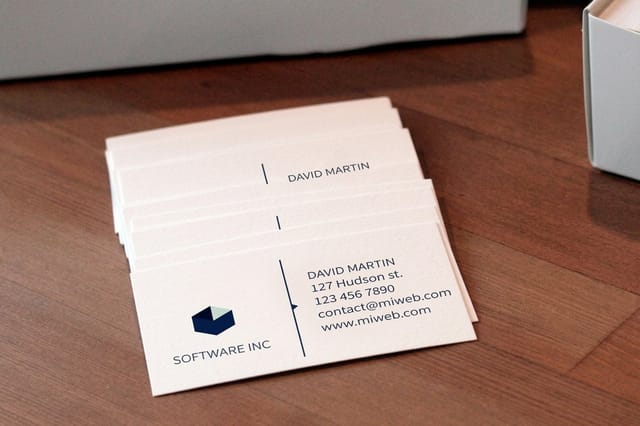
The back of the card is where most of these uses actually happen, and it is the half most people leave empty. A punch grid, a ruled date line, five lines of care instructions or a single QR code all live back there. We collected the layouts worth copying in back of business card design ideas, and if you want the shape itself to carry the idea, look at custom shaped card ideas before you commit to a rectangle.
Which uses suit which business
The right two or three uses depend on what you sell and how often a customer comes back.
- Salons and clinics. Appointment cards and loyalty punch cards on the same uncoated stock, ordered as two short runs, so the front desk has both without a second supplier.
- Makers and craft sellers. Backing cards for jewelry, swing tags for pricing and a care card in every parcel. Three uses, one die, one order.
- Gyms and clubs. Plastic membership cards for the wallet, paper referral cards for members to hand on. Different lifespans, different materials.
- Trades and home services. Business card magnets first, standard cards second. The magnet is the one that is still in the house when the boiler fails.
- Bookshops, artists and studios. Bookmarks and numbered mini prints slipped into every order, so the cheapest item in the box is the one that gets kept.
One blank that covers every use on this list
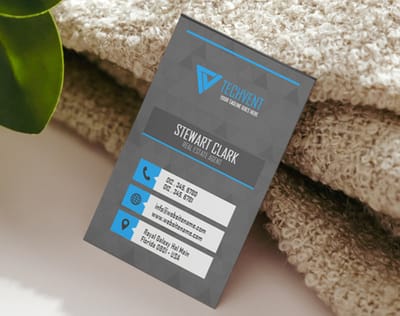
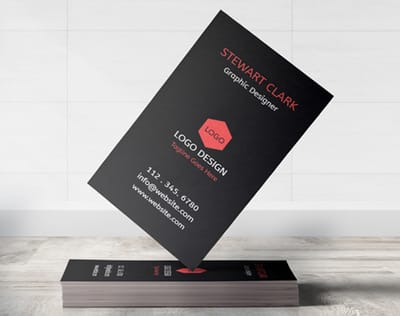
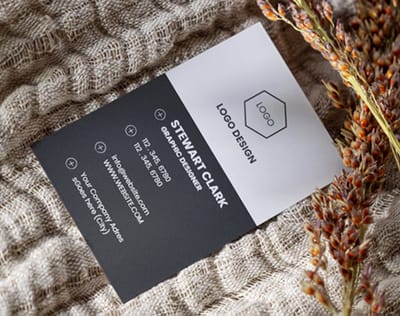
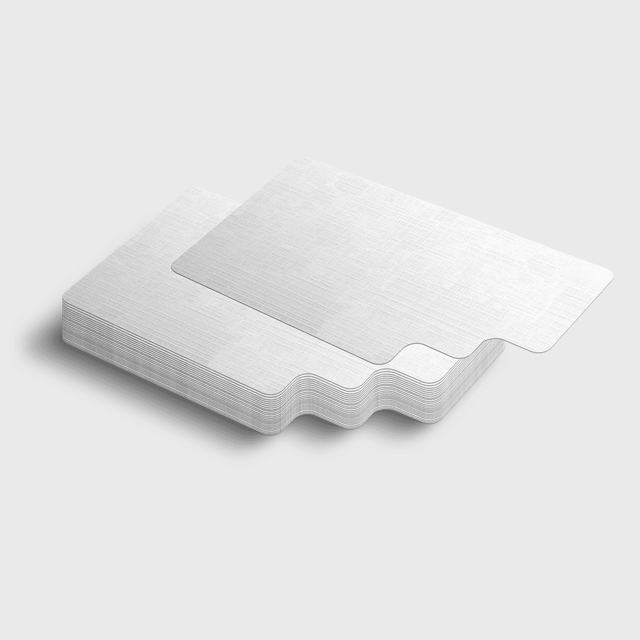
You do not need to build the file from scratch. The standard card blank is 3.5 x 2 in with the bleed and trim already marked, and that one file covers every use on this list, from the punch grid to the care card, printed on standard business cards from $17.57 for 100. Square 2 x 2 in and slim 1.5 x 3.5 in blanks cover the odd one out. Start from a print-ready blank, or design in the browser with the free online designer and swap the back for each use.
Start fast
One blank that covers every use on this list
Business card templates and exact size blanks, so the same file works for every use on this list.
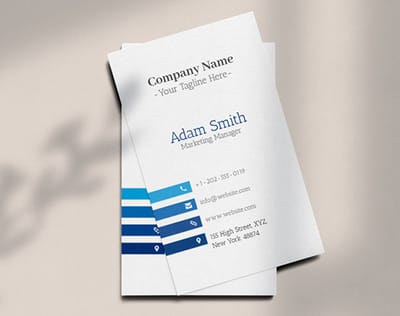





Wally turns one card blank into twelve jobs
Same 3.5 x 2 die, different back, different coating
Set the file at 3.5 x 2 inches with 0.125 inch bleed, keep type an eighth of an inch inside the trim, and work at 300 DPI in CMYK. Order uncoated or matte for anything a person writes on, gloss for anything handled, and 16pt whenever the card has to survive longer than a week. 4OVER4.COM prints the standard cut, hang tags, bookmarks and 30mil plastic from the same artwork.
Order business cards →What to remember about reusing the card format
Design tips that apply to every use
- Pick the coating before the artwork. Anything a person writes on is uncoated or matte. Gloss and UV seal the surface and reject pen and stamp ink, and no design fixes that after the run.
- Keep the die, change the words. The standard 3.5 x 2 cut covers eight of these twelve uses. Reuse the same template and change only the back, and your artwork costs drop to nothing.
- Set the hole 0.25 inches inside the trim. On any punched tag, a hole closer than a quarter inch to the edge tears through the first time the string takes weight.
- Step up to 16pt for anything kept. Loyalty cards, membership cards and bookmarks all live for months. 14pt goes soft at the corners; 16pt is noticeably more rigid in the hand.
- Give the QR code room. Leave a clear margin around the code, keep it about an inch square, and test the printed proof with a phone rather than the file on screen.
Explore more
Every format on this list, ready to print
Standard bookmarks run 50 for $16.48 in 3 business days and 30mil white plastic cards 250 for $226.11 in 15.
Product Standard Business Cards The 3.5 x 2 die that covers eight of these uses. Product Appointment Cards Writable panels for the date and the cancellation window. Product Custom Hang Tags Punched to spec so the string does not tear out. Product Standard Bookmarks A longer cut, heavy enough not to curl in a spine. Product Plastic Business Cards Bank card thickness for membership cards that last.  Product Business Card Magnets The same artwork, stuck on the fridge instead of filed.
 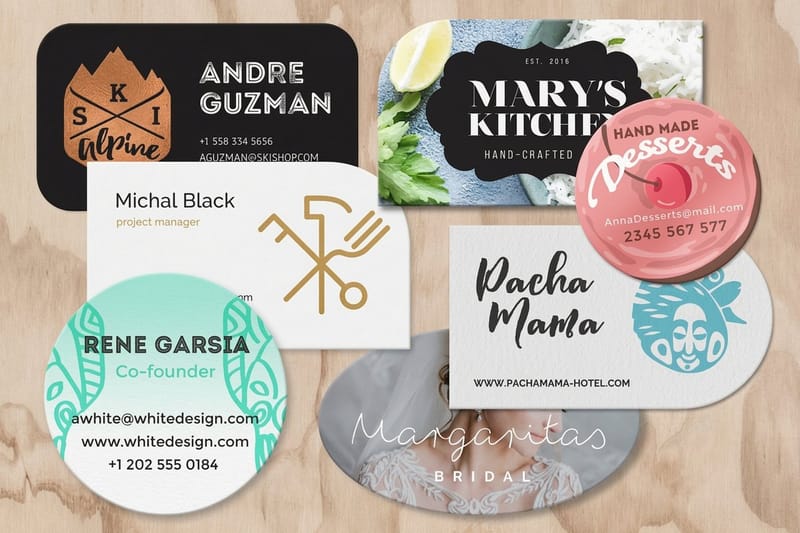 Product Die-Cut Business Cards Shaped backing cards for earrings, pins and clips.
 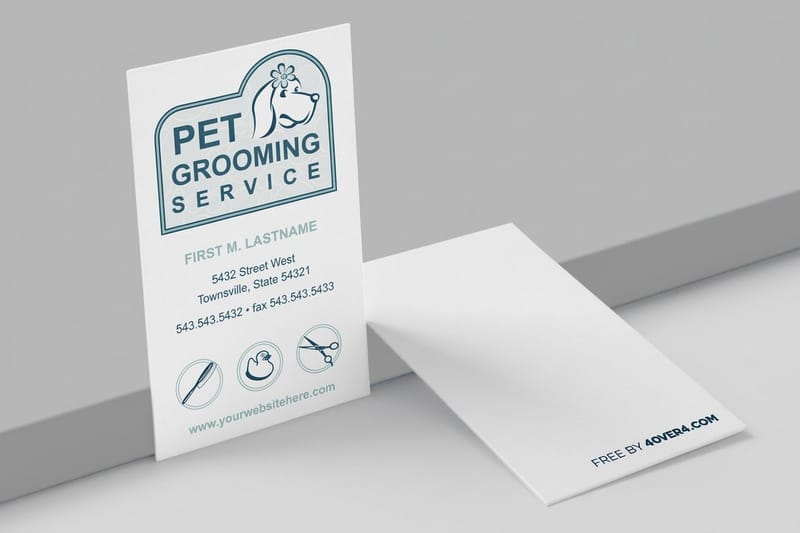 Category Business Card Printing Every stock, coating and shape in one place.
 Ready to put your cards to work?
Pick the coating for the job, drop in your design or a free template, and 4OVER4.COM prints it sharp on 14pt or 16pt stock, as fast as your deadline needs.
Common questions about reusing business cards
Can I use ordinary business cards as loyalty punch cards?
Yes, as long as you order them uncoated or matte. The card itself is identical: same 3.5 x 2 inch cut, same stock weight, same price. What ruins a punch card run is a gloss or UV coating, because the surface is sealed and rubber stamp ink sits on top of it wet and smears onto the next card. Print a single proof, stamp it, and wait a minute before you commit to 500. Keep the punch marks at least a quarter inch across so a hand-held stamp can actually land on one.
What is the difference between a swing tag and a business card with a hole in it?
The hole placement and the fact that it is punched at the factory rather than by hand. A hang tag has the hole set at least 0.25 inches inside the trim edge, in a position the die accounts for, so the card does not tear when the string takes the weight of a garment on a rail. Punching a stack of business cards with a desk punch works for a handful and fails on the rest, because the hole ends up too close to the edge and the paper fibres give way. Standard hang tags at 4OVER4.COM start at $25.27 with the hole already in place.
Are plastic membership cards worth the extra cost over paper?
Only when the card is carried for a year or longer, or when it needs to feel like a bank card to justify a membership fee. Plastic business cards start at $180.02 against $17.57 for the standard paper cut, which is a real gap. For a three-month promotion or a trial membership, print 16pt paper and reprint when the offer changes. For a gym membership, a club card or a tier that customers show at a counter repeatedly, 30mil plastic at 0.030 inches survives the handling that turns paper soft at the corners within weeks.
What size should a jewelry backing card be?
Most sellers use somewhere between 2 x 2 and 3.5 x 2 inches, and the standard business card cut is the cheapest starting point. Size it so the item sits centred with room for your logo below and the pierce points at least half an inch from any edge, otherwise the card splits when a post goes through. Use 16pt uncoated rather than 14pt gloss: the extra rigidity holds the earring flat in a bag, and the uncoated surface grips the post instead of letting it slide. A die-cut card lets you shape the top so the card itself is part of the branding.
How many uses can I get out of one card design?
Keep one front and change only the back, and a single design covers your contact card, your loyalty card, your referral card, your care card and your gift tag. That is the practical reason so many small businesses run this format: the artwork is done once, and each new use is a text change on the reverse. The two things that force a new design are a different cut, such as a bookmark at 2 x 6 inches, and a different coating, because a card that gets written on and a card that gets handled want opposite surfaces.
