
Pet Wall Graphics Design Tips That Pull Customers Through the Door


Tobias is our voice for cutting, binding and large format, built from the knowledge of our production team, with over 20 years in printing.
Design a pet wall graphic for the phone camera, not for the wall: a mid tone background so a black dog and a white dog both separate, one large simple element, and your shop name low in the frame where a crouching customer still catches it. Before any of that, check the wall itself, because texture, paint sheen and a recent repaint decide whether the graphic holds at all.
Where the graphic goes in a pet space
| Zone | Height off the floor | What works there | What to watch for | Product at 4OVER4 |
|---|---|---|---|---|
| Entry wall, facing the door | 36 in to 90 in off the floor | Brand mark, one line of what you do, service hours | Door swing scuffs and light glare from the glass behind you | Vinyl wall graphics |
| Photo wall for pets and owners | Floor up to about 84 in | Large simple shapes, a mid tone field, handle low in the frame | Wet paws and tails at the bottom edge | Vinyl wall graphics |
| Retail shelving wall | 48 in to 96 in, above the fixtures | Category signposting, price call outs, seasonal offer | Fixture brackets and outlets breaking the artwork | Retail wall graphics |
| Waiting area and family corner | 24 in to 72 in | Playful illustration, breed or animal characters, a counting game | Hand height means constant contact, so laminate it | Kids wall graphics |
| Grooming or exam room | Above 48 in only | Calm color field, aftercare reminders, brand mark | Disinfectant wipe down below waist height eats unlaminated print | Vinyl wall graphics |
Measure the real wall and mark the heights in tape before you size the artwork, because outlets, fixture brackets and door swings move the usable area more than a floor plan suggests. You can order vinyl wall graphics at any size straight from the configurator.
Start with the wall, not the artwork
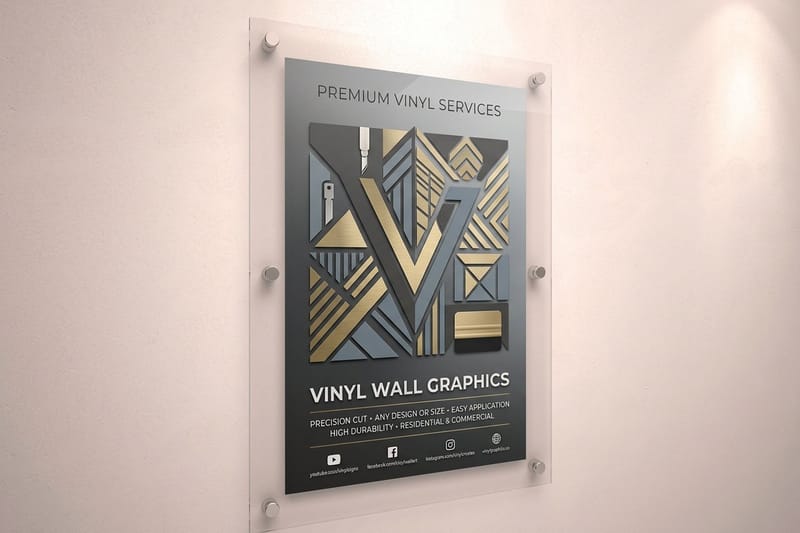
Walk the space with your hand on the wall before anyone opens a design file. Run a palm across the surface, look at the sheen under the lights that are actually on during business hours, and find out when the room was last painted. Those three answers decide more about how the finished graphic looks than any decision made later in Illustrator.
Texture is the first killer. Adhesive vinyl bonds to what it touches, and on a knockdown or orange peel wall it only touches the high points, so the effective contact area collapses and the corners start lifting inside a month. A smooth wall, skim coated or level five drywall, is what a large graphic wants. If the wall is textured and repainting is not on the table, print the same artwork and mount it on a rigid panel instead of fighting the surface.
Sheen is the second. Flat and matte paints are deliberately porous, which is why they hide imperfections, and it is also why the vinyl grips the paint layer harder than the paint grips the drywall. That is the graphic that takes a patch of wall with it on removal. Eggshell, satin and semi gloss release far more cleanly. Freshly painted walls need time too: give a new latex coat roughly a month before anything sticks to it, because solvent is still leaving the film and a bond made on day three will not hold.
Our wall signs and graphics guide covers the install side in more detail, and the full range of stocks and sizes lives on the wall graphics printing category page.
The five minute texture test
Cut a six inch square of the vinyl you intend to order, stick it on the wall you intend to use, press it down properly, and leave it for 48 hours. Then look at the edges. If any corner has lifted or if you can see the wall texture pushing through the film as a mottled pattern, the full size graphic will do the same thing, only bigger and in front of customers. Watch the vinyl wall graphics video overview before you run the test.
Do the removal half of the test as well. Pull the square off slowly at a shallow angle and check what comes with it. A clean release means the wall is ready. Paint on the back of the sample means you have a repaint to budget for at the end of the campaign, which is worth knowing before the graphic goes up rather than after.
Height, and what a dog does to it
A pet space has two viewing heights, not one. Owners read at roughly 60 inches. Dogs, cats and the kids who came along with them operate a lot lower, and the bottom 30 inches of any wall in a grooming shop or a boarding facility takes wet fur, shaking, leashes and mop contact. Anything precious down there gets scuffed.
The practical split is simple. Keep the message above 48 inches where it stays clean and readable, and treat everything below that as either laminated durable artwork or deliberate empty color. The exception is a photo wall, where the whole point is getting the animal in the frame, so the design has to run to the floor and be laminated accordingly.
Design that photographs, because that is the point
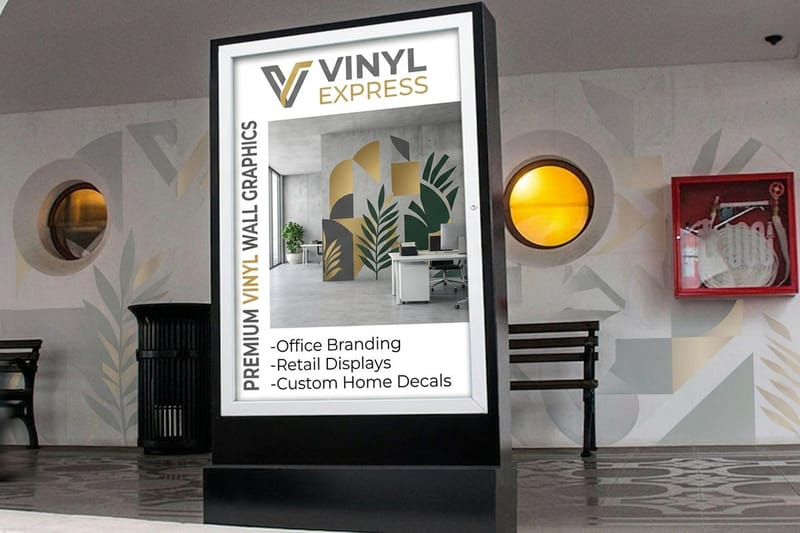
A pet business gets more from a wall graphic that customers photograph than from one they merely read. Every groomed dog leaving your shop is a photo opportunity the owner already wants to take, and the wall behind that photo is free advertising with a caption attached. Design for the camera and the rest follows.
Contrast is the whole game. Pets are mostly very dark or very light, and a camera exposing for a black poodle against a black wall gives you a silhouette with no dog in it. A mid tone background holds both ends: the black dog separates, the white dog separates, and the phone does not have to choose. Save the deep saturated color for a band or a shape rather than the full field.
Then keep the frame simple. One large element, generous empty space around it, and no small type in the middle where a body will sit. Put your handle or your shop name low and to one side, around 12 to 24 inches off the floor, because that is the part of the wall a phone still catches when someone crouches to get the dog in shot. A name across the top of an 8 foot wall is out of frame in almost every photo actually taken.
If you are still settling the brand mark itself, the 6 key principles of logo design is worth reading first, and what brand mascots teach about character design applies directly to pet businesses, where an animal character usually outperforms a wordmark.
Type size and reading distance
The working rule indoors is about one inch of cap height for every ten feet a person reads from, and add a little in a busy room. A groomer whose waiting area is 15 feet deep wants roughly two inch capitals for the headline, not the 6 inch monster that looks right on screen when the artboard is scaled down to fit a laptop.
Check it before you print. Set the headline at final size, print one line on a sheet of paper at 100 percent, tape it to the wall, and stand where the customer stands. It takes five minutes and it catches the two most common mistakes at once, which are type that is too small to read and type so large it stops feeling like a brand and starts feeling like a warning sign.
Color that survives real lighting
Most pet spaces run cool white fluorescent or LED, which pulls warm colors flat and makes light grays go slightly blue. A palette picked on a calibrated monitor at home will not look the same on that wall. Order a small proof, tape it up under the working lights, and judge it there.
Watch glare as well. A gloss laminate under a row of ceiling lights throws a hot band across the artwork exactly where people stand, and a matte laminate does not. Matte costs the same and photographs better, which is why it is the safer default for any wall a customer will point a phone at.
Wall, window, or both
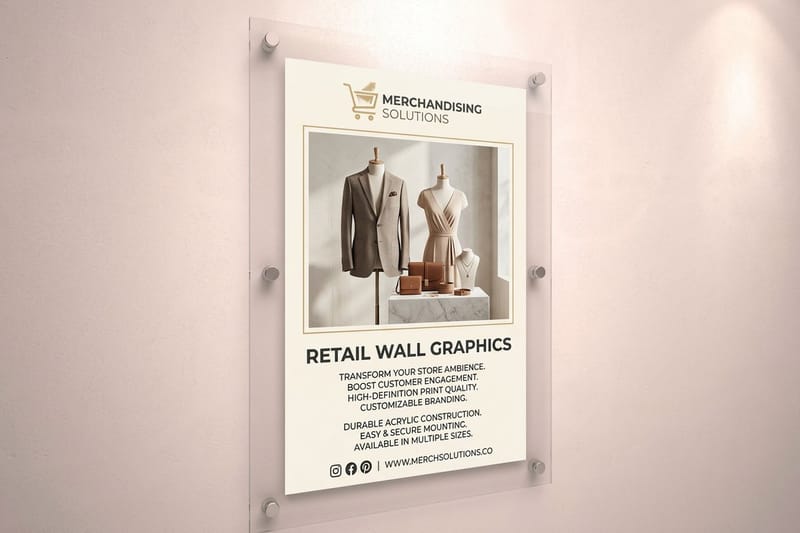
A wall graphic is invisible from the sidewalk. It is worth being blunt about that, because plenty of pet businesses spend their signage budget on an interior feature wall and then wonder why walk in traffic did not move. The wall graphic works on people who are already inside: it makes the space feel considered, it gives them something to photograph, and it sells the service they had not thought to ask about.
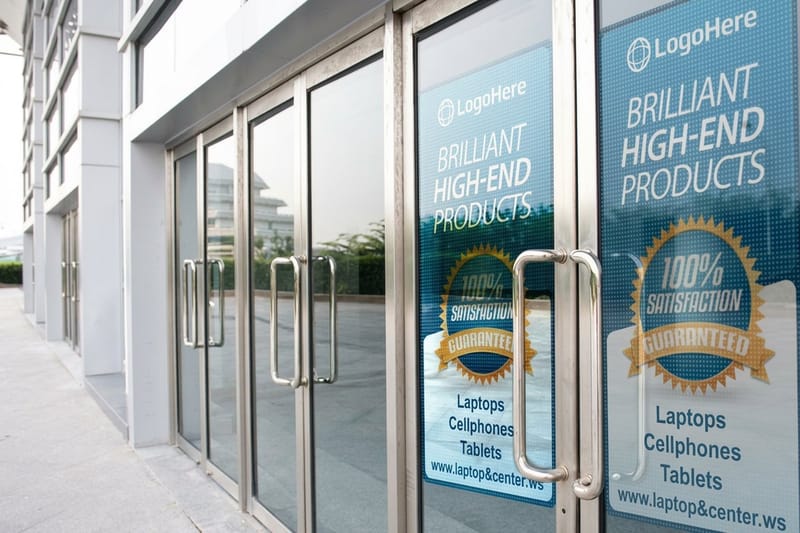
The job of stopping someone outside belongs to window graphics. Glass gets the hours, the services, the phone number, and one image big enough to read from across the street. Once the door opens, the wall takes over. If your budget only stretches to one this quarter and you are on a street with foot traffic, do the window first and the wall next, and the signage guide for wall, door and window lays out how those three surfaces divide the work.
Beyond the storefront, the same artwork travels. A door hanger in the neighborhood carries the same character and colors you just put on the wall, so the person who saw one recognises the other. Once the wall is up, order door hangers with the same artwork for the streets around the shop. Consistency across surfaces is what makes a small shop read as a brand.
Seasonal runs are cheap enough to change
At $25 a wall graphic is not a permanent installation decision, and treating it as one is the mistake. A pet store that swaps a wall three times a year has a fresh reason for regulars to look up, and a fresh photo backdrop for the costume contest, the holiday portraits and the spring intake.
Halloween wall graphics earn their keep in a shop that runs a costume day, and Christmas wall graphics pay for themselves in a single afternoon of holiday pet portraits. Keep the seasonal piece on the photo wall and leave the permanent brand mark somewhere it does not have to come down. Flip through the Halloween wall graphics story, or watch the Christmas wall graphics video overview.
Surfaces, cleaning and the things that ruin a graphic
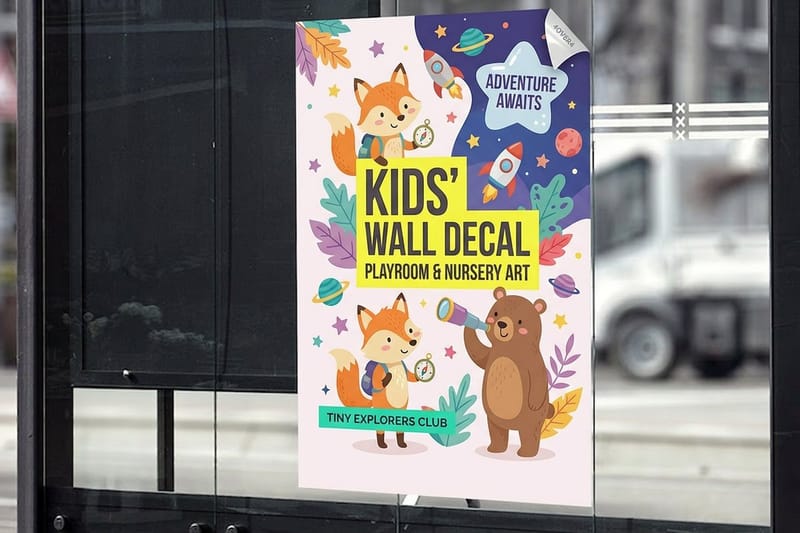
Pet spaces get cleaned harder than most retail. Quaternary disinfectants, bleach dilutions and alcohol wipes all go on the walls in a grooming or veterinary setting, and an unlaminated print in a wipe down zone loses its surface quickly. The ink dulls first, then it burnishes where the cloth passes most often, and within a season the graphic looks older than the paint around it.
The fix is a laminate on anything below shoulder height and anything in a cleaning zone. It adds cost per square foot and it is the reason a graphic still looks new after a year of daily wiping. Above the cleaning line, in a waiting area or a retail aisle, unlaminated is usually fine and the money is better spent on size.
One more thing that catches people out: humidity. A bathing room with a lot of steam and poor extraction is a hard environment for any wall covering, and a graphic on the wet wall directly opposite a tub will not last as long as the same graphic in the front of the shop. Put the artwork on the dry side of the room.
Removal, and the repaint you should plan for
Removable vinyl comes off with gentle heat from a hair dryer and a slow pull at a shallow angle. Cold and fast is what tears the film and leaves adhesive behind. Work from a top corner, keep the peel angle tight to the wall, and give a large graphic more time than you think it needs.
Then accept that the wall underneath is not identical to the wall around it. Paint fades where light hits it and does not fade where a graphic covered it, so a large piece that has been up for two years leaves a visible ghost even after a perfectly clean removal. That is a scuff coat of paint, not a disaster, but it belongs in the plan rather than in the surprise column.
Wall graphic specs and what drives the price
Wall graphics are priced by the size you enter rather than from a fixed quantity ladder, which is why the configurator asks for height and width before it quotes. Prices start at $25, and the two decisions that move the number most are the finished square footage and whether you add a laminate. Everything below comes from the live product options, so you can settle the spec before you commit a design.
Spec it
Vinyl wall graphic options
The stocks, finishes and size behavior on the live configurator, so the artwork is built to what will actually be printed.

You can also earn coins on every order and redeem them against future printing, which helps when a seasonal wall is a three times a year habit rather than a one off.
Choosing artwork by pet business type
The wall does a different job in a grooming shop than it does in a retail aisle, so it changes by business type.
- Dog groomers. A photo wall behind the finish table is the highest value square footage in the shop. Mid tone field, laminated to the floor, handle low in the frame so it survives the crop.
- Veterinary clinics. Keep artwork above 48 inches in exam rooms so the disinfectant wipe down zone stays clear. Calm colors in the waiting area do more for anxious animals than anything loud.
- Boarding and daycare. Signpost the areas by zone with large simple shapes readable at a glance by a stressed owner carrying a crate. Durable laminate, because leashes and carriers hit walls constantly.
- Pet retail. Category signposting above the fixture line, refreshed seasonally. Retail wall graphics are the cheapest way to make a small shop navigate like a bigger one.
- Trainers and mobile services. You may not have a wall of your own, so put the artwork on a rigid panel that travels to classes and events and comes home in the van.
Print it
Retail wall graphics for the aisle
Category signposting above the fixture line, swapped as the season changes.

Files, templates and getting the artwork right
Large format artwork is built the same way as any print file, only the tolerances are friendlier. Work in CMYK, keep a bleed on every side, and set the file at a scale you can actually handle: quarter scale at 300 DPI is a common working method for anything over a few feet, because a full size file at print resolution gets unmanageable fast. Vector logos and vector type stay sharp at any output size, which matters more here than anywhere else. Exact size blanks with the cut and bleed already marked are in the blank template library, and if you would rather start from a layout than a blank page, the design template library has starting points you can edit.
Wally checks the wall before he checks the artwork
Texture, sheen and paint age decide whether the graphic holds
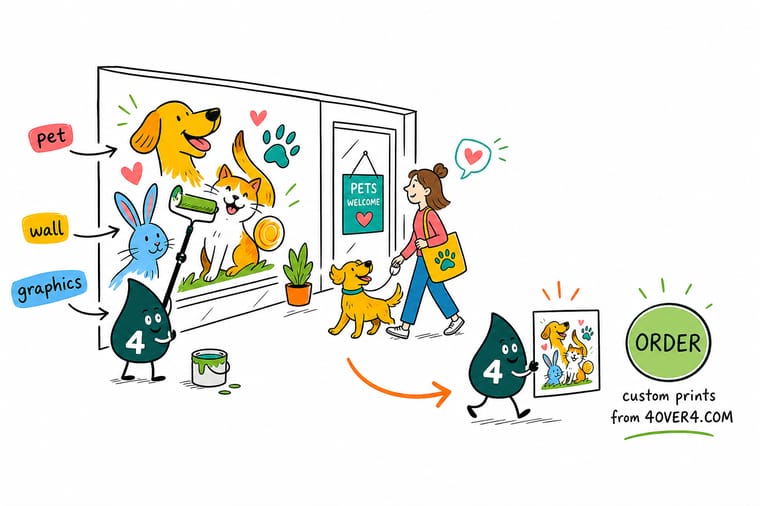
Stick a six inch sample for 48 hours and look at the corners. Smooth wall in eggshell or satin, painted more than a month ago, is what a large graphic wants. Then design for the phone: a mid tone field so dark and light pets both separate, one big simple element, and your shop name 12 to 24 inches off the floor where a crouching customer still catches it. 4OVER4.COM prints wall graphics from $25 with a free proof.
Order wall graphics →What the wall decides before the artwork does
Design tips that hold up in a working pet space
- Test the wall before you design. A six inch sample stuck for 48 hours tells you about texture, sheen and paint condition. That answer changes the artwork, so get it first.
- Mid tone field, always. Dark dogs and light dogs both have to separate from the background in a phone photo. A saturated wall picks a winner and loses the other.
- Put the handle low. Around 12 to 24 inches off the floor, because that is what stays in frame when someone crouches to get the animal in shot.
- Laminate the bottom 48 inches. Wet fur, leashes, mops and disinfectant all live down there. Above that line, unlaminated is fine and the money buys size instead.
- Matte over gloss on a photo wall. Gloss throws a hot band of ceiling light straight across the artwork. Matte costs the same and photographs cleanly.
Explore more
More ways to print and promote
Vinyl wall graphics print in 2 business days, so a proof can go up under the real lights first.
Product Vinyl Wall Graphics The workhorse stock for interior feature walls and photo backdrops. Product Retail Wall Graphics Category signposting and seasonal offers above the fixture line. Product Kids Wall Graphics Playful artwork for the family corner of a waiting area. 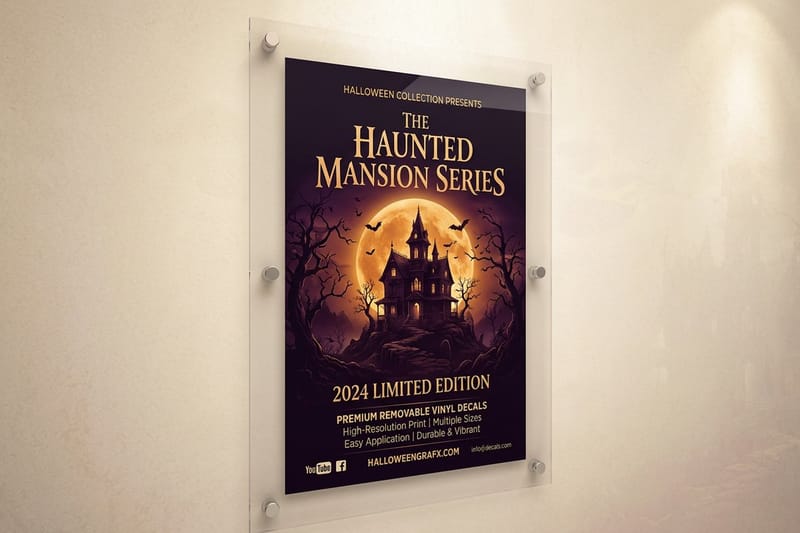 Product Halloween Wall Graphics A photo backdrop built for costume day at the pet store.
 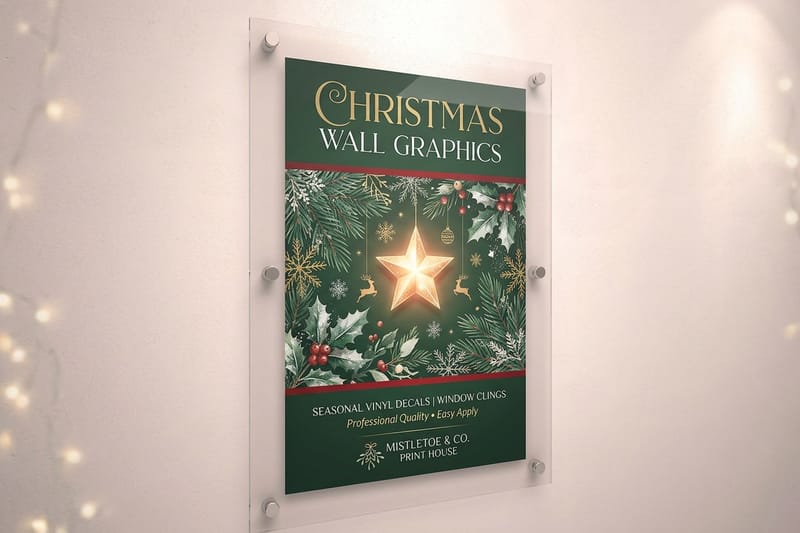 Product Christmas Wall Graphics Holiday pet portraits without hiring a set.
 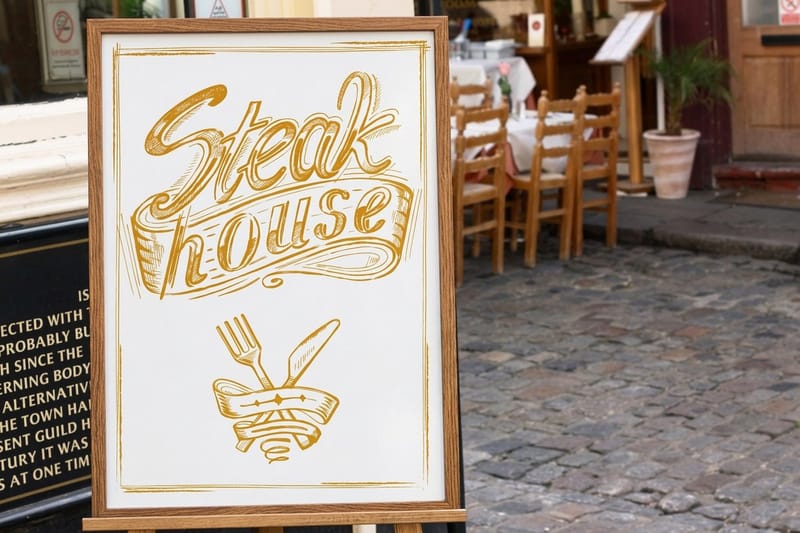 Category Wall Graphics Printing Every size, stock and finish for interior walls in one place.
  Category Pet Services Printing Print built for groomers, vets, boarding and pet retail.
  Category Window Graphics Printing The surface that actually stops people on the sidewalk.
  Guide Wall Signs and Graphics Guide Sizing, mounting and install for interior wall signage.
  Guide Wall, Door and Window Signage Guide How the three surfaces divide the work between them.
  Article 10 Graphic Design Portfolio Examples What strong visual work looks like when it is presented well.
  Guide How to Design a Wall Calendar Another wall piece, with grid and date type rules that transfer.
 Ready to print the wall?
Pick your size, upload your artwork or start from a free template, and 4OVER4.COM prints it sharp on durable stock, as fast as your opening date needs.
Common questions about pet wall graphics
Will a wall graphic stick to a textured wall?
Usually not for long. Adhesive vinyl only bonds where it makes contact, and on knockdown, orange peel or heavy roller texture that is the raised points alone, so the real contact area is a fraction of the graphic and the corners begin to lift within weeks. You also see the texture pushing through the film as a mottled pattern, which ruins flat color areas. If the wall has to stay textured, print the same artwork and mount it to a rigid panel rather than sticking it to the surface. Test first either way: a six inch sample left for 48 hours tells you the answer before you have paid for a full size piece.
Will a wall graphic pull the paint off when I take it down?
It depends almost entirely on the paint, not the vinyl. Flat and matte paints are porous by design, so the adhesive grips the paint film harder than the paint grips the drywall, and that is the combination that lifts patches on removal. Eggshell, satin and semi gloss release cleanly in most cases. Paint that was applied within the last few weeks is also a risk, because it has not fully cured. Remove with gentle heat and a slow pull at a shallow angle, and expect a color ghost where the wall behind the graphic did not fade at the same rate as the wall around it, which is a scuff coat rather than a repaint.
How big should a pet photo wall be?
Wide enough to hold a person and an animal with room to spare, and tall enough to include a dog standing on the floor. In practice that means running the artwork from the floor to about 84 inches and giving yourself at least 6 feet of width, because a phone held at chest height from 6 feet away sees more wall than people expect. Keep the middle of that area simple, since a body will be standing in it, and put your shop name or handle low and to one side around 12 to 24 inches off the floor so it survives the crop when someone crouches to get the dog in frame.
Can wall graphics handle kennel disinfectant and wet dogs?
With a laminate, yes. Without one, the printed surface dulls and burnishes where a cloth passes repeatedly, and in a grooming or veterinary room that is every day. Laminate anything below shoulder height and anything inside a wipe down zone, and leave the upper areas unlaminated if the budget is tight, since nobody is scrubbing an 8 foot wall. Steam is the other factor people miss. A bathing room with poor extraction is hard on any wall covering, so put the artwork on the dry side of the room rather than directly opposite the tub.
Should I do wall graphics or window graphics first?
If you are on a street with foot traffic, do the window first. A wall graphic cannot be seen from the sidewalk, so it does nothing for the person walking past who has never heard of you, while window graphics carry your hours, your services and one image large enough to read from across the street. The wall takes over once the door opens: it makes the space feel finished, it sells the service the customer had not thought to ask about, and it gives them something to photograph. If you are in a location where customers arrive by appointment rather than by walking past, that order flips and the interior wall matters more.
