
What Size Is an A7 Envelope and What Fits Inside It?


The exact dimensions, the cards and photos that fit, the clearance you actually have to work with, and the postage rules that decide whether an A7 mails cheaply or picks up a surcharge.
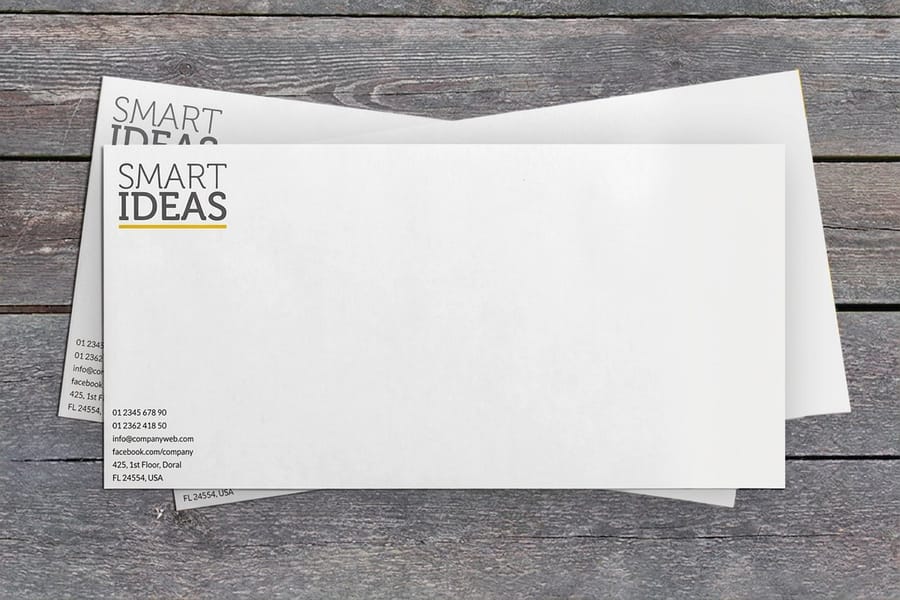
An A7 envelope measures 5 1/4 by 7 1/4 inches, or 133 by 184 mm. It is built around a 5 by 7 inch card, which leaves about an eighth of an inch of clearance on each side, so it takes 5 by 7 invitations, greeting cards, photo prints and a 7 by 10 sheet folded once. It is a US announcement size and has nothing to do with ISO A7, which is 74 by 105 mm.
Quick answer
5 1/4 by 7 1/4 inches, built around a 5 by 7 card
An A7 envelope is 5 1/4 by 7 1/4 inches (133 by 184 mm), the standard US announcement size. Slide a 5 by 7 card in and you have an eighth of an inch of clearance on each side, which is generous for a single card and tight once you add a liner, an overlay or a reply set. It sits inside the USPS letter dimensions and its 1.38 aspect ratio keeps it machinable, so a single card usually mails at the basic letter rate. The one thing to check first: US A7 and ISO A7 are different sizes entirely.
A7 Dimensions and the Rest of the Announcement Series
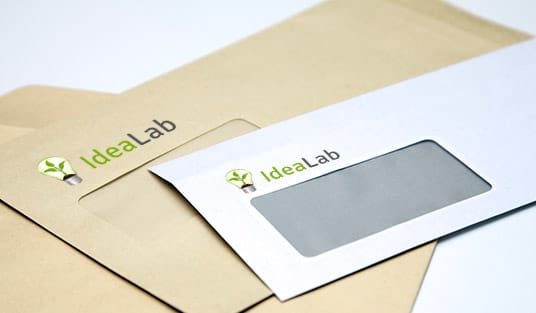
An A7 envelope is 5 1/4 by 7 1/4 inches, or 133 by 184 mm. It belongs to the US announcement series, a set of envelope sizes built around common card sizes rather than around a sheet of paper.
The pattern across the series is easy to hold in your head. Each envelope is a quarter inch wider and a quarter inch longer than the card it is meant to carry.
| Envelope | Size (inches) | Card it holds | What it usually carries |
|---|---|---|---|
| A1 (4-bar) | 3 5/8 x 5 1/8 | 3 1/2 x 4 7/8 | Reply cards, thank you notes, gift enclosures. |
| A2 | 4 3/8 x 5 3/4 | 4 1/4 x 5 1/2 | RSVP cards, small notecards, place cards. |
| A6 | 4 3/4 x 6 1/2 | 4 1/2 x 6 1/4 | Photo cards, save the dates, holiday cards. |
| A7 | 5 1/4 x 7 1/4 | 5 x 7 | Invitations, greeting cards, 5 by 7 photo prints. |
| A9 | 5 3/4 x 8 3/4 | 5 1/2 x 8 1/2 | Half sheet programs, larger invitations, letters folded once. |
| A10 | 6 x 9 1/2 | 5 3/4 x 9 1/4 | Certificates, menus, tall announcement cards. |
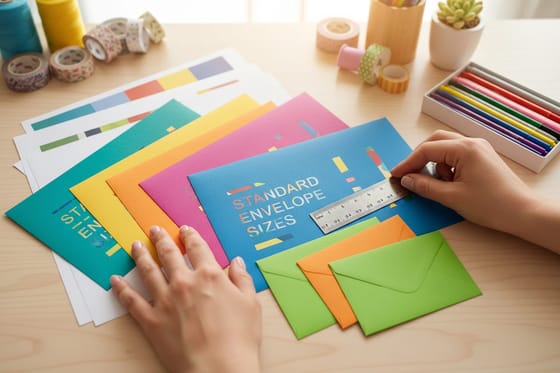
A7 sits at the middle of that list and takes most of the volume, which is why liners, inner envelopes and matching reply sets are stocked in A7 long after the odd sizes have sold out. If you want the wider picture including the business formats, the standard envelope sizes guide lays out the commercial series next to the announcement one, and envelope printing shows what we run.
US A7 and ISO A7 Are Not the Same Size
ISO A7 is 74 by 105 mm, about 2 7/8 by 4 1/8 inches. It is a sheet size from the international series that starts at A0 and halves each step down, and it has nothing to do with the US announcement letters beyond sharing the character A.
The practical consequence shows up in sourcing. Order A7 from a US converter and a 5 1/4 by 7 1/4 inch invitation envelope arrives. Order A7 from a European supplier or from a size chart written to the ISO standard and you get a small card roughly the size of a luggage tag. Designers who set up files from an ISO chart while buying envelopes from a US stock house end up with artwork that is right by the numbers and wrong by a factor of three.
The fix is simple: quote dimensions, not letters. Write 5.25 by 7.25 inches on the purchase order and the ambiguity disappears. Converting between units is where the second round of errors creeps in, and our guide to print dimensions in cm, inches and pixels covers the rounding traps that eat a bleed allowance.
What Actually Fits Inside an A7
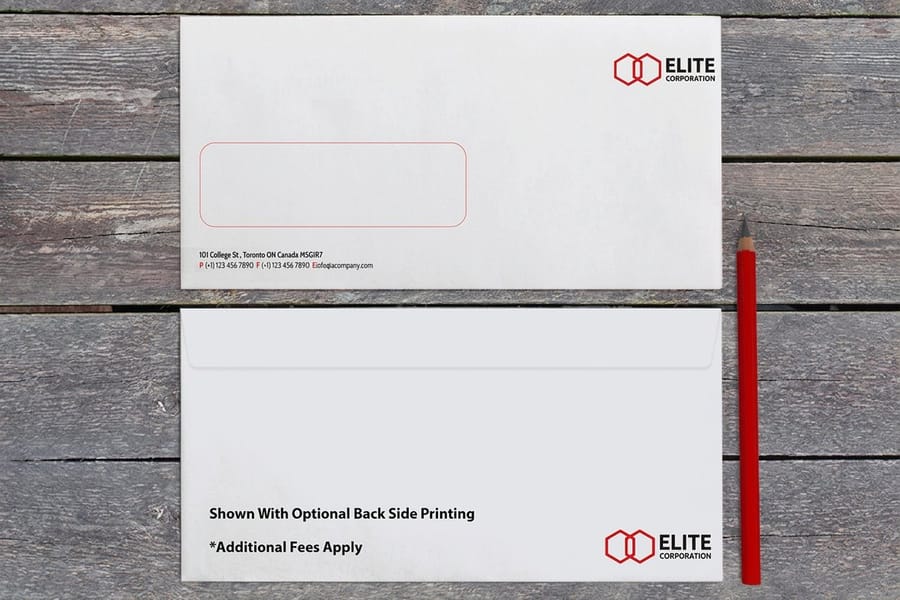
A flat 5 by 7 card, a 5 by 7 photo print, or a 7 by 10 sheet folded once to 5 by 7. All three slide into a stock invitation envelope with an eighth of an inch of room on each side, which is enough for a person in a hurry to insert a hundred of them without creasing a corner.
That eighth of an inch is also the limit, and it disappears faster than people expect. A 16pt card on its own is fine. A 16pt card with a vellum overlay, a reply card, a reply envelope and a belly band is a fight, because the stack has thickness and thickness steals width as the envelope bows around it. The test is physical: assemble one complete suite, insert it, and see whether it needs one hand or two. Two hands means order the A7.5 at 5 1/2 by 7 1/2, or step up to an A9.
Trim tolerance eats into the gap as well. Cutting is accurate to a fraction of a millimeter, not to zero, so a card specified at exactly 5 by 7 can come back a hair over on one edge. That is survivable inside a quarter inch of total clearance and it is not survivable if you built the card at envelope size. Design at 5 by 7 trim with an eighth of an inch of bleed all round, and start from a correctly built file in the blank template library.
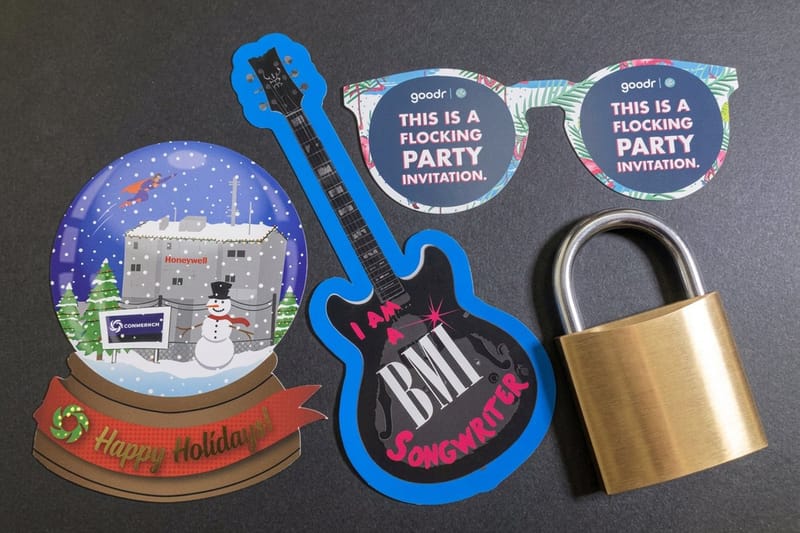
Shaped cards are the exception worth knowing. An arched top, a rounded corner or a scalloped edge still mails in a standard A7 as long as the shape stays inside a 5 by 7 footprint, which is how most custom die-cut cards at $87.00 end up in stock envelopes rather than custom ones.
Mailing an A7: Postage, Machinability and the Surcharge
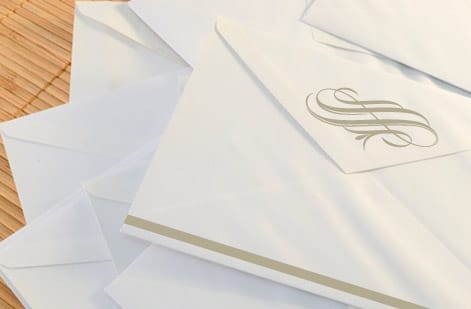
An A7 mails as a letter, not as a large envelope, and it runs through the automation rather than being sorted by hand. That combination is worth money on any list above a few hundred pieces.
| Check | USPS letter limit | An A7 at 5 1/4 x 7 1/4 |
|---|---|---|
| Length | 5 to 11 1/2 inches | 7 1/4 inches, inside the range. |
| Height | 3 1/2 to 6 1/8 inches | 5 1/4 inches, inside the range. |
| Aspect ratio | 1.3 to 2.5 for machinable mail | 1.38, comfortably inside it. |
| Thickness | Up to 1/4 inch | Fine for a card, tight for a full suite. |
| Weight | Up to 3.5 oz at letter rates | One card is under an ounce, a suite often is not. |
The two rows that cost real money are the last two. Weight is charged in ounce steps, so an invitation, a details card, a reply card and a reply envelope can push a mailing into a second ounce across the entire list at once. Thickness is a pass or fail: once the stack will not slide under a quarter inch gauge, the piece leaves the automated stream and picks up a non-machinable surcharge.
Embellishments do the same thing without adding weight. Wax seals, ribbon, twine, charms and rigid inserts all make a piece non-machinable, and a square envelope is non-machinable by shape no matter how light it is. If the design calls for a wax seal, budget the surcharge or ask for hand cancelation, and expect to hand the batch over at the counter rather than dropping it in a box. For plain mailings, printed envelopes with the return address printed instead of labeled keep the surface flat and the piece machinable, and the full color envelope sizes guide covers the business formats that follow the same rules.
Printing and Addressing A7 Envelopes
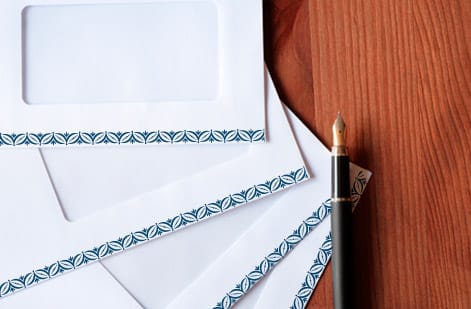
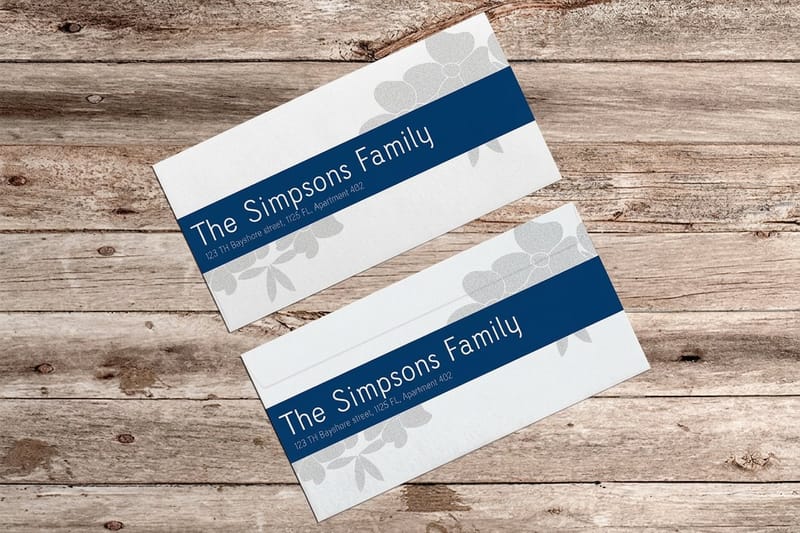
There are two ways to get ink onto an A7, and they fail in different places. Printing flat and converting afterwards puts artwork anywhere, including full bleed across the flap, because the sheet is still a flat sheet when it goes through the press. Printing on a converted envelope is cheaper and faster, but the press is now running over a folded, glued object.
On a converted envelope, keep artwork about a quarter inch clear of every edge and clear of the flap fold and the glue seam. Ink laid across a seam sits on two thicknesses of paper and one step of height, so it prints unevenly and can scuff. A heavy solid across the whole front is where this shows worst. A logo, a return address and a rule are where it never shows at all.
Addressing has its own trap. Dark and heavily colored envelope stock is uncoated and absorbent, so inkjet addressing spreads and grays out on it, and toner adhesion on some coated stocks is unreliable. White ink printing or a printed address label solves it. Liners are the other thickness to remember: a lined A7 is a lovely thing and it takes a bite out of the clearance you were counting on for the card.
If the piece is going out unenclosed, the size logic changes completely, and pairing postcards with envelope sizes covers where a bare postcard beats a card in a sleeve. For the card itself, invitation printing and greeting card printing both run the 5 by 7 sizes that an A7 was built to hold.
Wally sizes up the A7
Five and a quarter by seven and a quarter, and an eighth of an inch of room
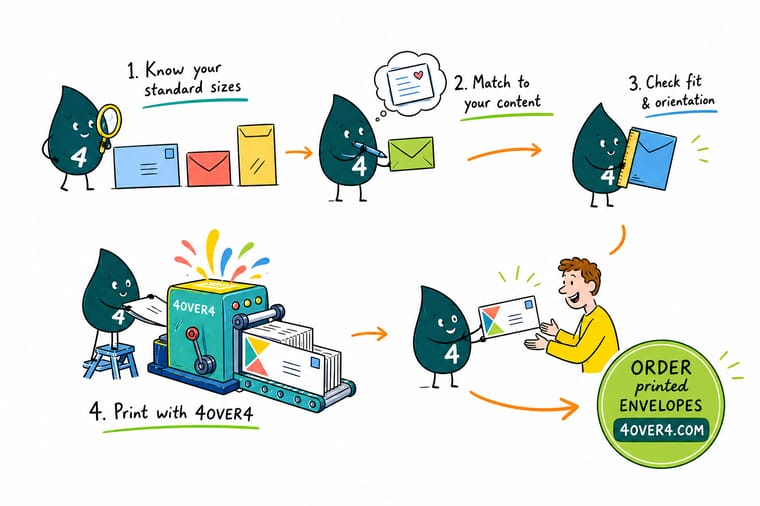
Wally measures the envelope at 5 1/4 by 7 1/4 inches and the card at 5 by 7, which leaves him an eighth of an inch on each side. One card goes in with a fingertip. Add a vellum overlay, a reply card and a ribbon and the same envelope needs both hands, which is his cue to move up to an A7.5. He also weighs the finished suite before buying stamps, because the second ounce arrives quietly and applies to the whole list at once.
Order invitation envelopes →Specs and pricing
Envelopes and 5 by 7 cards, with live options
Sizes, stocks and starting prices pulled straight from the 4OVER4.COM configurator, so you can check the fit and the cost in the same place.

Print it
Order the envelope and the card that fits it
Explore more
Where to go next

By the numbers
Envelopes and inserts from one order
Common Questions
Your A7 envelope questions, answered
Is an A7 envelope the same thing as a 5x7 envelope?
In everyday use, yes, but the numbers describe different things and that trips people up. A7 is the envelope, at 5 1/4 by 7 1/4 inches. The 5 by 7 is the card that goes inside it. Stationery suppliers and print shops use the two names for the same product, so if a listing says "5x7 invitation envelope" you are looking at an A7. Read the actual dimensions before you buy, because a few sellers list the insert size and a few list the envelope size under the same heading.
Does a 5x7 photo fit in an A7 envelope?
Yes, comfortably. A standard 5 by 7 photographic print is the exact insert the A7 was designed around, and it slides in with about an eighth of an inch of clearance on each side. Photo prints are also thin, so weight is rarely a problem with one or two per envelope. If you are mailing a stack of prints, check the thickness against the quarter inch that USPS allows for letter mail before you assume letter postage.
What is the difference between an A6 and an A7 envelope?
An A6 measures 4 3/4 by 6 1/2 inches and holds a 4 1/2 by 6 1/4 card. An A7 measures 5 1/4 by 7 1/4 inches and holds a 5 by 7. The half inch of difference matters more than it sounds: A6 suits photo cards, save the dates and smaller announcements, while A7 is the size the invitation trade builds around, so liners, inner envelopes and matching reply sets are far easier to source in A7.
Can I mail an A7 envelope with regular First-Class postage?
Usually yes for a single card. The envelope is inside the USPS letter dimensions, its 1.38 aspect ratio is inside the machinable range, and one card plus one envelope normally stays under an ounce. Three things break that: going over an ounce, going over a quarter inch thick, and adding anything rigid or lumpy such as a wax seal, a ribbon, a charm or a thick belly band, which pushes the piece into a non-machinable surcharge. Take one fully assembled sample to the counter and have it weighed and measured before you buy postage in bulk.
What size should I set up my invitation file if it goes in an A7?
Design to a 5 by 7 inch trim size and add an eighth of an inch of bleed on every edge, so the artboard is 5.25 by 7.25 inches. Keep anything you cannot afford to lose, such as text and logos, at least an eighth of an inch inside the trim line. Do not build the card at the envelope size. A card cut to 5.25 by 7.25 has no clearance at all and will bind or crumple at the corners on the way in.
When do I need an A7.5 or an A9 instead?
When the suite stops being one flat card. An A7.5 at 5 1/2 by 7 1/2 inches gives you a quarter inch more in both directions, which is what you want for a 5 by 7 card wrapped in a vellum jacket, tied with twine, or stacked with a reply card and a details card. An A9 at 5 3/4 by 8 3/4 inches is the move for a 5 1/2 by 8 1/2 half sheet, a program, or a folded piece that will not compress. If your test assembly needs two hands to insert, you are already in the next size up.
Get Started
250 invitation envelopes cost $170.42 on white wove
Pick your envelope size and stock, print the return address instead of sticking a label on it, and keep the whole mailing inside the letter rate.
Legal Disclaimer
Gold Standard guarantees apply to all standard orders placed through 4over4.com. Price match requires verifiable proof of a competitor's published price for an equivalent product with matching specifications and turnaround time. Satisfaction guarantee covers manufacturing defects and print quality issues. Contact support with order number and documentation. On-time delivery rate based on tracked orders 1999 to 2026. Individual results may vary based on shipping carrier performance.
