
12 Postcard Marketing Ideas That Get People to Respond


Nadia is our customer education voice, built from the knowledge of our production team, with over 20 years in printing.
Postcard advertising works when the card carries one offer, one deadline and one way to respond, printed large enough to read at arm’s length. The twelve examples below, from fun ones such as a die-cut product silhouette, a fridge magnet punch card and a price that only exists behind a QR code to the plain sale and grand opening card, are the ones that keep earning their postage: a sale, a grand opening, an event, a loyalty card, reactivation, a referral, a seasonal offer, an appointment reminder, a product launch, a survey, a thank you, and a QR-only price.
Twelve postcard campaigns at a glance
| Campaign | The offer that pulls | The call to action | Postcard to print |
|---|---|---|---|
| Sale or promotion | A named dollar amount off, with an end date | Bring this card in by the date | Standard Postcards |
| Grand opening | Free specific item on opening weekend | Walk in Saturday, show the card | Oversized Postcards |
| Event invitation | A seat, a time and an address | RSVP at a short vanity URL | Folded Postcards |
| Loyalty and punch card | Visit count toward a free item | Keep this card, bring it back | Magnet Postcards |
| Reactivation | A reason to come back, named for them | Call the number and book | Direct Mail Postcards |
| Referral | Something for both sides of the referral | Pass this card to a neighbor | Standard Postcards |
| Seasonal offer | The service they need this month | Book before the season starts | Oversized Postcards |
| Appointment reminder | The date they are already due | Confirm by phone or QR | Magnet Postcards |
| New product launch | One product, one photograph, one price | Scan to see it in stock | Die-Cut Postcards |
| Survey or feedback | A credit for two minutes of their time | Scan the code and answer four questions | Standard Postcards |
| Thank you card | No offer at all, on purpose | None. It is a thank you | Folded Postcards |
| QR-only offer | A price that only exists behind the code | Scan for the mailer price | Direct Mail Postcards |
Pick one row and run it properly rather than running three at half strength: one list, one card, two drops. Standard postcards start at 50 for $16.48, magnet postcards at 25 for $19.68 and die-cut postcards at 50 for $34.05. Each format links straight to its configurator, and you can compare the stocks side by side on the postcard printing page.
Why a postcard still gets answered
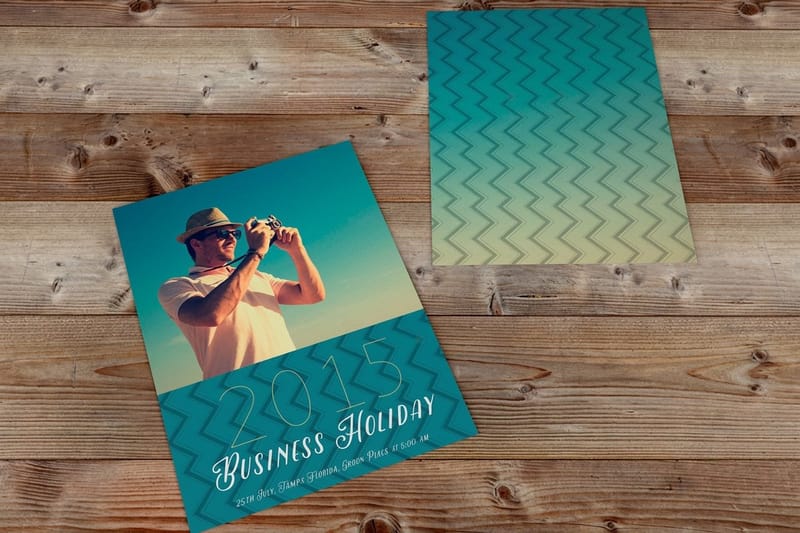
A postcard has no envelope, so there is no decision to make before the message is seen. It arrives face up in a stack of statements and it gets read on the walk back from the mailbox, whether or not the recipient intended to read anything. That is the whole advantage, and it is also the whole constraint: you get one screenful of attention, so the card carries one idea.
A common first-campaign mistake is treating the card as a small brochure. Three offers, a service list, a paragraph of history, and a logo at the top. Nobody reads it. A card with one offer, one date and one action is easier to act on than a card with five things on it, because the reader never has to choose what to look at.
Postcards also sit at the cheap end of addressed mail. Compare the economics against the alternatives in our breakdown of direct mail cost per piece, and browse the formats on the postcard printing page before you commit to a size.
The size choice that sets your postage
The USPS postcard rate applies to a piece between 3.5 x 5 in and 4.25 x 6 in, rectangular, and between 0.007 and 0.016 in thick. Stay inside that window and you pay the lowest rate for addressed mail. Step outside it, even by a quarter inch, and the card is priced as a letter, and a 6 x 11 card is priced as a flat.
That does not mean small is always right. A 6 x 9 card is impossible to miss in a stack and it gives the offer room to breathe. It just has to earn the postage difference, which it usually does on a high value service and almost never on a coffee shop discount. If you want the larger canvas, oversized postcards start at $51.62 for 50 and the postage is the number to check before the print price.
What a postcard cannot do
A postcard cannot explain something complicated. If the sale needs three paragraphs of context, a comparison table or a set of case studies, the card will fail no matter how well it is designed. That job belongs to a letter, and our letter printing and mailing guide covers when to switch.
It also cannot rescue a bad list. A brilliant card mailed to people who have no reason to buy performs worse than a plain card mailed to lapsed customers. The list decides more of the result than the design does, which is uncomfortable for anyone who enjoys the design part.
The twelve postcard campaigns, with the offer for each
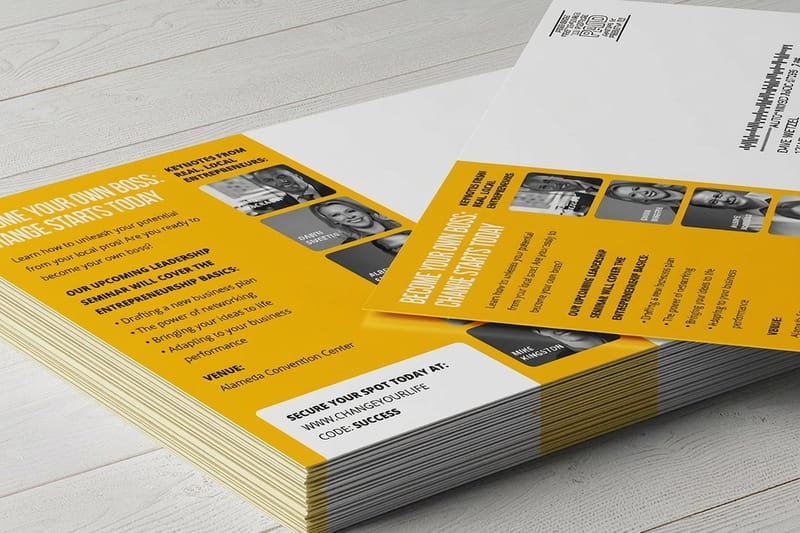
Each of these is a campaign, not a design. The design follows the offer. Work out what you are asking for and what you are giving, then lay the card out around those two lines.
They are ordered from the easiest to run to the ones that need a list you have to build first. A new business can run the first three this month. A five year old business should start at number five, because reactivation is almost always the cheapest response available to it.
Ideas one to six: the campaigns any business can run
1. The sale. Put the discount as a dollar figure, not a percentage. On a cold list, “$25 off your first service” is understood instantly and “20% off” requires arithmetic the reader will not do. Give it a real end date. A card without a deadline gets kept, and a kept card is a card that never gets used.
2. The grand opening. Mail the streets you can walk to, not the whole town. The offer should be a free specific thing rather than a discount, because the goal is a first visit, not a margin. Print it big. Oversized postcards earn their postage here because an opening only happens once.
3. The event invitation. Date, time, address, and what happens when they arrive. Post so the card lands seven to ten days out, and mail a second, smaller card two days before to the same list. The second card is the one that fills the room. A folded postcard gives you an inside panel for the agenda without turning into a brochure.
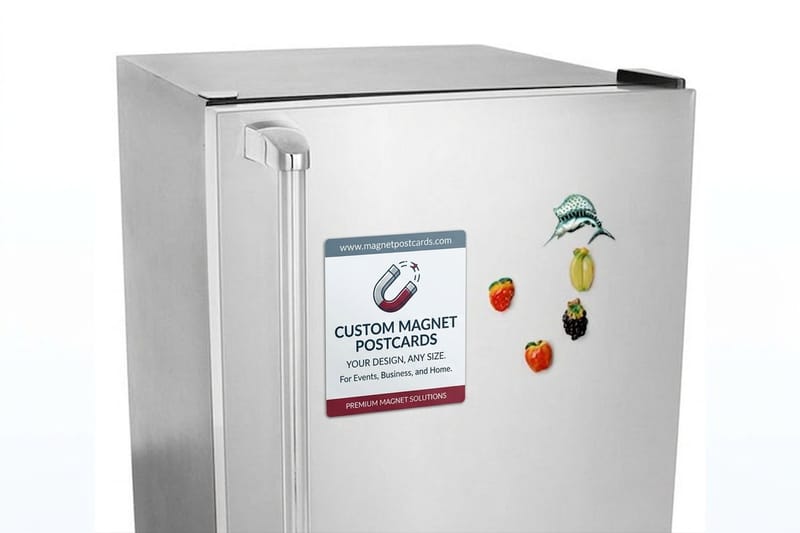
4. The loyalty card. A card the customer is meant to keep has to survive being kept. Paper in a wallet is dead in a month. A magnet postcard at $19.68 goes on the fridge on 17pt or 35pt magnet, where a recall or loyalty message stays in view. Other shapes sit in the custom magnet range.
5. Reactivation. Pull everyone who bought once and has not bought in twelve months. Say the true thing: it has been a while, here is what changed, here is something to come back for. This is the smallest list you will mail and usually the best responding one, because these people already know you work.
6. The referral card. Give both sides something. A card that rewards only the referrer feels like a job; a card that rewards only the friend gives the customer nothing to say. Print two cards per envelope of a delivery, or hand them out at the counter and mail them to the top fifty customers.
Ideas seven to twelve: campaigns that need a list or a hook
7. The seasonal offer. Mail the service they are about to need, four to six weeks before they need it. Furnace tune-ups in September, gutters in October, tax prep in January. Timing is doing most of the work here, so a plain card mailed early beats a beautiful card mailed late.
8. The appointment reminder. Anyone on a recall cycle, a dentist, a vet, a car service, gets a card with their own due date printed on it. It is the least creative campaign on this list and one of the most reliable, because the recipient already agreed to the thing you are reminding them about.
9. The new product launch. One product, one photograph, one price. Cut everything else. A die-cut postcard at $34.05 cut to the silhouette of the product is the one moment where the shape of the card is genuinely doing sales work rather than decoration.
10. The survey card. Ask four questions, offer a credit, and put a QR code straight to the form. Keep the questions short enough to answer standing up. You get feedback and a reason to contact everyone who answered, which is the real value.
11. The thank you card. No offer. No code. A short line of thanks after a large job or a first order. It is the only card here with nothing to sell, and it is the one people mention back to you months later. Send it on a folded postcard so it stands on a desk.
12. The QR-only offer. The price exists only behind the code, so every redemption is attributable and there is no way to fake it at the counter. It works when the reward is worth the scan. Point the code at a page built for the offer, never at your home page, or you are teaching people that your codes waste their time.
Designing an offer people actually act on
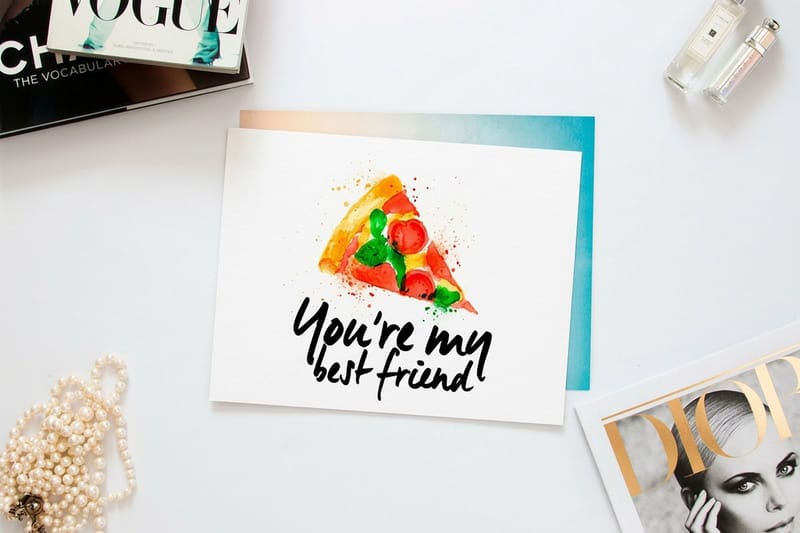
An offer that works has three parts and no fourth: what they get, what it costs them, and when it expires. Everything else on the card is support. If a sentence does not serve one of those three, it is taking space from the ones that do.
Specific beats generous. A free named item, described exactly, out-pulls a bigger discount described vaguely, because the reader can picture it. “A free 12 point inspection, 45 minutes, no obligation” is a thing. “Great savings on service” is not a thing. The second one also survives being pasted onto a competitor’s card unchanged, which is the test for filler.
The deadline is not a pressure tactic, it is a scheduling instruction. Without a date the reader has no reason to act today, so the card goes on the counter and dies there. Print an actual date rather than “limited time only”, because a date can be diarised and a phrase cannot.
Where the offer sits on the card
Top third of the design side, largest type on the piece, readable from a meter away. Everything else steps down from there in size. The logo does not go at the top; the logo goes near the call to action where it belongs, because nobody has ever responded to a mailer because of a logo placement.
Keep live text at least 0.125 in inside the trim, and build the file with 0.125 in bleed on every edge at 300 DPI in CMYK. Our anatomy of a postcard walks through the zones, and the postcard mailing layout guide covers the address side rules the Postal Service enforces.
The three second test
Print the card, put it face up on a table with five bits of real mail, walk past it, and try to say what it was offering. If you cannot, the card fails and no amount of retouching will fix it, because the problem is hierarchy rather than craft.
Do this before you order a full run. A short proof run costs almost nothing against the postage on a bad card, and postage is the number that hurts. More on that trade-off in direct mail design best practices.
Writing a call to action that gets used
One action. Not a phone number and a website and a QR code and an address and a social handle, all the same size, which is what most cards do. Pick the response you actually want, make it the biggest element after the offer, and let the rest sit small.
Match the action to the audience rather than to your preference. Older service customers phone. Younger buyers scan or type a short URL. If the job is booked by appointment, a phone number wins because the booking happens in one call. If the offer is an online order, a QR code to the exact product page wins because there is nothing to type.
Write it as an instruction with a verb and a deadline: “Call 555 0134 before 30 November and quote MAIL25.” That sentence carries the action, the deadline and the tracking code in one line, which is about all the room a postcard has.
Vanity URLs beat long links
A URL on a postcard has to be typed from memory, into a phone, by someone standing in a hallway. Keep it short enough to hold in your head for four seconds. A dedicated landing page also lets you measure the drop without touching your main analytics setup.
If the card carries a QR code, still print the URL underneath it. Some people will not scan, some phones sit in another room, and a code with no fallback loses those responses for no reason.
Lists, targeting and proving which drop paid
There are three kinds of list and they behave nothing alike. Your own customer list responds best and is the one you already own. A geographic saturation drop through EDDM reaches every address on a carrier route with no names, which suits anyone whose customers are simply nearby. A rented or purchased list sits in between and lives or dies on how tightly it is filtered.
EDDM has rules worth knowing before you plan around it: 5,000 pieces per ZIP code per day, no addressee names, and the piece has to be flat size, which means a 4 x 6 card does not qualify. Our EDDM mailers guide sets out the size and paperwork requirements, and five quick steps to send direct mail postcards covers the addressed route.
Mail the same good list three times before you mail three different lists once. Frequency on a right list beats reach across wrong ones, and by the second and third card the name is no longer new to that household.
Promo codes and QR codes that measure something
Change one thing per drop and the result becomes readable. A unique promo code for each mailing, printed on the address side where there is room, tells you which drop produced the sale at the counter. A dedicated phone extension does the same for calls. A QR code that lands on its own URL does it for scans.
Do not point every code at the same page and then wonder which card worked. One drop, one code, one landing URL. It is a five minute setup that turns the next campaign from a guess into a decision.
Hold back a control group
Leave ten percent of the list out of the drop. When the numbers come in, compare the mailed group against the group that got nothing over the same weeks. Without it, every sale that would have happened anyway gets credited to the postcard, and the campaign looks better than it was.
Keep the same control discipline across drops so the comparison holds. If you are weighing the channel as a whole, our comparison of direct mail against digital marketing is a more useful starting point than an industry average.
Postcard pricing and specs at 4OVER4.COM
For the twelve campaigns above, the budget starts at $16.48 for 50 standard postcards, $19.68 for 25 magnet postcards on the loyalty and reminder cards, and $34.05 for 50 die-cut postcards on a product launch, and a $25 off offer on the card costs you nothing until someone redeems it. Size, stock and quantity move the number from there, and the per piece cost drops as the run grows, so price your real list size in the table below before you pick the campaign.
- Standard postcards. 4 x 6 in, 4.25 x 5.5 in and 5 x 7 in among 14 sizes, on 14pt or 16pt gloss cover, 100# silk or uncoated, printed on one side or both.
- Oversized postcards. 5.5 x 8.5, 6 x 8, 6 x 9 or 6 x 11 in, from 50 for $51.62, with optional variable data for a name or a code on each card.
- Magnet postcards. 2 x 3.5 in up to 5 x 7 in on 17pt or 35pt indoor magnet with a UV coating, from 25 pieces.
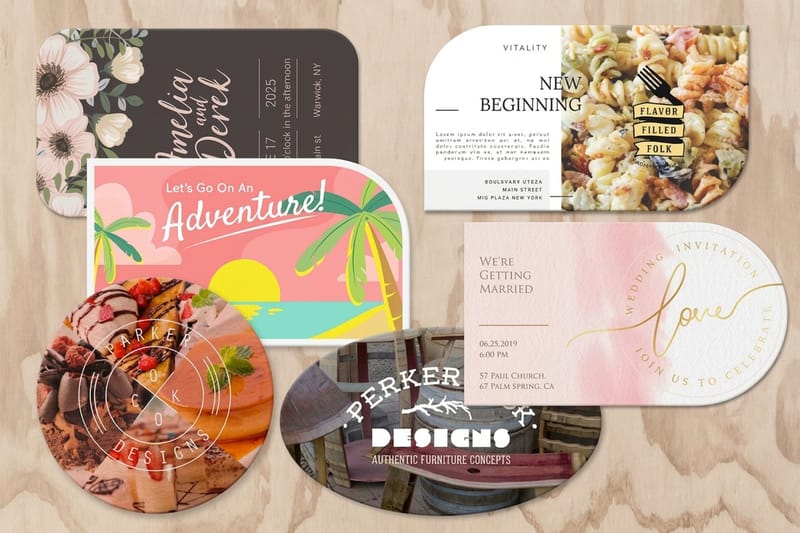
- Die-cut postcards. 4 x 6 in shapes (rounded, leaf, oval, half circle) or a 4 in circle, on 14pt or 16pt gloss, uncoated, linen or synthetic plastic.
- Folded postcards. Half folds such as 6 x 8 in folding to 4 x 6 in, or tri-folds such as 6 x 12 in folding to 6 x 4 in.
- What to upload. A PDF at the final size with 0.125 in bleed, live text 0.125 in inside the trim, 300 DPI images in CMYK, and the address side kept clear for postage and barcode.
Quantity and price
Postcard pricing and specs
Live configurator numbers on gloss cover stock, where the per piece cost falls as the quantity climbs.
| Quantity | Price Per Unit | Total |
|---|---|---|
| 50 | 33.0¢ | $16.48 |
| 100 | 24.2¢ | $24.16 |
| 200 | 15.9¢ | $31.86 |
| 300 | 12.8¢ | $38.45 |
| 400 | 11.3¢ | $45.04 |
| 500 | 10.3¢ | $51.62 |
You can also earn coins on every order and put them against the next drop, which matters when a campaign is three mailings to the same list rather than one.
Stock, finish and how they change the card
Two stock decisions cover most postcards. 14pt gloss cover is the default: bright color, low cost, and stiff enough to survive the mail stream. 16pt is noticeably more rigid in the hand, which is worth paying for on an oversized card that would otherwise arrive with a bent corner. Above that you are buying feel rather than function.
Print it
Postcards, ready to mail
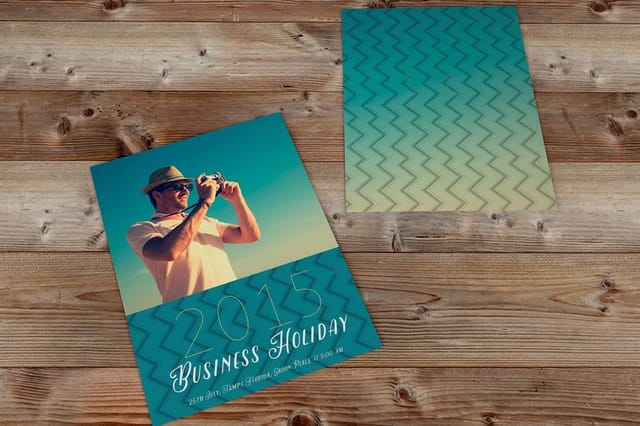
Postcard rate sizes on gloss cover, the fastest route from a layout to a drop.
Finish is a response decision as much as a look. Gloss lifts photography and shrugs off rain in a mailbox. Matte reads calmer and cuts glare, which helps when the card is dense with type. Uncoated is the one to choose when you want the recipient to write on the card, for an appointment date or a returned survey, because ink beads and smears on a coated surface. If you are mailing a service card the customer keeps, look at magnet postcards instead of chasing a heavier paper.
Postcard campaigns by industry
The right campaign depends more on how often your customers buy than on what you sell. Here is where each business type usually starts.
- Home services and trades. Seasonal offers and appointment reminders on magnet postcards. The card has to survive twelve months on a fridge, because that is how long it takes for the boiler to fail.
- Restaurants and cafes. Grand opening and loyalty cards mailed to the streets within walking distance. A named free item beats a percentage, because the visit is the goal.
- Dental, medical and veterinary. Recall reminders with the patient due date printed on the card. Least creative campaign on the list, most dependable response.
- Real estate agents. Just listed, just sold and open house drops to a tight geography, repeated. Start with real estate postcards at $16.48 for 50 and mail the same farm area every month.
- Retail and ecommerce. New product launches and QR-only mailer pricing, so every redemption is attributable and the offer cannot leak to the general public.
- Nonprofits and churches. Event invitations and thank you cards. The thank you card with no ask is the one that gets kept and mentioned back to you.
Blank files at every postcard size
Templates remove the two mistakes that cost a reprint: art that falls outside the 0.125 in bleed and type that crosses the trim. 4OVER4.COM sizes its blanks to each product, from the 4 x 6 in standard card to the 6 x 11 in oversized one and the folded and die-cut shapes. Pull a print-ready file from the blank template library with bleed and trim already marked, or start from a layout in design templates.
Start fast
Blank files at every postcard size
Blanks at standard, oversized, folded and die-cut sizes, with the mail panel kept clear.

Wally lays out a postcard that gets answered
One offer, one date, one action, and a code that proves it worked
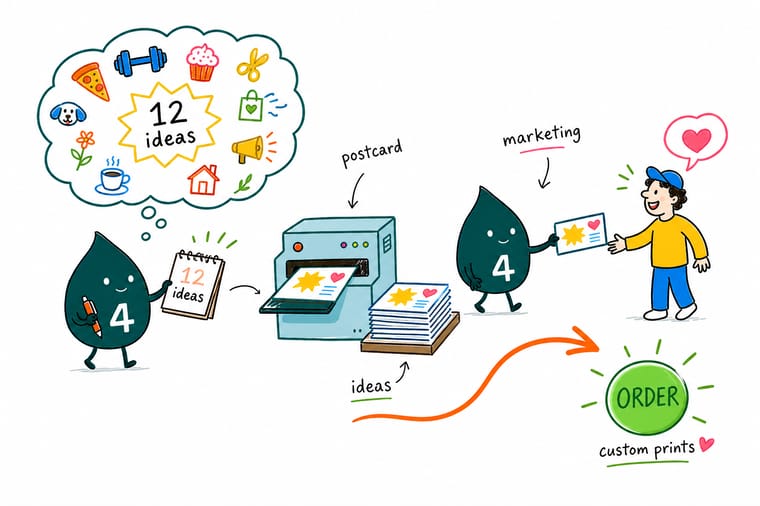
Put the offer in the top third at the largest type size, print a real end date instead of a vague phrase, and give the card one call to action. Keep live text 0.125 inch inside the trim, build at 300 DPI in CMYK with 0.125 inch bleed, and leave the bottom 5/8 inch of the address side clear for the barcode. Add a unique promo code per drop and 4OVER4.COM prints, addresses and mails the run for you.
Print and mail postcards →What to remember about postcard campaigns
Design rules that hold on every campaign
- One offer, nothing else. A second offer does not add a second chance to respond. It splits the attention the first offer needed and lowers both.
- Print a real date. A deadline the reader can put in a diary works. “Limited time only” is a phrase people have learned to ignore.
- Give the address side its due. The Postal Service owns the lower right block and the bottom 5/8 in stays clear for the barcode. Design the left third deliberately instead of leaving it empty.
- Keep the code short. MAIL25 gets quoted at the counter. A fourteen character alphanumeric string does not, and the sale gets logged as untracked.
- Proof on the real stock. Color on 14pt gloss cover reads brighter than the same file on uncoated. Check the proof before the full run, not after.
Explore more
More ways to print and mail
Standard postcards run 50 for $16.48 and oversized 50 for $51.62, both out in 3 business days.
Product Standard Postcards The postcard rate sizes on 14pt and 16pt stock, from $16.48 for 50. Product Direct Mail Postcards We print, address, sort and drop them into the mail stream. Product Oversized Postcards A 6 x 9 or larger canvas when the offer needs the room. Product Magnet Postcards The loyalty and reminder card that lives on the fridge. Product Die-Cut Postcards Cut to a shape when the silhouette is doing sales work. 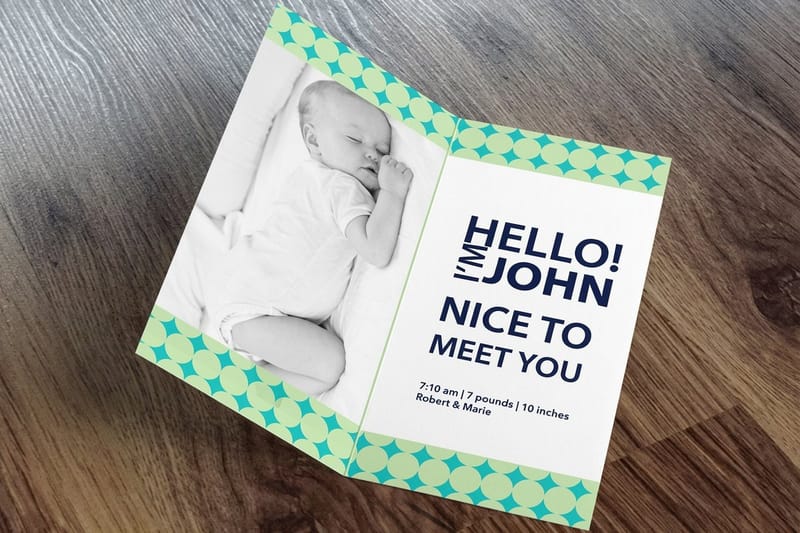 Product Folded Postcards An inside panel for an agenda or a longer thank you. Category Postcard Printing Every postcard size, stock and finish in one place.
  Guide Anatomy of a Postcard The zones on both sides and what has to stay clear.
 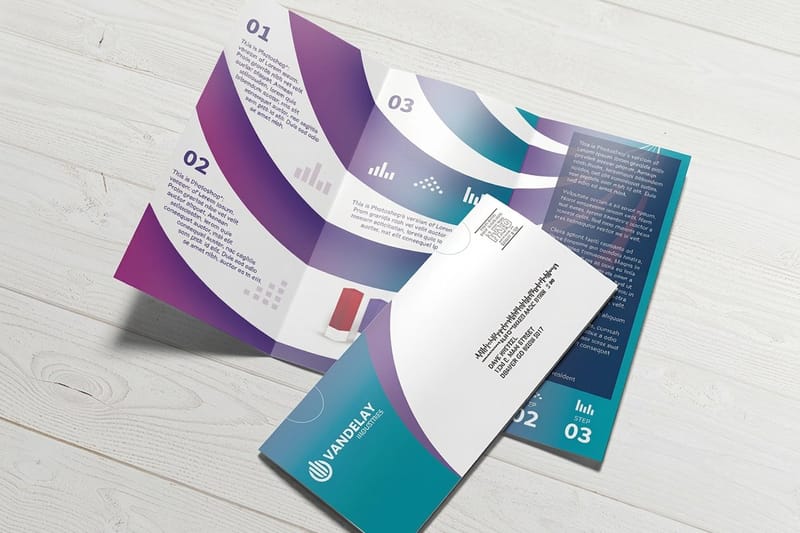 Guide Direct Mail Cost Per Piece Print, postage and list cost, added up honestly.
 Ready to put a card in the mail?
Pick the size, drop in your artwork or a free template, and 4OVER4.COM prints it sharp on gloss cover. Hand us the list and we address, sort and mail it for you.
Common questions about postcard marketing
What size postcard should I mail?
Mail at 4 x 6 in if the offer is simple and you want the lowest postage, because the USPS postcard rate covers pieces from 3.5 x 5 in to 4.25 x 6 in at a thickness of 0.007 to 0.016 in. Go to 6 x 9 in or larger when the offer is worth more per response and the card has to survive a stack of mail, accepting that it will be priced as a letter or a flat rather than a postcard. The honest way to decide is to price the postage first for both sizes on the quantity you plan to mail, then compare that gap against the value of one extra customer. On most home service jobs the larger card pays for itself and on most low ticket retail offers it does not.
Do QR codes on postcards actually get scanned?
They get scanned when the code goes somewhere that matches what the card promised, and they get ignored when it lands on a home page. Build a dedicated page for the offer, point the code at it, and print the short URL underneath the code so people who will not scan still have a way in. The other benefit is measurement: a code with its own landing URL tells you exactly how many scans came from that drop, which is difficult to get any other way on a printed piece. Keep the code at least 0.75 in square and leave a clear margin around it so the scan works at arm’s length in poor hallway light.
Can 4OVER4 mail the postcards for me, or do I have to do it myself?
We do both. Direct mail postcards start at $89.68 for 500 and cover printing, addressing from your list, presorting and handing the batch to the Postal Service, so nothing arrives at your office. If you would rather run it yourself, order standard postcards from $16.48 for 50 and take them to the post office, which makes sense when you are mailing a small house list or hand delivering. The point where handing it over pays off is usually somewhere past a few hundred pieces, because that is where sorting and addressing stop being a job you can do between customers.
How far in advance should an event postcard arrive?
Aim for the card to land seven to ten days before the event, then mail a second smaller card to the same list two days out. The first card gets the date into the diary and the second one is what fills the room, because the people who meant to come need a reminder closer to the day. Work backwards from that arrival date through your production and mailing time rather than from the day you place the order. For a mailing dropped through us, ask for the in-home date rather than the ship date, since they are not the same thing.
What is the cheapest way to test whether postcards work for my business?
Take the smallest list you own with the strongest reason to respond, which is almost always customers who bought once and have not returned, and mail them a reactivation card with a unique promo code. Hold ten percent of that list back as a control so you can tell the difference between sales the card produced and sales that were coming anyway. A test like this costs a fraction of a saturation drop and it answers the real question, which is whether your offer moves people, not whether direct mail works in general. If the reactivation card pulls nothing, a bigger list will not fix it.
Should I put a percentage discount or a dollar amount on the card?
Use a dollar amount on a cold list and a percentage only when the recipient already knows your prices. A stranger reading “20% off” has to work out what your service costs before the offer means anything, and they will not do that work standing over a bin. A regular customer reading the same line understands it immediately. The exception is a genuinely large percentage on a product with a familiar price, where the number itself is the headline.
More frequently asked questions →
Keep reading: 10 postcard examples from small businesses, 15 print marketing examples that still win customers, and direct mail agency against doing it yourself.
