
Paper Products That Still Beat Digital in Everyday Work

Emma is our prepress and print production voice, built from the knowledge of our production team, with over 20 years in printing.
Paper still beats digital in five places: the notepad beside the keyboard, the business card handed across a table, the handwritten thank you card, the letterhead on a document somebody files, and the notebook that holds one project. Everywhere else the screen has already won, and the useful version of this argument admits it instead of pretending a nicer stock changes the outcome.
Paper products that still beat digital at a glance
| Paper product | Format that works | The job a screen does worse | Stock to ask for | Product at 4OVER4 |
|---|---|---|---|---|
| Notepad | 4.25 x 5.5 or 5.5 x 8.5 in, 25 or 50 sheets | Always visible, no window to switch to | Uncoated bond or text over a chipboard back | Standard Notepads, from $93.37 |
| Business card | 3.5 x 2 in, 0.125 in bleed | Transfers a name with no app and no signal | 14pt or 16pt, uncoated or matte if you write on it | Standard Business Cards, from $17.57 |
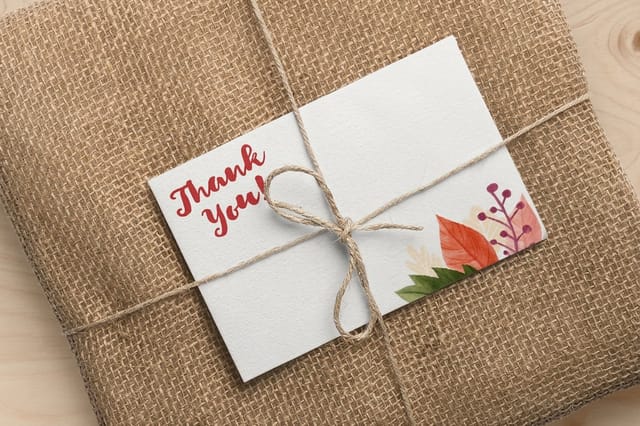
| Thank you card | Flat A2, 4.25 x 5.5 in | Gets kept and propped up; email gets archived | Uncoated cover so a pen bites into it | Flat Thank You Cards, from $19.77 |
| Letterhead | 8.5 x 11 in, quarter inch clear on all edges | Makes a filed document look like a filed document | 24lb bond or 70lb uncoated text, no raised ink | Standard Letterheads, from $99.95 |
| Notebook | Spiral or Wire-O so it lies flat | One place per project, survives a flat battery | 70lb to 80lb text pages, sturdier cover | Deluxe Spiral Notebook, from $5.00 |
Every price above is the first run in the configurator: 25 notepads for $93.37, 100 business cards for $17.57, one spiral notebook for $5.00, and each drops per piece as the run grows. You can order branded notepads or standard business cards straight from the product page and see the exact break for your run.
Why paper still wins in a few places and loses everywhere else
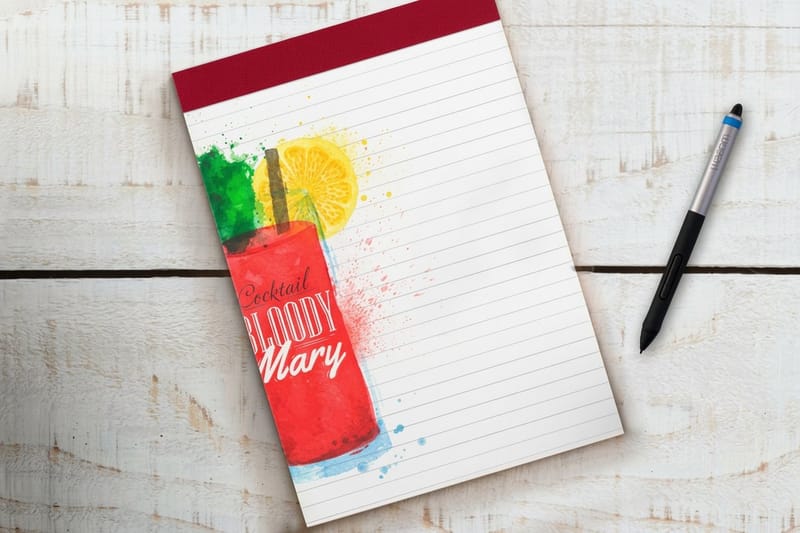
Paper wins when the object does the work. A 4.25 by 5.5 inch pad on a desk is visible without a decision. To see the same note in an app you have to remember it exists, wake a screen, and choose a window. Those two or three seconds are the entire advantage, and they are why the pad next to the keyboard outlives every task app installed the same year.
It also wins on independence. A printed card works with a flat battery, no signal, and a stranger who has no interest in installing anything. You hand it over and the transfer is finished. Anything that needs a scan, a tap or a download is asking the other person for a favour before you have earned one.
Now the half that most articles skip, because a page that only cheers for paper is useless. Digital beats print on search, on revision, on distribution cost, and on anything that has to stay current. A price list that moves every month belongs on a screen. We argue the same trade from the marketing side in print marketing, dying or quietly outworking digital ads.
The test that settles it
Ask one question before you print anything: does the physical object do a job the content alone does not do? A daily menu fails. A thank you card passes, because the fact that somebody spent a stamp and four minutes is most of the message. A notepad passes because permanent visibility is the feature, not the paper.
If the answer is no, print it because you want it to look good, and be honest that this is the reason. That is a perfectly legitimate reason. It is simply a different argument, and mixing the two is how print budgets get spent on things nobody keeps.
Where the two halves work together
The strongest use of print now is as the entry point to something digital, not a replacement for it. A card with one clean URL. A notepad carrying the phone number a customer will actually dial. A proposal on letterhead that also arrives as a PDF. Print carries presence and trust, the screen carries depth and detail.
Keeping the two halves looking like one brand is mostly a typography and margin problem. Our guide to matching letterheads and business cards walks through the alignment decisions, and personalized stationery, notecards and letterhead covers the full set.
The paper products that still beat digital
Five products carry almost all of the remaining advantage. Each one below comes with the format that works, because the wrong format is exactly how a good idea about paper turns into a drawer of unused stock.
The prices are live starting prices at 4OVER4.COM, so a first run is easy to budget before you commit any artwork time.
One, the notepad. Two, the notebook
The notepad is the paper product almost nobody has replaced. Notepads start at $93.37 for a branded run, glued at the head over a chipboard back, in 25 or 50 sheet pads. Choose 5.5 x 8.5 inches if people write lists on it and 4.25 x 5.5 inches if they write phone numbers and nothing else. Put the brand in the footer, not the middle, because the middle is where the writing goes.
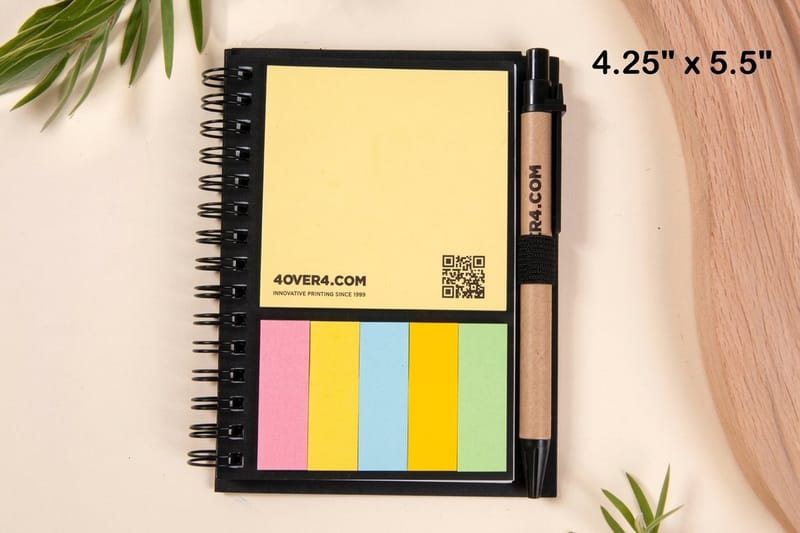
The notebook does a different job: one place per project instead of one sheet per thought. A Deluxe Spiral Notebook starts at $5.00, and the binding matters more than the cover, because a book that will not lie flat gets closed and stays closed. If you are torn between the two formats, notepad versus notebook makes the call in a paragraph, and how to organize a work notebook is the follow up for anyone who fills one.
Three, the business card. Four, the thank you card. Five, the letterhead
The business card survives because the handoff is faster than any digital equivalent and because it leaves a physical object in a pocket that has to be dealt with later. Standard Business Cards start at $17.57 and hold a 4.9 average across 303 reviews. Print 3.5 x 2 inches with 0.125 inch bleed, and pick uncoated or matte if there is any chance somebody writes on the back, which is where a lot of the value of a card actually lands.
The thank you card returns more per dollar than anything else on this list. Flat Thank You Cards start at $19.77 and a flat A2 at 4.25 x 5.5 inches is the right size, because it forces the message to stay short. The rule is that the note is handwritten. A printed message inside turns the card into a receipt. If the words are the hard part, writing a thank you card that gets remembered gives you a structure, and these thank you note examples give you a starting line.
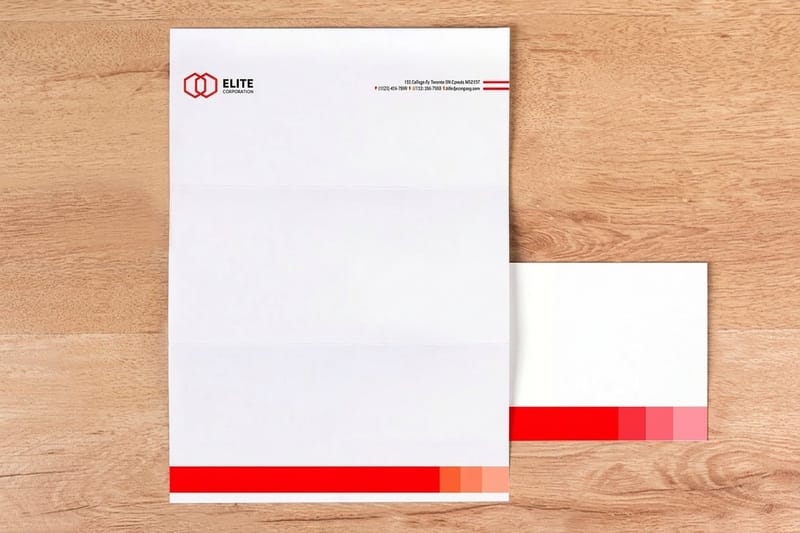
The letterhead earns its place on documents that get filed: a quote, a contract, a formal letter. Letterheads start at $99.95. Leave at least a quarter inch clear on all four edges so a desktop laser printer can grip the sheet, and keep the design flat for the heat reason covered in the next section.
Stock weight and finish decide whether paper feels real
The gap between paper that feels like a real object and paper that feels like a leaflet is weight and coating. Both are cheap decisions made at order time, and both are close to impossible to fix afterwards.
Weight first. A business card on 14pt feels normal and on 16pt feels deliberate, and the difference shows the instant somebody bends a corner. Notepad sheets sit around 60lb to 70lb text so they tear off the glue cleanly without dragging the sheet below with them. Letterhead on 24lb bond feels like correspondence; on 20lb it feels like a photocopy. The paper weight guide lines the text and cover scales up side by side.
Coating is the decision people get wrong more often. A gloss aqueous coating looks superb under a photograph and is hostile to a pen: ballpoint beads on it and pencil skates across it. Anything that will be written on has to be uncoated, or matte at the very least. That one rule explains why notepads, letterheads and note cards are almost never glossy, and why a glossy thank you card feels wrong in the hand before you can say why.
The letterhead trap is heat, not ink
Letterhead goes back through a laser printer, and a laser fuser runs hot enough to soften thermographic raised ink. Raised printing on letterhead can lift, smear, or transfer onto the fuser roller, which is a repair bill rather than a reprint. Foil has a milder version of the same problem. Keep raised and foil finishes for cards that never see a printer again, and keep letterhead flat on uncoated stock.
Heavy coatings cause the related failure: curl and jams. If you are unsure about a stock, print ten sheets, run all ten through the office printer, and only then order five hundred.
Binding, if the thing opens
Spiral coil and Wire-O both lie flat and both fold back on themselves, which is what you want in a book somebody writes in standing up. Perfect binding, the square glued spine, does neither. It photographs beautifully and it is the reason a lot of branded notebooks get used twice and then shelved.
For a book meant for daily use, the binding matters more than the cover material. Soft cover notebooks explained covers where the cheaper build still holds up, and a leather journal from $10.00 is the version people keep on a desk rather than in a drawer.
Notepad pricing and specs at 4OVER4.COM
A notepad is the one item on this page you order by the stack: 25 pads of 50 sheets at 4.25 by 5.5 inches cost $93.37 on 70lb uncoated text, about $3.73 a pad, against $5.00 for one spiral notebook, $10.00 for a leather journal and $19.77 for flat thank you cards. Pads run from 4.25 by 5.5 to 8.5 by 11 inches, 50 or 100 sheets each, in black or full color. The numbers below come straight from the live configurator.
Quantity and price
Notepad pricing and specs
Real configurator numbers on uncoated pad stock, where a larger run drops the cost per pad.
| Quantity | Price Per Unit | Total |
|---|---|---|
| 25 | $3.73 | $93.37 |
| 50 | $2.53 | $126.32 |
| 100 | $1.92 | $192.22 |
| 150 | $1.72 | $258.12 |
| 200 | $1.65 | $329.52 |
| 250 | $1.58 | $395.42 |

You can also earn coins on every order and redeem them against the reorder, which is the run that usually matters more than the first one.
If you only print one thing, print this
Start with the thank you card. It costs the least, it is the only piece on the list that people keep on display, and it is the one a competitor almost certainly is not sending. Buy a box, keep it in the drawer, and write one a day for a fortnight. Two weeks in you will know whether the rest of this list is worth your money, which is a cheaper way to find out than a full stationery order.
Print it
Flat thank you cards, ready to write
Flat A2 note cards on uncoated stock, so a real pen bites instead of beading.
After that, the order that works for most small businesses is cards, then notepads, then letterhead. Cards get used every week, notepads get left behind after meetings and keep working for months, and letterhead only earns its place once you are sending documents that somebody else files. For layouts, browse these letterhead examples from real customers. If you are building a full brand set rather than one piece, these print brand awareness ideas and fifteen print marketing examples are the sensible next reads. For gifting rather than day to day use, corporate gift ideas made from paper covers the same materials at a higher spend.
What to print first, by business type
The right first piece depends on who handles it and what they do with it afterwards.
- Consultants and agencies. Letterhead on the proposal, a notepad left behind after the meeting, and a card that matches both. The matching set is what reads as established, not any single piece of it.
- Retail and e-commerce. A handwritten note in the box outperforms the follow up email that lands in a promotions tab. Flat note cards, uncoated, one line in real ink, signed.
- Clinics and law firms. Letterhead and appointment reminders, because a document somebody files has to look like one. Uncoated 24lb bond, and no coating that fights a pen at the signature line.
- Trades and home services. Business cards live in a kitchen drawer for years, which is the whole point. Print the phone number larger than the logo and leave the back matte so a price can be written on it.
- Schools and nonprofits. Branded notebooks and notepads stay in use for a full term, which is a longer working life than any campaign you can buy for the same money.
Pad and letterhead blanks at the real size
If you are not starting from a blank artboard, templates remove the two mistakes that cost a reprint: artwork sized to the trim instead of the bleed, and type that sits too close to the cut. 4OVER4.COM sizes its blanks to exact product specs: notepads in five sizes from 4.25 by 5.5 to 8.5 by 11 inches, letterhead at 8.5 by 11 with a quarter inch clear on every edge, business cards at 3.5 by 2 with 0.125 inch bleed. Pull a print ready blank from the blank template library with bleed and trim already marked, or start from a full layout in the design template library.
Start fast
Pad and letterhead blanks at the real size
Notepad design templates and exact size blanks so your artwork lands inside the cut line.
Wally on what is still worth keeping on paper
Five things to print, and the stocks that make them work
Keep the notepad, the notebook, the business card, the thank you card and the letterhead on paper, and move anything that changes weekly to a screen. Print anything you will write on uncoated, use 14pt or 16pt for cards, leave a quarter inch clear on letterhead so a laser printer can grip the sheet, and pick spiral or Wire-O for a book that has to lie flat. 4OVER4.COM prints the whole set on premium stock.
Order notepads →What to remember about paper versus digital
Design rules that hold on every paper product
- Leave the middle empty. On a notepad the center is where the writing goes. Put the brand at the head or in the footer and keep the field clear, or people flip the pad over and use the back.
- Uncoated for anything written on. Gloss coating beads ballpoint ink. Use uncoated or matte on notepads, letterhead, note cards, and any business card you expect somebody to write on.
- Bleed an eighth of an inch, every time. Any color running to the edge needs 0.125 inch past the trim line, or part of the run comes back with a white hairline down one side.
- Pick binding by how it opens. Spiral and Wire-O lie flat. Perfect binding does not. Choose by how the book gets used, not by how the spine photographs on a product page.
- Print one before you print five hundred. Order a short run, live with it for a week, then reorder. A pad you never pick up teaches you more than any proof on a screen.
Explore more
More ways to put your brand on paper
Standard notepads run 25 for $93.37 on 70# uncoated text and take 7 business days.
Product Notepads Glued at the head over a chipboard back, 25 or 50 sheets. Product Deluxe Spiral Notebook Spiral bound so it lies flat and stays open. 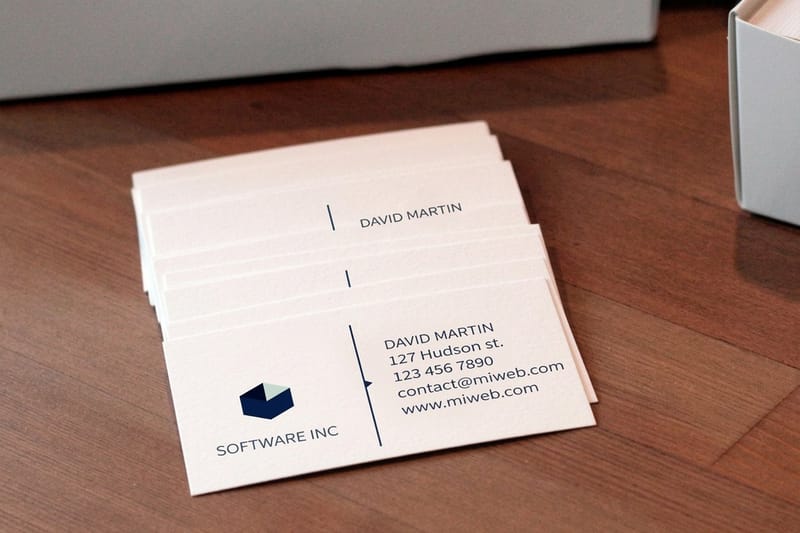 Product Standard Business Cards 3.5 x 2 inches, uncoated or matte if you write on them.
 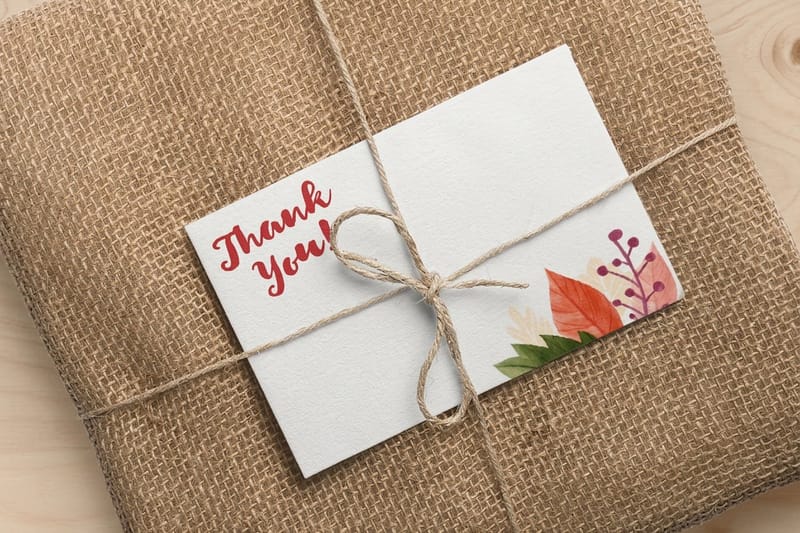 Product Flat Thank You Cards Flat A2 note cards that keep the message short. Product Letterheads Uncoated 8.5 x 11 sheets built to go back through a laser printer.
 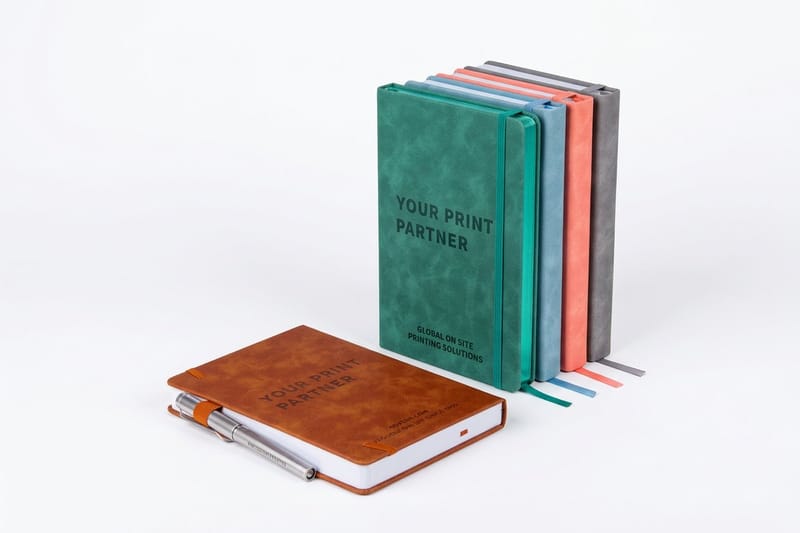 Product Leather Journals The notebook people keep on the desk instead of in a drawer.
 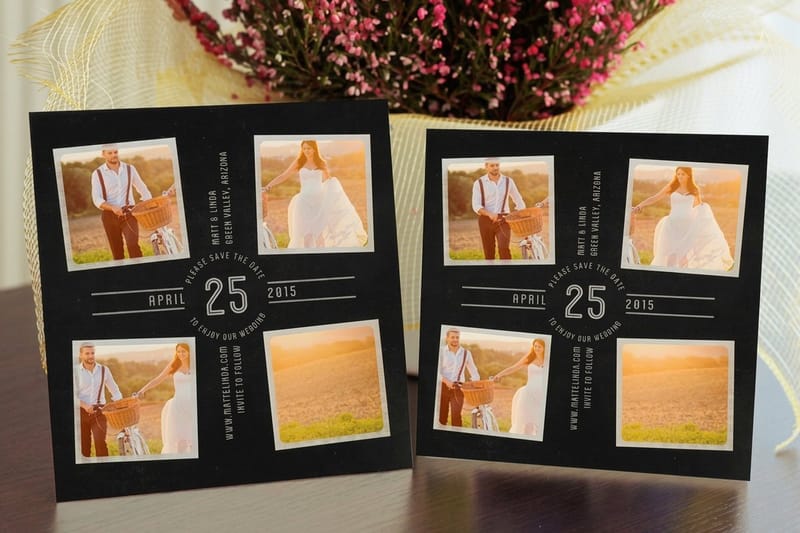 Category Greeting Card Printing Folded and flat cards, every size and stock in one place.
  Guide Notepad vs Notebook Which format suits how your team actually writes.
 Ready to put your brand back on paper?
Pick the piece, drop in your artwork or a free template, and 4OVER4.COM prints it sharp on premium stock, as fast as your deadline needs.
Common questions about paper versus digital
Is print still worth the money, or has digital taken over completely?
Print is worth the money where the physical object does something the content alone cannot. A business card transfers a name with no app, no signal and no request that the other person install anything. A handwritten card gets propped up on a shelf. A notepad stays visible on a desk without anyone deciding to look at it. Those advantages have not moved to a screen and are not going to. Everything that depends on being current, searchable or cheap to distribute has already moved, and printing it now is a decision about how it feels rather than what it does.
What stationery do people actually still use every day?
Notepads and business cards, by a wide margin, followed by notebooks for people who work across several projects. The notepad survives because it is permanently visible and needs no decision to reach. If you are choosing between the two sticky formats, see notepads vs post-its. The business card survives because handing one over is faster than any digital exchange and leaves an object in a pocket. Letterhead survives in a narrower band, on documents that get filed by somebody else. Wall and desk calendars hold on where a whole month or quarter has to be visible at a glance rather than one day at a time.
Should a business card be coated or uncoated?
Uncoated or matte if anyone will write on it, gloss only if the card is carrying a photograph and nothing else. A gloss aqueous coating makes ballpoint ink bead and sit on the surface instead of drying into it, so a phone number written on the back smears. Uncoated stock takes pen and pencil immediately and has a warmer feel in the hand. Soft touch sits between the two: it feels expensive and still resists most pens, so treat it as a gloss for writing purposes. Standard Business Cards start at $17.57 at 4OVER4.COM in both directions.
Can I run my printed letterhead through an office laser printer?
Yes, provided the letterhead is flat and uncoated and you left the printer a margin to grip. Keep about a quarter inch clear on all four edges. Avoid thermographic raised ink, because a laser fuser runs hot enough to soften it and it can lift or transfer onto the roller. Avoid heavy coatings as well, which curl under heat and cause jams. The safe test is to order a short run, put ten sheets through the exact printer that will be used, and check the back of the sheet for transfer before you order in volume.
How much should I order on a first run of notepads or cards?
Order to the quantity you will genuinely use before the design changes, not to whatever quantity shows the lowest unit price. Print pricing steps down as the run grows, which regularly tempts a new business into ordering thousands of a layout that changes after a month of real use. A practical sequence is a short first run, a week of living with it, then a larger reorder once the layout has survived contact with customers. You can also earn coins on every order and put them against the reorder.
