
Spiral Bound Calendars, How Wire-O Binding Works and How to Set Up the Pages


Emma is our prepress and print production voice, built from the knowledge of our production team, with over 20 years in printing.
Wire-O is the binding behind most wall calendars. The loops do a specific job, coil and saddle stitch behave differently, and a half inch at the top of the sheet decides whether your file comes back.
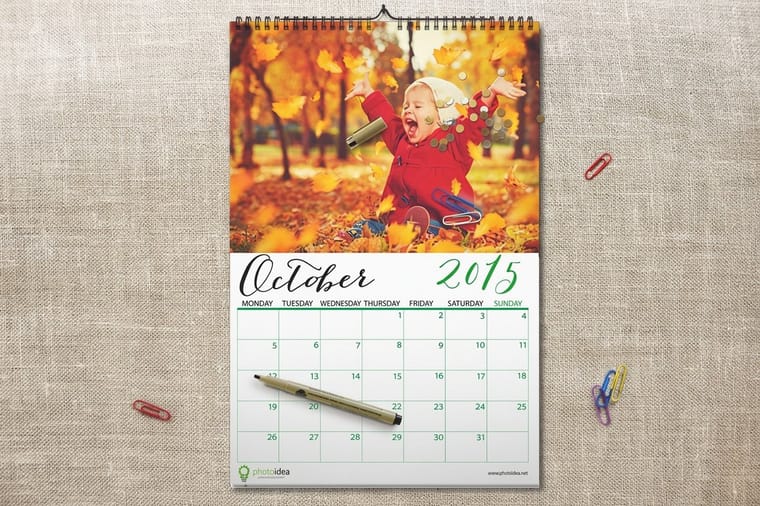
A spiral bound calendar is a stack of separate leaves punched along one edge and held by a wire or plastic coil, so every page turns a full 360 degrees and lies flat. Wire-O is the double loop version most wall calendars use, because each loop grips its own hole and the punched rows stay in register. The punch takes the top quarter inch of the sheet, art can bleed through it, and type has to stay about half an inch clear.
Quick answer
Independent loops, a full turn, and half an inch you cannot use
Wire-O binds a calendar with a row of separate double loops, one per hole, so a leaf rotates a full circle and lands flat behind the stack instead of springing back. That is what a saddle stitched or perfect bound calendar cannot do, and it is why wall calendars went to wire. The cost is at the top edge: the punch sits about a quarter inch down, so background art can bleed through it but type has to stay roughly half an inch clear. Everything else follows from those two facts.
How Wire-O Binding Lets a Calendar Turn a Full Circle
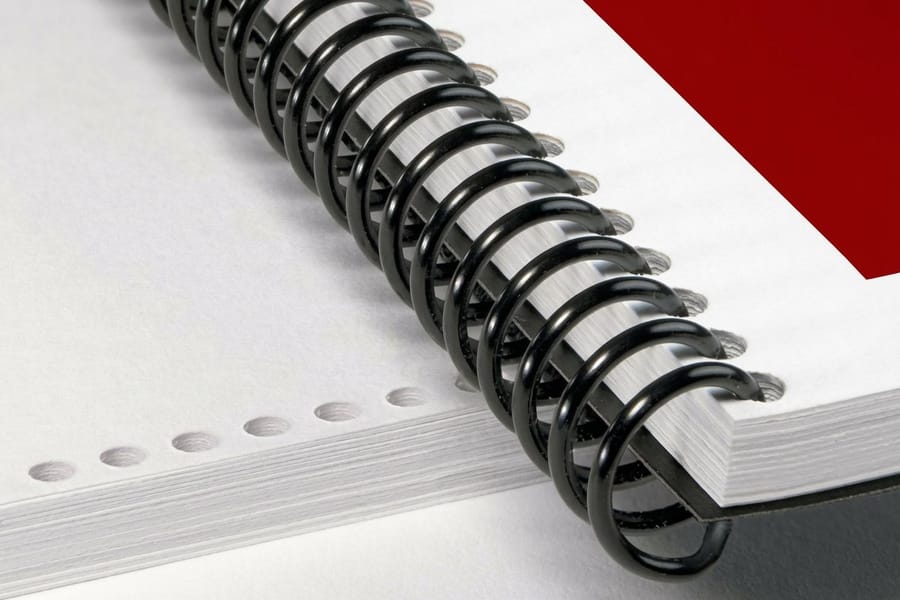
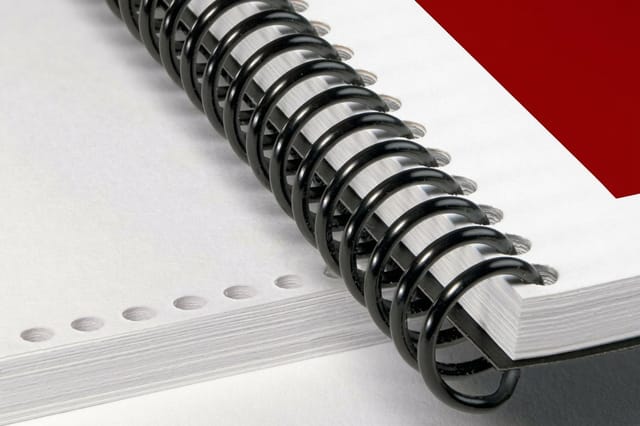
Wire-O starts life as a flat metal wire formed into a comb of separate double loops. The punched block is dropped onto the open comb, and a closing machine squeezes the loops into circles so each one is captured in its own hole. Nothing threads through anything. That single fact is why the binding behaves the way it does.
Because the loops are independent, a leaf rotates around its own row of loops and stops dead flat behind the stack. Nothing pulls on the leaf next to it, and the punched rows stay square to the trim. A saddle stitched calendar springs back toward closed and a perfect bound one cracks along the spine before it lies flat, which is the whole reason wall calendars went to wire in the first place.
Two numbers decide whether the turn feels smooth. The first is pitch, meaning holes per inch: calendars run a three to one punch, small loops close together, which suits a thin block of a dozen leaves. Thicker books move to a two to one punch with fewer, larger loops. The second is wire diameter, which has to clear the thickness of the bound block with room to spare. Undersized wire is the usual cause of a calendar that binds halfway through a page turn instead of flopping over. It is the same mechanism behind our spiral coil book, only with a top punch instead of a side punch.
One consequence people meet late: you cannot trim after binding. Every sheet is cut to final size before it reaches the bindery, so color, register and bleed all have to be right upstream. Our explainer on bleed and trim covers the setup a bound job needs before the punch ever touches it.
Wire-O, Plastic Coil and Saddle Stitch on a Wall
All three end up on walls, and the choice usually turns on how the calendar travels rather than how it looks in the mock-up.
| Binding | How the page turns | Page count rule | Where it fails |
|---|---|---|---|
| Wire-O | Full 360, rows stay in register, sits dead flat behind the stack. | Any count, each leaf is separate. | A crushed loop stays crushed, so the calendar needs a rigid pack. |
| Plastic coil | Full 360, but facing edges sit slightly offset because the coil is a helix. | Any count, each leaf is separate. | Looks less formal, and the offset shows on a ruled grid. |
| Saddle stitch | Springs back toward closed unless you crease it flat. | Multiples of four, always. | The wall version needs the fold to carry the hang, so it sags with weight. |
| Single sheet | No turn at all, the whole year is on one face. | One. | Nothing to flip, so it stops feeling current within a couple of months. |
Read the last column before the first. If the calendars are going into padded mailers to a client list, plastic coil takes a knock and springs back while wire records the impact forever. If they are handed over at a trade counter or shipped flat on a pallet, wire is the better looking binding and holds the grid square. The multiples of four rule that governs stitched work is explained in our guide to booklet page counts and creep, and none of it applies once you punch separate leaves.
The cheapest honest option is not a binding at all. Standard Posters start at $108.75 against $812.59 for Wire-O Coil Calendars, so a year on one sheet costs a fraction of a bound block. It is the right answer for a warehouse wall and the wrong answer for a gift.
Setting Up the Pages for the Punch and the Hanger
Most calendar files come back from prepress for one of three reasons, and all three live in the top inch of the sheet.
Type inside the punch zone. The holes sit roughly a quarter inch below the trimmed top edge. Background photography can run straight through them, since punching happens after trimming, but a logo or a headline in that band comes back with holes through it. Keep live copy about half an inch clear of the bound edge and the problem disappears.
Artwork under the hanging hole. If the job carries a punched hanging hole rather than hanging from the wire, that hole lands on the centreline a little below the punch row. Leave it clear. A hole through a face, a logotype or a date is the sort of detail nobody notices in the proof and everybody notices on the wall.
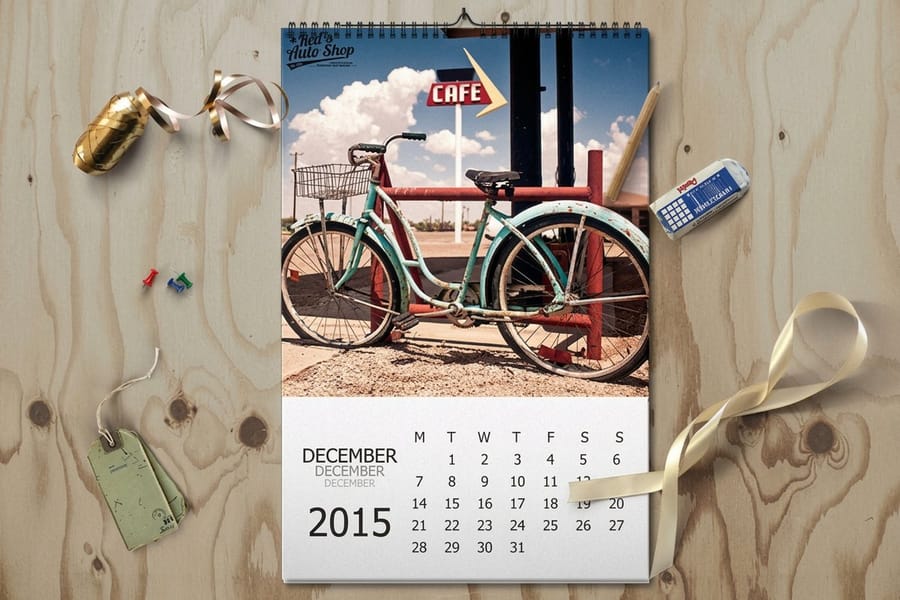
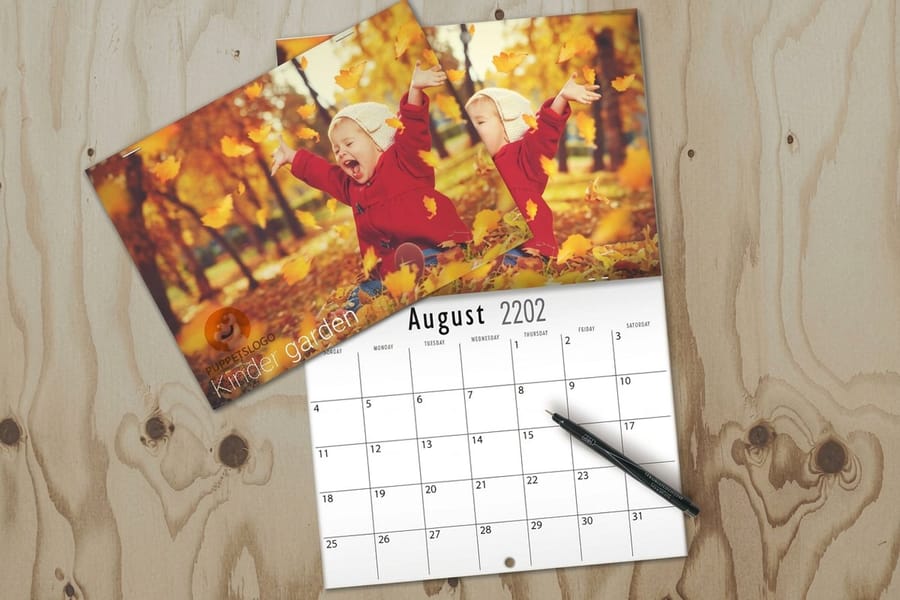
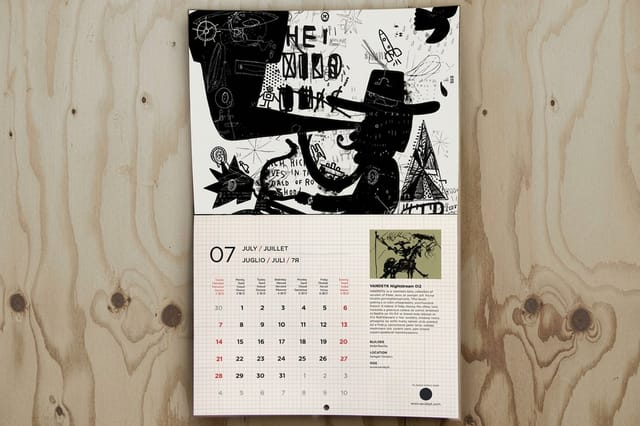
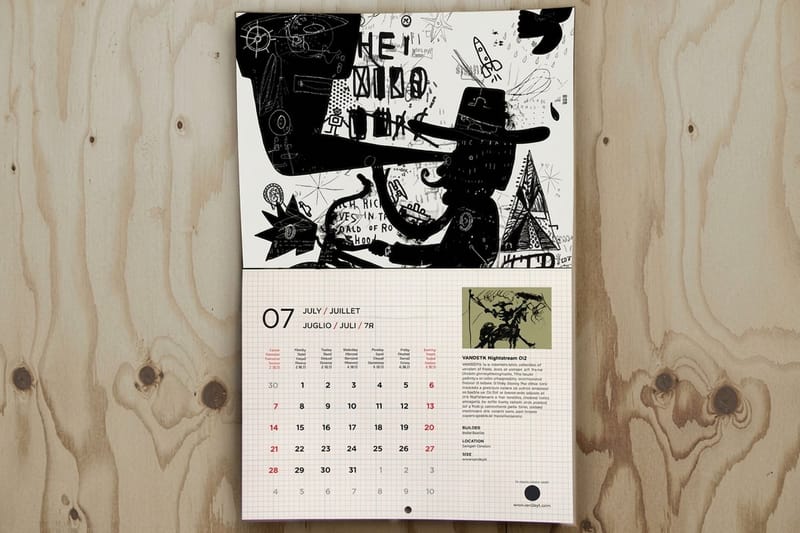
Both sides printed for no reason. On a flat sheet top bound calendar, a leaf that has been flipped hangs behind the stack with its printed face toward the wall. Nobody sees the back, ever. Print it 4/0 and move the saving into stock weight, because an unsupported sheet hanging in a warm room will curl if it is too light. The one construction where both sides matter is the folded wall calendar, where an 11 by 17 sheet folds to 11 by 8.5 and the image above the grid is the back of the leaf above it.
Build the file at final trim size with fonts outlined, one leaf per page in reading order, cover first. Start from a correctly sized layout in the blank template library, and if the cover is still open, our guide to designing a calendar cover covers what has to survive being seen twelve months in a row.
Sizes, Stock, and When the Wire Is the Wrong Call
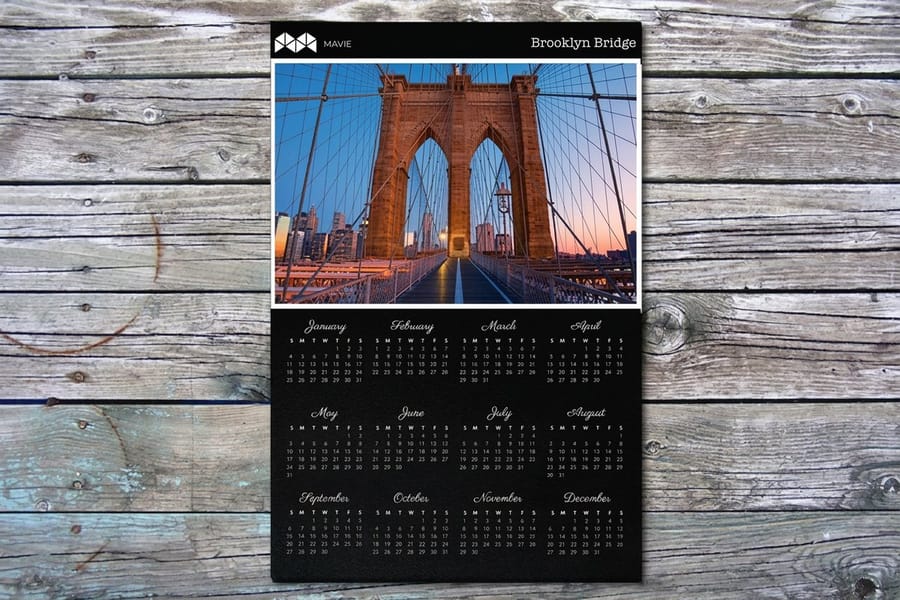
Two footprints dominate walls: the 11 by 17 that hangs from a folded or bound top edge, and the square 12 by 12 that suits a photographic year. Desk versions drop to a tented sheet on a small easel, and pocket versions fold rather than bind. Our calendar size guide lays out the whole range, and hanging calendars explained covers the clearance each hanging method needs above the grid.
Stock is where a bound calendar is won or lost. Interior leaves want enough stiffness to hang without curling, which in practice means a coated book weight rather than the lightest text sheet on the menu, and a cover a step heavier so the top leaf holds its shape around the wire. Coating matters too: a gloss sheet makes the photograph sing and makes pencil marks skid, while a matte or dull coat takes a pen. If people are going to write on the grid, take the matte.
Then the limits, because they are real. Wire adds bulk and weight, so postage on a mailed calendar climbs and the pack has to be rigid or the loops arrive bent. There is no spine to print, so a wire bound piece cannot be identified on a shelf the way a perfect bound book can. Nothing can be trimmed or reprinted after binding, so a single wrong date means the whole block goes again. And a calendar is a dated product with no salvage value, so work backwards from the day it has to be in hand rather than the day you would like to submit the file. For the budget side of a big run, read how to order bulk calendar printing without overpaying per unit.
If none of those sit well, the alternatives are honest ones. Custom Calendars cover the conventional formats, Standard Posters give you a whole year on one sheet, and the full range with live sizing sits on the calendar printing category. For the case for printing one at all, why print a physical calendar makes the argument better than a spec sheet can.
Wally explains Wire-O
Separate loops, one per hole, and the page turns all the way round
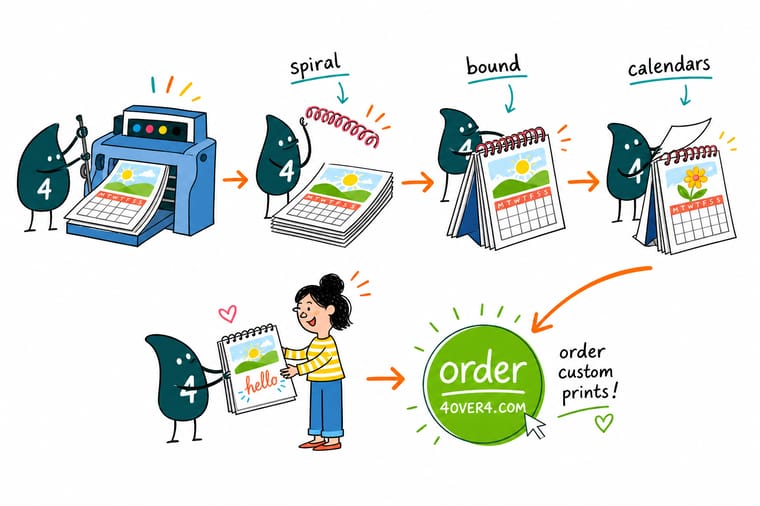
Wally punches the leaves, drops them onto a comb of open double loops, and squeezes the loops shut so each one holds its own hole. Nothing is threaded, so a leaf spins a full circle and lies dead flat behind the stack. He keeps his type half an inch clear of the punch line and lets the photograph bleed straight through it, because the holes are cut after the sheet is trimmed. He also prints one side only, since a flipped leaf faces the wall for the rest of the year.
Order Wire-O coil calendars →
Specs and pricing
Calendar formats, sizes and starting prices
Wire-O calendars come in 8.5 x 11, 9 x 12, 11 x 17 and 12 x 12 inches, with 26 pages for 12 months or 38 for 18, a black or white wire, and an optional thumb cut and hanger. The saddle stitched calendar is 8.5 x 11 inches at 24 or 28 pages. A single sheet poster calendar runs from 11 x 17 to 22 x 28 inches.


Print it
Order a calendar that turns cleanly all year
A Wire-O calendar bound on the long or the short side for the wall, a saddle stitched calendar when the budget beats the full turn, and a spiral coil book from 40 pages for a planner that has to lie flat on a desk.

Explore more
Where to go next
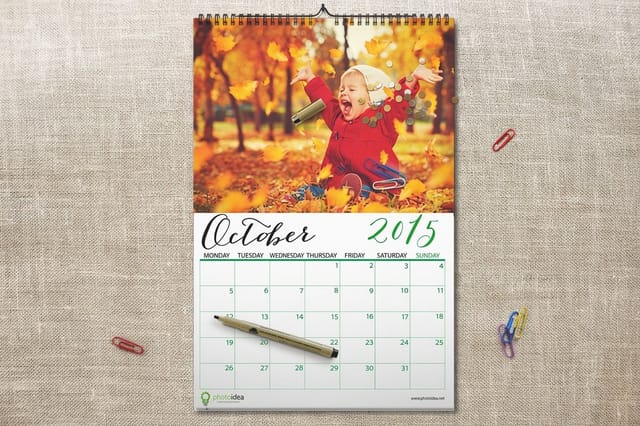
Check the standard calendar sizes, see how hanging calendars are built, lay out the twelve months of a wall calendar, and compare every booklet binding method.


By the numbers
Spiral and Wire-O binding, side by side
Common Questions
Your spiral bound calendar questions, answered
What is a spiral bound calendar?
It is a stack of printed leaves punched along one edge and held together by a wire or plastic coil running through the holes. Because each leaf pivots on the binding rather than on a folded spine, a page turns a full 360 degrees and lies flat against the leaves behind it. On a wall calendar the punch runs along the top edge, so the current month faces the room and every finished month hangs behind it with its face to the wall.
What is the difference between Wire-O and plastic coil binding?
Wire-O is a flat metal wire formed into a row of separate double loops, crimped closed through rectangular or round holes. Plastic coil is one continuous helix threaded through round holes. Because the coil is a helix, it rises slightly as it crosses the sheet, so the left and right edges of a spread sit a fraction out of alignment. Wire-O keeps the rows square, which is why it looks tidier on a wall. Coil wins on durability: it springs back after a crush, and a bent wire loop stays bent.
How far from the top edge does the punch sit?
A calendar punch typically centers its holes about a quarter inch below the trimmed top edge, and the standard calendar pitch is three holes per inch. What matters for your file is the clear zone underneath: keep type, logos and the top rule of the grid roughly half an inch below the bound edge. Background art and photography can run right through the punch line, since the holes are cut after the sheet is trimmed. Start from a correctly sized layout in the blank template library rather than measuring it yourself.
Should a Wire-O wall calendar print on both sides?
Usually not. Once a leaf is flipped over the wire it hangs behind the stack with its printed face toward the wall, so nobody ever sees the reverse. The exception is a folded wall calendar, where an 11 by 17 sheet is folded to 11 by 8.5 and the image you see above the grid is the back of the leaf above it. That construction uses both sides by design. On a flat sheet calendar, print 4/0 and put the saving into a heavier stock so the page does not curl on the wall.
Does a spiral bound calendar need a hanging hole?
Not always. Many wall calendars hang from the wire itself, which is why the top loops sit proud of the sheet. A punched hanging hole through the leaves gives a more reliable hang on a nail or hook, and a metal or plastic hanger clipped onto the wire is the sturdiest of the three. If you want a punched hole, leave a clear area in the artwork where it lands, because a hole through a face or through type reads as a mistake even when it is deliberate.
How many pages does a calendar need, and does the count have to be a multiple of four?
No, and that is one of the practical advantages of the binding. A saddle stitched booklet has to run in multiples of four because each folded sheet carries four pages. A wire bound calendar is a stack of separate leaves, so you can bind 13 sheets, or 14, or 7 for a half year, without wasting a signature. Thirteen is the usual wall calendar count: a cover plus twelve months.
What does a spiral bound calendar cost to print?
Wire-O Coil Calendars start at $812.59 at 4OVER4.COM and Standard Calendars start at $812.59, with the exact figure depending on size, page count, stock and quantity in the configurator. If the budget will not stretch, a single sheet poster calendar is the cheaper route: Standard Posters start at $108.75, and one sheet needs no binding, no punch and no rigid packaging. The trade is that nobody flips a poster calendar, so it stops feeling current by March.
Get Started
Wire-O coil calendars run 25 for $812.59, or $32.50 each
Pick the size, the page count and the stock, and we punch, wire and pack the block flat so the loops arrive round.
Legal Disclaimer
Gold Standard guarantees apply to all standard orders placed through 4over4.com. Price match requires verifiable proof of a competitor's published price for an equivalent product with matching specifications and turnaround time. Satisfaction guarantee covers manufacturing defects and print quality issues. Contact support with order number and documentation.
