
Custom Header Cards and Bag Topper Printing Guide for 2026


Your complete header cards printing guide, from design to shelf
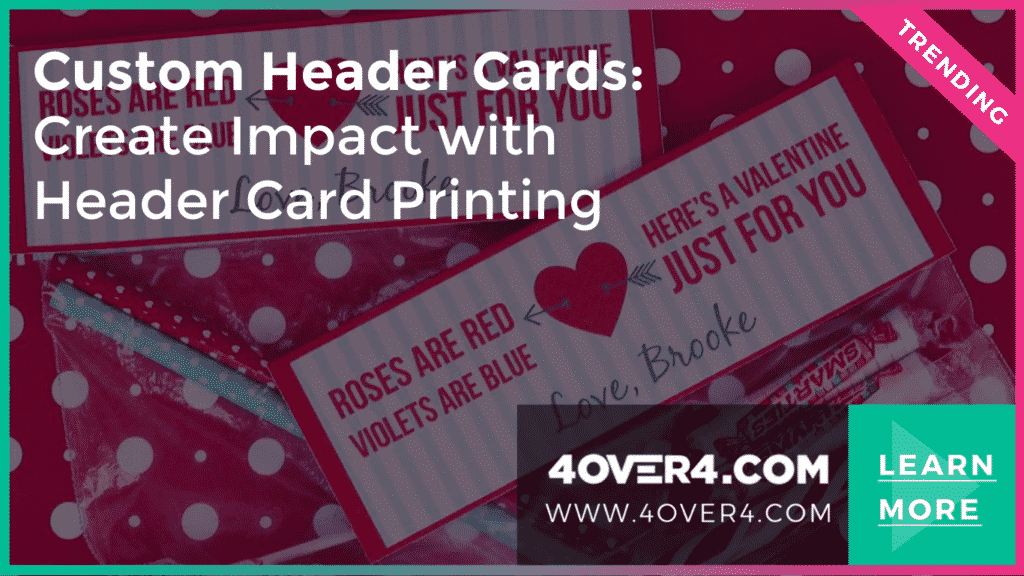
Header cards are folded cardstock pieces that attach to poly bags, turning simple packaging into branded retail displays. 4OVER4.COM has printed 10 billion+ cards across 1,000+ product types, and header cards stay one of the most affordable ways to get your products shelf ready. Whether you package hair accessories, craft supplies, or snack items, this header cards printing guide walks you through every step, from choosing the right size to designing artwork that sells.
Running a product based business or launching a new brand? Custom printed header cards are one of the smartest packaging solutions available. They are cost effective, they are versatile, and you do not need expensive equipment to use them. A stapler is all it takes to attach a custom foldover header card to a poly bag and create a professional retail ready product.
Full color personalized bag toppers cut your packaging expenses in a real way. When you order header card printing in bulk, the per unit price drops fast. 4OVER4.COM is trusted by 150,000+ businesses for custom header card printing, so let us dig into how these simple pieces get your products into customers hands.
Why header cards keep growing in popularity
Whether someone is actively shopping or just walking past a display, they meet dozens of brands and products every day. Some grab attention instantly, others get ignored. The difference is packaging. Your packaging shapes a buying decision before a shopper even touches the item, and one of the easiest, most budget friendly ways to upgrade that packaging is with header cards.
With rising costs across every industry, businesses are leaning toward smaller quantity packaging that still looks professional. Custom sized poly bags with header cards play a real role in that shift. They give small brands the same shelf presence as bigger competitors without the overhead.
Almost every industry uses custom header cards to package products at lower rates. They boost visibility and push profitability for retailers and brands alike. You can customize the color, design, shape, and size to match your product and your brand personality. Browse the Showcase to see how other businesses put header cards to work.
Header cards versus bag toppers, the same product under two names

There is no difference. A header card and a bag topper are the same printed piece of cardstock, stapled flat to a poly bag or folded over the top of one. Which word you use tends to follow your industry: craft, bakery, and food sellers say bag toppers, retail and hardware buyers say header cards, and both land on the same product.
It matters mainly when you go looking for a printer. Search one term and you get party favor templates, search the other and you get retail packaging, so if a supplier speaks only one of the two you may never find the option you actually wanted. 4OVER4.COM prints both as header cards, in the same sizes, stocks, and finishes.
The distinction worth making is flat versus fold over. A flat card sits on the front of the bag, a fold over wraps the top and prints on both sides, and that choice, not the name, is what changes your file setup.
How to create header cards that actually sell products
A header card works hardest when the design, size, and finish all pull in the same direction. Start with the size. Your header card width should sit at least 1/8 inch wider than the poly bag opening so the fold stays clean and the attachment stays secure. Taller cards suit heavier products and give you more branding room, while lighter items like hair clips can use shorter cards.
Design for the front first. Keep your brand name, product name, and one key selling point on the front panel, and move ingredients, instructions, barcodes, or social handles to the back. Always build in 0.125 inch of bleed so no white edges show after trimming, use images at 300 DPI or higher, and convert fonts to outlines before you upload. Bold, contrasting colors win on a crowded shelf, so add a bright accent or border if your brand colors run subtle.
Header card benefits that matter for your business
Header cards, also called bag toppers, deliver real advantages for small and mid sized businesses. Here is what makes them worth the investment.
- Sales growth. Professional packaging raises perceived value, which drives more purchases at retail and craft shows.
- Free marketing. Every header card is a mini billboard on a shelf or peg hook, working for you around the clock.
- Customer attraction. Eye-catching printed cards pull shoppers toward your products over plain-packaged competitors.
- Eco-friendly options. Recycled cardstock lets you market sustainably without extra cost.
- Total customization. Unique shapes, die-cut designs, and full-color printing make every card yours.
- Budget-friendly. Header cards cost a fraction of custom boxes while delivering similar shelf impact.
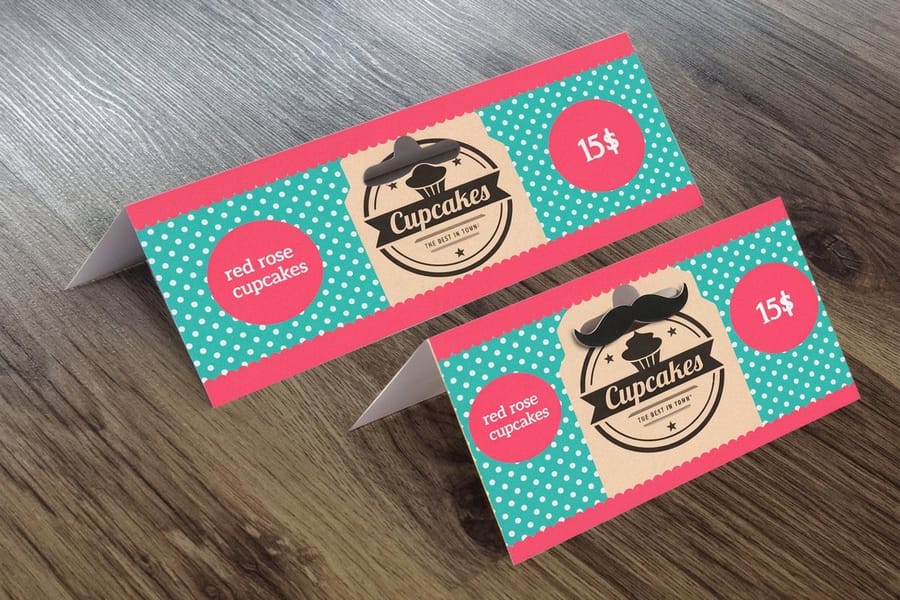
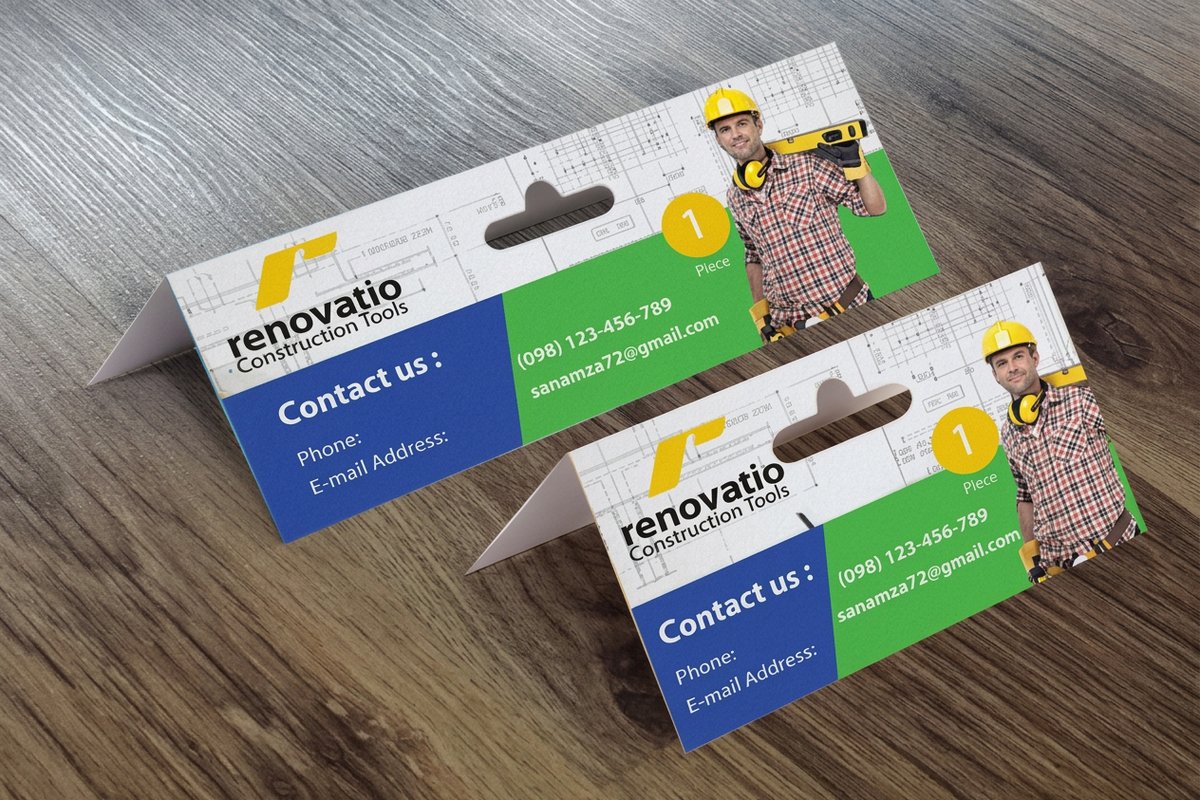
The typical header card design includes holes punched at the top for peg hooks, a crease at the midpoint for folding over a poly bag, and two glued panels to hold everything secure. You can also staple the card straight to the bag for a tighter fit.
Whether you need Free Business Cards or custom header cards, the 4OVER4.COM team backs every order. Print your product image on the back, add matte or gloss lamination, and emboss your logo for a card that feels as good as it looks. For more packaging ideas, explore Black Hangtags and Bottle Neck Hang Tags as complementary products.
Header card sizes, stocks, pricing and turnaround
Header cards are built to your bag, not to a fixed catalog size. Measure the poly bag you are packing, add 1/8 inch to the width so the card is not fighting the seams, then decide whether it sits flat on the front or folds over the top. Everything else follows from those two choices.
| Spec | Flat header card | Fold over header card |
|---|---|---|
| Width | Bag width plus 1/8 inch | Bag width plus 1/8 inch |
| Printed height | The visible face only | Double the visible face, because the panel wraps front and back |
| Scoring | None needed | One score at the midpoint so the fold lands clean and square |
| Stock | 14pt for standard retail packaging | 16pt, since two panels have to hold their shape together on a peg hook |
| Finish | Gloss for bright retail, matte for boutique, uncoated for a natural look | The same three, with matte hiding handling marks best |
| Attachment | Stapled or glued to the face of the bag | Folded over the bag top, then stapled through both panels |
| Best for | Flat goods, sticker packs, cards, single-item bags | Anything with bulk, and any product that hangs from a peg hook |
Pricing runs by quantity, so the per-unit cost at 250 is not the per-unit cost at 1,000. Pick your size, stock, and finish on the header cards page and the price for 250, 500, and 1,000, with the turnaround for each, shows before you upload a file.
Shop the product
Custom header cards, ready to brand
Preset and custom sizes, the fastest way to get your products shelf ready.
If you also need label solutions for bottles or jars, look at Any Shape Wine Labels for products that call for wraparound branding instead of a header card.
Choose your cardstock and finish
The stock you choose changes how your header card feels in a customer hand. Thicker stock signals quality. A 14pt cardstock works well for standard retail packaging, and heavier stock suits boutique or artisan products.
Finish changes the look and the durability. Gloss lamination makes colors pop and adds a slight shine, matte lamination gives a softer, more sophisticated feel, and uncoated stock reads natural and eco friendly. 4OVER4.COM offers multiple finish and coating combinations, so match the finish to where the product will live. Bright retail environments favor gloss, while craft fairs and farmers markets often suit matte or uncoated.
Add functional elements
Do not skip the practical details. Hang holes let your product hang on peg hooks, and score lines keep folding clean and consistent. If you attach the card with staples, keep your design elements away from the staple area so nothing gets covered.
Barcodes and UPC codes are a must for retail. Place them on the back panel with enough white space around them for scanners to read cleanly. A QR code linking to your site or social profiles turns your header card into an interactive marketing piece too.
Quantity and price
Header card pricing and specs
Real configurator numbers, the more you order, the lower the per-unit cost drops.
| Quantity | Price Per Unit | Total |
|---|---|---|
| 1,000 | 21.8¢ | $218.30 |
| 2,500 | 13.7¢ | $341.88 |
| 5,000 | 10.4¢ | $520.36 |
| 10,000 | 10.3¢ | $1,028.35 |
Industries that get the most from header cards
Different businesses need different approaches. Here is what works for specific industries, and why.
Beauty and personal care
Hair accessories, bath bombs, lip balms, and sample-size skincare all benefit from header card packaging. The card gives you room to list ingredients, display your logo prominently, and keep a cohesive brand look across your product line. A well-designed header card makes a $5 product look like a $15 product.
Craft and handmade goods
If you sell at craft fairs, Etsy, or local boutiques, header cards are your best friend. They are affordable enough for small batch runs and professional enough to compete with mass-produced products. Handmade soap, candles, jewelry components, and sewing notions all package beautifully with custom bag toppers.
Food and snacks
Trail mix, candy, dried fruit, cookies, and spice blends all package well in food-safe poly bags with branded header cards. Make sure your card stock and inks are food-safe compliant if the card touches food packaging, and include nutritional information, allergen warnings, and your brand story on the card.
Hardware and small parts
Screws, bolts, fishing lures, craft beads, and electronic components are commonly sold in poly bags with header cards. The card provides room for product specifications, quantity counts, and compatibility notes. Industrial products benefit from clear, no-nonsense designs with prominent part numbers.
Pet products
Dog treats, cat toys, grooming accessories, and training aids all use header card packaging effectively. Pet owners respond to bright colors, cute imagery, and clear benefit statements, so your header card should answer why someone should buy this for their pet in under three seconds. Treat pouches in particular are usually sold as bag toppers, folded over a resealable bag so the seal still works after the first opening.
Header card design mistakes to avoid
Even experienced brands make these errors. Here is what to watch for as you follow any header cards printing guide.
Crowded copy. The header card is the smallest thing on the shelf and it gets read from about three feet away. One product name, one benefit line, and the brand mark is the entire budget. Ingredients, care instructions, and social handles belong on the back panel or on the bag itself.
The wrong fold margin. Art that runs into the score gets bisected by the fold, so a logo centered on the flat file ends up half on the front and half on the back. Hold type and logos at least 1/8 inch clear of the score on both panels and treat that line as a hard edge, not a middle.
Low contrast. Pale type over a pale product photo disappears under retail lighting and vanishes completely in a phone photo. Put the product name on a solid block of color, then check the file in grayscale, because what fails there fails on the shelf.
No clear barcode zone. A barcode printed over artwork, across a fold, or without white space at either end will not scan at the register. Reserve a plain white rectangle, keep the bars vertical, and never shrink the code to make room for a graphic.
- Cluttered layouts. Trying to fit every detail on the front panel is a common error. Keep the front clean and impactful, and move secondary information to the back.
- Low-resolution images. Pixelated logos and blurry product photos destroy credibility instantly. Always use 300 DPI or higher, and rebuild a small logo file as a vector.
- Wrong size for the bag. A header card that is too narrow slides around, and one that is too wide will not fold properly. Measure your poly bags and add that 1/8 inch buffer.
- Ignoring the fold. Your design needs to account for where the card folds over the bag. Critical text or images on the fold line will look distorted or get damaged by staples.
- Skipping the proof. Always review a digital proof before you approve the order. Colors on screen can look different in print, and a proof catches issues before they get expensive.
For more promotional packaging and branding ideas, explore Logo Sticker Design Ideas that pair perfectly with header cards. You can also browse the full library of printing articles, and see finished projects in the Showcase.
Printing options and file setup for header cards
Getting your files right before uploading saves time and prevents reprints. Here is what you need for a smooth header card order with 4OVER4.COM.
- File format. Submit a press ready PDF with fonts outlined and images embedded. AI and EPS files work too. Avoid JPGs or PNGs as your final print file because they compress data and can reduce quality.
- Color mode. Design in CMYK, not RGB. Screens show RGB, but printing uses CMYK ink, so converting before upload gives you the most accurate color.
- Bleed and safety. Include 0.125 inch of bleed on all sides, and keep critical text and logos at least 0.125 inch inside the trim line so nothing gets cut off.
Check these four before you upload.
- The dieline. Put the cut line and the score on their own named layer so nobody mistakes them for artwork, and leave the rest of the file exactly as it prints.
- The safe zone either side of the fold. Keep type and logos at least 1/8 inch clear of the score on both panels, because a fold that lands a hair off center will otherwise clip a letter.
- Hang hole clearance. Leave the punch area empty with a margin around it, and remember that on a fold over card the hole goes through two layers of stock above the crease.
- The barcode quiet zone. White space at both ends of the code, bars running vertically, nothing printed behind it, and no lamination texture across it.
Need a head start on your design? These blank templates give you the correct dimensions, bleed areas, and fold lines already set up, including 30mil Clear Plastic Cards and 30mil Frosted Plastic Cards.
Start fast
Templates and print-ready blanks
Header card design templates and exact-size blanks so your artwork lands inside the cut line and fold.
Wally turns a poly bag into a retail display
One folded card, instant shelf presence
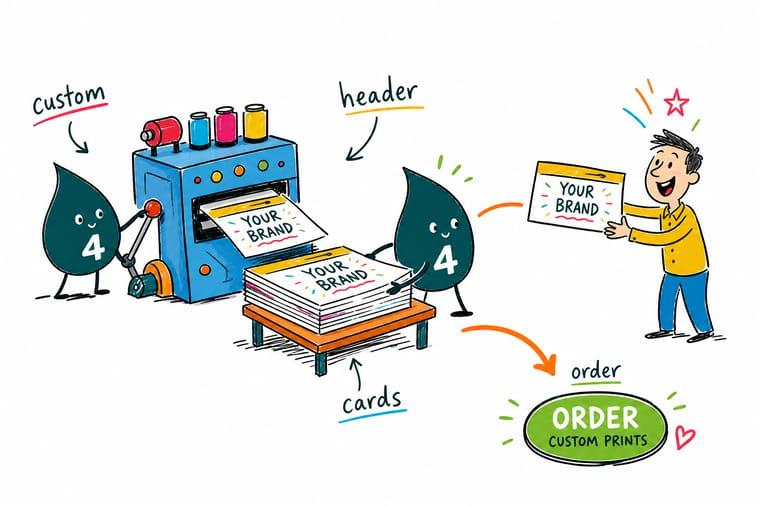
A header card is the cheapest way to make your product look retail ready. Measure your poly bag, add 1/8 inch to the width, design the front in CMYK with 0.125 inch of bleed, and 4OVER4.COM prints it sharp. Pick gloss for bright shelves or matte for a boutique feel, then staple it on and let your packaging do the selling.
Order header cards →What to remember about header card design
Why header cards work for small brands
- Maximize sales. They lift sales and productivity for small and medium businesses.
- Grow faster. Results are tangible and help your company grow.
- Free marketing. Header cards keep working on the shelf long after the sale.
- Attract buyers. Bright, branded packaging pulls customers toward your products.
- Cost-effective. Recycled custom header cards market your brand for less.
- Fully custom. Personalize into any shape and custom design.
- Affordable. Header cards stay economical for runs of any size.
Alongside header cards, many businesses order complementary products like Barricade Tape for events and promotions. The right mix of print products builds a cohesive brand presence across every touchpoint.
Explore more
More ways to brand your packaging
Every related product and page for header cards, one card each, so you can keep exploring branded packaging.
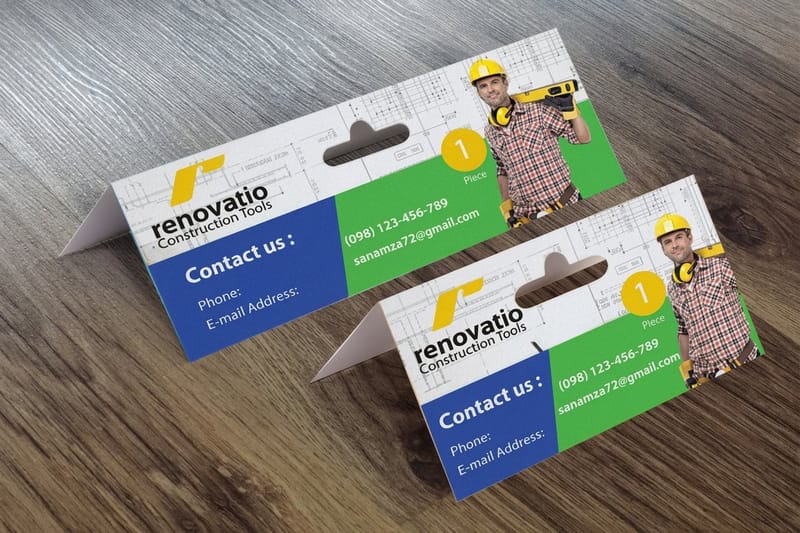 Product Header Cards Custom foldover bag toppers from $218.30.
 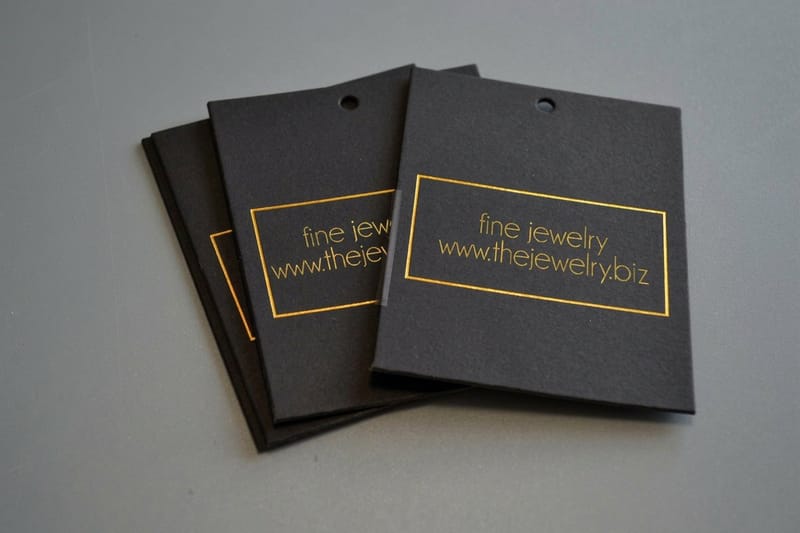 Product Black Hangtags Premium dark hang tags for retail displays.
 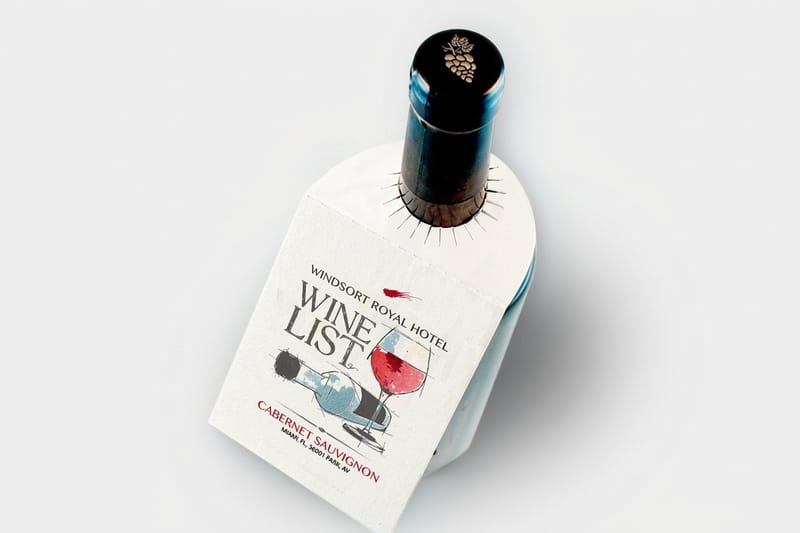 Product Bottle Neck Hang Tags Wraparound tags for bottles and jars.
  Product Any Shape Wine Labels Die-cut labels for bottles and jars.
 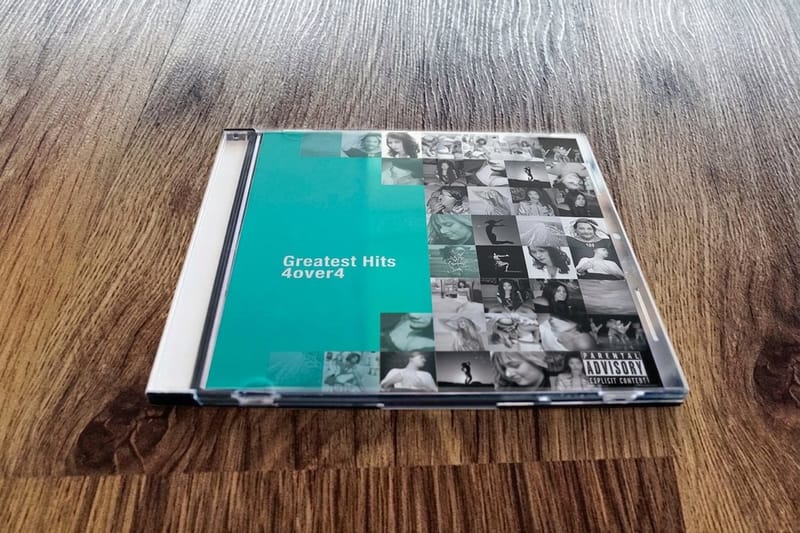 Product Custom CD Covers Branded covers for media packaging.
  Product Custom CD Sleeves Slim protective sleeves for discs.
  Product Barricade Tape Printed tape for events and branding.
  Article Logo Sticker Design Ideas Stickers that pair with header cards.
  Showcase Showcase See finished header card projects from real customers.
 Ready to get your products shelf ready?
Measure your poly bag, add 1/8 inch, drop in your CMYK artwork or a free template, and 4OVER4.COM prints your header cards sharp.
Common questions about header cards printing
What are the best practices for header cards?
Keep the front panel clean with your logo, product name, and one key selling point. Use 300 DPI images, design in CMYK, and always include 0.125 inch of bleed. Position critical text inside the safety zone and away from fold lines, then review your digital proof before you approve the order.
How do I choose the right header cards?
Measure your poly bag width and add 1/8 inch for the header card width. Choose card height based on how much information you need to display and how heavy your product is, since heavier items need taller cards. Pick a cardstock weight and finish that matches your brand, thicker stock with lamination for premium products and standard weight for everyday retail.
What makes header cards effective for marketing?
Header cards turn plain poly bags into branded retail displays at a fraction of custom box costs. Every card acts as a mini billboard on the shelf, communicating your brand, product benefits, and professionalism. Full color printing with quality finishes raises perceived value, which drives purchase decisions. Pair them with Custom CD Sleeves and other branded packaging for a cohesive look.
How much should I budget for header cards?
Header card pricing depends on quantity, size, cardstock, and finish. Per unit costs drop as orders grow, so 1,000 or more units bring the price down fast. 4OVER4.COM lists transparent pricing with no hidden setup fees, and 99.8% on-time delivery means your packaging arrives when you need it.
