
Custom Pennant Flags Designed to Print Sharp and Fly Long


What a Pennant Flag Is and Why the Shape Still Works
A pennant flag is a triangle, and that is the whole trick. Take a rectangle, cut it on the diagonal, print it edge to edge in full color, and the shape does something a square banner never manages. It points. The eye slides down the taper to the tip and lands wherever you aimed it, which is why pennants have hung over ballparks, car lots, and school gyms for a century without once looking dated.
Most people meet pennants in one of two forms. The first is a single large triangle mounted on a wall or a pole, the piece a team hangs to mark a season nobody wants to forget. The second is a string of small triangles running along a rope or ribbon, often called bunting, which turns a bare doorway, fence line, or aisle into an event in about four minutes.
4OVER4.COM has served 150,000+ businesses since 1999, and flag orders tend to land in three buckets. Someone needs a lot of pennants for one weekend. Someone needs a handful that survive an entire season in the sun and wind. Someone needs a keepsake that hangs on a wall for the next ten years. Those are three different jobs, they want three different materials, and choosing the wrong one is the most common and most expensive mistake on this page.
Shop the range
Custom printing collection
Flags, banners, and every custom format 4OVER4.COM prints, gathered in one place.
Where Pennant Flags Earn Their Keep
Pennants sell attention cheaply. A string costs less than almost any other signage you can hang, goes up without tools, and works at the distance where a printed sign has already lost the argument. That combination makes them the default for anyone who needs a space to look busy, festive, or open for business right now.
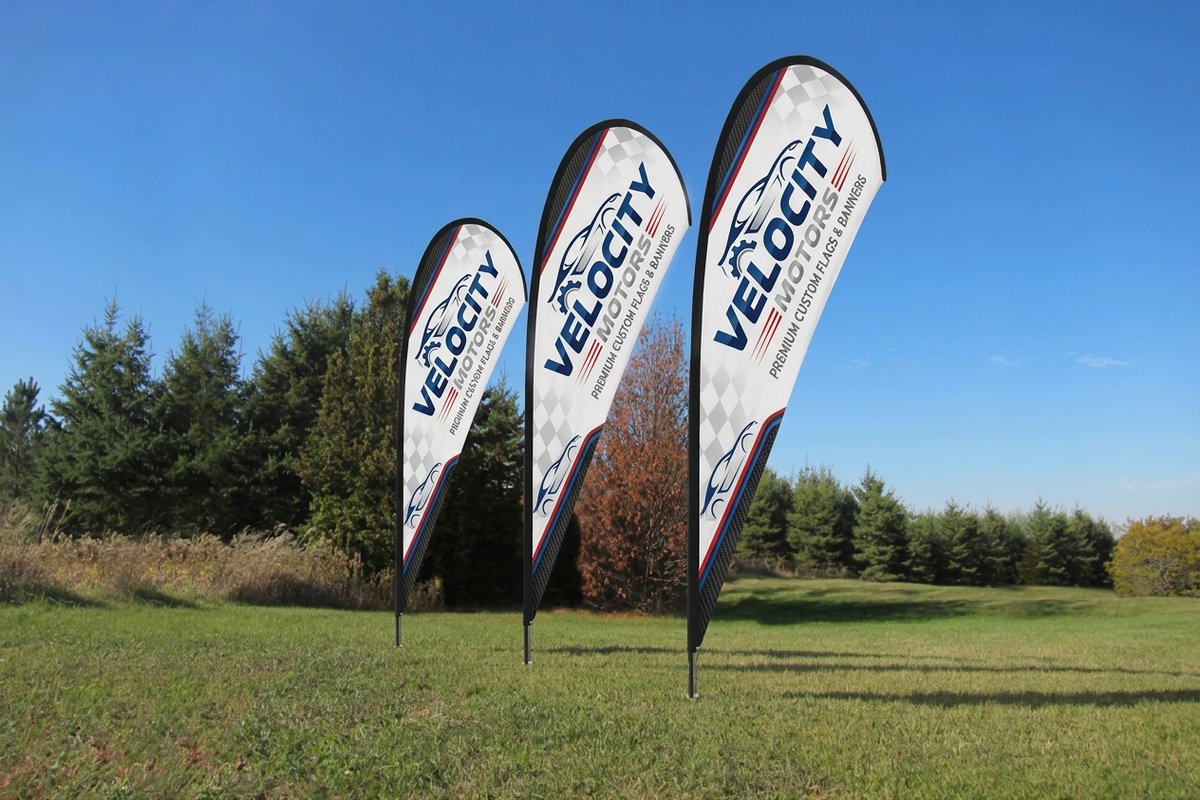
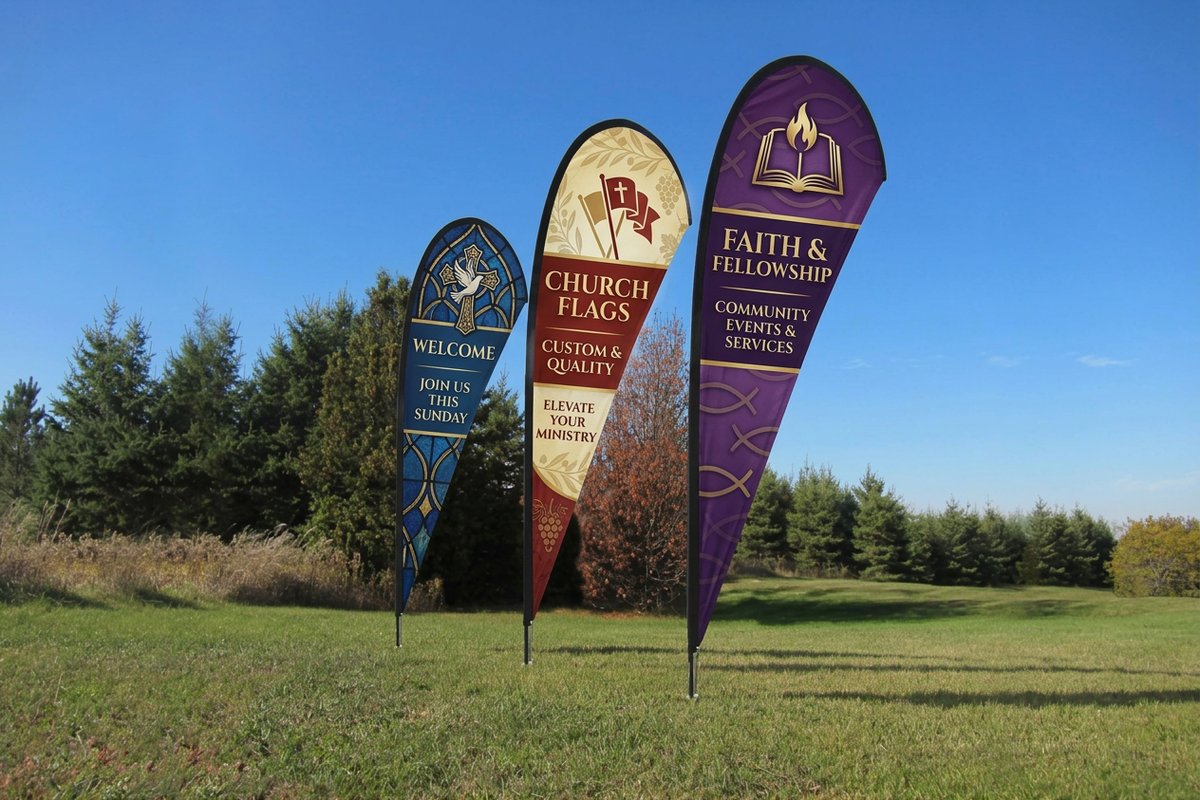
Dealerships and service lots lean on Automotive Flags because a moving row of color reads from a road at 40 miles an hour, long before anyone can make out a logo. Congregations and community groups use Church Flags for processions, festival days, and permanent sanctuary display, where fabric weight and color depth matter more than raw volume.
- Grand openings and sidewalk sales. A run of pennants across the storefront signals activity from the far side of the parking lot.
- School spirit and youth sports. Team colors on triangles, one per class, per grade, or per championship year.
- Outdoor festivals and markets. Bunting strung between tent poles gives a row of identical booths an actual identity.
- Weddings and backyard parties. Custom pennant banners spelling a name or a date, hung over a table or a doorway.
- Trade shows and conferences. A triangle hanging above a booth is visible over the heads of the crowd, which a table sign never is.
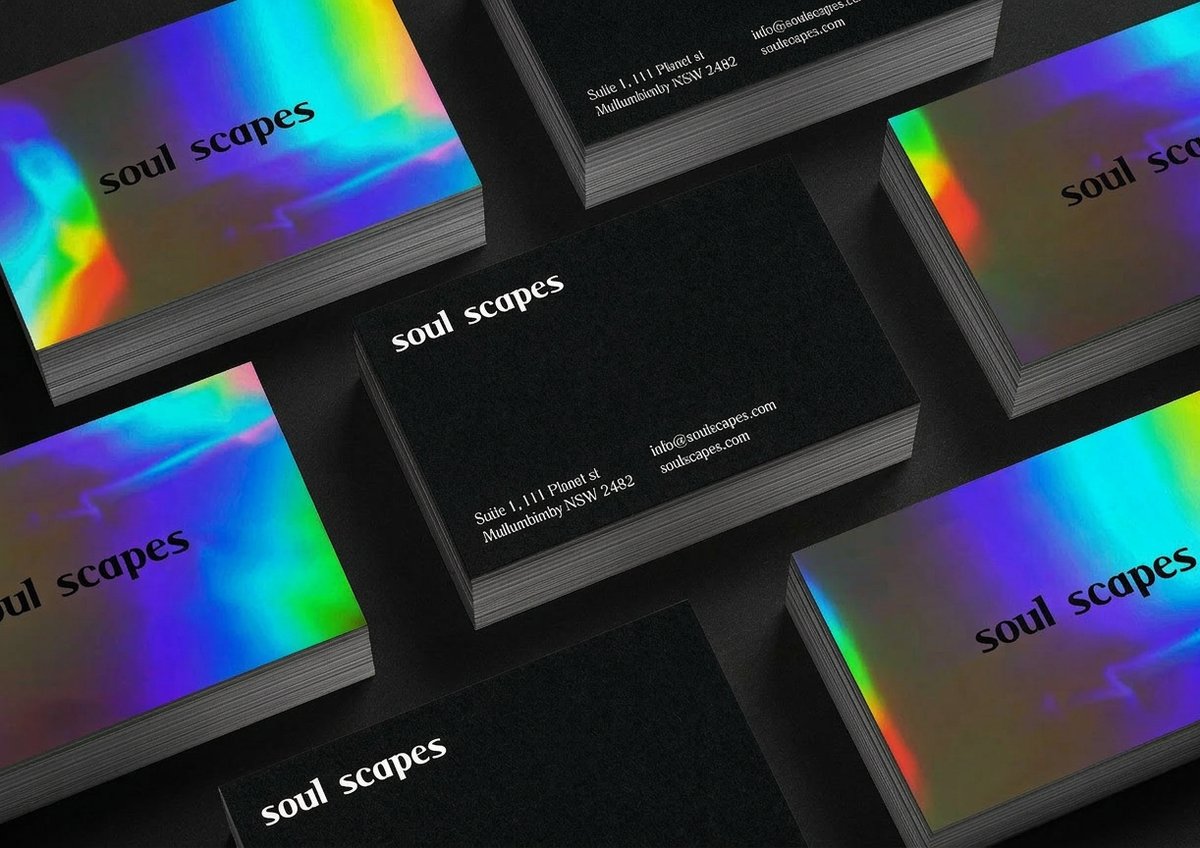
The one thing pennants do not do is carry detail. Treat them as the thing that turns a head, then hand the details to something a person can hold and keep. That is why a stack of Custom Business Cards belongs on the table under the bunting.
Print picks
Three formats that pair with a pennant run
Live prices, ready to customize with your colors and artwork.
Pennant Sizes and Shapes That Hang Straight
Pennant sizing is really two decisions. How tall is each triangle, and how far apart do they sit on the string. Get those right and a run looks deliberate. Get them wrong and it looks like leftover decorations from someone else's party.
Small strings for interiors and short spans
Triangles in the 7 to 9 inch range suit doorways, booth fronts, dessert tables, and anywhere a viewer stands within about ten feet. Keep the gap between flags roughly equal to the flag width so the row reads as one continuous line rather than a set of separate objects.
Mid strings for storefronts and fence lines
Around 10 to 12 inches tall is the workhorse size for outdoor runs across a lot, a patio, or a stretch of fence. At that scale a single word per flag stays readable from the street, and the string still has enough mass to move visibly in light wind.
Single large pennants for walls and poles
A standalone spirit pennant is a different animal. Here the triangle is the whole piece, often two to three feet along the long edge, with one bold mark and a date. Build it like a poster rather than like signage, because people will stand close and read it slowly.
Shape variations worth knowing
- Classic isosceles. Symmetrical taper to a center point, the shape everyone pictures when they hear pennant.
- Swallowtail. A notch cut into the fly end, which reads as more formal and moves beautifully outdoors.
- Right triangle. One straight edge along the top, good for flags that hang from a single horizontal line.
- Rounded tip. A softened point that resists fraying on long outdoor runs and suits softer brand looks.
Quantity and price
Custom flag pricing and specifications
Real configurator numbers. The more you print in one run, the less each flag costs.
| Quantity | Price Per Unit | Total |
|---|---|---|
| 1 | $108.75 | $108.75 |
| 2 | $103.25 | $206.49 |
| 3 | $103.25 | $309.74 |
| 4 | $97.76 | $391.02 |
| 5 | $97.76 | $488.78 |
| 6 | $95.56 | $573.36 |

Indoor Paper or Outdoor Fabric, Decide Before You Design
This is the decision that determines whether your pennants look great for one evening or one season. Material also changes how color behaves, so it needs to be settled before you finish the artwork, not after.
Paper and card stock pennants print the crispest color and the finest detail, and they cost the least per flag. They also curl in humidity and disintegrate in the first rain, which makes them perfect indoors and a waste of money outside. Fabric flags in knitted polyester breathe, so they fly in light wind instead of hanging limp, and the weave softens fine detail slightly. Reinforced vinyl is the toughest option and holds saturated color hard, but it is heavy and needs real wind to move.
- One indoor event, high flag count. Paper or card stock. Cheapest way to fill a room with color.
- Outdoor run, weeks to months. Knitted polyester. It moves in wind and resists fading better than paper ever will.
- Roadside and high wind. Reinforced vinyl with stitched hems. Built to take punishment near traffic.
- Wall keepsake or trophy pennant. Felt weight or heavy fabric, where the texture is part of the point.
One practical note on color. Fabric absorbs ink differently than coated paper, so deep blacks and heavy saturation read slightly softer on a flag than they do on your screen. Push contrast a little further than feels necessary and the finished pennants will look right outdoors.
Compare options
Popular flag formats, side by side
Material, size, quantity, turnaround, and price lined up so the tradeoffs are obvious.
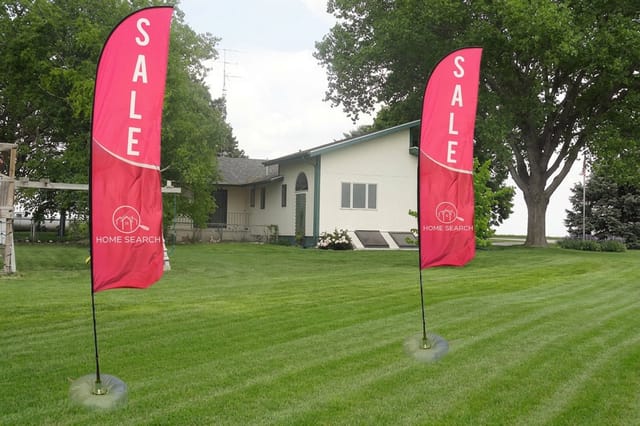 Feather Flags | 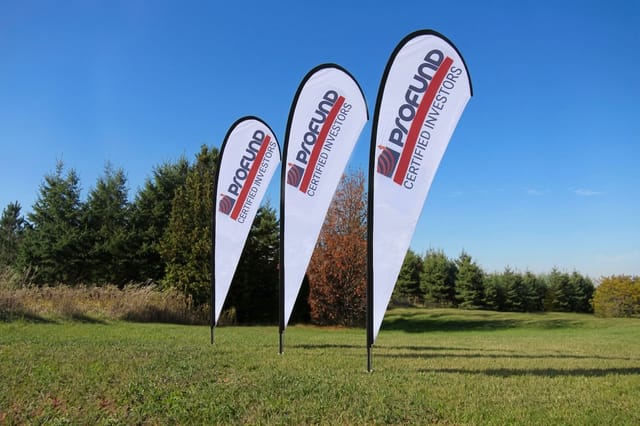 Teardrop Flags | 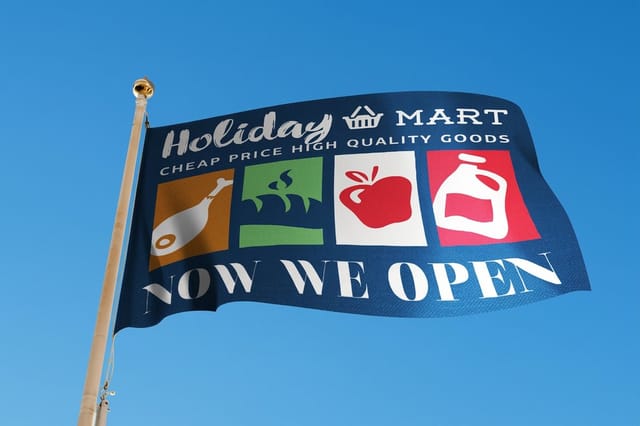 Pole Flags | 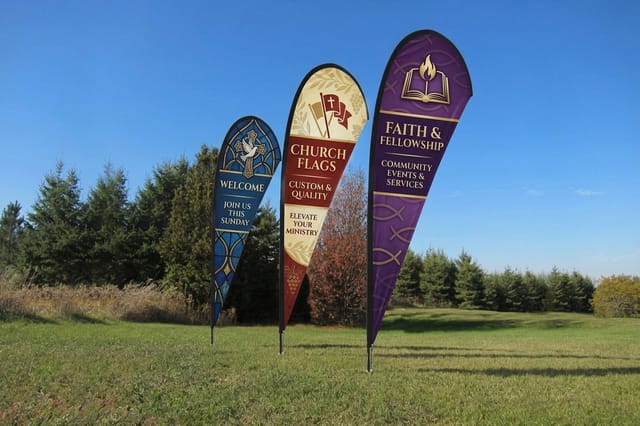 Church Flags | |
|---|---|---|---|---|
| Min price | $108.75 | $108.75 | $97.76 | $108.75 |
| Size | 24" x 81" (8 Foot Tall) | 32" x 70" (7 Foot Tall) | 36" x 60" | - |
| Default qty | 1 | 1 | 1 | - |
| Turnaround | 4 business days | 4 business days | 7 business days | - |
| Rating | ||||
| View & customize | View & customize | View & customize | View & customize |
Designing a Pennant That Reads From Across the Parking Lot
A pennant is not a small poster. It is a shape that narrows, moves, and gets seen at an angle from a distance, usually for less than two seconds. Design for those conditions and the rest is easy.
Start by respecting the taper. Anything you place near the point will be squeezed, so keep type and logos in the upper third where the triangle is widest. Set the baseline parallel to the top edge rather than following the diagonal, because tilted type on a moving flag becomes unreadable fast.
- One idea per flag. A word, a number, a letter, or a mark. If it needs a second line, it belongs on a banner instead.
- Contrast beats cleverness. Dark type on a light field or the reverse. Mid tone on mid tone disappears at 30 feet.
- Mind the hem. Keep artwork at least half an inch inside the edge, since the top edge folds over the rope or pole sleeve.
- Design both faces. A flag is seen from two sides. Decide whether the back mirrors the front or carries a plain color field.
- Build a rhythm across the string. Alternate two or three flag designs instead of repeating one, and the run reads as a pattern rather than a photocopy.
If you are spelling a word across multiple flags, plan for wind. Letters drift out of order visually when the string sways, so add a color change or a repeating icon flag between words to keep the message legible in motion.
Fabric detail
Church flags specifications
Fabric weight, finishing, and hem options that decide how your artwork lands on cloth.

Hanging, Spacing, and Surviving the Weather
Installation is where most pennant projects quietly go wrong. The flags are fine, the string sags, and the whole run looks tired within an hour. A little tension planning fixes it permanently.
String pennants along a line that is already under tension rather than a loose rope, and anchor both ends higher than the center of the span so the natural sag lands where you want it. On long outdoor runs, tie off to a fixed point every 15 to 20 feet. Wind loads add up quickly across a full string, and a single mid-span anchor prevents the slow droop that makes bunting look abandoned.
- Even spacing wins. Mark your rope before you attach anything. Eyeballed gaps always drift wider toward the end.
- Leave the flags room to move. Fabric that cannot swing looks dead. Fabric that swings freely does the advertising for you.
- Watch the mounting surface. Rough brick and metal edges saw through rope and hems faster than weather does.
- Take them down before storms. A pennant string is a sail. Ten minutes of removal saves the whole set.
For permanent installations, order a small spare set with the original run. Color batches drift over time, so replacements printed months later rarely match a faded string exactly, while spares from the same order always will.
Built to hang
Fabric flags for permanent display
Hemmed, finished, and ready to mount, with color depth that survives a full season of weather.
From Artwork File to Flying Flags in Five Steps
Once the shape, the material, and the design direction are settled, ordering is mechanical. Work through it in this order and there is nothing left to guess at checkout.
Step 1: lock the size and quantity
Measure the span you need to cover, divide by the flag width plus the gap, and you have your count. Order about ten percent extra for damage, replacements, and the sections nobody measured.
Step 2: choose the material for the location
Indoors and short term, paper is fine. Outdoors and beyond a weekend, go straight to knitted polyester or reinforced vinyl. This choice drives price more than quantity does.
Step 3: build artwork at the real dimensions
Set up your file at full flag size with bleed past the trim, keep everything important inside the safe area, and export at 300 dpi in CMYK. Vector logos and type stay clean at any scale, which matters if you reprint larger later.
Step 4: proof the whole string, not one flag
Lay your designs side by side at the spacing you plan to hang them. Sequence problems, color clashes, and repetition are invisible on a single flag and obvious across a full run.
Step 5: order with real lead time
Fabric flags take longer than paper because of hemming and finishing. Place the order with room to spare, confirm the digital proof quickly, and the flags arrive with time left to hang them properly instead of frantically.
Start fast
Templates and print-ready blanks
Free layouts plus exact-size blanks so your artwork lands inside the trim on the first try.
Wally sizes up your pennant run
Right shape, right material, right spacing on the rope
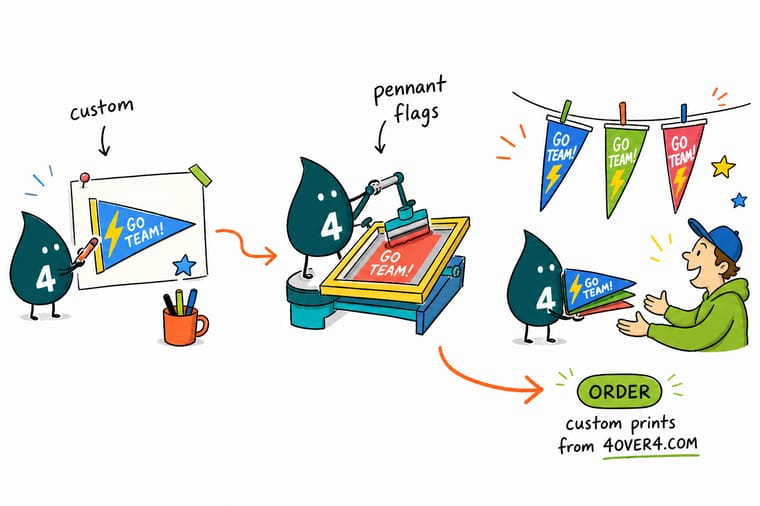
Pennants look simple until the string sags and the type disappears. Wally starts with three questions. How far away is the viewer, how long do the flags stay up, and how much wind hits them. Distance sets the size, duration sets the material, and wind sets the anchoring. Answer those first and the artwork almost designs itself, because you already know how big your one idea has to be.
Design your custom flags →What to Remember Before You Print
By the numbers
4OVER4.COM at a glance
The production record behind every flag order that leaves our floor.
- 10B+ Print products, produced since 1999.
- 150,000+ Businesses served, across every industry.
- 108.75 Custom flags start, full color, per order.
- 99.8% On-time delivery, tracked orders.
Related guides
More printing to pair with your flags
Design walkthroughs for the pieces that usually ship alongside an event order.
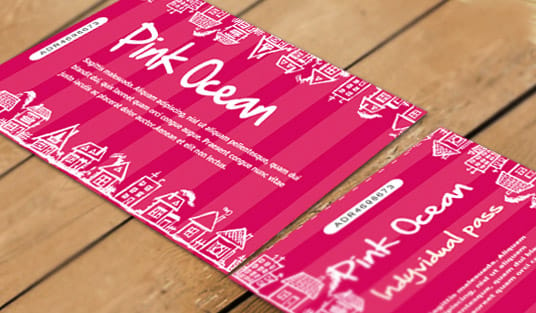 Guide How to Design Custom Event Tickets The other half of an event, from layout to numbering.
 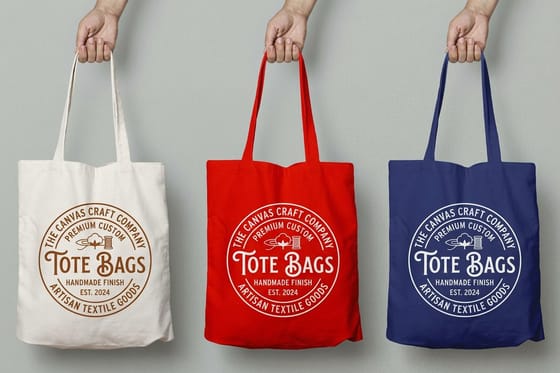 Guide Custom Bags Buying and Design Guide Take-home branding to pair with your event signage.
  Guide DIY Custom Menu Cards Table pieces that match the color story overhead.
  Guide How to Design Custom Food Packaging Packaging design for markets, fairs, and pop-ups.
 Explore more
More ways to dress a space with print
Related pages across 4OVER4.COM, one card for every kind of project.
 Collection Custom Printing Collection Flags, banners, and every custom format under one roof.
 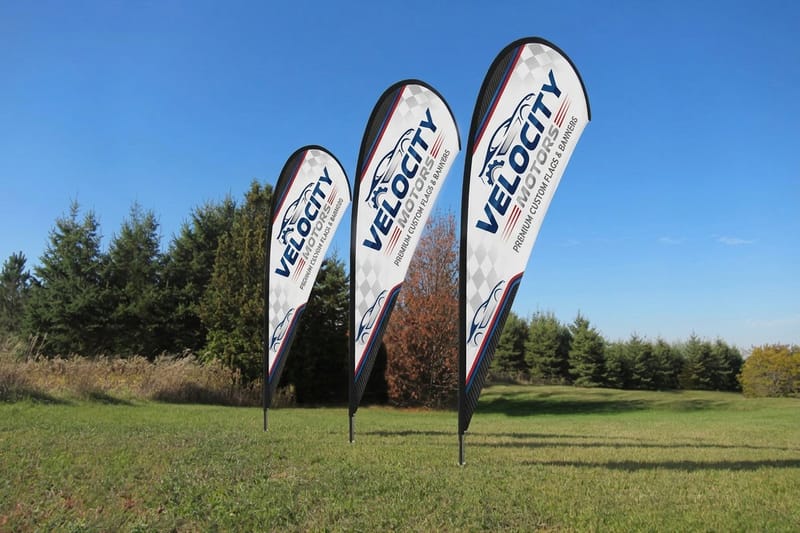 Product Automotive Flags Outdoor flags built for lots, forecourts, and roadsides.
 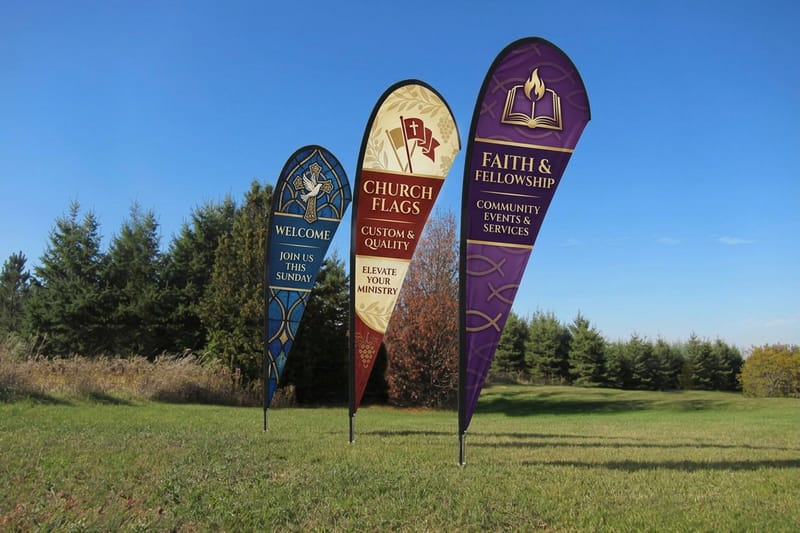 Product Church Flags Deep color on fabric for processions and display.
 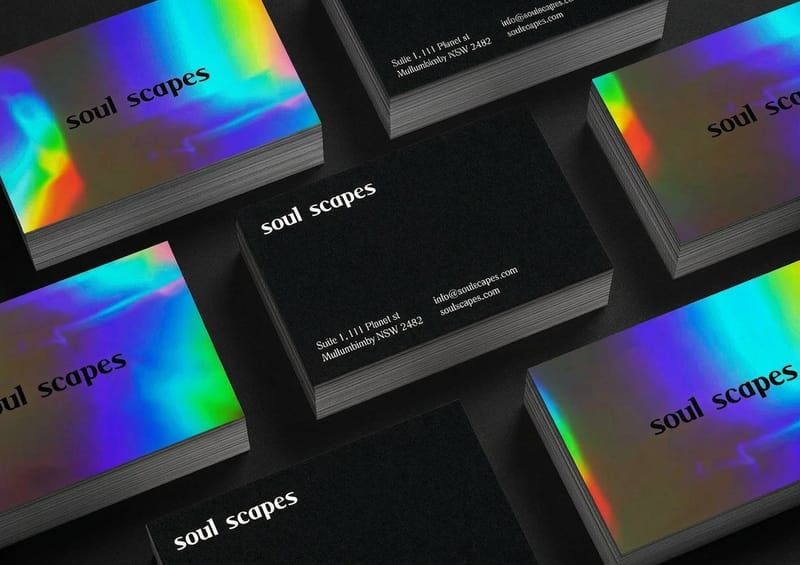 Product Custom Business Cards The handout for everyone your flags pulled in. Guide Custom Event Tickets Design, number, and print tickets that scan clean. Guide Custom Bags Guide Sizes, materials, and artwork for branded bags.
  Guide Custom Pencils Guide Bulk giveaway printing for schools and events. Guide DIY Menu Cards Make table menus that match your event colors. Guide Custom Food Packaging Packaging artwork for markets, fairs, and pop-ups.
  Article Custom Logo Design Build the mark your flags will carry at a distance.
  Article Custom Notepads Branded paper for booths, desks, and giveaways.
  Article Custom Bookmarks A small printed keepsake for events and shops.
 Ready to fill your space with color that moves?
Pick your size, choose the material for where the flags will live, upload your artwork, and we will print, hem, and ship a run that hangs straight.
Custom Pennant Flag Questions, Answered
What are custom pennant flags used for?
Pennant flags add color and motion to a space fast, indoors or out. Businesses string them across storefronts for openings and sales, schools and teams use them for spirit displays and championship walls, congregations carry them in processions, and event hosts hang them over doorways, tables, and fence lines. A single large pennant works as a wall keepsake, while a string of small ones turns an ordinary span into an event. They are the cheapest signage per foot that still reads from a moving car, which is why they never went out of style.
How do I choose the right pennant flags for my space?
Work backward from viewing distance and duration. If people will stand within about ten feet and the flags come down the same night, small paper triangles are perfect. If the run has to read from the street and live outdoors for weeks, go to knitted polyester at 10 to 12 inches tall. Roadside spans in real wind want reinforced vinyl with stitched hems. Then measure the span, divide by the flag width plus the gap you want, and add roughly ten percent for damage and the corners nobody measured.
What do custom pennant flags cost and how is the price set?
Custom flags at 4OVER4.COM start at $108.75 per order, and the final number moves on four things: material, size, quantity, and turnaround. Material is the biggest lever, since fabric and vinyl carry hemming and finishing work that paper does not. Quantity works in your favor because setup is a fixed cost spread across the run, so doubling the count never doubles the price. Rush turnaround is the one factor entirely in your control, so ordering with lead time is the simplest way to lower the total.
Which material holds up outdoors and which is indoor only?
Paper and card stock pennants are indoor only. They print the sharpest detail at the lowest cost, then curl in humidity and fail in the first rain. Knitted polyester is the standard outdoor choice because the weave breathes, so flags fly in light wind rather than hanging limp, and the color resists fading through a full season. Reinforced vinyl is the heavy-duty option for roadside and high-wind installs, holding saturated color hard but needing stronger wind to move. Decide this before finishing artwork, since fabric softens fine detail slightly.
What size should each pennant be and how far apart should they hang?
For interiors, booths, and dessert tables, 7 to 9 inch triangles are right. For storefronts, patios, and fence lines seen from the street, 10 to 12 inches is the workhorse size. A standalone wall or pole pennant is usually two to three feet along the long edge and should be designed like a poster rather than like signage. On spacing, keep the gap between flags roughly equal to the flag width, mark your rope before attaching anything, and anchor long outdoor runs every 15 to 20 feet.
