
Healthcare Direct Mail That Reaches Patients Who Actually Respond


Why Healthcare Direct Mail Still Works
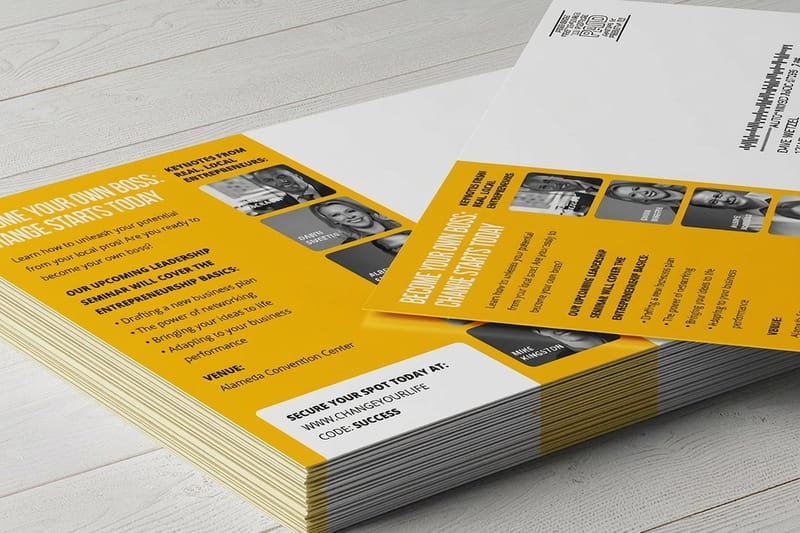
Patients ignore another email, but a postcard on the kitchen counter gets read. That is the whole case for healthcare direct mail: it lands in a physical space with no inbox to fight through, and it reaches people who are not searching online for a new dentist or a wellness visit. For a local practice trying to fill a schedule, a mailed piece still earns attention that digital rarely does.
The mistake most practices make is treating direct mail as a list to rent instead of a message to print and send. The real leverage is doing both well: a clean, HIPAA-aware design on a quality piece, mailed to the right homes, tracked so you know it worked. When the printing and the mailing happen in one order, a practice skips the headache of coordinating a separate printer and mail house entirely. Start with the healthcare printing collection for the pieces built for a practice.
4OVER4.COM has printed 10 billion+ products since 1999, including the postcards, brochures, and cards that medical and dental offices run. This guide covers why the channel works, how to keep it patient-safe, and how to print and mail it in a single step.
Shop the range
Healthcare printing collection
Postcards, brochures, and cards built for a practice, ready for a patient-safe design.
HIPAA Compliant Direct Mail Rules: Keep the Message Patient-Safe and Simple
Healthcare mail lives under a rule that most marketing does not: never expose anything about a person's health on the outside of a piece anyone can read. A postcard that implies a diagnosis, a condition, or a treatment on its face is a privacy problem waiting to happen. The fix is easy once you know it, and it also happens to make for cleaner, more inviting design.
HIPAA-aware design in practice
Keep the outside general and welcoming: your practice name, a service line, an appointment offer, and a friendly image. Save anything specific for a sealed piece. Speak to a neighborhood, not a named condition, so the card works as an invitation rather than a disclosure. A well-made brochure in an envelope is the place for detail, which is why a medical brochure pairs so well with a postcard.
What may appear on the outside of the piece
Do print: your practice name and logo, the service line in general terms, an appointment offer, office hours, a phone number, a web address, a photo of the office, the team, or the neighborhood, and an address panel that carries a name and a delivery address and nothing more.
Do not print: a diagnosis, a symptom, a test result, a medication, a procedure the patient has already had, a date of service, or a chart or account number. The plain test is whether a line only makes sense if the reader is being treated for something. "Time for your six month cleaning" passes, because it is true of everyone. "About your recent lab results" fails, because it tells the mail carrier and everyone in the household something private. Everything in that second group belongs inside a sealed envelope, which is exactly what a medical brochure is for, mailed alongside the healthcare direct mail postcard that gets the attention.
Where the mailing list comes from
A list you rent or buy from a consumer data provider, households in a zip code, an age band, an income band, or a new mover file, is ordinary marketing data. It carries no health information, so mailing to it is mailing to your neighbors. A list you export from your own practice management system is a different animal: the names, the addresses, and the fact that these people are your patients count together as protected health information, and they stay protected through printing, addressing, and delivery. EDDM sidesteps the question completely by mailing every home on a carrier route with no names involved at all, which is why it is the easiest first mailing for a practice that has no list yet.
What a business associate agreement covers
The moment a vendor touches a file that came out of your patient records, that vendor is a business associate, and the agreement is the paperwork that says so. It sets out what the vendor may do with the file, that it is used only to produce and mail your piece and never resold or reused, how it is stored and for how long, that it is destroyed or returned when the job is finished, that any subcontractor is held to the same terms, and who tells whom if something goes wrong. A rented consumer list needs none of this. Your own patient list does, so ask for the agreement before you upload the file, not after.
Here are three pieces built for patient outreach, ready for your branding and live prices.
Print picks
Three pieces built for patient outreach
Live prices, ready to customize with your branding and appointment offer.
Direct Mail Postcards From $57.11 The workhorse of patient outreach, printed and mailed with your appointment offer. 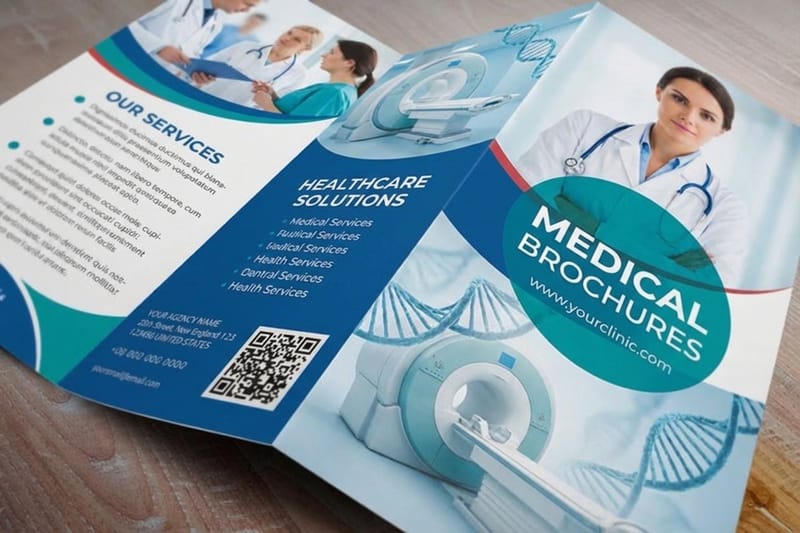 Medical Brochures From $48.33 Room to explain a service or new provider without crowding one small card.
 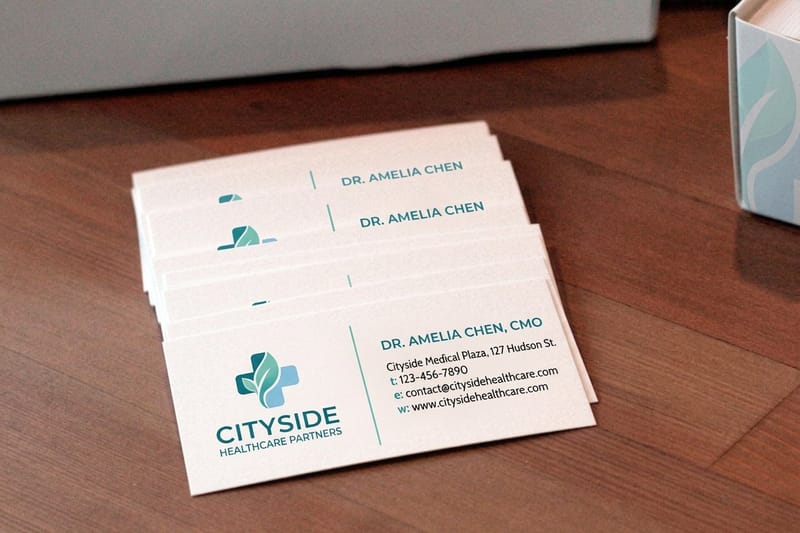 Healthcare Business Cards From $17.57 The card a patient keeps on the fridge with your number and next appointment.
 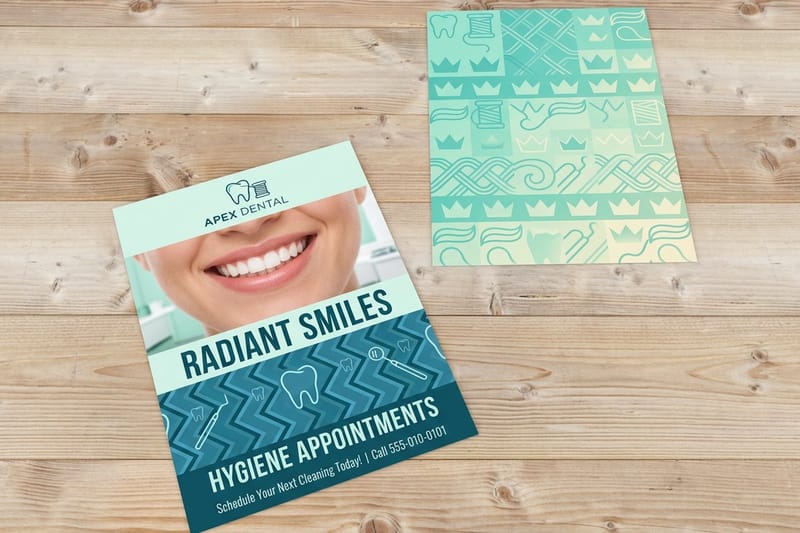 Dental Postcards From $57.11 A ready-to-brand card for a dental practice new-patient offer.
 Print and Mail in One Order
The reason direct mail feels like a chore is the handoff. You print somewhere, then ship the stack to a mail house, then chase both to make a deadline. Collapsing that into a single order removes the friction that stops most practices from mailing at all. Design it, choose who receives it, and it prints, addresses, and mails without you touching a pallet.
Here is that workflow, start to finish, so you can see how few steps it really takes.
Our EDDM service reaches every home on a carrier route with no list to rent, which is ideal for a practice that wants the whole neighborhood around its office. If you would rather mail a targeted patient list, the mailing list guide walks the options, and the direct mail campaign guide ties the whole thing together.
Design for a Response, Not Just a Read
A postcard that gets read but not acted on is a cost, not a campaign. The pieces that fill a schedule give a patient one clear reason to call and an easy way to do it. A new-patient offer, a seasonal checkup reminder, or a new-provider welcome all give a concrete next step, and a phone number plus a QR code makes booking a two-second decision.
Track the response so you can repeat what works. A dedicated phone line or a unique QR code tells you exactly how many appointments a mailing produced, which turns direct mail from a guess into a measurable channel. The direct mail results guide covers the levers that lift response the most.
- One clear offer. A new-patient special or a seasonal reminder, not a menu of five.
- An easy action. A big phone number and a QR code that books in one tap.
- A reason now. A date or a limited offer that rewards acting today.
- A way to measure. A tracked number or code so you know what mailed dollars returned.
Plan a Mailing Against Real Numbers
Direct mail rewards planning, and planning starts with real pricing. Knowing the per-piece cost at your quantity lets you set a budget against the appointments you need, rather than hoping the math works out. Postcards are the efficient starting point because they print and mail cheaply and still command attention on a counter.
Here is what real postcard pricing and specs look like, so you can size a mailing before you commit.
Quantity and price
Postcard pricing and specs
Real configurator numbers. A larger mailing drops the per-card cost fast.
| Quantity | Price Per Unit | Total |
|---|---|---|
| 500 | 17.9¢ | $89.68 |
| 1,000 | 17.1¢ | $170.53 |
| 2,000 | 9.35¢ | $186.95 |
| 3,000 | 6.84¢ | $205.13 |
| 4,000 | 5.58¢ | $223.31 |
| 5,000 | 4.83¢ | $241.51 |
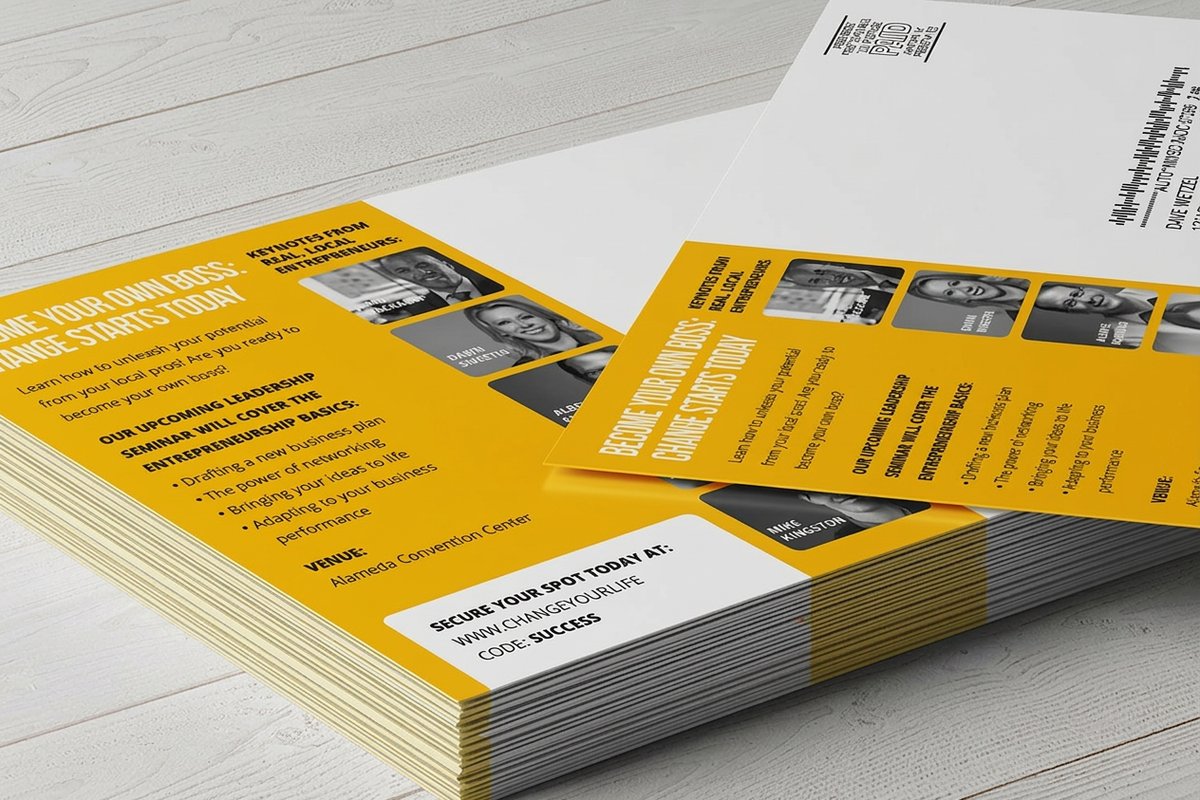
Healthcare Direct Mail Response Benchmarks
There is no single response rate that fits every practice, and a rate quoted without the specialty, the offer, and the list behind it will not predict yours. The benchmark that matters is your own, measured the same way every time: response rate = responses divided by pieces mailed, and cost per acquisition = total mailing cost divided by new patients booked. Run one mailing, write both numbers down, and every mailing after it has something to beat.
Make the responses countable before you mail
A mailing you cannot measure is a mailing you cannot improve. Put one tracking element on the card that exists nowhere else: a dedicated phone number that forwards to the front desk, a short landing URL, an offer code the receptionist types into the schedule, or a card the patient hands over at check-in. Ask every new caller how they heard about you and log the answer that day, because nobody remembers it a week later. Give the count six weeks before you judge the drop, since a card that lands in a busy week often sits on a fridge until somebody has time to call.
Compare against digital on cost per booked appointment
Mail and paid search usually get compared on the wrong number. Clicks and impressions do not fill a chair. Put both on the same denominator, cost per booked appointment, and the comparison becomes honest. Mail has a cost you know before you start: at 4OVER4.COM healthcare direct mail postcards start at $57.11 and medical brochures at $48.33, plus postage and the list, divided across the quantity you send. Paid search costs whatever the auction charges that month for your specialty, which is the part most practices underestimate. Work out the per-piece cost at your quantity, multiply by the appointments you need at the response rate you actually measured, and you know the budget before you commit a dollar.
The Piece Most Practices Start With
If you run one healthcare mailing this year, make it a postcard. It is the cheapest way to reach a home, it needs no envelope to open, and its whole message is visible the moment it lands. Pair it with a brochure when a service needs explaining, but the postcard is the reliable first move.
Specialty specific mailings
The format stays the same, the offer changes with the specialty. Dental: a recall card to patients overdue for a six month cleaning, plus a new patient exam offer to the blocks around the office. Optometry: an annual eye exam reminder timed to the start of the year when vision benefits reset, with a frame or second pair credit as the hook. Dermatology: a skin check card mailed ahead of summer, when sun exposure is on people's minds, offering a full body screening appointment. Urgent care: hours, the fact that no appointment is needed, and how close you are, mailed to the homes within a short drive rather than across a whole city. Physical therapy: a card built around recovery after a knee or shoulder surgery, an injury, or a fall, offering a free movement screen, mailed to the neighborhoods near the clinic.
In every one of those, the outside of the card stays general. A dental recall card says it is time for a cleaning. It never says why one particular patient stopped coming in.
Here is the format built to print and mail at volume, ready for your branding and offer.
Start here
Direct mail postcards
Cheapest to mail, nothing to open, and the whole message shows the moment it lands.
Compare the Postcard Formats
Postcards come in several sizes, and the right one depends on how much you need to say and what you want to spend per piece. A larger card stands out in a stack, while a standard size mails the most efficiently. Lining them up makes the tradeoff obvious.
Here are popular postcard formats compared on stock, finish, size, and from-price, so the mailing fits the budget.
Compare formats
Popular postcard formats, side by side
Stock, finish, size, quantity, turnaround, and from-price across our most ordered postcards.
 Standard Postcards | 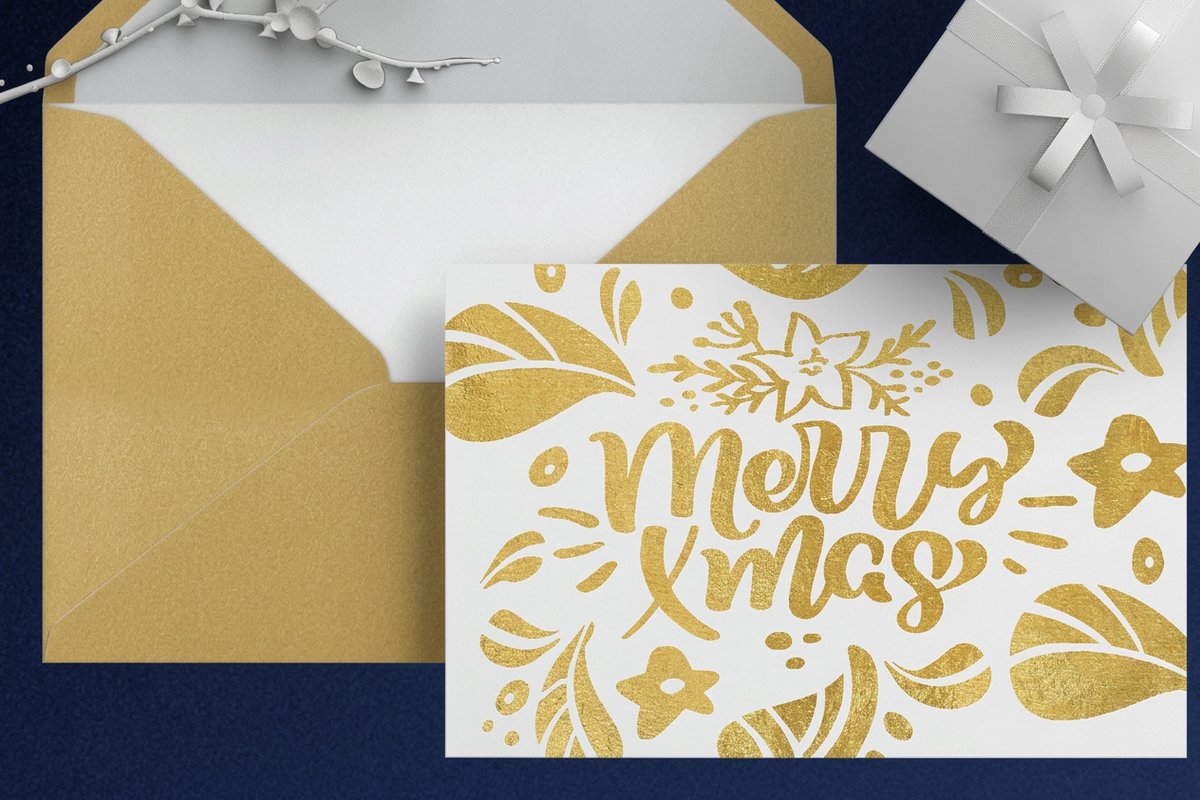 Metallic Foil Postcards | 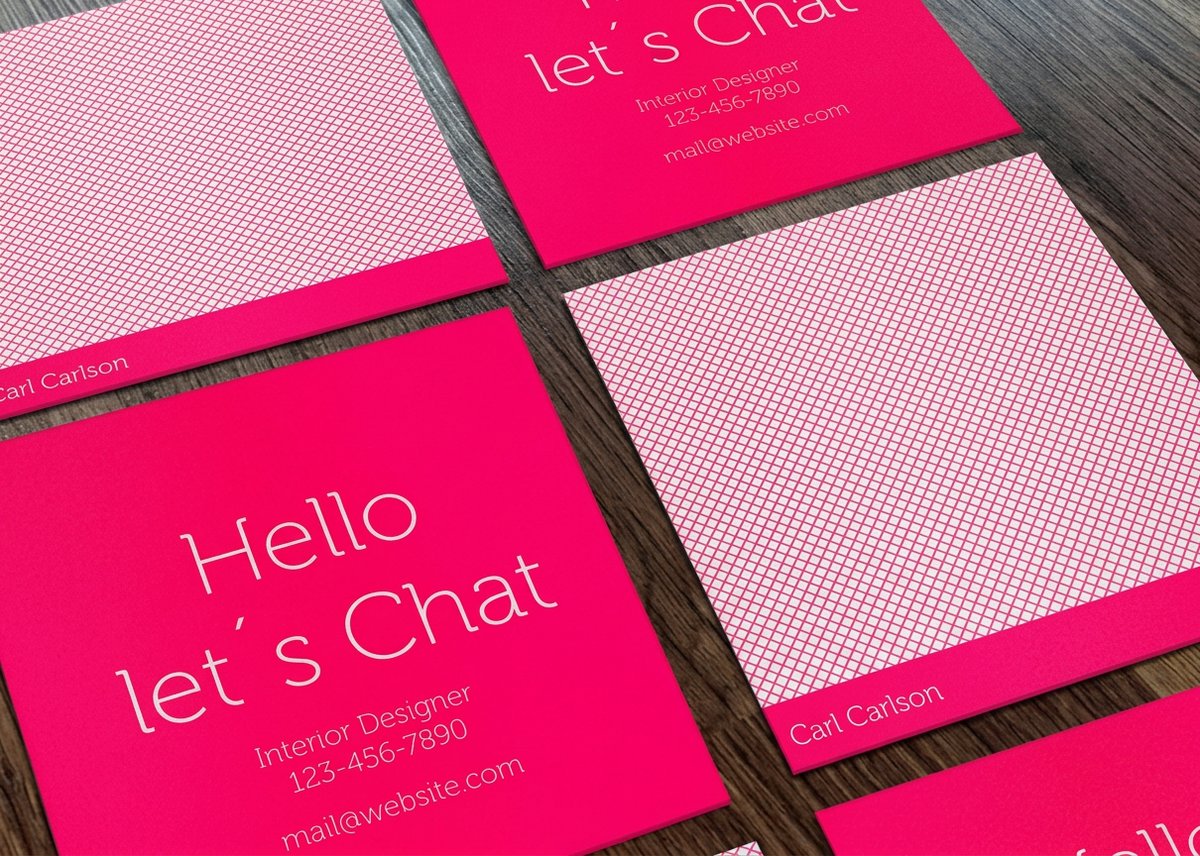 Mini Cards | 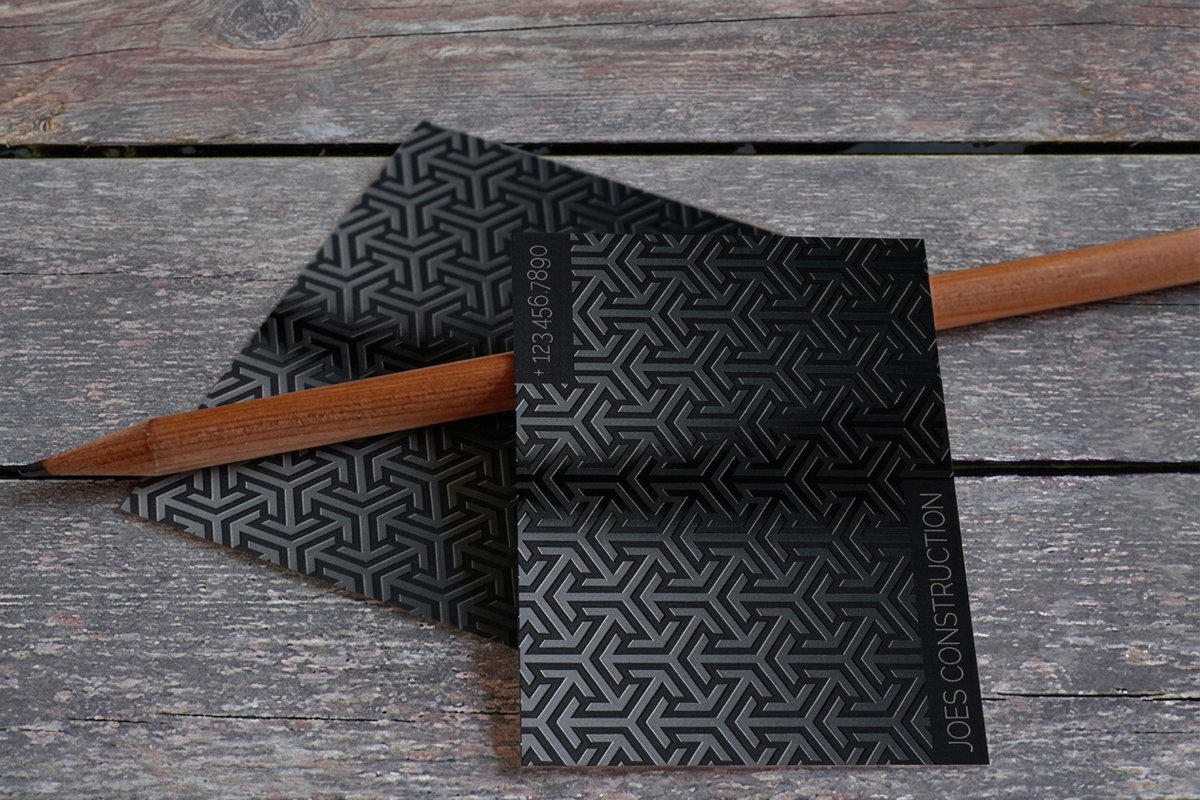 Spot UV Postcards | |
|---|---|---|---|---|
| Min price | $16.48 | $421.91 | $17.57 | $190.02 |
| Paper / stock | 14pt Gloss Cover | 16 Point Silk Laminated | 14pt Gloss Cover | 16pt Gloss Cover |
| Finish | Standard Finish | - | Standard Finish | - |
| Size | 2.5" x 2.5" | 4" x 6" | 2" x 2" | 2" x 6" |
| Default qty | 50 | 500 | 100 | 1,000 |
| Turnaround | 3 business days | 7 business days | 3 business days | 5 business days |
| Rating | ||||
| View & customize | View & customize | View & customize | View & customize |
Wally prints and mails it in one step
A patient-safe postcard, straight into the mailbox
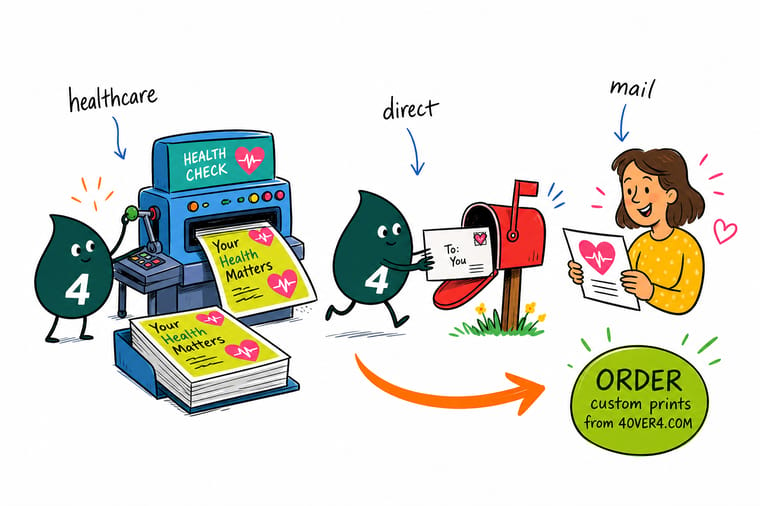
Healthcare direct mail works because a postcard on the counter beats another ignored email. Wally keeps the outside patient-safe and welcoming, then prints and mails it in one order so a practice never juggles a printer and a mail house. Add one clear offer and a tracked number, and a mailing turns into booked appointments. 4OVER4.COM prints, addresses, and mails the whole run for you.
Print and mail patient postcards →What gets a patient to open the envelope
Explore more
More ways to reach patients with print
Related pages across 4OVER4.COM, one card each, so you can keep exploring postcards, brochures, and mailing.
Collection Healthcare Printing Postcards, brochures, and cards built for a practice.  Shop Postcards Printing Every postcard size and stock for a patient mailing. Product Dental Postcards A ready-to-brand card for a dental practice.
  Guide Direct Mail Campaign Guide Plan a mailing that fills a schedule.
  Guides Build a Mailing List Target the right homes for a patient campaign.
  Article Direct Mail Deep Dive The full playbook for a mailed campaign.
 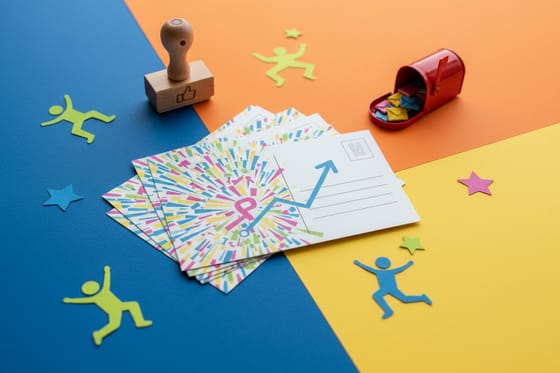 Statistics Response Rate Benchmarks What a good direct mail response looks like.
  Showcase Brochure Design Ideas Layouts that explain a service clearly.
  Case study Direct Mail Success How a mailed campaign doubled results.
  Benefit Free Proofs Confirm a patient-safe layout before the run mails.
 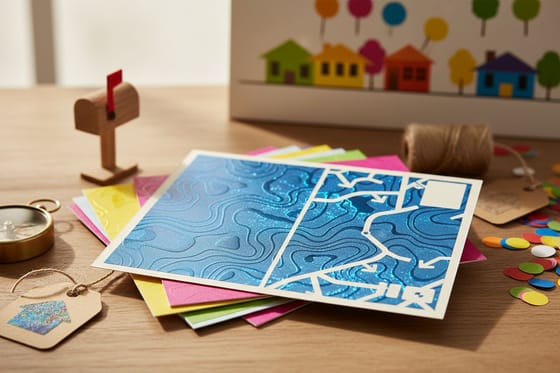 Service EDDM Mailing Service Reach every home in a route with no list to rent.
 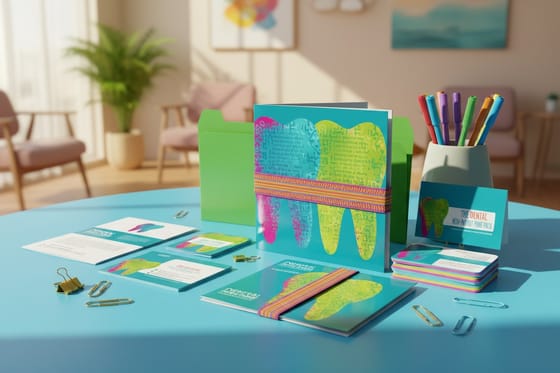 List Dental New Patient Pack A ready bundle to welcome and win new patients.
 Ready to fill the schedule with a mailing that responds?
Keep the outside patient-safe, give one clear offer, and let 4OVER4.COM print and mail it in one order, tracked, on quality stock, and on time.
Response and compliance questions clinics raise
Why does healthcare direct mail still work?
Because it reaches patients where digital cannot. A mailed postcard lands in a home with no inbox to compete for attention, and it reaches people who are not actively searching online for a new dentist, doctor, or wellness visit. For a local practice trying to fill a schedule, a physical piece on the kitchen counter earns a read that another email rarely gets. The key is treating it as a message to print and mail well, with a clean design and a clear offer, rather than just a list of addresses to rent.
What are HIPAA-aware direct mail design tips?
The core rule is simple: never expose anything about a person's health on the outside of a piece anyone can read. A postcard should not imply a diagnosis, condition, or treatment on its face. Keep the outside general and welcoming, your practice name, a service line, an appointment offer, and a friendly image, and save anything specific for a sealed piece like a brochure in an envelope. Speak to a neighborhood rather than a named condition so the mailing reads as an invitation, not a disclosure. This keeps you patient-safe and also produces cleaner, more inviting design.
Is direct mail HIPAA compliant?
Direct mail is HIPAA compliant when the outside of the piece carries no health information and the list is handled correctly. The address panel should show a name and a delivery address only, and the front should stay general: practice name, a service line, an appointment offer, hours, and a friendly image. A diagnosis, a symptom, a test result, a medication, a procedure, a chart or account number, or any wording that only makes sense if the reader is under treatment belongs inside a sealed envelope, which is what a brochure is for. The list is the other half of the answer. A rented or purchased consumer list of households in a zip code or an age band is ordinary marketing data. A list exported from your own practice management system is protected health information, and any vendor that touches it becomes a business associate, so it moves under a signed business associate agreement covering how the file is used, stored, destroyed or returned, and who reports a problem. EDDM avoids the question entirely, because it mails every home on a carrier route with no names at all.
What is the response rate for healthcare direct mail?
No single number fits every practice, and a rate quoted without the specialty, the offer, and the list behind it will not predict yours. Measure your own instead: response rate is responses divided by pieces mailed, and cost per acquisition is the total mailing cost divided by the new patients booked. To count responses at all, put one tracking element on the card that exists nowhere else, a dedicated phone number that forwards to the front desk, a short landing URL, or an offer code the receptionist enters in the schedule, and ask every new caller how they heard about you. Give the drop six weeks before you judge it, because a card that lands in a busy week often sits on a fridge for a while. Then compare it with paid search on cost per booked appointment rather than on clicks, since only one of those two fills a chair.
Can you mail to a purchased patient list?
You can mail to a purchased consumer list, but be clear about what you are buying. Consumer data providers sell households by zip code, carrier route, age band, income, or new mover status. That is marketing data, it carries no health information, and mailing to it is mailing to your neighbors. Nobody legitimately sells a list of people who have a named condition or who are patients somewhere else, and a vendor offering one is a vendor to walk away from. Your own patient list is the opposite case: it is protected health information, it stays under a business associate agreement with whoever prints and mails it, and it is usually the best performing list you will ever use because those households already know the practice. If you have no list yet, EDDM covers every home on the carrier routes around the office with no list to rent at all.
Can 4OVER4 print and mail the campaign together?
Yes, and that is the biggest advantage. Instead of printing in one place and shipping a stack to a separate mail house, you design the piece, choose who receives it, and it prints, addresses, and mails in one order. Our EDDM service reaches every home on a carrier route with no list to rent, which suits a practice that wants the neighborhood around its office, or you can mail a targeted patient list. Collapsing the printer and the mail house into a single step removes the friction that stops most practices from mailing at all.
What does healthcare direct mail cost, and how are prices set?
It is affordable and scales well. At 4OVER4.COM direct mail postcards start at $57.11, medical brochures at $48.33, and healthcare business cards at $17.57, all ready for your branding. Price depends on the piece, the stock and finish, the quantity, and the mailing option you choose, and ordering more brings the per-piece cost down quickly. Postcards are the efficient starting point because they print and mail cheaply and need no envelope. Check the live configurator numbers on each product page and plan the mailing against the appointments you need.
How do I know if a healthcare mailing worked?
Build tracking into the piece from the start. A dedicated phone line or a unique QR code tells you exactly how many appointments a mailing produced, which turns direct mail from a guess into a measurable channel you can repeat and improve. Give patients one clear offer and one easy way to act, then count the calls and bookings that came from that specific mailing. Once you know the response, you can scale the versions that fill the schedule and drop the ones that do not. The direct mail results guide covers the levers that lift response the most.
