
Online vs Local Banner Printing, Which One Actually Serves Your Job Better


Order online when you have three or more days, because published pricing and a full material and hardware range beat a quoted one off job. Use the local shop when the deadline is today, when someone has to handle the material first, or when a single small banner would carry more freight than it is worth. The print quality is rarely the deciding factor; the delivered cost and the calendar are.
Online versus local at a glance
| What you are judging | Ordering online | Local print shop | Wins | Why |
|---|---|---|---|---|
| Price on a repeat job | Published per size and quantity, no quote round trip | Quoted per job, varies shop to shop | Online | You can budget before anyone picks up the phone |
| A banner needed today | Production time plus transit, no way around it | Often same day on a plain hemmed banner | Local | Nothing beats standing at the counter |
| Material and hardware range | Scrim, blockout, mesh, fabric, stands, frames | Whatever is on the rack that week | Online | A wide catalogue is cheap to hold in a warehouse |
| Colour certainty | Digital proof, printed sample on request | You can look at the actual print before it runs | Local | Only on a first run of a brand critical colour |
| Ten banners to ten addresses | One order, one file, split shipments | You collect, then you post them yourself | Online | The admin is the cost, not the print |
No row here is universal. Change the quantity or the deadline and two of them flip, which is exactly why the honest answer is job by job rather than printer by printer. You can price a stand in seconds on mini retractable banner stands and compare it against the last quote you were given.
Where online and local actually differ
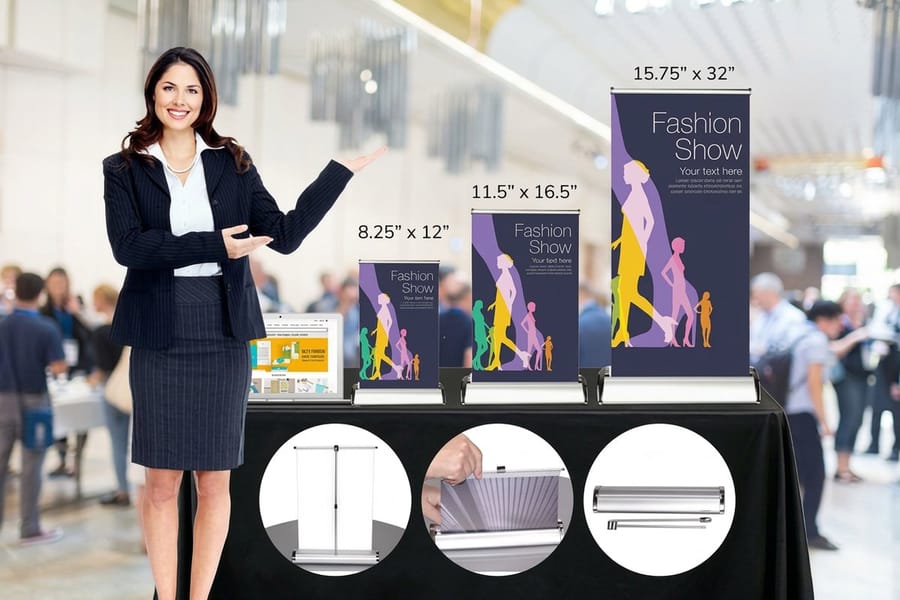
Order a banner online and you are buying a published price on a known material, printed on equipment that runs the same job hundreds of times a week. Walk into a local shop and you are buying access: someone who will look at your file, hand you the vinyl to feel, and possibly have it finished before you finish your coffee.
The print itself is rarely the difference. Wide format banners come off large inkjet or latex machines, and a competent shop of either kind will put down clean colour on 13 oz scrim. What changes is the price structure, the range of materials sitting in stock, and how much of the timeline you control.
Our local print shop versus online printing guide covers the same split across the whole catalogue. This page stays on banners, where the trade-offs land differently because banners are bulky, heavy for their value, and often needed for a fixed date.
Price: published versus quoted
Online pricing is a table. Pick the size, the material weight, the finishing, the quantity, and the number appears. That matters more than the number itself, because you can plan a season of events without a single quote request, and you can see exactly what going from one banner to five does to the unit cost.
A local shop quotes. Sometimes that quote beats the online price, particularly on a single small banner where shipping is a real share of the total. Sometimes it is double, because the shop is pricing setup time on a machine that will run your job once. Neither is dishonest, it is just what happens when a price is built per job instead of per catalogue line.
Freight is the part people forget
A banner ships rolled in a tube, and one tube costs close to what two or three cost. That is why the honest answer changes with the job. One 2 by 4 foot banner is the case where local is most likely to win on total cost. Five banners, or one large piece, and the shipping share collapses to almost nothing.
Work out the delivered cost, not the print cost. It is the only comparison that means anything, and it is the number most people skip when they say online was cheaper or more expensive.
When the local shop is the right call
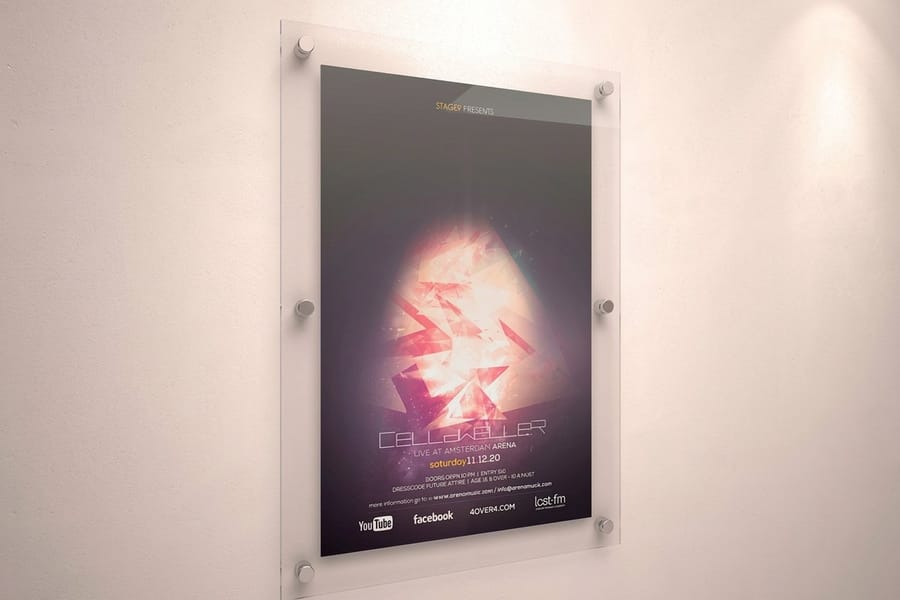
There are three jobs where a nearby shop is genuinely the better choice, and it is worth being honest about them.
The first is a deadline inside 24 hours. A plain hemmed and grommeted banner is a simple job for a shop with vinyl on the roll, and no shipping network beats walking out with it. The second is a material you need to handle before you commit, usually because a client has to approve the feel of a fabric or the opacity of a blockout. The third is a single banner for a venue two streets away, where collecting it yourself removes the freight entirely.
The catch is consistency. If you order the same banner three times a year from a shop, you are relying on the same operator, the same roll and the same profile each time. That is a lot of variables to hold steady, and it is why brands with repeat print eventually standardise on a catalogue price and a fixed spec.
What to ask before you hand over the file
Ask what weight the vinyl is, because 13 oz and 18 oz behave very differently outdoors and both get called banner vinyl. Ask whether the hem is welded or sewn, and where the grommets land. Roughly 2 foot centres is the common standard, and a banner with grommets only in the corners will pull and pucker on a windy fence.
Ask for the finished size after hemming, not the print size. A pole pocket eats material, and a banner ordered at 3 by 8 feet with 4 inch pockets is not 8 feet of visible artwork any more.
When ordering online is the right call
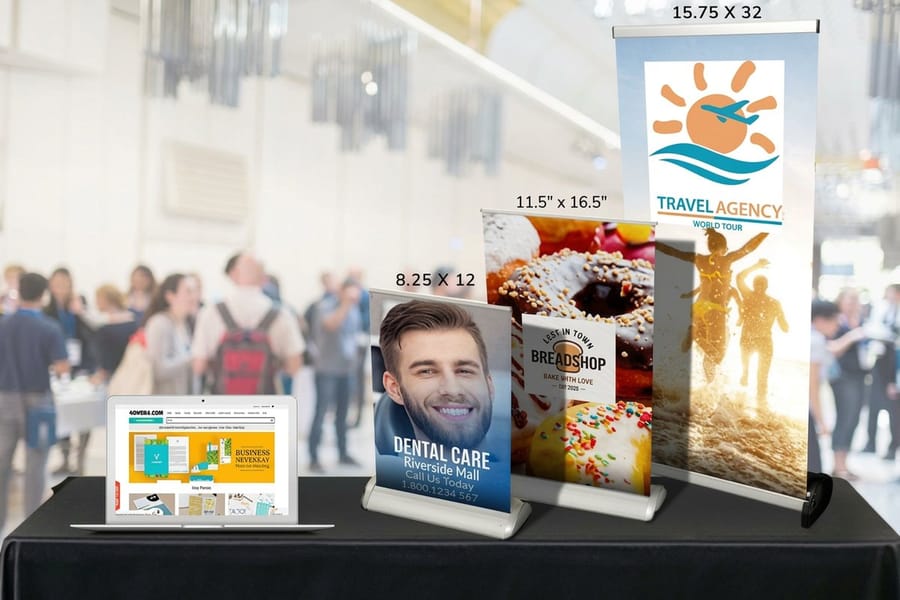
Everything that can be planned a few days out, and anything involving hardware, tends to go the other way. Retractable stands, a frames, mesh for fencing, fabric for indoor booths and matching poster runs all sit in an online catalogue at a published price, and very few local shops carry that spread of stock.
The second case is quantity and distribution. Ten banners going to ten branches is one order online with split shipping, and a day of your own time if you collect and post them yourself. The third is repeatability: the same file, the same spec, the same price, whether you order it in March or November.
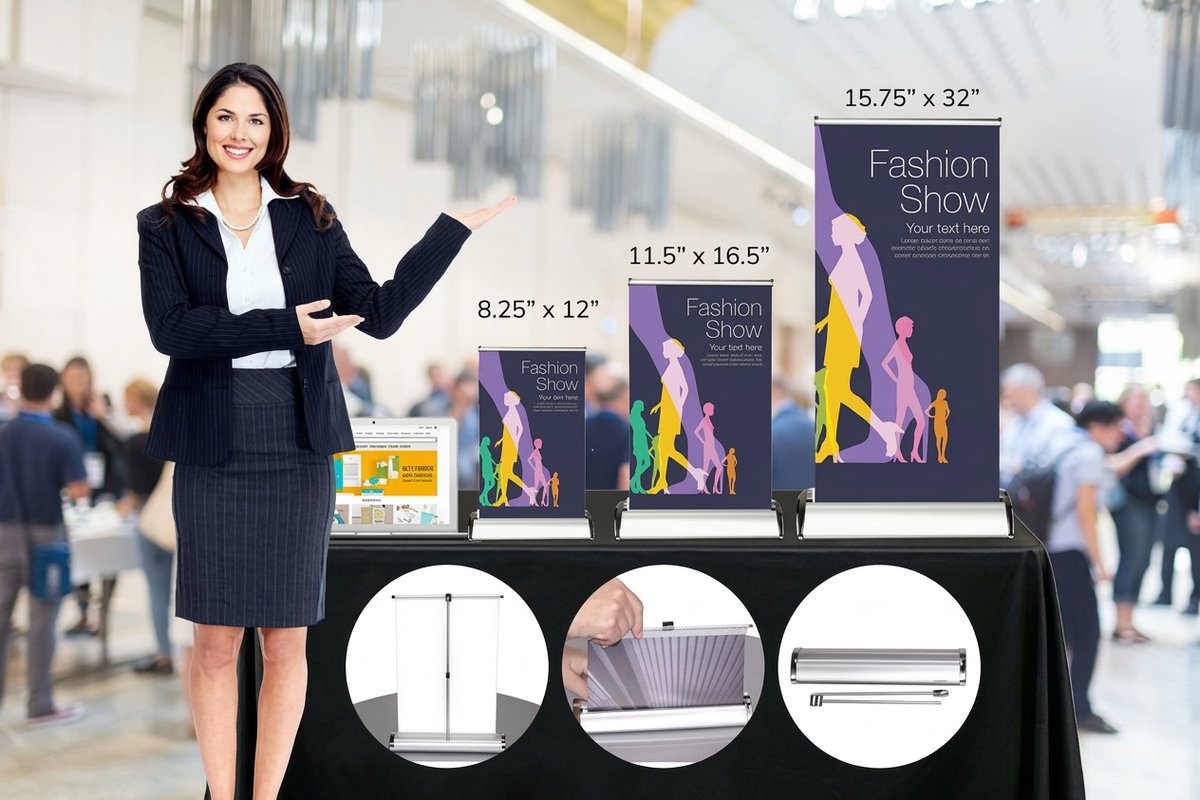
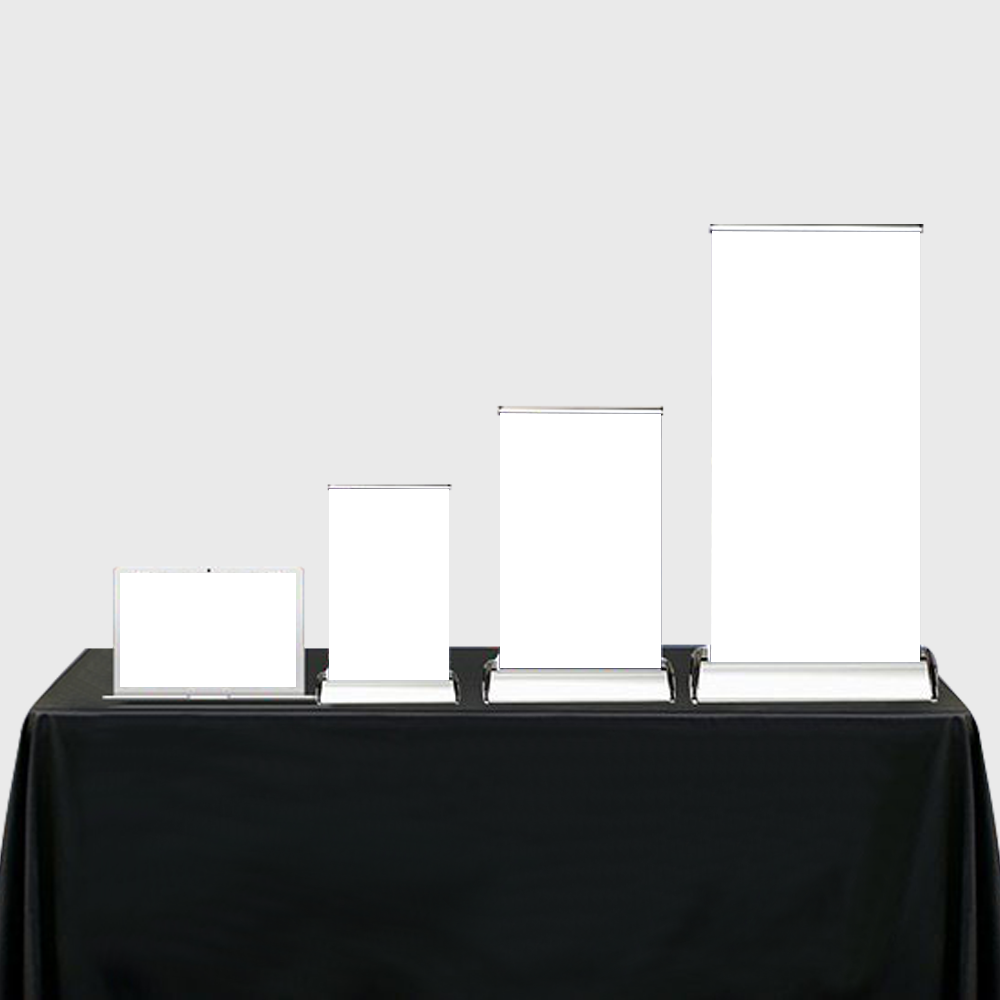
For trade show tables and reception desks, mini retractable banner stands start at $49.41 and arrive with the graphic already loaded, so setup is a pull and a click. Browse the full range in banner stand printing, and if the message needs to sit on a pavement rather than a table, a frame signs do that job better than any banner.
Picking the material before you pick the printer
Outdoors and single sided, 13 oz scrim vinyl is the default and it is what most quotes assume. Print both sides and you need 18 oz blockout, because a lighter vinyl lets the reverse image ghost through in daylight. On a fence, a rooftop, or any long span, mesh is the answer: the open weave lets wind through instead of loading the whole surface, which is what tears grommets out.
Indoors, the calculation flips to appearance. Fabric kills the glare from spotlights, and matte vinyl photographs better than gloss under a camera flash. Our banner material guide goes through each one with the conditions it is built for.
The paired print nobody plans for
A banner rarely travels alone. The same event usually needs a poster for the entrance and something to hand out, and printing them together keeps the colour consistent across the set. Large format posters start at $25 and take the same artwork scaled down.
If you are producing print for clients rather than yourself, the designer guide to winning clients with online printing covers how to price the print alongside the design work without carrying the stock yourself.
Proofing, colour, and the thing nobody warns you about
A digital proof confirms that your layout is right, your text is spelled the way you wrote it, and nothing important sits in the hem. It does not confirm colour. A monitor emits light and a banner reflects it, so a saturated blue on screen lands slightly differently on vinyl no matter who prints it. Supply a CMYK build for anything brand critical, and if a rollout depends on the colour being exact, order one banner first and judge it outdoors, in daylight, at the distance people will actually see it.
This is where a local shop has a real advantage and it is worth naming: you can stand next to the machine. For one difficult colour on one important job, that is worth something. For the twentieth reorder of the same file, it is worth nothing, because the spec is already settled.
Pricing and specs at 4OVER4.COM
Banner and stand pricing moves with size, material, finishing and quantity, and the unit cost drops as the run grows. The numbers below come from the live configurator, so you can size a budget before you commit to a date.
Quantity and price
Banner stand pricing and specs
Real configurator numbers, where the more you order the lower the per unit cost drops.
| Quantity | Price Per Unit | Total |
|---|---|---|
| 1 | $49.41 | $49.41 |
| 2 | $49.42 | $98.84 |
| 3 | $47.59 | $142.78 |
| 4 | $46.95 | $187.80 |
| 5 | $46.95 | $234.73 |
| 6 | $46.94 | $281.66 |
You can also earn coins on every order and redeem them against future printing, which takes a slice off the reorder you already know is coming.
Material and finishing decisions
Two choices decide whether a banner survives its first month outdoors, and neither of them is the artwork. The first is weight: 13 oz scrim vinyl for single sided outdoor work, 18 oz blockout when both sides are printed, and mesh on fencing or any long exposed span so the wind passes through instead of loading the surface. The second is finishing: a welded hem and grommets on roughly 2 foot centres, not just in the corners, because a banner tied at four points pulls and puckers in the first serious gust.
Print it
Banner stands, ready to pull up
The graphic arrives loaded, so setup is a pull and a click.
Indoors the calculation changes to appearance rather than survival. Fabric kills spotlight glare and packs without a crease line, and matte finishes photograph better than gloss under a camera flash, which matters more than most people expect when the whole point of the stand is the photo it appears in. For the paired pieces around a stand, large format posters take the same artwork scaled down, and flyer placement around a local event is what fills the room the banner is standing in.
Which way your industry usually goes
The split is fairly consistent by business type, and it tracks the deadline more than the budget.
- Retail and storefronts. Seasonal banners on a fixed rotation are a planning job, not an emergency, so online pricing and repeatable specs win. Keep one file per season and reorder rather than redesigning.
- Events and trade shows. Hardware decides this one. Retractable stands, table graphics and posters as one order beat sourcing three items from three places the week before the show.
- Construction and property. Mesh for fencing and hoarding, because a solid banner on a long span acts as a sail and tears out its own grommets in the first serious wind.
- Restaurants and bars. Small, frequent, local. A single 2 by 4 foot banner for this weekend is the classic case where the nearby shop is simply the faster answer.
- Multi site businesses. One artwork, ten addresses, one order with split shipping. This is where online stops being slightly cheaper and starts being a completely different amount of work.
Templates and print-ready blanks
Set the file up right and neither route sends it back. 4OVER4.COM sizes its blanks to exact product specs, so your artwork lands inside the cut line with the bleed already marked. Start from a print ready blank in the blank template library rather than guessing the finished dimensions.
Start fast
Templates and print-ready blanks
Design templates and exact size blanks so your artwork lands inside the cut line.
Wally settles the online versus local argument
The calendar answers it before the price does
Need it today, walk into the shop. Have three days or more, order online where the price is published, the material range is wider, and the same spec reprints identically next season. Compare delivered cost rather than print cost, pick 13 oz scrim for single sided outdoor work and mesh for anything on a fence, and 4OVER4.COM prints it on the stock the job actually needs.
Order banner stands →What to remember about this choice
File setup tips that apply either way
- Design for viewing distance. A banner read from 30 feet needs a headline you can read at arm length on a printed A4 page. If it is unreadable on paper, it is unreadable on the fence.
- Keep copy out of the hem. Anything within an inch of the edge risks being folded into the hem or punched by a grommet. Pull the type in and give the artwork room to be finished.
- Set up at the right scale. Build at quarter size at 300 DPI, or full size at a lower resolution, and say which you used when you upload. A full size file at 300 DPI is enormous and rarely necessary.
- Add bleed, always. A quarter inch of bleed on every side costs nothing and saves a white sliver on a trimmed edge. It is the single most common reason a banner file gets sent back.
- Order one before you order ten. A printed sample settles colour arguments that a screen proof never will, and it costs less than reprinting a rollout.
Explore more
More ways to print and promote
Related products, categories and guides on 4OVER4.COM, one card each.
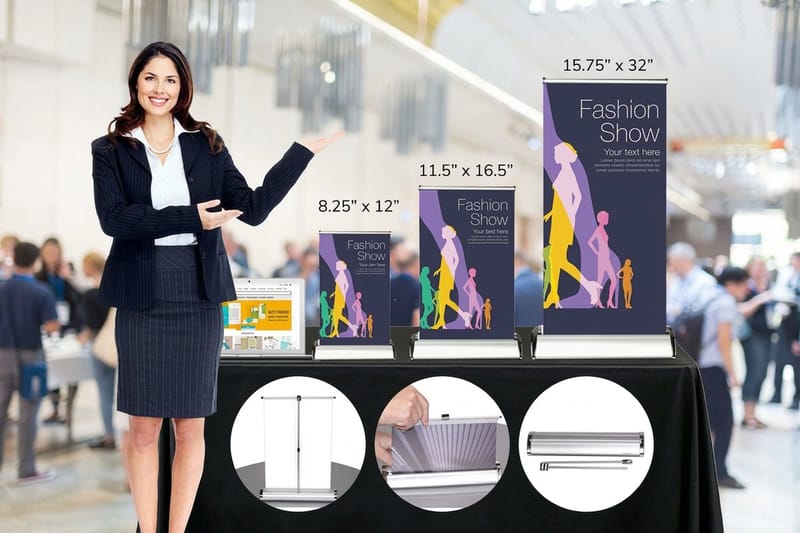 Product Mini Retractable Banner Stands Tabletop stands that arrive with the graphic loaded.
 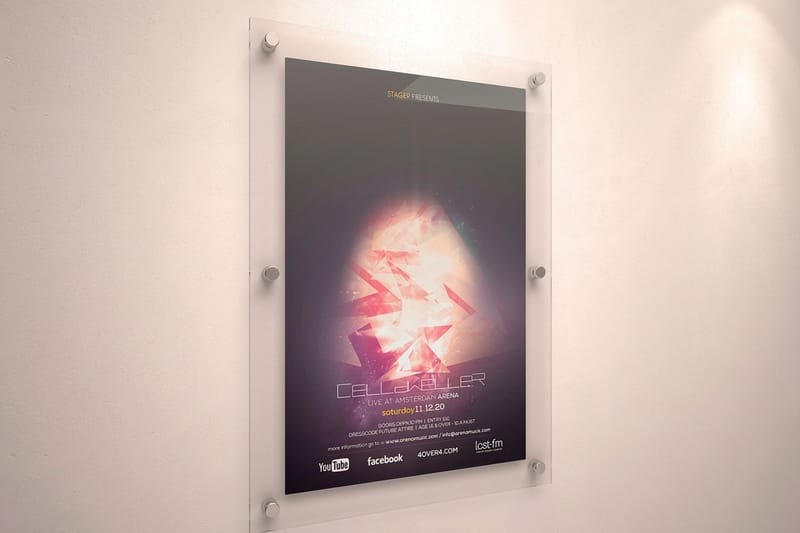 Product Large Format Posters The same artwork, scaled for a wall or an entrance.
 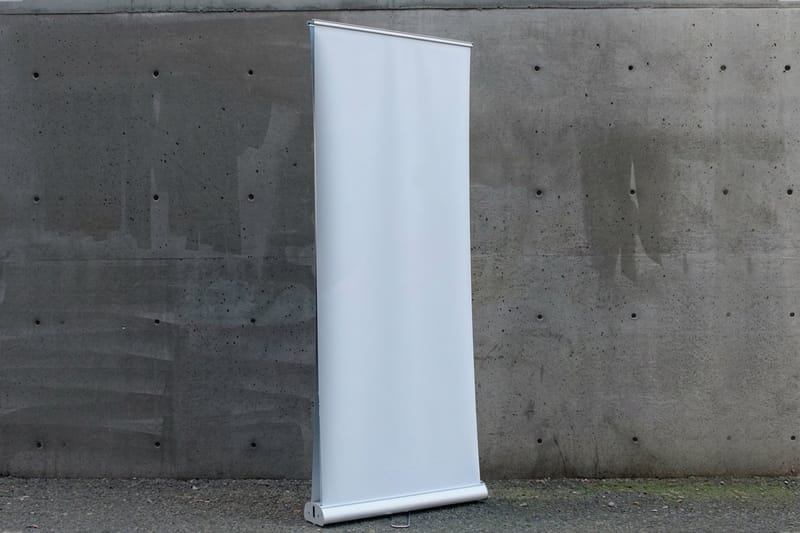 Category Banner Stand Printing Retractable, tabletop and full height stands in one place.
 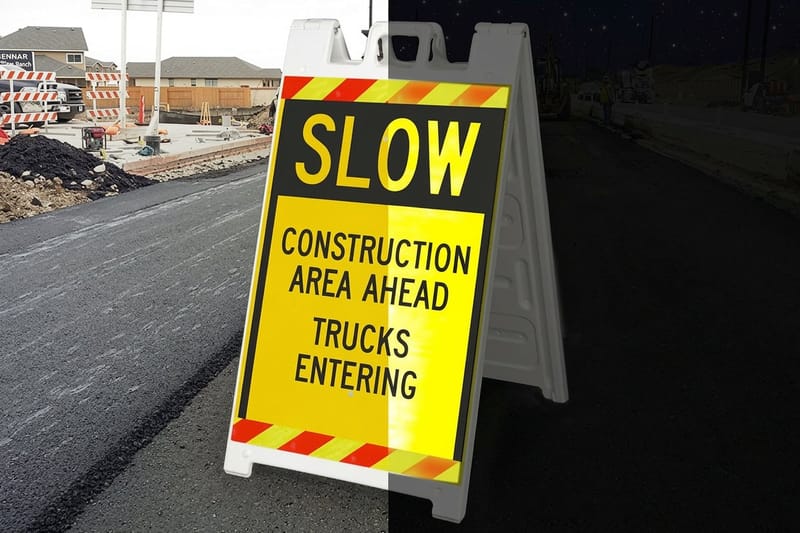 Category A Frame Signs For a message that belongs on the pavement, not a fence.
 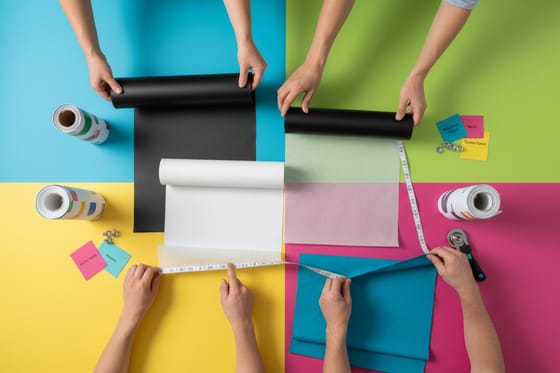 Guide Banner Material Types Scrim, blockout, mesh and fabric, and where each one belongs.
 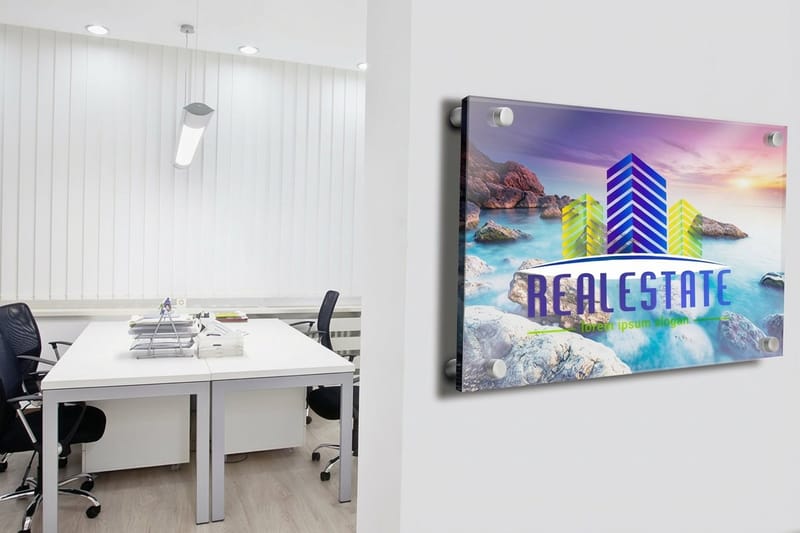 Guide Best Places to Print, Local vs Online The same comparison across the whole print catalogue.
 Comparing printers on other products too? Business card printer versus online printing runs the same test on small format work, colour laser printing services online covers short run digital, and local marketing ideas for landscaping firms shows where a banner sits in a wider campaign. For a seasonal push, the 4th of July printing collection has the dated pieces already sized.
Ready to print your banner?
Pick the size and the material, upload your file or start from a free blank, and 4OVER4.COM prints it sharp and ships it in time for the date.
Common questions about banner printing
Is online banner printing actually cheaper than a local shop?
On the print itself, usually yes, because online pricing is built per catalogue line rather than per job and the same size runs constantly. On delivered cost it depends on the size of the order. One small banner carries almost the same freight as three, so a single 2 by 4 foot piece collected from a shop down the road can genuinely come out ahead. Once you are ordering more than one banner, or one large piece, the shipping share drops sharply and the published online price is hard to beat. Compare delivered totals, not print totals, and the answer stops being a matter of opinion.
How fast can I get a banner if I order online?
You are paying two clocks: production and transit. Production on a standard banner is short because the job is routine, but transit is fixed by geography and no printer can compress it. If the event is tomorrow, a local shop with vinyl on the roll is the right call and it is not close. If you have three or more days, ordering online gives you the wider material range and the published price without any real risk to the date. The practical habit is to order banners the moment the event date is confirmed rather than the week it happens.
Will the printed colour match what I see on my screen?
Not exactly, and this is the one honest advantage of standing in a shop. A monitor emits light and a banner reflects it, so a saturated screen blue will always land slightly differently on vinyl. A digital proof confirms layout, size and content, not colour. If the banner carries a brand colour that has to be right, supply the CMYK build rather than an RGB file, and order one printed piece before committing to a multi site rollout. That single sample settles the question for every reorder afterwards.
What material should an outdoor banner be printed on?
For a single sided outdoor banner, 13 oz scrim vinyl is the standard and it is what most quotes assume unless you say otherwise. If the banner is printed on both sides, move to 18 oz blockout, because a lighter vinyl lets the reverse image ghost through in daylight and both sides look muddled. For fencing, hoarding or any long exposed span, use mesh: the open weave lets wind pass through instead of loading the whole surface, which is what pulls grommets out of a solid banner in the first real gust.
Can a local shop do something an online printer cannot?
Three things. It can print today, it can let you handle the material before you commit, and it can show you the actual sheet coming off the machine rather than a proof of it. Those matter on a rushed job, on a client approval where the feel of a fabric is part of the sell, and on a first run of a difficult colour. What a local shop generally cannot do is hold a wide range of hardware in stock, hold a price steady across a year of reorders, or ship ten identical banners to ten addresses without someone spending a day at the post office.
