
Pop-Up Display Frames Worth Reusing Show After Show


What a Pop-Up Display Frame Actually Is
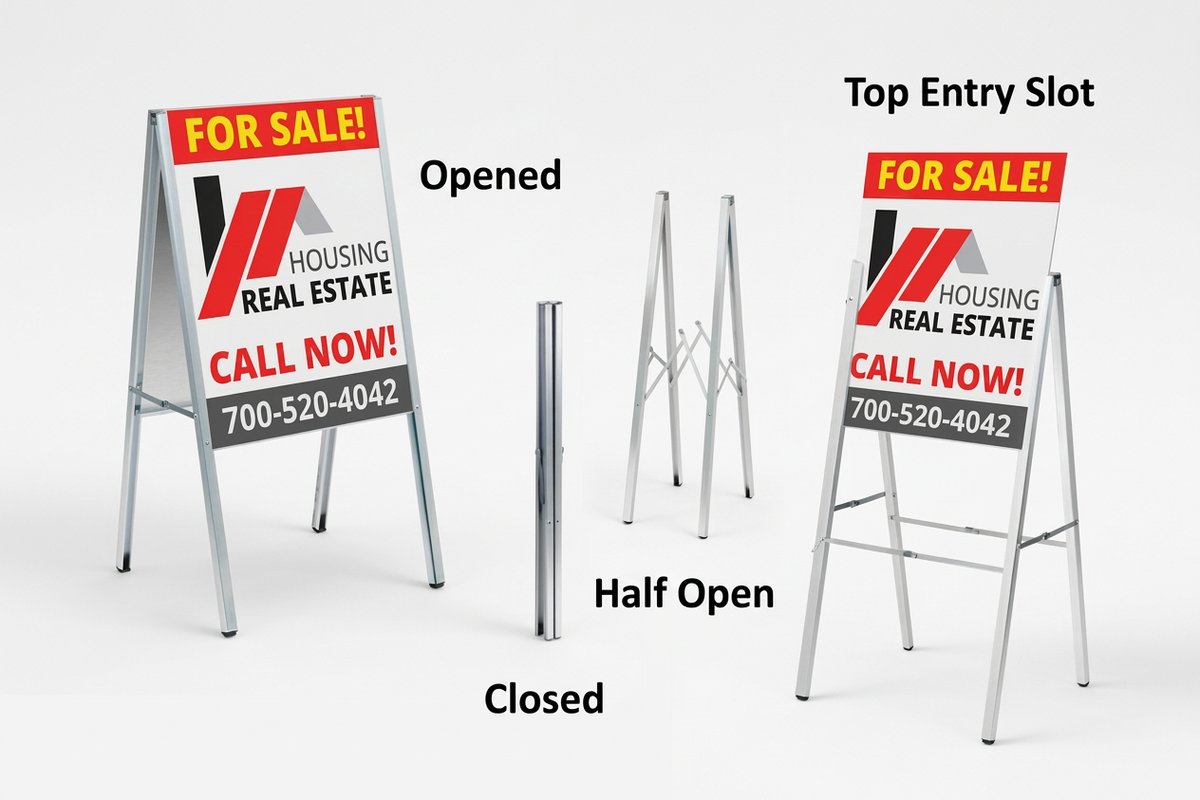
A pop-up display frame is the structure, not the artwork. It is the collapsible aluminum skeleton that snaps open into a straight or curved wall and then holds a printed graphic under even tension for three days on a show floor. Buy the frame on its own and you own a metal lattice. Buy the graphic on its own and you own a beautiful skin with nowhere to hang.
That split is what trips up first-time exhibitors. Booth listings quote one number for hardware, a second for the printed skin, and a third for the case that carries both. Shoppers compare the hardware number against a competitor kit price, think they found a bargain, then learn at checkout that the graphic was never in the box.
4OVER4.COM has printed for 150,000+ businesses since 1999, and the booth orders that go smoothly are the ones where frame, graphic, and case are bought together. When the skin is cut for the exact frame you own, the tension is even, the seams land in the corners, and nobody spends the morning of the show tugging at a sagging panel. When the three pieces come from three suppliers, fit becomes a coin flip you get to discover in a convention hall at 7 a.m.
The frame
Aluminum tubing or a hinged lattice, sometimes magnetic at the joints, sometimes push-button. It sets the finished width and height, it decides whether the wall is flat or curved, and it is the part you keep for years while the messaging changes.
The graphic
Either rigid printed panels that clip into the frame, or a stretch fabric skin printed by dye sublimation that pulls over it like a fitted sheet. Fabric folds without creasing permanently. Rigid panels stay perfectly flat.
The case
A hard rolling case or a padded bag, sized for the folded frame. It is the piece people skip and regret, because a bare frame rattling in a car trunk is how bent tubes and scratched joints happen between show one and show two.
The small hardware
Clamps, hinge pins, wheel feet, weight bags, and a light kit if the hall is dim. None of it is glamorous, and all of it is the difference between a booth that reads clean from the aisle and one that looks improvised.
Shop the hardware
A-frame and display sign printing
Frames, printed panels, and cases for booths, sidewalks, and lobbies.
How Pop-Up Frames Snap Together
The mechanism is simpler than the catalog photos suggest. Most pop-up hardware is a scissor lattice or a set of numbered tubes that lock with spring buttons. You lift, you hear the click, you attach the graphic, you stand it up. There is no drill, no bolt kit, and no reason to bring a toolbox unless your booth also has shelving.
Different formats snap differently. Aluminum A-Frames hinge open like a sandwich board and take two printed panels, one per face. FleX-Frame Signs build a slim rectangle first, then the fabric skin slides over and zips shut at the base. Browse the full hardware range on the a-frame signs printing category if you want to compare footprints before you commit.
- Unpack in order. Lay the frame parts out before you touch the graphic so nothing gets stepped on during assembly.
- Expand the lattice or lock the tubes. Work from the center outward so the frame squares itself instead of racking to one side.
- Dress the frame. Slide the fabric skin over the top rail first, or clip rigid panels in from the bottom edge upward.
- Tension and close. Zip or clamp the base, then walk the perimeter and pull out any slack you can see from ten feet away.
- Weight the feet. Sandbags or wheel locks keep a tall wall honest when the aisle traffic gets busy.
The one habit worth building is a dry run at the office. Open the frame once before it ever ships, count the parts against the packing list, and photograph the assembled wall. That photo becomes your setup instruction for whoever staffs the next show, and it catches a missing hinge pin while there is still time to replace it instead of at load-in.
Print picks
Three display frames worth a look
Live prices, ready to configure with your finished size and artwork.
Aluminum A-Frames From $146.07 A hinged two-sided frame that holds printed panels and folds flat for the trunk. 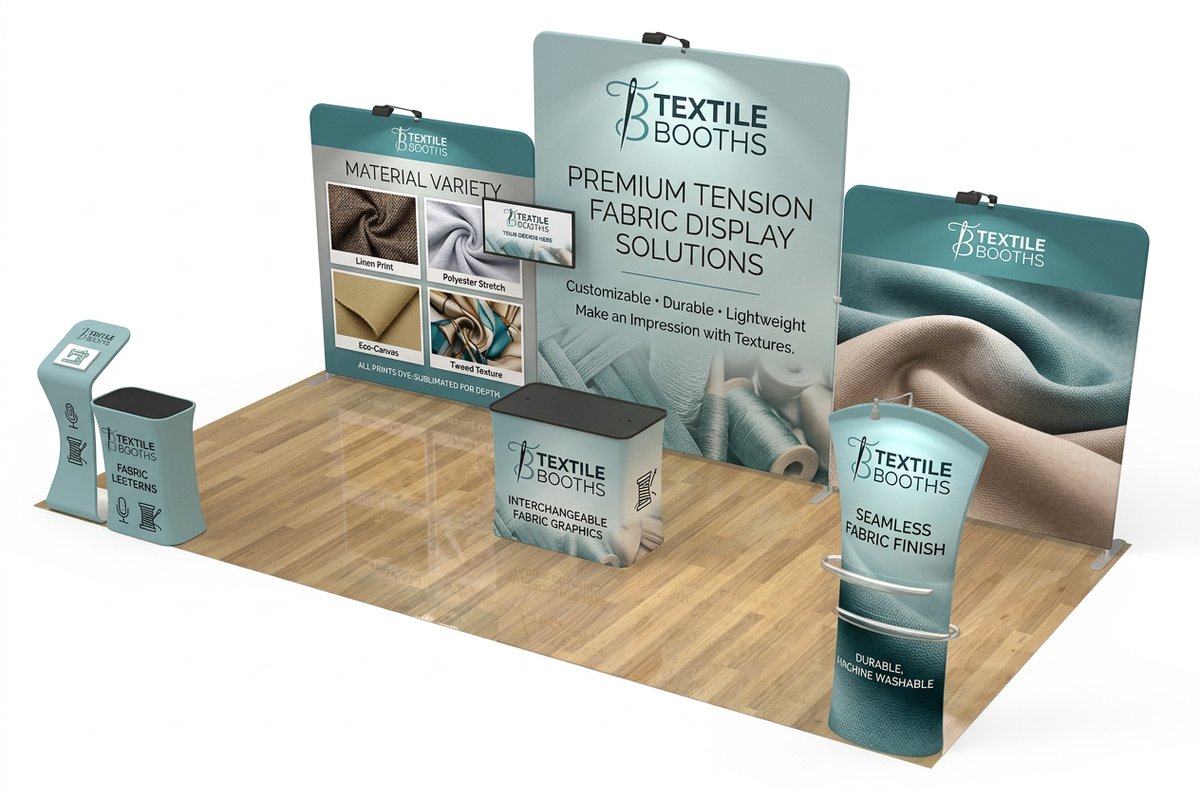 Fabric Booth Kits From $2599.00 Frame, dye-sub fabric skin, and travel case as one complete booth wall.
 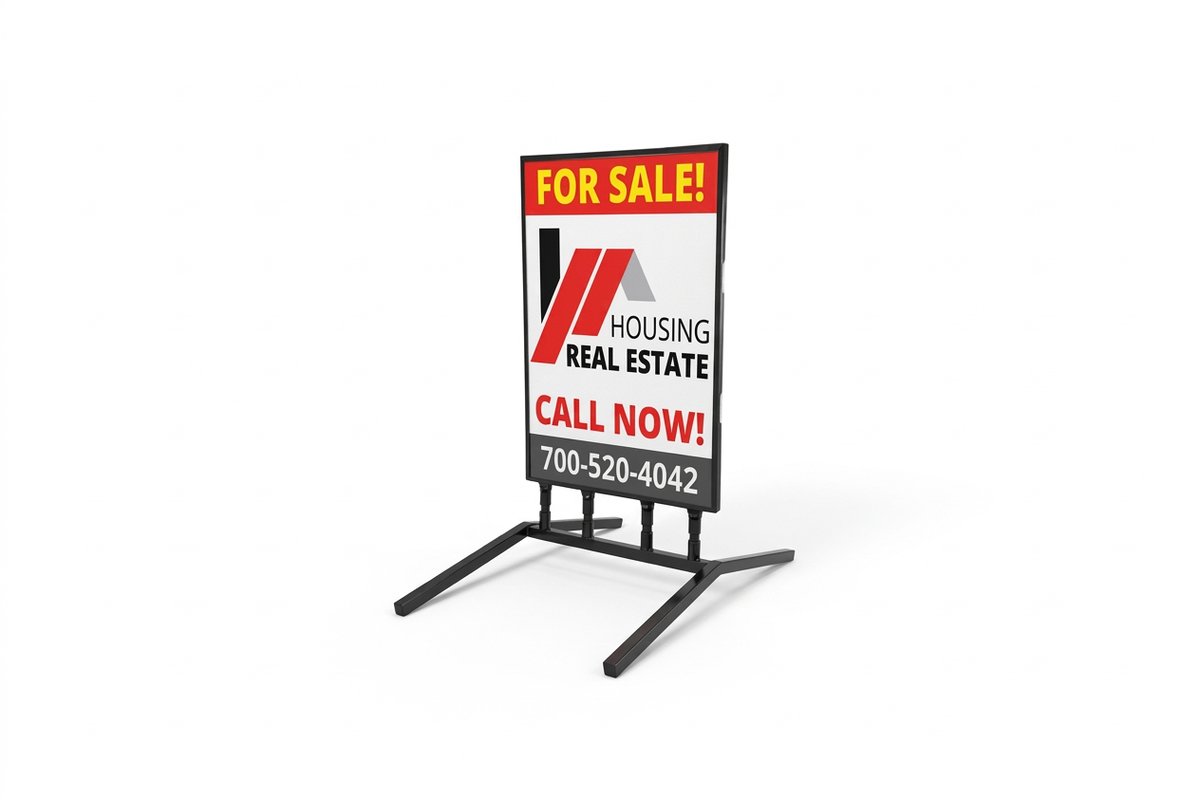 FleX-Frame Signs From $280.07 Tension fabric on a slim aluminum profile, with swappable skins for each show.
 Graphics, Skins, and Cases That Fit Your Frame
A frame is only as good as the skin stretched over it, and skins are where the measuring matters. Fabric graphics are printed slightly under the finished frame dimension on purpose so the material pulls taut. Rigid panels are cut to the visible opening, not the outside of the tube. Send artwork built to the wrong one of those two numbers and the wall either sags or refuses to close.
Design for the frame, not for a flat page. Keep logos and the headline above waist height, because the lower third of any booth wall spends the day behind a table, a laptop bag, or a person. Leave bleed on every edge that wraps. Keep body copy short enough to read from the middle of the aisle, then let your printed collateral carry the detail, the same way a strong brochure does in these brochure ideas.
- Dye-sublimation fabric. Colors sit in the fibers, folds fall out, and the skin machine washes when a show floor leaves it grimy.
- Rigid printed panels. Dead flat, high contrast, ideal for outdoor A-frames and any surface people will read up close.
- Double-sided artwork. Two faces means two files, and the back of a frame is free advertising for the aisle behind you.
- Swap skins, keep hardware. New campaign, new fabric, same frame, which is where the real savings show up in year two.
- Cases sized to the folded frame. A case that fits loosely is almost as bad as no case at all.
One more practical note on color. A skin that will live under harsh convention lighting reads darker than it does on your monitor, so avoid near-black backgrounds with thin white type. Mid-tone brand color with high-contrast lettering survives bad lighting, bad angles, and a photo taken by an attendee who is walking past.
Quantity and price
Aluminum A-Frame pricing and specs
Real configurator numbers, with the specs that decide how your artwork is built.
| Quantity | Price Per Unit | Total |
|---|---|---|
| 1 | $146.07 | $146.07 |
| 2 | $144.98 | $289.96 |
| 3 | $142.95 | $428.86 |
| 4 | $139.82 | $559.29 |
| 5 | $139.82 | $699.11 |
| 6 | $139.66 | $837.93 |
Setup Time, Teardown, and Years of Reuse
The honest promise of pop-up hardware is not that it is beautiful engineering. It is that one person can raise a full booth wall without help, without tools, and without a scheduled labor crew. That single fact is why frames survived every trend in exhibit design: they collapse the gap between arriving at a booth space and looking open for business.
Teardown is where frames earn or lose their second life. Fold the graphic loosely rather than creasing it into quarters, wipe the frame if the hall floor was dusty, and put the hinge pins back in the same pouch every single time. A frame treated this way goes to a dozen shows. A frame thrown into a trunk bare gets replaced after two.
- Assign one owner. The person who packs it should be the person who unpacks it, so missing parts get noticed immediately.
- Store it standing. A case stacked under boxes bends the tubing that keeps your wall square.
- Keep a spare parts bag. Extra clamps and pins cost almost nothing and save an entire booth day.
- Refresh the skin, not the frame. Rebranding is a fabric order, not a hardware order.
- Log the shows. Knowing a frame has done fifteen events tells you when to retire it before it fails on the floor.
Swappable skins
FleX-Frame Signs
Stretch fabric on slim aluminum, so a rebrand is a new skin instead of new hardware.
Choosing Between an A-Frame, a Flex Frame, and a Full Booth Kit
Three formats cover almost every real situation, and the choice comes down to where the display stands and how often it moves. An A-frame lives on sidewalks and at entrances. A flex frame lives inside a booth or a lobby. A booth kit builds the whole back wall of a ten-foot exhibit space in one purchase.
If you are shopping around, read comparisons rather than headline prices. Our breakdowns of the Staples a-frame sign alternative and the Vistaprint a-frame sign alternative show what is bundled and what is not, and the wider signs alternatives page lines up the sign category the same way. Pop-up retail shoppers should also read the pop-up shops guide before choosing a footprint, because a temporary storefront needs a different wall than a trade show aisle.
- Choose an A-frame when the display sits outside, moves daily, and needs to be readable from both directions of foot traffic.
- Choose a flex frame when you want a clean edge-to-edge graphic indoors and expect to swap the message between campaigns.
- Choose a booth kit when you are filling an exhibit space and would rather order one complete system than assemble a parts list.
- Choose two small frames over one large one when your team splits across events on the same weekend.
Compare formats
Popular display frames, side by side
Size, material, quantity, turnaround, and price lined up in one table.
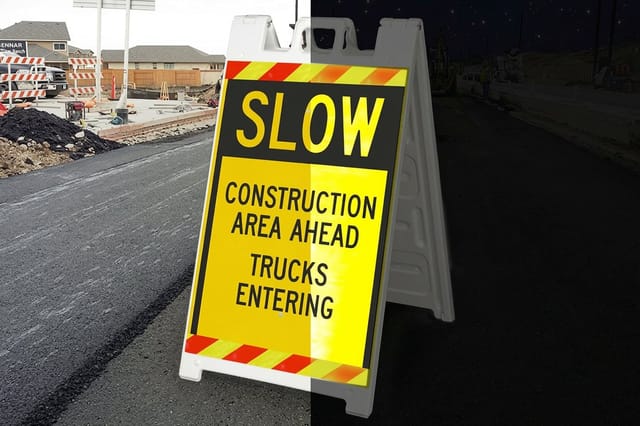 Reflective Signicade a Frame | 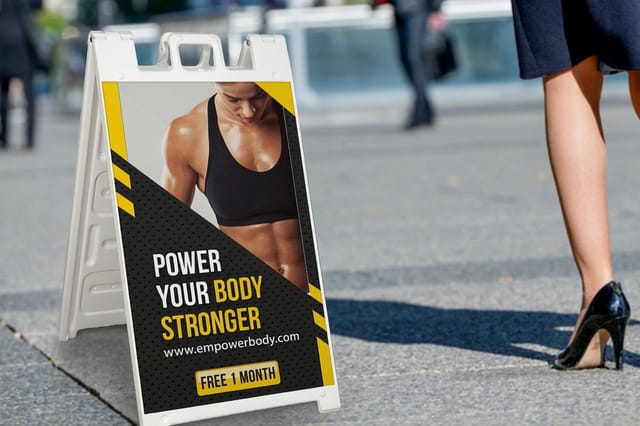 Signicade A-Frames | 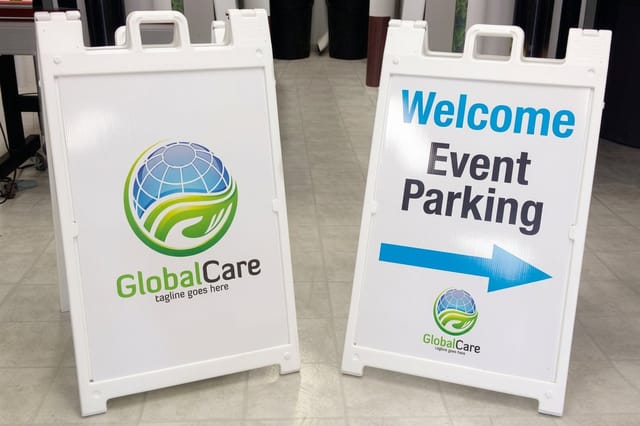 Signicade Deluxe A-Frames |  Dry Erase Signicade | |
|---|---|---|---|---|
| Min price | $163.67 | $182.32 | $196.60 | $185.63 |
| Paper / stock | Adhesive Vinyl | 4mm (3/16") Corrugated Plastic | 4mm (3/16") Corrugated Plastic | Adhesive Vinyl |
| Finish | Reflective Film | - | - | Dry Erase Lamination |
| Size | 25" x 45" | 25" x 45" | 27" x 46.125" | 25" x 45" |
| Default qty | 1 | 1 | 1 | 1 |
| Turnaround | 4 business days | 4 business days | 4 business days | 4 business days |
| Rating | ||||
| View & customize | View & customize | View & customize | View & customize |
Shipping Cases, Storage, and Keeping a Frame Alive
Shipping is the part of booth ownership nobody budgets for. Frames are light but long, which puts them into oversized freight brackets faster than their weight suggests. A proper rolling case turns that problem into checked luggage on a flight or a manageable box on a pallet, and it protects the joints that decide whether your wall still stands square next year.
Storage between shows matters just as much. Keep the case off a damp floor, keep fabric skins out of direct sun, and keep the small hardware in one labeled pouch inside the case rather than in a desk drawer three states away. If your booth also hands out gifts or samples, pack those separately, and pick items worth keeping, like the ideas in these paper gift ideas.
- Ship the case, not the parts. Loose tubes in a shipping carton arrive bent more often than they arrive straight.
- Label inside and out. A packing list taped inside the lid saves the frantic search for a missing foot.
- Photograph the packed case. Repacking is faster when someone can see how it left the office.
- Build in a buffer day. Freight to a convention center should land before the day you actually need it.
Ship it complete
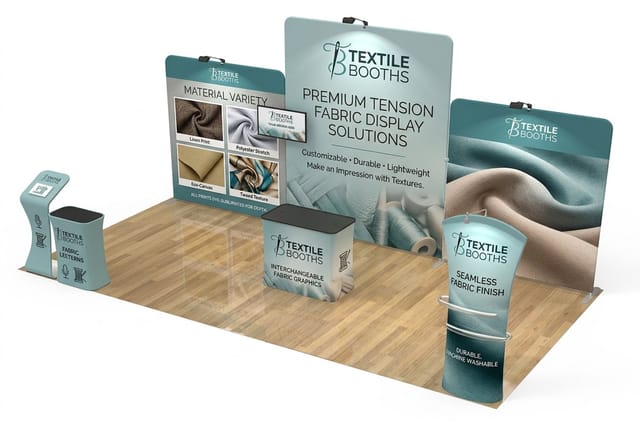
Fabric booth kits with case included
Frame, printed skin, and travel case arrive together, so nothing is missing at load-in.
Ordering the Complete Kit Without Guesswork
Order the frame, the graphic, and the case in one pass and the whole exercise stops being complicated. Confirm the finished wall size, confirm which faces get artwork, confirm how the skin attaches, then build your files to those numbers. Everything else, from stock to turnaround, is a dropdown on the product page.
Start from a print-ready layout instead of a blank canvas. The template libraries below give you exact-size files for the format you picked, with bleed and safe margins already marked, so the artwork you upload matches the frame you ordered. If your design is already built, run it past the blank template once before you check out. Two minutes there prevents a reprint later.
Match the format to the job
- Sidewalk and entrance traffic. Aluminum A-Frames with rigid double-sided panels.
- Indoor booth walls. FleX-Frame Signs with a stretch fabric skin you can wash and swap.
- Full exhibit space. Fabric Booth Kits, which arrive as frame, skin, and case together.
- Multi-city tours. Any frame plus a hard rolling case, ordered on day one rather than after the first bent tube.
Start fast
Frame templates and print-ready blanks
Free layouts plus exact-size blanks so your artwork matches the frame you ordered.
Wally sorts the frame from the graphic
Hardware, printed skin, and case are three parts of one booth wall
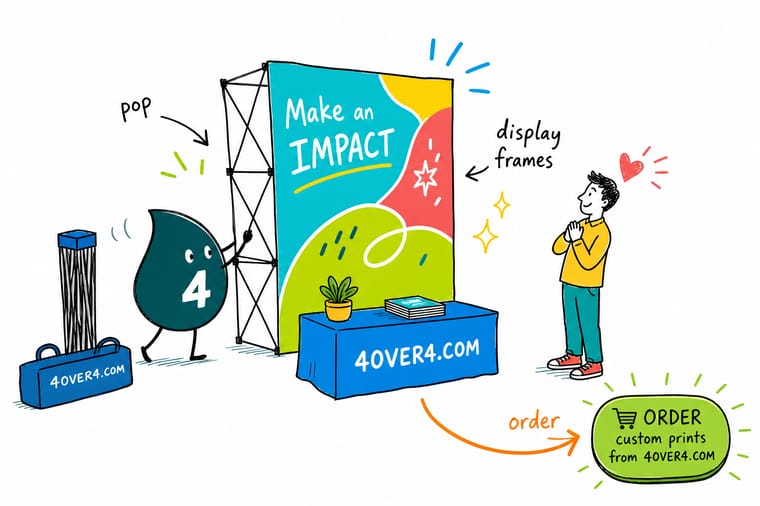
Shopping a booth wall gets confusing fast because the price you see might be hardware only. Wally splits it into three: the frame you keep for years, the printed skin that carries this year's message, and the case that keeps both straight in transit. Decide where the display will stand, pick the format that matches, then order all three together so everything fits on the first try.
Configure your display frame →By the numbers
Why exhibitors keep coming back for the reprint
A quick look at the print operation behind your booth wall.
- 10B+ Print products produced, since 1999
- 150,000+ Businesses served, across every industry
- 99.8% On-time delivery, tracked orders
- 1999 Printing in New York, family owned since day one
What to Remember Before You Order a Frame
Explore more
More ways to build a booth that gets noticed
Related pages across 4OVER4.COM, one card for every kind of help you might want.
 Guide How to Create a Pop-Up Shop Plan a temporary storefront, from footprint to signage.
 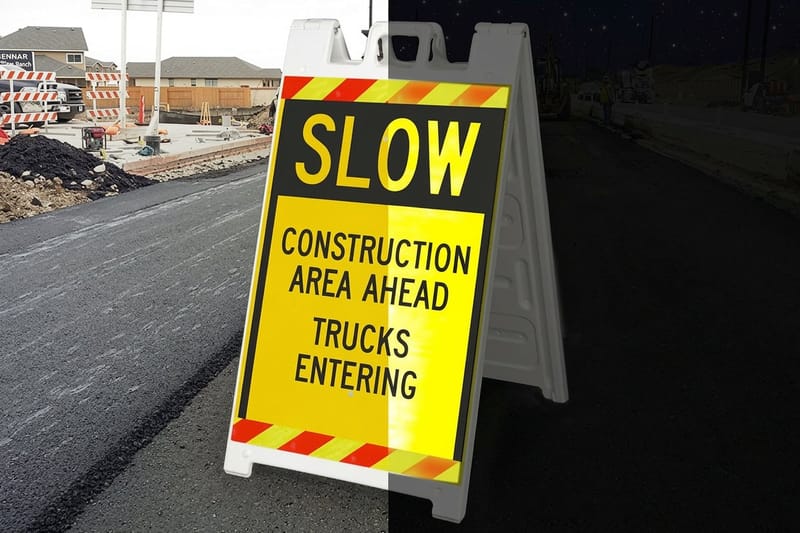 Shop A-Frame Signs Printing Browse frame sizes, panel stocks, and finishes.
 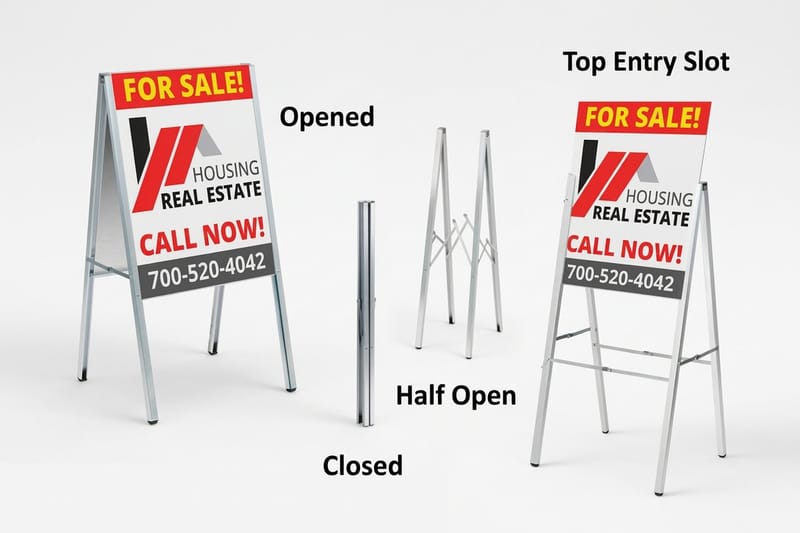 Product Aluminum A-Frames Hinged two-sided frames that fold flat between events.
 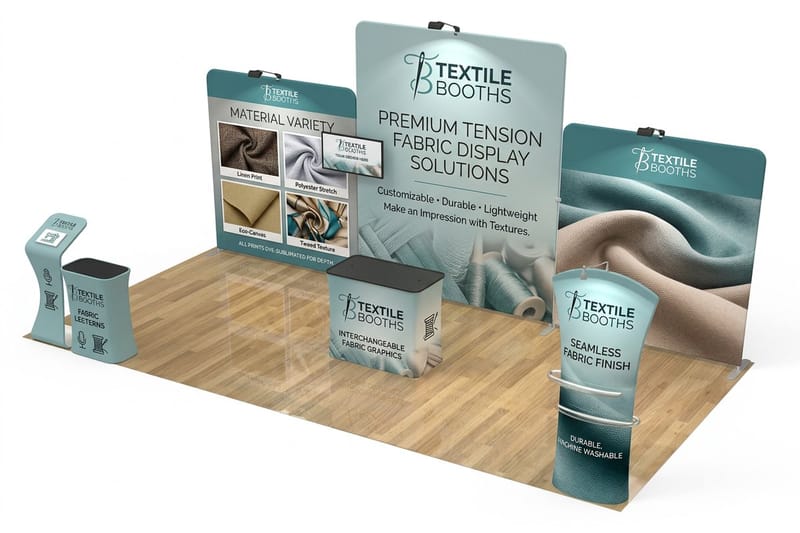 Product Fabric Booth Kits Frame, printed skin, and travel case in one order.
 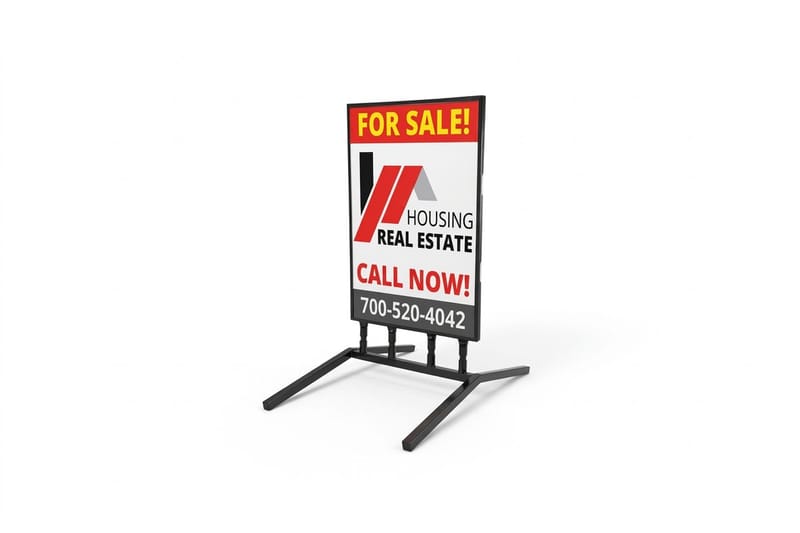 Product FleX-Frame Signs Tension fabric on slim aluminum, with swappable skins.
  Alternatives Sign Printing Alternatives How the major sign printers compare on price and specs. Alternative 4OVER4 vs Staples A-Frames What each option bundles before you compare prices. Alternative 4OVER4 vs Vistaprint A-Frames Hardware, panels, and turnaround side by side.
  Article Brochures That Stand Out Collateral that carries the detail your booth wall cannot.
  Article Corporate Gift Ideas Booth giveaways worth carrying home from the show.
  Articles All Printing Articles Ideas and how-tos across every print format we run. FAQs Printing FAQs Answers on files, stocks, turnaround, and shipping.
 Ready to build a booth wall you can reuse for years?
Pick the frame that matches where it will stand, print the skin to the exact finished size, and add the case that keeps it square between shows.
Pop-Up Display Frame FAQs
What is a pop-up frame?
A pop-up frame is the collapsible aluminum structure that opens into a booth wall and holds a printed graphic under tension. The frame is the hardware you keep for years. The graphic is a separate printed skin or set of rigid panels sized to that exact frame, and the case is what protects both in transit. Most frames assemble with spring buttons or a scissor lattice, so no tools are needed. Compare footprints on the a-frame signs printing category.
How do I choose the right pop up frame?
Start with where the display will stand. Outdoor sidewalk and entrance traffic points to an A-frame with rigid double-sided panels. An indoor booth or lobby wall points to a tension fabric flex frame with an edge-to-edge graphic. A full ten-foot exhibit space points to a booth kit that arrives complete. Then check how often it travels, because frequent movers need a hard rolling case from day one rather than after the first bent tube.
What does a pop up frame cost and how are prices set?
Aluminum A-Frames start at $146.07, FleX-Frame Signs start at $280.07, and Fabric Booth Kits start at $2,599.00. Price moves with finished size, how many faces carry artwork, the graphic material, and whether a travel case is included. Larger walls use more tubing and more printed square footage, so both halves of the cost rise together. Configure the exact size and quantity on the product page and the live price updates before you add to cart.
What sizes, stocks, and finishes are available for pop up frames?
Frames come in a range of finished heights and widths, from compact sidewalk A-frames to full booth-wall spans. Graphics print either as rigid panels for a dead-flat outdoor face or as dye-sublimated stretch fabric for indoor walls that fold without permanent creases. Double-sided artwork is standard on A-frames, and fabric skins can be ordered as replacements later so the same hardware carries a new campaign. Exact options are listed in the specs on each product page.
How long does a pop up frame take to print and ship?
Turnaround depends on the format and the graphic. Printed panels and fabric skins move on standard production schedules once your files pass preflight, and hardware ships from stock. Because frames are long and light, they fall into oversized freight brackets, so give a convention delivery a buffer day rather than aiming for the exact date you need it on the floor. Live turnaround options and shipping estimates appear at checkout for the size and quantity you configure.
