
What Card Design Etiquette Actually Means (And Why It Matters)
Card design etiquette is the set of unwritten rules that separates a card people keep from one they toss. Whether you're designing a business card, a thank you note, or a holiday greeting, the choices you make - font size, white space, paper weight, tone of your message - all signal something about you before a single word gets read.
Think about it. A cluttered business card with six phone numbers and a blurry logo says "I don't know what I'm doing." A clean, well-spaced card on thick stock says "I pay attention to details." That's card design etiquette at work. It's not about following rigid rules. It's about making intentional choices that respect your reader's time and attention.
"I redesigned my thank you cards with better spacing and a handwritten-style font. The response rate from clients doubled. People actually started mentioning the card in follow-up calls."
- Rachel K., Event Planner
For greeting cards, etiquette means matching your design to the occasion. Bold, playful colors work for birthdays. Muted tones and elegant type suit sympathy cards. Business cards demand restraint - your name, title, one contact method, and a logo. That's the sweet spot. If you're creating Free Invitations, the same principles apply: let the design breathe and match the event's mood.
4OVER4 has printed over 10 billion cards across every category, and the best-performing designs share common traits. They use no more than two fonts. They leave generous margins. They pick a paper stock that matches the message's weight - literally and figuratively.
Need something outside the standard formats? Custom Projects let you build from scratch. And if sustainability matters to your brand or your recipients, Green Printing options keep your etiquette game strong without the environmental guilt.
Below, you'll find templates that put these principles into practice - ready to customize with your own content and branding.
Looking for a completely blank canvas? Start with a blank template and apply your own etiquette-driven design choices from scratch.
Blank Card Design Etiquette Templates
Guides That Sharpen Your Card Design Skills
Good card design etiquette starts with knowing what works. These articles break down real examples, current trends, and specific techniques you can steal for your next project. Whether you're after business card design tips or greeting card inspiration, each guide covers a different angle.
Start with Classy Business Card Design Inspiration for layouts that nail the balance between bold and restrained. The Business Card Printing Trends Guide covers what's current in 2025, from minimalist designs to textured finishes. For personal cards, check out Diy Greeting Card Design Ideas - perfect for holiday and New Year greetings.
Want to push boundaries? 3D Lenticular Business Cards Explained shows how motion effects can work without breaking etiquette rules. Business Cards That Look Like Credit Cards proves unconventional formats still communicate professionalism. And because good design includes responsible choices, Are Business Cards Recyclable answers the sustainability question 4OVER4 customers ask most often.
Browse by Card Type and Design Approach
Card design etiquette shifts depending on the format. A double-sided business card follows different rules than a single-sided one. A clear plastic card demands a different layout approach than a matte paper card. Browse these categories to find the right match for your project.
Not sure about layout? Are Double Sided Business Cards Good walks through when to use both sides and when to keep it simple. If you're designing branded stickers alongside your cards, Logo Sticker Design Ideas shows how to keep your visual identity consistent across formats.
For design professionals building a portfolio of card work, Graphic Design Portfolio Examples offers layout ideas that showcase print projects effectively. 4OVER4 also offers specialty card stocks that demand their own etiquette considerations - 30Mil Clear Plastic Cards and 30Mil Frosted Plastic Cards both require transparent-friendly designs where ink placement and negative space become even more important.
The Real Rules Behind Thank You Cards, Business Cards, and Greeting Card Etiquette
Let's get specific. Card design etiquette isn't one-size-fits-all. The rules change based on what you're sending and who's receiving it.
Business Card Design Tips That Actually Work
Stick to one typeface family. Use your logo at a size that's visible but doesn't dominate. Leave at least 1/8-inch margin from every edge - not because the printer needs it (though they do), but because cramped edges make your card feel cheap. Your phone number should be large enough to read without squinting. If you have to choose between your fax number and white space, pick white space. Every time.
Thank You Card Etiquette in Design
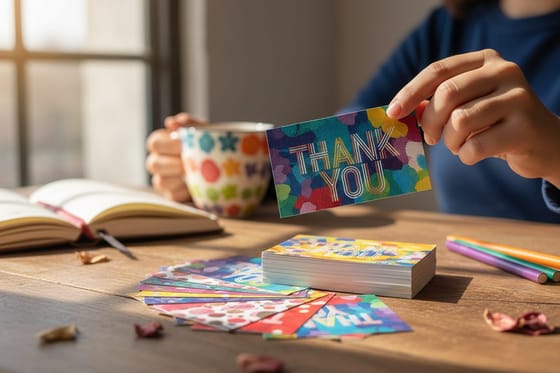
Thank you card etiquette goes beyond the message inside. The exterior design sets expectations. A glossy, photo-heavy cover on a sympathy thank you feels wrong. A plain white card with elegant type feels right. Match the weight of the paper to the weight of the sentiment. Thick, textured stock tells the recipient you cared enough to choose something big.
Greeting Card Etiquette for Every Occasion
Greeting card etiquette depends on context. Birthday cards can be loud. Anniversary cards should be warm. Corporate holiday cards need to avoid religious specifics unless you know your audience well. The safest approach: clean design, quality stock, and a message that sounds like a person wrote it - not a committee.
4OVER4 has printed cards for 150,000+ businesses, and the patterns are clear. The cards that get the best response are the ones where every design choice - color, type, paper, finish - serves the message. Browse more insights across our full library of Printing Articles. And if you need a creative reset, Funny Print Ad Examples proves that breaking rules intentionally is its own form of etiquette.
Why 4OVER4 Is the Right Partner for Etiquette-Driven Card Design
Knowing card design etiquette is step one. Printing it on the right stock with the right finish is step two. 4OVER4 gives you 60+ paper types so you can match your paper choice to your message's tone. Thick, rigid stock for formal business cards. Soft-touch matte for elegant thank you notes. Uncoated for that handmade greeting card feel.
Every order comes with a free digital proof, so you can check spacing, margins, and font sizes before anything hits the press. That's where most etiquette mistakes happen - in the gap between screen and print. 4OVER4 closes that gap with 99.8% on-time delivery and quality checks on every run.
Worried about cost? The Price Match guarantee means you won't overpay. If sustainability is part of your brand's etiquette, Green Printing options use recycled stocks and eco-friendly inks. And yes, the Price Match applies to those too.
"I switched to 4OVER4 for my wedding thank you cards. The 32pt uncoated stock felt handmade. Guests kept telling us how beautiful they were."
- David L., Groom
What Customers Say About Their Card Design Experience
The best proof that card design etiquette matters? Hearing from people who've put it into practice. 4OVER4 has earned over 10,000+ reviews with a 4.8/5 star average, and many of those reviews specifically mention how the paper quality and finish elevated their card designs.
"I followed basic business card design tips - two fonts, plenty of white space, 32pt stock - and ordered through 4OVER4. The cards feel like they cost five times what I paid. Clients comment on them constantly."
- Marcus T., Financial Advisor, ★★★★★
Here's a selection of recent reviews from customers who nailed their card design etiquette with 4OVER4's help.
Free Card Design Etiquette Templates
"Ordered card design etiquette from 4OVER4 and the quality blew me away. Sharp colors, premium feel, arrived 2 days early."
"Been using 4OVER4 for card design etiquette for a year. Consistent quality every time. The online designer made it easy."
"Switched to 4OVER4 and saved 40% on card design etiquette. Better quality than my old printer. 60+ paper options."
"4OVER4's card design etiquette helped us look more professional. Clients notice the difference."
Common Questions About Card Design Etiquette
What is card design etiquette and why does it matter?
Card design etiquette is the set of best practices for layout, typography, spacing, and paper choice that make your card feel intentional and respectful. It matters because a well-designed card gets kept. A poorly designed one gets tossed. First impressions happen in seconds, and your card's design speaks before your words do.
What are the most important business card design tips?
Use one typeface family, keep your logo visible but not oversized, and leave generous margins on all sides. Limit contact information to essentials - name, title, phone, email, and website. Choose a paper weight of at least 14pt for a professional feel. White space isn't wasted space. It's what makes your card readable.
How does greeting card etiquette differ from business card etiquette?
Greeting card etiquette is more flexible with color, imagery, and emotional expression. Business cards demand restraint and clarity. A birthday greeting can use playful fonts and bright colors. A business card should stick to clean lines and professional tones. The common thread is matching your design choices to the occasion and audience.
What paper stock works best for thank you cards?
For thank you card etiquette, uncoated or soft-touch matte stocks work best. They feel warm and personal in the hand. Thick stock (16pt or 32pt) adds a sense of care and quality. Glossy finishes can feel impersonal for thank you notes, so save those for marketing materials.
How many fonts should I use on a card?
Stick to two fonts maximum. One for headings or your name, one for body text or contact details. Using more than two creates visual clutter and breaks basic card design etiquette. If you need variety, use different weights (bold, regular, light) within the same typeface family.
Does card size affect design etiquette?
Yes. Standard sizes (3.5x2 inches for business cards, 5x7 for greeting cards) exist because they fit wallets, envelopes, and display racks. Non-standard sizes can work, but they need to serve a purpose. A square business card stands out - but only if the layout is designed specifically for that format. Don't just shrink a rectangular design into a square.