
Are Business Cards Recyclable? 2026 Eco-Friendly Guide


Are Business Cards Recyclable, and What Should You Do With Them?
Yes, most business cards are recyclable. Standard paper and cardstock cards drop straight into your curbside bin, and 4OVER4.COM has printed 10 billion+ cards for 150,000+ businesses since 1999, so we have watched a lot of them start and end their life. The catch is that not every card plays by the same rules. Coated finishes, plastic stock, and metallic foils can flip the answer from yes to no.
Businesses still trade millions of cards every year, which makes the recyclability question bigger than it looks. What happens to your card at the end depends on three things. What it is made of, how it is finished, and where you live. Get those right and the card returns to the paper stream instead of the landfill.
This guide walks through every common card type, the finishes that help or hurt, the disposal steps that actually work, and the greener stocks worth ordering when sustainability is part of your brand story. Start at the business cards printing hub if you want to compare eco-friendly options as you read.
What Are Business Cards Actually Made Of?
Business cards recycle when they are made from standard paper or cardstock, and that covers most cards in circulation. The common weight sits in the 14pt to 32pt range. A 14pt card feels close to a playing card, while 32pt runs about three times thicker. Curbside programs accept these paper-based cards without a fuss. If you are weighing weights, our business card thickness guide breaks down how each stock feels.
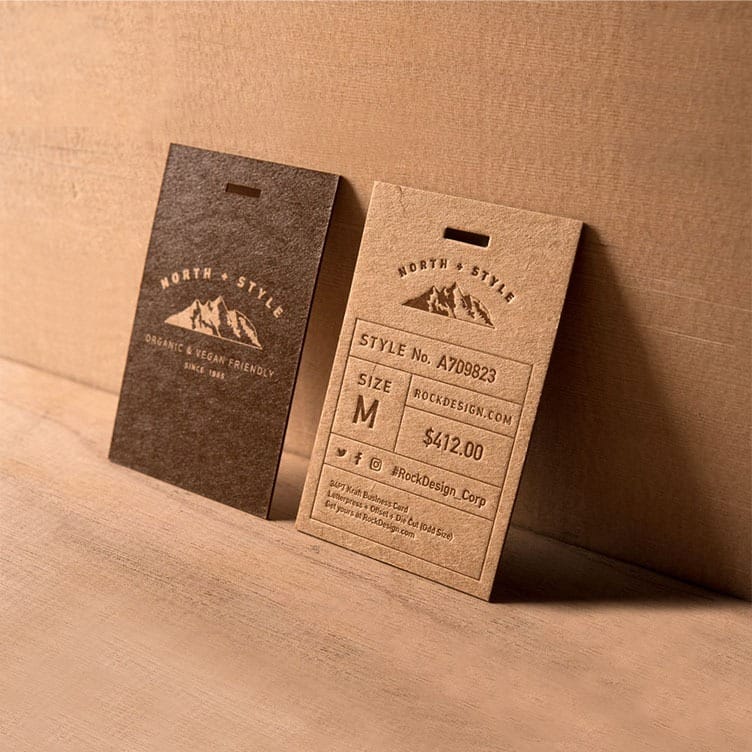
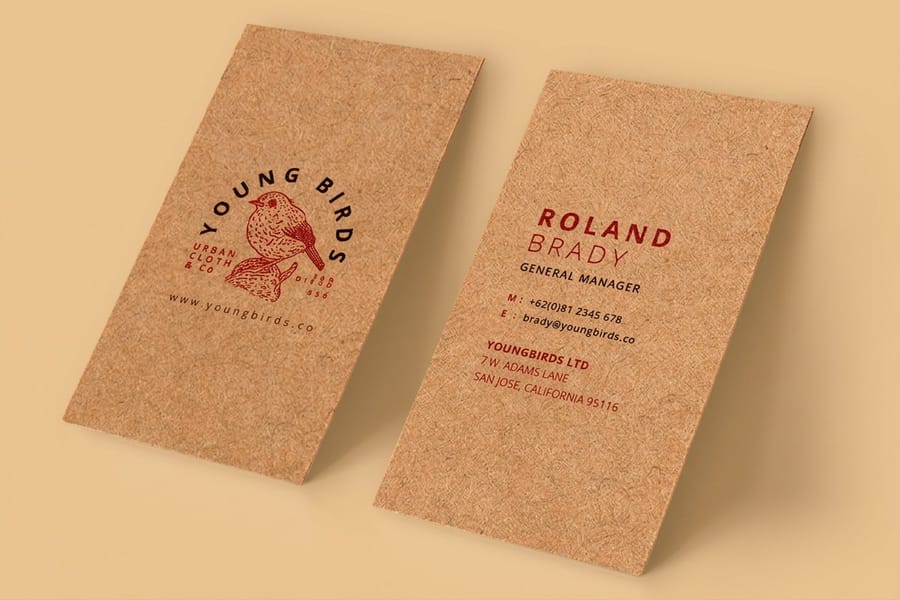
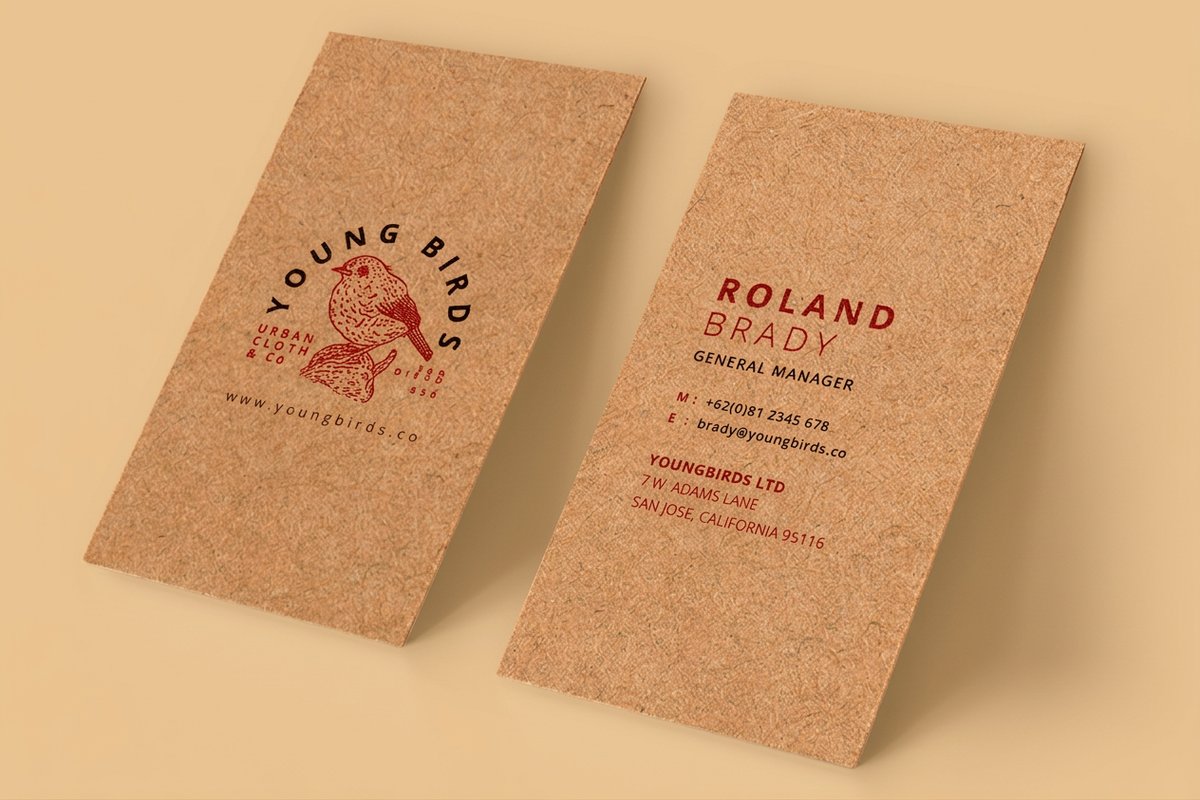
Kraft business cards are one of the most eco-friendly options on the shelf. They blend recycled paper with cotton linters, weigh around 110lb, and carry that natural brown texture. They recycle fully and compost in many cases, so a brand that leans into sustainability gets real material science behind the message.
Uncoated cardstock gives you a bright white, classic finish that recycles easily because there is no lamination layer to fight. Matte finishes usually recycle too, though a quick check with your local facility never hurts. Glossy and UV-coated cards are where it gets tricky, since that shine is often a thin plastic film that some centers refuse.
Then come the specialty materials. 30mil clear plastic cards look incredible and last for years, but they do not move through standard paper recycling. Metal, wood, and other alternative stocks each carry their own disposal notes. If you pick them for the wow factor, just know recyclability is not their strong suit.
Which Finishes and Coatings Affect Recyclability?
The finish on your card decides whether it gets recycled or landfilled. Here is the breakdown so you can order your next batch of business cards with your eyes open.
Buying rather than sorting? Yes, you can order recyclable cards outright. Kraft business cards print on unbleached brown fiber, and uncoated or matte finishes on standard business cards recycle whole through curbside programs. Read the finish notes below first, because that choice is what decides it.
Uncoated and Matte Cards
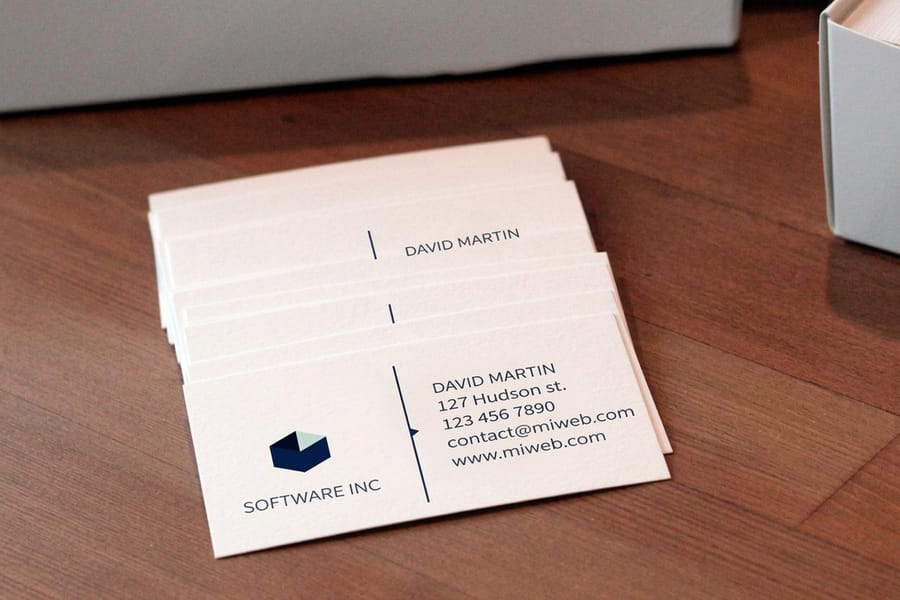
Uncoated cards are the easiest to recycle. With no coating, the paper fibers stay fully accessible during processing. Matte finishes sit right behind them, since most use a thin, water-based coat that standard facilities handle without trouble. For a professional look with no environmental trade-off, matte is the safe pick.
Gloss, UV Coating, and Lamination
Glossy cards look great, no argument there. The shine comes from a UV coating or a lamination layer, and both are essentially thin plastic films bonded to paper. Many facilities cannot separate those layers, so the whole card gets rejected. If recyclable cards are the goal, skip the high-gloss finish or call your local recycler first.
Spot UV and Foil Stamping
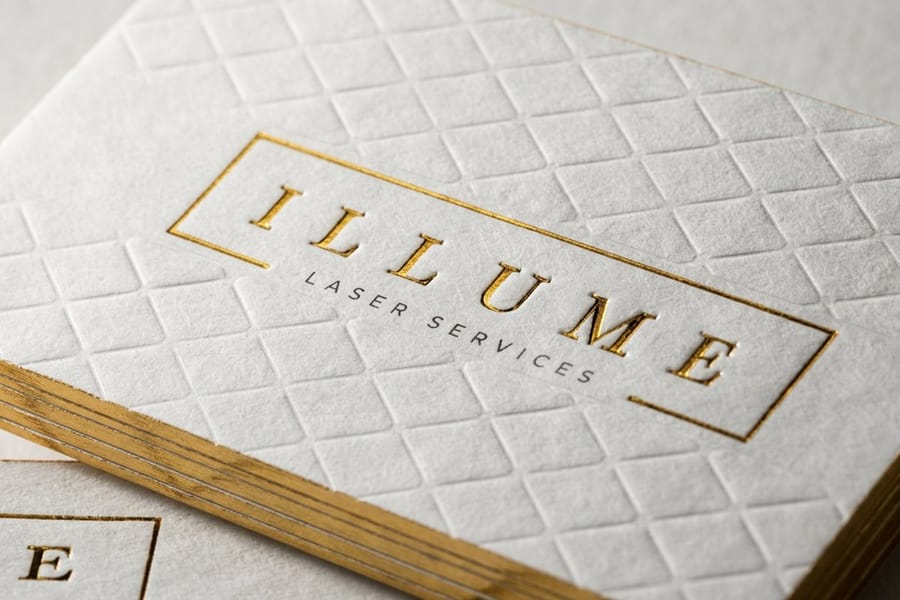
Spot UV lays a glossy coat over specific areas instead of the whole surface. It uses less material, but it can still trip up a recycling plant. Foil stamping in gold, silver, or holographic adds a metallic layer that will not recycle through paper streams. These finishes look stunning for branding, and you can see them at work in our roundup of amazing business card designs, so weigh the look against the end-of-life cost.
Velvet and Soft-Touch Lamination
That silky, velvety feel comes from a lamination layer. Soft-touch gives cards a premium hand that people love to hold, but it is a plastic coat, and it makes the card non-recyclable in most standard programs. Choose it knowing you are trading end-of-life recyclability for the sensory experience.
Should You Shred Old Business Cards Before Recycling?
Short answer: no, unless the card carries sensitive personal information. Shredding creates tiny fragments that recycling facilities struggle to process. Whole cards, or even large pieces, recycle far more efficiently because the fibers stay intact and usable.
If your old cards only list a name, title, and phone number, toss them in the bin as they are. Save the shredder for cards that hold account numbers, passwords, or data you truly need to destroy. For everything else, keeping the card whole is the greener move, and the leftover cards make handy bookmarks or note cards before they ever reach the bin.
Eco-Friendly Alternatives and Sustainable Card Options
If you are asking whether business cards are recyclable because sustainability drives your brand, you have more options than ever. The printing industry has made real progress on eco-friendly materials, and 4OVER4.COM stocks several that let you network responsibly.
Recycled Paper and Kraft Stock
Cards printed on recycled paper close the loop. You reuse material that already ran through recycling once, and it can go around again after you finish with it. Kraft stock pushes that further with its blend of recycled fibers and cotton linters, and the natural brown look signals environmental care without a word of copy.
Seed Paper Business Cards
Seed paper cards are embedded with wildflower or herb seeds. When the card has done its job, you plant it. The paper biodegrades and the seeds grow. It is a memorable conversation starter and a zero-waste ending. Seed paper will not suit every brand, but for eco-focused businesses it is hard to beat.
Soy-Based and Vegetable Inks
Traditional inks lean on petroleum-based solvents. Soy and vegetable inks are a cleaner swap that makes the card easier to recycle and cuts VOC emissions during printing. Many modern print shops, 4OVER4.COM included, run these greener ink formulas as standard, and the green printing program pulls the eco choices together in one place.
Digital Business Cards as a Complement
Some people argue that digital cards erase the recyclability question outright. True, yet a physical card still lands with a tactile weight that a screen cannot copy. The smart play for most professionals is both. Hand over a physical card in person, then follow up with a digital version. You print fewer cards and still make the in-person impression, and cotton business cards make that handshake feel premium.
Eco pricing
Kraft business card pricing and specs
Recycled kraft stock at real configurator numbers. The more you order, the lower the per-card cost drops.
| Quantity | Price Per Unit | Total |
|---|---|---|
| 100 | 24.8¢ | $24.75 |
| 250 | 14.2¢ | $35.57 |
| 500 | 13.1¢ | $65.60 |
| 1,000 | 13.3¢ | $132.55 |
How to Properly Recycle Your Business Cards
Recycling business cards is not complicated, but a few steps make the process cleaner and more effective.
- Check the material. Paper and uncoated cardstock recycle. Plastic, metal, or heavily laminated cards do not run through paper streams, so separate those out first.
- Remove non-paper elements. A metal clip, a rubber band, or a plastic sleeve contaminates a batch. Pull them off before the card hits the bin.
- Check local guidelines. Rules shift by municipality. Some accept glossy paper, some refuse it. A quick look at your city recycling page saves you from wishful recycling, the habit of tossing something in and hoping.
- Use the right bin. Business cards belong with mixed paper and cardboard. Keep them out of the glass and plastic streams.
Creative Ways to Repurpose Cards You Cannot Recycle
Not every card belongs in the recycling bin. Specialty cards made from plastic, metal, or heavily coated stock need a different end-of-life plan. Rigid plastic options like 30mil frosted plastic cards are the ones to repurpose rather than recycle, so plan a craft use from the start.
Here are practical ways to give them a second run, with a few ideas borrowed from logo sticker design ideas.
- Bookmarks. Thick 32pt cards hold their shape and already carry a design on one side, which makes them excellent bookmarks.
- Gift tags. Write a note on the back and tie them to a present. This works beautifully with <a href="/product/artist-business-cards">artist business cards</a> that carry unique artwork up front.
- Packaging filler. Shredded cards, the ones you would shred for security anyway, cushion small shipments. Not glamorous, but better than a landfill.
- Cue cards and mini notes. The blank back is the perfect size for reminders or study flashcards. Keep a stack on your desk.
- Composting. Uncoated, non-laminated cards break down in a home compost bin over a few months. Keep heavy-ink or coated cards out of the pile.
Can You Buy Recycled Business Cards? Ordering Recyclable Stock From 4OVER4.COM
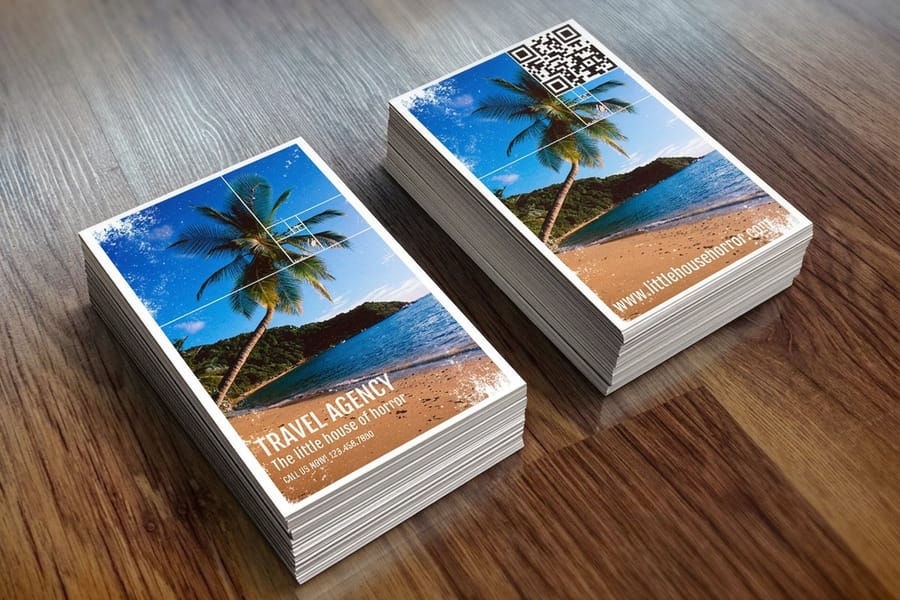
Yes, and the decision is made at the ordering stage, not at the recycling bin. 4OVER4.COM offers 60+ paper types across the full business card lineup, and many of them recycle fully. Pick uncoated or matte finishes on standard cardstock and your cards will be welcome at virtually every recycling program in the country. Here are the three eco stocks worth ordering, and what each one is actually like in the hand.
Kraft. Unbleached brown fiber with a visible texture, printed uncoated. It is the most openly recycled-looking card we print, it holds dark ink and white ink well, and it goes back into a curbside paper stream whole with nothing to separate out. Order kraft business cards.
Uncoated cardstock. No coating at all, so the paper fibers stay fully accessible during processing, which makes it the easiest card on this list to recycle. It also takes a pen, which matters if you write a price, a date, or an appointment on the back. Configure it on standard business cards and choose the uncoated finish.
Matte stock. A thin, water-based coat that standard facilities handle without trouble. You keep recyclability and get a cleaner, denser black than uncoated gives you. This is the pick when kraft or uncoated reads too raw for the brand.
Want the premium look of black business cards or a specialty finish while still caring about the planet? Balance is the trick. Choose a recyclable base stock and add minimal spot treatments rather than full-surface lamination. You keep the visual impact without giving up recyclability. Browse the design templates to find a layout, then select your eco-friendly stock at checkout.
Not sure how a stock feels before you commit to a full run? Order free samples first, then use the price table and spec sheet further down this page to plan your quantity.
Comparing Recyclable and Specialty Business Cards
Choosing between kraft, uncoated, matte, and specialty stock comes down to three things. The look you want, the durability you need, and how the card should end its life. Here is how the popular business card lineup stacks up side by side.
| Stock or finish | Feel in hand | Printed look | Durability | Recyclable? |
|---|---|---|---|---|
| Kraft, uncoated brown fiber | Textured and dry, unmistakably paper | Warmer and softer, because the fiber drinks the ink | Scuffs and marks show, and it drinks moisture | Yes, curbside, whole card |
| Uncoated white cardstock | Matte, and you can write on it with a normal pen | Slightly muted color, very crisp type | Dents and creases more easily than coated stock | Yes, the easiest of all, no coating to separate |
| Matte coated | Smooth with a low sheen, no glare | Deeper blacks than uncoated, no shine competing with the type | Better wear resistance than uncoated | Yes in most programs, the coat is thin and water-based |
| Gloss or UV coated | Slick and hard | The highest color saturation and contrast on the list | Shrugs off water and scuffing | Often rejected, the shine is a plastic layer bonded to the paper |
| Laminated, soft-touch or velvet | Silky, the most premium hand-feel we print | Rich and slightly muted | The toughest paper card here | No in most standard programs |
| Plastic, such as 30mil frosted plastic cards | Rigid, like a credit card | Frosted or opaque, with a look paper cannot copy | Outlasts every paper option | No, not through paper streams. Plan to repurpose. |
Read it top to bottom and the trade is clear: everything that makes a card tougher or glossier is a layer that has to come off again at the recycling plant, and the ones that recycle cleanest are the ones with the least on top of the fiber.
4OVER4.COM backs every order with 99.8% on-time delivery and a full quality guarantee. Before a big run, order free samples to feel the eco stock in your hands.
Compare formats
Business cards, side by side
Stock, finish, quantity, turnaround, and from-price across our most-ordered business cards.
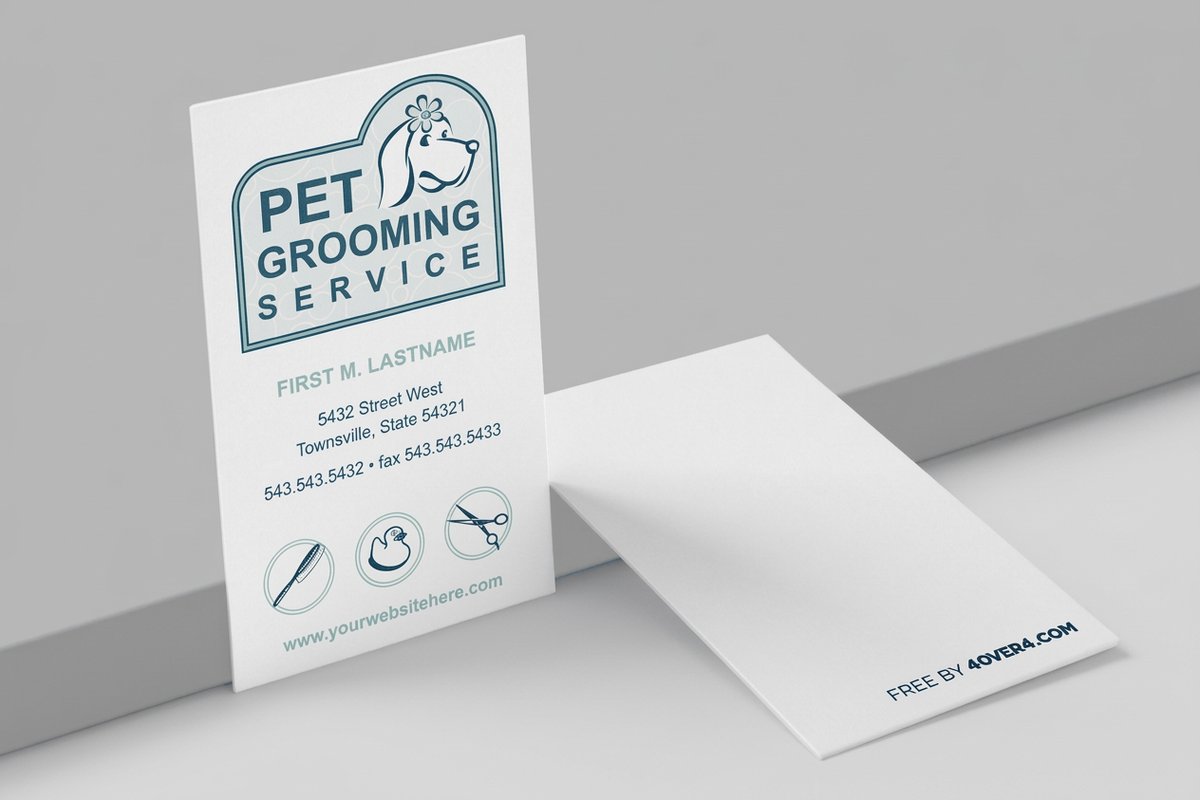 free business cards | 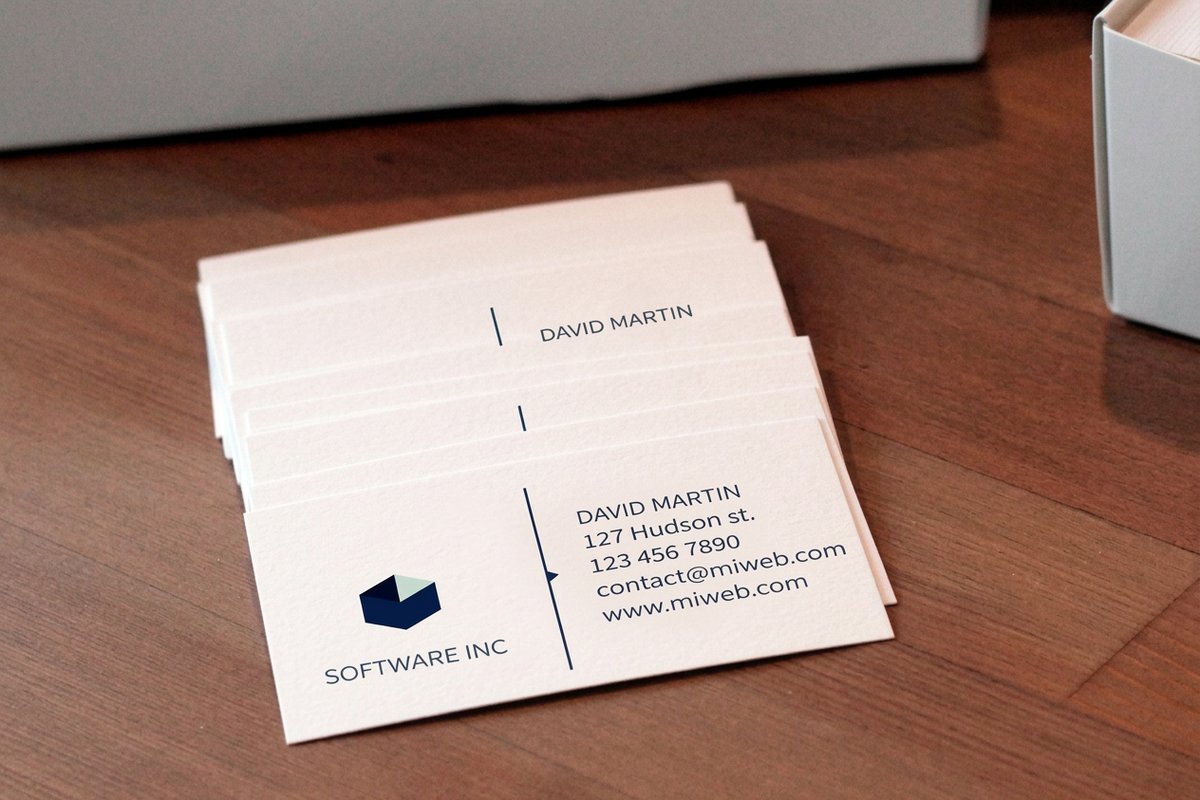 Standard Business Cards |  3D Lenticular Business Cards | 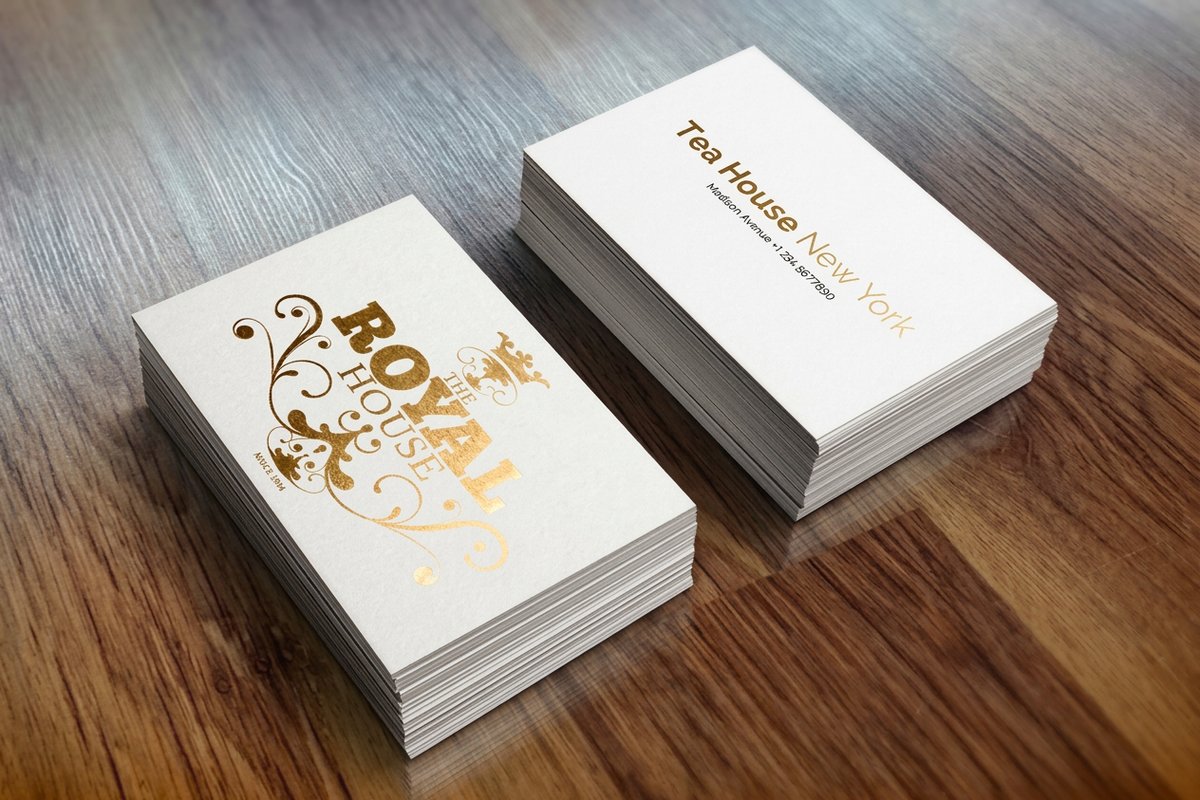 Metallic Foil Business Cards | |
|---|---|---|---|---|
| Min price | Free | $17.57 | $690.88 | $222.13 |
| Paper / stock | 14pt Gloss Cover | 14pt Gloss Cover | 31pt Lenticular Lens | 16 Point Silk Laminated |
| Finish | - | Standard Finish | - | - |
| Size | 2" x 3.5" | 2" x 3.5" | 2" x 3.5" - Vertical | 2" x 3.5" |
| Default qty | 200 | 100 | 500 | 500 |
| Turnaround | 5 business days | 3 business days | 22 business days | 7 business days |
| Rating | ||||
| View & customize | View & customize | View & customize | View & customize |
To baseline recyclable stock against everyday cards, here is the current tier chart and full spec sheet for standard business cards.
Baseline pricing
Standard business card pricing and specs
A paper-card baseline to plan your order. Per-unit cost drops fast as quantity climbs.
| Quantity | Price Per Unit | Total |
|---|---|---|
| 100 | 17.6¢ | $17.57 |
| 200 | 11.5¢ | $23.07 |
| 300 | 9.15¢ | $27.46 |
| 400 | 7.96¢ | $31.86 |
| 500 | 7.25¢ | $36.26 |
| 600 | 6.77¢ | $40.64 |
Ready-Made Templates for Recyclable Business Cards
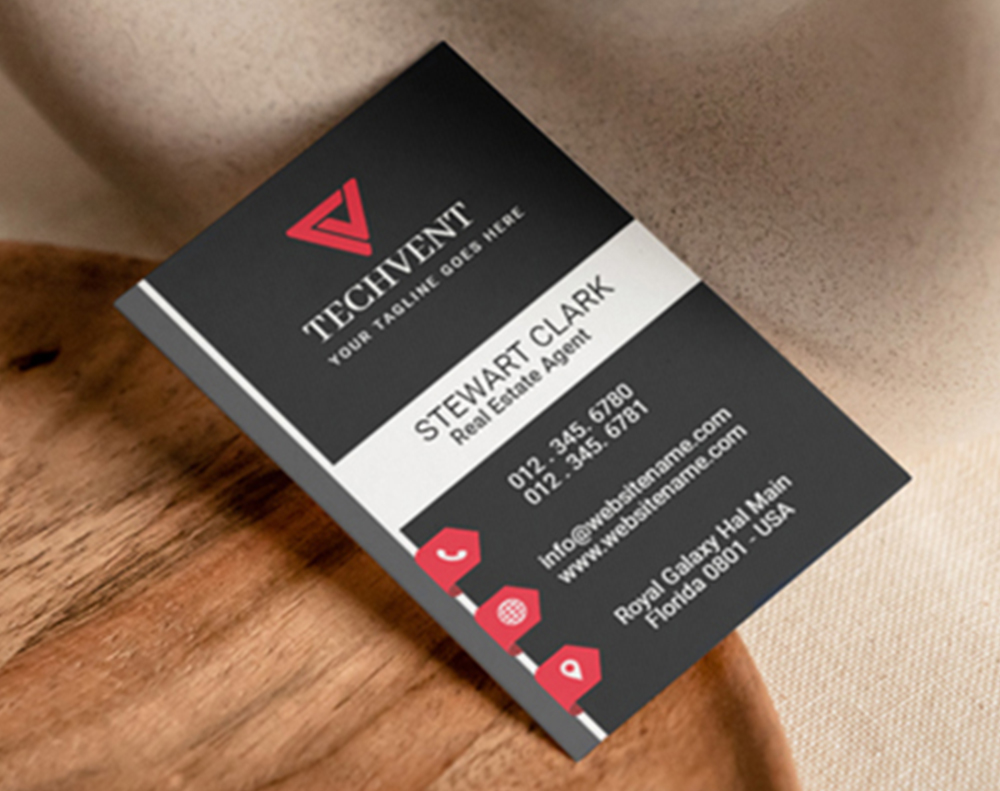
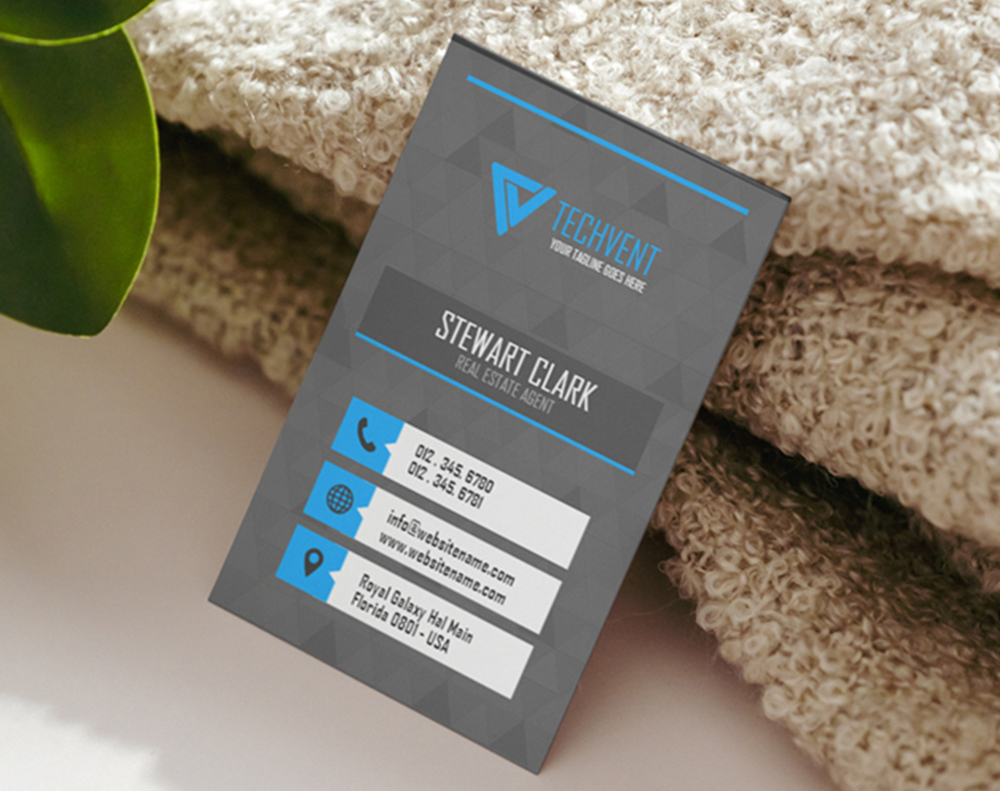
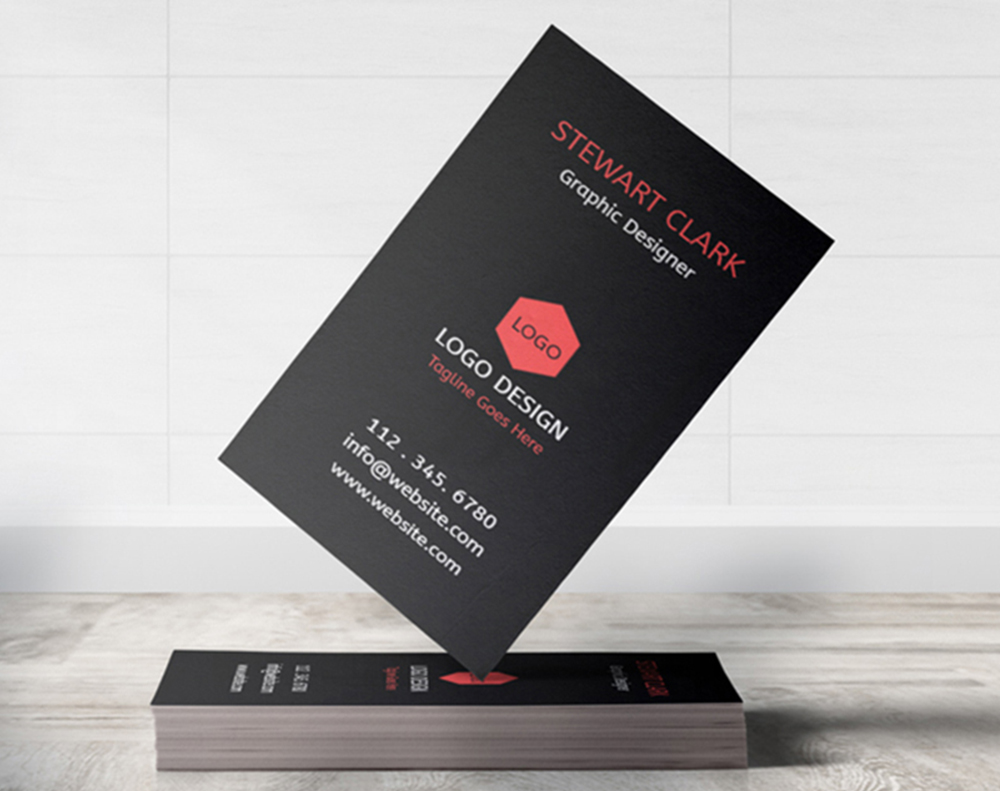
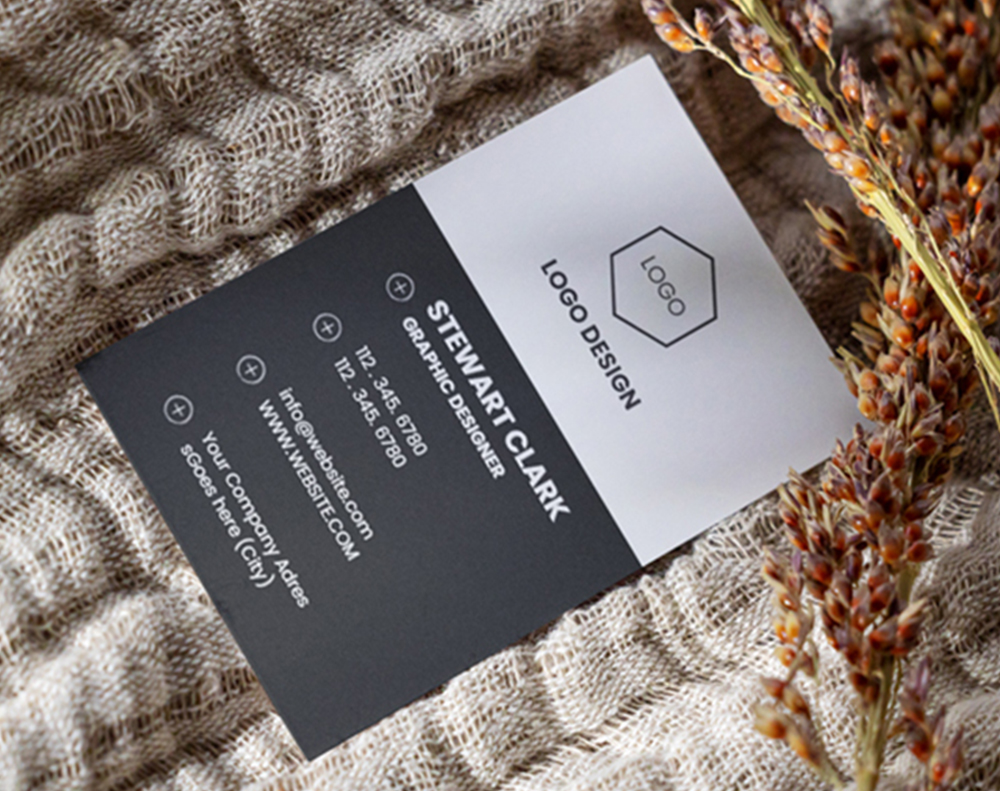
Starting from a blank file can feel intimidating. These templates are pre-sized for business cards, so your artwork lines up with the cut lines and bleed areas from the first click.
Start fast
Templates and print-ready blanks
Business card design templates and exact-size blanks so your logo lands inside the cut line.

Wally sorts the recycling for you
Most paper cards recycle, coatings and plastic do not
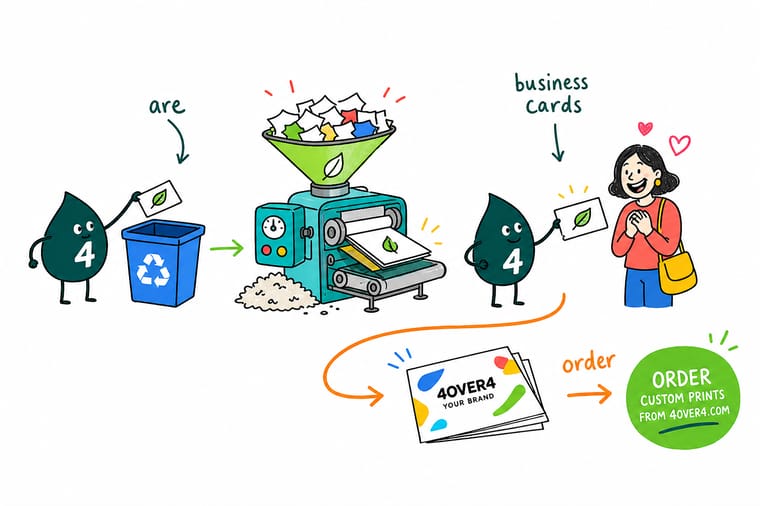
Standard paper and cardstock cards drop straight into the curbside bin. Kraft and uncoated stock recycle the easiest, while gloss, foil, and plastic need a second life instead. Pick a recyclable base, keep the card whole, and check your local rules. 4OVER4.COM prints eco stock sharp, so going green never means going bland.
Order kraft business cards →The greener way to print and toss a card
Why eco-friendly business cards make sense
- Lower footprint. Recycled and kraft stocks reuse fibers and cut the demand for virgin paper.
- Brand trust. A recyclable card gives you a built-in talking point about your environmental values.
- Budget-friendly. Uncoated and matte cardstock are among the most affordable choices, with no extra coating step.
- Fully recyclable. Uncoated paper drops straight into the mixed-paper stream at almost any facility.
- Compostable options. Kraft and untreated cards break down in a home compost bin over a few months.
- Same premium look. Matte on 16pt uncoated stock reads clean and professional, no gloss required.
- Easy disposal. No lamination to separate means recyclers accept the card without special handling.
Explore more
More ways to brand with recyclable cards
Every related page type on 4OVER4.COM, one card each, so you can keep exploring eco business card printing.
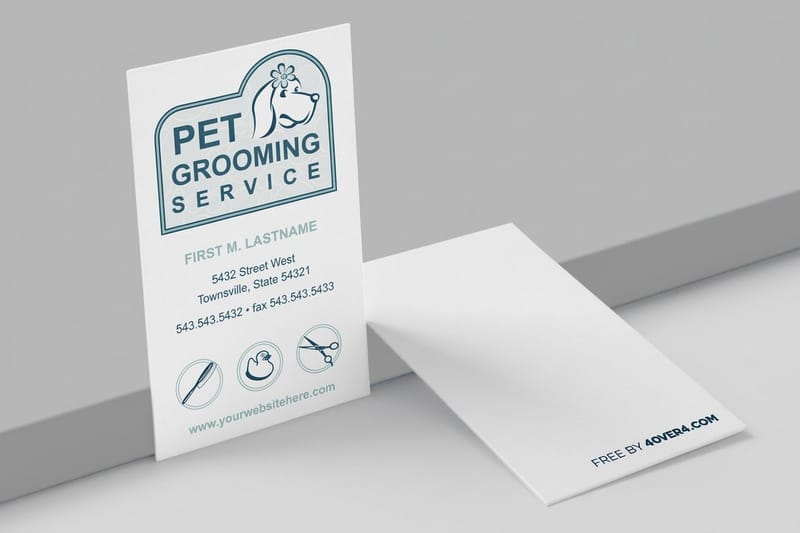 Shop Business Cards Printing Browse every business card format in one place.
 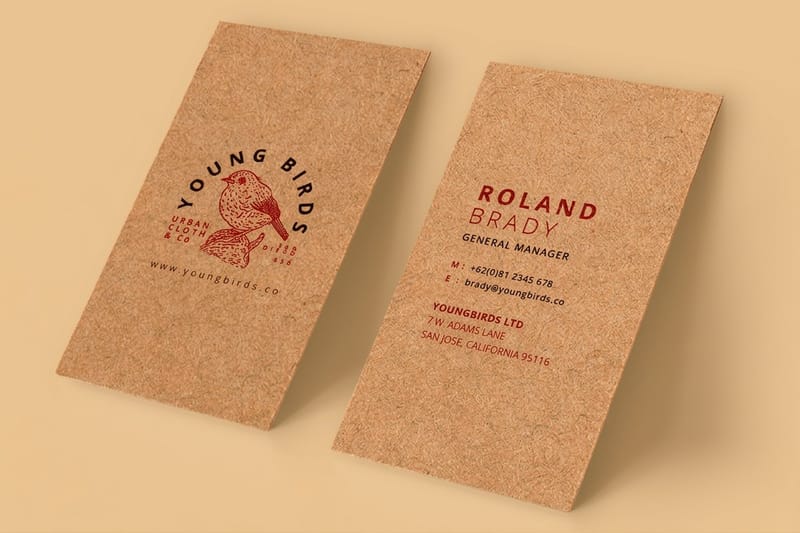 Product Kraft Business Cards Recycled kraft stock from $24.75.
 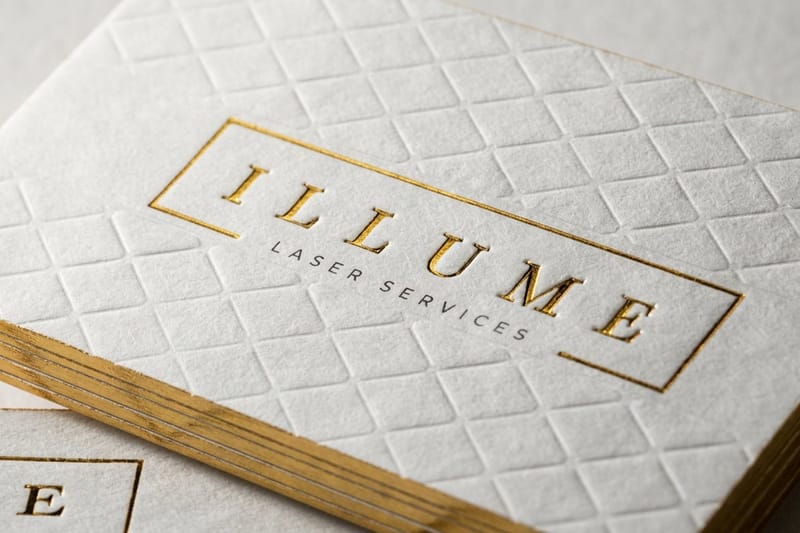 Product Cotton Business Cards Soft, natural cotton stock from $328.42.
 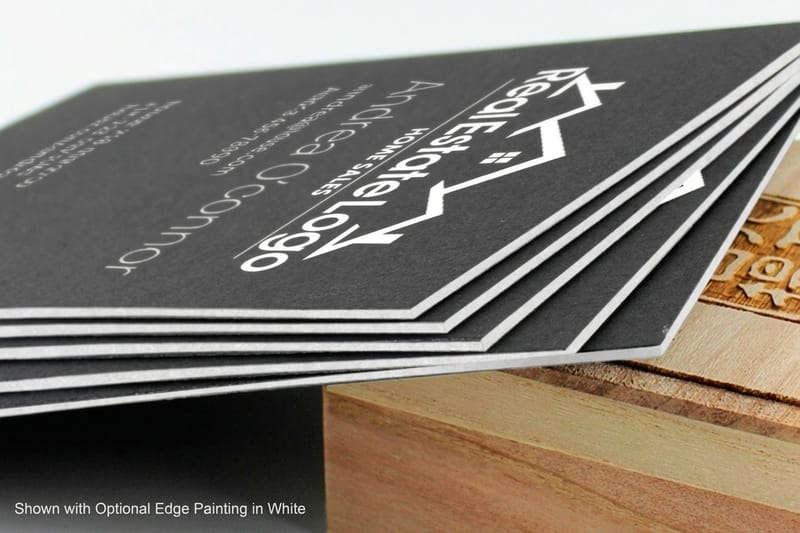 Product Black Business Cards Bold premium cards from $40.62.
 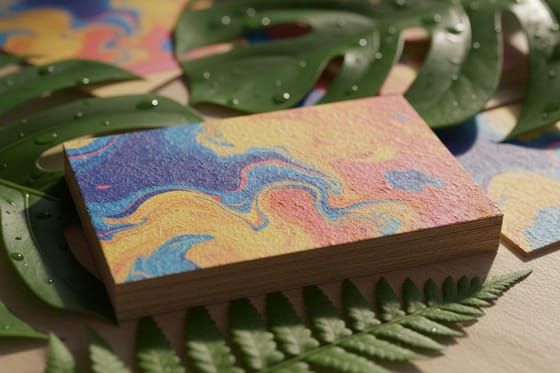 Benefit Green Printing Eco-friendly stocks, inks, and processes.
 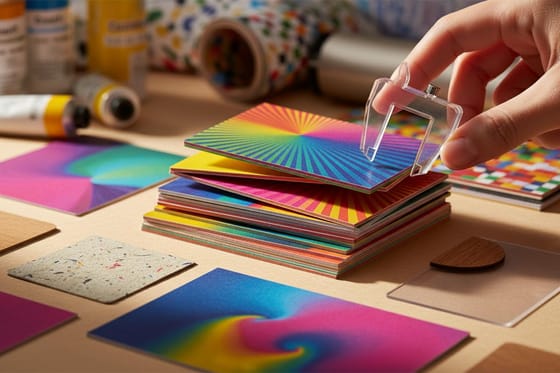 Article Business Card Thickness Guide From 14pt to 32pt and what each weight means.
 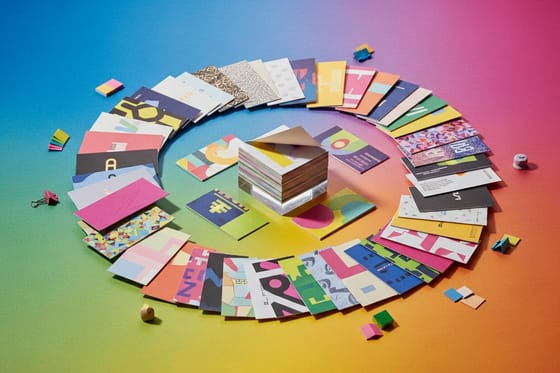 Article Amazing Business Card Designs Bold layouts and creative finishes for 2026.
  Article Business Card Size Guide Standard, EU, and custom dimensions explained.
  Article Green Printing Practices Eco habits for a lower-waste office.
  Product Artist Business Cards Showcase artwork on premium stock.
 Ready to print cards you can recycle?
Pick a recyclable kraft or uncoated stock, drop in your design or a free template, and 4OVER4.COM prints it sharp, as fast as same day.
Recycling questions we hear most
What are the best practices for making sure your business cards are recyclable?
Choose uncoated or matte cardstock with no lamination, and skip foil stamping, spot UV, and plastic coatings. When you are done, keep cards whole and drop them in the mixed-paper bin. If a finish has you unsure, check with your local facility before ordering. The kraft and uncoated options at 4OVER4.COM recycle reliably across most programs. For more tips, browse the printing articles library.
How do I choose the right recyclable business card material?
Start with your priorities. If full recyclability matters most, go with uncoated cardstock in 14pt or 16pt. For an eco-forward statement, kraft stock made from recycled fibers is a strong pick. If you need durability and accept a non-recyclable material, options like 30mil white plastic cards last longer but ask for repurposing rather than recycling.
What makes recyclable business cards effective for marketing?
A recyclable card signals that your brand cares about more than profit, and buyers increasingly favor visible sustainability. An uncoated or kraft card with clean design lands as memorably as a glossy one, and it hands you a built-in talking point about your values. The card itself becomes part of the message.
How much should I budget for recyclable business cards?
Recyclable cards do not cost more than standard options. Uncoated and matte cardstock are among the most affordable paper choices at 4OVER4.COM, since there is no extra coating step. Budget the same as any standard order, and feel the stock first with free samples before you commit to a full run.
