
3D Lenticular Business Cards Explained


How 3D Lenticular Business Cards Work, and Why People Keep Them
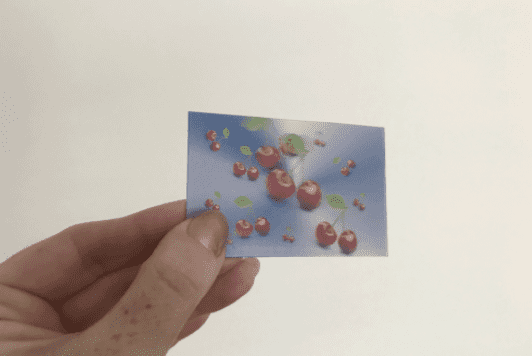
3D lenticular business cards are printed cards with a ridged lens layer that shows shifting, three-dimensional images the moment you tilt them. 4OVER4.COM has printed 10 billion+ cards across 1,000+ products since 1999, and 3D Lenticular Business Cards stay one of the most conversation-starting formats in the lineup. If you want a card people actually keep, this is the one that pulls it off.
Most business cards land in a drawer or a trash can within a day or two. Hand someone a card that flips, moves, or shows real depth when they angle it, and the story changes. They show it to the person next to them. They set it on the desk instead of the bin. They remember your name because the card gave them a reason to.
This guide breaks down how lenticular printing works, the design options you can choose, who gets the most out of these cards, and how to order them. Whether you run a studio, sell real estate, or lead a young startup, a lenticular card gives you an edge a flat card cannot match.
Print it
3D Lenticular Business Cards, ready to order
The full lenticular card, priced live from the configurator, with a proof before anything goes to press.
The Technology Behind Lenticular Printing
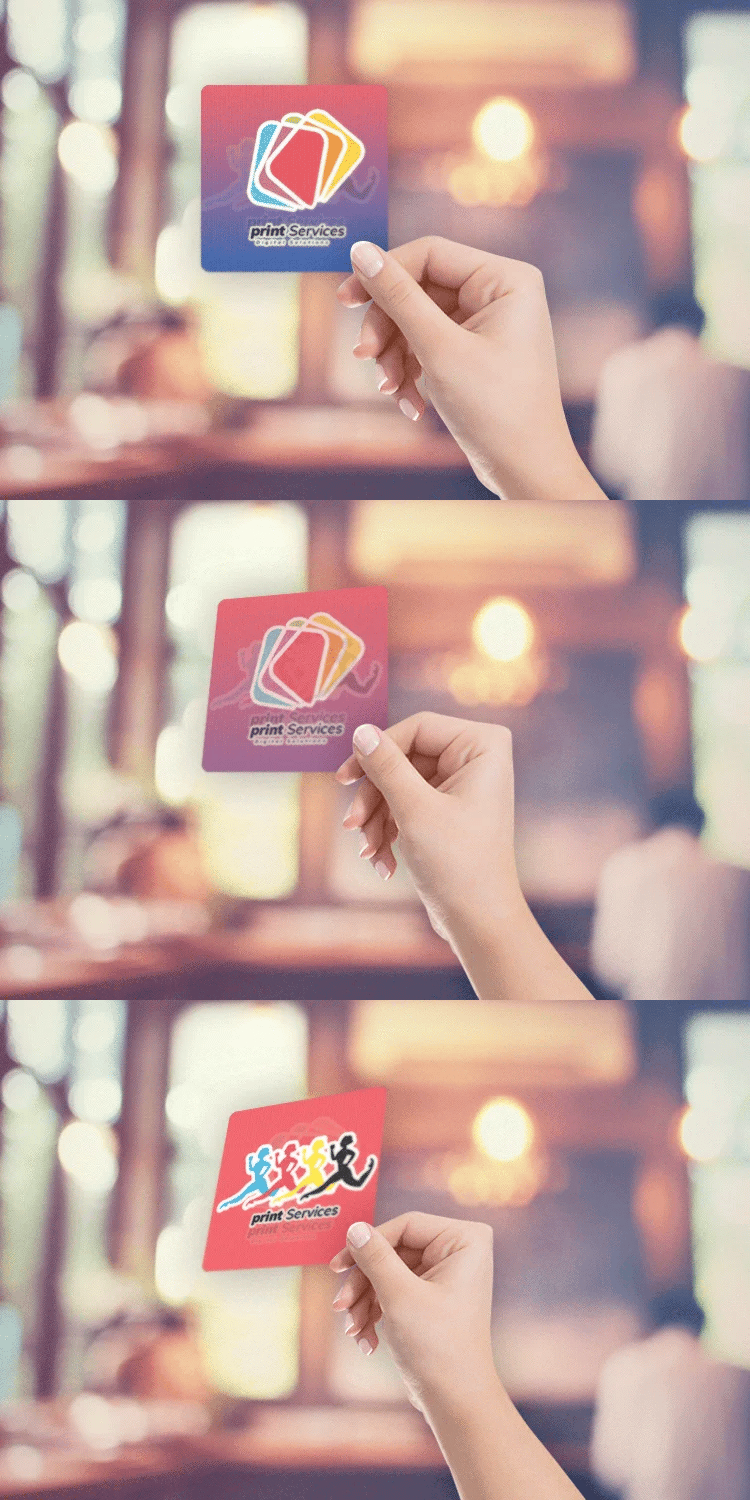
Lenticular printing is not new. It goes back to the 1940s. Bringing it to business cards at a clean, professional quality is more recent, and 4OVER4.COM has refined the process to deliver sharp, repeatable results.
Here is how it works. A lenticular card has two main parts, a printed image layer and a plastic lens sheet on top. The lens sheet is a field of tiny parallel ridges called lenticules, and each one acts as a small magnifying lens.
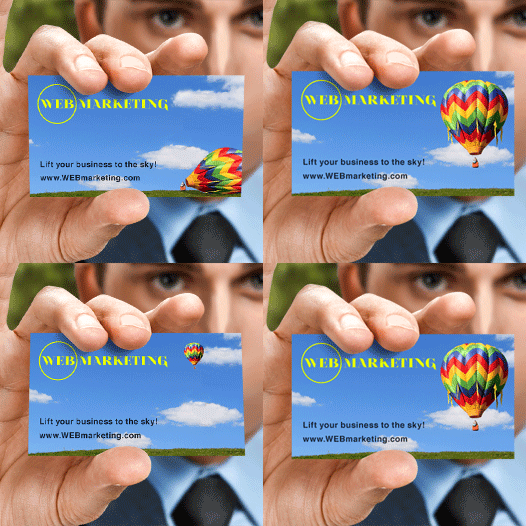
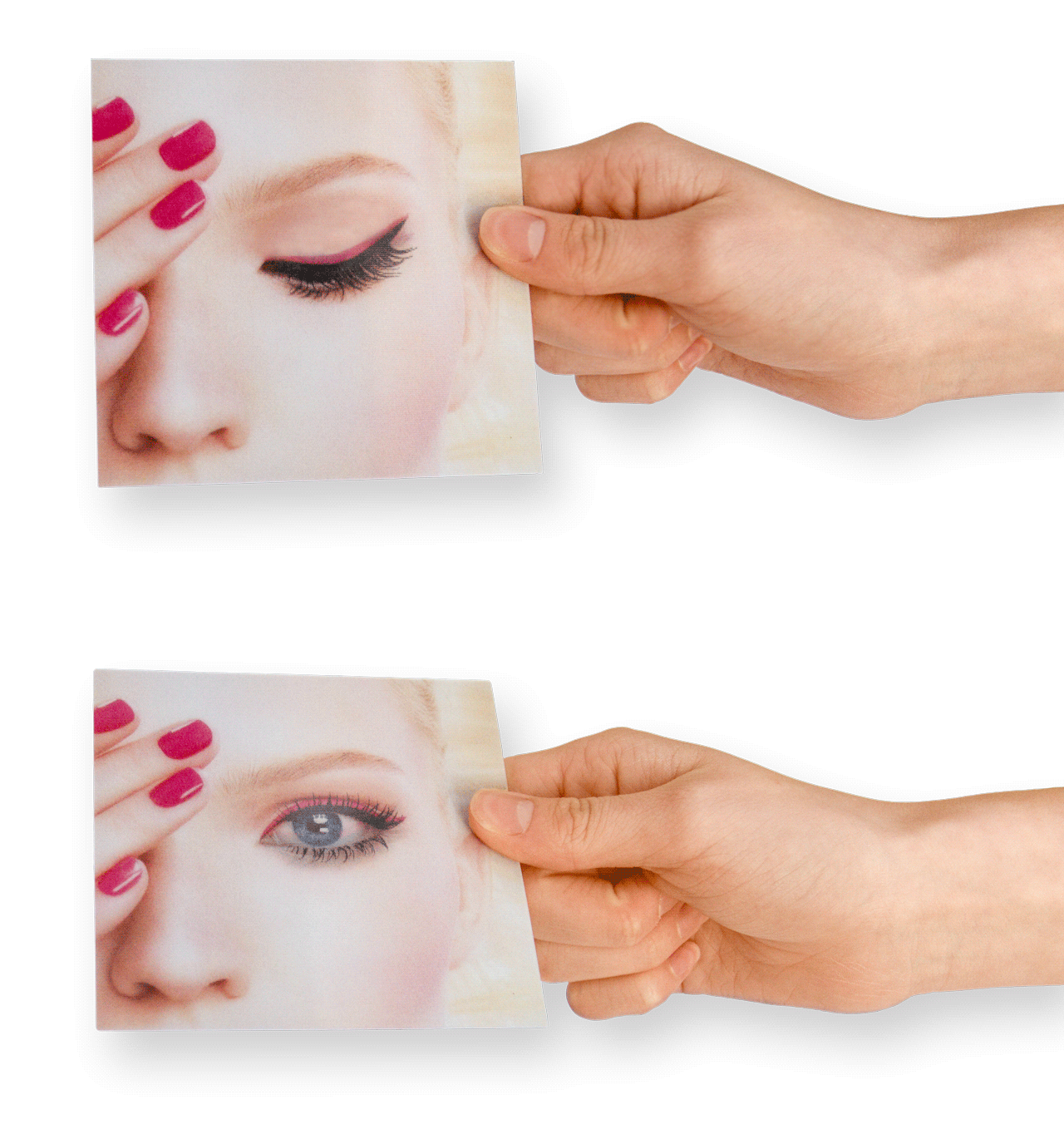
Each lenticule points your eye at a specific sliver of the image below, and the sliver changes with your viewing angle. Tilt the card and new slivers appear. Your brain stitches them into motion, depth, or a full image swap. The printed layer underneath is an interlaced image, several frames sliced into strips and woven together.
Think of it as a tiny self-contained animation. No batteries, no screen, just optics and precise printing. The result is a card that feels alive in your hand.
Types of lenticular effects you can use
Not every lenticular effect is the same. The right one depends on your brand, your message, and how much drama you want.
- Flip. The card switches between two or more separate images as you tilt it, great for before and after reveals or showing several products.
- 3D depth. Layers within one image sit at different depths, so you seem to look into the card. Perfect for logos and portraits.
- Morph. One image melts smoothly into another, ideal for showing transformation or a brand evolving.
- Zoom. An element appears to move closer or farther as the card tilts.
- Animation. A short sequence of frames plays like a clip, which suits demonstrating a process or an action.
Flip is the most popular for business cards because it is the most immediately obvious. Someone picks up the card, tilts it, and the image changes. For more ways to make a card memorable, browse this amazing business card design inspiration.
Lenticular Card Specs and Artwork Requirements
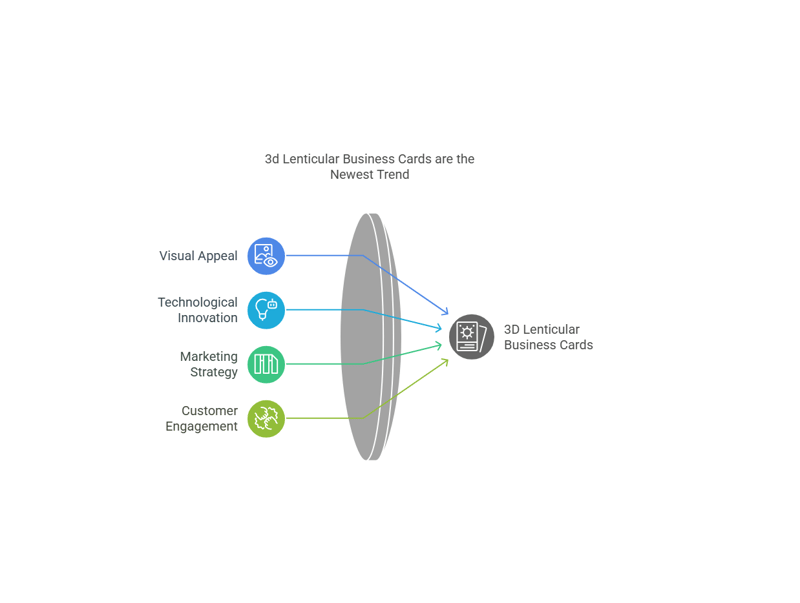
Lock the physical spec before you build the file. A lenticular card runs on a 21pt lens stock, noticeably thicker and stiffer than a standard business card, because the lens sheet sits on top of the printed layer. That extra body is part of the effect, and it is why the card feels heavier than everything else in the stack.
Size, corners, and which side does what
- Size. The standard 3.5 by 2 in business card, so it still fits a wallet, a card case, and any standard card holder.
- Corners. Square cut as standard, rounded as an option. Rounded corners protect the lens edge, which is the first place a card carried loose in a pocket starts to scuff.
- Sides. The lens carries the effect on one side. The reverse prints flat, and that is where the name, title, phone, email and site belong, because flat stock is where small type stays crisp.
How many frames the lens will hold
- Two flip. Two images, one clean switch. Each frame gets the largest slice of the lens, so this is the sharpest option and the safest first run.
- Three flip. Three images through the same lens. Still readable, but every frame gets a thinner slice, so build with bold shapes and drop the fine detail.
- Full 3D depth. Not frames at all, but one layered image. It trades the switch for the feeling of looking into the card, and it needs a file with the layers kept live rather than flattened.
What your artwork file has to meet
- Resolution. 300 DPI at final size is the floor and 400 to 600 DPI is better, because interlacing slices the art into strips and any softness gets multiplied.
- Frame separation. Every flip frame is its own full bleed file at the same size, the same crop, and the same subject position. If the frames drift, the flip smears instead of snapping.
- Contrast between frames. Two frames that look alike waste the lens. Change the color, the subject, or the value hard enough that the switch registers from across a table.
- Type placement. Small text on the lens side sits across the lenticules and breaks apart as you tilt. Keep the contact details on the flat side and give the lens side one idea.
Meet those four and the proof comes back doing exactly what you pictured. Miss them and no press adjustment saves it, because the interlacing is built into the file long before the card reaches the machine.
Designing Your 3D Lenticular Business Cards
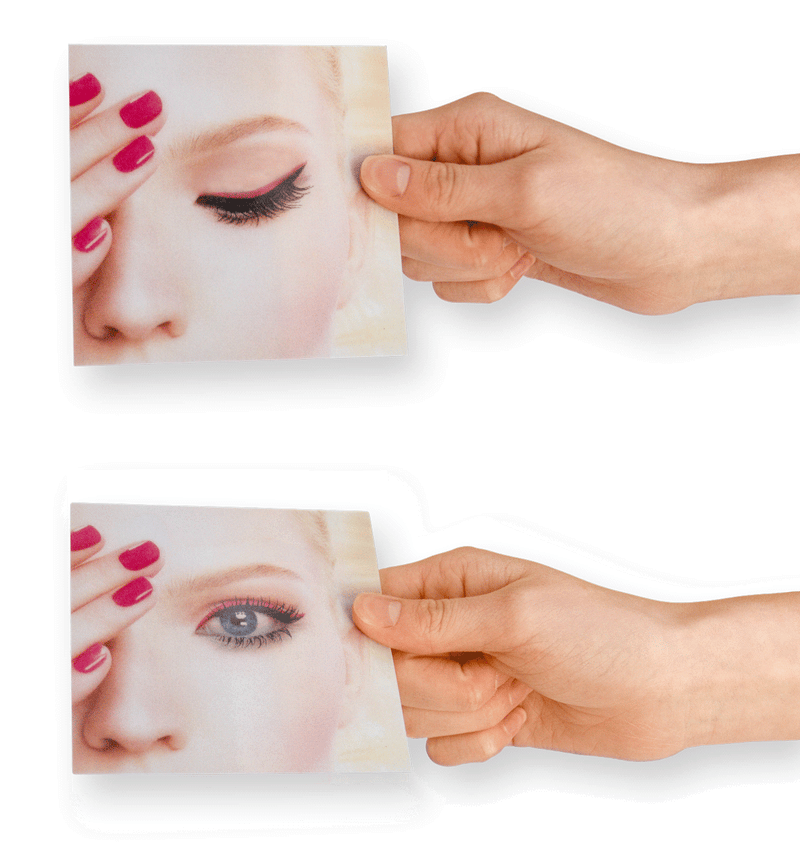
Design is where most people trip up with lenticular cards. You cannot take an existing flat business card file and send it straight to print. The lens changes how your artwork needs to be built.
Lenticular printing has specific requirements that shape the whole file. Get them right up front and the effect lands exactly the way you pictured it.
Which effect to pick, and what each one asks of your file
Pick the effect before you open the file. Each one is built a different way, and you cannot swap later without rebuilding the artwork from scratch.
- Flip. Pick it for a logo to product reveal. Two or three separate images at the same size and the same crop. The most legible effect and the easiest to prepare, which is why it is the usual first order.
- 3D depth. Pick it for a logo, a portrait, or a packshot. One image built as layers, background, midground and subject kept live on their own layers, so the eye reads distance instead of a switch.
- Zoom. Pick it for one hero element. A single subject scaled across the frames so it appears to move toward the viewer as the card tilts. Keep the background quiet or the motion reads as a wobble.
- Animation. Pick it to show a process or an action. A short frame sequence, so plan the movement small and repetitive. Big jumps between frames turn to mush at card size.
- Morph. Pick it for a before and after, or a rebrand. Two images that blend, so the composition has to match. If the two subjects sit in different places on the card, the blend reads as a smear.
Resolution and file setup
Lenticular cards need higher resolution than standard cards. Because the image gets interlaced, or sliced into thin strips, any softness gets amplified. Work at 300 DPI at a minimum, and many designers prefer 400 to 600 DPI for the sharpest result.
Your file also has to match the effect. A flip needs two or more separate images. A 3D depth effect needs a layered file with each element on its own layer. The 4OVER4.COM Online Designer helps you get started, and free templates cover the standard lenticular layouts.
Printing a postcard instead? Start from the 3D Lenticular Postcards blank template so your art lines up with the cut and bleed.
Color and contrast
Bold, high-contrast art works best. Subtle gradients and fine text can disappear in the interlacing, so lean on vivid color, strong outlines, and clear separation between elements.
Keep your text on the flat, non-lens side of the card. Contact details need to read cleanly, and the lens surface makes small type harder to catch. Save the lens side for impact, your logo animation, a product reveal, or brand imagery.
Design tips that hold up
- Keep it simple. One strong effect beats three weak ones. A clean flip between your logo and a product shot reads better than a busy animation.
- Use the effect to tell a story. Before and after, problem and solution, day and night. Give the tilt a reason to exist.
- Test at print size. What looks great on a monitor may not read at 3.5 by 2 inches, so check the standard business card dimensions before you finalize.
- Match it to your audience. A real estate agent flips between a home exterior and interior. A trainer morphs from before to after.
For creative work, Artist Business Cards with a lenticular effect double as a mini portfolio, handing someone a sample of your craft that shifts as they move it.
Start fast
Templates and print-ready blanks
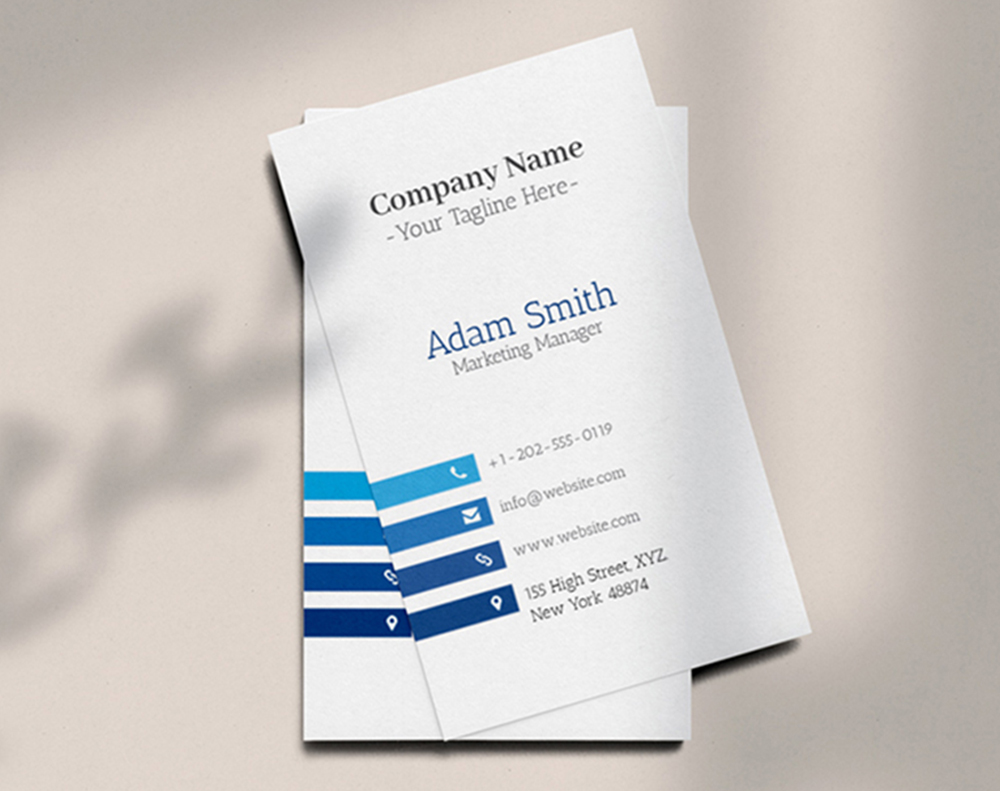
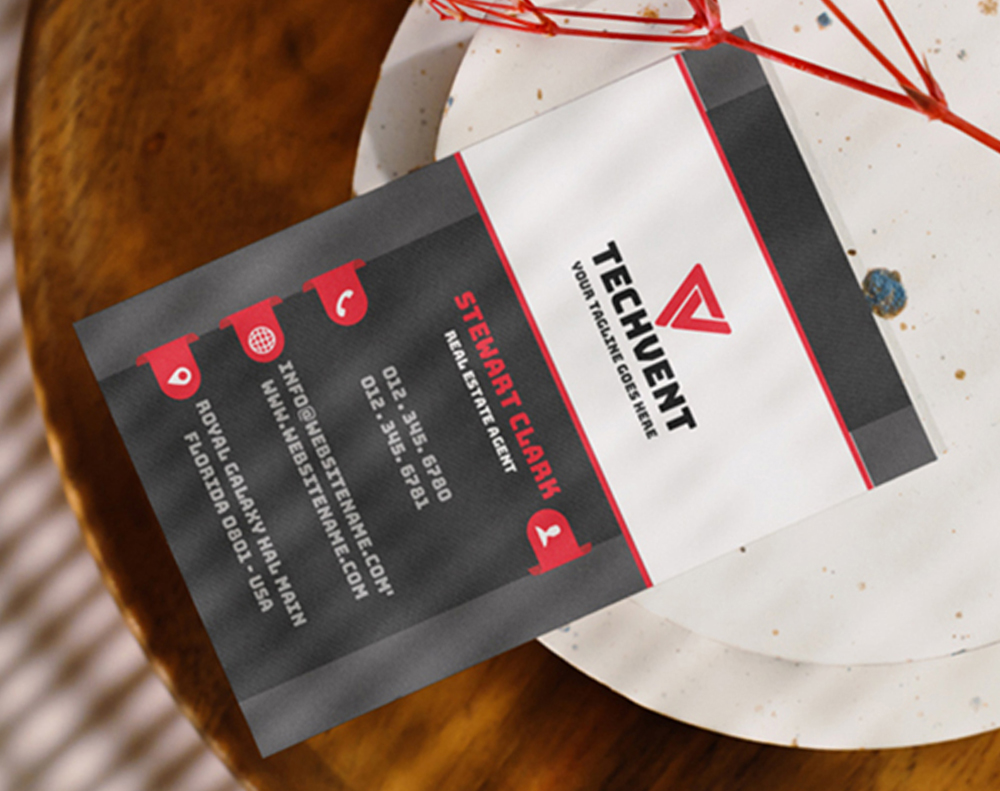
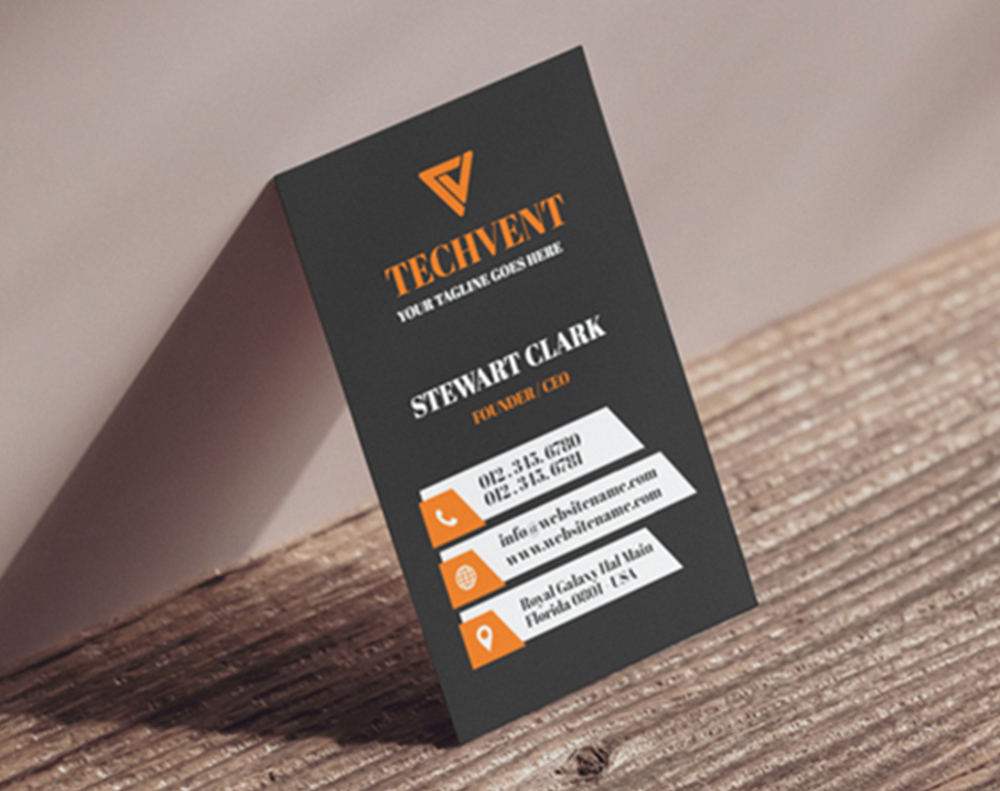
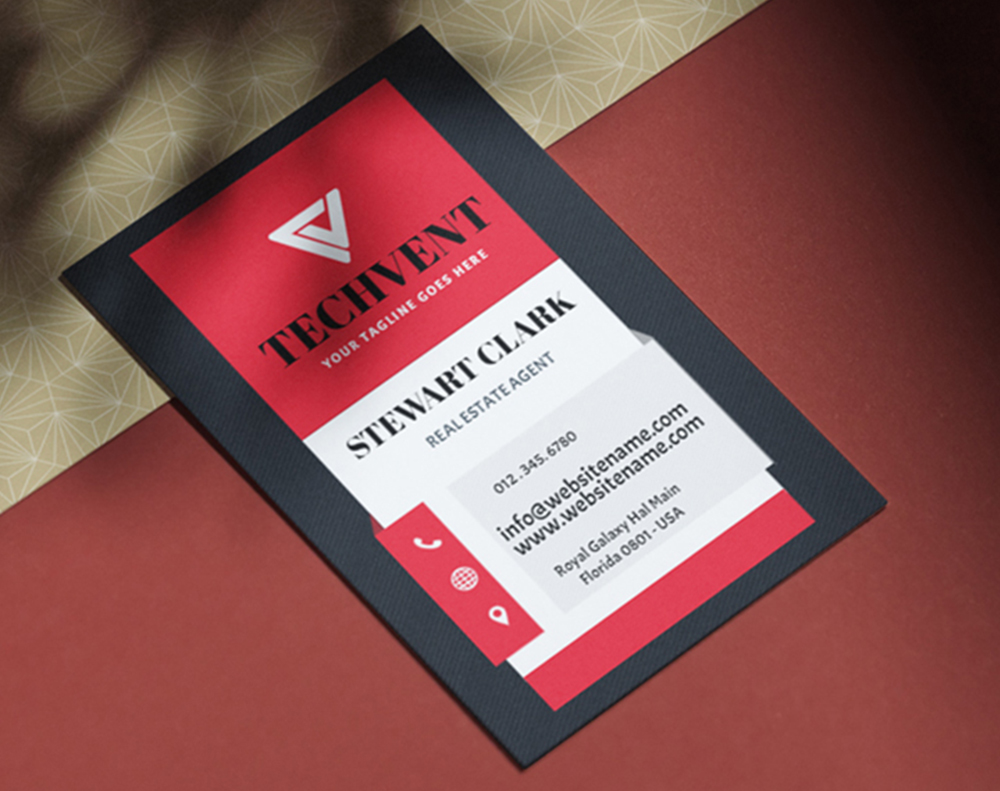
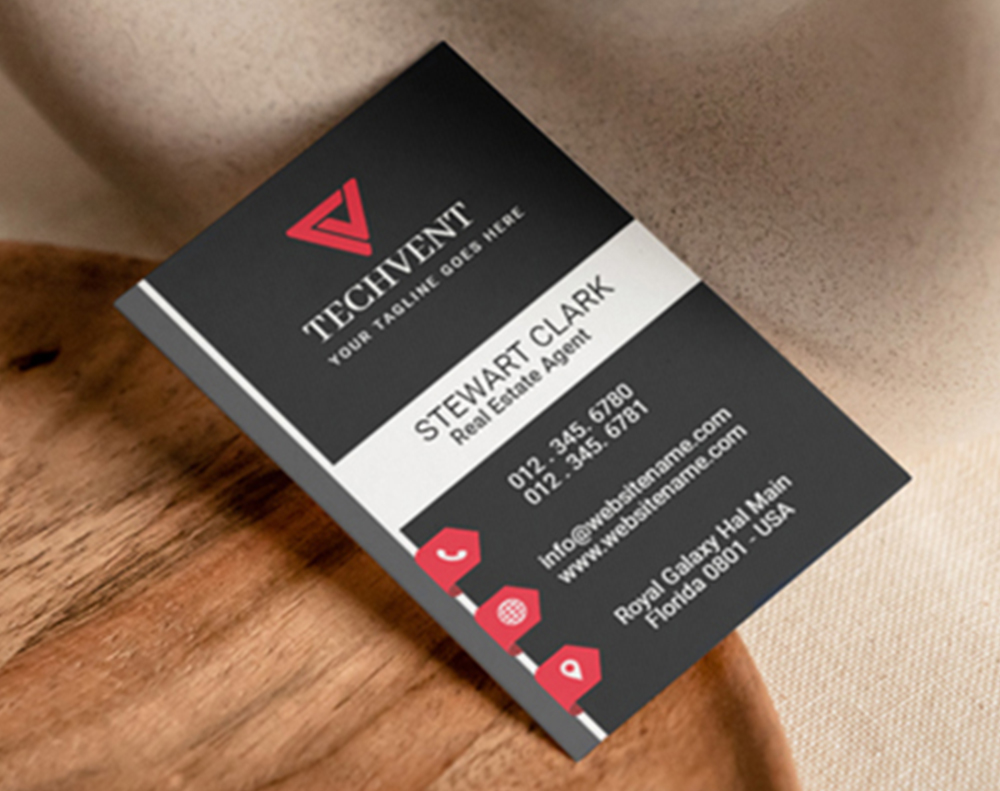
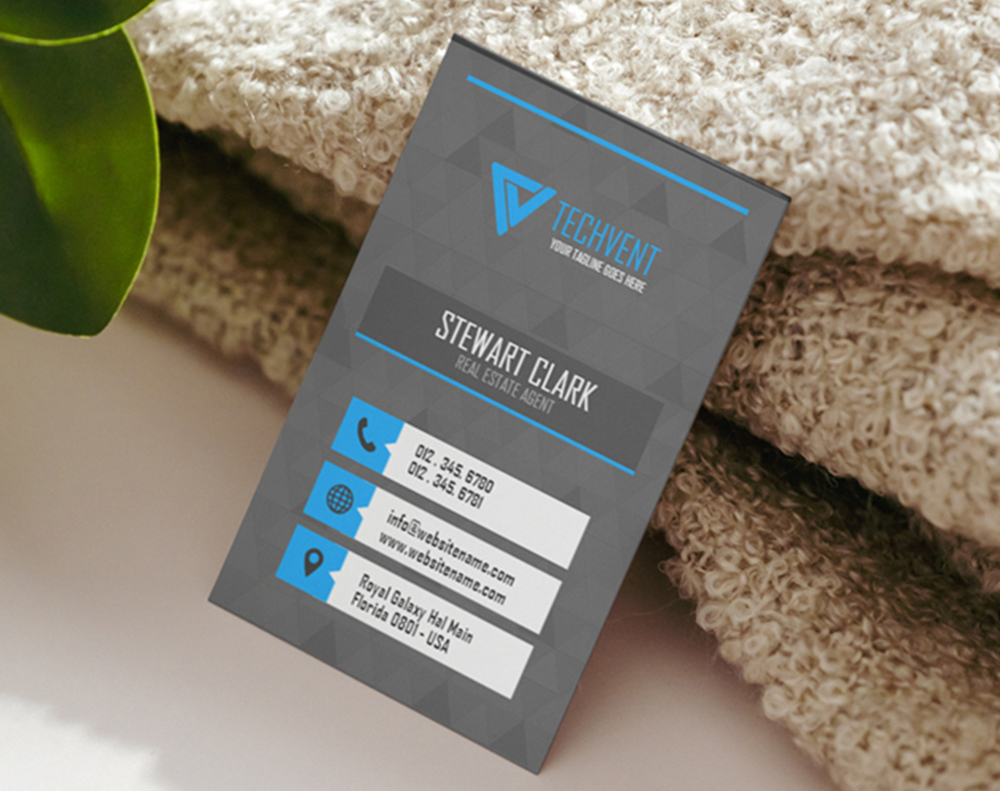
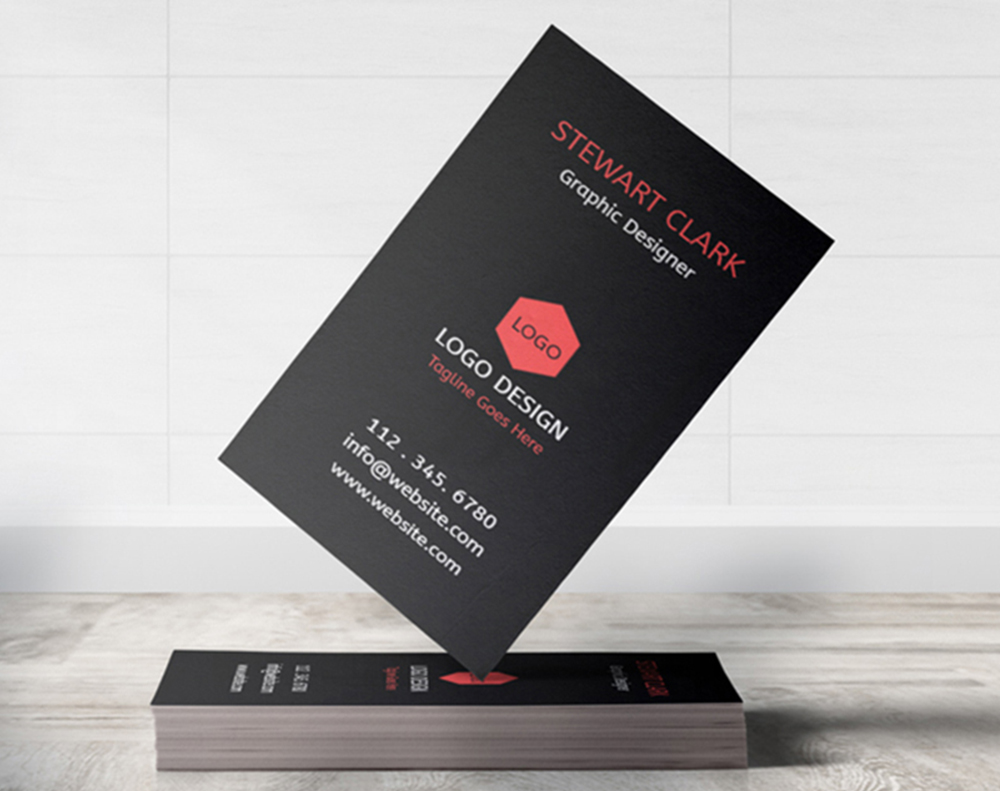
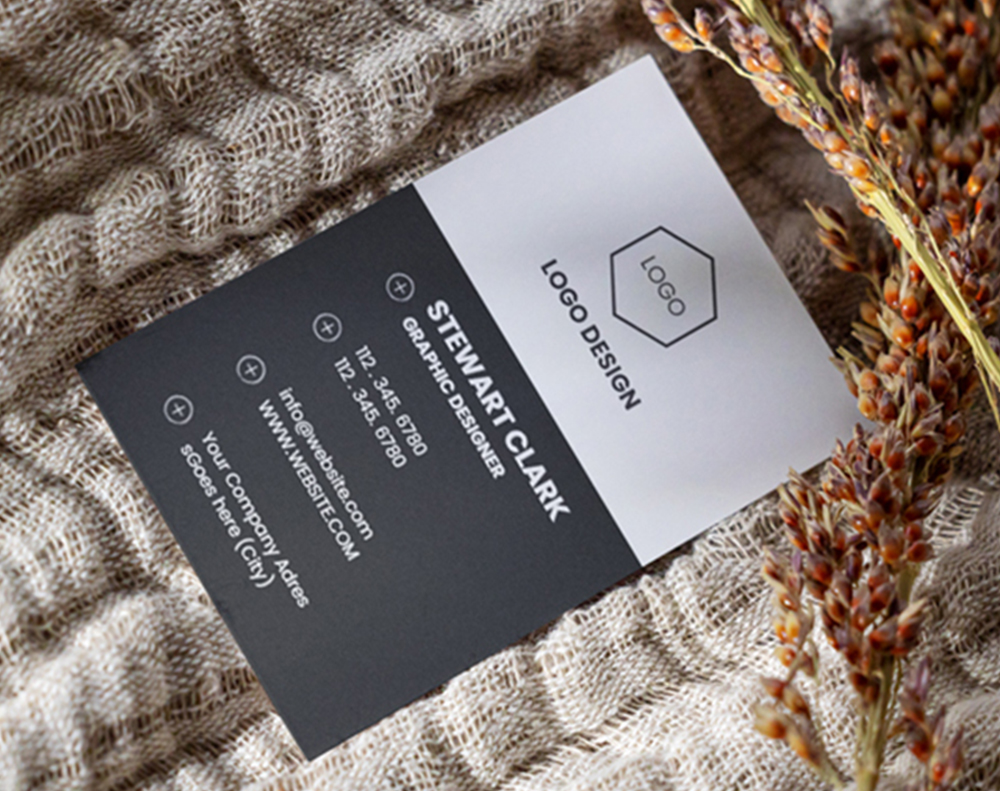
Business card design templates and exact-size lenticular blanks so your artwork lands inside the cut line.
Who Gets the Most Out of Lenticular Cards
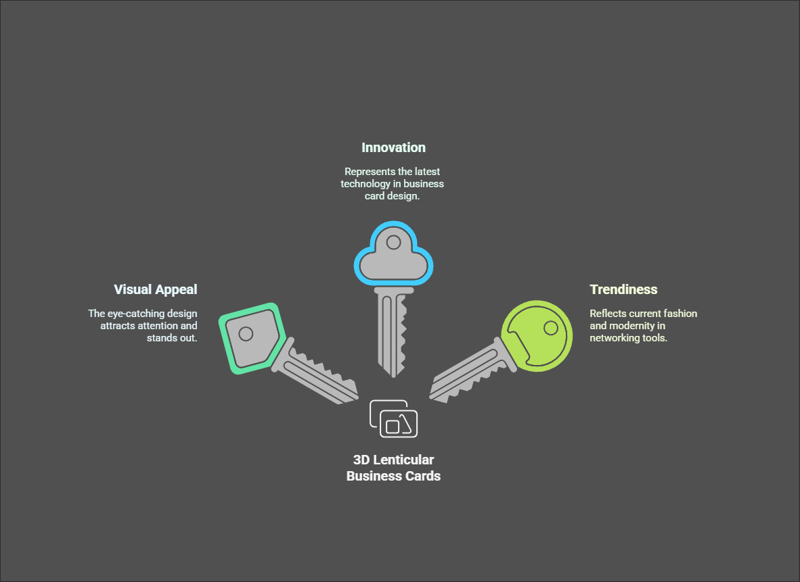
Lenticular cards are not for every job. If you are ordering 10,000 cards for a mass mailing, they are the wrong tool. For face-to-face networking, client meetings, and high-value introductions, they are hard to beat.
Here is who tends to get the most out of them, and why.
Real estate agents
A card that flips between a stunning exterior and a bright interior is a listing pitch in your pocket. Real estate is visual, and a lenticular card shows your work without pulling out a phone. Hand one over at an open house and it lands on the fridge, not in the bin.
Creative professionals and designers
Photographers, designers, illustrators, and artists need cards that prove the craft. A depth effect on your best piece does exactly that. It says you care about quality without a word. Browse the Showcase to see how other creatives put 4OVER4.COM printing to work.
Tech startups and new companies
If your brand runs on being forward-thinking, a flat card sends the wrong signal. A card that animates your logo or hints at your product tells people you are serious before they ever reach your website.
Event planners and entertainers
DJs, coordinators, wedding planners, and performers live on memorable moments. A lenticular card is a tiny experience of its own, which makes it right on brand for anyone whose job is to make things exciting.
Luxury brands and premium services
High-end salons, boutique hotels, and fine dining rooms need every touchpoint to feel premium. A smooth 3D depth effect on your brand mark reads as exclusive. Pair it with Black Business Cards for the ultimate first impression.
Lenticular Cards vs Other Premium Card Options
Lenticular is not the only way to stand out. 4OVER4.COM prints 1,000+ products, and a few other premium formats compete for the same memorable-and-upscale spot. Here is how lenticular stacks up.
The right pick comes down to whether your brand is about motion or minimalism.
Lenticular vs clear plastic cards
30mil Clear Plastic Cards bring a sleek, see-through, modern look, and they are durable and waterproof. They are also static. Lenticular adds motion and depth that clear plastic cannot copy. If your brand is about energy or change, lenticular wins. If it is about clean minimalism, clear plastic may fit better.
Lenticular vs frosted plastic cards
30mil Frosted Plastic Cards have a soft, matte-translucent feel that reads quietly premium. Lenticular is the opposite of quiet. It demands attention. Choose frosted for understated elegance, and lenticular when you want to stop someone mid-step.
Lenticular vs ultra-thick paper cards
A 32pt ultra-thick card carries real weight and presence, and it feels like quality the moment it hits a hand. It is still a flat image, though. Lenticular cards are naturally thick because the lens adds bulk, so you get heft and visual movement together. The trade-off is cost per card, which runs higher than thick paper, so thick paper stays the practical call for high-volume runs.
You can carry the same bold, visual, interactive thinking into other products too, from logo sticker design ideas to colorful custom lenticular card designs.
Compare formats
Lenticular products, side by side
Lens, price, quantity, and turnaround across the most-ordered lenticular formats.
 3D Lenticular Business Cards | 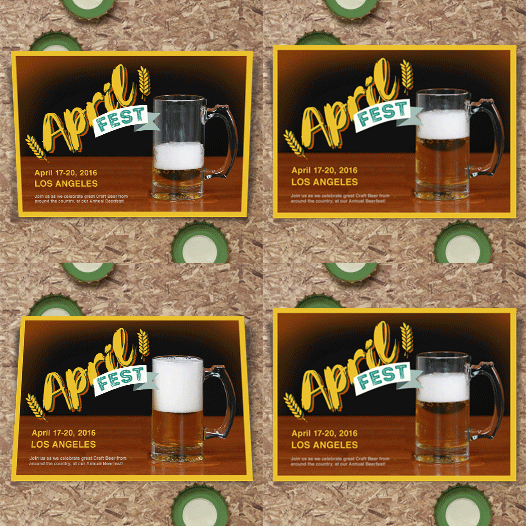 3D Lenticular Postcards | 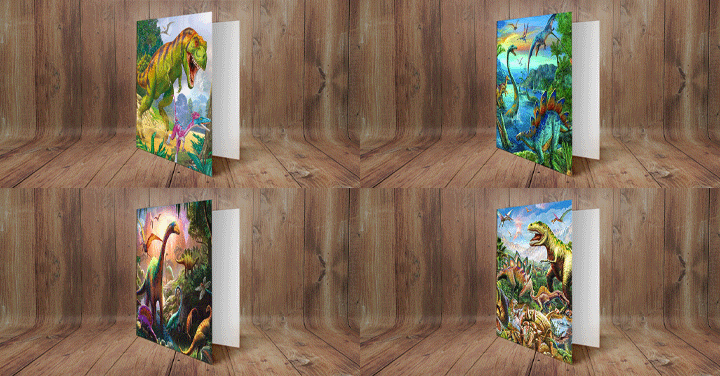 3D Lenticular Greeting Cards | 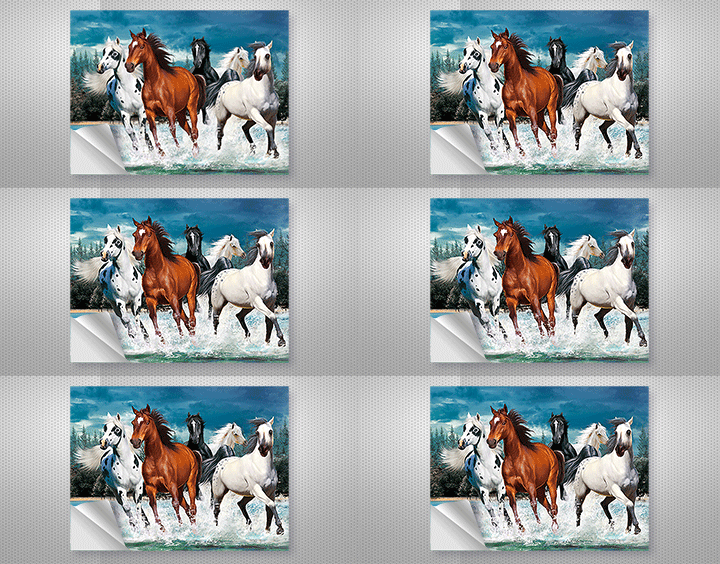 3D Lenticular Stickers | |
|---|---|---|---|---|
| Min price | $690.88 | $1,097.28 | $631.57 | $866.62 |
| Paper / stock | 31pt Lenticular Lens | 31pt Lenticular Lens | 31pt Lenticular Lens | Lenticular Sticker |
| Size | 2" x 3.5" - Vertical | 4" x 4" | 10" x 7" fold to 5" x 7" - Vertical | 2" x 3.5" - Vertical |
| Default qty | 500 | 500 | 50 | 500 |
| Turnaround | 22 business days | 22 business days | 22 business days | 22 business days |
| Rating | ||||
| View & customize | View & customize | View & customize | View & customize |
How to Order 3D Lenticular Business Cards from 4OVER4.COM
Ordering lenticular cards is straightforward once you know the steps. A little prep up front keeps the whole run smooth.
Here is the process from start to finish.
Step 1: Choose your effect
Decide which effect fits your brand, flip, 3D depth, morph, zoom, or animation. If you are unsure, flip is the safest and most impactful choice for a first order.
Step 2: Prepare your artwork
Set up your files for the effect you picked. Flip needs two or more high-resolution images, and depth needs a layered file. 4OVER4.COM provides templates and file guidelines to make it easier.
Step 3: Upload and customize
Head to the 3D Lenticular Business Cards page, upload your artwork, choose your quantity, and review the options for flips, direction, and corners.
Step 4: Review your proof
This step is non-negotiable with lenticular. Because interlacing is precise, you want to confirm the images align and the effect works before press. A free online proof lets you catch any issue early.
Step 5: Print and ship
Approve the proof and 4OVER4.COM handles the rest. With a 99.8% on-time delivery rate, your cards arrive when you need them, and rush options are there for a tight deadline.
Specs, quantities and price at a glance
- Size. 3.5 by 2 in, the standard business card footprint.
- Stock. 21pt lenticular lens over the printed layer, square or rounded corners.
- Effect options. Two flip, three flip, morph, zoom, animation, or full 3D depth, with the flip direction set left to right or top to bottom.
- Sides. The lens side carries the effect, the reverse prints flat for contact details.
- Quantity. Pricing starts at 500 cards for $690.88.
- Quantity break. At 10,000 cards it falls to about $0.32 per card, so one larger run beats three small ones.
- Production time. Set the quantity in the configurator to see the live turnaround, and rush options are there when the date is fixed.
- Proof. A free online proof before press, the step that catches an interlacing problem while it is still free to fix.
Here are the live pricing tiers and printing specifications for 3D Lenticular Business Cards.
Quantity and price
Live lenticular card pricing and specs
Real configurator numbers. The more you order, the lower the per-card cost drops.
| Quantity | Price Per Unit | Total |
|---|---|---|
| 500 | $1.38 | $690.88 |
| 1,000 | 80.1¢ | $800.72 |
| 2,000 | 53.2¢ | $1,064.33 |
| 3,000 | 43.5¢ | $1,305.98 |
| 5,000 | 35.1¢ | $1,756.30 |
| 10,000 | 31.8¢ | $3,184.20 |
The numbers
Why brands print lenticular cards with 4OVER4.COM
Wally makes your card move
One tilt, and people remember your name
A lenticular card does one job well, it earns a second look. Pick a flip, depth, morph, zoom, or animation effect, build your art at 300 DPI or higher, keep contact details on the flat side, and 4OVER4.COM prints the lens sharp. Choose flip for the strongest first impression and let the motion do the talking.
Order lenticular business cards →When motion earns its place on a card
Explore more
Keep exploring cards, lenticular, and premium print
Related products, collections, and guides across 4OVER4.COM, one card each.
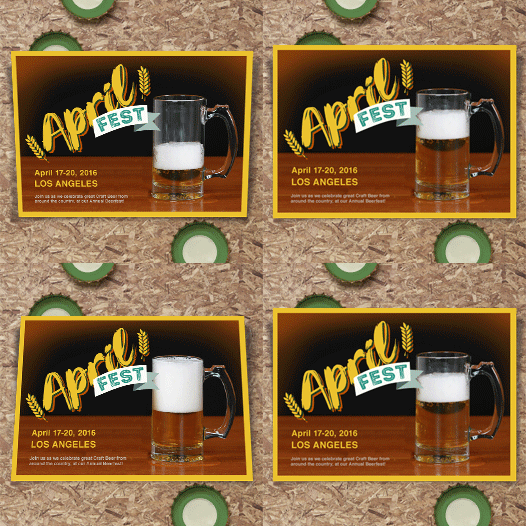 Product 3D Lenticular Postcards Motion and depth on a postcard canvas.
 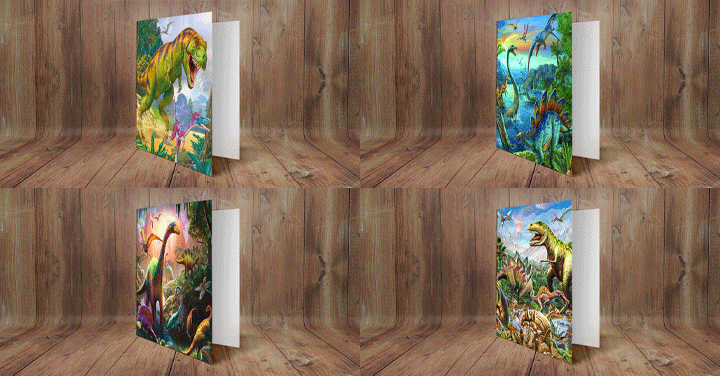 Product 3D Lenticular Greeting Cards Greeting cards that move as you tilt them.
 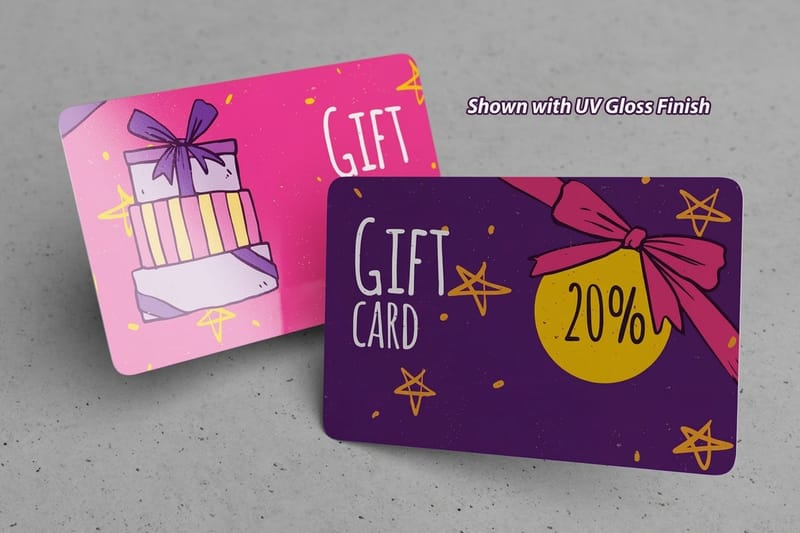 Product 30mil White Plastic Cards Premium durability without the lens layer.
 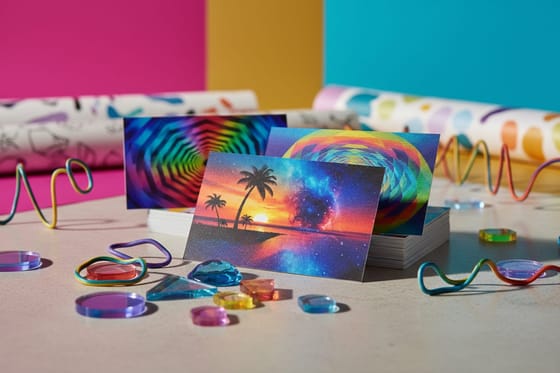 Article Lenticular Card Design Ideas Colorful custom lenticular card inspiration.
 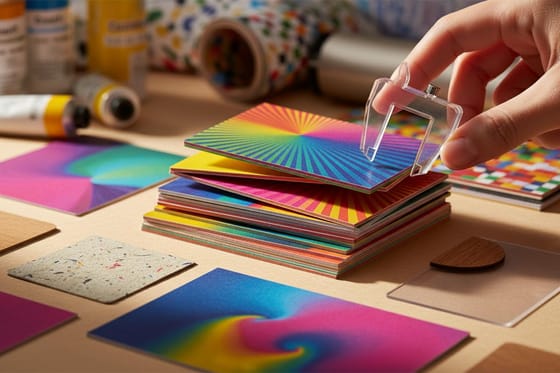 Article Business Card Thickness Guide How thick your card should really be.
 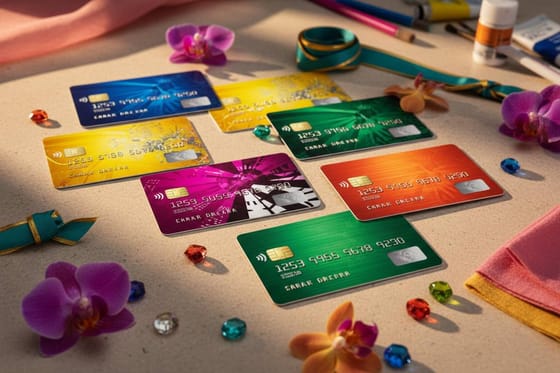 Article Cards That Look Like Credit Cards Premium plastic card ideas that turn heads.
  Collection Lenticular Printing Collection Every lenticular format in one place.
  Collection Plastic Cards Collection Clear, frosted, and white plastic cards.
  Category Business Cards Printing Browse the full business card lineup.
  Article 3D Lenticular Postcard Trends Where lenticular postcards are headed.
 Ready to hand out a card people keep?
Pick your effect, upload your artwork or a free template, and 4OVER4.COM prints your lenticular cards with a proof before press.
Lenticular cards, the questions worth asking
What are the best practices for 3D lenticular business cards?
Use high-resolution images at 300 DPI or more with bold colors and strong contrast. Keep text on the flat, non-lens side for readability. Stick to one clean effect per card, since a single flip or depth effect beats a cluttered design every time. Always review your digital proof before you approve production. For more inspiration, see these colorful custom lenticular card designs.
How do I choose the right lenticular effect for my card?
Match the effect to your message. Flip works best for before and after or dual-image concepts. 3D depth suits logos and portraits that need dimension. Morph fits brands built on transformation. If you are unsure, flip is the most universally effective choice and delivers the strongest first impression at networking events.
What makes 3D lenticular business cards effective for marketing?
People keep cards that surprise them. A lenticular card creates an interactive moment where you tilt, watch, and react, and that physical engagement makes your brand stick in memory far longer than a flat card. With 4OVER4.COM having printed 10 billion+ cards, lenticular stays one of the highest-retention formats. Browse more printing articles for extra marketing print strategies.
How much should I budget for 3D lenticular business cards?
Lenticular cards cost more per unit than standard paper cards because of the lens material and the interlacing process. Pricing at 4OVER4.COM starts at $690.88 for 500 cards and drops to about $0.32 per card at 10,000, so higher quantities carry a much lower per-card cost. They are best used for targeted networking rather than mass distribution. Check the 3D Lenticular Business Cards page for current quantity tiers.
