
How to Nail Your Packaging Inserts With 5 Ideas That Drive Repeat Sales


The box is already shipping, so the insert is nearly free. Here are five packaging inserts that turn one order into the next, plus how to choose between paper and cardboard for each.
Packaging inserts drive repeat sales because they reach the customer at the moment of the unboxing. The five that work: a thank-you card, a discount code, a product card, a care guide, and a review-and-follow ask. Print light offers on paper buckslips and keepsakes on cardboard, then track each code and reprint the winner.
Start here
Packaging inserts in one paragraph
An insert is the cheapest repeat-sale tool you own. It rides along in a box you are already shipping and reaches the customer mid-unboxing, when attention and goodwill peak. Say thank you, hand over a discount code, promote the next product, reduce returns with a care card, and ask for a review. Print offers on paper, keepsakes on cardboard, and let each insert earn the next order.
What a packaging insert is, and why it works
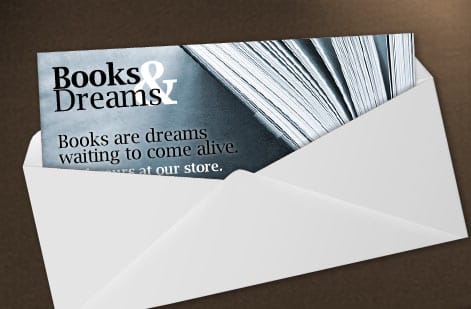
A packaging insert is any printed piece you slip into a shipped order: a thank-you card, a discount buckslip, a product card, a care guide, or a small catalog. It is quietly one of the most efficient marketing tools you have, because the box is already shipping. The insert costs cents to add and reaches the customer at the perfect moment, when they are opening something they chose to buy and are feeling good about your brand.
That timing is the whole point. A digital ad interrupts; an insert arrives welcome. The customer is holding your product, paying full attention, and open to a suggestion. A well-designed insert uses that window to say thank you, hand over a reason to come back, and point at what to buy next.
The rest of this guide covers five inserts that earn their place, then the paper-versus-cardboard call so you print each one on the stock that fits its job. For the packaging around them, our packaging collection has the boxes, sleeves, and tape to match.
Idea 1 and 2: thank the customer, then hand them a reason to return

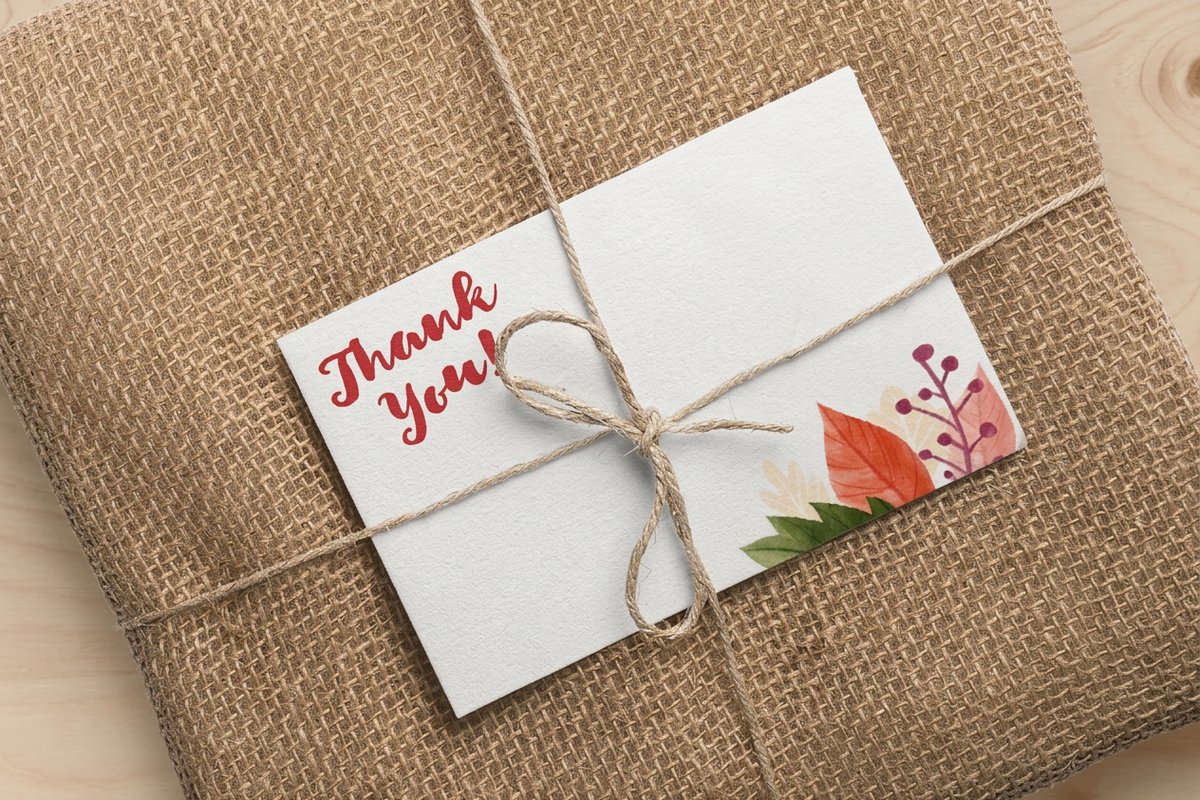
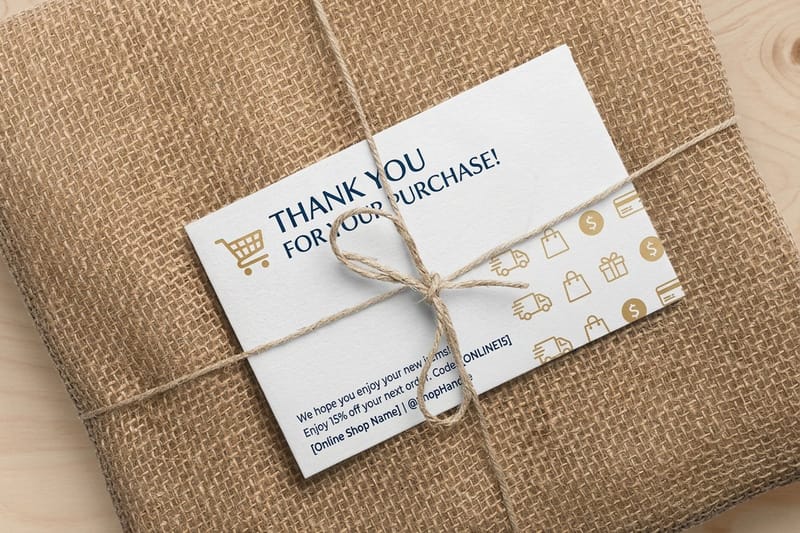
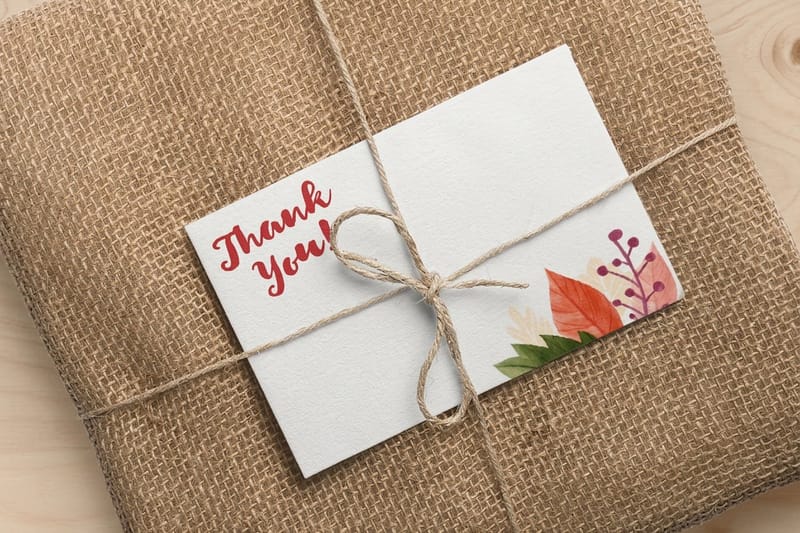
Open with gratitude. A short, genuine thank-you note is the highest-return insert you can print, because it makes the unboxing feel personal and human before you ask for anything. A flat thank-you card or an ecommerce thank-you card printed on a nice stock signals that a real business, not a faceless warehouse, packed this box.
Then hand over a reason to come back. A printed discount code with a clear deadline turns a satisfied buyer into a repeat one while the good feeling is fresh. Put the code on a lightweight buckslip or a statement stuffer so it is cheap to add to every order, and make the offer specific: a dollar amount or percent off the next purchase, redeemable by a date.
Track the code so you can see exactly how many reorders each drop earned. That single number tells you whether the insert pays for itself, and it almost always does, because you are marketing to someone who has already bought once.
Idea 3 and 4: promote the next product and reduce returns

Show the customer what pairs with what they just bought. A small product card that features a complementary or new item works like a mini catalog at the moment of highest interest. Print it on sturdy cardboard so it feels substantial and survives the trip, and keep it to one or two hero products so the suggestion is easy to act on.
Alongside it, a care or how-to card earns its keep by lowering returns and building trust. Telling a buyer how to use, wash, assemble, or store what they bought means fewer disappointed customers and fewer refunds, and it gives the insert a reason to be kept rather than tossed. A kept card keeps advertising.
Both of these lean toward heavier stock. If you want the substantial, premium feel, print them as cardboard inserts; if you are optimizing purely for cost at high volume, a coated paper still reads well. Our guide on preparing print files for packaging products covers setting these up so they cut clean.
Idea 5: turn a buyer into a reviewer and a follower
The final insert asks for something that compounds. Invite an honest review and print your social handle or a QR code that links straight to the review page or your feed. A buyer who just had a great unboxing is the most likely person to leave a five-star review and hit follow, and both are worth far more than the cents the insert cost.
Keep the ask light and specific. One clear line, one action, and a scannable code beat a paragraph of instructions. If you run a loyalty program or a referral offer, this is the insert to mention it on, because you are talking to someone already inclined to say yes.
Rotate this insert so repeat buyers do not see the identical card every time. Small changes to the offer or the message keep it feeling fresh, and reprinting the winning design at a higher quantity keeps the per-piece cost low across every future shipment.
Paper vs cardboard: choosing the right insert format

Every insert idea prints on either light paper or sturdy cardboard, and picking the right one is mostly about job and budget. Light paper inserts, like buckslips and statement stuffers, are the most economical way to carry an offer or a note. They are perfect for a discount code or a thank-you message you print by the thousand, where cost per piece matters most.
Cardboard inserts feel premium, resist creasing, and survive the trip flat. They suit the pieces you want the customer to keep and hold: a product card, a keepsake care guide, or a branded welcome card. The extra rigidity reads as quality and reinforces that your brand sweats the details.
Many brands use both in one box: a paper buckslip for the offer and a cardboard card for the product they most want to sell next. Set the size, stock, and quantity in the configurator and the price updates live, so you can weigh a premium feel against cost before you commit to a run.
Insert size and paper quick specs
Size is the first decision, because it settles what fits the box and how much the buyer can read before the packing peanuts come out. Four sizes cover nearly every packaging insert idea, and each one has a stock that suits it. Print the offer on paper, print the piece you want kept on cardboard.
| Insert size | Stock that suits it | Best use in the box |
|---|---|---|
| 3.5 x 2 in | 14 pt or 16 pt cardboard | Business-card size. A discount code or VIP card the buyer keeps in a wallet, and the smallest cardboard piece you can add to a box. |
| 4 x 6 in | 14 pt cardboard, or 100 lb paper on high-volume runs | The thank-you card and the product card. A photo on one side, a short signed note and a code on the other. |
| 5 x 7 in | 16 pt cardboard | The keepsake: a care guide, a how-to-use card, a founder note. Biggest face in the box, so it gets read first. |
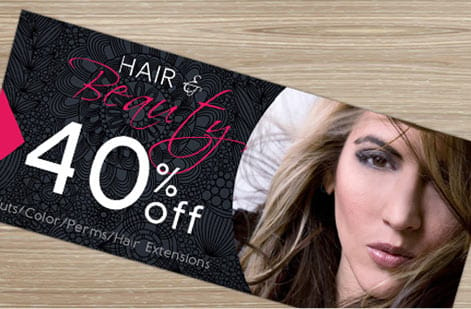
| 3.5 x 8.5 in buckslip | 100 lb paper, or 14 pt cardboard if you want it to stand up in the box | Slides down the length of most shipping boxes. One offer and one deadline at the lowest cost per piece, which is why brands print it by the thousand. |
Keep the code and the deadline on the side that faces up when the box opens, and keep live text well inside the trim so nothing important sits on the cut line. When you are ready to print your packaging inserts, the buckslip is the workhorse for offers, ecommerce thank-you cards carry the personal note, and flyers take over when the insert doubles as a mini catalog. Set size, stock, and quantity in the configurator and the price updates live before you commit to a run.
Wally packs the box that sells again
Say thanks, hand over a reason to return
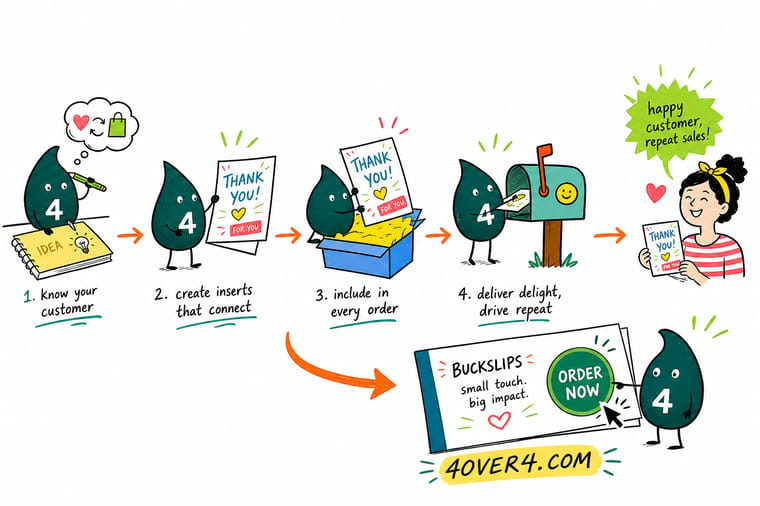
Wally tucks a warm thank-you card and a tracked discount buckslip into a box you were shipping anyway, adds a product card on sturdy cardboard, and asks for a review. Two or three inserts, printed on the right stock, and the next order pays for the whole run. That is how an insert turns one sale into a habit.
Print your packaging inserts →Step by step
The 5 packaging inserts that drive repeat sales
- Open with a thank-you cardA short, genuine thank-you note is the highest-return insert you can print. It makes the box feel personal, and a flat or folded thank-you card sets a warm tone before you ask for anything.
- Include a discount code for the next orderPrint a unique code with a clear deadline on a buckslip so the reorder is a decision, not an afterthought. Track the code and you know exactly which insert earned the repeat sale.
- Promote a new or matching productShow the customer what pairs with what they just bought. A small card featuring a complementary item, printed on cardboard so it feels like a mini catalog, nudges the next purchase.
- Add a care or how-to guideTell them how to get the most from what they bought. A quick care card lowers returns, builds trust, and gives the insert a reason to be kept rather than tossed.
- Ask for a review and a followInvite an honest review and print your social handle or a QR code. Turning a buyer into a reviewer and a follower multiplies the value of a sale you already made.
Infographic
The five-insert box that sells the next order
Each insert has a job and a best stock. Here is what goes in the box and why, from the thank-you on top to the review ask at the bottom.
Two or three of these per box is plenty. Rotate the offer so repeat buyers always see something new.
Specs and pricing
Buckslip insert specs and live pricing
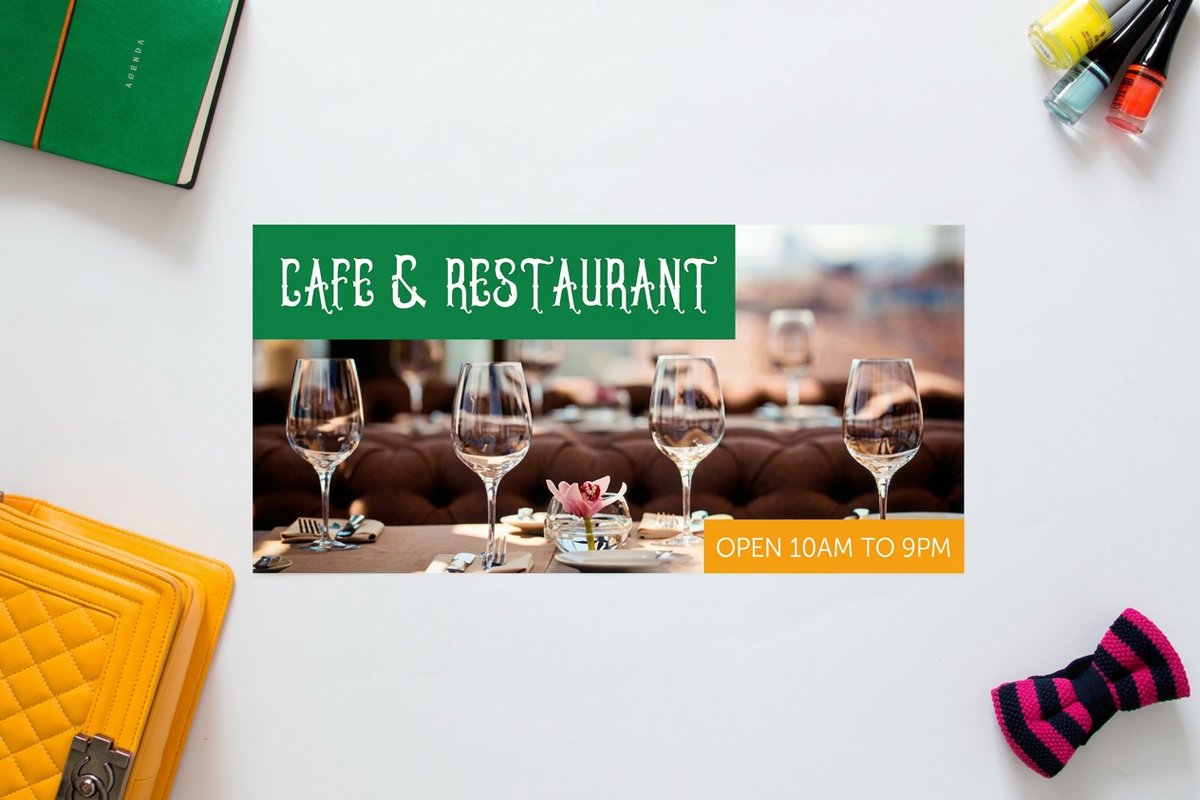
The buckslip is the classic offer insert: light, cheap at volume, and quick to print. Here are the live specs and price-per-unit from the configurator.
| Quantity | Price Per Unit | Total |
|---|---|---|
| 25 | $1.10 | $27.46 |
| 50 | 63.7¢ | $31.86 |
| 100 | 42.8¢ | $42.84 |
| 150 | 35.9¢ | $53.83 |
| 200 | 32.4¢ | $64.81 |
| 300 | 23.8¢ | $71.40 |
| 400 | 19.2¢ | $76.88 |
| 500 | 19.6¢ | $97.76 |
Print it
Inserts that make every box sell the next one
See it in use
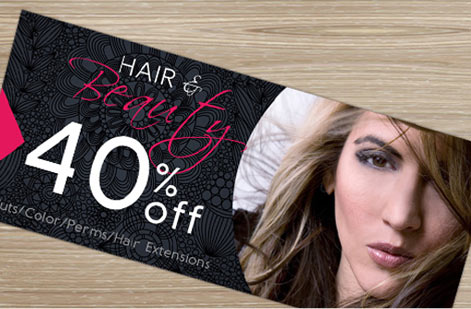
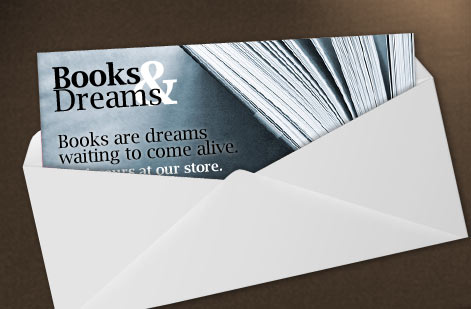
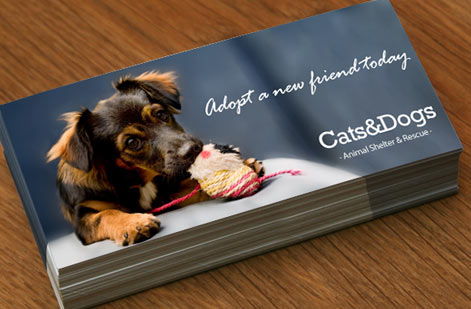
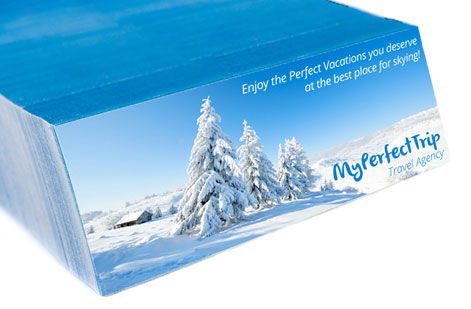
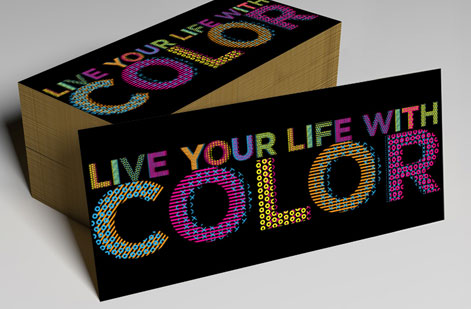
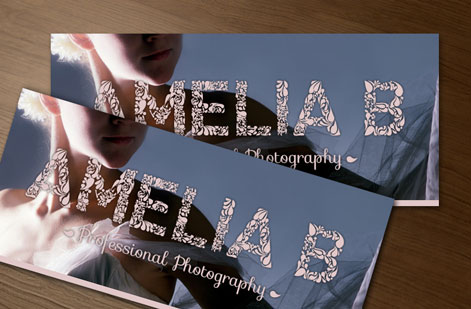
Real inserts, printed in-house


Explore more
Where to go next
By the numbers
Insert printing you can count on at 4OVER4
Common Questions
Common questions about packaging inserts
What is a packaging insert?
A packaging insert is any printed piece you tuck inside a shipped order, from a thank-you card and a discount buckslip to a product card, a care guide, or a small catalog. It costs almost nothing to add because the box is already shipping, and it reaches the customer at the best possible moment, when they are opening something they chose to buy. That makes inserts one of the most efficient repeat-sale and brand-building tools in ecommerce and retail.
What are the best packaging insert ideas that drive repeat sales?
The proven set is a warm thank-you card to open, a discount code with a deadline to earn the next order, a product card that promotes a matching or new item, a care or how-to guide that reduces returns, and a review-and-follow ask that turns a buyer into an advocate. You do not need all five in every box. Pick two or three that fit your product and margin, print them on the right stock, and rotate the offer so repeat buyers see something fresh each time.
Should packaging inserts be paper or cardboard?
It depends on the job. Light paper inserts like buckslips and statement stuffers are the most economical way to carry an offer or a note, which makes them ideal for a discount code or a thank-you message at scale. Sturdier cardboard cards feel premium, survive the trip without creasing, and work better for a product card or a keepsake care guide the customer will hold onto. Many brands use both: a paper buckslip for the offer and a cardboard card for the product they most want to promote.
What does it cost to print packaging inserts and how are prices set?
Insert printing scales with the usual levers: quantity, size, paper stock, and any finish. Because inserts are small and often run on lighter stocks, the unit price is low, and it drops further as the quantity climbs, which suits the high volumes ecommerce brands ship. You set the size, stock, and quantity in the configurator and the price updates live, so you can balance a premium feel against cost before you order.
What sizes and stocks work best for package inserts?
Common insert sizes fit standard mailers and boxes without extra folding, and standard sizes run most efficiently for the lowest cost. For a thank-you or discount buckslip, a light-to-medium stock keeps it affordable at volume. For a product card or care card you want to feel substantial, a heavier cardboard stock with a coating holds up better and reads as premium. Match the size to your packaging so the insert sits flat and is the first thing seen on opening.
How long do packaging inserts take to print and ship?
Once your artwork is ready, inserts are quick to produce because they are small and run on common stocks, and rush options are available when you are restocking fast. Upload your file, let the free file check confirm it is press-ready, choose your quantity, and the inserts print and ship. Reprinting a proven insert design at a higher quantity is the fastest, cheapest way to keep every future box working for you.
Get Started
Ready to make every box sell the next order?
Print thank-you cards, discount buckslips, and product cards at 4OVER4.COM on the stock that fits each job. Adjust size, stock, and quantity and watch your price update live.
Legal Disclaimer
Gold Standard guarantees apply to all standard orders placed through 4over4.com. Price match requires verifiable proof of a competitor's published price for an equivalent product with matching specifications and turnaround time. Satisfaction guarantee covers manufacturing defects and print quality issues. Contact support with order number and documentation. On-time delivery rate based on tracked orders 1999 to 2026. Individual results may vary based on shipping carrier performance.
