
How to Find the Cheapest Place to Print Without Sacrificing Quality


Cheap printing is set by four levers you control, not luck. Here is what makes print cheap, how to compare quotes like for like, and how to spot the hidden fees that inflate a low price.
The cheapest place to print is the one with the lowest all-in total for your exact job, set by quantity, stock, turnaround, and finish. Order the right larger run, match the stock to the job, choose standard turnaround, compare quotes like for like, and add setup, rush, and shipping before you decide.
Start here
The cheapest place to print in one paragraph
The cheapest place to print is the one with the lowest all-in total for your exact job. Four levers set the price: quantity, paper stock, turnaround, and finish. Order the right larger run, match the stock to the job, choose standard turnaround, skip finishes you do not need, then compare quotes like for like and add setup, rush, and shipping. The cost curve below shows why quantity matters most.
What actually makes printing cheap
Cheap printing is not luck or a secret vendor, it is the result of four levers working in your favor: quantity, paper stock, turnaround, and finish. Every print price is built from those, so once you understand them you can drive the cost down deliberately instead of hoping a search turns up a bargain. The headline price on a page is only the starting point.
The most important lever is quantity, because presses carry a fixed setup cost that spreads across the run. Print ten pieces and each one absorbs a big slice of that setup, print a thousand and the cost per piece plummets, as the cost curve above shows. That is why a stack of business flyers or a box of business cards gets dramatically cheaper per unit as the quantity climbs.
This guide unpacks each lever, then shows how to compare quotes fairly and spot the hidden fees that turn a low price into a high total. If you would rather skip design costs entirely, our online design tool is free to use, which keeps your all-in price lower still.
The four price levers you control

Quantity is the heavyweight, so estimate your real need and order the right larger run once rather than paying setup repeatedly on small batches. Paper stock comes next: heavier, premium weights cost more, so pick the lightest stock that still does the job and save the luxe feel for pieces where it matters, like a business card a client holds.
Turnaround is a lever most people ignore. Rush production carries a real premium, so planning a few days ahead to choose standard turnaround is one of the easiest ways to save without touching quality. Finish is the last one: foil, spot gloss, and heavy coatings all add cost, so add them only where they earn attention and skip them where plain ink does the job.
Pull these four together and you can hit a target price on purpose. Want a cheaper flyer? Order more, on a standard stock, at standard turnaround, with no special finish. Our guide on choosing paper for marketing materials helps you pick the stock lever wisely.
How to compare quotes like for like

The most common way to overpay is comparing prices that are not actually comparable. A quote is only cheaper if it matches on every spec: the same product, size, quantity, paper stock, finish, and turnaround. If one price uses a lighter stock or a slower delivery, it is a different job wearing a lower number, and choosing it can mean a flimsier piece or a later arrival than you expected.
So before you compare, lock the spec down precisely, then price that exact job everywhere. Line the numbers up side by side against the identical specification, and only then are you seeing the truth. This is also where a live-updating price helps, because you can build the same order twice and watch the totals rather than trusting a headline figure.
Once the specs match, add the extras that do not show on the first line, setup, rush, and shipping, and compare the all-in totals. For a worked example of how one product's price is built, our guide on how much business cards cost shows exactly where the money goes.
Why online printing wins on unit price
Once any real quantity is involved, online printing usually beats a local shop on unit price, and the reason is scale. Online printers run high volume on large, efficient presses and spread their costs across many customers, which pushes down the per-piece price on standard products like business cards, flyers, and postcards. That efficiency is exactly what the quantity lever rewards.
A local shop still has its place: it offers speed and in-person help, which is worth paying for on a tiny same-day job. But on a planned order of a few hundred pieces or more, the online unit price typically wins even after shipping, as long as you plan ahead for standard turnaround. The catch is simply planning, which is the same habit that keeps printing cheap everywhere.
The bonus with online ordering is transparency: the price updates live as you set quantity, stock, and finish, so you can dial in the cheapest combination that still meets your standard. Browse affordable staples in the business cards category to see how the levers move the number.
Putting it together and ordering
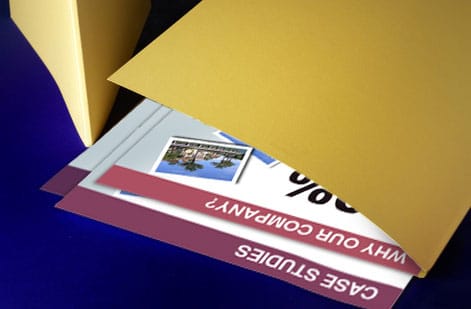
Cheap printing without cheap quality is a process, not a gamble. Define the job precisely, right-size the quantity, match the stock to the purpose, choose standard turnaround, and skip finishes you do not need. Compare quotes like for like on the all-in total, and send a clean print-ready file so you never pay for a reprint.
Do that here and the price is transparent the whole way. Use the live specs and pricing panel below to build your exact job and watch the total update as you adjust quantity, stock, and finish, so the cheapest combination that meets your standard is always visible before you commit. Our free file check is included, which protects you from the costliest surprise of all.
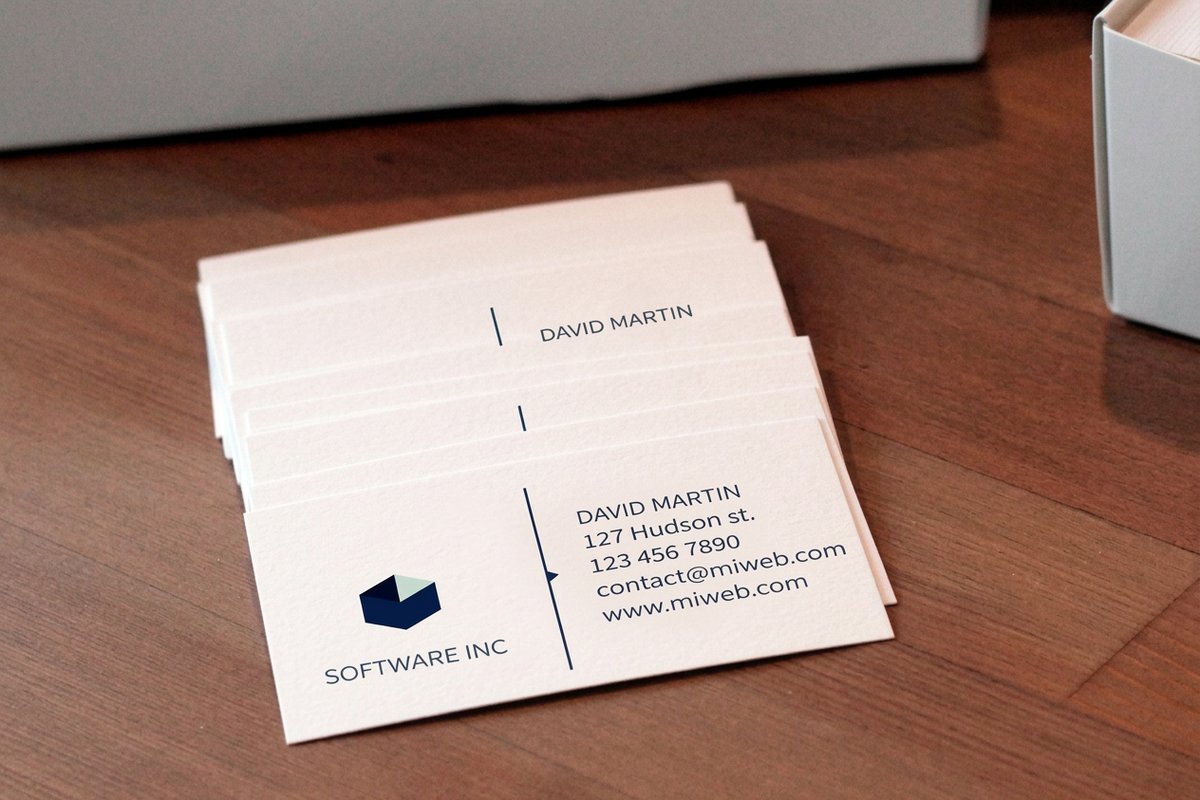
If you would rather start from a layout to save on design, our design templates keep your artwork inside safe margins, and the affordable staples across business cards, flyers, and postcards are all priced live so you can see the levers at work.
Wally compares the total, not the headline
Quantity, stock, turnaround, finish, all in
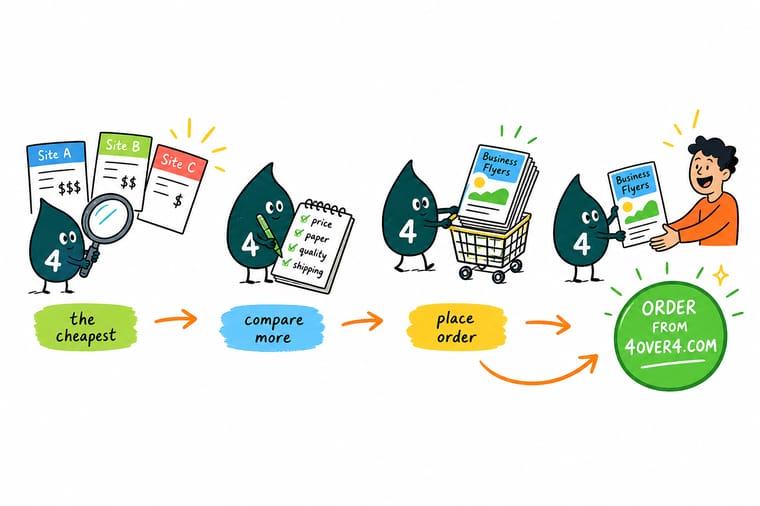
Wally's rule for cheap printing is to compare like for like: same size, stock, quantity, and turnaround, then add setup, rush, and shipping to find the real total. Order the right larger run, keep the stock sensible, plan for standard turnaround, and send a clean file so you never pay for a reprint. 4OVER4 shows the all-in price live as you build.
Compare live print prices →Quick reference
The cheap-print checklist, at a glance
Every low print price comes down to the same handful of moves. Work these and you cut cost without cutting quality.
| Lever | Do this | Why it matters |
|---|---|---|
| Quantity | Order the right larger run | The per-piece price drops sharply with volume, so one bigger order beats many small ones. |
| Paper stock | Match weight to the job | A lighter stock costs less, so save premium weights for pieces that truly need them. |
| Turnaround | Standard over rush | Rush production carries a premium, so planning ahead is one of the easiest ways to save. |
| Finish | Skip finishes you do not need | Foil, spot gloss, and heavy coatings add cost, so add them only where they earn their keep. |
| Like-for-like | Same size, stock, quantity | A quote is only cheaper if every spec matches, otherwise you are comparing different jobs. |
| Hidden fees | Setup, rush, shipping | Check the all-in total, since low headline prices can hide charges that inflate the final number. |
| Artwork | Print-ready PDF | A correct file avoids revision fees and reprints, which are the most expensive surprises of all. |
Step by step
Find the cheapest print in 7 steps
- Define the job preciselyNail down the exact product, size, quantity, stock, and finish before you price anything. A vague spec makes every quote look different and impossible to compare.
- Right-size the quantityBecause the per-piece price falls with volume, estimate your real need and order the larger run once rather than paying setup and higher unit prices on repeat small batches.
- Match the stock to the purposePick the lightest paper that still does the job. Save the heavy, premium stocks for the pieces where the feel actually matters, like a business card.
- Choose standard turnaroundPlan ahead so you can pick standard production instead of a rush option, since rush charges are one of the biggest and most avoidable premiums.
- Compare quotes like for likeLine up each price against the identical spec, then add setup, rush, and shipping so you are comparing all-in totals rather than headline numbers.
- Send a clean fileUpload a print-ready PDF so you avoid revision fees and reprints. Use our free file check, which is included, to confirm the setup before production.
- Order and trackPlace the order at the all-in price you confirmed, watch the live total as you set options, and keep the specs on file so reorders stay just as cheap.
Specs and pricing
Live pricing you can compare for yourself
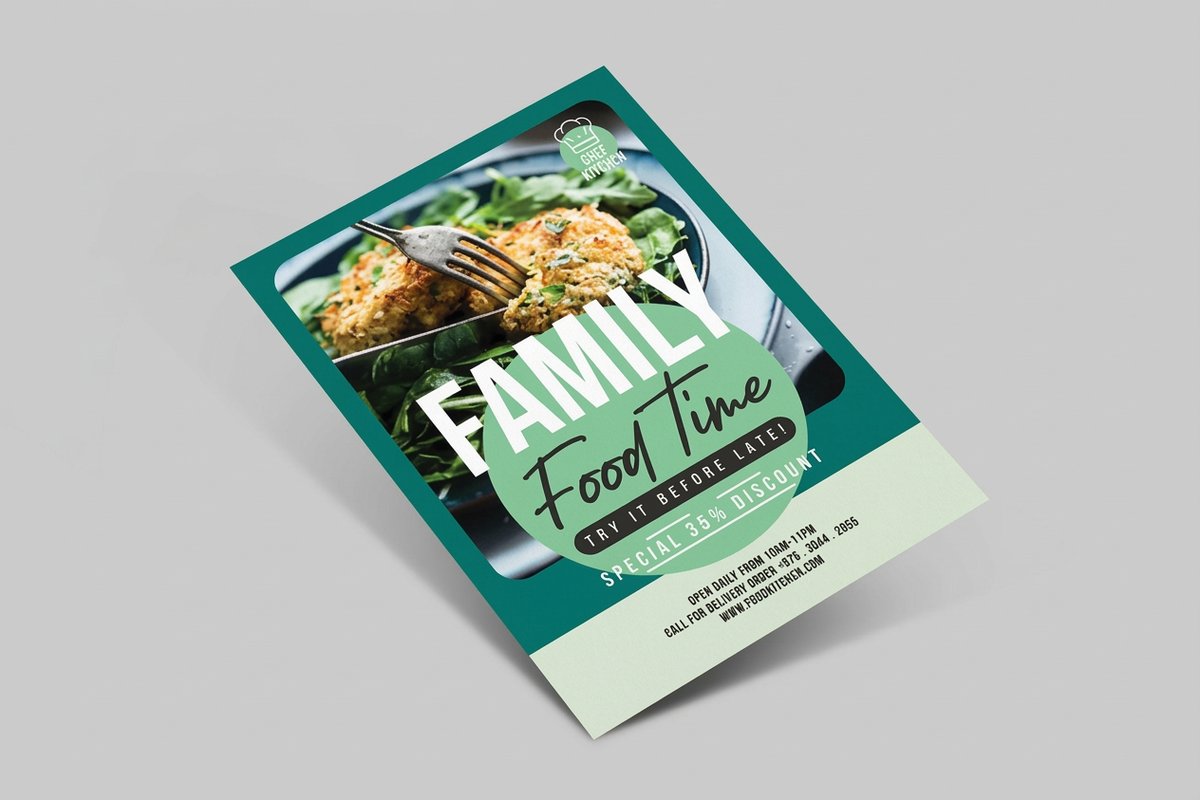
The best way to see the levers at work is to watch the price move. Here are the live specs and price-per-unit for business flyers at 4OVER4.COM, straight from the configurator.
| Quantity | Price Per Unit | Total |
|---|---|---|
| 50 | $1.14 | $57.11 |
| 100 | 82.4¢ | $82.38 |
| 200 | 53.3¢ | $106.55 |
| 300 | 41.0¢ | $123.02 |
| 400 | 34.9¢ | $139.49 |
| 500 | 31.2¢ | $155.97 |
| 600 | 26.7¢ | $160.36 |
| 700 | 23.5¢ | $164.75 |
Order it
Affordable staples, priced live
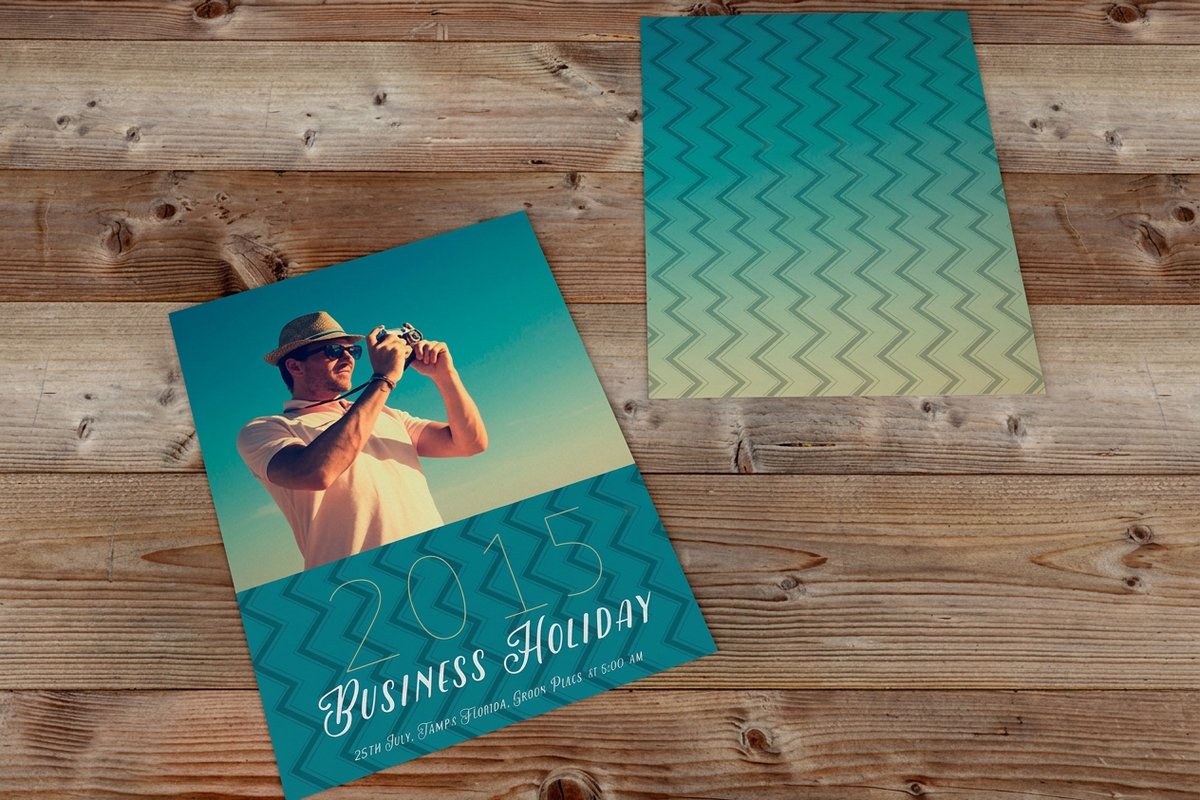
See it in use
Real marketing print, done affordably
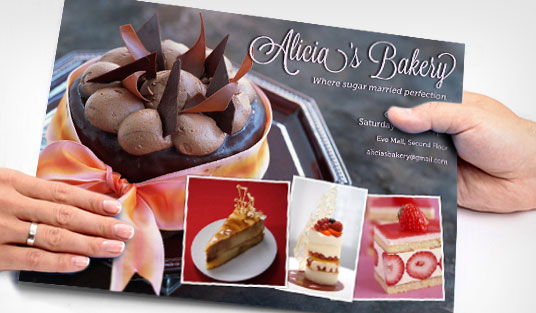
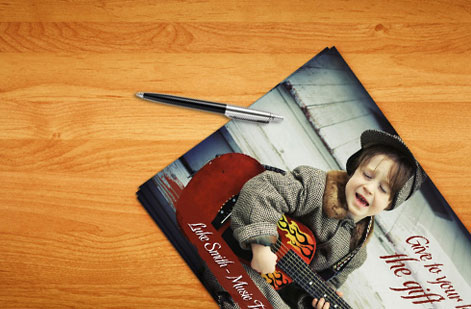
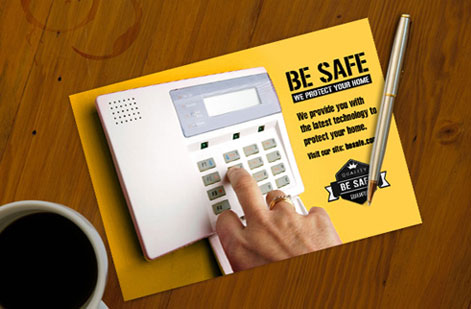





Explore more
Where to go next





By the numbers
Value printing you can count on at 4OVER4
Common Questions
Common questions about finding the cheapest print
What actually makes a place to print cheap?
Four levers set the price of almost any print job: quantity, paper stock, turnaround, and finish. Quantity is the biggest, because presses have a fixed setup cost that spreads across the run, so the per-piece price falls sharply as the quantity climbs. Lighter paper stocks cost less than premium weights, standard turnaround costs less than a rush, and skipping finishes like foil or spot gloss removes cost. A printer is genuinely cheap when it prices these efficiently and shows the all-in total, not when it advertises a low headline number that grows once setup, rush, and shipping are added.
How do I compare print quotes fairly?
Compare like for like. A quote is only cheaper if it matches on every spec: the same product, size, quantity, paper stock, finish, and turnaround. Change any one and you are comparing different jobs, which is how a low price can hide a lighter stock or a slower delivery. Once the specs match, add the extras that do not show in the headline price, namely setup fees, rush charges, and shipping, and compare the all-in totals. The cheapest real price is the lowest total for the exact job you need delivered when you need it, not the lowest number on the first line.
Is online printing cheaper than a local print shop?
For most jobs with any real quantity, yes. Online printers run high volume on large, efficient presses and spread their costs across many customers, which lowers the per-piece price on standard products like business cards, flyers, and postcards. A local shop offers speed and in-person help, which is worth paying for on a tiny rush job, but on a planned order of a few hundred or more pieces the online unit price usually wins, even after shipping. The trade-off is planning ahead for standard turnaround, which is exactly the habit that keeps printing cheap in the first place.
What hidden costs should I watch for when printing?
The price that matters is the all-in total, and several charges can hide beneath a low headline number. Watch for setup or plate fees on the first run, rush charges for fast turnaround, shipping that is quoted separately, and upcharges for options that should be standard, like a basic coating or a common size. Revision and reprint fees are the most expensive surprises, which is why sending a correct print-ready file matters so much. Before you commit, build the full order with every option selected and confirm the final total, since a live-updating price that includes everything is the honest way to compare.
How does quantity affect print price?
Quantity is the single biggest lever on print cost. Every print run carries a fixed setup cost, and that cost spreads across however many pieces you order, so the per-piece price drops steeply as the run grows and then flattens at high volume. In practice this means small batches carry the highest unit price, while a larger single order is dramatically cheaper per piece, as the cost curve above shows. The cheapest approach is usually to estimate your genuine need and order the right larger quantity once, rather than paying setup and premium unit prices on repeated small reorders.
How do I compare printing prices between companies?
Write the spec down once, then send that exact spec to everyone. Product, size, quantity, paper stock, sides, finish, and turnaround, plus the date you need it in hand. Ask each printer for the delivered total rather than the unit price, because setup fees, rush charges, and shipping are where a low headline number quietly grows. Collect all the quotes inside the same day and note the month and year next to each one, since paper and freight prices move and an old quote is only a memory. Then line the totals up: same job, same delivery date, one number each. If one comes in lower on a matched spec, look for what changed, usually a lighter stock or a slower ship, and if nothing changed then you have found the cheaper printer. On this page you can settle one column yourself, because the live specs and pricing panel prices your exact job as it stands today, all-in and current.
Why is the same print job cheaper online than at a local shop?
Scale and sheet sharing. Online printers run high volume on large, efficient presses and gang many customers onto one press sheet, so the setup, the plates, and the press time are split across all of those jobs instead of landing on yours alone. The shop down the road prices one job on one machine, plus rent and counter staff, so its unit price starts higher and stays higher as the run grows. That is why the same 500 piece order usually costs less online even after freight, as long as you plan ahead and take standard turnaround instead of paying a rush premium. The local shop still earns its money on speed and in-person help, which is worth paying for on a tiny same-day job. The crossover shows up fast: at a handful of pieces the shop often wins on total, at a few hundred pieces or more the online sheet wins.
Get Started
Ready to see how cheap your print can be?
Build your exact job at 4OVER4.COM and watch the all-in price update live as you set quantity, stock, and finish. Compare it like for like and print it with a free file check included.
Legal Disclaimer
Gold Standard guarantees apply to all standard orders placed through 4over4.com. Price match requires verifiable proof of a competitor's published price for an equivalent product with matching specifications and turnaround time. Satisfaction guarantee covers manufacturing defects and print quality issues. Contact support with order number and documentation. On-time delivery rate based on tracked orders 1999 to 2026. Individual results may vary based on shipping carrier performance.
