
Wide Format Printing Explained for Banners Posters and Displays


Wide format is just printing at a big scale. Here is what large format covers, the materials that suit each product, and the resolution rule that keeps oversized prints looking sharp.
Wide format printing, also called large format, produces prints too big for a standard press. It covers vinyl and mesh banners, paper and fabric posters, rigid foam board and coroplast signs, backdrops, and displays. Pick the material for the setting, build artwork at scale, and set resolution to the viewing distance rather than a fixed 300 DPI.
Start here
Wide format printing in one paragraph
Wide format, or large format, is printing at a scale a standard press cannot reach. It covers vinyl and mesh banners, paper and fabric posters, rigid foam board and coroplast signs, backdrops, and displays. Choose the material for the setting, finish it to hang or stand, and set resolution to how far away the piece is viewed. The DPI-versus-distance chart below shows why.
What wide format printing means

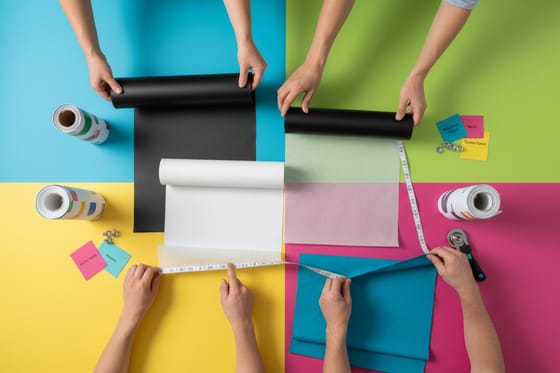
Wide format printing, also called large format, is simply printing at a scale that a standard office or sheet-fed press cannot handle. Where a normal press tops out around a sheet you can hold, large-format printers run several feet wide off a roll or across a flatbed, producing banners, posters, wall graphics, and displays in one pass. If a print is measured in feet rather than inches, it is a wide format job.
The category exists because marketing needs big surfaces: a grand-opening vinyl banner across a storefront, a trade show backdrop, a poster that fills a wall. Those pieces demand different equipment, materials, and file setup than a flyer, which is exactly what this guide unpacks: the products, the materials, and the one rule that trips people up, resolution at scale.
The DPI-versus-distance chart above previews that rule, and the rest of the page walks the practical choices. If you want to jump straight to a specific size, our guides on large format poster sizes and standard banner sizes have the dimensions, and the full range lives in the large format category.
The products wide format covers
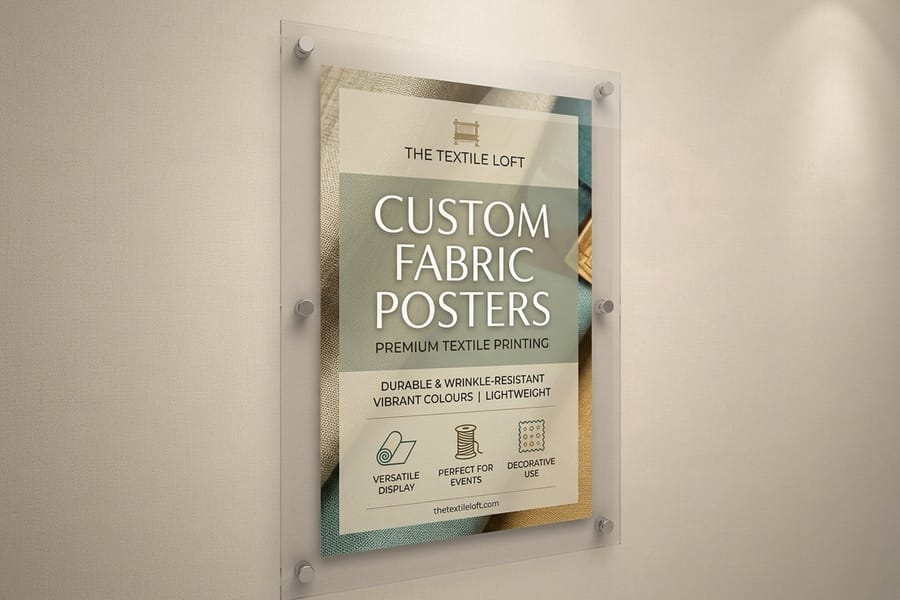
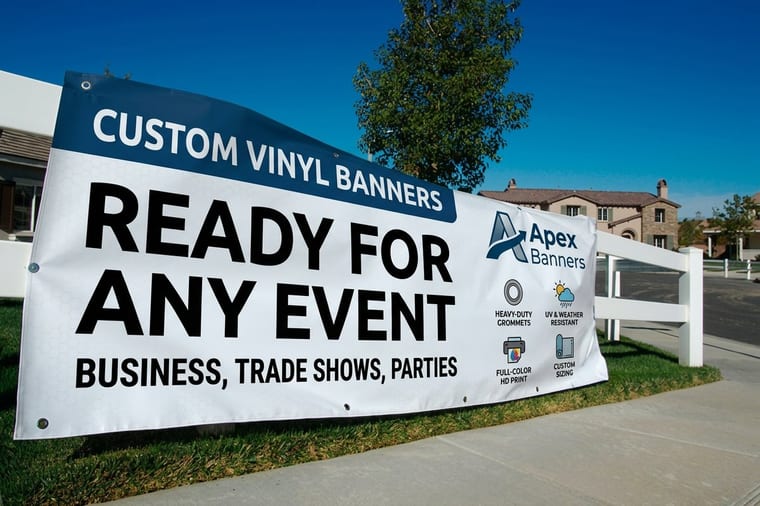
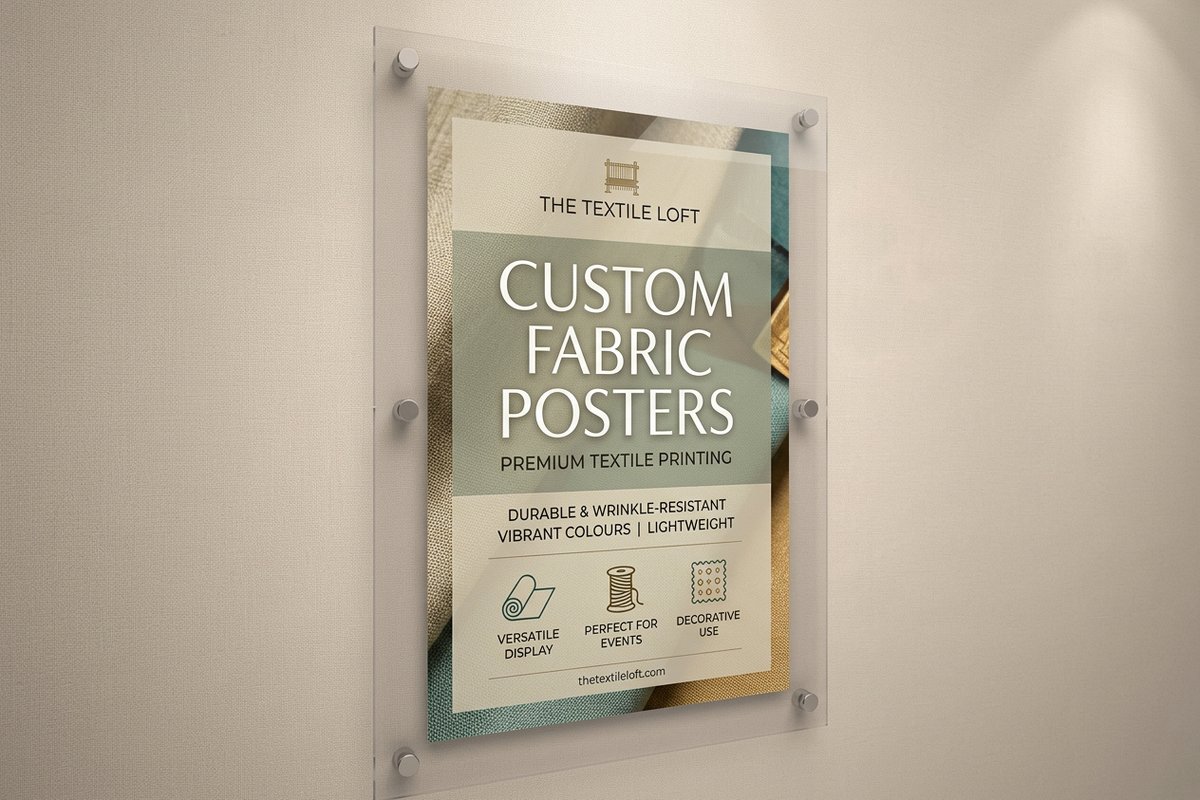
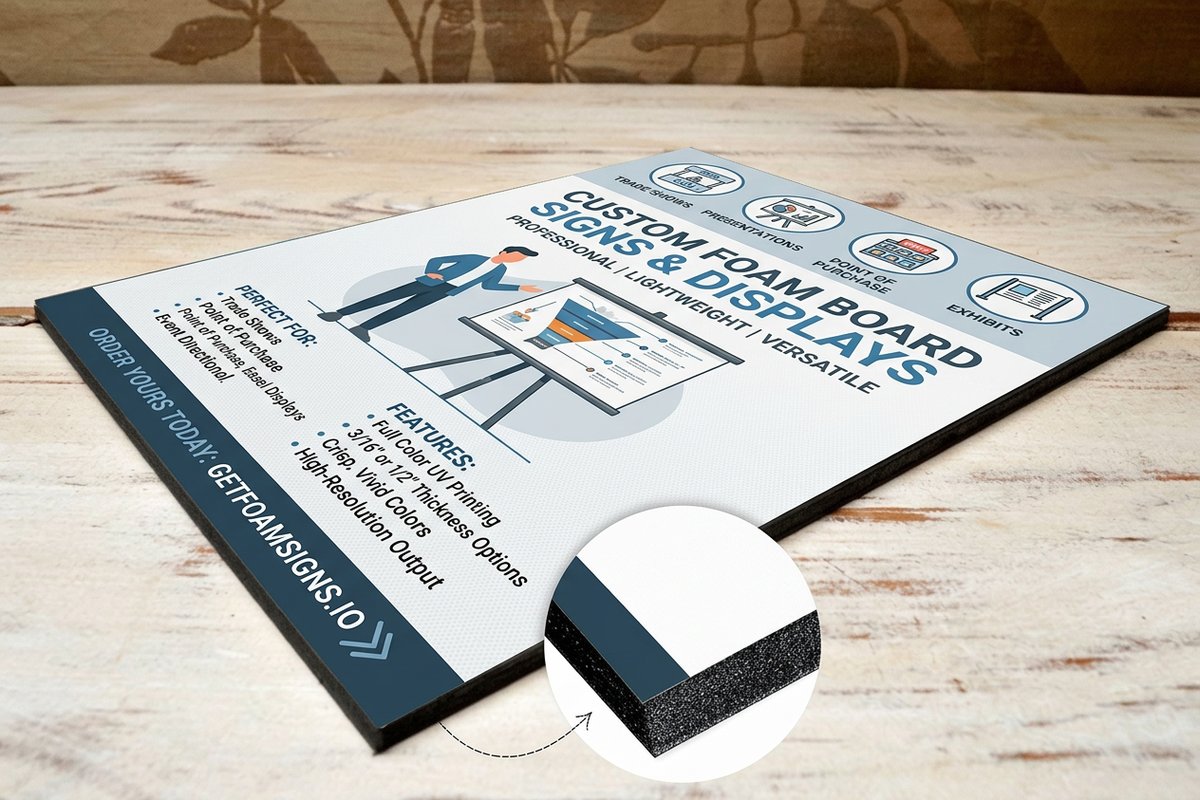
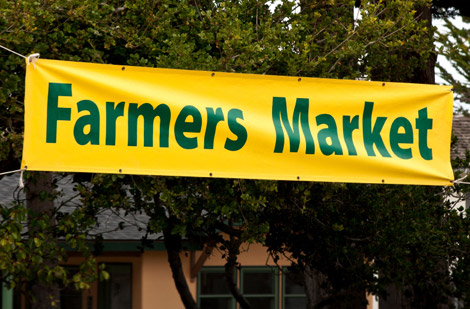
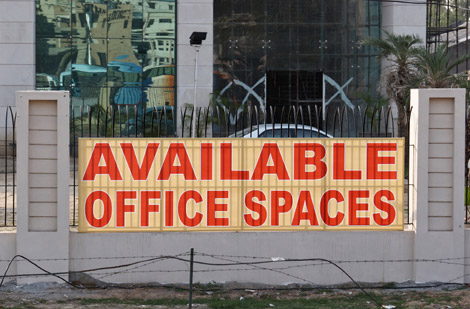
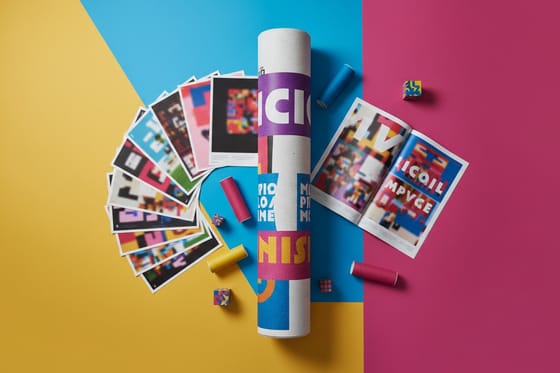
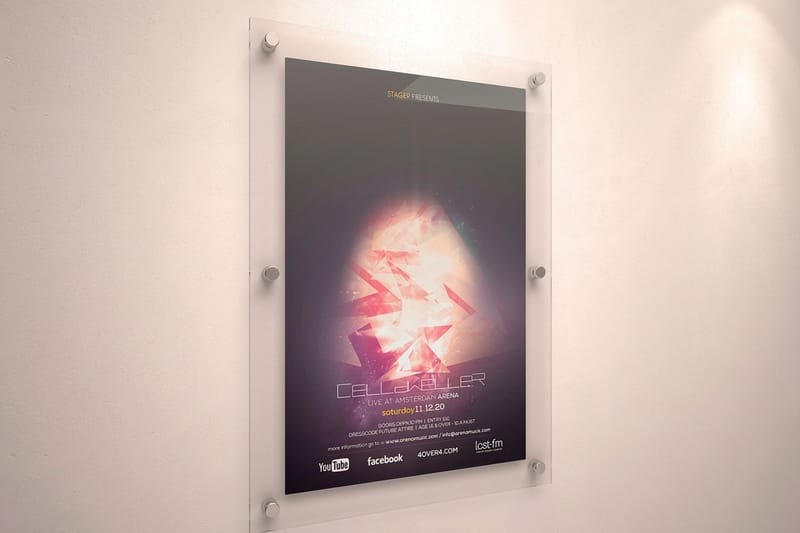
One process, a whole family of products. Banners are the most common, hung across entrances and along fences for events and promotions. Posters come next, printed on paper for a crisp indoor look or on fabric for a premium, wrinkle-resistant hang. Rigid signs on foam board or coroplast stand on easels or ground stakes without any backing.
Beyond those, wide format produces step-and-repeat backdrops for photos, trade show displays and retractable stands, and large wall and window graphics. What ties them together is scale: each is too big for a standard press and benefits from the same large-format equipment and file thinking. Our lineup includes fabric posters and foam board signs alongside the banners.
Because the products share a process, a single campaign can span several at once: a banner outside, posters inside, and a backdrop for the photo moment, all printed to matching brand colors. For inspiration on what oversized print can do, our article on large format ad examples is worth a look.
Materials and substrates, matched to the use

Material is chosen for where the piece lives and how it hangs. For banners, vinyl is the durable, solid-color default, while mesh is a perforated vinyl that lets wind pass through, which keeps large outdoor banners from acting like a sail. For posters, paper gives a crisp, economical indoor print, and fabric resists wrinkles and hangs with a soft, premium drape.
Rigid work uses foam board for lightweight indoor displays and coroplast for weatherproof outdoor signs on stakes. Each substrate has a job, and matching it to the environment is what keeps a piece looking sharp instead of curling, fading, or tearing in the wind. Our guide on banner material types compares vinyl, mesh, and fabric in detail.
Finishing is part of the material decision. Banners get hemmed edges with grommets or pole pockets so they hang flat and tight, posters can be laminated for durability, and displays come with stands. Getting the substrate and finishing right up front is what makes installation quick and the result long-lasting.
Resolution: why big prints need fewer dots

The rule that surprises people: the bigger the print, the less resolution it needs. That is because large prints are viewed from farther away. Your eye cannot resolve fine detail across a parking lot, so a banner read from thirty feet looks perfectly sharp at a fraction of the dots per inch a close-read poster requires. The chart above maps this out, from about 150 DPI at arm's length down to 20 DPI across a room.
The practical habit is to build the file at 100 percent scale whenever your software allows, so a two-foot poster is designed at two feet. When a design program cannot handle the full dimensions, build at a clean fraction and multiply the resolution to match: a quarter-scale file needs four times the DPI to end up correct at full size. Skip this and a file that looked fine on screen prints soft.
Two things stay sharp at any size: vector art and type. Keep logos and text as vectors and they scale without any loss, which is why brand marks belong in vector form for large format. For the deeper mechanics of print files, our guide on creating print-ready files covers resolution, color, and bleed in full.
Finishing and mounting your large format piece

Finishing is what turns a printed sheet into a piece you can actually hang or stand. For banners, hemmed edges add strength and grommets give you clean tie points, while pole pockets let a banner slide onto a crossbar for a taut, professional look. Choosing the right edge treatment for how you plan to mount the banner is what keeps it flat instead of flapping.
Rigid pieces need their own thinking. Foam board and coroplast are self-supporting, so they sit on easels, hang on hooks, or ride on ground stakes with no frame. Posters can be laminated for scuff and moisture resistance in a high-traffic spot, and fabric posters hang softly without the curl that afflicts paper. Displays and backdrops arrive with stands or frames so setup on the day is fast.
Match the finishing to the install and the piece behaves. Our guide on making banners walks through the finishing choices for hanging work, and pairing the right substrate with the right edge treatment is the difference between a display that looks crisp and one that sags.
What wide format costs, and how to order

Large format pricing is driven mostly by square footage, then material, finishing, and quantity. A small poster is inexpensive, a large mesh banner or a full trade show display sits at the higher end, and finishing like lamination, grommets, or pole pockets adds to the total. Every option adjusts the number, and the configurator updates the price live as you build, so you can weigh a paper poster against fabric or vinyl against mesh before you commit.
Ordering more than one piece lowers the per-unit price, which helps when a campaign spans banners, posters, and a backdrop. Use the live specs and pricing panel below to set your exact product, material, and size for real large format printing at 4OVER4.COM, then upload art built at scale and let our free file check confirm everything before production.
If you would rather start from a layout, our design templates keep your art inside safe margins, and the full large format category shows every oversized product that pairs with your piece.
Wally thinks big, and builds it right
Pick the product, match the material, size the resolution
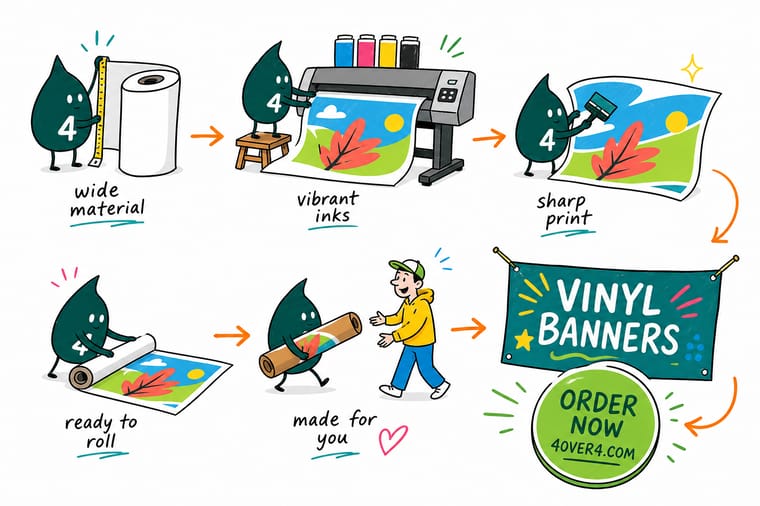
Wally treats wide format as one rule with many products: choose the piece, match the material to where it lives, and set resolution to how far away people stand rather than chasing 300 DPI. Keep logos and type as vectors, build at scale, and 4OVER4 prints your banner, poster, or display ready to hang.
Configure your large format print →Quick reference
The wide format spec sheet, at a glance
Every large format job comes down to product, material, resolution, and finishing. Match these to the setting and the file is ready to order.
| Product | Common material | Why it matters |
|---|---|---|
| Banners | Vinyl or mesh | Vinyl for solid color and durability, mesh to let wind through on large outdoor spans. |
| Posters | Paper or fabric | Paper for crisp indoor posters, fabric for a wrinkle-resistant, premium hanging look. |
| Rigid signs | Foam board or coroplast | Self-supporting panels for easels, displays, and stake-mounted outdoor signs. |
| Resolution | 100 to 150 DPI at size | Large prints are viewed from a distance, so they need far less resolution than close-read pieces. |
| Scale | Build files at 100 percent | Design at full size when possible, or at a fraction with matching extra resolution. |
| Finishing | Grommets, hems, pole pockets | The right edge finishing is what lets a banner or display hang flat and last. |
| Artwork | Vector art, CMYK | Vector logos and type stay razor sharp at any scale and CMYK keeps color true. |
Step by step
Order a wide format print in 7 steps
- Pick the productDecide what the piece is: a hanging banner, a poster, a rigid sign, a backdrop, or a display. The product sets the material and the finishing.
- Match the material to the settingVinyl or mesh for outdoor banners, paper or fabric for posters, foam board or coroplast for rigid signs, chosen for weather and handling.
- Set the finished sizeMeasure the space and enter the exact dimensions. Large format is cut to size, so you are not limited to standard formats.
- Build artwork at scaleDesign at full size when you can, or at a clean fraction like one quarter scale with four times the resolution, keeping logos and type as vector.
- Set the resolution to the distanceA close-read poster wants around 150 DPI at size, while a banner seen from far away needs far less, so match the file to how it is viewed.
- Choose the finishingAdd grommets, hems, or pole pockets for banners, or a stand for a display, so the piece hangs flat and survives its environment.
- Order and installConfigure the options, watch the price update live, and let our free file check confirm the setup before the piece prints and ships ready to hang.
Specs and pricing
Large format specs and live pricing
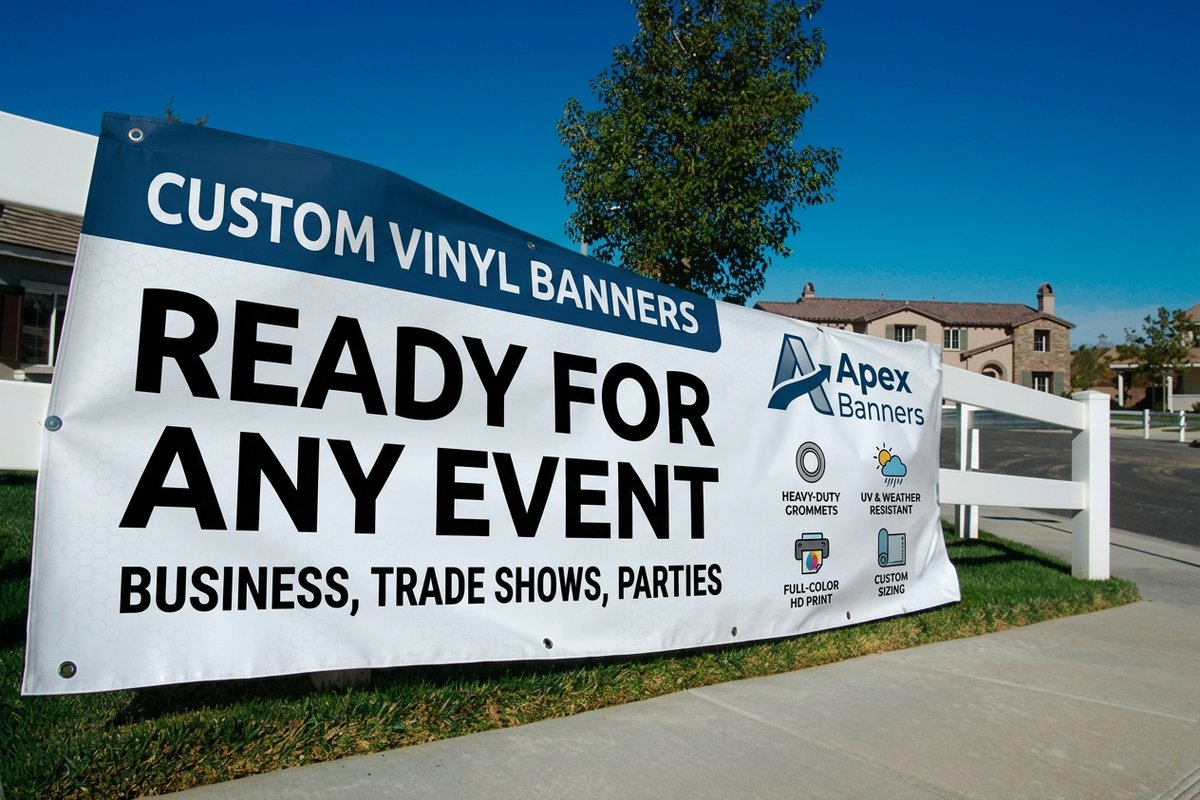
Once the product and material are settled, the print decisions come down to size, finishing, and quantity. Here are the live specs and price-per-unit for vinyl banners at 4OVER4.COM, straight from the configurator.
Order it
Wide format for every big idea
See it in use
Real large format work, printed in-house




Explore more
Where to go next

By the numbers
Large format you can count on at 4OVER4
Common Questions
Common questions about wide format printing
What is wide format printing?
Wide format printing, also called large format printing, is the production of prints too large for a standard sheet-fed press. It covers vinyl and mesh banners, paper and fabric posters, rigid foam board and coroplast signs, step-and-repeat backdrops, and trade show displays. The prints are made on roll-fed or flatbed large-format printers that can output several feet wide in a single pass, then finished with grommets, hems, or mounting as the product requires. The category exists because marketing often needs signage and displays measured in feet rather than inches, and those pieces demand different equipment, materials, and file setup than a business card or flyer.
How do I choose the right wide format product?
Start with what the piece has to do and where it lives. For a hanging outdoor message choose a vinyl banner, or a mesh banner if wind is a concern on a large span. For a poster, choose paper for a crisp indoor print or fabric for a premium, wrinkle-resistant hanging look. For a self-supporting sign choose a rigid foam board or coroplast panel, and for events reach for a backdrop banner or a display stand. Then size it to the space, build the artwork at scale with vector logos and type, and pick finishing like grommets or a stand so it installs cleanly.
What does wide format printing cost and how are prices set?
Large format price scales mainly with size, material, finishing, and quantity. Square footage is the biggest driver, so a small poster is inexpensive while a large mesh banner or a full display sits higher, and finishing like lamination, grommets, or pole pockets adds to the total. You set every option in the configurator and the price updates live as you adjust the size and material, so you can compare a paper poster against a fabric one or a vinyl banner against mesh before you commit. Ordering more than one piece lowers the per-unit price.
What resolution do wide format files need?
Less than most people expect, because large prints are viewed from a distance. A poster read from a few feet away looks sharp at roughly 150 DPI at its final size, while a banner seen from across a parking lot can drop to 50 DPI or lower and still look clean. The practical rule is to build the file at 100 percent scale when you can, and if you design at a fraction of the final size, multiply the resolution to match, so a quarter-scale file needs four times the DPI. Keep logos and type as vector art and they stay crisp at any size.
What materials and sizes are available for wide format printing?
Large format spans many materials, each suited to a use. Banners come in vinyl for durability and mesh for wind resistance. Posters print on paper for indoor crispness or fabric for a premium hanging finish. Rigid signs use foam board or coroplast, and displays include backdrops and stands. Sizes are custom, so pieces are cut to your exact dimensions, from a small poster up to banners of eight feet and beyond, with multi-panel options for the very largest installations. That range lets one process cover almost every oversized print a business needs.
Get Started
Ready to print something big?
Set the product, material, and size for your wide format print at 4OVER4.COM and watch the price update live. We finish it to hang or stand and ship it ready to install.
Legal Disclaimer
Gold Standard guarantees apply to all standard orders placed through 4over4.com. Price match requires verifiable proof of a competitor's published price for an equivalent product with matching specifications and turnaround time. Satisfaction guarantee covers manufacturing defects and print quality issues. Contact support with order number and documentation. On-time delivery rate based on tracked orders 1999 to 2026. Individual results may vary based on shipping carrier performance.
