
Synthetic Labels
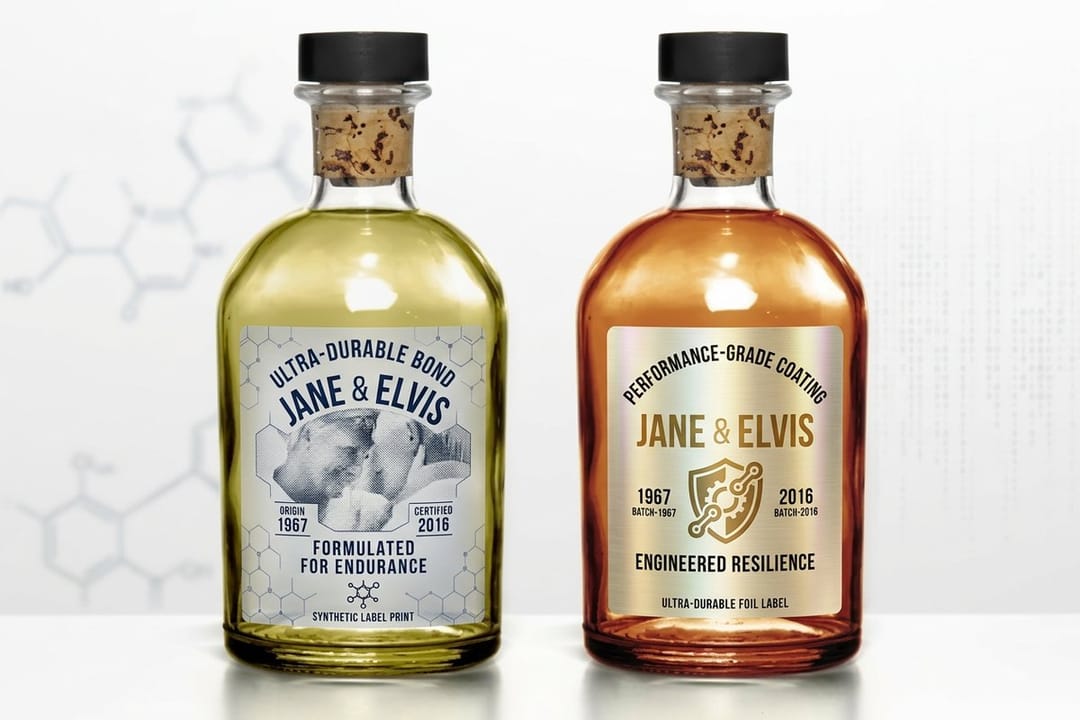
See Synthetic Labels in action
Watch the Synthetic Labels overview from 4OVER4.COM. A short walkthrough of options, premium stocks, live pricing and fast turnaround.
- From $25 per run, across 31 quantity tiers from 25 up to 25,000 labels, with the per-label price dropping as the run grows.
- 23 materials: white and clear vinyl (permanent or repositionable), clear and white cling, clear label permanent, fluorescent and pastel colors, solid colors, and brown kraft.
- 14 sizes, from a 2" x 3.5" default, plus a custom size made to order up to 7" x 6".
- Full color or black ink on the front, on uncoated, semi-gloss, or hi-gloss (Hi-Gloss UV) surfaces, with a free online proof before it runs.
- 3 business day standard turnaround, with 2-day, Next-Day and Same-Day rush, rated 4.4 out of 5 across 18 reviews.
Print a Label That Survives the Real World
A synthetic label is the one that does not quit. Where a paper label wrinkles, smears, or peels the moment it meets water, a synthetic label is built on plastic-based stock, vinyl, cling, or clear film, that shrugs off moisture, oils, and rough handling. Whether it is going on a bottle in an ice bucket, a jar in a fridge, or a drum in a warehouse, it stays stuck and stays readable. Synthetic labels start at $25, rated 4.4 out of 5 across 18 reviews.
These labels earn their keep. They print full color (4/0) or black only (1/0) on the front, in 14 sizes on any of 23 materials, and they cost about the same to run as a standard label while lasting far longer in the field. Want to see how synthetic labels sit next to the rest of the range? Browse every style on online labels, or stay here and build yours from the choices below.
The price rewards a bigger run. A batch starts at $25, and the per-label cost keeps sliding as the count climbs across 31 quantity tiers up to 25,000, so a full run for a product launch costs far less per label than a quick test batch. Comparing quotes elsewhere? 4OVER4's Price Match beats a real competitor price by an extra 10% - the 110% price-match guarantee, and larger runs unlock deeper bulk discounts.
What Are Synthetic Labels
Synthetic labels are pressure-sensitive labels printed on durable synthetic stock, vinyl, cling, or clear film, instead of paper, so they resist water, tearing, and handling. People reach for them when a paper label would fail: product labels on bottles and jars, outdoor and equipment tags, cold-storage and freezer packaging, warning labels, and no-label-look clear stickers. You pick full color or black on the front, choose the material, and the price updates live. If you want a paper label for dry indoor use, the Standard Labels cover that, and synthetic sits right beside it as the durable upgrade.
What Size Should a Synthetic Label Be
The right size comes down to the surface you are labeling. The default is a 2" x 3.5" label, the same footprint as a business card and an easy fit for bottles, jars, and cartons. From there the 14 preset sizes step up and down, including a 2" x 4", a square 2.75" x 2.75", and a 2.75" x 3.5", so most standard containers have a match. Need something exact? Set a custom size, made to order, up to 7" x 6", and the price follows the dimensions you enter. All 14 sizes and both ink options are grouped below exactly the way the live configurator presents them, so you know what you can change before you change it. For round shapes instead, the Standard Round Labels are another pick.
Here are a few easy ways to make a synthetic label pull its weight.
Match the material to the job
Durability starts with the stock. White vinyl in a permanent or repositionable adhesive is water- and tear-resistant for products that get handled and chilled. Clear label permanent and clear vinyl give you a no-label look on glass, while clear and white cling stick and re-stick on windows without adhesive. Fluorescent and pastel colors add punch without extra ink, and a hi-gloss (Hi-Gloss UV) surface makes a photo or logo snap. The default keeps it clean and cheap; the material menu is where a synthetic label really goes to work.
Design it without a designer
You do not need a design background to make a label look sharp. Start from a professionally built layout in our label design templates, then change the colors, copy, and logo in the online editor in minutes. Drop your brand on the front and you are print-ready fast.
Already have your artwork? Skip the editor and download a press-ready blank instead. Each blank synthetic label template is built at the real trim size with the bleed and safe margin already drawn in, so your design never crowds the cut. Grab the size that matches your order below, drop your art in, and upload.
Wally prints a label that laughs at water
Why a $25 run on durable vinyl beats a paper sticker that peels.
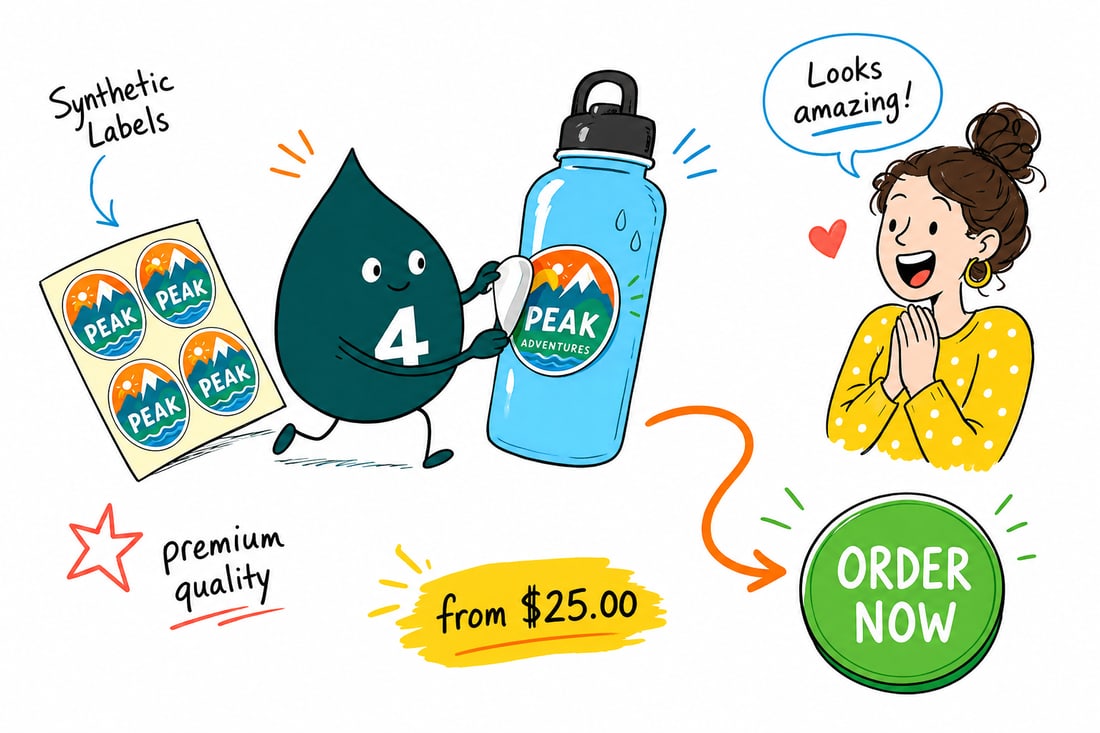
Synthetic labels start at $25 and print on 23 tough materials, vinyl, cling, and clear film that shrug off water, cold, and handling. Pick a size, choose full color or black, review a free online proof, and Wally runs them, with same-day rush when the clock is against you.
Press-Ready Blank Templates
How Much Do Synthetic Labels Cost
Synthetic labels start at $25, and the per-label price keeps dropping as the quantity climbs across 31 tiers from 25 up to 25,000, so a cheap synthetic label really comes down to how big a run you order. A premium material, a larger size, full-color ink, or a rush speed shift the total, and the live configurator shows every change before you commit. Want a side-by-side quote? 4OVER4's Price Match will beat a real competitor price by an extra 10% - the 110% price-match guarantee.
Which Material Should You Choose
This is where synthetic labels earn their name. The list runs 23 materials deep. For durability, reach for white vinyl in a permanent or repositionable adhesive, both water- and tear-resistant. Clear label permanent and clear vinyl repositionable give you a no-label look on glass and clear containers, while clear and white cling stick and re-stick without adhesive on windows and smooth surfaces. Want the label to pop? Fluorescent red, pink, orange, and yellow grab attention, pastels keep it soft, and solid orange, pink, yellow, and green stocks add color without ink. Brown kraft brings a natural, recycled look, and surfaces range from uncoated to semi-gloss and a hi-gloss (Hi-Gloss UV) finish that makes color snap.
How Do Synthetic Labels Compare
Synthetic labels are the durable pick when a label has to survive water, cold, or wear, but they are not your only move. If you are weighing a round shape, a roll format, or a paper label, it helps to see the trade-off in plain numbers. The chart below lines up synthetic labels against their closest siblings so you can compare the starting price on each before you choose.
How Fast Can You Get Synthetic Labels
Synthetic labels print on a 3 business day standard turnaround, and when a date sneaks up you can move that to 2-day, Next-Day, or even Same-Day production straight out of our NYC plant. Each step buys back time for a set amount on top of the base price, so you only pay for speed when you actually need it. Same-Day orders need to clear the daily cutoff to ship that afternoon, and 99.8% of 4OVER4 orders arrive on time, so the date you pick is the date you can plan around. When the clock is against you, the same-day printing option keeps you covered.
You are not printing blind, either. Choose a free online proof and you approve exactly what will run before it goes on press, which catches any file issue up front. Already have a print-ready file? Send it straight to production, or add a next-day hardcopy proof to check a physical sample first.
What Do People Use Synthetic Labels For
Because a synthetic label holds up where paper quits, it goes on the jobs that get wet, cold, or knocked around. Beverage and cosmetics brands wrap bottles and jars that live in fridges, showers, and ice buckets. Warehouses and manufacturers tag equipment, drums, and shelving that face dust and abrasion. Food producers label freezer and cold-storage packaging that would peel a paper sticker. Clear and cling versions turn into window signage and no-label-look product labels, and fluorescent stocks make warning and clearance labels impossible to miss. One durable material menu, a lot of jobs a paper label cannot take.
See the Rest of Our Labels
Synthetic labels are one stop in a much larger lineup, and you can scan the full print product range any time. If a round cut, a roll format, or a paper stock would serve you better, the rest of the family is one tap away. Each option shows its own starting price and links straight to its product page, so finding the right fit takes seconds.
Print Your Synthetic Labels Today
At 4OVER4.COM, quality comes first, and it's backed by a satisfaction guarantee and 25+ years of printing since 1999. Whatever size or material you pick, these synthetic labels are built to stay stuck and stay readable in conditions that ruin paper. Need them before a launch or a shipment? Our Same-Day production keeps you covered. Print your synthetic labels today.
Synthetic Stock Against Paper Stock
Both run on this product, which is why the material list reaches 23. A paper label costs less to run and takes ink beautifully, and on a carton, a box or dry indoor packaging it does the job for years. It gives up at the first splash, because water lifts the fibres and the ink goes with them. A synthetic stock is plastic based, vinyl, cling or clear film, so moisture sits on the surface instead of soaking in and the label keeps its shape through oils, cold and rough handling. That is the whole trade. A jar that lives in a fridge, a bottle in an ice bucket, a drum in a warehouse or a pack in a freezer all need the synthetic side of the list. A shelf carton in a dry stockroom does not. Either way it prints full color or black on the front, in the same 14 sizes, on the same 3 business day standard, from $25.
Synthetic Labels: Frequently Asked Questions
What makes a synthetic label different from a paper one?
A synthetic label is built on plastic-based stock such as vinyl, cling or clear film, so it shrugs off moisture, oils and rough handling where paper wrinkles, smears or peels. It costs about the same to run as a standard label and lasts far longer in the field. That is the trade for a bottle in an ice bucket, a jar in a fridge, or a drum in a warehouse.
Can I get a repositionable synthetic label?
Yes, white and clear vinyl are offered in permanent or repositionable adhesive, and clear and white cling hold without adhesive at all. Repositionable suits anything you may need to lift and realign, and cling is the option for glass.
Will white text print on a clear label?
White ink is an option in the configurator, and it is what lets type and logos read on clear film or a dark stock. Without it, anything set in white simply shows whatever sits behind the label. Set the option while you build the order so the file is prepared for it.
How many synthetic labels can I order?
Runs go from 25 to 25,000 across 31 quantity tiers, starting at $25. The per-label price drops as the run grows, so check the next tier before you settle on a number.
What sizes are available?
Fourteen sizes are offered, from a 2" x 3.5" default up to a custom size made to order as large as 7" x 6". Rounded corners are available, which helps on a label that gets handled often since a square corner lifts first.
How long does production take?
Standard turnaround is 3 business days, with 2-day, next-day and same-day rush. A free online proof is available before it runs, so you can confirm the layout on the size and material you picked.
What is a synthetic sticker?
The same thing as a synthetic label, named for how it is handed over rather than what it is made of. Both are pressure-sensitive graphics printed on plastic based stock, vinyl, cling or clear film, instead of paper. People tend to say sticker for a single piece and label for a run that goes onto product. What you order here is the same durable stock either way, in 14 sizes from a 2" x 3.5" default.
What are the four types of labeling?
In printing the split that matters is the material. Paper labels use a permanent adhesive and suit dry indoor packaging. Vinyl labels take permanent or repositionable adhesive and survive wet, cold and handled surfaces. Cling labels hold by static with no adhesive and strip off glass clean. Clear film gives the no-label look on glass and clear containers. All four sit inside the 23 materials on this product.
What are the different types of plastic labels?
White vinyl in a permanent or a repositionable adhesive is the durable workhorse, water and tear resistant. Clear vinyl and clear label permanent give the no-label look on glass and clear containers. Clear and white cling hold by static with no adhesive, so they stick and re-stick on windows and smooth surfaces. Fluorescent, pastel and solid color stocks add color without extra ink, and surfaces run from uncoated to semi-gloss and a Hi-Gloss UV finish.