
Referral Marketing Statistics That Prove ROI in 2026


Trust, conversion, retention, and cost-per-acquisition benchmarks, set against the order data behind 25 plus years of printing referral cards at 4OVER4.
Referral marketing is the highest-trust, lowest-cost growth channel most businesses ignore. 92 percent of consumers trust referrals from friends, referred leads convert 3 to 5 times better, and referral programs cut acquisition cost to a fraction of paid search. With 150,000 plus businesses printing with 4OVER4.COM, the data backs what marketers already feel: a card in someone's hand beats a link in their inbox.
Referral benchmarks
What referral rates and acquisition costs actually look like
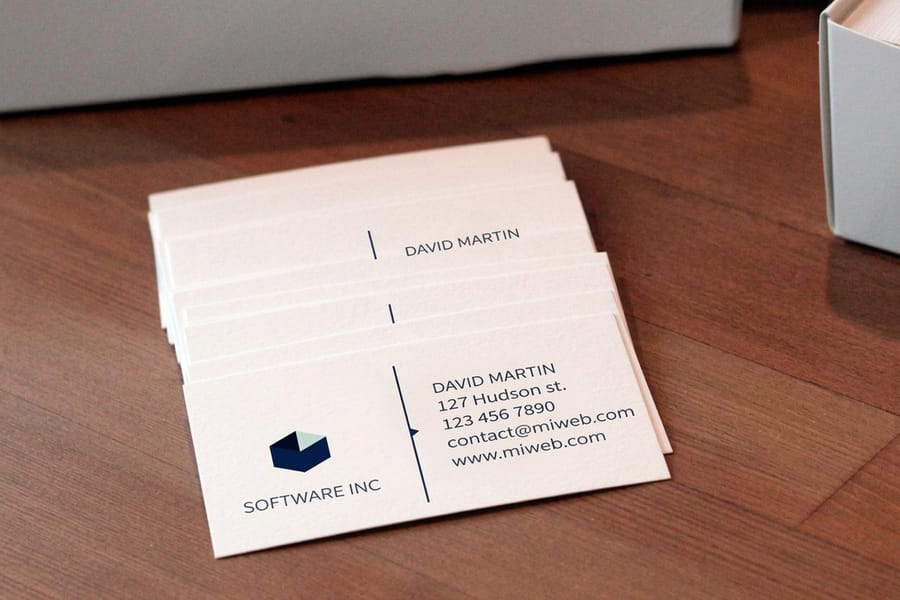
Referral marketing statistics reveal a clear picture. Word-of-mouth remains one of the most cost-effective ways to grow a business, and referred customers convert faster, spend more, and stick around longer than leads from almost any other channel. 4OVER4.COM has helped 150,000 plus businesses turn their print materials into referral engines, from custom referral cards to branded thank-you inserts. You can even Earn Coins through the 4OVER4.COM loyalty program as you build your referral toolkit.
Why it matters
Why these numbers matter for your business
Referral marketing statistics are not just interesting data points. They are a roadmap for where to put your marketing dollars. When you understand the customer referral rate across industries and the ROI referral programs deliver, you stop guessing and start investing with confidence.
The data here draws from industry research, marketing surveys, and real-world performance benchmarks. For a startup or an established brand, these referral program statistics help you benchmark your own efforts. For broader context, see our Small Business Marketing Statistics.
If you are looking at growth from multiple angles, our Small Business Growth Statistics roundup covers the full landscape of what is working right now.

By the numbers
Referral rate, retention lift, and cost per customer
Here are the headline figures marketers reach for first when they build a referral program, drawn from industry benchmarks and our own production data. Set them against 25 plus years of printing referral cards at 4OVER4.COM and the pattern is consistent: the pieces people can hold get acted on.
Trust and behavior
Why buyers trust a referral over any ad
Referral marketing statistics start with one number that has held steady for years. According to Nielsen, 92 percent of consumers trust referrals from people they know over any other form of advertising. That trust is the foundation of every referral program worth running.
Think about your own buying habits. When a friend recommends a restaurant, a product, or a service, you are far more likely to try it than if you saw a banner ad. That is not marketing theory, it is human behavior backed by data.
Referred customers also arrive with a different mindset. They have already heard a positive review, so they show up pre-sold. Your team spends less time convincing and more time closing, which is why referral marketing ROI consistently beats other channels.
We started including referral cards with every order, and within three months our repeat customer rate jumped noticeably. People actually hand them out.
Marcus T., small business owner
Conversion and quality
Referred leads convert and stay longer

Referred leads convert at rates 3 to 5 times higher than leads from other marketing channels, according to research published by the Wharton School of Business. That is not a marginal lift, it is a different league.
The customer referral rate also tracks with retention. Referred customers show a 37 percent higher retention rate than non-referred customers, per a study in the Journal of Marketing. They stay longer, buy more, and refer others themselves.
That creates a compounding effect. One happy customer refers two friends, those friends each refer two more, and your acquisition cost drops with every cycle. Businesses that struggle with growth often overlook this math, and our Small Business Failure Rate data shows customer acquisition cost is a top reason small businesses fail.
Program structure
How the best referral programs are built
Despite the clear benefits, only about 30 percent of companies run a formal referral program. That is a wide gap between what works and what businesses actually do, and the referral program statistics suggest most companies leave this revenue on the table.
Among companies that do run programs, the most common incentive structures include:
- Double-sided rewards where both the referrer and the new customer get something, the most effective structure of all
- Cash or credit rewards, direct discounts or account credits for successful referrals
- Tiered rewards that increase as referrers bring in more customers
- Physical referral cards, tangible branded cards customers hand to friends
- Points-based systems redeemable for products or services
Double-sided rewards consistently outperform one-sided incentives. When both parties benefit, the referrer feels less awkward about recommending your business. It shifts from doing you a favor to sharing a deal.
ROI by channel
Where referral ROI actually comes from

Referral marketing ROI depends on how you execute. Digital referral links are easy to track but easy to ignore. Email-based referrals perform well when the relationship is warm. Physical referral cards, the kind you hand to someone face to face, carry a weight that digital cannot match.
According to the Data and Marketing Association, direct mail earns a 4.4 percent response rate compared to email at 0.12 percent. When that piece is a referral card with a personal recommendation attached, the response climbs even higher.
Startups benefit most from referral-first strategies. Our Startup Statistics show early-stage companies with referral programs grow 86 percent faster in their first two years than those relying on paid acquisition alone.
I switched from digital-only referrals to handing out printed referral cards at events. My redemption rate tripled. People actually keep a nice card.
Diana L., event planner
The economics
Referral programs slash acquisition cost

Referral marketing cuts customer acquisition cost sharply. The average cost to acquire a customer through paid search runs 50 to 200 dollars or more depending on industry. Referral programs typically bring that down to 10 to 50 dollars per acquired customer.
That is not just a saving, it is a reallocation. Money you are not spending on ads can go toward product, customer experience, or better referral incentives. It becomes a virtuous cycle.
For small businesses on tight budgets, this math is everything. Our Small Business Marketing Budget data shows most small businesses spend between 7 and 12 percent of revenue on marketing, so shifting even a portion toward referrals improves returns fast.
Card effectiveness
Why a printed referral card outperforms a link

Referral card effectiveness is one of the most underrated metrics in marketing. A well-designed referral card does three things at once. It reminds the referrer to spread the word, it gives the prospect something tangible to hold, and it signals your brand professionalism.
Physical cards have staying power that digital messages lack. People keep cards on their desks, in their wallets, and on their refrigerators. Each time they see it, that is another brand impression at zero added cost.
The best referral cards pair a clear offer with a simple redemption method, a QR code or short link, and premium print quality. A flimsy card signals a flimsy business. A thick, well-finished card says this company is worth your time.
By industry
Referral benchmarks across key industries
Referral performance varies by industry. Here is what the data shows for customer referral rates across key sectors:
- Financial services, referral programs generate up to 25 percent of new business
- Real estate, agents report that 40 to 60 percent of clients come from referrals
- Health and wellness, referral rates of 20 to 30 percent are common for gyms and clinics
- E-commerce, referred customers carry 16 percent higher lifetime value on average
- Professional services, accounting, legal, and consulting firms see more than half of new clients from referrals
These numbers make one thing clear. Whatever your industry, referral marketing is not optional, it is a primary growth channel.
The psychology
The psychology behind referral success
Referral marketing works because it taps into social proof and reciprocity, two of the strongest drivers in human decision-making. When someone you trust vouches for a product, your brain shortcuts the evaluation and goes straight to yes.
Robert Cialdini research on influence identifies reciprocity as a core motivator. When you give someone a referral card with a genuine benefit attached, they feel compelled to use it, not because of the discount alone, but because a friend took the time to share it.
This is why referral card effectiveness depends so heavily on design and quality. The card itself is part of the message. A premium card from a trusted friend carries more weight than a forwarded email link.
Make it easy to redeem
Bridge the card and the click
The strongest referral programs pair a physical hand-off with a one-tap redemption, so the recipient gets the trust of a card they can hold and the convenience of a link that makes acting on it effortless.
Proof, not promises
Referral cards by the numbers at 4OVER4
Here are the figures from our side of the press, the volume, delivery, and quality signals that round out the picture for marketers planning referral campaigns in 2026 and beyond. A 99.8 percent on-time delivery rate keeps your program on schedule, and a 4.8 out of 5 rating across 10,000 plus reviews shows the print quality holds up card after card.
Stock, finishing and price
What a referral card costs to print at 100
For businesses ready to act on these numbers, here is current pricing for Business Cards, which double as referral cards, alongside the full specifications so you can match the right stock and finish to your program.
Wally turns referral data into printed results
Statistics are step one. The card in someone's hand is step two.
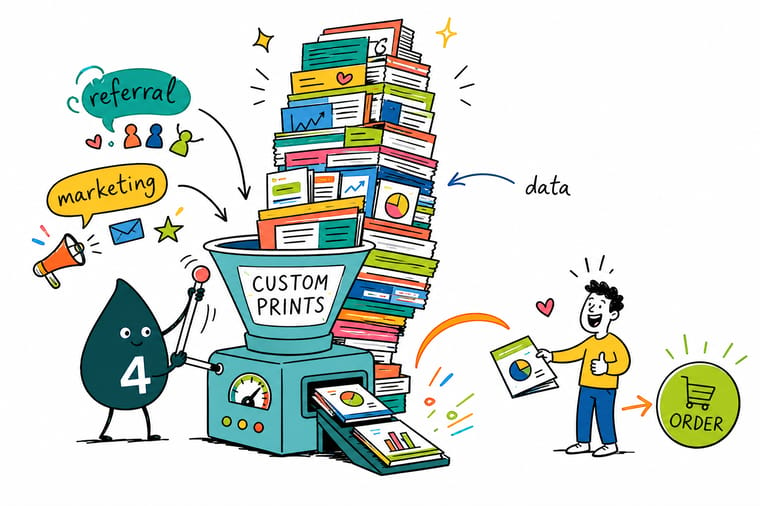
A referral card survives in a wallet where a shared link does not survive an inbox. Wally's rule is simple. Give both sides a reward, print the card heavy on stock that signals quality, and add a QR code so redeeming takes one tap. Standard Business Cards double as referral cards at 100 for $17.57, printed in 3 business days.
Order referral cards →Side by side
How referral marketing stacks up against other channels
Referral marketing statistics become most useful when you compare them against other acquisition channels. Referral programs do not just compete with paid channels, they outperform them on cost, retention, and lifetime value. For more on how small businesses allocate their spend, visit our Small Business Statistics hub.
| Channel | Trust | Conversion or response | Cost per acquisition | Retention |
|---|---|---|---|---|
| Word-of-mouth referral | Highest, 92 percent trust friends | 3 to 5x higher conversion | 10 to 50 dollars | 37 percent higher |
| Paid search | Lower, paid placement | Baseline conversion | 50 to 200 dollars plus | Baseline |
| Email marketing | Low, easy to ignore | 0.12 percent response | Very low per send | Lower |
| Direct mail referral card | High, tangible and kept | 4.4 percent response | Moderate per piece | Strong |
The takeaway from every comparison is simple. Referral marketing costs less, converts better, and produces customers who stay longer. That is not one advantage, that is three.
Myths vs facts
What marketers get wrong about running a referral program
A few myths keep marketers from running a referral program that would pay off. The pairs below set each common assumption against what the referral marketing statistics actually show, so you can plan on evidence rather than habit.
Referral marketing just happens on its own.
Only about 30 percent of companies run a formal program. Structured programs with clear incentives consistently outperform passive word-of-mouth.
A digital referral link works as well as a printed card.
Direct mail earns a 4.4 percent response rate versus email at 0.12 percent. A physical card someone can hold carries trust a link cannot match.
Referral rewards are too expensive to be worth it.
Referral programs cut cost per acquisition to roughly 10 to 50 dollars versus 50 to 200 dollars or more for paid search, so the reward pays for itself.
Only one side of a referral needs a reward.
Double-sided rewards, where both the referrer and the new customer benefit, consistently outperform one-sided incentives.
Print it
The products marketers turn into referral cards
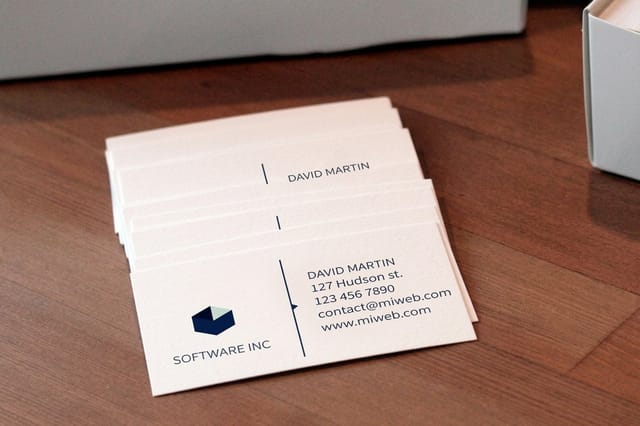
Standard Business Cards start at 100 for $17.57 and print in 3 business days. Standard Rack Cards run 50 for $42.84 when the offer needs more room. These are the pieces that carry a referral once the program is live.



What our print data reveals
What 4OVER4 order data says about referral cards
Referral marketing statistics from third-party sources are valuable, but 4OVER4.COM own data, drawn from 150,000 plus businesses ordering print, adds another layer. We have printed 10 billion plus cards over 25 plus years, and that volume shows how businesses actually use print for referrals.
Referral card orders have grown steadily year over year, and businesses that order them tend to reorder at high rates. That aligns with the broader statistics showing companies with active programs see compounding returns.
The most popular referral card specs among our customers lean toward thicker stocks and premium finishes. Businesses choosing higher-quality materials report better referral card effectiveness, because the tactile experience matters when you ask someone to trust a recommendation.
Our data also shows businesses ordering referral cards alongside standard business cards are more likely to be repeat customers, which supports the ROI data. Companies that invest in referral infrastructure grow faster and stay with their print partner longer.
The quality of 4OVER4.COM cards made our referral program feel like a premium brand experience. Redemption rates were the best we have seen in three years.
Verified customer, E-commerce Manager
Why marketers trust us
The press behind the cards these programs hand out
Every benchmark on this page sits on a long record of getting cards printed right. A 4.8 out of 5 average across 10,000 plus reviews, 150,000 plus businesses served, and referral and business cards printed since 1999 are the trust signals behind the numbers, so you can launch a program knowing the cards will land sharp and on time.
From data to print
Turning referral data into printed results
4OVER4.COM does not just report referral marketing statistics, we help you act on them. With 1,000 plus products and 60 plus paper types, you can create referral cards that match your brand personality and quality standards.
Every referral card printed at 4OVER4.COM comes with a 99.8 percent on-time delivery guarantee. When you run a time-sensitive referral campaign, that reliability matters. Your cards arrive when you need them, not after the window closes.
We also support businesses committed to sustainable practices. Our Green Printing options let you create referral materials on eco-friendly stocks without sacrificing print quality.
With 10,000 plus reviews and a 4.8 out of 5 star rating, 4OVER4.COM is the print partner 150,000 plus businesses trust for their marketing materials, from a first batch of referral cards to a national program.
How we built this
The research behind these referral benchmarks
The referral marketing statistics on this page come from published academic research, industry reports from organizations like Nielsen and the Data and Marketing Association, and 4OVER4.COM own internal print order data spanning 25 plus years of operation.
We cross-referenced multiple sources for each data point and prioritized peer-reviewed studies and large-sample surveys. Internal 4OVER4.COM data reflects aggregate trends from 150,000 plus business customers. All figures are presented as reported by their original sources.

Get Started
Print 100 referral cards for $17.57 in 3 business days
Design a referral card, add a double-sided reward and a QR code, and we will print it sharp on premium stock and ship it on time.
Legal Disclaimer
Gold Standard guarantees apply to all standard orders placed through 4over4.com. Price match requires verifiable proof of a competitor's published price for an equivalent product with matching specifications and turnaround time. Satisfaction guarantee covers manufacturing defects and print quality issues. Contact support with order number and documentation. On-time delivery rate based on tracked orders 1999 to 2026. Individual results may vary based on shipping carrier performance.
Explore more
Referral programs, small business benchmarks, and card printing
 Statistics Small Business Statistics The full landscape of what is working for small businesses now.
  Statistics Small Business Marketing Where referral marketing fits in the bigger marketing picture.
  Statistics Small Business Growth Growth benchmarks across channels and company stages.
  Statistics Startup Statistics How referral-first startups grow 86 percent faster early on.
  Statistics Small Business Failure Rate Why acquisition cost sinks so many small businesses.
  Statistics Marketing Budget Benchmarks How much small businesses spend, and where to shift it.
  Product Business Cards Turn a business card into a referral card that gets kept.
  Benefit Earn Coins Bank rewards as you build your referral toolkit.
  Benefit Green Printing Print referral materials on eco-friendly stocks. FAQs Printing FAQs Answers on stock, sizes, proofs, and turnaround.
 Questions and answers
Common questions about referral marketing data
Referral rates, ROI, printed cards, program structure, and timing, answered.
What is a good customer referral rate?
A strong customer referral rate varies by industry, but most successful programs see 2 to 5 percent of customers actively referring others. In professional services like accounting and consulting, referral rates can reach 50 percent or higher. The key is making it easy and rewarding for customers to share your business.
How does referral marketing ROI compare to paid advertising?
Referral marketing ROI consistently beats paid advertising. Acquisition costs through referral programs run about 10 to 50 dollars, while paid search can cost 50 to 200 dollars or more per customer. Referred customers also show a 37 percent higher retention rate, so lifetime value is stronger too.
Do printed referral cards still work in a digital world?
Yes. Referral card effectiveness stays strong because physical cards have staying power. Direct mail response rates hit 4.4 percent versus email at 0.12 percent, according to the Data and Marketing Association. A referral card with a QR code bridges physical and digital, giving recipients a tangible reminder to act.
What percentage of businesses have a formal referral program?
Only about 30 percent of companies run a formal referral program. That means most businesses miss one of the highest-ROI channels available. Even a basic program with printed referral cards and a simple incentive puts you ahead of most competitors.
What makes a referral program successful?
The most effective programs use double-sided rewards where both the referrer and the new customer benefit. Clear incentives, easy redemption, and referral materials printed on heavy stock all help. Programs that combine digital tracking with physical touchpoints like branded cards generate the best results.
How quickly can a referral program impact growth?
Most businesses see measurable results within 60 to 90 days of launch. Startups with active referral strategies grow 86 percent faster in their first two years. The compounding nature of referrals means results accelerate as referred customers begin referring others. Visit our Help Center if you need guidance on printing referral materials for your launch.
