
Co-Marketing Ideas That Split the Cost and Double the Audience


Marcus is our print marketing voice, built from the knowledge of our production team, with over 20 years in printing.
Co-marketing makes sense when you and a partner sell to the same customer at different moments, and it pays for itself fastest on a printed piece both sides distribute. One postcard, two logos, half the cost each, and a separate code per partner so you can tell afterwards which list actually produced the orders.
Partnership models at a glance
| Model | What is shared | Who owns the product | Typical cost split | Piece that carries it |
|---|---|---|---|---|
| Co-marketing | Audience, cost, one campaign | Each keeps its own product | Usually 50/50 on print and postage | Joint postcard, counter flyer |
| Co-branding | A product both marks appear on | One shared SKU | Negotiated per unit, with royalties | Packaging, labels, hang tags |
| Sponsorship | Visibility at an event or property | The sponsor buys placement | One side pays, the other hosts | Banners, table throws, signage |
| Referral or affiliate | Customers, one direction at a time | Each side sells its own | Commission per closed sale | Referral cards, coded stickers |
| Bundle or joint offer | One price covering two products | Both, fulfilled separately | By the value each side contributes | Brochure, insert, voucher card |
Most local partnerships start in the first row and stay there, which is the right call. You can order a joint postcard run straight from the configurator once both sides have signed one proof.
What co-marketing is, and what it actually buys you
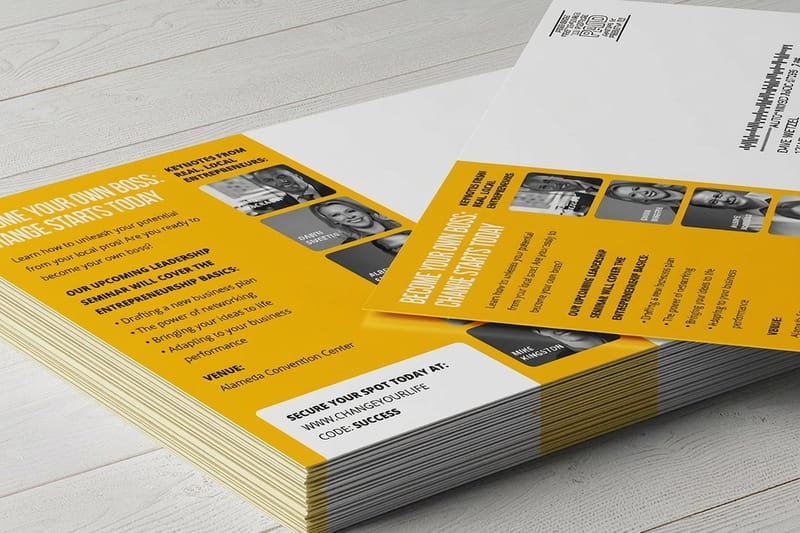
Co-marketing is two businesses running one campaign together, splitting the cost and reaching both audiences, with each brand keeping its own product. A gym and a juice bar mail one postcard carrying both logos, each pays half the print and the postage, and each lands in front of a list it could not otherwise rent.
The money argument is simple. One direct mail postcard run starts at $89.68, and a partner who covers half turns that into $44.84 for roughly twice the households. The better argument is trust. A recommendation carried by a business your customer already pays gets read in a way a cold ad never does.
The cost is control. You now share a calendar, an approval loop, and a reputation. If your partner ships late, takes three days to answer an email, or runs a sloppy counter, your logo is standing next to that. Vet the operation, not the logo.
Where partners beat paid reach for a local business
Paid social rents attention for as long as the card is charged. A partner gives you placement inside a routine: a flyer in the bag at checkout, a coupon stapled to a receipt, a sticker on a coffee cup lid. That placement keeps working after the campaign budget stops, because the physical piece stays in a customer bag or on a fridge.
It also reaches people who are already spending money nearby. A list of 800 active customers from a shop two doors down is worth more than 8,000 impressions bought at a radius, and it costs the price of a shared print run.
What you are actually trading
Name the asset each side brings, in writing, before anything gets designed. Usually it is one of four things: a customer list, a physical counter or window, foot traffic at an event, or an audience on a channel one of you owns. Two businesses bringing the same asset produce a campaign that goes nowhere.
Uneven trades are fine as long as they are named. If your partner has 4,000 subscribers and you have 600, pay a larger share of the print. That conversation is cheap at the start and toxic three weeks in.
Co-marketing vs co-branding, and where the line sits
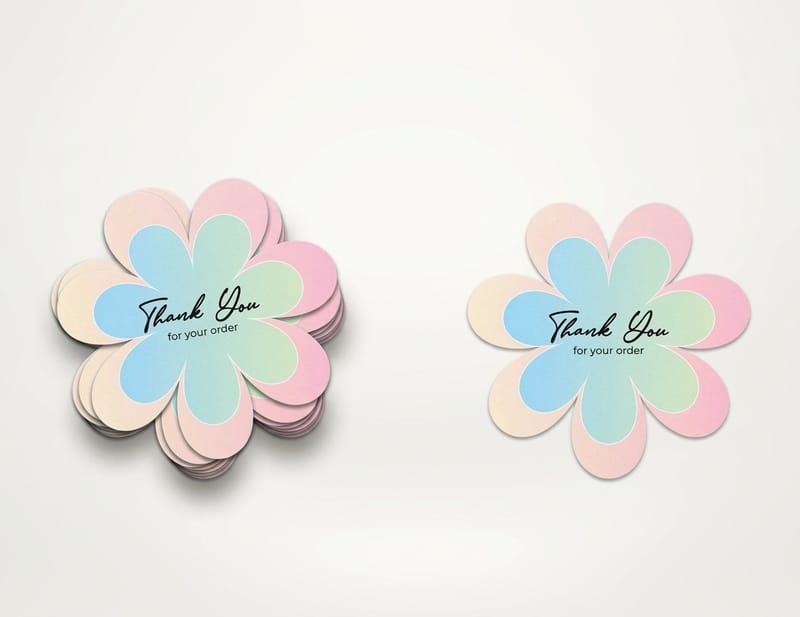
Co-marketing shares the promotion. Co-branding shares the product. If both logos sit on an ad, a postcard or an event banner, that is co-marketing. If both logos sit on the thing the customer takes home and uses, you have made a co-branded product, and the paperwork changes.
Co-branding needs a trademark license, agreed quality standards, and a plan for what happens to unsold stock when the deal ends. Co-marketing usually needs an email agreeing dates, spend and artwork approval. That is why most partnerships should start as co-marketing and only graduate if the first campaign works.
The graduation point is repeat demand. Run the joint offer twice, and if customers ask for the combination by name, a co-branded product is worth the legal time. Our roundup of co-branding examples that worked shows what that step looks like when it lands.
The piece that quietly crosses the line
A die-cut sticker with both marks on it, applied to a partner product, is co-branding in everything but the contract. Stickers start at $93.37 and are the cheapest way to end up in a trademark conversation you did not plan for, so agree the artwork use in the same email as the dates.
Keep one rule and most of the risk disappears: neither logo gets modified, recoloured or squeezed. Both sides supply a vector file and a clear-space rule, and whoever builds the artwork sticks to both.
Finding a partner who is worth the paperwork
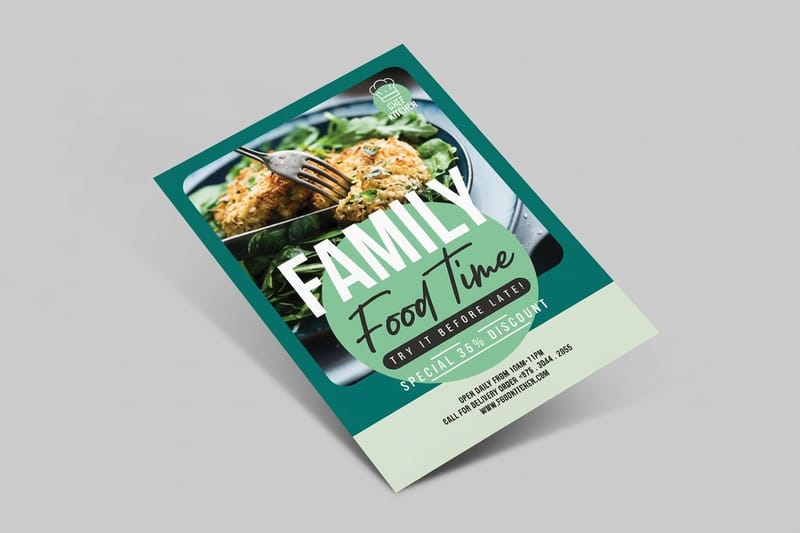
Start with the same customer, a different purchase. A wedding photographer and a florist share a buyer with a fixed budget and a fixed date. A gym and a physiotherapist share a person and a season. If your customer could reasonably buy from both inside the same month, the partnership has a reason to exist.
Then check the size gap. A partner with ten times your list will not put real effort behind a joint offer, and a partner with a tenth of it cannot carry half the cost. Somewhere inside a three times spread, both sides still care.
Look at how they operate before you look at their brand. Order something from them. Watch how fast they reply, whether the packaging is intact, whether the person at the counter knows what is on. Those are the things your customer will judge you by once your logo is on their flyer.
Three questions to settle before anything is designed
Who owns the leads? Shared or split, decided up front. The common answer is that each side keeps the customers it brought and both get the redemption data, which is enough to judge the campaign without a data-sharing argument.
Who approves artwork? One named person per side, with a deadline. Committee approval turns a two-week build into six.
What happens if it works? Agree now whether a second run is automatic and who pays for it. Momentum dies in the fortnight spent renegotiating.
The partners local businesses overlook
Suppliers, landlords and neighboring trades are easier partners than direct-industry names, and they rarely get asked. A coffee roaster and the cafe that pours it, a dentist and the orthodontist upstairs, a print buyer and the agency that designs for them. Shared address, shared footfall, no competitive tension.
Non-profits are the other overlooked group. A joint campaign that funds something local gives both brands a reason to be in the paper, and a reason for staff to talk about it. Our notes on print that powers nonprofit campaigns cover the formats that carry that story.
Planning a joint campaign so nobody stalls
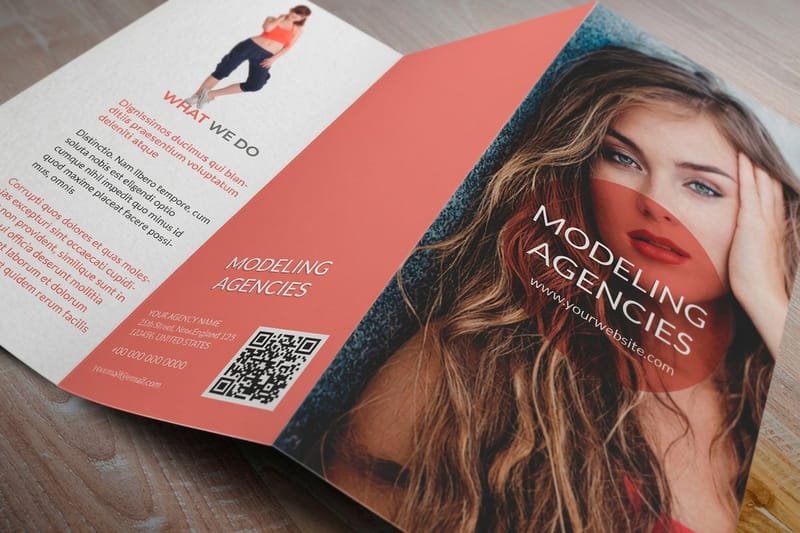
One owner, one calendar, one artwork file. Co-marketing fails at the handover, not at the idea, so pick a lead before you pick a headline. The lead books the print, holds the proof, and chases both approvals.
A workable six-week shape: week one agree offer, split and dates in an email both sides answer; week two build one artwork file with both logos; week three proof and print; week four mail the joint postcard and stock both counters with business flyers; weeks five and six run the offer and count redemptions. Print takes days, not weeks, so the schedule is set by approvals.
Build one offer, not two. Two offers on one piece reads as an advert and gets discarded. One offer that requires both businesses, such as a discount that only unlocks with the other partner receipt, is what makes people cross the street.
Who pays for what
Split print by quantity used, not by logo size. If you take 2,500 flyers and your partner takes 500, pay in that ratio. Postage belongs to whoever mails, design belongs to whoever has the designer, and the side that supplies less cash usually supplies the venue or the list.
Put the numbers in the same email as the dates. A flyer run at $57.11 or a brochure run at $57.11 is small enough that people skip the paperwork, and small unclear amounts cause the same resentment as large ones.
Artwork rules to agree first
Decide the lock-up before the layout. Which logo leads, how much clear space each gets, which brand palette dominates the piece, and whose typeface carries the headline. Write it in one line and both designers can work from it.
Both sides sign one proof. Set the artwork with 0.125 inch bleed on every side, keep type inside the safety margin, and supply CMYK at 300 DPI. If you are starting from scratch, pull an exact-size layout from the blank template library so both logos land inside the trim.
Co-branded print that carries a partnership
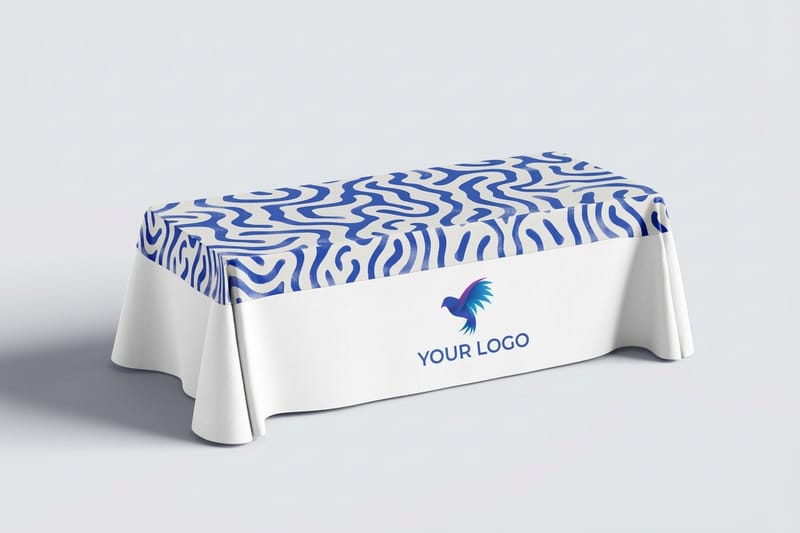
Print is where co-marketing gets cheap, because the second logo costs nothing to add and the run cost splits cleanly. Digital placements are priced per impression, so a partner halves nothing. A print run is a fixed cost two businesses can genuinely share.
Pick pieces by the moment they have to survive. A mailed piece needs to work face down on a hall floor. A counter piece needs to be readable while somebody pays. An event piece has to be legible from across an aisle. The formats below map to those three moments.
For a joint stand, a printed table throw at $225.00 and a retractable banner stand at $139 give each partner its own vertical and one shared surface, which reads as a partnership rather than two businesses sharing a table by accident.
The five formats that do the work
Direct mail postcards from $89.68. One drop, both lists, no envelope to open. Put the joint offer and the deadline on the address side so it is readable without turning the card.
Business flyers from $57.11. The bag stuffer and counter piece. Each partner takes the quantity it can actually hand out, and pays for that share.
Standard brochures from $57.11. For an offer that needs explaining, such as a bundled service where both sides deliver a part.
Die-cut stickers from $93.37. Cups, boxes, laptops. The cheapest piece that travels beyond the two customer lists.
Table throws and banner stands from $225.00 and $139. Reusable across every joint event, which is what makes them worth the higher first cost.
Where the printed piece beats the shared post
A shared social post reaches whichever slice of two audiences the platform decides to serve that day. A mailed postcard reaches every household on both lists, once, at a price you knew before you committed. That certainty is the reason joint campaigns still run on paper.
The trade-off is speed. You cannot edit a printed offer after it ships, so the deadline, the terms and both phone numbers get checked twice by both sides before the proof is signed. Our steps for sending direct mail postcards walk through the list side of that.
Measuring a campaign two brands share
Give each partner its own code. Same offer, same artwork, one character different on the promo code or the QR destination, so redemption tells you which list produced the customer. Without that, the campaign ends in two different stories about who did the work.
Count redemptions, not impressions. A joint campaign has three numbers worth reporting: pieces distributed by each side, offers redeemed by each side, and the average value of those orders. Anything else is decoration in a partnership review.
Agree the measure of success before launch, and make it a number one side can check. Fifty redeemed offers is a fact. Increased brand awareness is an argument. Set the threshold that means run it again, and set it while everyone is still enthusiastic.
What to do with the result
If both sides hit the threshold, reprint the same artwork with new dates. The design cost is already paid, and a second run at the same quantity is the cheapest campaign either business will run that quarter.
If one side carried the volume, fix the split rather than the partner. Usually the weaker side had fewer pieces in hand or nobody at the counter mentioning the offer, and both are fixable before you conclude co-marketing does not work for you.
What a joint campaign costs to print
A joint postcard on 14pt gloss cover starts at $89.68 for 500 cards, and 5,000 cost $241.51, so each partner pays about $121 for its half of a run that size. Size is the other lever: a 4 by 6 card suits a single joint offer, while a 6 by 9 or 6 by 11 gives two logos and two offers room to breathe. Halve any figure below and you have each partner share, which is usually the fastest way to end a debate about whether the campaign is worth doing.
Quantity and price
Direct mail postcard pricing and specs
Live configurator numbers, where a larger shared run pulls the per unit cost down for both sides.
| Quantity | Price Per Unit | Total |
|---|---|---|
| 500 | 17.9¢ | $89.68 |
| 1,000 | 17.1¢ | $170.53 |
| 2,000 | 9.35¢ | $186.95 |
| 3,000 | 6.84¢ | $205.13 |
| 4,000 | 5.58¢ | $223.31 |
| 5,000 | 4.83¢ | $241.51 |

You can also earn coins on every order and redeem them against future printing, which is worth agreeing up front since only one account books the shared run. For the wider picture on formats and budgets, our business marketing supplies guide covers what each piece is for.
Stock, size and how a shared run changes them
A shared run usually means a larger quantity than either side would order alone, and quantity is the lever that moves unit cost most. It also means the piece has to work in two contexts, so size and stock get decided by the harder one. A flyer that sits in a bag can be 100lb gloss text; a flyer that lives on a counter in a wet cafe wants cover stock.
Print it
Business flyers, ready for both counters
Preset sizes on premium stock, split between two partners by the quantity each one hands out.
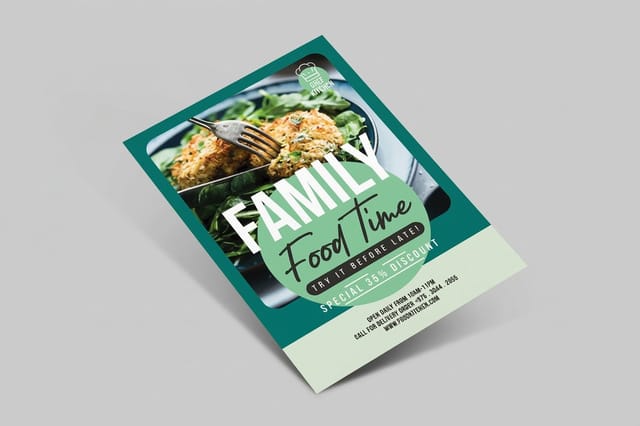
Finish decides how the piece reads in the hand. Gloss lifts photography and shrugs off a damp counter, matte reads calmer and takes pen for a staff note, and uncoated stays writable if you want a member of staff to add a name or a date. For a joint mailer, check both logos against the same coating on a printed proof, because a metallic or dark brand color can look very different under gloss than it did on screen. If one partner brand is built on a specific spot color, read our notes on color pairings that work in print before the layout is locked.
Co-marketing by industry
The pairing that works depends on how your customer moves through a week, so here is the shape it usually takes by business type.
- Restaurants and cafes. Partner with the roaster, the brewery or the gym next door. Stickers on cups and a joint postcard to both lists reach people who are already spending within a few streets.
- Gyms and studios. Physiotherapists, juice bars and sportswear shops share your member without competing for the same spend. A counter flyer and a shared January offer is the standard play.
- Wedding and event vendors. Photographers, florists, venues and caterers share one buyer with one date. A brochure covering the bundle sells better than four separate cards in a folder.
- Health and dental practices. Neighboring practices refer in both directions all year. A coded referral card makes the exchange countable instead of anecdotal.
- Trade and home services. Roofers, electricians and landscapers work the same houses in sequence. A joint mailer to one postcode beats each side mailing it separately at full cost.
Blanks with room for two logos
If neither partner has a designer on hand, start from a template. The postcard blanks come at the exact finished size, from 4 by 6 up to 6 by 11 inches, with the 0.125 inch bleed and the safety margin drawn in, so both logos land inside the cut line and the trim never eats a mark. Pull a print-ready blank from the blank template library with bleed and trim already marked, or start from a design template and drop both brands into it.
Start fast
Blanks with room for two logos
Postcard design templates and exact size blanks so a two-logo layout lands inside the cut line.


Wally splits the run, not the message
One artwork, two logos, two codes
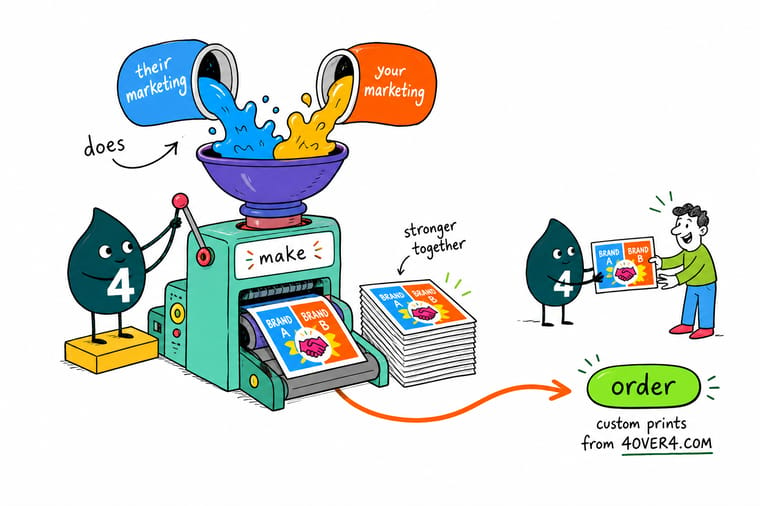
Agree the offer, the dates and the cost split in one email, then build a single artwork file with both logos locked as one unit. Set 0.125 inch bleed, keep both marks clear of the safety margin, and give each partner its own promo code so redemption tells you which list delivered. 4OVER4.COM prints the shared run and proofs it before it ships.
Order a joint postcard run →What to remember about co-marketing
Design rules for a two-logo piece
- Lead with the offer, not the logos. The reader decides in about a second. The joint offer and the deadline go at the top, and both marks sit together underneath where they confirm the sender.
- Lock the two logos as one unit. Agree the pairing, the order and the clear space once, then reuse that lock-up on every piece so the partnership looks deliberate across mail, counter and event.
- One call to action, one destination. Two phone numbers and two websites on one piece splits the response. Pick a single route, then track the two sides with separate codes behind it.
- Keep type out of the fold and the trim. Set 0.125 inch bleed and keep both logos clear of the safety margin, because a trimmed logo is the fastest way to end a partnership over print.
- Print the terms in a readable size. Expiry date, what the offer includes, and which locations honor it. Vague terms produce arguments at two counters instead of one.
Explore more
More ways to print and promote
Table throws run 1 for $225.00 and retractable banner stands print in 3 business days.
Product Direct Mail Postcards One drop that reaches both partner lists. Product Business Flyers The counter piece each partner hands out. Product Die-Cut Stickers Cups, boxes and laptops carrying both marks. Product Table Throws One shared surface for a joint event stand. 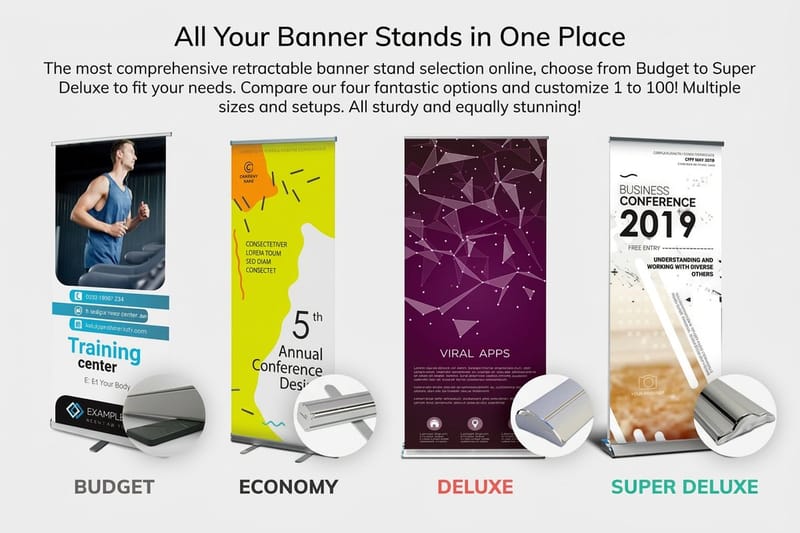 Product Retractable Banner Stands A vertical each, reusable at every event. Article 7 Co-Branding Examples That Worked What partnerships look like once they graduate.
 Ready to print the joint campaign?
Agree the offer, build one artwork file with both logos, and 4OVER4.COM prints the shared run on premium stock as fast as your dates need.
Common questions about co-marketing
What is the difference between co-marketing and co-branding?
Co-marketing is two businesses promoting together while each keeps its own product, so both logos appear on the campaign but not on the goods. Co-branding puts both marks on the product itself, which creates a shared SKU and needs a trademark license, agreed quality standards and a plan for unsold stock. Co-marketing usually runs on an email agreeing dates, spend and artwork approval. That is why most partnerships should start as co-marketing, run the joint offer twice, and only take on the legal work of co-branding once customers ask for the combination by name.
How do you split the cost of a co-marketing campaign?
Split print by the quantity each side actually uses rather than by logo size. If you take 2,500 flyers and your partner takes 500, pay in that ratio. Postage belongs to whoever mails the drop, design belongs to whoever has the designer, and a partner who brings a much larger list or the venue can reasonably contribute less cash. Put the figures in the same email as the dates. A business flyer run at 4OVER4.COM starts at $57.11 and postcards at $89.68, which is small enough that people skip the paperwork, and small unclear amounts cause the same resentment as large ones.
What should go on a co-branded postcard?
The joint offer and the deadline at the top, both logos together underneath as one locked-up unit, and one call to action rather than two. Two phone numbers and two websites split the response and make the result impossible to read. Put the offer and the expiry on the address side so a mailed card is readable without being turned over, keep the terms in a size someone can actually read, and set 0.125 inch bleed with both logos clear of the safety margin. Agree which brand palette dominates before the layout starts, because that argument at proof stage costs days.
How does a small local business find a co-marketing partner?
Look for the same customer making a different purchase, then check the size gap. Somewhere inside a three times spread on list size, both sides still put effort in. Suppliers, landlords and neighboring trades are the easiest partners and the ones nobody asks: the roaster and the cafe, the dentist and the orthodontist upstairs, the roofer and the electrician working the same street. A shared drop can be as simple as Electrician Flyers that carry the roofer's offer on the back. Before you approach anyone, buy from them. How fast they reply and how the counter handles a customer is what your own customers will judge you by once your logo is on their flyer.
How do you measure a campaign when two brands share the leads?
Give each partner its own code. Same offer, same artwork, one character different on the promo code or the QR destination, so a redemption tells you which list produced the customer. Report three numbers: pieces distributed by each side, offers redeemed by each side, and the average order value behind those redemptions. Agree the threshold that means run it again before launch, while both sides are still enthusiastic, and make it a number either partner can check. If one side carried the volume, fix the split or the counter script rather than writing off the partner.
