
Farm Printing Essentials from Invitations to Grain Tickets


Farm print divides into pieces people keep and pieces people write on, and the two need opposite stocks. Invitations for a barn wedding or a harvest supper want a heavy coated or matte cover; grain tickets, scale slips and gate tickets want uncoated stock, big write-on boxes, and a sequential serial printed on both halves of the perforation.
Farm print at a glance
| Piece | Typical size | Stock | What it carries | At 4OVER4.COM |
|---|---|---|---|---|
| Barn wedding invitation | 5 x 7 in, A7 envelope | Heavy uncoated or matte cover | Date, directions, parking, RSVP cutoff | Flat Wedding Invitations, $19.77 |
| Harvest or anniversary supper | 4.25 x 5.5 in, A2 envelope | Matte cover | One date, one address, one phone number | Anniversary Invitations, $19.77 |
| Farm birthday or open day | 4 x 6 in | Gloss or matte cover | Time window, age range, weather plan | Birthday Invitations, $19.77 |
| Grain or scale ticket | 4.25 x 7 in or 5.5 x 8.5 in | Uncoated text, 70lb or 80lb | Serial, date, hauler, gross, tare, net, moisture | Order through Event Tickets Printing |
| Gate or agritourism ticket | 2 x 5.5 in with a perforated stub | Cover stock, uncoated face | Serial on both halves, price, date | Order through Event Tickets Printing |
Sizes are the defaults worth starting from, not limits. The one row that is not negotiable is the stock column: coated for the keepsake pile, uncoated for anything a pen has to cross. You can order flat invitations in any of these sizes straight from the configurator.
The two piles of print on a working farm
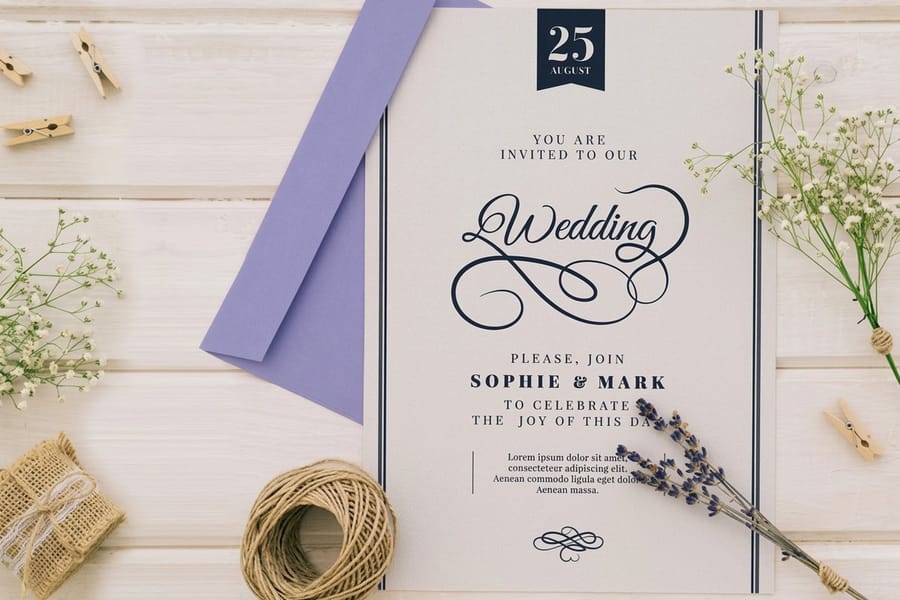
Sort every printed thing on a farm into two piles and the specification writes itself. The first pile is print people keep: the invitation to the barn wedding, the card for the fiftieth anniversary supper, the flyer for the open day. The second pile is print people write on and then hand to somebody else: scale tickets, load slips, gate tickets, delivery notes. The first pile is judged on how it looks in a hand. The second is judged on whether a wet ballpoint leaves a legible mark at seven in the morning.
That split decides the stock before anything else. Coated gloss and satin stocks are sealed on the surface, which is exactly why photographs look sharp on them and exactly why a pen skates across and smears. Uncoated stock has an open fibre surface that takes ballpoint, pencil and rubber stamp ink. Get this one choice backwards and the job is scrap on day one, no matter how good the artwork was.
Most farms order the keepsake pile once or twice a year and the write-on pile every season, so it pays to treat them as separate jobs with separate specs. Browse the invitation printing range for the first pile and event ticket printing for anything that needs a serial number and a tear-off stub.
The elevator does not care what our tickets look like. It cares that the number on the stub in my hand matches the number on the copy in the truck.
A grain hauler, describing the whole brief
What the write-on pile actually needs
Uncoated stock, generous line spacing, and boxes big enough for a gloved hand. Weight fields want at least a quarter inch of clear height, because numbers get written fast and large. Print the field labels in a second colour or a lighter grey so the handwriting reads as the primary layer rather than competing with the form.
Keep the layout the same year to year. The person filling it in is not reading the form, they are reaching for the box where the moisture number goes. Move that box and you generate errors for a month. Our guide to two colour and spot ink printing covers the cheapest way to get that second colour without paying for full process work.
What the keepsake pile actually needs
Weight in the hand and enough contrast to read in a barn. Farm venues run on string lights and warm bulbs, which flatten pale ink and low contrast type into nothing. Dark ink on a light stock survives that room. White or pale metallic ink on a dark stock looks superb on a screen and disappears once it is on a table under an edison bulb.
Set the artwork at 300 DPI in CMYK with 0.125 inch bleed on every side, and keep type at least 0.125 inch inside the trim. If you are choosing between profiles, our rundown of the best colour profile for printing saves a round of surprised proofs.
Invitations for barn weddings and harvest dinners
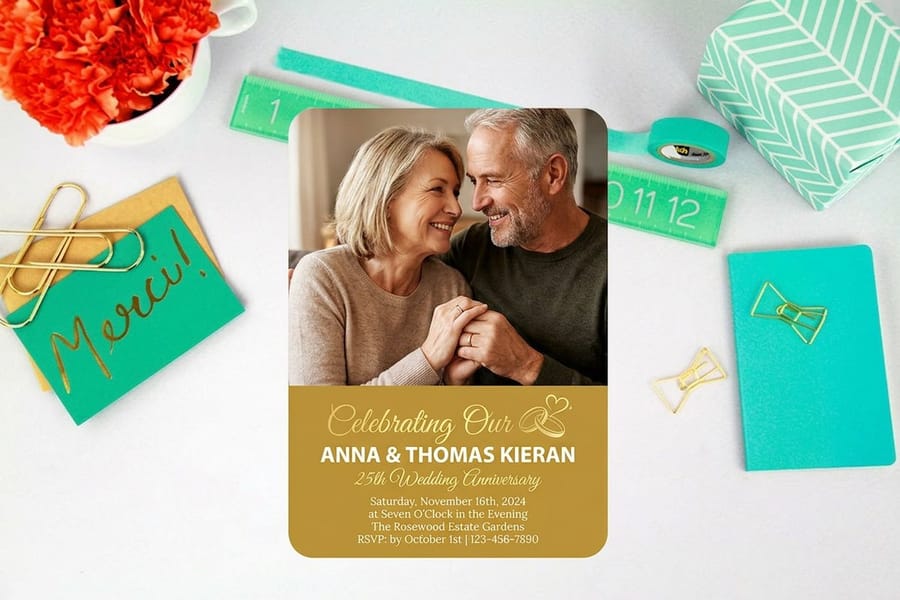
A farm invitation carries one job the city version never has to: getting people to a place that mapping apps handle badly. Half the guests will type the farm name into a phone and be sent to a field entrance three miles away. Print the driving directions, the turn that matters, and the gate to use. Coordinates in small type at the bottom cost nothing and save the host forty phone calls.
Then say the practical things nobody else will. Guests park on grass. Heels sink. Evenings on open ground drop cold once the sun goes. A single line about footwear and a jacket does more for the night than any amount of ornament. Flat wedding invitations start at $19.77, and the same format works for a milestone anniversary, a shower held in the farmhouse, a baptism supper or a farm birthday.
Mailing is where farm invitations quietly lose money. A 5 x 7 inch card in an A7 envelope stays inside USPS letter dimensions. A square envelope does not machine, and the surcharge applies to every single piece. If the design is set on a square, price the postage before the print, because the mailing can end up costing more than the cards.
Sizes worth defaulting to
For a wedding or a formal supper, 5 x 7 inches. It holds a headline, six lines of detail, directions and an RSVP without crowding, and the A7 envelope is stocked everywhere. For a smaller gathering or a save the date, 4.25 x 5.5 inches. For a public open day or a pick-your-own weekend where cost per piece matters more than ceremony, 4 x 6 inches.
Order roughly ten percent over your guest count. Addresses get written wrong, someone spills coffee on a stack, and a late addition to the list should not trigger a second run at a second setup cost.
Timing around the season, not around the calendar
Send farm invitations earlier than you would for a town event, because your guest list includes people whose availability is dictated by weather and by their own harvest window. Six to eight weeks out is a working minimum, and an RSVP cutoff three weeks before the date leaves room to order place cards, gate tickets or a final headcount for catering.
For anything tied to a summer holiday weekend, order well ahead of the rush. The Fourth of July printing collection covers the tractor parade, the fair booth and the open day that all land in the same seven days.
Grain tickets, scale slips and anything that carries a number
A grain ticket is a receipt for a weight. The design work is minimal and the discipline is everything, because the ticket is the only physical evidence that a specific load left a specific field on a specific day at a specific net weight. At minimum it records a serial number, the date, the hauler or truck, the farm or field, gross weight, tare weight, net weight, moisture percentage, test weight, and the destination bin or contract.
The serial is the part that goes wrong. Sequential numbering is straightforward on a first run and a trap on a reorder: unless you tell the printer the start number, the new run begins at 001 again and you end up with two tickets numbered 0417 in the same season, which is the exact ambiguity the ticket exists to prevent. Write the next start number on the reorder before you write anything else.
If the ticket has a tear-off stub, print the serial on both halves. The stub stays with the farm, the body travels with the load, and the pair only proves anything if the numbers match. Runs like this are ordered through event ticket printing, which is the same numbered, perforated format a gate ticket uses.
The limit worth knowing before you order
True multi-part carbonless sets, the kind where one pass of a pen copies through to a yellow and a pink sheet, are made on a forms press with coated back and coated front sheets. That is a specialist forms job, not a digital press job. If your elevator or your co-op requires a three-part carbonless set, buy those from a forms house.
What digital printing does well is the single-part numbered ticket, the perforated stub ticket, and everything customer facing. Plenty of operations run exactly that split and photograph each completed ticket on the phone in the cab, which gives the same audit trail a pink copy used to and costs nothing per load.
Print undated, use for years
Leave the year off the ticket and print a date field instead. A dated run is obsolete the moment the season turns, and the leftovers get thrown away every winter. An undated run with a clean date box carries over, which lets you order a larger quantity at a lower unit price without gambling on how many loads the season will bring.
The same logic applies to produce and stand labels. A label that names the farm and leaves a blank for the variety and the pick date outlives a label with the variety printed on it, and it survives the year you plant something different.
Invitation pricing and specs at 4OVER4.COM
Invitation pricing moves with size, stock, finish and quantity, and the per unit cost drops as the run grows. The numbers below come straight from the live configurator, so you can size the budget before the guest list is final.
Quantity and price
Flat invitation pricing and specs
Real configurator numbers, where ordering the ten percent overage costs far less than a second run at a second setup.
| Quantity | Price Per Unit | Total |
|---|---|---|
| 25 | 79.1¢ | $19.77 |
| 50 | 50.5¢ | $25.27 |
| 100 | 42.8¢ | $42.84 |
| 200 | 25.8¢ | $51.62 |
| 300 | 20.1¢ | $60.42 |
| 400 | 17.3¢ | $69.20 |
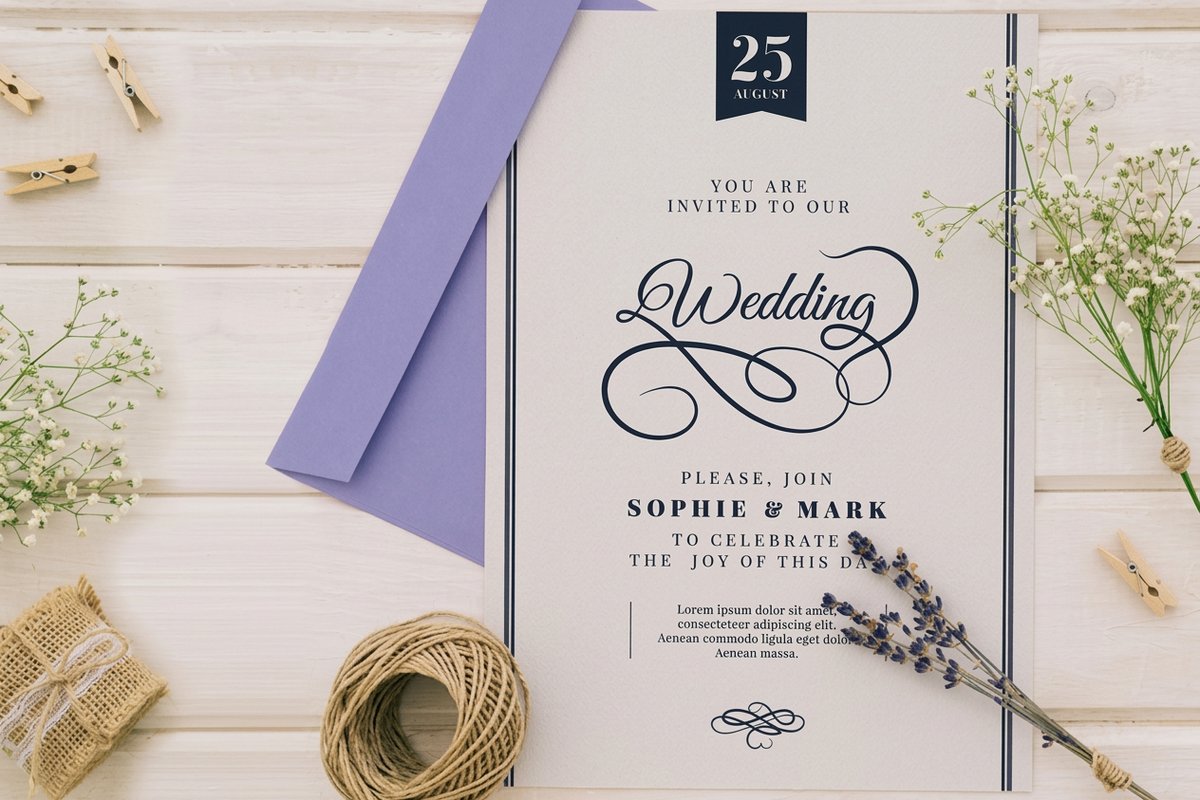
You can also earn coins on every order and redeem them against the next season’s print, which matters when the ticket run repeats every year. If you are weighing up doing this in house against sending it out, our look at outsourced printing for a business works through the real cost of an office printer over a season.
Stock, finish, and what each one costs you
Coated stock seals the fibre, which is why photographs stay sharp and colours stay saturated on it, and why a pen will not write on it. Uncoated stock leaves the fibre open, which softens photographs slightly and takes handwriting, pencil and stamp ink without complaint. Matte sits between the two: coated enough for clean type, dull enough to kill glare in a barn lit by string bulbs. There is no stock that does both jobs, which is the whole reason farm print gets ordered as two separate runs.
Print it
Flat invitations, ready to address
Preset sizes on heavy cover stock, with a free proof before the run goes to press.
Weight is the other half of the decision. A 14pt or 16pt cover reads as a real invitation in the hand, and 16pt is noticeably more rigid once a card passes 5 x 7 inches. For the write-on pile, stay at 70lb or 80lb text: heavy enough not to tear on a clipboard, light enough that a pen does not emboss straight through to the copy underneath. If you want the longer version of that comparison, our breakdown of paper for printing and the paper types guide both go deeper on weights.
What to print, by farm type
The mix changes with the operation, so here is the split that tends to hold.
- Grain and row crop. Numbered scale tickets on uncoated stock, undated with a date field, plus a stub that keeps the serial on the farm side. Reorder with the next start number written on the job.
- Livestock and dairy. Movement and delivery slips with big write-on boxes, and a keepsake pile that is mostly sale day and open day invitations rather than weddings.
- Pick-your-own and agritourism. Perforated gate tickets with a serial on both halves, plus 4 x 6 inch invitations for opening weekend that carry directions before decoration.
- Farm-to-table and CSA. Share pickup cards, stand signage and small flat invitations for member suppers. Matte stock photographs better for the social posts that follow.
- Farm event venues. Flat 5 x 7 inch invitations at $19.77 for couples and hosts, printed dark on light so the card still reads under string lights in a barn.
Templates and print-ready blanks
If you are not starting from a blank artboard, templates cut a day out of the job. 4OVER4.COM sizes its blanks to exact product specs, so your bleed and your trim line up with the press rather than with a guess. Pull a print-ready blank from the blank template library with bleed and trim already marked.
Start fast
Templates and print-ready blanks
Invitation design templates and exact size blanks so your artwork lands inside the cut line.
Wally sorts the farm print into two piles
One pile gets kept, the other gets written on
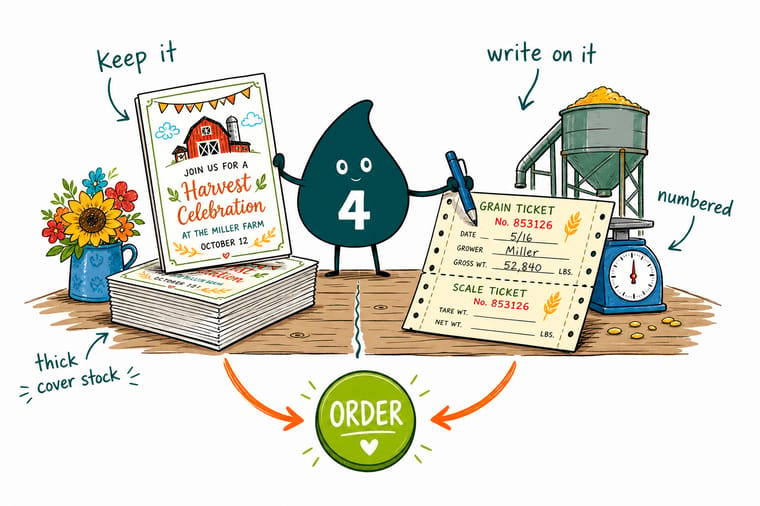
Print invitations at 5 x 7 inches on 14pt or 16pt cover, dark ink on light stock so the card still reads under string lights, with 0.125 inch bleed at 300 DPI in CMYK. Print scale and gate tickets on 70lb or 80lb uncoated with a sequential serial on both halves of the perforation, leave the year off and use a date box, and give the printer a start number every time you reorder.
Order flat invitations →What to remember about farm printing
Rules that hold on every farm job
- Uncoated for anything a pen touches. Ballpoint and pencil need an open fibre surface. Gloss coating repels both and the ink smears into the next box before it dries.
- Serial on both halves of a perforated ticket. The stub and the body only prove a load happened if their numbers match. A perforation without a repeated serial is decoration.
- Directions before decoration. Mapping apps mishandle farm addresses. The turn, the gate and the parking field belong on the card, not in a follow-up text on the day.
- Avoid the square envelope. Square mail is non-machinable and surcharged on every piece. A 5 x 7 inch card in an A7 envelope mails at the standard letter rate.
- Print undated, add a date box. Undated tickets and labels carry into next season, which lets you buy the cheaper quantity without guessing how many loads the year brings.
Explore more
More ways to print for the farm
Related products, categories and reading on 4OVER4.COM, one card each.
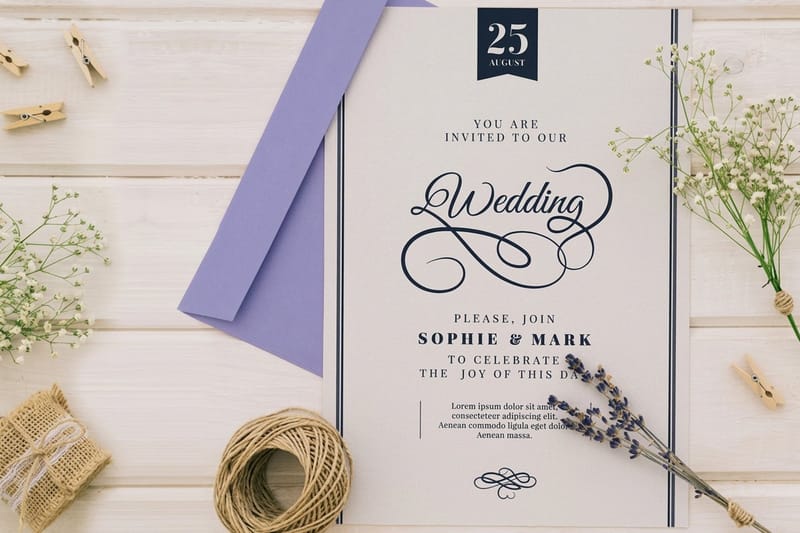 Product Flat Wedding Invitations Heavy flat cards for barn weddings, from $19.77.
 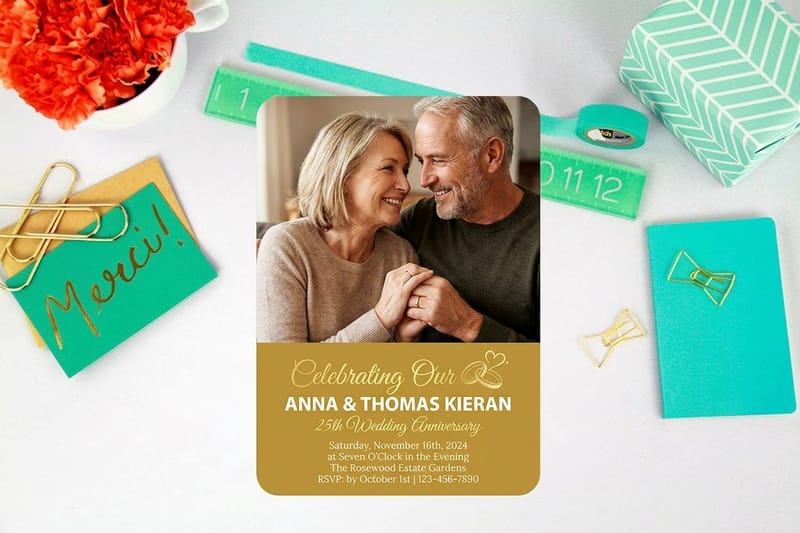 Product Anniversary Invitations For the milestone supper in the farmhouse.
 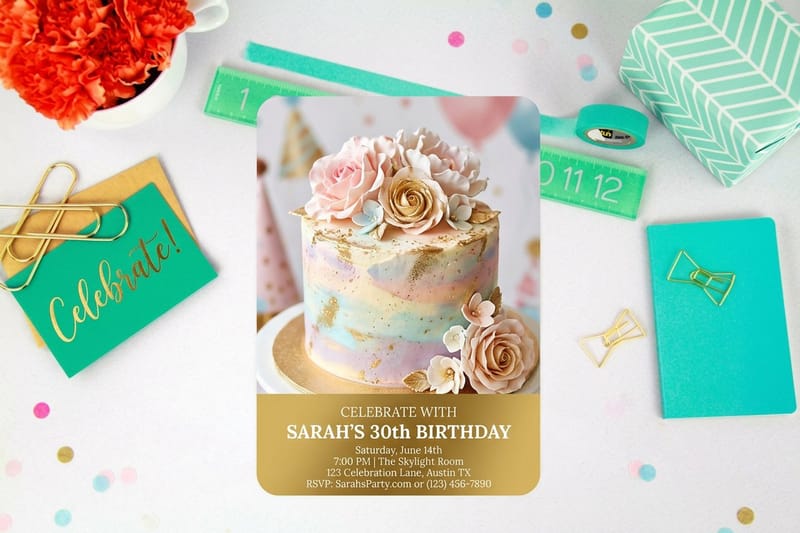 Product Birthday Invitations Farm birthdays and open days, 4 x 6 inches.
 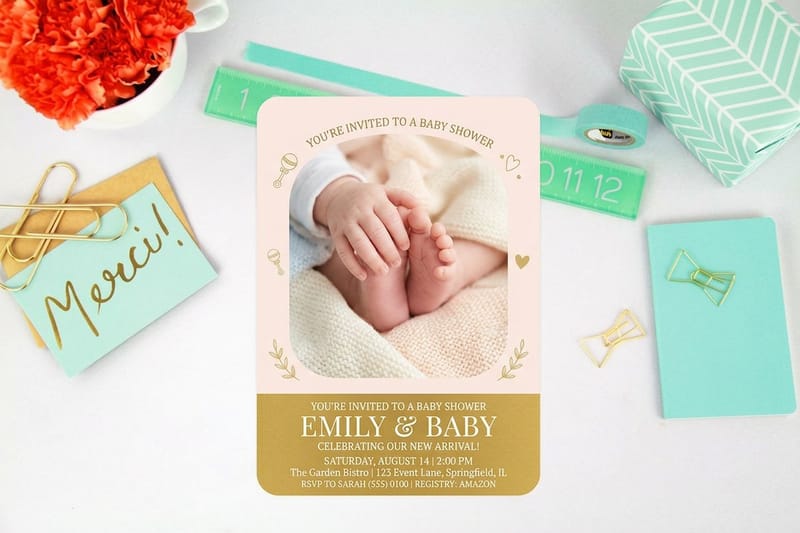 Product Baby Shower Invitations Small flat cards for a gathering at home.
 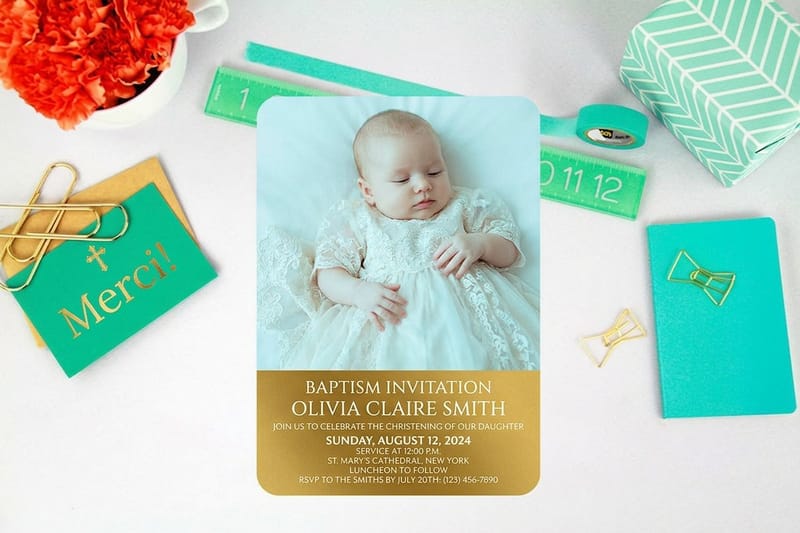 Product Baptism Invitations Matching format for a christening supper.
  Category Invitation Printing Every size, stock and finish in one place.
 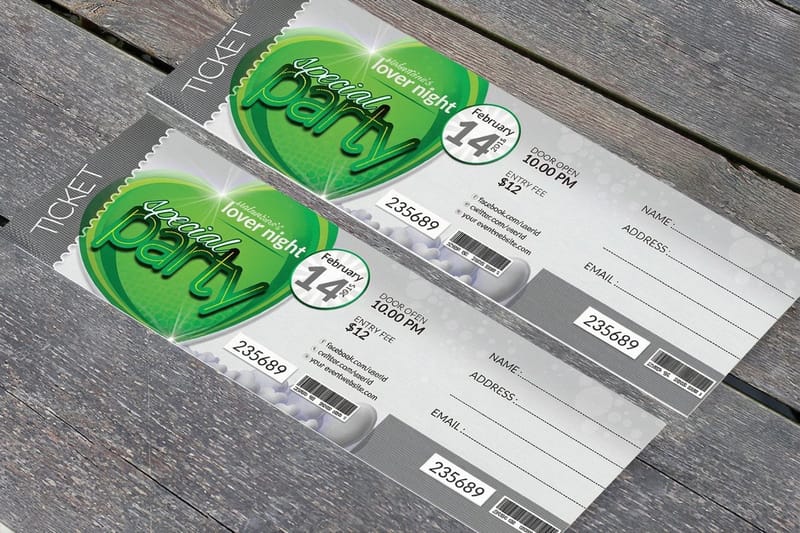 Category Event Ticket Printing Numbered tickets with perforated stubs.
  Guide Best Paper Types for Printing Coated against uncoated, and what each one costs you.
  Article Best Paper for Printing How weight and finish change the feel of a piece.
 Ready to print the season’s run?
Pick your size, upload your artwork or start from a free template, and 4OVER4.COM prints it sharp on the right stock, as fast as your deadline needs.
Common questions about farm printing
Can grain and scale tickets be printed with sequential numbers?
Yes, sequential numbering is a standard option on ticket runs, and it is the single feature that makes a scale ticket worth printing at all. The detail that catches people out is the reorder: give the printer the start number for the new run, or it begins at 001 again and you finish the season with two tickets carrying the same serial. If the ticket has a tear-off stub, ask for the number on both halves so the stub in the office matches the copy that travelled with the load. Runs like this go through event ticket printing at 4OVER4.COM, which is the same numbered, perforated format.
What stock should a load ticket or scale slip be printed on?
Uncoated text stock, 70lb or 80lb. Coated gloss and satin stocks have a sealed surface that repels ballpoint ink and pencil graphite, so writing skates, smears and takes minutes to dry, which is unusable in a truck cab. Uncoated has an open fibre surface that takes pen, pencil and rubber stamp ink immediately. Print the field labels in a lighter tone than the data lines so the handwriting reads as the top layer, and leave at least a quarter inch of clear height in every weight box.
What size should a farm wedding or harvest dinner invitation be?
Default to 5 x 7 inches for a wedding or a formal supper. It holds the headline, the date, the address, driving directions and an RSVP line without crowding, and it fits a stocked A7 envelope that mails at the standard USPS letter rate. Drop to 4.25 x 5.5 inches for a smaller gathering or a save the date, and to 4 x 6 inches for a public open day where the cost per piece matters more than ceremony. Flat wedding invitations at 4OVER4.COM start at $19.77.
Will a square invitation envelope cost more to mail?
Yes. Square envelopes are classed as non-machinable by USPS and carry a surcharge on every piece, because the sorting equipment cannot reliably orient a square. On a two hundred piece guest list that surcharge adds up to real money for a shape decision. If the design is set on a square, price the postage before you approve the print. A 5 x 7 inch card in an A7 envelope stays inside letter dimensions and avoids the whole problem.
How far ahead should I order print for a farm event?
Six to eight weeks before the date for invitations, with the RSVP cutoff about three weeks out. Farm guest lists include people whose availability is set by weather and by their own harvest window, so they need longer to commit than a town crowd does. The three week RSVP gap is what gives you a real headcount in time to order gate tickets, place cards or a catering number. For anything landing on a summer holiday weekend, order earlier still, because every farm in the county is printing at once.
