
Where to Print Custom Banners for Retail Campaigns


Print retail banners at a local sign shop when you need them in under two days or need them installed, and at an online trade printer for everything else: custom sizes, real material choice, and a price that holds up across more than one banner. Office supply counters only fit a small indoor banner in a preset size, and a general marketplace listing gives you no proof and nobody to call when the colour comes back wrong.
Where to print a retail banner, compared
| Where | Realistic turnaround | Materials and sizes | Finishing | The tradeoff |
|---|---|---|---|---|
| Local sign shop | Same day to 2 days | Vinyl, mesh, rigid signs, vehicle graphics | Hems, grommets, pole pockets, installation | Highest unit price, and quality swings shop to shop |
| Office supply print counter | Next day to 3 days | A short list of preset sizes, mostly indoor stock | Grommets on some sizes, little else | Preset sizes only, so odd storefronts get cropped |
| General online marketplace | 3 to 10 days including transit | Wide, but the seller behind the listing changes | Listed, not always delivered as listed | No proof, no press control, no one to call |
| Online trade printer | 2 to 5 business days plus transit | Custom sizes, scrim vinyl, mesh, fabric | Hems, grommets, pole pockets, reinforced corners | You have to plan around shipping, not walk in |
Turnaround excludes transit, and transit is the part retail teams forget. Price the full campaign rather than one banner, because the gap between a walk-in counter and production printing only shows up from the second piece onward. You can size and order retail banners straight from the configurator.
The four places that actually print retail banners
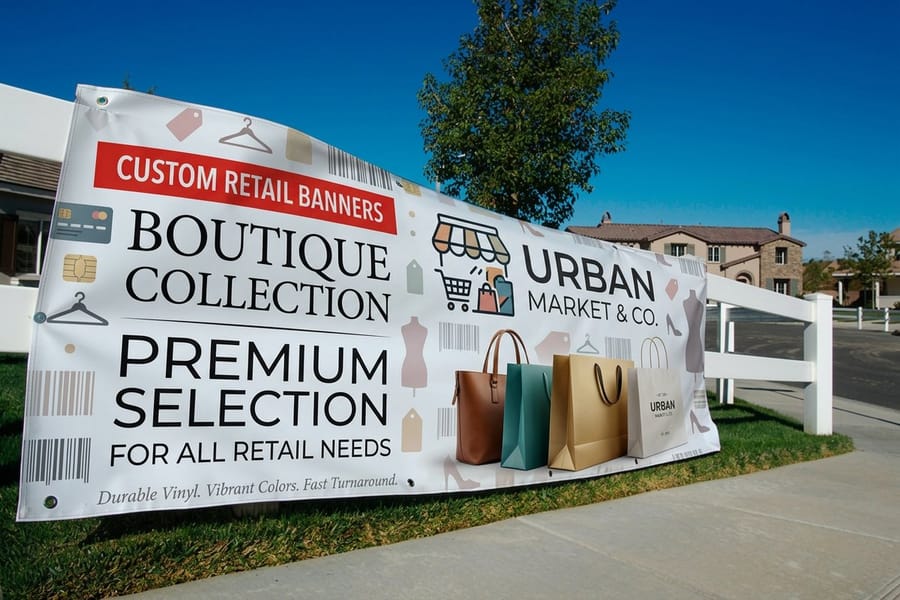
For a retail promotion, your realistic choices are a local sign shop, an office supply print counter, a general online marketplace, or an online trade printer. The sign shop is fastest and will hang it for you, the print counter is convenient for one small indoor banner, the marketplace is a lottery, and the trade printer gives you real material choices and the lowest price per banner once you need more than one.
Most retail campaigns are not one banner. They are a window banner, a couple of aisle banners, and something for the sidewalk, repeated across two or three stores. That quantity is where the pricing separates: a sign shop quotes each piece as a job, while a printer running scrim vinyl all day quotes it as production. Retail banners at 4OVER4.COM start at $79, and the second and third banner do not cost what the first one did.
The tradeoff is honest and worth saying out loud. If your sale starts tomorrow morning and nothing is printed yet, drive to the sign shop and pay the premium. If you have four business days, order online and put the difference into the rest of the campaign. Our custom printed banners guide walks through the specs a printer will ask you for either way.
When the local sign shop is the right call
Buy local when the banner has to go up in under 48 hours, when it needs to be installed on a pole or a rooftop rail, or when the job includes rigid signage the same week. A sign shop that mounts things for a living owns the ladder, the grommet press and the liability insurance, and that is what you are paying for.
The limit is repeatability. Order the same banner from the same shop twice in a year and the colour can move, because small shops profile their presses at very different intervals. If brand colour matters, ask for a printed proof on the actual stock rather than a PDF proof on a monitor.
When an online trade printer is the right call
Order online when you need a custom size, a specific material, more than one banner, or the same file printed again next quarter with the colour matching the first run. That is most retail work.
The other thing you get online is a size that fits your actual storefront. Preset sizes are the quiet reason retail banners look wrong: a 3 by 6 foot banner hung over an 8 foot window leaves dead air on both sides, and no amount of design fixes a banner that is the wrong shape for the wall it is on. Measure first, order to the measurement.
The specs that decide who can print your job
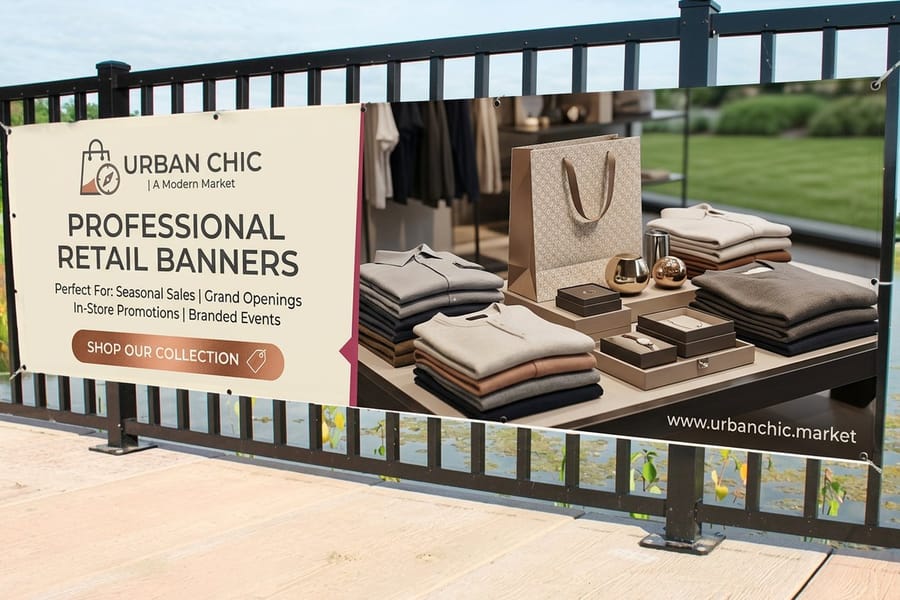
Before you compare prices, settle four things: where the banner hangs, what material that demands, how it attaches, and whether anyone reads the back of it. Those four decide which shops can even quote the job, and they matter more than the price difference between them.
Where it hangs is the first fork. Inside a store, under LED lighting, a polyester fabric banner reads calmer because it does not throw glare back at a shopper standing under a spotlight, and it folds into a box between seasons without holding a permanent crease. Outside, on a wall or a storefront frame, 13 oz scrim vinyl is the default: it is the scrim, a woven mesh laminated between vinyl layers, that keeps a grommet from tearing out in the first storm.
The exception is wind. Any large solid banner on a fence line, a rooftop rail, or a scaffold acts as a sail, and the failure is never the ink, it is the corner or the fence tie. Mesh vinyl solves it because the surface is perforated and air passes through. Cutting wind slits into solid vinyl is a habit that persists because it feels sensible, but slits mostly weaken the panel and fray, so if the site is windy, order mesh from the start.
Hems, grommets and pole pockets
A hem is the folded and welded edge that gives the banner something to hold on to. Grommets are the metal rings punched through that hem, usually every 2 to 3 feet along the top and bottom and one in each corner. Pole pockets replace grommets when the banner slides onto a rod or a frame, and they need extra material allowed on those edges, which is why the printer asks before you upload rather than after.
Keep live copy about 2 inches inside the hem line. Grommets get punched through the hem, and a headline that runs too close to the edge either gets a metal ring through a letter or disappears into the fold. Every banner that comes back looking amateur has a logo half eaten by a grommet.
Double sided is a material decision, not a print setting
If shoppers approach from both directions, you need artwork on both faces, and printing both sides of standard scrim shows a ghost of the reverse image through the panel. The fix is a blockout material with an opaque layer in the middle, or two banners sewn back to back. Either way it costs more than double a single side, so decide it before you get quotes and compare like with like.
For a window banner read from the street, one side is enough. For a banner hanging in the middle of a mall walkway, it never is.
Turnaround, files, and the things that blow a deadline
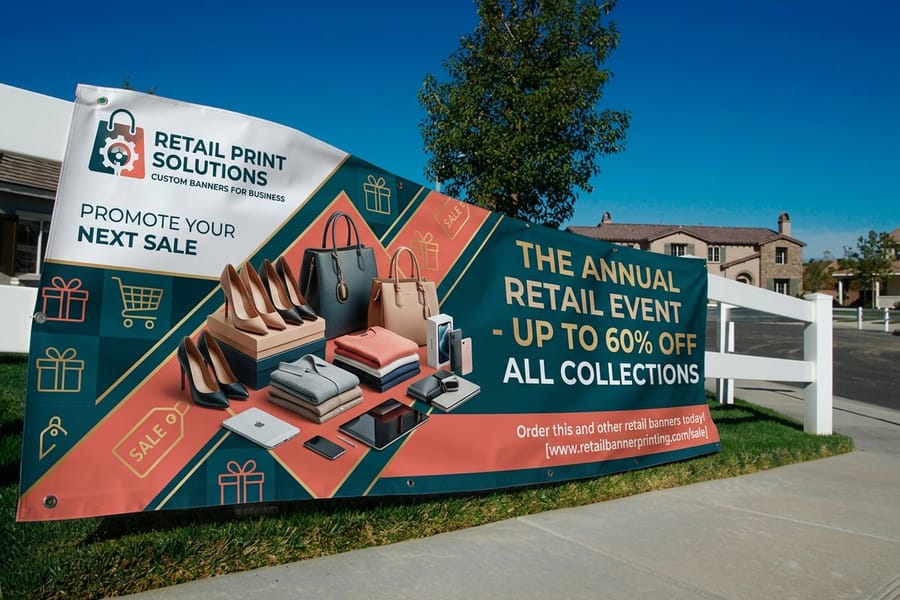
Count backwards from the morning the sale opens, not forward from today. A retail banner deadline has four stages: artwork approved, file uploaded and proofed, printed and finished, then shipped and hung. Teams lose promotions in stage one and blame stage three.
Production on banners typically runs a few business days once the file is approved, and transit is separate. Add a day for the proof round, because a proof that sits in an inbox over a weekend costs you the weekend. If the campaign has a hard date, order at the top of the week rather than the end of it.
The file itself is simpler than people expect. Large format is viewed from several feet away, so full resolution at final size is unnecessary: build the artwork at quarter scale at 300 DPI, or at full size at around 100 DPI, and keep logos and type as vector so they stay crisp at any enlargement. Set up in CMYK, add 0.25 inch of bleed on every side, and keep text inside the safe area described above.
What a good proof actually tells you
A digital proof confirms the layout, the trim, the bleed and the position of the grommets. It does not confirm colour, because your monitor is not the press. If the banner has to match a brand red already printed on your storefront or your bags, say so when you order and ask what the printer can do about it.
Check the proof for scale before anything else. The most common banner error is not colour or resolution, it is a file built at the wrong aspect ratio, then stretched to fit, which nobody notices until a 3 foot logo arrives 9 inches tall.
Reorders and dated artwork
Leave the dates off the banner and print them on something cheap. A banner that says "Grand Opening" hangs for years, while one that says "Sale ends March 31" is refuse on April 1. Put the changeable detail on retail counter cards or a shelf label instead, and keep the banner generic enough to hang again next season.
When you do reorder, order the same file from the same printer. Sending the same artwork to three different shops for three stores is how one location ends up with a noticeably different red.
Banner pricing and specs at 4OVER4.COM
Banner pricing moves with size, material, finishing and quantity, and the per unit cost drops as the run grows. The numbers below come from the live configurator, so you can budget the campaign before you commit artwork.
Quantity and price
Retail banner pricing and specs
Live configurator numbers, including the finishing options that decide how the banner hangs.
| Quantity | Price Per Unit | Total |
|---|---|---|
| 1 | $79.00 | $79.00 |
You can also earn coins on every order and redeem them against the next run, which matters when a chain reorders the same seasonal set twice a year.
The rest of the retail campaign
A banner brings someone through the door and then stops working. What converts is the piece sitting at eye level next to the till, and that is where the expiring detail belongs anyway. Retail counter cards start at $21.97 and carry the offer, the end date and the terms in type a shopper actually reads at arm's length.
Print it
Retail banners, sized to your storefront
Scrim vinyl, mesh or fabric, hemmed and grommeted, printed to the measurement you took.
Underneath the banner, price and shelf work is a labels job. Standard custom labels from $23.88 handle promotional shelf tags and sale stickers without reprinting signage, and they peel off after the promotion instead of leaving a shop looking like last month. Slip a thank you card from $19.77 into the bag and the campaign leaves with the customer rather than ending at the door. The full range of formats sits in our banner printing collection, and adjacent promotional pieces in custom printing.
What to order, by store type
The right banner set depends less on the industry than on where it hangs and how often the offer changes. Here is how it usually falls out.
- Apparel and boutique retail. One outdoor window banner in fabric or 13 oz vinyl, sized to the full window width, plus counter cards that carry the actual offer and its end date.
- Grocery and specialty food. Aisle and endcap banners in fabric so they do not glare under overhead lighting, with shelf labels doing the price work underneath.
- Seasonal and pop-up retail. Generic banners with no dates so the same set hangs at every event, and a cheap printed insert that changes per location.
- Auto, garden and outdoor lots. Mesh on any fence line or open lot, hemmed with grommets on all four corners, because the wind decides how long a solid banner lasts.
- Multi-store chains. One file, one printer, one reorder. Colour consistency across locations is the whole point, and it is lost the moment two shops print the same job.
Templates and print-ready blanks
If you are not starting from scratch, templates save the setup round. 4OVER4.COM sizes its blanks to exact product specs, so bleed, trim and the hem allowance are already marked and your headline lands inside the safe area. Grab one from the blank template library before you open the artboard.
Start fast
Templates and print-ready blanks
Banner design templates and exact size blanks so your artwork lands inside the cut line.
Wally measures before he prints
The storefront decides the size, not the price list
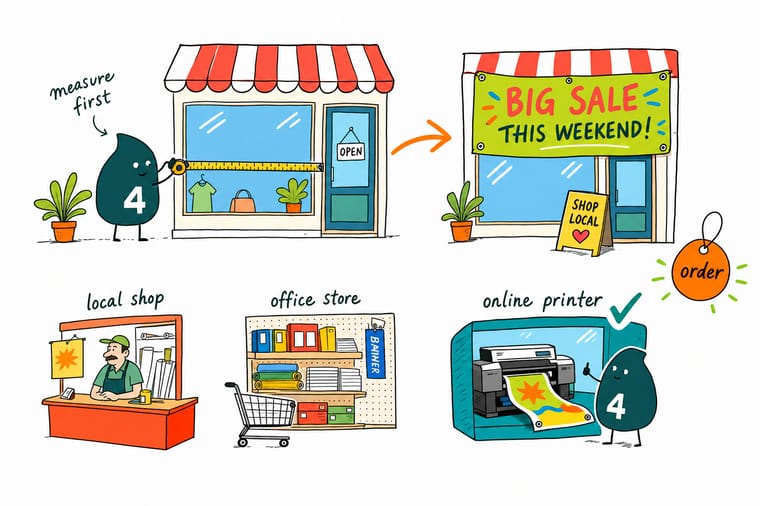
Measure the window or wall first and order to that number instead of a preset. Pick 13 oz scrim vinyl for a flat outdoor wall, mesh anywhere the wind gets at it, and fabric indoors where lighting causes glare. Keep live copy 2 inches inside the hem so grommets miss your headline, build artwork at quarter scale at 300 DPI in CMYK with 0.25 inch bleed, and leave the dates off so the banner hangs again next season.
Order retail banners →What to remember about printing retail banners
Design tips that hold at any banner size
- Measure the wall, then the banner. Preset sizes are the reason banners look rented. Take the width of the window or the wall, subtract the frame, and order to that number.
- One message, read at speed. A driver gets under two seconds. A headline, an offer, and the brand mark is the whole budget. Everything else belongs on the counter card.
- Keep copy 2 inches off the hem. Grommets punch through the hem and the fold eats the last inch. Pull live text in before you upload, not after the proof.
- Contrast beats colour choice. Dark type on a light field, or the reverse, reads from across a parking lot. Two mid-tones next to each other do not, no matter how good they look on screen.
- Vector the logo, raster the photo. Type and logos scale cleanly as vector. Photography does not, so check any placed image at final size before you send the file.
Explore more
More ways to print and promote
Related products, categories and guides on 4OVER4.COM, one card each, so you can finish planning the campaign.
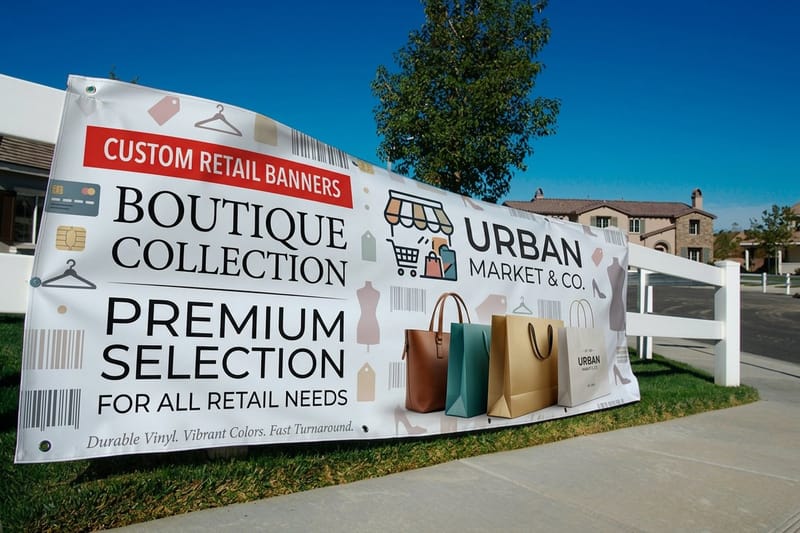 Product Retail Banners Custom sized banners with hems and grommets, from $79.
 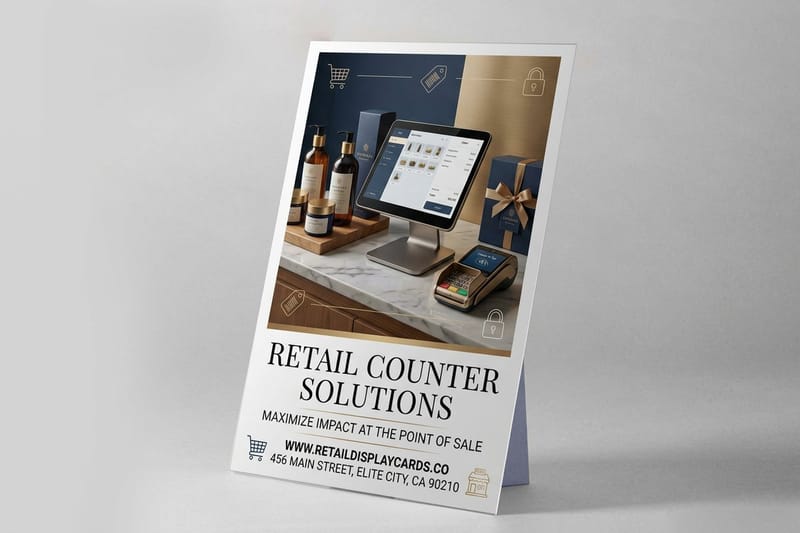 Product Retail Counter Cards The dated offer, printed where the banner should not carry it.
  Product Standard Custom Labels Shelf and price labels that match the campaign.
  Product Thank You Cards A bag insert that carries the promotion home.
 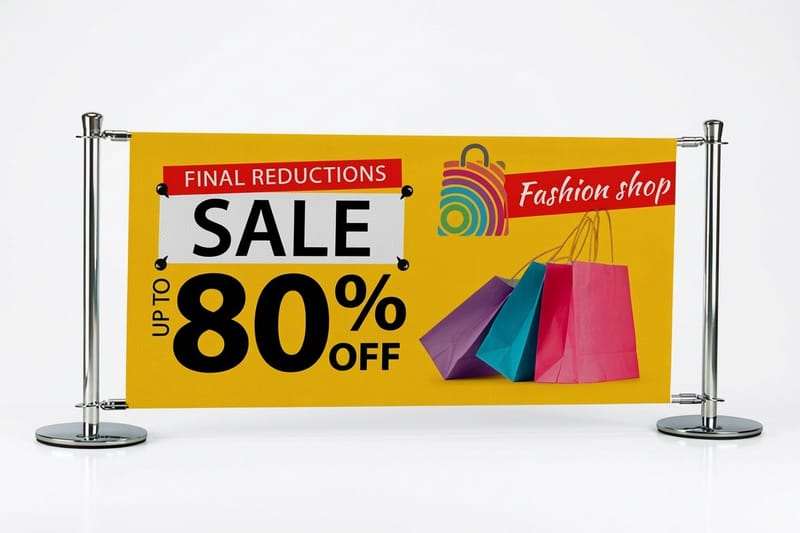 Category Banner Printing Every banner size, material and finish in one place.
  Guide Custom Printed Banners Guide Specs, materials and file setup, start to finish.
 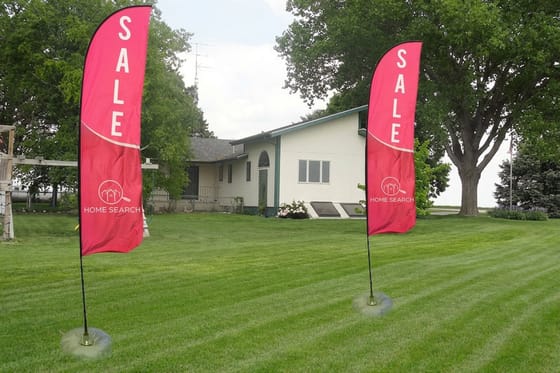 Article Custom Flags vs Banners Which one actually suits your storefront.
 Ready to print your campaign banners?
Send the measurement, pick the material, and 4OVER4.COM prints it hemmed, grommeted and ready to hang, as fast as your promotion needs.
Common questions about printing retail banners
How much does it cost to print a custom retail banner?
Retail banners at 4OVER4.COM start at $79, and the final price moves with size, material, finishing and quantity. A small indoor fabric banner sits near the bottom of that range, while a large outdoor mesh banner with pole pockets sits well above it. A local sign shop will usually quote higher per piece because each job is set up individually, which is fair for one rush banner and expensive for six. The honest way to compare quotes is to price the whole campaign rather than a single banner, since the per unit cost is where online production separates from a walk-in counter.
What material should a storefront banner be printed on?
Use 13 oz scrim vinyl for a banner mounted flat against a wall or a storefront frame, because the scrim layer inside is what stops a grommet tearing out. Use mesh vinyl on a fence, a rooftop rail, or anywhere exposed to real wind, since the perforated surface lets air through instead of catching it. Use polyester fabric indoors, where it reads without glare under store lighting and folds away between seasons without a permanent crease. If a banner has artwork on both faces, it needs a blockout material with an opaque core, otherwise the reverse image ghosts through.
How fast can I get a banner printed for a sale this weekend?
If the sale is in one or two days and nothing is printed, a local sign shop is the realistic option and worth the premium. Online production on banners typically runs a few business days after the file is approved, and transit is on top of that, so a Friday sale wants a file uploaded at the start of the week. The stage that ruins deadlines is not printing, it is proof approval sitting unanswered, so watch for the proof email and turn it around the same day.
What resolution does banner artwork need to be?
Banners are read from several feet away, so full resolution at final size is unnecessary and produces files nobody can open. Build the artwork at quarter scale at 300 DPI, or at full size at roughly 100 DPI, and keep logos and headline type as vector so they stay sharp at any enlargement. Set the document up in CMYK, add 0.25 inch of bleed on every edge, and keep live copy about 2 inches inside the hem so grommets do not punch through a letter. Check any placed photograph at final size before you send the file, because photography is the one element that does not scale for free.
Should the banner carry the sale dates?
Usually not. A banner with a date on it becomes waste the day after the promotion ends, while the same banner without one hangs again next season and at the next event. Keep the banner on the message that does not expire, then print the dated detail on something cheap and replaceable such as counter cards, shelf labels or a window insert. It is the single change that turns banners from a per campaign cost into a reusable asset.
