
Yellow Letters: Why Real Estate Investors Swear by Them


Marcus is our print marketing voice, built from the knowledge of our production team, with over 20 years in printing.
What a Yellow Letter Is and How Investors Use It
A yellow letter is a short, handwritten style note printed on yellow paper and mailed to a property owner who has not listed anything for sale. It reads like a neighbor wrote it at the kitchen table instead of a company running a campaign. That single choice is the entire strategy, because it survives the walk from the mailbox to the recycling bin, which almost nothing else in that stack does.
Investors reach for yellow letters when the goal is a phone call rather than brand awareness. The message stays deliberately plain: you own the property, I buy in this area, here is my number. No logo, no photography, no gloss. Curiosity does the work that polish keeps failing to do.
The format has been in rotation since long before anyone called it direct response, and it holds its slot because it is cheap to produce, quick to test and simple to scale once the wording works. Across its whole catalog, not yellow letters alone, 4OVER4.COM has printed more than 10 billion cards and print products since 1999, and the same presses that run coated brochures will run a plain yellow sheet at volume with variable data, so every letter carries the correct owner name and property address without anyone hand writing a single envelope.
Step 1: build a list worth mailing
Pull owners with a reason to move: absentee landlords, inherited property, code violations, tired long term holders with high equity, pre foreclosure filings. The list decides your response before you write a word, so spend the first hour there rather than on adjectives.
Step 2: write four sentences, not four paragraphs
Name the property, say you want to buy it, take the pressure off, give one easy way to reach you. Anything longer reads as a pitch, and the handwritten illusion collapses the second the copy starts sounding like a brochure.
Step 3: print it so it still looks handwritten at scale
Uncoated yellow stock, a script face in blue ink, ragged line breaks, and variable data for the name and address. Coated stock kills the effect instantly, so keep the sheet matte, light and ordinary looking.
Step 4: answer the phone, then follow up in print
Every campaign lives or dies on pickup. Route calls to a number a human answers, then mail a real brochure to the owners who ask for details, so the conversation has something credible to sit on.
Shop the category
Real estate printing collection
Brochures, signs and mailers built for investors working off market lists.
Yellow Letter Wording That Gets a Call Back
Good yellow letter copy sounds like a note, not a message from a marketing department. Write it the way you would speak on a doorstep: one line about the property, one line about your intent, one line that lowers the stakes, then your number. Read it out loud before you print, and cut every sentence that a person would not actually say to a stranger they hope will call.
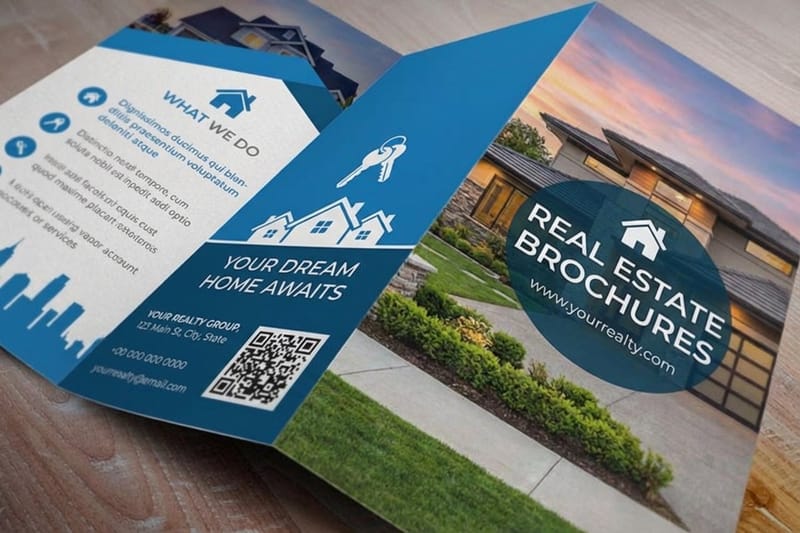
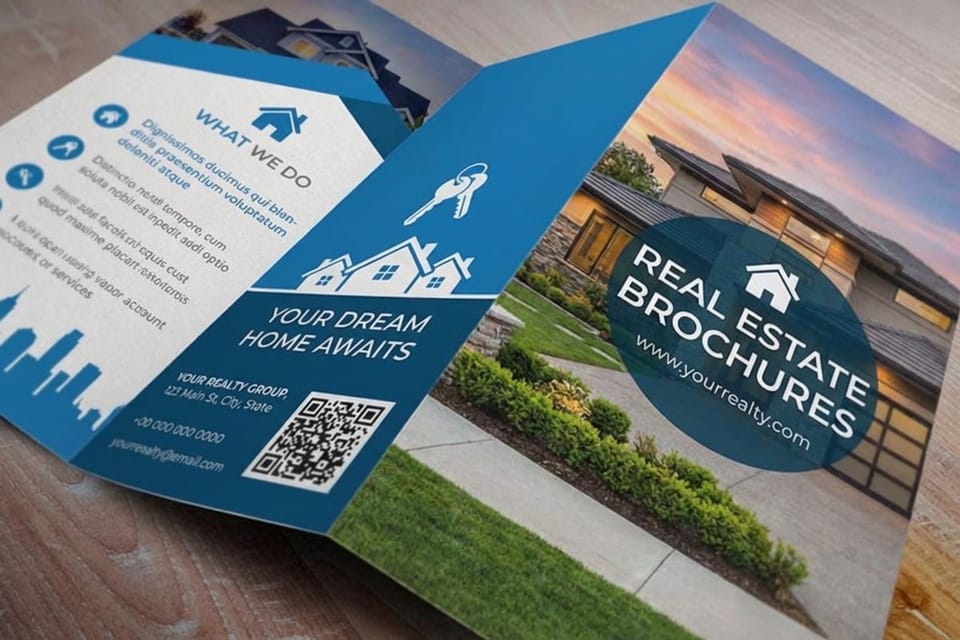
When an owner does call, the second touch has to look like a real business. Mail Real Estate Brochures from $57.11 with your closings, your process and your timeline, and use Commercial Real Estate Brochures when the asset is multifamily, retail or mixed use and the owner expects numbers rather than adjectives.
- “Hi [Owner], I am interested in buying your property at [Address]. Are you open to an offer?” The plainest opener and usually the strongest.
- “I buy a few homes a year in [Neighborhood] and yours caught my eye. Would you consider selling?” Local and specific beats generic every time.
- “No agents, no repairs, no cleaning out the place. I can work around your timeline.” Names the three things owners quietly dread.
- “If the timing is wrong, no problem at all. Keep my number for later.” Removing pressure is what earns the call weeks later.
- “Call or text [Number] and ask for [First Name].” One channel, one name, zero friction.
Keep a swipe file of the openers that produced calls and the ones that produced silence, and change only one variable per drop so you know what moved the number. Wording, paper colour, envelope and signature all matter, but they matter separately. Testing three changes at once tells you nothing except that something worked, which is the most expensive kind of answer in direct mail.
Print picks
Three pieces that catch the calls your letters create
Live prices, ready to customize with your closings and your number.
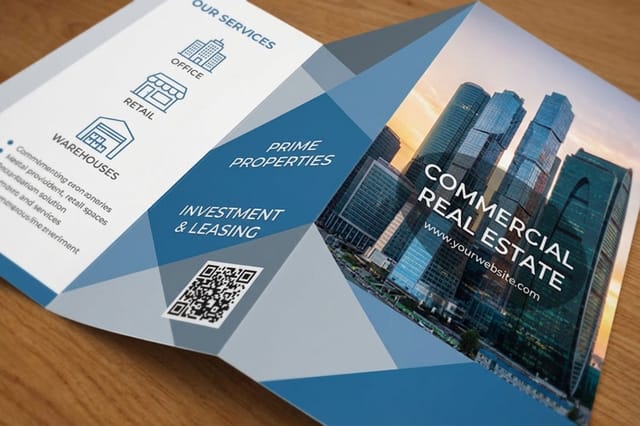 Commercial Real Estate Brochures 50 for $57.11 The packet you mail when a commercial owner answers the letter and wants numbers.
 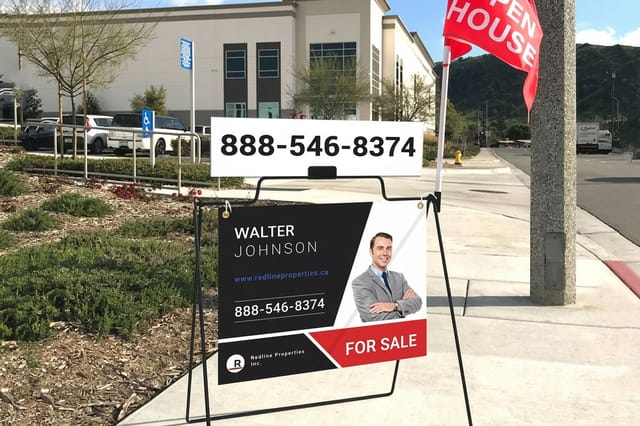 Real Estate a Frame $65.90 each Put your buying message on the sidewalk of the same blocks you are mailing.
 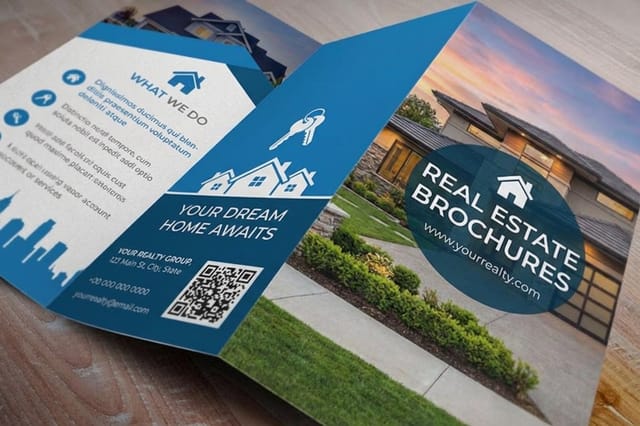 Real Estate Brochures 50 for $57.11 Your credibility piece: past closings, proof of funds language and a clear process.
 Yellow Letters Compared With Postcards and Bandit Signs
Yellow letters are one channel in an investor marketing mix, and they are not always the right one. They win on open rate and personal tone, they lose on speed and cost per piece. Postcards get read without opening an envelope and cost less to mail, while signs cost almost nothing per impression but let you choose only a street, never an owner.
Most investors who stay in the game run all three on a rotation rather than betting the budget on one. Seasonal postcard drops keep the pipeline warm between letter campaigns, and the Memorial Day postcard ideas are a useful template for that. For street level reach, the tactics in bandit signs for real estate advertising pair naturally with a letter drop in the same zip code. For the postcard leg, see these postcard ideas for real estate investors, and the wider Memorial Day advertising ideas cover the rest of that holiday push.
- Yellow letters. Highest personal tone, best for targeted owner lists, slowest to produce and the most expensive per piece.
- Postcards. No envelope to open, cheaper to mail, ideal for repeat touches and seasonal offers to the same list.
- Signs and a frames. Cheap reach on a specific street, no targeting, works best where you already own or are already mailing.
- Brochures. Not a prospecting piece at all, but the credibility follow up that converts an interested owner into a meeting.
The deeper mechanics of list selection, drop cadence and tracking live in the definitive guide to real estate direct mail, which is worth reading before you commit a budget to any single channel.
Paper, Ink and Envelope Choices That Keep the Illusion

Everything about a yellow letter should look like it cost nothing. That is not laziness, it is the point. A thick coated sheet with sharp registration signals a company, and a company signals a sales pitch. Cheap looking is doing real work here, and it is the one project where you deliberately spend less on the substrate than you normally would.
- Stock. Uncoated yellow or cream text weight. Never gloss, never heavy card, never a coating that catches the light.
- Ink. Blue script reads as pen more convincingly than black, and a single ink keeps the sheet from looking mass produced.
- Layout. Uneven line lengths, a slight tilt and a signature block. Perfect margins are the fastest way to break the effect.
- Envelope. Hand addressed look, live stamp rather than an indicia, no return address logo. The envelope decides whether the letter is opened at all.
- Variable data. Owner name and property address merged per record, so a run of several thousand still reads as one to one.
Order a small run first and mail one to yourself. Hold it next to the rest of your own mail on a kitchen counter and see whether it looks like a bill, a flyer or a note from a person. That two dollar test has saved more campaigns than any amount of copywriting theory.
Building and Cleaning the Mailing List
A yellow letter mailed to the wrong owner is just an expensive piece of paper. Start from county records, probate filings, tax delinquency lists and code enforcement records, then filter for equity and length of ownership. Absentee owners with a mailing address in a different state remain the single most reliable segment for most investors.
Run the file through address standardisation and a change of address update before every drop, then suppress anyone who has asked you to stop. Duplicate records inflate your spend and annoy the exact owners you most want to keep on side, and a stale list quietly doubles your cost per lead without ever showing up as a line item.
- Absentee owners. Out of area landlords tired of managing a property from a distance.
- Inherited and probate. Approach gently, with longer timelines and a softer tone than any other segment.
- High equity long holds. Twenty years of ownership and no mortgage means a sale is a real option.
- Distressed condition. Code violations and open permits signal an owner who cannot or does not want to fix it.
Quantity and price
Real estate brochure pricing and specs
Real configurator numbers. The more you print per drop, the lower the unit cost.
| Quantity | Price Per Unit | Total |
|---|---|---|
| 50 | $1.14 | $57.11 |
| 100 | 82.4¢ | $82.38 |
| 200 | 53.3¢ | $106.55 |
| 300 | 41.0¢ | $123.02 |
| 400 | 34.9¢ | $139.49 |
| 500 | 31.2¢ | $155.97 |

What a Yellow Letter Campaign Costs to Run
Budget a yellow letter campaign the way you would budget a deal. Add the printing, the envelope, the postage and the list, divide by the number of pieces, and you have a cost per piece. Divide the total drop cost by the calls you receive and you have a cost per lead, which is the only number that tells you whether to mail again.
Track that per drop and per list segment, not as one lifetime average. One acquisition usually pays for many months of mailing, so the campaigns that fail are almost never the ones that were too expensive, they are the ones that were stopped before the data said anything useful. Give a list at least three touches before you judge it.
- Print. The cheapest line on the sheet, and the easiest to keep flat by ordering drops in larger runs.
- Postage. Usually your largest cost, and the reason list hygiene pays for itself immediately.
- List. Priced per record, and worth paying more for when the filters are genuinely tighter.
- Follow up print. Brochures and packets mailed only to responders, so the cost scales with interest rather than volume.
For commercial owners
Commercial real estate brochures
The follow up packet for multifamily, retail and mixed use owners who want figures.

Staying Compliant and Getting Delivered
Yellow letters sit inside real rules. Keep a suppression list and honour every opt out immediately, do not imply you are a licensed agent if you are not, and check your state rules on wholesaling disclosure before you promise anything in writing. Text and call responses fall under separate consent rules from the mail itself, and that is where most investors get careless.
Deliverability is the quieter problem. Handwritten style addressing can confuse automated sorting, so keep the address block clean and machine readable even when the body of the letter is deliberately messy. Standardise every address before printing, and expect a small percentage of returns on any list, which is useful data rather than a wasted spend.
- Suppression. One list, updated the same day a request arrives, applied before every single drop.
- Claims. Say what you actually do. Never imply licensing, guaranteed offers or a valuation you have not made.
- Address block. Clean, standardised and readable by sorting equipment, even inside a handwritten style layout.
- Returns. Log them, remove them, and use the pattern to judge the quality of the list vendor.
Own the street too
Real estate a frame signs
Put the same buying message on the sidewalk of the blocks you are already mailing, so the letter is recognised.
Sequencing Touches So the Campaign Compounds
Almost nobody calls off the first letter. Owners keep a note on the fridge, think about it for a season, then dial when a tenant leaves or a repair bill lands. Plan a sequence of at least four to six touches over several months, and treat the first drop as the one that makes the later ones work rather than as the campaign itself.
Vary the format across the sequence so the same household sees a letter, then a postcard, then a letter again. When a call finally comes in, have the credibility piece ready to mail that day. A team that built its whole brand this way is documented in the real estate team print case study, and the same discipline is what separates a mailing habit from a mailing budget.
- Touch one. The plain yellow letter, shortest version, one clear question.
- Touch two. A postcard four to six weeks later that repeats the number without repeating the pitch.
- Touch three. A second letter with a different opener and the same signature and number.
- Touch four and beyond. Keep going quarterly on the segments that produced any conversation at all.
Compare formats
Popular real estate print, side by side
Stock, finish, size, quantity, turnaround and price across the pieces investors mail most.
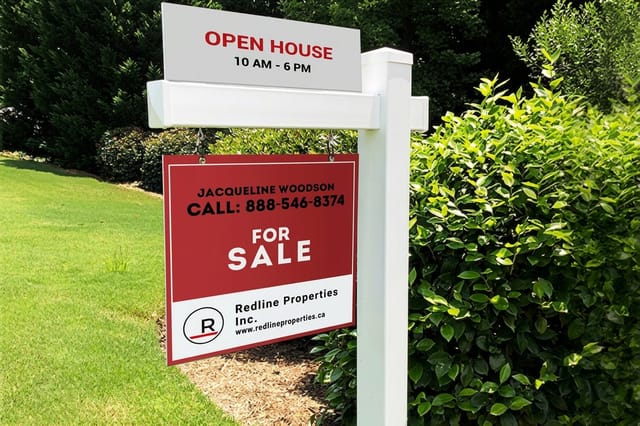 Real Estate Post | 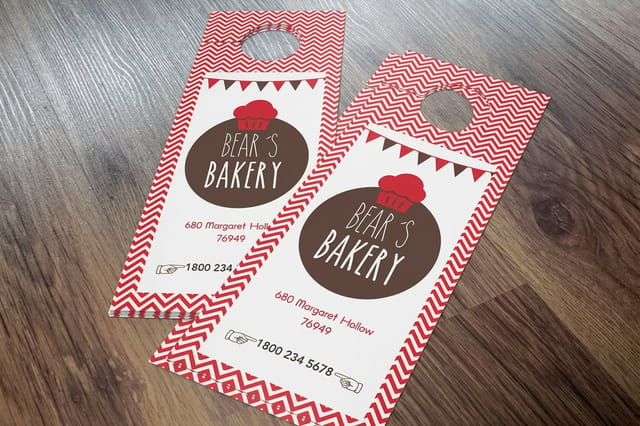 Real Estate Door Hangers | 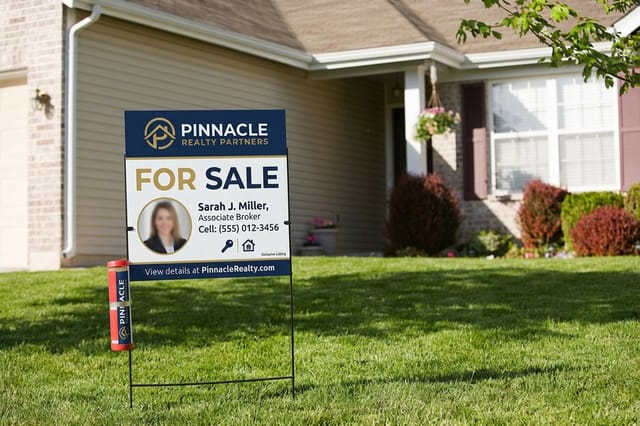 Real Estate Signs | 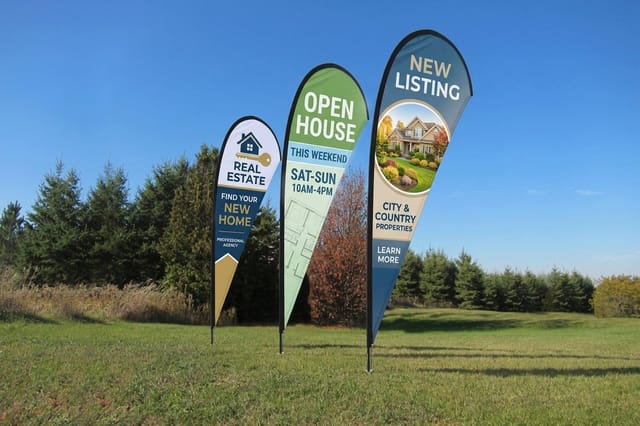 Real Estate Flags | |
|---|---|---|---|---|
| Min price | $218.35 | $252.51 | $25.00 | $108.75 |
| Paper / stock | 1/8" Aluminum Sign Panel | 14pt Gloss Cover | 4mm White Coroplast | - |
| Finish | - | High Gloss UV Coating | - | - |
| Size | 6' Tall Post & Arm | 4.25" x 11" | 12" x 18" | 32" x 70" (7 Foot Tall) |
| Default qty | 1 | 250 | 1 | 1 |
| Turnaround | 4 business days | 7 business days | 5 business days | 4 business days |
| Rating | ||||
| View & customize | View & customize | View & customize | View & customize |
Printing Yellow Letters and the Follow Up Pieces
Once the wording is settled, printing is the easy part. Set the letter up as a single uncoated sheet with your merge fields, order the drop in one run so the paper matches across the whole campaign, and keep a proof of the exact version you mailed so the next test has a real baseline to beat.
Then print the pieces that catch the calls. Real Estate Brochures from $57.11 carry your process and past closings, Commercial Real Estate Brochures handle owners who want figures, and a Real Estate a Frame from $65.90 keeps your name visible on the streets you are already mailing.
Match the piece to the moment
- Prospecting. Plain yellow letter, uncoated, blue script, variable data, live stamp.
- Responder follow up. A printed brochure that proves you close, mailed the day they call.
- Commercial owners. A numbers led packet built for multifamily, retail and mixed use assets.
- Neighbourhood presence. An a frame on the block, so the letter and the street say the same thing.
Start fast
Brochure templates and print ready blanks
Free layouts plus exact size blanks so your follow up piece is ready the day a call comes in.

Wally breaks down the yellow letter
A plain note that opens the door, and printed proof that closes it
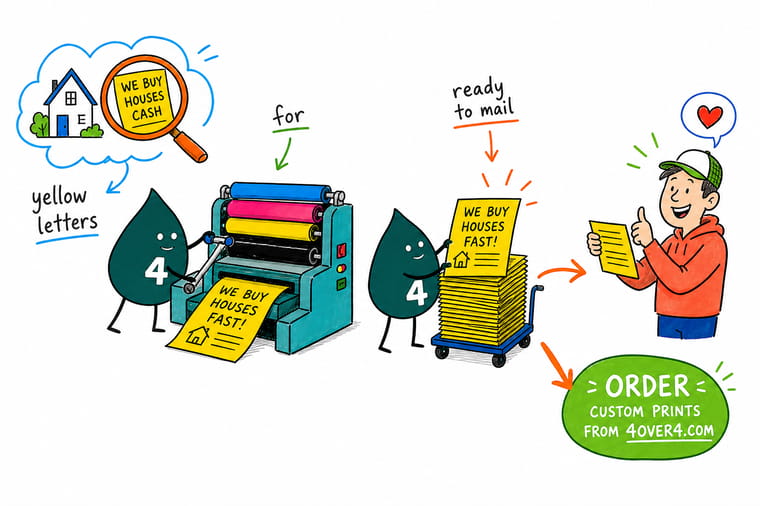
Think of a yellow letter as the knock and the brochure as the handshake. The letter is uncoated, handwritten looking and short enough to read standing at the mailbox, so it earns a phone call. What happens next decides the deal. Mail a real brochure the same day an owner responds, with your closings and your process on it, and the conversation moves from curiosity to a meeting.
Print your follow up brochures →Numbers Worth Keeping in View Before You Mail
By the numbers
The numbers behind a yellow letter drop
Four sentences on yellow paper, a $57.11 brochure for the owners who call, and the company press record behind both.
- 10B+ Cards and print products, printed since 1999.
- 150,000+ Businesses served, across every industry.
- 99.8% On-time delivery, tracked orders.
- $57.11 Real estate brochures, starting price.
- $65.90 Real estate A-frame, starting price, for the streets you mail.
- 4 Sentences or fewer, the length of a yellow letter that gets a call.
Guides That Pair With a Yellow Letter Campaign
 Guide Real Estate Direct Mail Guide Lists, cadence and tracking for every mail channel.
  Guide Bandit Signs for Investors Street level reach on the blocks you already mail.
 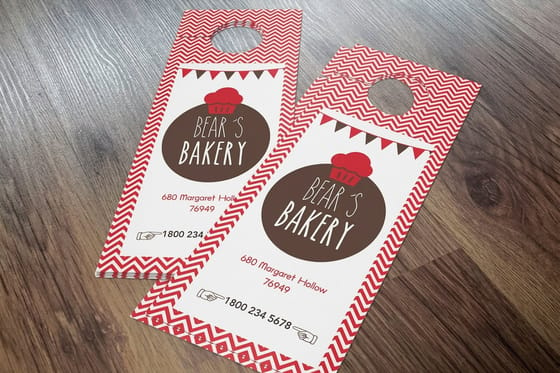 Guide Real Estate Door Hanger Ideas A no postage touch for tight, walkable farm areas.
  Guide Real Estate Business Card Ideas The card you hand over once the owner agrees to meet.
 Explore more
More print that works a real estate market
Brochures from $57.11, an A-frame from $65.90, and the direct mail, bandit sign and postcard reads that run beside a letter drop.
 Article 5 Popular Photoshop Effects You Can Do Yourself Five popular Photoshop effects you can recreate yourself, with the exact settings for duotone, double exposure
  Article Traditional and Digital Marketing Work Better Split by Job, Not by Bud Where print beats digital, where digital beats print, and how to split a small marketing budget between them b
 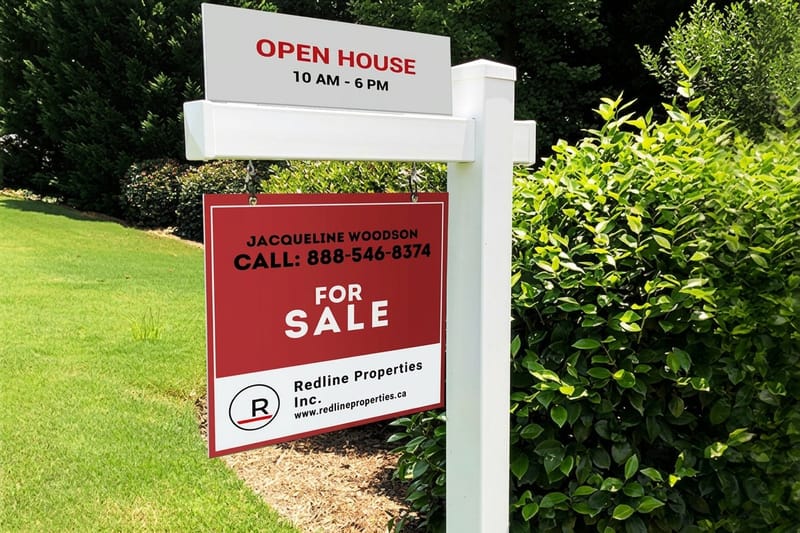 Collection Real Estate Printing Brochures, signs and mailers built for property marketing.
 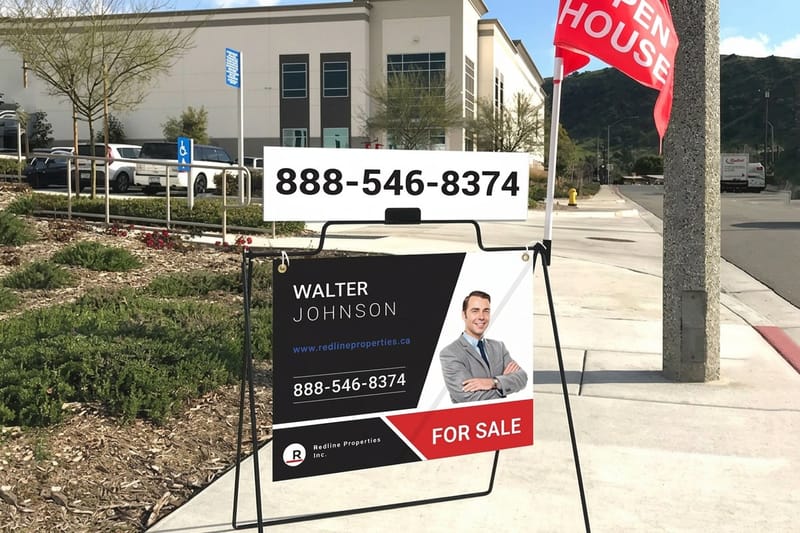 Kit Real Estate Investment Suite A print kit for investors opening a new market. Product Real Estate Brochures The credibility piece you mail to every responder. Product Commercial Real Estate Brochures Numbers led packets for multifamily and retail owners. Product Real Estate a Frame Street presence on the blocks you are already mailing.
  Case study A Team Built on Print How consistent mailing turned into a local brand. Article Direct Mail Definitive Guide The full playbook behind every mail channel. Article Bandit Signs That Work Placement, wording and rules for investor signage.
  Article Best Colors for Yard Signs Contrast choices that stay readable from a car.
 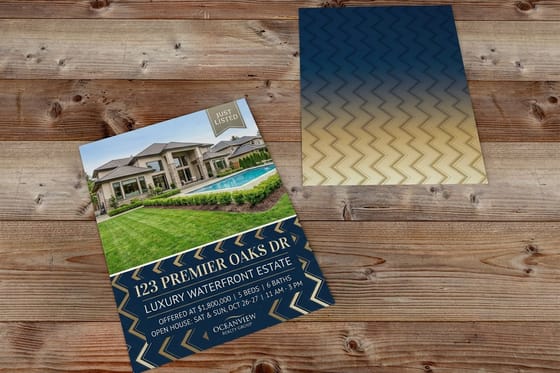 Article Real Estate Postcard Ideas Seasonal touches that keep a list warm between drops.
 Mail the four sentences, then have the $57.11 brochure waiting
Write the four sentences, mail the list, and have your brochures printed and waiting so the first owner who calls gets proof in the post the same day.
Yellow Letter Questions Investors Ask
What is a yellow letter in real estate?
A yellow letter is a short, handwritten style note printed on yellow paper and mailed to a property owner who has not listed anything for sale. Investors use it to open a conversation about buying off market, usually in four sentences or fewer, with no logo and no photography. The plain look is deliberate, because it reads as personal rather than promotional and gets opened far more often than a designed mailer. The wider channel strategy behind it is covered in our real estate direct mail guide, and the follow up print for yellow letters for real estate campaigns sits in one collection.
How do I choose the right yellow letter approach for my market?
Start from the list rather than the letter. In markets with a lot of out of state landlords, an absentee owner file usually outperforms everything else. In older neighbourhoods with long term owners, high equity and length of ownership are the better filters. Match the tone to the segment too, since probate and inherited property need a softer, slower approach than a tired landlord does. Then keep the format identical across a segment so your test results actually mean something.
What do yellow letters and the follow up pieces cost?
The letter itself is the cheapest part of a campaign. Your real costs are postage and the list, which is why address hygiene and suppression pay for themselves on the first drop. The follow up print scales with interest rather than volume, so you only mail it to owners who respond. Real Estate Brochures start at $57.11, Commercial Real Estate Brochures start at $57.11 and a Real Estate a Frame starts at $65.90, with prices dropping as quantity goes up.
What paper and ink should a yellow letter be printed on?
Uncoated yellow or cream text weight stock, printed in a blue script face that reads as pen on paper. Avoid gloss, avoid heavy card and avoid anything with a coating that catches the light, because a premium finish signals a company and undoes the effect you are paying for. Ragged line breaks, a signature block and a hand addressed envelope with a live stamp complete the look. Order a small run and mail one to yourself before committing to a full drop.
How many yellow letters should I send before judging a campaign?
Give any list at least three touches spread over several months before you decide it failed. Owners rarely call off a first letter, because the decision to sell usually arrives with an event such as a vacancy, a repair bill or a change at home. Keep the number and the signature consistent across the sequence so the later pieces are recognised, vary the format between letters and postcards, and measure cost per lead per segment rather than as one blended lifetime average.
