
How Do Direct Mail Brochures Work?


A direct mail brochure lands in a real mailbox with a story to tell. It works by pairing a well-designed, foldable brochure with a targeted mailing list and postal delivery. Here is how the process works, what sizes and postage apply, what it costs, and whether it still gets results.
Direct mail brochures work by combining a printed, folded brochure with a targeted mailing list and postal delivery so your message arrives directly in a prospect's mailbox. You design the brochure, choose a size and fold that meets postal rules, build or buy a list of the right recipients, and mail it as a self-mailer or in an envelope. Because it reaches a defined audience physically, a well-targeted brochure campaign still drives strong, measurable response.
Start here
What a direct mail brochure is and how it reaches people
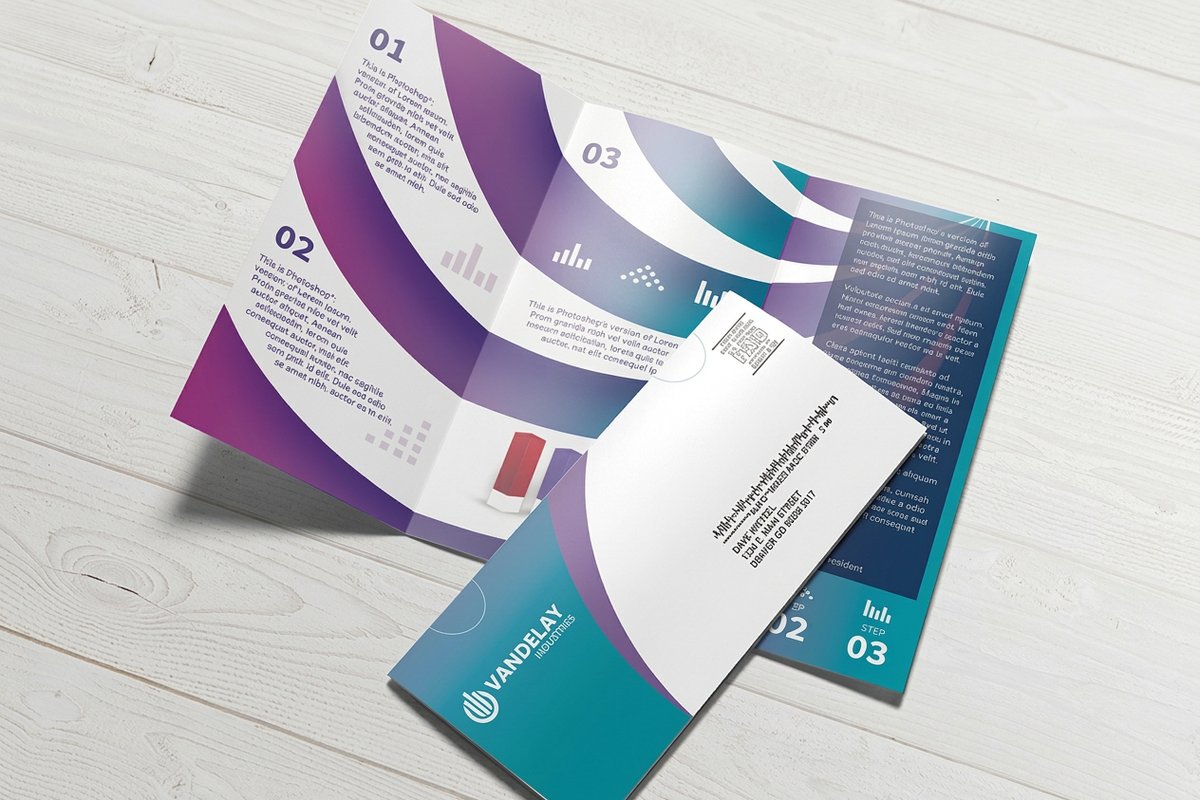
A direct mail brochure is a folded, printed brochure sent through the postal system to a targeted list of recipients. It works by uniting three things: a persuasive brochure, a list of the right people, and postal delivery that puts your message physically in their hands. The sections below explain how the pieces fit together, the sizes and folds, the postage and mailing options, the targeting, the cost, and whether the channel still works.
Mail your brochures with 4OVER4
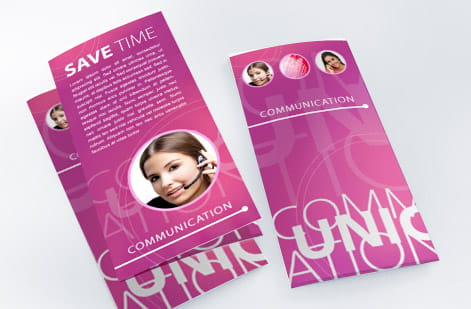
You do not have to run the mailing yourself. Brochure mailing at 4OVER4 is one job on one invoice: we print the brochure, score and fold it, seal it as a self-mailer or insert it into an envelope, address each piece from your list, apply the postage indicia, sort the run the way the post office wants it, and hand it over. You never touch a stack of paper.
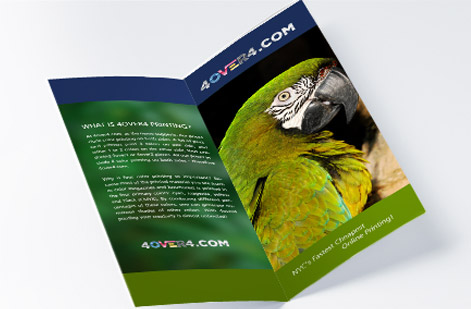
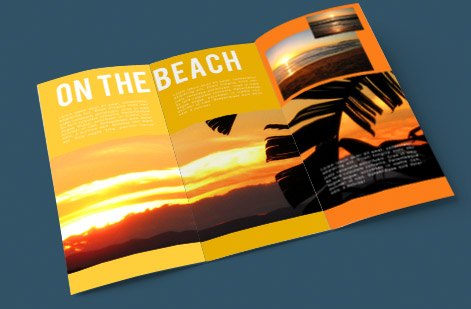
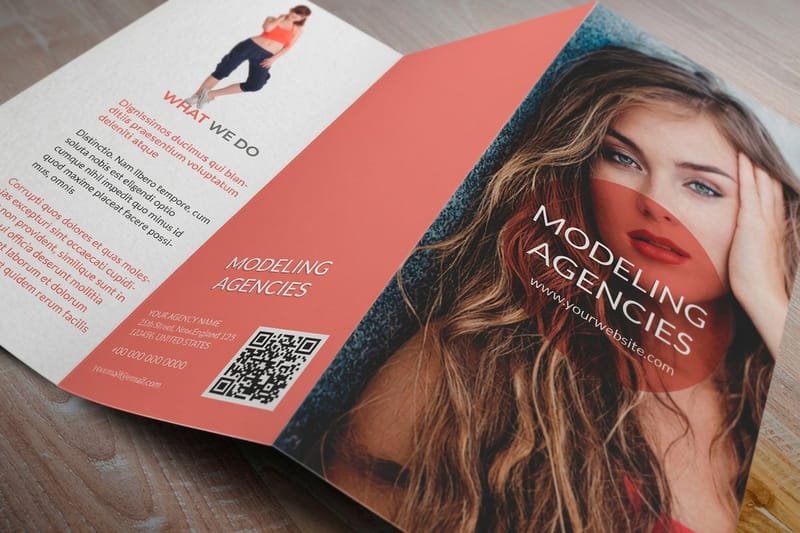
Every folded format we print qualifies. A tri-fold or Z-fold on letter-size stock, 8.5 x 11 inches flat, folds down to a compact mailing panel and gives you six panels of selling space. A bi-fold gives four larger, magazine-style panels. Both are on the direct mail brochures page. Text-weight stock folds cleanest and keeps the piece light, which keeps postage down. Heavier card stock feels more substantial in the hand but adds weight, and weight is exactly what the postal rate is built on. Whatever fold you pick, leave one panel clear for the address block and the indicia, and keep artwork and folds out of that area.
Per piece cost falls as the run grows, and you can watch it fall. Put 500 into the price calculator on the product page, then 1,000, then 5,000, holding the size, stock and fold steady, and the per piece figure drops at every step: prepress, plates, setup and makeready are spread across more pieces while the paper and ink per brochure stay flat. That is why a 5,000 piece drop is rarely five times the cost of a 1,000 piece drop. Postage is quoted on top of the print price and depends on the class you mail, so budget the two separately. Turnaround is chosen in the same calculator before checkout, and a folded, sealed and addressed run carries bindery and mailing time that a flat printed sheet does not, so book the drop date backwards from the day you want it in mailboxes.
Price and order direct mail brochures, or compare every folded format first on our brochure printing pages.
How the pieces fit together
A direct mail brochure campaign has three moving parts. First is the brochure itself, a folded printed piece with room to tell a fuller story than a postcard: a cover that stops the reader, inside panels that build the case, and a panel dedicated to the offer and next step. Second is the mailing list, the set of households or businesses you want to reach. Third is the mailing itself, which physically carries the piece into the mailbox.
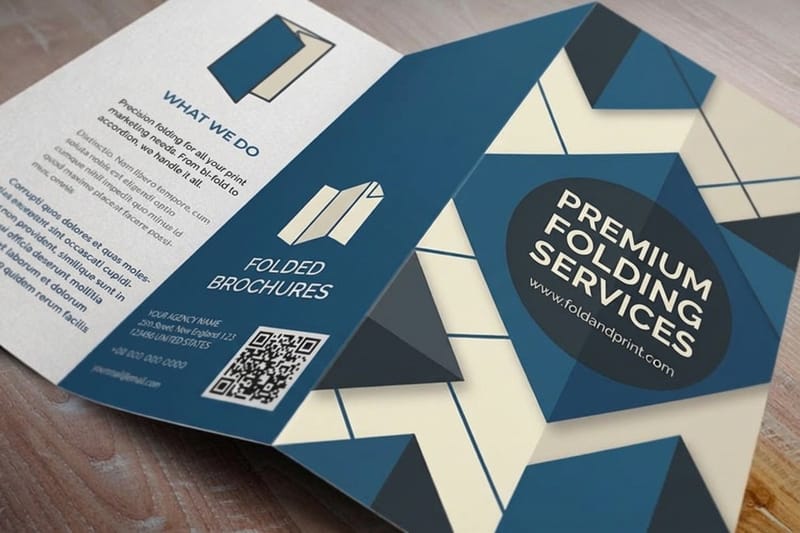
The brochure can travel two ways. As a self-mailer it is folded and sealed with a tab or wafer seal, with the address and postage printed right on a panel, which is efficient and economical. Enclosed in an envelope it feels more personal and premium and protects the piece, at a slightly higher cost. Either way, the fold is the advantage over a flat mailer, since it carries more content while staying compact.
If you are new to the format, our guide on what a brochure is covers the basics, and how to fold a brochure explains the fold options that shape a mailer.
What each mail class costs and how fast it moves

Postage is quoted separately from print, and the class you choose is usually the biggest lever you have on the cost of brochure mailing. Three classes carry almost every brochure run. Read them across before you pick a size and a stock, because the rate you qualify for is set by the size, the thickness, the weight and whether the piece is sealed the way the post office asks.
| Mail class | Per piece rate band | Delivery speed | Minimum quantity |
|---|---|---|---|
| USPS Marketing Mail | The lowest per piece rate of the three for an addressed piece, which is why most brochure runs mail this way | The slowest of the three. Mail it well ahead of your event or promotion date and do not count on a fixed arrival day | A bulk minimum applies, so it fits runs in the thousands rather than a handful of pieces |
| First Class Mail | The highest per piece rate. You are paying for speed and for handling of bad addresses | The fastest of the three, and undeliverable pieces are forwarded or returned to you rather than thrown away | No minimum. One brochure mails on the same terms as ten thousand |
| EDDM, Every Door Direct Mail | The lowest per piece rate overall, and you skip the cost of buying or renting a list because you are not addressing individuals | Similar to Marketing Mail, so plan the drop ahead of the date you want it read | Sold by carrier route. You take every address on the routes you choose, which suits a shop or clinic covering its own neighborhood |
Read the trade-off this way. If your list is a named set of customers or prospects and the offer is time sensitive, First Class earns its higher rate. If the list is large and the offer runs for weeks, Marketing Mail keeps the per piece cost down. If you want everyone within a few streets and have no list at all, EDDM is the cheapest way in, at the price of giving up targeting. Whichever you pick, a self-mailer has to be sealed with tabs or wafer seals so it survives the sorting equipment, and an oversized or heavy piece can drop out of the rate band you budgeted for, so confirm the folded size and the weight before the run prints.
Sizes, folds, and designing for the mailbox
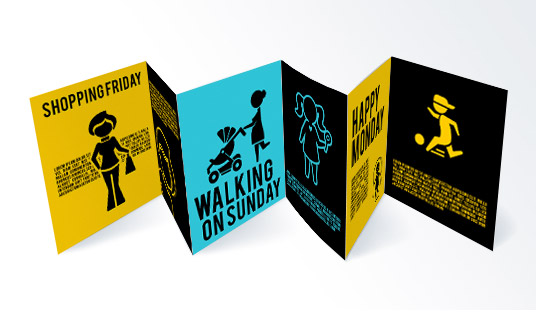
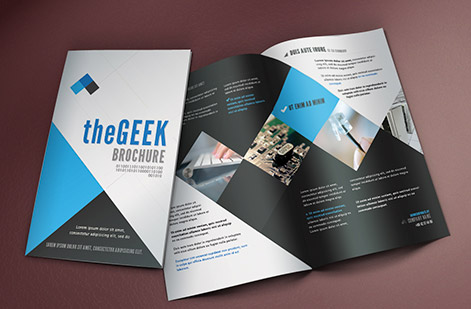
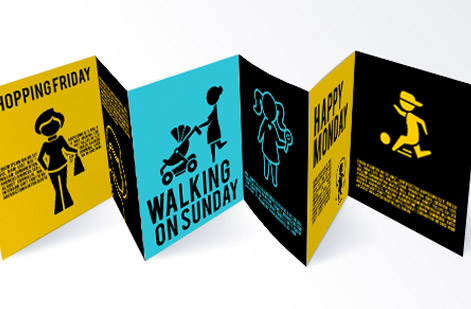
Format decisions start with the fold. A tri-fold on letter-size paper is the workhorse of direct mail: it opens to a generous canvas yet folds down to a compact, mailable panel. A bi-fold gives larger, magazine-like panels, and a Z-fold reveals its message in sequence as the reader opens it. Each fold changes how your story unfolds, so plan the reading order before you place a single element. Our guide on brochure sizes and fold options lays out the choices.
Design for the mailbox, not the desk. The outer panel that shows in the mail has to earn the open, so lead it with a benefit and a reason to look inside rather than burying the hook. Reserve a panel for the address and postage if you mail it as a self-mailer, and keep that area clear of busy artwork. Our online design tool and ready-made brochure templates give you correctly proportioned panels, and every direct mail brochure order is set up to meet mailing requirements.
Keep text and logos inside a safe margin and run backgrounds to the bleed, because a mailer that gets clipped at the fold or trim looks careless in a way that undercuts your offer.
Postage, mailing options, and postal rules
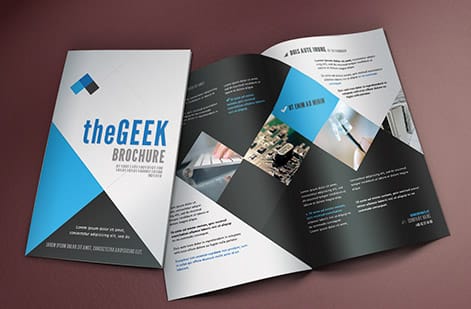
Postage is where format meets budget. The postal service prices mail by size, thickness, weight, and how it is prepared, so the dimensions and stock you choose directly affect what each piece costs to send. Standard letter and flat sizes have defined limits, and self-mailers must be sealed correctly to qualify, which is why designing to the mailing specs from the start saves money and rejections later.
You also have delivery choices. A targeted list mailing sends your brochure only to the specific addresses you select, ideal when you know exactly who you want to reach. A saturation approach blankets entire routes or neighborhoods, which suits local businesses casting a wide net. Bulk and presorted rates lower the per-piece postage in exchange for volume and preparation. Our guide on how to mail brochures walks through preparing a mailing.
The practical takeaway is to decide the mailing method early, because it constrains size, weight, and sealing, and those in turn shape both your design and your total cost.
Targeting, and whether direct mail still gets results

The single biggest driver of results is targeting. A brilliant brochure sent to the wrong people underperforms a plain one sent to the right people. Build or rent a list that matches your customer, filtering by location, demographics, business type, or past buying behavior, and pair it with an offer that is genuinely relevant to that audience. Relevance, not raw volume, is what turns a mailing into response.
Does it still work? Yes, and for a specific reason: a physical brochure in the mailbox competes in a far less crowded space than an inbox, gets handled and kept, and reaches people who never see your ads online. A folded brochure in particular earns attention because it invites the reader to open it. Track every campaign with a unique promo code, URL, or phone line so you can measure response and refine the next run.
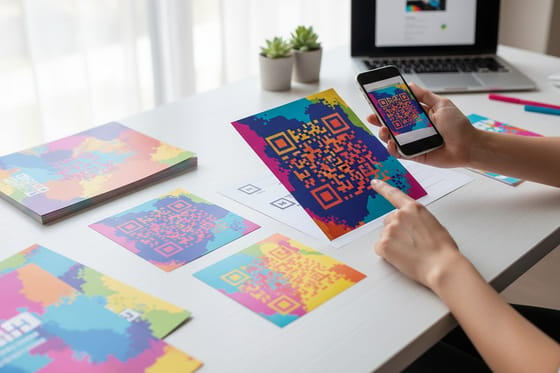
For a channel comparison, our guide on QR codes on print shows how to bridge mail to a digital response and attribute the results cleanly.
What direct mail brochures cost and how prices are set

Budget a direct mail campaign in two parts: printing and mailing. On the print side, price scales with quantity, since setup spreads across more pieces, then with size, stock, fold, and finish. Larger runs drop the per-brochure cost sharply, so a real campaign volume is far more economical per piece than a small batch. You set the print options in the live configurator and the total updates as you go.
On the mailing side, postage is a per-piece cost driven by the size, weight, and mailing method you chose, and it is often the larger share of a campaign. Presorted and bulk rates reduce it in exchange for volume. Because both halves reward scale and planning, decide your quantity, format, and mailing method together rather than in isolation, and factor the list cost if you are renting one.
Measured against the response a targeted physical mailer can pull, the combined cost is competitive, especially for local and high-value offers. Order a sample first so you can confirm the fold, stock, and finish before committing to a full run.
Building and ordering your direct mail brochure
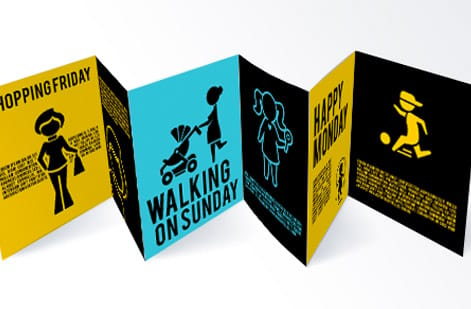
Put it together in a clear sequence. Define your audience and offer, choose a size and fold that mails efficiently, design the outer panel to earn the open and the inside to build the case, and reserve space for the address and postage if it is a self-mailer. Set the file up at final size with bleed and a safe margin so nothing important sits near a fold or trim.
When the file is ready, upload it to the direct mail brochures page, choose your size, stock, fold, and quantity, and place the order. Explore the full brochure range if a different format fits the campaign, and pair this page with our guide on how to mail brochures to prepare the mailing itself.
Wally mails your story to the right door
Print plus list plus delivery equals response
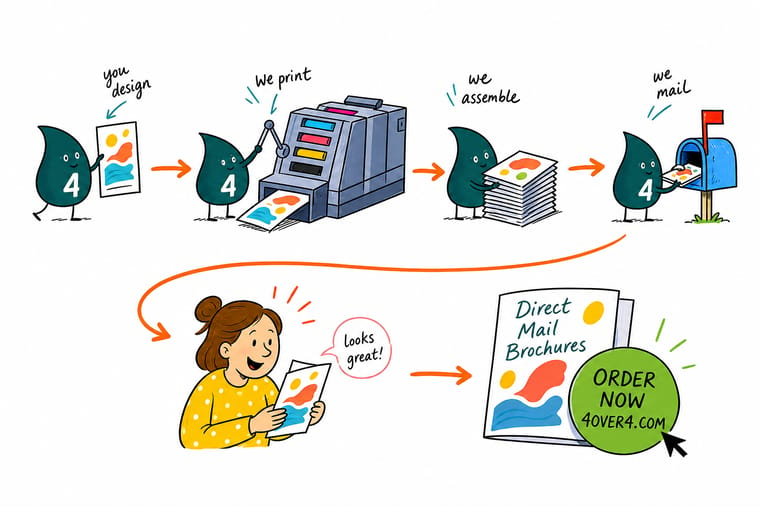
Wally builds a direct mail brochure as three parts working together: a folded piece with room to tell the story, a targeted list of the right recipients, and postal delivery that lands it in the mailbox. He designs the outer panel to earn the open, keeps the piece within postal rules, and adds a unique code so every campaign is measurable. Relevance beats volume, and 4OVER4 prints and folds it ready to mail.
Order your direct mail brochures →Quick reference
Direct mail brochure setup at a glance
A mail campaign lives and dies on these fundamentals, so lock them in before you design.
| Setting | What to pick | Why it matters |
|---|---|---|
| Format | Tri-fold, bi-fold, or Z-fold | The fold carries more story than a postcard while still mailing compactly. |
| Mailing method | Self-mailer or enclosed in an envelope | It shapes sealing, feel, cost, and how you design the address panel. |
| List | Targeted or saturation | Reaching the right recipients drives response far more than raw volume. |
| Postal specs | Meet size, weight, and sealing rules | Designing to postal limits controls postage and avoids rejected pieces. |
| Offer and CTA | One clear offer with a reason to act | A relevant offer and next step turn a delivered brochure into a response. |
| Tracking | Unique code, URL, or phone line | Measuring each campaign tells you what it returned so the next run improves. |
Step by step
How to run a direct mail brochure campaign in 7 steps
- Define audience and offer Decide exactly who you want to reach and the single relevant offer that will move them to respond.
- Choose a size and fold Pick a fold and dimensions that give you room to tell the story while mailing efficiently within postal limits.
- Design for the mailbox Make the outer panel earn the open with a benefit, build the case inside, and reserve a clear panel for address and postage.
- Build or rent a list Assemble a targeted list that matches your customer, filtering by location, demographics, or business type.
- Pick your mailing method Decide between a targeted mailing and saturation, and use presorted or bulk rates to lower per-piece postage.
- Add tracking Put a unique promo code, URL, or phone line on the piece so you can measure the campaign's response.
- Upload, order, and mail Send your file to the direct mail brochures page, set stock and quantity, place the order, and prepare the mailing.
Specs and pricing
Direct mail brochure specs and live pricing
Set your size, stock, fold, and quantity below to see live per-piece pricing and full specs for direct mail brochures, straight from the configurator.
| Quantity | Price Per Unit | Total |
|---|---|---|
| 500 | 47.7¢ | $238.73 |
| 600 | 41.1¢ | $246.31 |
| 700 | 36.3¢ | $253.88 |
| 800 | 32.7¢ | $261.47 |
| 900 | 29.9¢ | $269.05 |
| 1,000 | 27.7¢ | $276.63 |
| 2,000 | 17.3¢ | $346.10 |
| 3,000 | 13.9¢ | $415.57 |
Order it
Order direct mail brochures
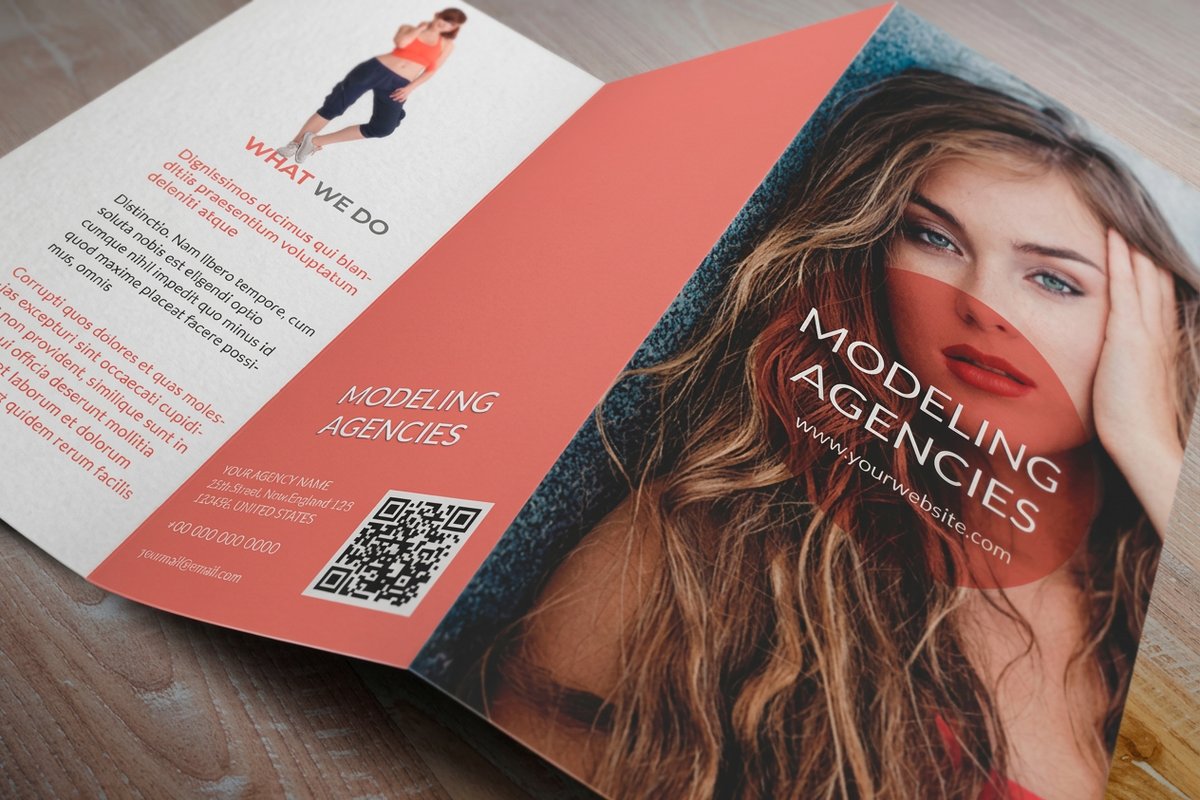
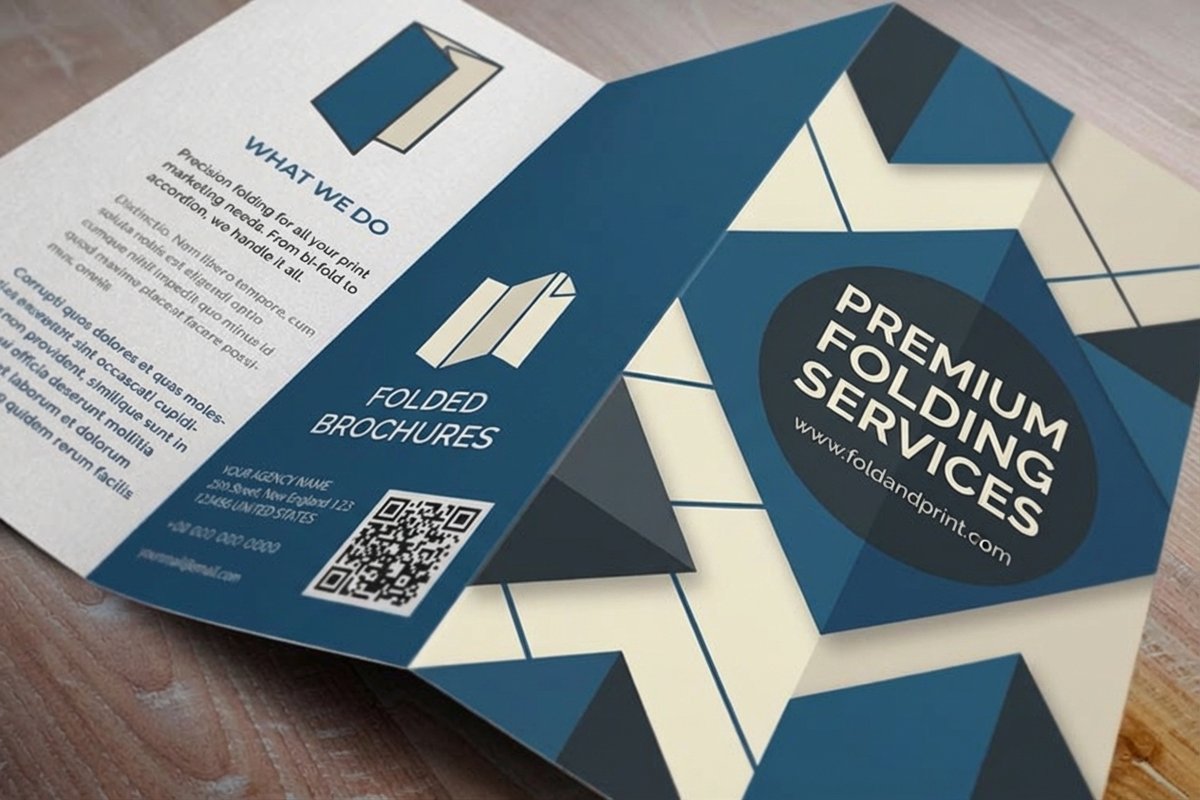
See it in use
Real brochure work, printed in-house



Explore more
Where to go next
By the numbers
Printing you can count on at 4OVER4
Common Questions
Common questions about direct mail brochures
How do direct mail brochures work?
They work by combining a printed, folded brochure with a targeted mailing list and postal delivery, so your message arrives directly in a prospect's mailbox. You design the brochure, choose a size and fold that meets postal rules, build or buy a list of the right recipients, and mail it either as a sealed self-mailer with the address printed on a panel or enclosed in an envelope. Because it reaches a defined audience physically, a well-targeted brochure campaign drives strong, measurable response.
What sizes and folds work best for direct mail brochures?
A tri-fold on letter-size paper is the workhorse, opening to a generous canvas yet folding to a compact, mailable panel. A bi-fold gives larger magazine-like panels, and a Z-fold reveals its message in sequence as the reader opens it. Choose the fold based on how you want the story to unfold and the postal size limits you must meet, then design the outer panel to earn the open. Our brochure sizes and fold options guide compares the choices in detail.
What does direct mail brochure postage cost and how is it set?
Budget a campaign in two parts, printing and mailing. Print price scales with quantity, size, stock, fold, and finish, and larger runs lower the per-piece cost sharply. Postage is a separate per-piece cost driven by the size, weight, and mailing method you choose, and it is often the larger share. Presorted and bulk rates reduce postage in exchange for volume and preparation, so decide your format and mailing method together to control the total.
Do direct mail brochures still get results?
Yes, especially when well targeted. A physical brochure competes in a far less crowded space than a digital inbox, gets handled and kept, and reaches people who never see your online ads. A folded brochure in particular earns attention because it invites the reader to open it. The biggest driver of results is targeting the right recipients with a relevant offer, and tracking each campaign with a unique code or URL lets you measure response and improve the next run.
How do I target the right people for a direct mail brochure?
Build or rent a mailing list that matches your ideal customer, filtering by location, demographics, business type, or past buying behavior, and pair it with an offer that is genuinely relevant to that audience. A targeted list mails only to the addresses you select, while a saturation approach blankets whole routes for local reach. Relevance beats raw volume, so a smaller, well-matched list with a strong offer usually outperforms a large, generic mailing.
How long do direct mail brochures take to print and ship?
Printing runs on the standard brochure production schedule, and the live turnaround and shipping options appear in the configurator once you set your quantity, stock, and fold. Add time for preparing and mailing the campaign itself, especially if you are presorting for bulk rates. For a dated offer, plan backward from the in-home date you want and order with a comfortable buffer, and confirm a proof so no reprint is needed.
Get Started
Ready to land your story in the right mailbox?
Bring your brochure to 4OVER4, choose a size, fold, stock, and quantity built for mailing, and watch the price update live as you plan your campaign.
Legal Disclaimer
Gold Standard guarantees apply to all standard orders placed through 4over4.com. Price match requires verifiable proof of a competitor's published price for an equivalent product with matching specifications and turnaround time. Satisfaction guarantee covers manufacturing defects and print quality issues. Contact support with order number and documentation. On-time delivery rate based on tracked orders 1999 to 2026. Individual results may vary based on shipping carrier performance.
